
Quick Answer
Define liability first, then enforce a fixed control order. For negative balance management marketplaces, contain outbound risk with payout checks and holds, recover through reserves, offsets, or top-ups, and escalate unresolved cases before provider fallback windows. In Adyen for Platforms, prolonged deficits can be covered from a reserved compensation account, so waiting is a cash decision, not an ops delay. Close each case only when transfer events, provider references, and the Balance Platform Accounting Report match your ledger journals.
Marketplace deficits are a payments liability problem, not something you can explain away after launch#
Marketplace deficits are a payments liability problem, not something you can explain away after launch. They hit finance, ops, and engineering at the same time, because someone still has to absorb the loss, stop more money from leaving, and reconcile the ledger cleanly. This piece treats marketplace negative balance management as an operating discipline: who is liable, how recovery works, and which controls you can actually enforce.
The goal is straightforward. By the end, you should have a practical way to choose between reserves, offsets, top-ups, and payout holds, plus the checkpoints that keep those controls from creating new reconciliation problems. At scale, that matters more than broad advice about "managing risk," because a deficit only becomes manageable when the liability path and recovery path are explicit.
A useful place to start is with the difference between platform balances and participant balances. Providers handle this differently, but the pattern is consistent. Stripe Connect says your platform account and each connected account have separate balances, and it also notes that responsibility for connected-account negative balances can belong to your platform or to Stripe depending on your integration. Adyen uses a liable balance account concept, including a reserved compensation account used to cover negative balances in the platform. Those are not cosmetic differences. They determine where losses land and which recovery controls are available to you.
Examples here lean on that balance-platform model because it makes the liability chain easy to name. In that setup, refunds and chargebacks are explicit causes of negative balances on accounts. The same docs also state that an account cannot have a negative balance due to payouts or fund transfers, which is a useful reminder that not every negative balance comes from outbound money movement. On Stripe, transfer attempts can fail if the platform has insufficient available funds. Before you use any recommendation here, verify three things in your own setup: the product variant, the country or market configuration, and the contract terms that govern liability and timing.
What operating sequence should you use?#
Use one operating sequence from start to finish:
| Stage | What to do |
|---|---|
| Prevent | Prevent deficits where you can with payout gating, reserve design, and balance checks |
| Detect | Detect every balance-changing event reliably and tie it to a case owner |
| Contain | Contain loss propagation quickly, especially around payouts and transfers |
| Recover | Recover with the least costly method that still fits your policy |
| Reconcile | Reconcile the case back to ledger entries, provider references, and final account state |
This is not a formal industry standard. It is a practical sequence that keeps teams aligned. A common failure mode is skipping from "negative detected" straight to a manual recovery action, then finding out later that the balance moved again, the wrong account was held, or the journal trail no longer explains the outcome.
One caveat up front: timelines and enforcement are provider specific. In the setup above, for example, negative balances can remain for up to 30 days before compensation actions, but you should not treat that as a universal rule. The right threshold for your platform depends on provider mechanics, jurisdiction, and the risk you agreed to carry.
Related: Chargeback Management for Marketplaces: How to Reduce Disputes and Recover Revenue. If you want a quick next step, try the free invoice generator.
Stop confusing marketplace deficits with broker protection#
Broker-style Negative Balance Protection is not a marketplace ledger design model. It protects traders from owing money beyond deposited funds, while marketplace negative balance management is about liability ownership, balance mechanics, and recovery execution.
VT Markets and DayTrading.com describe Negative Balance Protection as trader-side protection against owing beyond deposited funds. That framing does not answer the core marketplace question: who absorbs a shortfall, from which balance, under which recovery rule?
For marketplace operations, anchor on provider-native terms:
- An account holder can go negative from refunds or chargebacks.
- In chargeback flow, disputed funds can be withdrawn from the marketplace's liable balance account.
- Payouts and fund transfers must respect available balance constraints, rather than creating deficits.
The operational risk is terminology drift: teams reuse broker language, then discover no one has clearly assigned liability when reversals hit after settlement. Confirm liability ownership in your provider setup and contract terms. Stripe Connect is explicit that connected-account negative-balance responsibility can sit with your platform or with Stripe, depending on integration.
Intent mismatch
If a page explains how traders avoid owing money to a broker, it is solving the wrong problem for a marketplace. Your docs should instead name the liable balance account, the account holder, which events can create a negative balance, and who owns recovery.
Map exactly where negative balances are created#
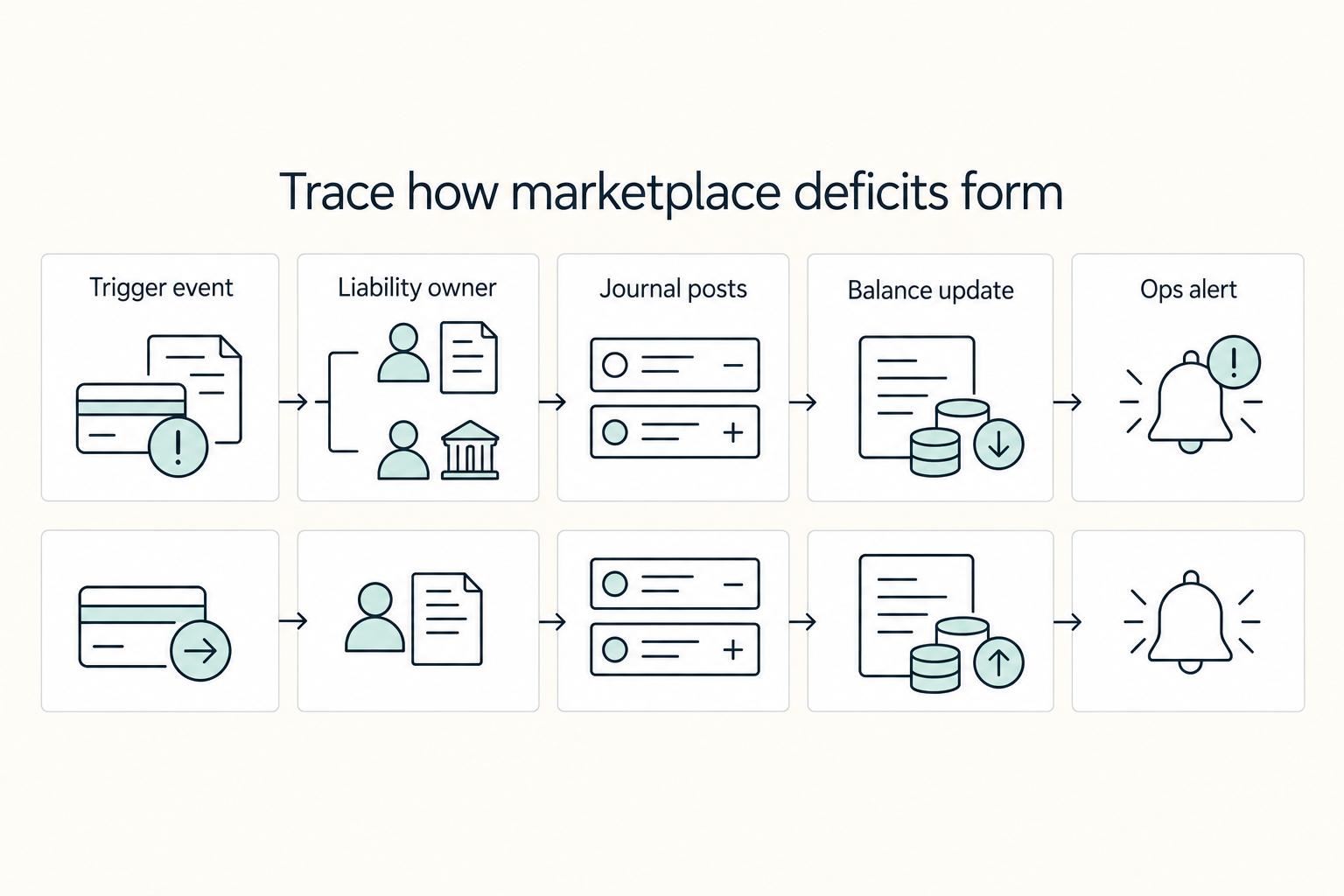
Treat negative balances as event-driven ledger outcomes, not as a generic cash problem. For each deficit, identify the triggering event, who is liable, which journals posted, and how the derived balance changed.
Documented deficit creators here are post-settlement reversals and deductions, especially chargebacks and refunds. Adyen also expects debit tracking across refunds, chargebacks, transfers, fees, and payouts, with transaction fees deducted from the liable balance account.
| Source type | How it can create or deepen a deficit | Failure mode to watch |
|---|---|---|
| Chargeback | Reverses previously settled funds and can reduce an account holder balance or the liable balance account | Reversal risk is not modeled early, so the negative appears late in reconciliation |
| Refund | Reduces balance after the original payment was recognized | Timing is underestimated; return timing can stretch up to 40 business days |
| FX on transfer | Transfer amount can be converted to the primary payout currency using the exchange rate on creation date | Finance assumptions do not match conversion outcomes |
| Split or commission allocation error | Invalid split instructions can misbook funds, including to the reserved incorrect splits account | Split logic errors require manual unwind and rebalance |
| Fees and internal adjustments | Provider fees debit the liable account; internal adjustment labels may also reduce balances | "Adjustment" is logged without a clear originating event |
What order should deficit events follow?#
- Event received: refund, chargeback, fee posting, split correction, or FX-affected transfer.
- Liability assigned: account holder, liable balance account, or incorrect-splits path.
- Ledger journals posted: debit/credit entries are written.
- Derived balance updated: available and booked balances recalculate.
- Operator alert triggered: ops can investigate, contain, and recover.
For payout-related investigations, track transfer lifecycle events with balancePlatform.transfer.created and balancePlatform.transfer.updated, and use the update status to see what changed.
Which paths should not be treated as deficit creators?#
Routine payouts and transfers should not be treated as deficit creators when available-balance checks are enforced. In this setup, available balance is verified before scheduled payouts, and negatives are expected from reversals or deductions after settlement, not from compliant payout execution.
Decide who absorbs losses and when liability shifts#
Decide the loss owner upfront: recovery steps and final liability are not the same thing. You can pursue seller-side recovery first, but still end with platform exposure if the balance stays negative long enough under your provider's rules.
In Stripe Connect, you choose whether your platform or Stripe takes responsibility for connected-account losses by integration model, while your platform is always responsible for its own negative balances. Stripe also documents that it first attempts recovery from the connected account's external account. In Adyen's model, negative balances can remain for up to 30 days, then Adyen debits the platform's reserved compensation account on the first day of the following month. Stripe also documents a 180-day path where unresolved connected-account negatives are covered from platform reserve in platform-liable setups.
| Liability model | How it works | Recovery speed | Seller friction | Platform cash-flow impact |
|---|---|---|---|---|
| Seller-first recovery | Try to recover from the seller first (for example, offset/external-account collection paths) before treating the loss as platform-borne | Usually slower | Usually higher | Lower upfront, higher if recovery fails |
| Platform-first absorption | Platform takes the exposure early and prioritizes seller continuity | Faster for seller operations | Lower | Immediate platform liquidity impact |
| Reserve-plus-offset hybrid | Hold reserves, apply offsets/collections, then absorb remaining unresolved deficits per provider mechanics | Medium | Medium | More predictable when reserve coverage is active |
How should the liability model match recovery reality?#
Match your policy to the documented fallback clock, not to assumptions. If recovery confidence is weak for a case, increase reserve coverage and tighten payout release conditions; if recovery confidence is stronger, controlled offset-based recovery can be workable.
Use provider mechanics as hard guardrails. Stripe connected-account reserves are explicitly designed to hold payout-eligible funds while still exposed to refunds and disputes, and those reversals are taken from reserved amounts first. Adyen and Stripe also publish loss-shift timing points, including the 30-day negative window in Adyen and the 180-day unresolved transfer point in Stripe platform-liable reserve flow, so unresolved cases should be tracked against those timelines.
For every open case, check four things: current liable party, deficit age, recovery attempts made, and the next provider-triggered step if no action is taken.
Who should own what before the first bad month?#
This is an internal governance decision, not a provider-assigned org chart, so make it explicit and enforceable.
- Finance defines loss policy, reserve posture, and write-off criteria.
- Operations runs seller communication, escalation, and exception handling.
- Engineering enforces payout, transfer, and reserve rules so policy is applied in production.
Keep evidence attached to each case: provider reference, age bucket, current liability owner, and closing journals. We covered this in detail in Goodwill and Intangible Assets on a Balance Sheet for Payment Risk.
Implement reserves, offsets, top-ups, and payout holds in the right sequence#
For most marketplaces, sequence controls as containment first, recovery second. In practice, that usually means reserve buffer, rolling offset, a short top-up window, and only then collections handoff when activity is dormant or repayment does not happen.
| Control | Typical trigger | Upside | Downside | Operational burden |
|---|---|---|---|---|
| Reserve buffer | New or higher-risk cohort, or known refund/dispute exposure | Pre-funds part of potential loss and reduces surprise cash calls | Ties up seller funds and can increase friction | Medium: set threshold, monitor adequacy, reconcile reserve moves |
| Rolling offset | Deficit exists and seller still has active inflows | Recovers from future earnings without immediate bank pull | Slow when volume drops; can linger if inflows are weak | Medium: apply offset logic at payout time and track remaining deficit |
| Top-up balance account | Deficit exists and offset path is weak or too slow | Fastest path when seller cooperates | Depends on seller action and available funding source | Medium to high: request, monitor incoming transfer, follow up on failures |
| Payout hold | Need to stop funds leaving while exposure is assessed or recovered | Prevents avoidable outflow and preserves recovery options | Friction rises quickly if too broad or too long | Low to medium technically; higher with many exceptions |
| Collections handoff | Seller is dormant, unresponsive, or no meaningful inflow remains | Formalizes recovery attempts and clears aged internal queues | Recovery may be limited and relationship impact is usually high | High: evidence pack, transfer process, status tracking, write-off review |
Which control fits which deficit shape?#
Use offsets first when the deficit is dispute-driven and the seller still has active volume. You already have a recovery path through future earnings, and reserve mechanics can help because reserve funding can be deducted from payable balance when the payout batch closes.
If activity is dormant, open a defined top-up balance account window, then decide on collections handoff or write-off review. Top-ups are handled as an incoming external transfer into the balance account, so the checkpoint is simple: did funds arrive, and did the ledgered deficit close?
Use payout holds as containment, not as a standalone strategy. Stripe payout pause blocks automatic and manual payout creation, and paused in-flight payouts can stay pending for up to 10 days before cancellation returns funds to the connected account balance.
How do you tie controls to real balance movements?#
Tie every control to a concrete payout or balance movement. Enforce holds on payout batches, and map balance debits and credits to provider transfer primitives. If your internal ledger labels this as internalTransfer, keep the provider mapping explicit; for Adyen internal recovery debits, the documented transfer type is internalDirectDebit.
Make recovery actions idempotent by case ID plus action type so retries do not double-debit. Before you close a case, verify that the initiating event, applied hold, each balance movement, and the closing entry reconcile in your ledger journals.
Which failure modes create bigger losses?#
Three red flags come up often: broad payout freezes that exceed case scope, spreadsheet-based offsets that drift from real balances, and controls that bypass policy gates or leave incomplete journal records.
A practical default for new cohorts is conservative controls first: stronger reserves, tighter payout release conditions, and a short escalation path after failed top-up. Relax only after measured recovery performance by segment shows offsets clear reliably, top-ups settle, and journals reconcile without manual repair.
If you want a deeper dive, read E-Commerce Supplier Relationship Management: How Marketplaces Build and Maintain Vendor Trust.
Build detection and containment with event reliability, not heroics#
Containment only works when detection is reliable and repeatable, not operator-dependent. If a deficit case depends on someone spotting a dashboard spike or chasing updates in Slack, you do not have a containment system.
Start with a minimum event set. For Adyen for Platforms, balancePlatform.transfer.created signals an outgoing transfer initiation, and balancePlatform.transfer.updated signals a transfer status change. Pair those with your internal balance-change signals so you can detect both attempted outflows and balance movements that create or deepen a negative.
What should the containment sequence be?#
Use a fixed, machine-enforced sequence:
- Detect the negative balance or risky transfer state.
- Classify the cause using your case taxonomy.
- Lock the payout or transfer path that can increase exposure.
- Notify the owner or recovery queue.
- Start the recovery timer.
- Write an immutable audit record of the trigger and action.
Order matters. If you notify before you lock, exposure can grow during handoff. If you lock too broadly, you create avoidable seller friction.
How should you treat webhook handling?#
Treat webhooks as a strict contract: return 2xx, store the message, then process it. Build idempotent consumers so retries do not create duplicate side effects. In practice, you need this because failed deliveries can be retried three times immediately and then continue retrying from queue for up to 30 days.
Add dead-letter handling and a replay path. If a message exceeds processing limits, move it to DLQ, alert, and redrive after the fix. Avoid manual database patches that skip event replay, because they break the event trail and can leave payout controls out of sync.
When should you close a case?#
Close only after verification, not when the UI balance looks recovered. Require request IDs, provider references for the related transfer or adjustment, and matching closing ledger journals in the case record.
Then reconcile real-time ledger updates from API responses and webhooks against the daily Balance Platform Accounting Report. If those views do not match, keep the case open.
Handle compliance and tax constraints before recovery actions go live#
Do not launch recovery automation until compliance state checks are in the decision path. KYC, KYB, and AML gates can override recovery logic, so a valid deficit case can still be blocked from payout release, fund receipt, or account changes.
For Adyen for Platforms, verification is an operational gate, not a preference: users must be verified before you can process payments or pay out funds, and capability restrictions can prevent an account holder from receiving funds. If your recovery flow depends on offsets, controlled releases, or account funding, that gate can delay execution even when the case logic is correct.
Set one rule before go-live: every hold, offset, or top-up request must check live verification and capability status, then store that result in the case record. If status is incomplete or restricted, route to manual review. Avoid manual exception shortcuts that force actions through anyway, because they create uneven treatment and weak auditability.
How do tax documents change recovery requests?#
Tax and document logic should be explicit in cross-border recovery messaging:
| Item | Use or trigger |
|---|---|
| Form W-9 | Used to provide a correct TIN to payers or brokers required to file IRS information returns |
| Form W-8BEN / Form W-8BEN-E | Used to document foreign individual or entity status when requested by the withholding agent or payer |
| Form 1099 references | Keep references tied to tax year in notices and SOPs |
| FBAR (FinCEN Form 114) | Triggered when aggregate foreign financial account value exceeds $10,000 at any point in the calendar year |
| FEIE | Applies only when IRS qualification requirements are met |
If your workflow ignores that split, you send the wrong request, delay recovery, and shift preventable cleanup to support.
Keep Form 1099 references tied to tax year in notices and SOPs. IRS instruction publication changes are effective for tax year 2026 and processing year 2027, so versioning matters. FBAR and FEIE should be treated as communication and routing topics, not individualized filing determinations: FBAR (FinCEN Form 114) is triggered when aggregate foreign financial account value exceeds $10,000 at any point in the calendar year, and FEIE applies only when IRS qualification requirements are met.
What should the evidence pack include before launch?#
Require an operator evidence pack for every recovery action before rollout:
| Artifact | What to include |
|---|---|
| Policy decision log | Rule invoked, compliance status checked, manual approver (if any), timestamp |
| User notification templates | Mapped to payout hold, document request, or recovery funding request scenarios |
| Audit export set | API responses and webhooks tied to daily Balance Platform Accounting Report reconciliation |
Do not mark a recovery action complete unless it ties back to event history and report-based reconciliation. Country, program, eligibility, document, and enforcement constraints vary by market and contract, so legal and compliance should confirm final rules before launch. Getting this wrong can create delayed recovery, fines, reputational damage, and long-tail trust issues.
For a step-by-step walkthrough, see Document Management for Accounting Firms: Secure Intake, Retrieval, Retention, and Automation.
Conclusion#
The core decision is simple: make liability and recovery rules explicit first, then enforce them through ledger-first controls you can audit later. Marketplace negative-balance programs become risky when teams treat deficits as edge cases, rely on manual judgment, or discover too late that provider mechanics have already shifted seller debt into platform cash exposure.
A workable launch standard is not complicated, but it does need to be written down and tested. Your policy should say who absorbs loss first, when you move from seller recovery to platform compensation, and which control comes next: reserve, offset, top-up, or payout hold. If you use Adyen for Platforms, build around the actual product nouns, not internal shorthand. A negative account holder balance may need to be offset by a top-up or internal transfer. Prolonged exposure can end up hitting a reserved compensation account on the provider's schedule, not yours.
Before you go live, make sure four things are true:
- Liability policy is documented and approved. Finance should sign off on who pays, ops should own escalation timing, and engineering should map those rules to enforceable balance and payout checks.
- Your control matrix is concrete. For each deficit type, define when to use reserve coverage, when to recover through offsets, when to request a top-up, and when to pause payouts rather than waiting for recovery to fail.
- Event reliability has been proven. Test transfer-status webhook handling, including
balancePlatform.transfer.updated, for idempotency, replay, and dead-letter recovery so a missed status change does not leave a risky payout path open. - Reconciliation has a real sign-off gate. Do not close a case because a webhook fired or an operator clicked resolved. Close it only after the daily Balance Platform Accounting Report supports the opening balance, the recovery action, and the closing balance.
One practical recommendation: run one cohort through the full sequence in shadow mode before broad rollout. Mirror live traffic, classify deficits, and generate the same alerts and case actions you would use in production. Do not let the new logic change seller-visible outcomes until you have measured recovery behavior and operator impact. Shadowing is useful because it is low impact, but it is not enough on its own. You still need reconciliation checks and policy gates to prove the design holds up.
A common late-stage failure is weak evidence. Keep an audit trail that ties each case to the triggering event, the recovery decision, the transfer or top-up reference, and the final report-backed balance state. If that evidence pack is missing, your launch is not ready, even if the logic looks correct in testing.
Related reading: Working Capital Management for Freelancers Who Invoice Clients.
Frequently Asked Questions
Who in the end pays a marketplace negative balance when an account holder does not repay?
There is no universal answer. In Adyen for Platforms, if a balance account stays negative for more than 30 days, the provider can compensate by debiting your reserved compensation account, which is a liable balance account used for platform compensation. The practical takeaway is to document your liability waterfall in policy, because provider mechanics and contracts decide when seller debt becomes platform cash exposure.
How long should we allow a deficit before moving from seller recovery to platform compensation?
Use your provider window as the hard outer boundary, not as your first action point. In the platform model used here, negative balances are allowed for up to 30 days, and the default webhook warning timing referenced in its reconciliation guidance is 20 days. You should usually escalate before day 20 rather than waiting for automatic compensation. If you have low confidence in recovery, shorten your internal timer even if the provider allows longer.
When should we use reserves instead of offsets?
Use reserves when future seller inflows are uncertain, slow, or too small to clear the deficit in a reasonable time. Offsets depend on new money arriving, while a reserve such as a reserved compensation account or Stripe's connect reserved balance exists to absorb connected-account negatives when recovery from the seller is not enough. One risk is relying on offsets for dormant accounts and then finding there is little or no new inflow to offset against.
When should we trigger a top-up request versus a payout hold?
Trigger a payout hold when there is active volume and upcoming payouts that can contain exposure, because payouts and transfers should only use available balance. Trigger a top-up request when held payouts will not cover the shortfall or the seller is no longer generating enough activity to recover through offsets. In this setup, a top-up creates an incoming external transfer that pulls funds from the source specified in the top-up request, so verify that funding source before you treat the case as funded.
Which events and webhooks should trigger automated containment?
At minimum, consume balancePlatform.transfer.created and balancePlatform.transfer.updated. The first tells you an outgoing transfer was initiated. The second tells you its status changed. That is where you should lock risky payout paths, update the case record, and notify ops if the transfer affects an open deficit. Do not treat either webhook as a closure signal on its own.
What should be reconciled before we mark a negative-balance case as closed?
Close the case only after report-backed reconciliation, not just successful event processing. Tie the deficit, any compensating transfer or top-up, and the final status changes back to the daily Balance Platform Accounting Report, then confirm the relevant opening and closing balances match the expected outcome. If the report does not support the final balance state, keep the case open and investigate before finance signs off.
Try a related tool
Researched and edited by the Gruv editorial team. Gruv builds cross-border billing, payouts, and finance-operations software for global businesses.
Sources
Includes 3 external sources outside the trusted-domain allowlist.
- docs.stripe.com/connect/risk-managementtrusted
- docs.stripe.com/connect/account-balancestrusted
- federalregister.gov/documents/2024/07/03/2024-14414/anti-money-l...trusted
- irs.gov/businesses/small-businesses-self-employed/re...trusted
- irs.gov/forms-pubs/about-form-w-9trusted
- docs.adyen.com/platforms/manage-liable-accountsexternal
- docs.adyen.com/platforms/reports-and-fees/balance-platform-...external
- help.adyen.com/en_US/knowledge/adyen-for-platforms/funds-tr...external
Educational content only. Not legal, tax, or financial advice.
Related Posts
How Marketplaces Build Vendor Trust Through Supplier Relationship Management
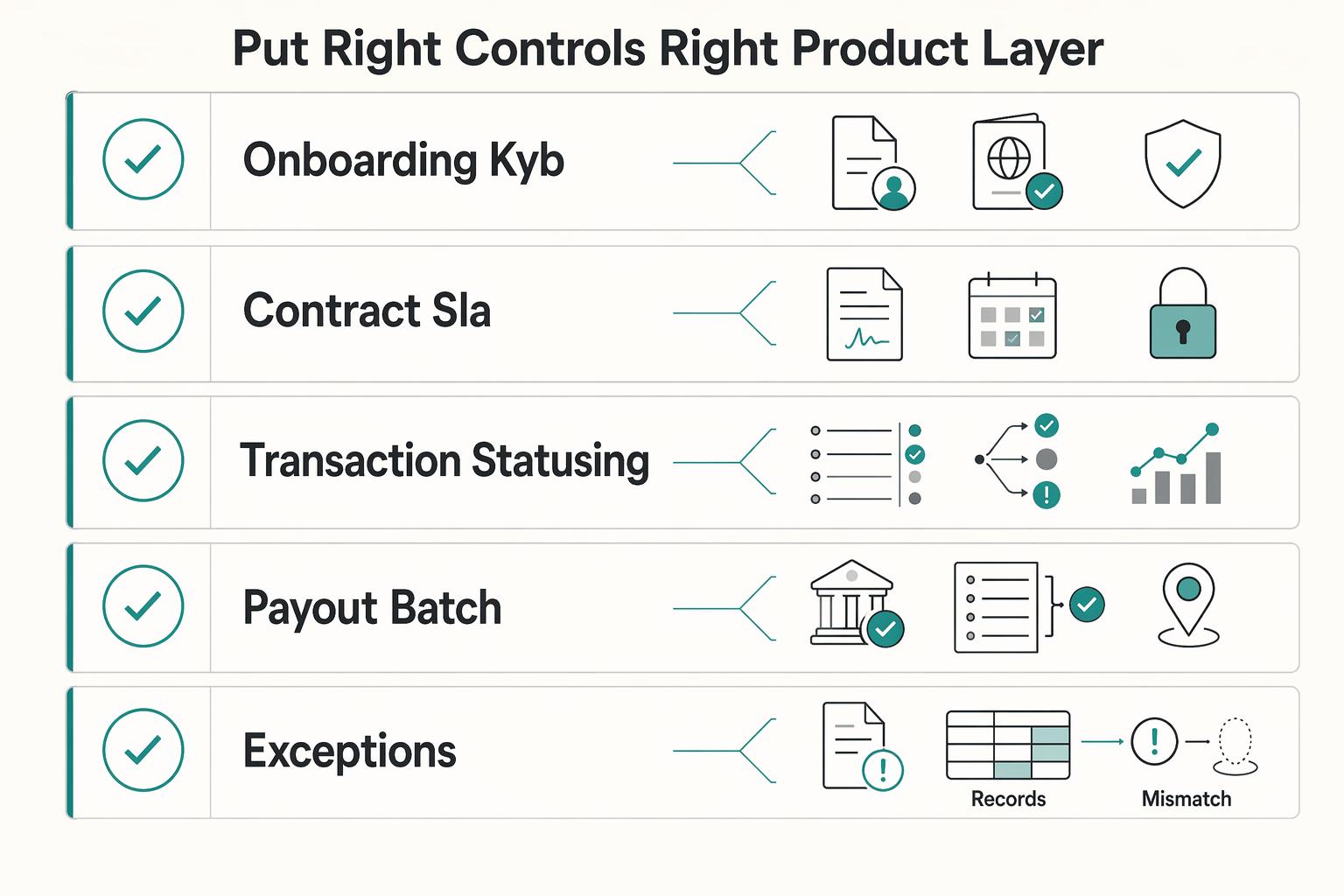
Vendor trust in a marketplace belongs in your revenue model, not in a vague partner-relations bucket. If suppliers do not trust how your platform onboards them, governs issues, or communicates status, growth can get more expensive. Activation can slow, and teams may spend more time handling exceptions and manual fixes that should have been designed into the product and operating policy much earlier.
Chargeback Management for Marketplaces and MoR Dispute Recovery
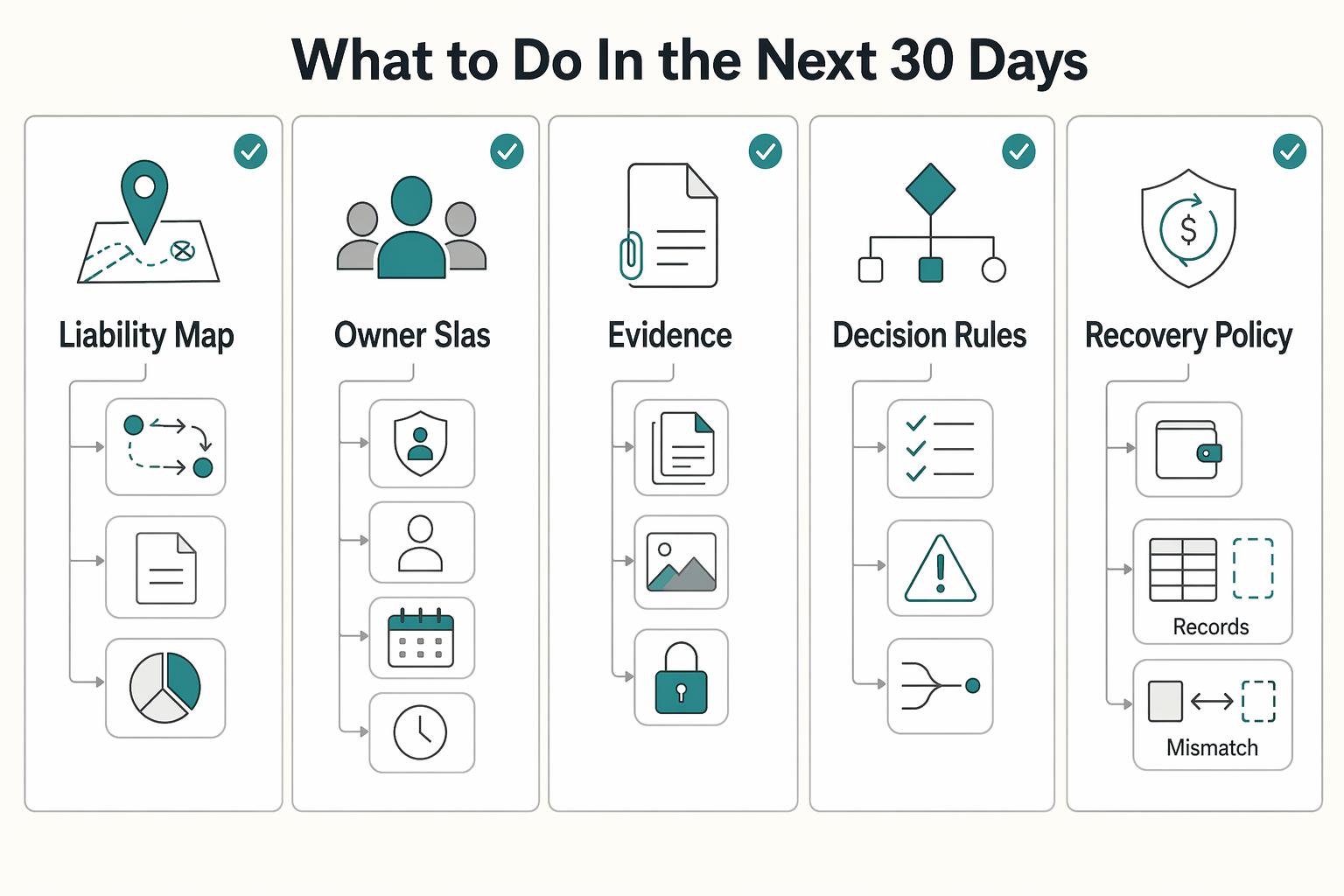
If you are the **Merchant of Record (MoR)** in a marketplace flow, chargebacks are an execution problem. The dispute lands with you. The real question is who reacts, how fast, and with what evidence.
How to Handle a Negative Review on Airbnb
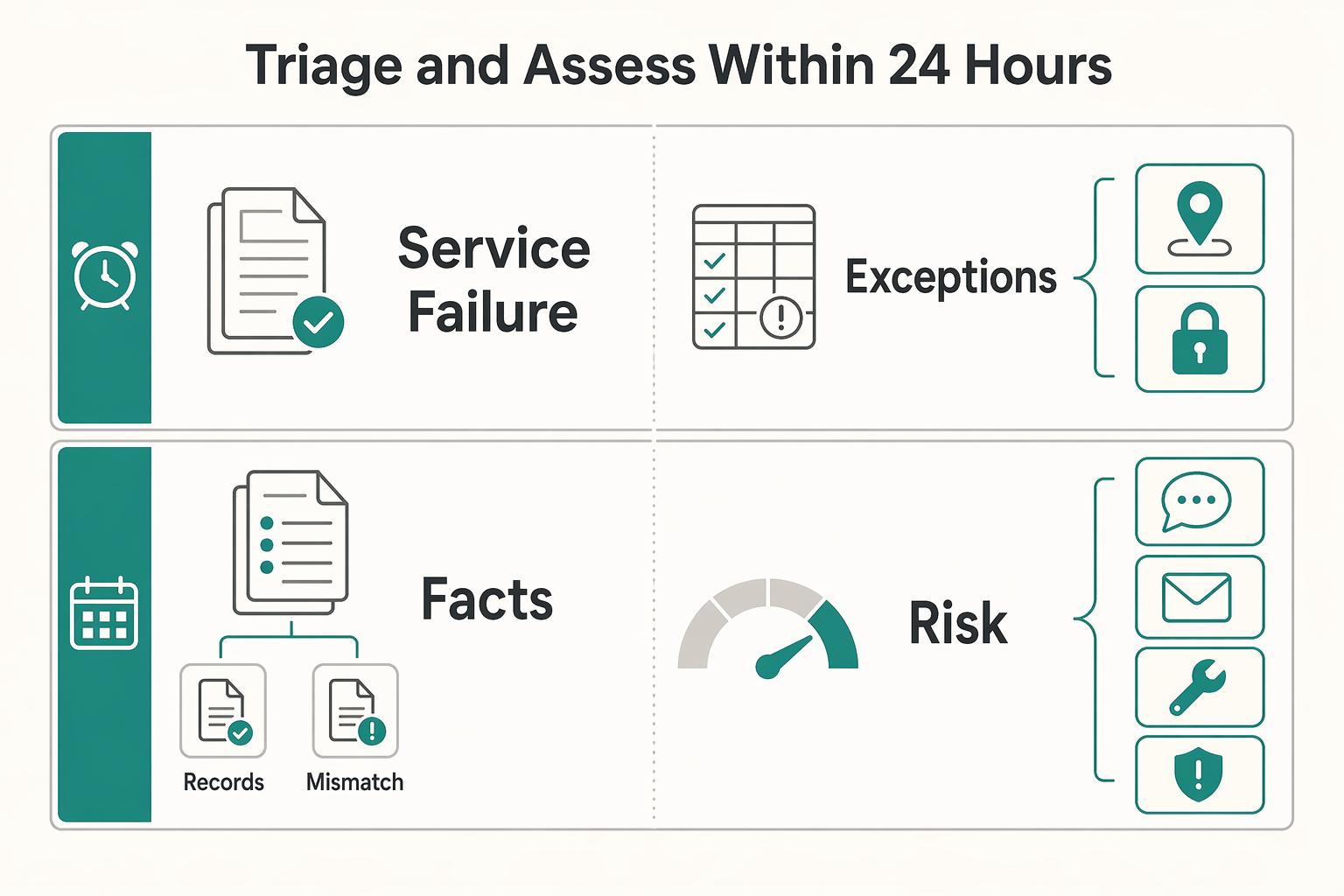
When a bad review goes live, do three things in order: assess it, decide whether a public reply helps, and turn the useful part into an operating fix. Your goal is not to win an argument with the last guest. It is to protect booking performance, response quality, and future guest trust.