
Quick Answer
Give each lifecycle stage a named owner, preserve required approvals and link every payout to its original request, attempts, provider status and ledger evidence. Use handoff packets and daily exception triage. Query unknown transfers before replacement, and apply verification and tax requirements to the actual payment model.
What It Takes to Run a Remote Finance Team at a Payment Platform#
Remote finance at a payment platform works better when you optimize for control over money movement, not calendar overlap. The baseline is simple: collection decisions, journal postings, matching outcomes, and payout statuses should be traceable without depending on whoever happens to be online when an update arrives.
Before you start#
Treat this guide as payment operations guidance, not generic remote-team advice. Managing a distributed finance team is not just replacing office routines with video calls. Time-zone spread creates approval and handoff friction, especially when you need clean evidence behind a decision.
Meetings also do not fix the core technical constraint. Many payment lifecycle updates arrive asynchronously through webhook events. Some actions, such as capture, can complete in the background after an API response has already returned success. Your process should assume that important status information can arrive later.
Reframe the job around control points#
Start with control points, not meeting volume. At a payment platform, that usually means Ledger journals, exception matching, and Payouts. If those three stay accurate, async work can still close cleanly.
A good early test: can someone in another time zone explain a payout or balance change from the original request or provider event through to the journal entry using IDs and references, not chat history?
Accept the async event path as the operating reality#
Treat asynchronous events as normal. Providers send many event types this way, and asynchronous capture exists because some lifecycle steps finish after initial confirmation.
That means an initial success response can be an interim state. To reduce handoff errors, require a compact evidence pack for exceptions: event ID, provider reference, related journal ID, and the latest known payout state.
Scope payment roles and product surface before redesign#
Document which entity sells to the customer, appears as merchant, handles refunds and disputes, invoices and remits applicable sales taxes. A Merchant of Record arrangement changes those responsibilities under its contract; it is not simply a processing permission or a dashboard setting.
Apply the same discipline to account design. Virtual-account identifiers can help attribute incoming funds to customers or invoices, but the provider’s underlying account, custody and safeguarding model must be documented separately. Confirm supported Gruv modules and program terms before incorporating them into the operating map.
Separate customer-payment settlement, platform funding availability and contractor payout arrival. Record each provider’s schedule and eligibility rules for the selected account and market; a first-merchant-payout delay does not establish the delivery SLA for a funded contractor transfer.
Define the operating baseline before you change tools#
Lock the baseline controls before you replace tools or redraw queues. If you cannot show retry safety, a reliable audit trail, and clear decision ownership at each breakpoint, new tooling will only hide the same gaps.
Write the non-negotiables as operating rules#
Write the operating rules down. Name the records Finance uses for close and exceptions, and link them to the ledger. Keep a permanent logical money-movement ID and a separate submission-attempt record. Provider idempotency protects a documented retry window; your own durable record must still prevent a second payment after that window expires.
Set a minimum evidence set for any money movement:
- request or case ID
- idempotency key for create or update calls
- provider reference
- related
Ledger journalsID - current status in matching,
Settlements, orPayouts
Verification point: review five recent exceptions and confirm someone outside the original shift can reconstruct the path from request to provider reference to journal entry without chat history. Red flag: if records can be edited without recreating the original state, the audit trail is too weak.
Map current breakpoints and assign a practical owner#
Document where work actually stops today before you redesign flow. In the daily match process, that usually means the points where record pairing fails, settlement state is unclear, or a payout cannot be explained. For each breakpoint, capture only what the next person needs to move the decision:
- breakpoint name
- trigger
- primary owner
- next evidence required
- escalation path
Checkpoint: each breakpoint should have a designated owner role that can approve, reject, or route it without waiting for a meeting.
Set compliance boundaries by program and market#
Set program and market boundaries before process redesign. Identify which obligations belong to your business, provider and payee under the actual legal and account model. US bank CIP and FinCEN CDD requirements do not automatically apply to every platform or contractor. FinCEN’s current CDD FAQ identifies covered institutions and the 2026 account-opening relief; retain applicable first-account, reliability and risk-based review requirements.
For each program and market, define where KYC, KYB, and AML checks apply, what data is collected, and which team owns review. Do not design one global path first and discover later that provider country coverage or verification flow changes by market.
Assign clear ownership across the full money lifecycle#
Assign ownership to the transaction path itself, not to team boundaries. Use internal lifecycle stages, for example collection, balance tracking, conversion, payout, and close, and keep each transaction in one clear chain of responsibility from start to finish.
Align owners to lifecycle stages#
Name one accountable owner per lifecycle stage, and tie that owner to the stage transition they must be able to explain. For collection, that includes initial credits and returns. For balance tracking, it includes explaining funds held in the balance account and how funds and fees were booked to the correct balance accounts. For close, assign one settlement-close owner who confirms batch closure before signoff, since settlement reporting is tied to batch close.
Red flag: if different teams own separate steps but no one owns the full path for one payment, async handoffs will pile up and final decisions will stall.
Build a RACI for the objects that usually create delay#
Use a real RACI with named people for the operational objects that most often slow remote payment finance work:
| Object | Responsible | Accountable | Consulted | Informed |
|---|---|---|---|---|
Pay-in credits and returns | Case handler | Collection owner | API/event support as needed | Close owner |
Payout batches | Batch operator | Payout owner | Close and risk/compliance reviewers as needed | Adjacent ops stakeholders |
Webhooks exception queue | Queue/on-call handler | Event-processing owner | Finance or provider operations when references/journals mismatch | Close owner |
Verification point: sample five recent exceptions and confirm the accountable owner can produce the case ID, provider reference, related journal ID, and current queue state without relying on chat history.
Keep required approvals workable across time zones#
Assign one accountable coordinator for each decision while preserving required maker-checker or independent approvals for payment releases, beneficiary changes and overrides. Publish authorized delegates, response windows and escalation coverage. A single owner keeps the queue moving; it does not remove separation of duties.
Separate routine callback processing from a money-moving release or retry. Automatic event handling may run under a preapproved policy; unusual releases need the approvals that policy requires. Record original operation, provider reference and definitive status before authorizing a replacement payment.
Map the event path from API request to finance close#
Use one shared transaction map so every owner can explain the same path from initiation to close without ad hoc log hunts. The map should show what happens immediately, what arrives later, what posts to Ledger journals, and what finance uses as close evidence.
Draw one canonical path for each money movement#
Map each flow from the initiating API request to the close-time extract in one artifact. Link the request payload, provider response, later Webhooks, internal journal posting, and matching or payout reporting output.
Model it as one request to many possible events, not one-to-one. A single API request can create multiple events, and webhook deliveries are event-based payloads. Capture request IDs where available so you can connect product activity to finance evidence.
Red flag: if request IDs, journal IDs, and payout references live in separate systems with no linking artifact, close will become manual.
Mark what is synchronous vs asynchronous#
Label each stage as immediate or delayed. An API response can be synchronous while the financial outcome is still pending, and Webhooks are often the async confirmation path.
Be explicit for status changes and Payouts. Define which state came from the API response, which was confirmed by Webhooks, and which was confirmed in matching evidence, for example payout reconciliation output. Treat duplicate safety as part of this step. Webhook endpoints can receive the same event more than once, so log processed event IDs and deduplicate. Mark where idempotent requests are required so retries do not create duplicate operations.
Add finance checkpoints that prove completion#
Keep the checkpoint set small enough that finance can verify it without engineering reconstruction.
| Checkpoint | What you confirm | Minimum evidence to store |
|---|---|---|
| Journal posting | Internal Ledger journals entry exists for the transaction outcome | Internal journal ID, originating request ID (if available) or provider reference, posting timestamp |
| Balance expectation | Where your provider exposes balance transactions, movement matches the posted transaction outcome | Balance transaction or movement reference, matching note |
| Payout explainability | Payout state is explainable from initiation to final provider outcome, and reconciled against transaction history | Payout or batch ID, event IDs, provider reference, proof of matching |
If you skip evidence capture here, the work comes back later as month-end log hunting.
Store the evidence pack with retention in mind#
Store the smallest complete evidence pack in the case or close record: event ID, request ID (if available), internal journal ID, provider reference, and proof of matching. For payouts, keep the payout reconciliation report or equivalent extract used for signoff.
Do not assume historical event retrieval is permanent. Stripe's Retrieve Event API access window is 30 days, so if your close or audit timelines run longer, persist identifiers and proof during review.
Operational test: if an operator cannot explain a transaction from request through close using stored artifacts alone, fix the map before volume grows.
You might also find this useful: How to Create a Culture of Asynchronous Communication.
Design async handoffs that do not slow payouts#
Async handoffs should let the next owner make a release, hold, or escalation decision without reopening raw logs. The handoff should carry enough context to act, not just enough to reopen the case.
Standardize the handoff packet#
Use one packet format per exception queue so every handoff answers the same questions: what case this is, which Payouts or Payout batches are affected, the latest event state, and the required next action. A practical packet includes:
- case ID
- affected payout ID or payout batch ID
- latest
Webhooksevent ID and payload snapshot - originating request ID and provider reference
- current internal status, including whether
Ledger journalsposted - required next action, named owner, and due time
- release deadline or settlement cutoff, if one applies
Record the latest delivery and processing state. Stripe retries live-mode webhook deliveries for up to three days with backoff, but a manual resend does not cancel its automatic retry schedule. Authenticate events, deduplicate them and acknowledge after durable receipt or safe processing so recovery does not apply an event twice.
Do not omit retry evidence. Safe retry handling depends on idempotency, and Stripe notes keys can be pruned after at least 24 hours. After pruning, a reused key is treated as a new request.
Route by risk before speed#
Route exceptions by the known risk signal. Missing required verification or disabled payout capability goes to the appropriate compliance/provider remediation owner. For a timeout, first query the original provider reference and retain an unknown-outcome status until resolved. A transport error is not proof that money did not move.
For mixed cases, escalate to the higher-risk queue and include both the last clean state and the new adverse signal. If your program has a designated compliance owner, name that owner directly in the packet.
Set follow-the-sun windows with explicit cutoffs#
Follow-the-sun coverage works best when each region owns specific queues, handoff obligations, and escalation triggers within defined time windows. Set explicit cutoff times for Settlements review and release approval by rail and market.
For the Fedwire Funds Service, the funds-transfer business day opens at 9:00 p.m. ET on the preceding calendar day and closes at 7:00 p.m. ET, excluding applicable holidays. The current customer-transfer cutoff is 6:45 p.m. ET; your bank may require an earlier submission. Publish the bank’s actual cutoff and the action expected at handoff. This schedule does not govern ACH, cards or foreign rails.
At handoff, each packet should state whether the next region is expected to release, hold, or escalate before the cutoff, with the approving role named.
Use an explicit release-vs-hold evidence rule#
Define release criteria for a not-yet-submitted payment separately from investigation of one already in flight. Required approvals, eligibility and available funding must be complete before release. Delayed analytics can be handled with a documented follow-up when independent evidence establishes the outcome; a late callback with unknown payment status cannot justify another transfer.
Retain the approved amount and beneficiary snapshot, applicable eligibility decision, usable funding, original operation status and required approvers. A release note should identify evidence reviewed, delayed reporting, authority and follow-up. If the original transfer remains unknown, hold any replacement until a query or provider confirmation resolves it.
Related reading: How to Manage a Software Project in ClickUp with a Remote Team.
Put compliance and tax gates directly in the process#
Apply required eligibility checks before execution. Creating a draft case to collect information can happen earlier; distinguish draft creation from approval and submission. Do not block every payment for every tax or document field without identifying the legal or contractual basis.
Complete applicable verification before execution#
Do not let payout initiation depend on a later exception queue. For identity verification, the account or payee should already show that required information is provided and verified before a payout enters Payouts or a Payout batch. In payout platforms with identity thresholds, payout capability can be paused when required information is missing or unverified.
For legal entities in flows with CDD/KYB obligations, add a separate checkpoint for beneficial ownership verification. Do not treat "business account created" as "business verification complete."
Keep this checkpoint explicit in the packet:
- verification state
- last verification timestamp
- secure record reference for supporting documents
- blocker reason if the case is not eligible
If a required verification is incomplete, keep the payment draft or held and route it to the named remediation owner. Optional internal documentation does not itself establish a legal reason to withhold an otherwise due payment.
Define exactly when VAT validation is required#
Use a VAT-validation checkpoint for invoice flows that rely on a customer VAT identification number. In EU invoice contexts, the customer VAT identification number can be a required invoice element, so validation should happen in flow, not during month-end cleanup.
Use VIES where applicable and retain validation evidence: checked VAT number, returned result, validation date, and response snapshot. If VIES does not return the needed information, route to manual review and request national-level verification instead of blind retries.
Separate EU and UK validation paths. Do not treat a GB-number lookup failure in VIES as proof that a UK business is unregistered; use the UK VAT-checking service for GB numbers. Assess the Northern Ireland XI prefix separately for transactions within its relevant EU VAT treatment.
Add tax-document state checks before reporting deadlines get close#
Where your payer flow includes U.S. reporting, track W-9, W-8BEN, and Form 1099 readiness as document states, not ad hoc attachments. A W-9 provides the TIN used by payers filing IRS information returns, and Form W-8BEN should be collected when requested by the withholding agent or payer.
Map the payee to the applicable reporting path, not just a form attachment. Current IRS instructions use a $2,000 nonemployee-compensation reporting threshold for tax years beginning after 2025, with inflation adjustment beginning in 2027; the former $600 threshold belongs to earlier years. Apply exemptions, payment-method rules and any withholding duty separately. Form 1099-NEC is generally due January 31 following the payment year, adjusted for weekends and holidays. Finance should version the rule by tax year.
Keep tickets and chat free of full tax data#
Keep sensitive tax and identity data out of daily case handling. Tickets and chat should reference secure records, not copy full tax or identity fields. Personal data should stay limited to what is necessary, and PII should be protected from inappropriate access, use, and disclosure.
Most case threads only need payee or entity ID, document status, blocker code, and a secure record link. If status plus reference is not enough for a decision, grant secure-record access to the right owner instead of spreading sensitive fields across async channels.
Standardize reconciliation and settlement routines#
Standardize this routine around one rule: reconcile daily, not only at close, and route unmatched items into an exception queue with a clear owner and due time.
Run daily exception triage across money movement and status changes#
Start each day from one consolidated list of non-matching items after automatic matching runs. An exception here is a transaction that did not pair cleanly and now needs analysis.
Review by transaction path first, not by tool, so you can catch cross-system breaks where one status looks complete but settlement or journal evidence is still missing. For each item, include the core references needed to reconcile: transaction or payout ID, provider reference, settlement date or expected window, current status, and linked journal identifiers.
For always-on rails, use debit and credit notifications and acknowledgements to support real-time reconcilement where available. Otherwise, exception aging can reflect review timing instead of actual risk. Treat status-without-money or money-without-journal patterns as control exceptions, not reporting noise.
Define reconciliation tiers before volume forces the issue#
Define handling tiers early so mismatches are resolved by risk and evidence, not by whoever sees them first.
| Tier | What goes here | Typical owner | Timing guideline | Closure evidence |
|---|---|---|---|---|
| Auto-match | Clean amount and reference matches | Reconciliation automation or platform logic owner | Fastest path after import/event receipt | Match record plus journal link |
| Rule-assisted review | Near-matches, expected variances, missing secondary fields | Finance ops reviewer | Risk-based target set by policy | Reviewed disposition and logged reason |
| Manual investigation | True breaks, missing transactions, unexplained settlement gaps | Senior finance ops or payments operations | Escalation target with named decision owner | Investigation notes, corrective action, final reconcilement proof |
Systems can evaluate exceptions and recommend actions, but recommendation is not resolution. Log every exception action so you can show who changed status, what evidence was used, and whether automation, reviewer action, or manual correction closed the case.
If auto-match is low, sample unmatched items by cause before adding review capacity. For example, missing provider references may require an event-to-ledger mapping fix; fee differences may need an approved matching rule. Keep unexplained amount differences out of automatic clearing, and compare the same cohort before and after a change.
Tie month-end close to ledger completeness and settlement finality#
Month-end close should validate matching evidence explicitly, not bypass unresolved exceptions. Check in this order:
- In-period events have a posted journal or an approved exception record.
- Settlements tie back to source transactions, with unresolved breaks carried as open exceptions rather than hidden adjustments.
- Open payment statuses at period end have a documented reason and named owner.
Include subledger-to-ledger completeness and a signed exception schedule in the close checklist. A pending settlement can remain an appropriately recorded receivable or payable at period end; you do not need to pretend it is final to close the books. Record amount, expected resolution, owner and the approved accounting treatment for each open item.
Choose tools by process maturity not by feature volume#
Choose the tool that fixes your current control bottleneck, not the one with the longest feature list. If payout reliability is the issue, prioritize API retry safety and Webhooks observability. If spend governance is the issue, prioritize approval routing, spend controls, and audit exports.
Name the bottleneck before comparing vendors#
Start with the queue creating the most manual risk: async money-movement visibility or spend authorization control. These are different problems and should not be evaluated with the same rubric.
If your team keeps asking whether a payment was actually confirmed, focus on async event handling. Stripe documents webhooks for asynchronous outcomes and notes a 1 hour SLA for charge.updated after successful PaymentIntent confirmation in its async-capture flow. For retry behavior, validate idempotent request handling so repeats do not create duplicate side effects.
For off-policy spend or unclear authorizations, compare spend-management tools such as Ramp, Spendesk and Brex against the same approval cases. Require a demo of delegates, escalation, limits, override logging and an export of the final decision. Confirm those features and permissions in the selected plan rather than assuming a product category provides every control.
Before you shortlist anything, complete this sentence with a specific queue or evidence gap: "We are losing time and control because..."
Map each tool to one primary job#
Use each product for its strongest documented job, then evaluate migration risk up front.
| Tool | Primary job | Operational fit signal to verify | Migration constraints to plan |
|---|---|---|---|
| Ramp | Spend request governance | Test approval routing, budget enforcement and exportable decision history | Define release authority and cutover ownership during overlap |
| Spendesk | Spend governance and accounting workflow | Test purchase-to-payment approvals and the audit export required by Finance | Preserve approval evidence and historical links across cutover |
| Brex | Candidate for spend controls | Confirm approval, limit and export capabilities in the proposed account and plan | Test ERP mapping and historical export compatibility before cutover |
| Stripe | Payment and payout-status observability | Authenticated callbacks, durable request mapping and provider-status reconciliation | One execution owner per logical payment; test report comparison during migration |
| Deel | Global payroll and worker administration | Validate the specific payroll or contractor program, supported country and entity | Assign overlap ownership by worker and pay period |
| Gusto | Candidate for payroll operations | Confirm supported worker types, geography, calculations and export requirements | Define system of record and final pay-period cutover |
| ClickUp | Async task coordination | Owners, due dates and linked evidence for operational work | Keep financial records in the approved ledger and provider systems |
If a tool wins mainly on UI polish, pause and verify evidence outputs first: approval history exports, webhook traces, and retry behavior.
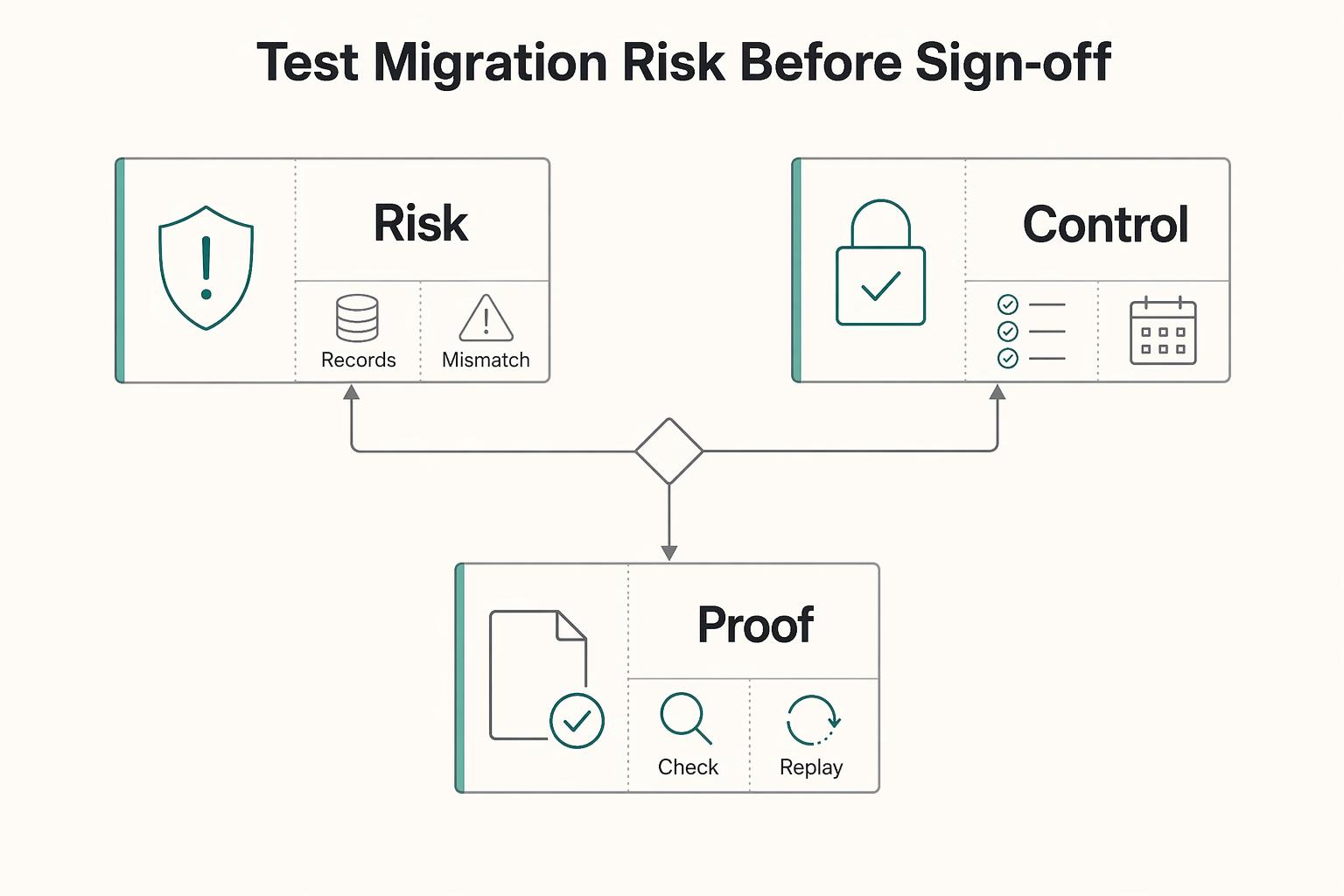
Test migration risk before sign-off#
Design coexistence and cutover around one execution owner per logical payment. Parallel observation can compare reports; it must not let both old and new systems submit the same payout. Define which system can release funds, how identifiers are mapped, the rollback condition and who signs off.
Use a short cutover evidence pack before approval:
- one traced path from request to provider response to webhook to posted record
- proof that idempotent retries do not create duplicates
- a matching view that separates old-path and new-path transactions during parallel running
For spend tools, require approval evidence in product exports, not reconstruction from chat or email later.
Shortlist payment infrastructure when event visibility and retry safety are the bottleneck, spend tools when authorization evidence is weak, and payroll systems when worker administration is fragmented. Use coordination software for owners and next actions. Confirm the chosen provider’s coverage, exports and permissions with the same test cases before selecting it.
Related: The Best Tools for Managing a Remote Development Team's Workflow. If payout reliability is your main bottleneck, review this before you lock your tooling matrix: Payouts overview.
Instrument KPIs that prove the system is under control#
Use a small KPI set that triggers action, not just reporting. If a metric has no threshold, no owner, and no response rule, it is dashboard noise.
Define metrics at the stage where failure actually happens#
Measure the stage where failure happens, not only the end result. For a remote finance team, a practical core set can include exception aging, settlement lag, payout failure rate, and exception time-to-resolution, because each one surfaces a different failure point.
| KPI | What to measure | Threshold design | Named owner and action |
|---|---|---|---|
| Reconciliation aging | Open unmatched items by age bucket across Settlements, Payouts, and ledger records | Set internal age bands from your baseline and escalate once an item crosses the agreed band | Reconciliation lead investigates the mismatch and assigns manual review or a rule fix |
| Settlement lag | Time from payment or payout initiation to known settled or returned state | Define by rail or provider and end state; avoid one cross-rail target | Treasury or payments ops checks provider state, return status, and expected settlement window |
| Payout failure rate | Share of payouts ending in failed, returned, or canceled status | Set per corridor or provider, then review spikes and repeat causes | Payout operations owner reviews failed or returned states and routes bank-detail, provider, or compliance fixes |
| Exception time-to-resolution | Time from queue creation to resolved state for finance or compliance exceptions | Set internal targets by exception type, with compliance-held cases tracked on a separate timeline | Queue owner resolves or escalates to compliance, product, or provider support |
Define the payout-failure denominator, observation window and terminal-status set. Report pending and unknown counts and amounts beside it; otherwise a slow provider can appear successful because unresolved attempts were excluded. Separate recipient-credit time, provider confirmation and reconciliation time.
Attach thresholds and response rules#
Use threshold-plus-action logic. When a value crosses the threshold, a defined action should follow. Internal thresholds are fine, but they need to be explicit.
Use rail- and institution-specific reporting clocks alongside internal targets. Nacha’s unauthorized ACH debit return threshold is 0.5%; its 3.0% administrative and 15.0% overall levels initiate inquiry rather than automatically establishing a violation. These are debit-origination controls, not generic contractor-payout failure targets. Applicable OFAC blocking/rejection reports are due within ten business days of the action. A compliance officer should map any SAR duty and clock to the regulated entity and detected facts; not every platform exception triggers a filing.
Assign one accountable owner per KPI row for day-to-day coordination. Shared ownership without a clear lead usually creates drift.
Separate control KPIs from speed KPIs#
Keep separate views for speed and control so teams do not trade compliance quality for faster throughput. Speed KPIs can include settlement lag and exception response time. Control KPIs can include matching accuracy, compliance backlog, and unauthorized return risk.
If speed conflicts with missing documentation or a compliance signal, control KPIs should govern the decision.
Publish one fixed-cadence scorecard with evidence links#
Publish one fixed-cadence scorecard, often weekly, as an internal operating cadence and anchor it to Payout batches, Settlements, and compliance backlog. Keep each issue tied to:
- current value versus threshold
- named owner and next action
- one evidence link, for example a payout-state export, exception list, or compliance case count
If a spike cannot be traced back to specific Payout batches or open settlement exceptions, tighten the KPI definition.
Handle common failure modes and recover fast#
When a metric trips, classify the failure first and recover with the matching playbook. Duplicate retries, webhook disorder, and compliance-blocked payouts can look similar in one queue, but they require different controls.
Enforce idempotency before you clear a suspected duplicate#
Use your permanent logical payout ID, saved provider reference and attempt history to resolve a suspected duplicate. Check the original and retry outcomes before another submission. A provider key that has been pruned can create a new operation, so do not rely on reusing it as a permanent duplicate guard.
Before releasing any hold, verify:
- one provider object reference
- one expected balance effect
- one posting in
Ledger journals
If the provider handled the request idempotently but you still have two journal entries for one provider reference, fix internal posting first, then move the case.
Keep a standard evidence pack:
- original request ID and idempotency key
- provider object or payout reference
Ledger journalsIDs tied to that reference- hold release approver and timestamp
Reconcile against provider references before replaying Webhooks#
Do not replay first. Webhook events can be duplicated, delayed, partial, and out of order. Start from the provider event or object reference, match provider state to internal state, and only then decide whether replay is needed.
If you replay, make it safe:
- deduplicate on event ID
- confirm the target state transition has not already been applied
Done means the payment or payout state is explainable from provider reference to internal record to ledger impact. If that chain is not clear, stop replaying and investigate mapping or stale-event handling. Also account for provider retry windows, including undelivered webhook retries for up to three days in some systems.
Route compliance-blocked payouts to a named remediation owner#
When a payout is blocked for missing KYC or other verification artifacts, route it to compliance remediation immediately, not to a general ops queue. Verification can be required before processing and payouts, and missing information can disable capabilities until it is remediated.
Use a strict ticket format:
- one owner
- one due time
- exact missing artifact or verification field
Close the case only with decision plus evidence: payout released after verification clears, or payout remains blocked with reason, owner, and next review time. If verification evidence is still missing, do not release for speed.
Conclusion and copy-paste execution checklist#
Run payment finance as an async control system, not a meeting system. If a payout, settlement, or close decision cannot be explained from recorded events, ownership, and evidence, control is incomplete. For 2025 and 2026 rollouts, version the owner matrix, evidence pack, and escalation rules by market before you expand.
-
Confirm lifecycle owners. Assign one decision owner each for
Virtual Accounts,Settlements,Payouts, and finance close, and publish handoff points. For any live exception, your team should be able to name one owner immediately. -
Publish one event path. Define one canonical path from
APIrequest toWebhookstoLedger journalsto the reporting extract. Keep one evidence pack on that path: request ID, idempotency key, provider reference, webhook event ID, and journal ID. -
Implement applicable eligibility and tax rules. Identify the entity with each duty, required payee form and release control. FinCEN CDD applies to covered institutions and current account-opening relief must be considered. For applicable 2026 US nonemployee compensation reporting, use the current $2,000 threshold, exceptions and adjusted deadline rather than the earlier $600 rule. Record the exact hold basis, owner and evidence request.
-
Launch daily exception triage and a weekly scorecard. Separate unmatched
Settlements, payout status gaps, and documentation holds into distinct queues with action owners. Keep weekly KPIs tied to response rules: unresolved matching items, payout failures, webhook delivery gaps, and compliance backlog. -
Build the tool comparison around your bottleneck. Compare candidate tools on audit exports,
APIreliability, webhook observability, approval depth, and migration friction. Include matching overlap risk during dual running and retraining load for remote operators. -
Drill failure modes before they hurt you. Test duplicate retries by re-sending the same money-moving request with the same idempotency key and confirming one posting reaches
Ledger journals. Verify webhook deduplication by logging processed event IDs and skipping duplicates, and account for Stripe retry behavior for undelivered webhook events for up to3 days. Test blocked payouts by routing missing verification or tax-document cases to the correct owner with a due time. -
Keep rollout language precise. State what is live, where it is supported, when it is enabled, and whether coverage varies by market or program. Precision in release notes prevents teams from applying one market's controls or tax-handling assumptions to another.
After you finalize the execution checklist, confirm market/program fit and control requirements for your rollout: Contact Gruv.
Frequently Asked Questions
What are the minimum processes required to manage a remote finance team at a payment platform?
A workable minimum is idempotent request handling for money-moving API calls, webhook intake for asynchronous updates, routine matching to provider references, and a named compliance owner for identity and beneficial-ownership exceptions. Your case evidence should tie together the request ID, idempotency key, provider payout or transaction reference, and the related Ledger journals entry. If you operate in a regulated scope, include formal internal controls, independent testing, compliance ownership, and training instead of ad hoc operator judgment.
Which tools are table stakes versus optional as transaction volume grows?
Table stakes are durable payout identifiers, duplicate-safe submission and posting, authenticated callback intake, status queries and reconciled transaction-to-payout linkage. Verify the provider’s automatic- and manual-payout reports rather than assuming automatic setup preserves every link. Tax forms and additional approvals are required when the program’s obligations or risk policy call for them, regardless of volume.
How should we design async approvals without delaying urgent payouts?
Collect required identity and entity evidence early, apply the checks relevant to the account model, and preserve required independent approval. Preapproved delegates and handoff windows can reduce waiting. A delayed report may need follow-up; an unknown payment outcome needs a query before any replacement. Urgency does not waive a verification or release control.
Which KPIs best indicate that reconciliation and settlement are healthy?
Trace each payout to the provider reference, balance movement and ledger journals, with owned exceptions for open items. Track reconciliation aging, pending/unknown amounts, confirmed failures and time to recipient credit separately. For ACH debit origination, monitor the applicable Nacha return thresholds using its code set and denominator; do not apply them as a universal payout SLA.
How do we separate compliance holds from operational delays in daily reporting?
Use separate reason codes and owners for legal/provider eligibility holds, operational unknown outcomes and optional documentation gaps. A compliance hold must identify its basis and release authority; a timeout must retain the original provider reference. If classification is uncertain, keep it pending with an owner and next evidence request while Compliance resolves it, rather than assuming it is operational and releasing funds.
When should we escalate a payout exception to compliance instead of operations?
Escalate possible sanctions or suspicious-activity signals promptly to the designated compliance owner. That owner determines which entity has a reporting duty and its deadline. Applicable OFAC blocking/rejection reports have a ten-business-day clock. Keep callback delays and mapping errors with Ops when their outcome is understood, but never release an unknown or legally held payment simply to clear the queue.
Researched and edited by the Gruv editorial team. Gruv builds cross-border billing, payouts, and finance-operations software for global businesses.
Sources
- bsaaml.ffiec.gov/docs/manual/06_AssessingComplianceWithBSAReg...trusted
- bsaaml.ffiec.gov/manual/AssessingTheBSAAMLComplianceProgram/04trusted
- csrc.nist.gov/glossary/term/Separation_of_Dutytrusted
- csrc.nist.gov/pubs/sp/800/122/finaltrusted
- docs.stripe.com/webhookstrusted
- docs.stripe.com/api/idempotent_requeststrusted
- ecfr.gov/current/title-31/subtitle-B/chapter-X/part-1...trusted
- ecfr.gov/current/title-31/subtitle-B/chapter-X/part-1...trusted
Educational content only. Not legal, tax, or financial advice.
Related Posts
How Solo Professionals Create an Async-First Client Communication System
For a solo professional, async is not just a style preference. It is an operating mode that protects focus by reducing constant interruption and pushing more work into clear written communication.
How to Manage a Software Project in ClickUp with a Remote Team
For a solo professional, ClickUp works best as the control center for the business, not just a to-do list. The shift from a basic task tracker to a reliable client system starts with one deliberate choice: build a repeatable structure for every new engagement before the work begins.
The Best Tools for Managing a Remote Development Team's Workflow
--- Most remote team problems are not tool problems. They are handoff problems. Work gets scoped in one place, built in another, approved somewhere else, and billed from memory. That is when deadlines slip, scope expands, and client confidence drops.