
Quick Answer
Create an async-first communication culture by making written communication the default, routing requests into one official channel, setting a predictable response cadence, and recording decisions in one source of truth. Use live calls only when delay, confusion, or sensitivity makes real-time conversation more effective. This protects focus, keeps approvals traceable, and gives clients clear boundaries to follow.
The Asynchronous OS: A Solo Professional's Guide to Reclaiming Focus and Profitability#
Step 1. Treat async as your default operating mode#
For a solo professional, async is not just a style preference. It is an operating mode that protects focus by reducing constant interruption and pushing more work into clear written communication.
An asynchronous communication culture means work can move forward without you and your client being available at the same time. In practice, that means fewer context switches because every question does not become an instant demand. Decisions often get clearer because people have time to read, think, and respond when they are actually available.
Handoffs improve because the request, the files, and the next action live in one written trail. Documentation gets stronger too, because you are writing updates instead of improvising them on a call.
Use this quick checkpoint when a client message comes in: where does this request belong, when will you respond, and where will the decision be recorded?
Step 2. Shift your day-to-day habits around written clarity#
Async breaks down fast if your routine still treats inbox, chat, and calls as equal channels. If everything is allowed everywhere, you are still working reactively. Build the day around four habits:
| Habit | What to do | Key note |
|---|---|---|
| Route intake | Use one primary place | Email, a client portal, or a shared thread in Slack or Microsoft Teams can be the official home for new requests |
| Set a response cadence | Keep a cadence you can actually keep | The goal is predictable replies, not instant replies |
| Log decisions in writing | Do it after any meaningful exchange | Especially if a quick call or voice note happened first |
| Define escalation rules | Clarify what can interrupt deep work | Clarify what must wait for the next written update |
- Route intake into one primary place. That can be email, a client portal, or a shared thread in Slack or Microsoft Teams with direct messaging and file sharing, but pick one official home for new requests.
- Set a response cadence you can actually keep. The goal is not instant replies. The goal is predictable replies.
- Log decisions in writing after any meaningful exchange, especially if a quick call or voice note happened first.
- Define escalation rules for what can interrupt deep work and what must wait for the next written update.
The common failure mode is drift. When people are not online at the same time, alignment gets harder if ownership is unclear, files are missing, or the request is vague. Async can also feel disconnecting if you do not manage it well. If someone asks you to "just make it better," stop and ask for specifics before you act.
Step 3. Reserve live conversation for true exceptions#
Live conversation should be the exception, not the fallback. Use it when delay or ambiguity would cost more than the meeting.
| Mode choice | Scenario | Signal to switch | Expected output |
|---|---|---|---|
| Async default | Routine updates, reviews, file handoffs, status questions | No immediate risk, people can respond later | Written update, documented decision, clean next step |
| Live exception | Initial project kick-off | Rapport and alignment matter more than speed | Shared understanding of goals, tone, and responsibilities |
| Live exception | Complex creative brainstorming | Ideas are getting stuck or fragmented in writing | Faster idea exchange and narrowed options |
| Live exception | Urgent crisis resolution | Time-sensitive issue, high ambiguity, active blockers | Immediate coordination and a written follow-up summary |
| Live exception | Sensitive personal feedback | Tone is likely to be misunderstood in text | Clear conversation with reduced friction |
Use a simple verification rule. If you cannot explain in one sentence why a call is necessary, keep it async. That rule alone removes many unnecessary meetings.
Once that principle is clear internally, make it visible to clients. Async-first only works when your policy is obvious enough that clients can follow it without guessing.
You might also find this useful: A Guide to Using Loom for Asynchronous Client Communication.
The Control Framework: How to Architect Boundaries That Clients Respect#
Clients respect boundaries when your defaults are clear, written, and consistently enforced. Your job is to make the right path obvious: one policy, one channel map, one escalation path, and one onboarding routine.
Step 1. Publish a one-page communication policy clients can follow without guessing. Use a short template that defines:
- Expected response window: "Non-urgent messages get a reply within [your business window]."
- Approved channels by message type: one home each for new requests, file delivery, approvals, urgent issues, and scheduling.
- Urgency escalation path: what counts as urgent, where urgent messages go, and what should not be sent by chat or text.
- Project comments vs chat: requests, decisions, revisions, and approvals go in project comments; chat is for lightweight coordination.
Use one rule to keep records clean: if it affects scope, deliverables, timing, or approval, it belongs in the project record.
Step 2. Configure tools so the policy is easier to follow than to bypass. Set calendar focus blocks so delivery time is visible. Use scheduled send outside normal hours so you do not train instant-reply expectations. Keep task status, files, and decisions in one central place so progress stays visible without constant live updates.
Make your channel map explicit and repeat it during the project:
- Email: contracts and formal summaries
- Project comments: work requests, revisions, approvals, decisions
- Chat: quick coordination
- Calendar: booked live time
- Emergency path: true blockers only
When side-channel requests appear, redirect them back to the official channel instead of resolving them where they landed.
| Scenario | Default async behavior | Live exception behavior |
|---|---|---|
| Kickoff | Share goals, files, timeline, and responsibilities in writing before work starts | Use a call if alignment or ambiguity still blocks a clear start |
| Revisions | Client leaves specific change requests in the task or document thread | Use a call if revision notes conflict and written exchange is stalling |
| Blockers | Post blocker, impact, and required decision in the project thread | Use a call if delay risk is immediate and multiple people must decide quickly |
| Feedback cycles | Give written feedback tied to the asset, section, or timestamp | Use a call if feedback is sensitive and text is increasing friction |
Step 3. Escalate by decision quality, not by thread length. Stay async while the next step is still clear. If options are competing, confusion repeats, or disagreement is starting to hurt either decision clarity or working tone, pause the thread and post a short decision memo: issue, options, recommendation, owner, and deadline.
Move to a live call only when faster back-and-forth is required to unblock a decision. Require a pre-read and a stated decision outcome in the invite. Without both, keep it async.
Step 4. Onboard clients to the system in week one and reinforce it every time. In onboarding, do five things: share the policy, confirm official channels, show where decisions live, explain urgency routing, and walk through one correctly submitted request.
Use redirect language that is firm but collaborative:
- "To keep this tracked and avoid misses, please add that request to the task thread."
- "If this is time-sensitive, use the escalation path in the welcome doc so I can triage it correctly."
- "Happy to meet if it helps move a decision forward. Please send context and desired outcome first."
Related: How to Manage an Offshore Development Team in a Different Time Zone.
The Profitability Engine: Your Tactical Defense Against Scope Creep#
Protect your margin by requiring every scope-affecting request to move through one documented workflow before work starts. Let clients raise ideas anywhere, but do not estimate, schedule, or begin changed work until the request is fully captured, assessed, approved, and logged.
| Request path | Clarity | Turnaround | Billing confidence | Dispute risk |
|---|---|---|---|---|
| Request in chat or email | Often partial; context and rationale can be missed | Can feel fast initially, then slow down through rework | Lower when request details and approval are split across threads | Higher when people interpret the request differently later |
| Request through formal change workflow | Higher because the same intake fields are completed each time | Slightly slower upfront, then easier to review and confirm once | Higher because request details, approval, and decision record stay together | Lower because the final decision is easier to verify |
Step 1. Intake the request in one standard format#
Capture the same five fields every time: scope statement, business rationale, delivery impact, owner approval, and decision log location. If a request arrives in chat, treat it as a signal and redirect it to the formal workflow.
Step 2. Validate completeness before committing#
If any required field is missing, pause. Do not estimate, schedule, or start until the intake is complete. This is the point where quick yeses create avoidable rework.
Step 3. Assess impact against current delivery reality#
Review the request against current scope, active deadlines, and your available work blocks. If you run a non-linear day, check timing against real focus windows before you commit.
State your threshold policy in writing, then apply it consistently. Verify the current threshold from the governing contract, policy, or source record before using it in client-facing approval language.
Step 4. Confirm the decision and revised plan in one record#
Send a short written confirmation that includes: decision, delivery impact, budget impact (if applicable), approving owner, and where the decision is logged. The change is not controlled until this confirmation is complete.
Step 5. If live discussion is needed, close it with clear ownership#
For a 60-minute check-in, reserve the final 10% (6 minutes) to confirm action items, owners, and the final decision log entry. That wrap-up keeps scope conversations from drifting without resolution.
Step 6. Use async updates to protect margin without sounding salesy#
In each update, include: completed work, current blockers, decisions needed from the client, approved changes since the last update, and next opportunities tied to the original goal. This keeps progress visible, reduces side-thread drift, and makes approved changes easier to plan and price.
For a step-by-step walkthrough, see How to Create a Communication Policy for a Remote Team.
The Compliance Shield: Creating an Ironclad, Auditable Record#
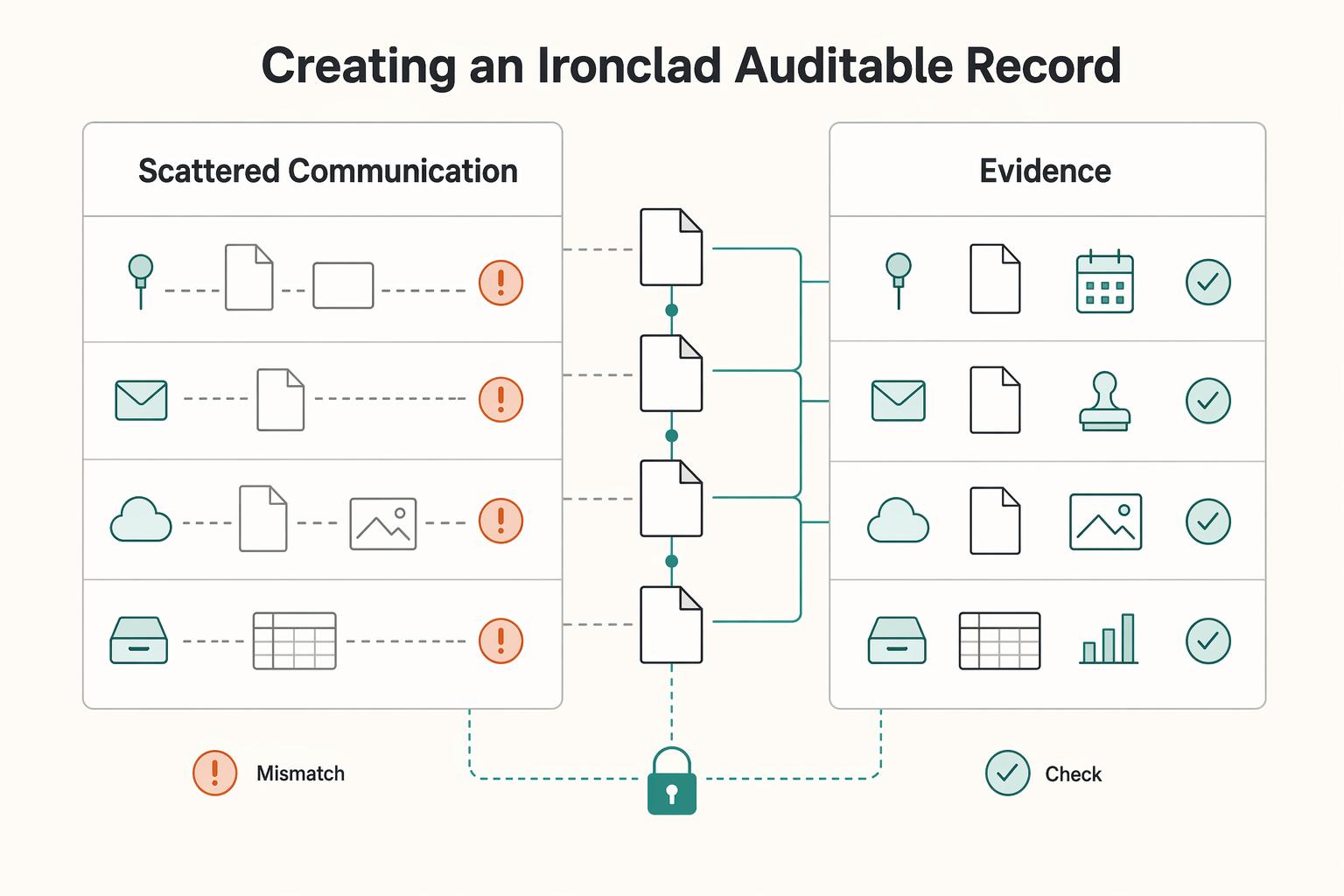
Async documentation protects your business only when the full chain is easy to verify: request, approval, delivered version, and invoice line in one place. If a decision is not in your source of truth, treat it as not finalized.
| Setup | What usually breaks | Risk impact |
|---|---|---|
| Scattered communication across chat, email, docs, and calls | Approvals split from requests, file versions drift, and ownership gets unclear | Higher payment risk, more confusion, and weaker evidence if scope or timing is challenged |
| Single source of truth with linked records | Request, approval, version, delivery, and billing stay connected | Lower dispute risk and a cleaner audit trail for payment reviews or internal checks |
Step 1. Create one project record and store identity details up front#
Create one master record per client and keep the required identity/contact details together: legal name, principal address, phone/fax, email, and project URL. In that same record, keep scope, decision log location, file location, and the current record-retention requirement once it has been verified from the governing policy or source record.
| Record item | Grouping in article | Where it lives |
|---|---|---|
| Legal name | Required identity/contact detail | One master record per client |
| Principal address | Required identity/contact detail | One master record per client |
| Phone/fax | Required identity/contact detail | One master record per client |
| Required identity/contact detail | One master record per client | |
| Project URL | Required identity/contact detail | One master record per client |
| Scope | In that same record | One master record per client |
| Decision log location | In that same record | One master record per client |
| File location | In that same record | One master record per client |
| Current record-retention requirement pending policy/source-record verification. | Retention requirement | One master record per client |
Step 2. Link every approval to a specific version#
Capture each approval in writing and tie it to the exact deliverable version. If you collect a deposit or milestone payment, store the confirmation or receipt number in that same record so the payment trail matches the work trail.
Step 3. Assign one final sign-off owner and map work to billing#
Name one final sign-off owner for each deliverable, even when multiple people comment. Then map each invoice line to four linked items: original request, approval, delivered version, and completion note.
Use this as your reusable evidence workflow when payment is questioned: trace the request, link the approval, map the work to the invoice line, and export the audit trail. This also helps reduce missed deadlines, confusion, and reputational risk that fragmented communication can create.
We covered this in detail in The Best Asynchronous Communication Tools for Remote Teams.
Conclusion: Stop Managing Messages, Start Leading Projects#
Step 1. Make the shift in how you work#
This is not about becoming harder to reach. It is about leading the project through clearer decisions, better records, and fewer avoidable interruptions. The default is written communication that does not expect an immediate reply. Real-time conversation stays available for the moments that actually need everyone present at once.
In practice, that changes your day-to-day in concrete ways. You give updates where the work lives instead of scattering them across chat. You record approvals, changes, and next steps in one persistent project record. You treat a call or direct message as input, not as a final decision, until the summary is written down in the source-of-truth channel.
Step 2. Use sync only when async stops helping#
The test is simple: can someone open the project record and see the current status, latest approved version, open questions, and decision owner without asking you? If not, your communication is still too dependent on memory and message chasing.
Watch the failure mode too. If written threads are getting longer but not clearer, or if team morale is dropping and conflict is rising, do not force async-only behavior. Strong communication uses both async and sync. Book the live conversation, resolve the issue, then post the decision summary back into the record.
Step 3. Apply this checklist this week#
Start small, but make the changes visible:
- Publish your async policy so clients know which channels count for requests, feedback, and approvals.
- Set clear channel expectations so people know when to use async updates versus real-time escalation.
- Set a clear change-request path before extra work starts.
- Enforce one source-of-truth channel for status, files, and decisions.
If you want to put this into practice next, go deeper on managing client communication across different time zones, managing a global team of freelancers, or managing an offshore development team in a different time zone. If you want a deeper dive, read How to Manage a Global Team of Freelancers.
Frequently Asked Questions
How do you set communication boundaries without sounding difficult or slow?
Frame the rule around quality and clarity, not your convenience. Tell clients which channels are official for requests, feedback, and approvals, and make clear that decisions only count when they are recorded there. If a request lives only in chat or a call, treat it as not ready to act on.
When should you reply async instead of scheduling a live call?
Reply async when someone can review and respond on their own schedule, especially for check-ins, status updates, general feedback, shared docs, and task updates. Schedule a live call when the issue is too tangled for a clean written exchange or when a real-time decision is needed to unblock work. If a thread gets longer but not clearer, stop typing and book time.
How does this help you control scope on a fixed-price project?
It creates a written trail for what was requested, what was approved, and which version was delivered. Route new work through the official channel with the what, why, and expected impact, then require approval before work starts. That keeps extra work from slipping into the project without a decision record.
What is the most common scope-control failure mode?
A verbal yes on a call that never gets written down is a common failure mode. After any live conversation, post a short summary in the project record with the decision, approver, date, and affected file or task, then ask for confirmation there.
What tools do you actually need for async work?
Choose by capability, not brand. Many solo professionals can cover the basics with a task hub, async video, shared docs, and a way to schedule live calls when needed. Pick tools that keep comments attached to the work, show version history, make task status easy to check, and let you export or search records later.
How do you choose the right tool setup for your work?
Match the setup to the work. If tasks and deadlines drive the project, your task hub matters most. If you explain visual changes often, async video helps, and if clients revise text or drafts together, shared docs with comments and version history matter more than chat. Use scheduling so live sessions stay occasional and intentional.
How do you manage clients across time zones without being online all day?
Set channel rules up front so clients know where requests go, where approvals count, how status is updated, and what qualifies for escalation. Keep one published escalation path, one source of truth, and one place where task status can be checked without asking you directly. That lets work move across time zones without being online all day.
What do you do if a client keeps asking for unscheduled calls?
Do not reward the pattern by solving everything live. Ask the client to post the issue and key questions in the official channel first, then decide whether a written answer is enough or a scheduled call is justified. If you do take the call, write the decision summary back into the project record.
Does this approach still work for creative or collaborative projects?
Yes. Use written briefs, shared docs, video feedback, and tracked versions for most of the work, then reserve calls for kickoff, concept selection, or moments when feedback is looping. The goal is for each round to end with one documented direction, one approved version, and one named sign-off owner.
Try a related tool
Researched and edited by the Gruv editorial team. Gruv builds cross-border billing, payouts, and finance-operations software for global businesses.
Sources
Includes 2 external sources outside the trusted-domain allowlist.
- cod.edu/academics/continuing-education/adult-enrichm...trusted
- docs.lib.purdue.edu/cgi/viewcontent.cgitrusted
- eplan.tn.gov/DocumentLibrary/ViewDocument.aspxtrusted
- regent.edu/wp-content/uploads/2025/01/Regent-Research-R...trusted
- repository.library.northeastern.edu/files/neu:4f171f238/fulltext.pdftrusted
- ung.edu/university-press/_uploads/files/delivering-v...trusted
- asana.com/resources/synchronous-vs-asynchronous-commun...external
- coursera.org/articles/asynchronous-communicationexternal
Educational content only. Not legal, tax, or financial advice.
Related Posts
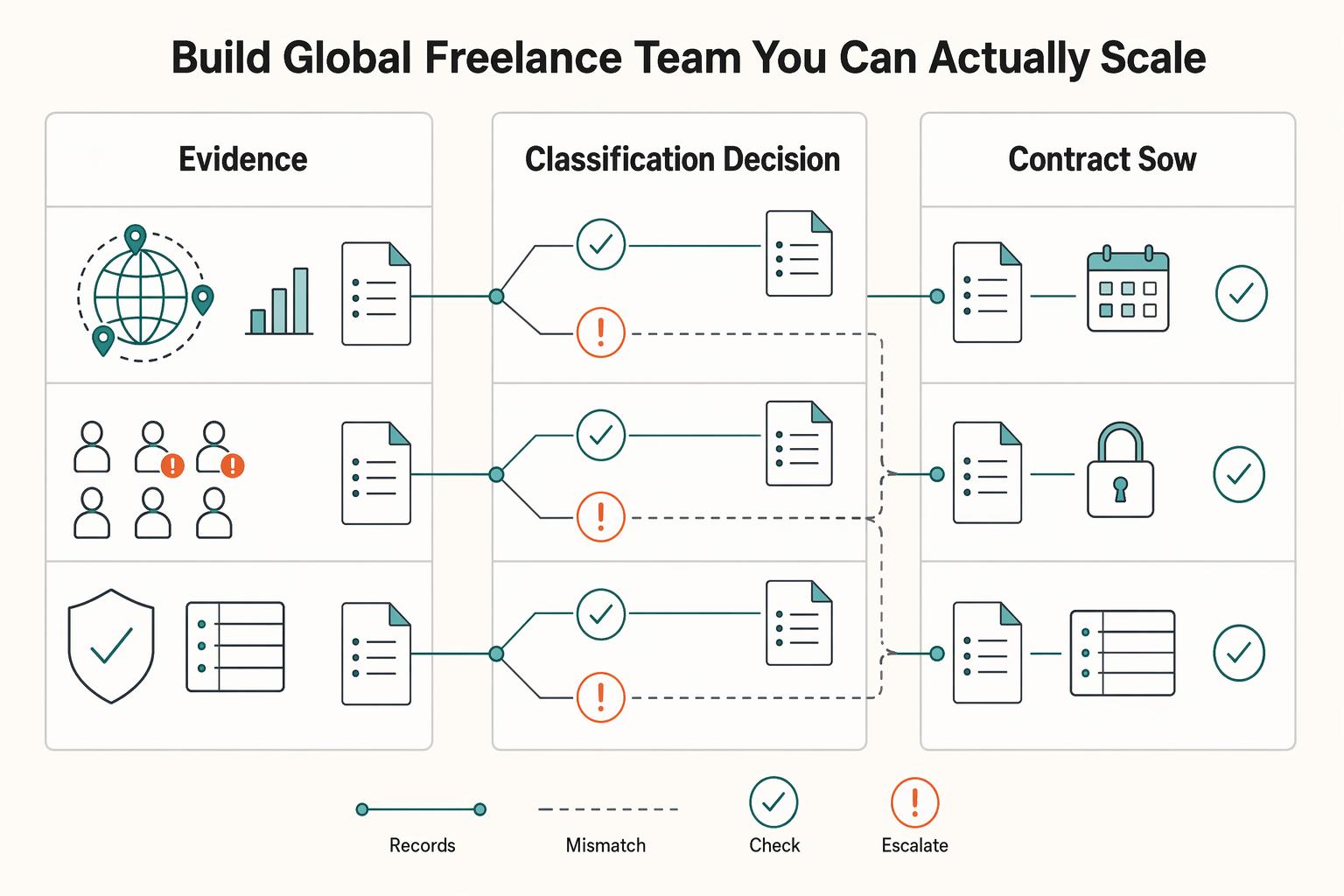
How to Manage a Global Freelance Team Without Compliance Gaps
If you want to manage a global freelance team without constant cleanup, use the same intake-to-payout process for every engagement and save an artifact at each gate. Common failure points are instinct-based classification, vague scope, and payments approved in chat with no audit trail.
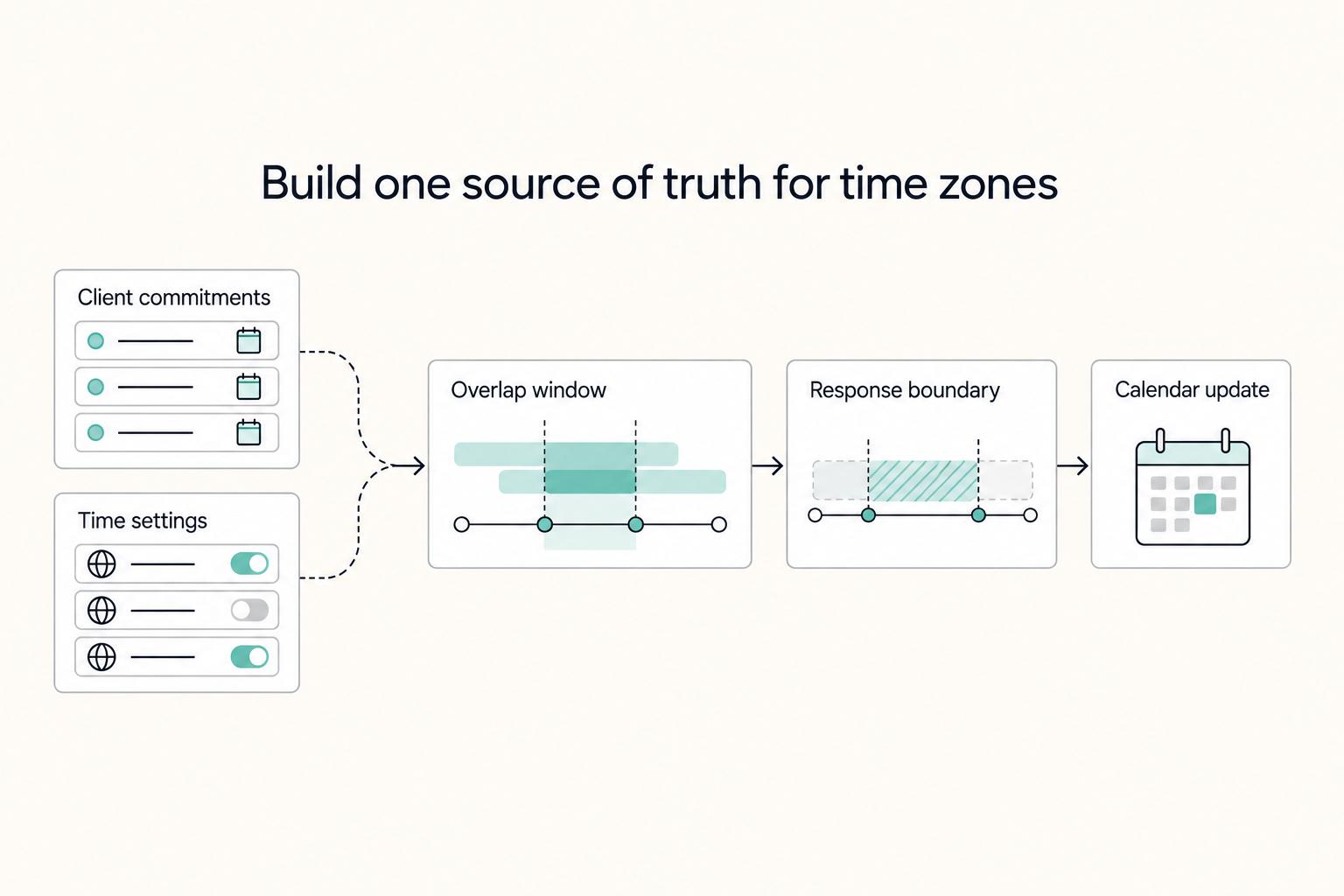
How to Manage Client Communication Across Different Time Zones
You can get better control of client time zones with a short setup pass. Stop treating timing as a courtesy issue and treat it as a written operating choice. The goal is simple: clearer rules, fewer delays, and fewer boundary problems because everyone knows which local time controls scheduling, what counts as urgent, and when a reply is actually due.
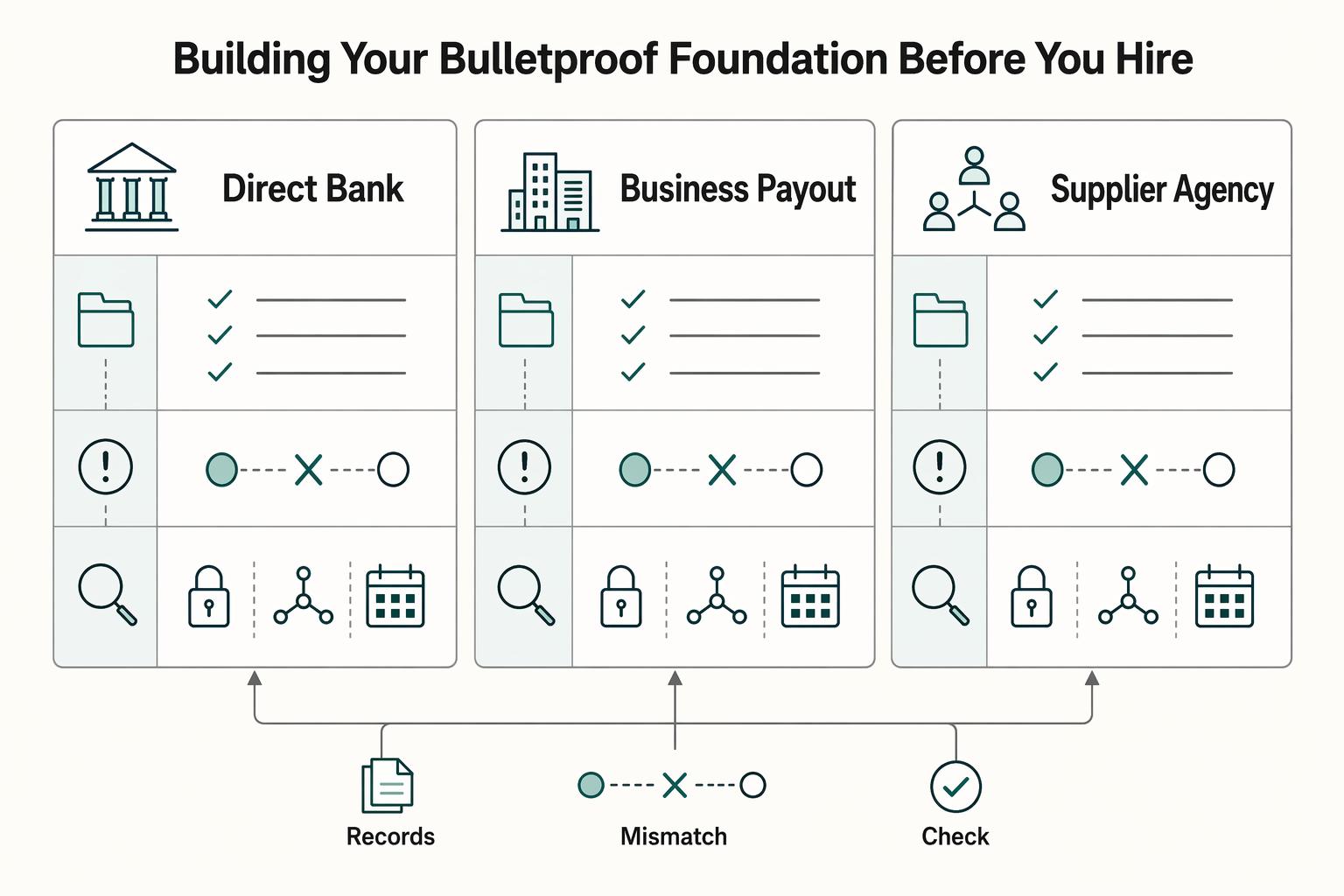
How to Manage an Offshore Development Team Across Time Zones
**Step 1. Make the four decisions that actually shape the result.** To manage offshore development work well, decide early on your engagement model, how ownership and decision-making will work, how work will move across time zones, and how performance will be judged. Offshore hiring can give you access to global talent, faster delivery, and more scalable operations, but it is not just a cost play. If you optimize only for rate, you usually end up with less control and weaker alignment.