
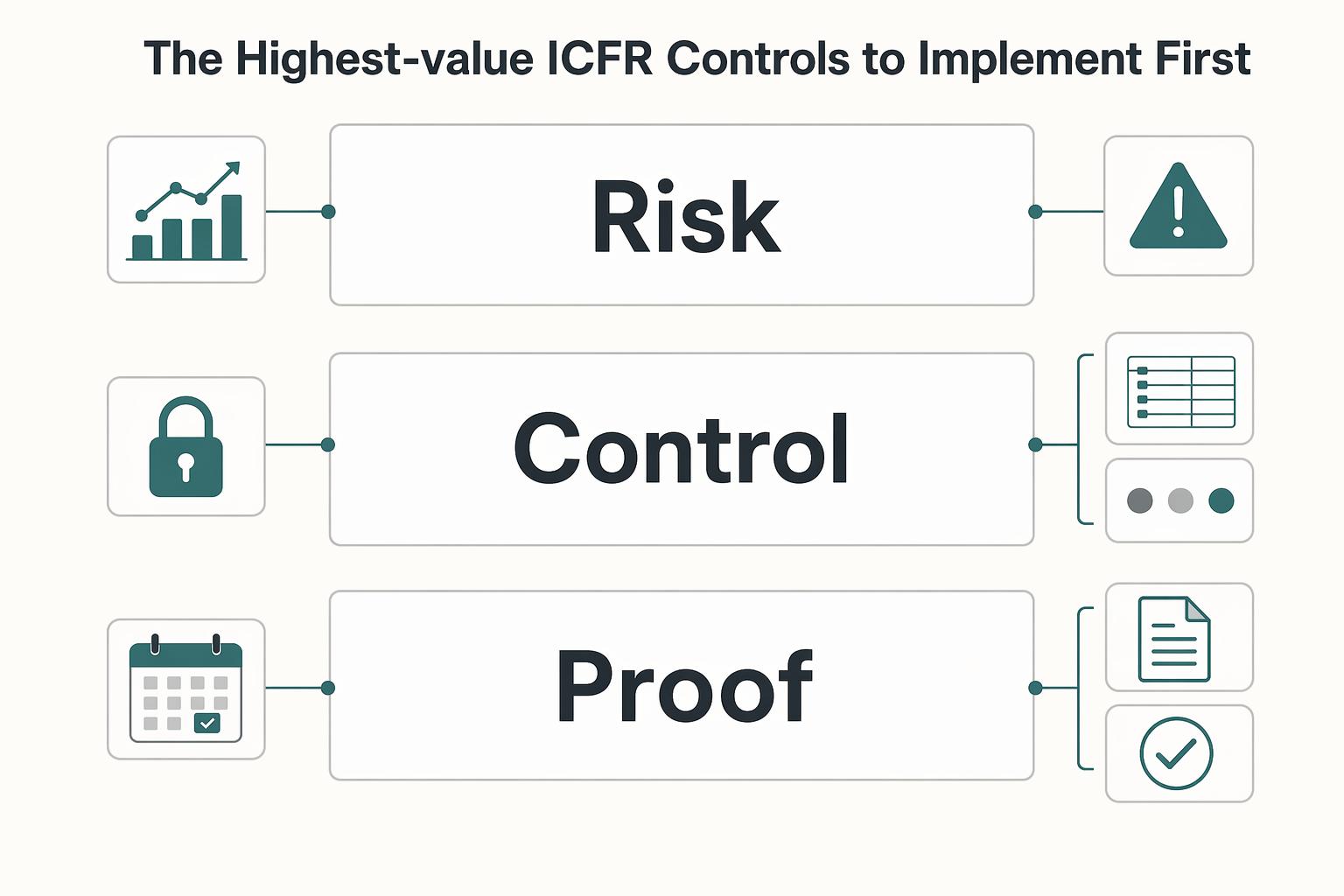
Quick Answer
Start with a narrow ICFR baseline: close-cycle reconciliations, access and change controls, and exception review with named owners. Run that set through one full close cycle, then keep only controls that produce replayable evidence at execution time. Escalate repeated unreconciled breaks, conflicted approvals, and failed-open compliance gates instead of treating them as routine cleanup. For lean teams, SOX readiness comes from traceable records and clear accountability, not a broad control catalog.
ICFR for payment platforms without enterprise overhead#
Think small on scope and strict on evidence. Under SOX pressure with a lean team, the goal is to build defensible ICFR for financial reporting, not to document everything. For covered Exchange Act issuers, management must maintain ICFR and assess effectiveness at each fiscal year-end under Section 404-related SEC rules. ICFR is designed to provide reasonable assurance, not absolute assurance. If you run a lean finance team, we recommend treating evidence quality as the control floor before you add more documentation.
- Start with the issuer reality
First decide whether you are dealing with current filing obligations or preparing for them. SEC rules require covered issuers to include management's ICFR report in the annual report, including management responsibility for establishing and maintaining adequate ICFR and management's year-end effectiveness assessment. If you are in scope, use a suitable, recognized control framework and a top-down, risk-based evaluation rather than copying an enterprise control catalog. If scope is unclear, use the discipline without assuming the same filing obligations apply absent issuer-specific advice.
- Define scope by reporting risk, not org chart
Scope should follow activities that could affect external financial reporting. For payment platforms, that can include tracing key transaction flows from collection and ledgering through payout and reconciliation when those flows affect reported balances or disclosures. A practical test is to trace one real transaction to the reconciliation artifact used in close. If that trace depends on ad hoc reconstruction, your first control gaps are already visible.
- Use "reasonable assurance" correctly
ICFR reduces reporting risk to a defensible level. It does not eliminate all errors. Prioritize higher-risk breaks near close before adding lower-risk controls. If one or more material weaknesses exist, ICFR is not effective. Treat recurring unexplained breaks as escalation signals, not routine cleanup for the next period.
- Expect concrete outputs from the rest of this list
This guide is meant to help you make decisions. You should leave with a minimum control set, an evidence checklist, escalation triggers, and a short defer list for risks that are not yet material. The operating bias is simple. Controls should run during a full close cycle with named owners and produce evidence when executed. We would rather see your team run a shorter control list cleanly than carry a larger list it cannot defend at close.
- Defer overhead until risk justifies it
Do not start with enterprise tooling, broad narratives, or edge-case coverage across the full payout stack. Start where misstatements can enter financial reporting, then expand only after evidence is repeatable and ownership is clear. If an independent teammate cannot reperform a control from saved artifacts, it is not ready to scale. We recommend proving that replay test on your highest-risk close lane first.
For a deeper look at disbursement controls on platforms, read Internal Controls for Accounts Payable on Platforms: How to Prevent Fraud and Ensure Accurate Disbursements.
How this list is scored and who should use it#
Use this list if you need the fastest path to defensible controls, not the broadest control library. It favors controls that reduce reporting risk, leave evidence an independent reviewer can reperform, go live quickly, and stay manageable for a small team. That bias fits SOX readiness and control testing, which are risk-based. If your team is choosing between breadth and replayable evidence, we would choose the evidence every time.
- Score risk reduction first, then auditability
A control scores highest when it directly lowers misstatement risk in reporting-critical areas and leaves evidence that supports management's assessment. In practice, controls that rely on weak or after-the-fact reconstructed evidence score lower. The test is simple: can someone other than the owner reperform what happened from saved artifacts? If your reviewer needs a side explanation, your control is not ready yet.
- Best fit: payout-heavy teams with lean Finance staffing
This list is designed for teams with meaningful payout volume and operational complexity, especially around exception handling and policy gates such as CIP/AML where applicable. It is most useful when close quality depends on tracing money movement across collection, ledgering, FX, payout, and reconciliation. The tradeoff is intentional: practical, repeatable controls over broad enterprise-style edge-case coverage.
- Not for issuer-specific SOX determinations
This is operational guidance, not a legal opinion on filing obligations or issuer-specific ICFR interpretation. If you are deciding whether Section 404(b) auditor attestation applies, filer status matters, and thresholds such as $75 million public float and $100 million revenue can affect the outcome. Use securities counsel or external accounting advice for that determination.
For a step-by-step walkthrough, see What Is RegTech? How Compliance Technology Helps Payment Platforms Automate Regulatory Reporting.
The minimum control baseline every credible platform needs#
For a lean team, a practical baseline is three control areas: close-cycle reconciliations, access and change controls, and exception review tied to the reporting assertions that matter.
| Control area | What it covers | Evidence / notes |
|---|---|---|
| Close-cycle reconciliations | Reconcile financial statements to underlying accounting records during the close; investigate and resolve disagreements between internal ledger and payout statuses | Artifact should show the as-of date, source population, preparer, reviewer, and unresolved items |
| Access and change controls | Control who can access programs and data, and who can change code, mappings, or configuration that affect reporting | Current access listings, approvals for privileged access, removal reviews, and change records tied to what actually moved |
| Exception review tied to assertions | Document disposition of unreconciled items, failed postings, manual adjustments, or similar breaks linked to reporting assertions | Require evidence at execution time; oral explanation alone is not persuasive evidence |
Keep this baseline tight. Section 404 requires management to include an ICFR report in the annual filing and assess effectiveness as of fiscal year-end. A material weakness can exist even when financial statements are not yet materially misstated, so recurring breaks and weak evidence are control issues, not housekeeping.
- Close-cycle reconciliations
Start with the control that tells you whether money movement, ledger activity, and period-end reporting agree. In practice, that means reconciling financial statements to underlying accounting records during the close, with artifacts an independent reviewer can reperform. If your internal ledger and payout statuses disagree at close, treat that as a control exception that needs documented investigation and resolution. A defensible artifact should show the as-of date, source population, preparer, reviewer, and unresolved items. If your reviewer cannot retrace the break from saved artifacts, you do not have a control yet.
- Access and change controls
Put clear control around who can access programs and data, and who can change code, mappings, or configuration that affect reporting. Archived PCAOB guidance ties IT general controls to program changes and access to programs and data. A practical evidence set includes current access listings, approvals for privileged access, removal reviews, and change records that tie approval to what actually moved.
- Exception review tied to assertions
Give one owner responsibility for exception review and require documented disposition of unreconciled items, failed postings, manual adjustments, or similar breaks linked to the relevant reporting assertions. Require evidence at execution time. The primary source of evidence should be documented when procedures are performed, and oral explanation alone is not persuasive evidence. Month-end reconstruction may look tidy, but it is weak support in testing.
If you are evaluating tooling, use this baseline as the filter. If it cannot produce contemporaneous reconciliation support, access and change evidence, and exception-review artifacts, it adds process surface area without improving control quality. If your tooling cannot hand your reviewer the evidence trail on demand, we would not treat it as control-ready for your team.
The highest-value ICFR controls to implement first#
Once the baseline is running, the next priority is controls that either prevent bad cash movement or create evidence an independent reviewer can reperform. This sequence is a practical implementation order, not a mandated SOX/PCAOB ranking. As a working rule, if a control cannot produce repeatable evidence within a close cycle, redesign it before scaling it. Testing then evaluates whether operation is effective over a sufficient period, ordinarily one year.
| Rank | Control | Best for | Preventive / Detective | SOX testing effort map | Key tradeoff | Payout-ops use case |
|---|---|---|---|---|---|---|
| 1 | Reconciliation controls | Any payout-heavy platform, including Merchant of Record (MoR) and virtual-account (VAM) flows | Detective | Clear to test for design and operation because artifacts can be traced from reports to source records | Finds issues after they occur; weak artifacts or aging open items increase testing friction | Reconcile receipts, fees, payables, and executed payouts to the general ledger at close; in virtual-account flows, reconcile virtual-account populations to the master bank account and platform ledger. |
| 2 | Access controls | Teams where payout tools, bank portals, or reporting data access is shared across Finance, Ops, and Engineering | Preventive | Directly tied to IT control environment testing, including design and operating effectiveness | Reviews fail when user populations are incomplete or role definitions are vague | Restrict who can change beneficiaries, payout timing, ledger mappings, and payout holds; retain current access lists, privileged approvals, and removal reviews. |
| 3 | Change controls | Platforms frequently changing payout logic, mappings, or system behavior that affects reporting | Primarily preventive | Maps directly to quarterly ICFR-change evaluation and testing of design and operation | Paper approvals fail if they cannot be tied to the exact deployed change | For MoR fee-allocation or virtual-account reconciliation-rule updates, retain approval, change record, and deployment evidence; rerun the control if evidence shape changes before close. |
| 4 | Payout approval controls | Higher-value or manual batches, off-cycle disbursements, refunds, reserve releases, and beneficiary changes | Preventive | Strong authorization evidence supports control design and operation testing | Weak if approvers lack payment-basis visibility or if preparer and approver are the same person | Require named approval for defined high-risk payouts, first-time beneficiaries, or manual reruns before funds are released. |
| 5 | Exception remediation controls | Teams with recurring payout failures, stale reconciling items, or repeated post-close corrections | Detective and corrective | Tests whether issues are identified, owned, and resolved on a timely basis | Ticket queues create false comfort without aging, ownership, and closure evidence | Require documented disposition for failed payouts, unreconciled virtual-account items, and MoR fee variances, with owner and date through final resolution. |
This order gives lean teams a practical sequence: reconciliation, access, change, payout approval, then exception remediation. It also preserves the preventive-plus-detective mix expected in effective ICFR.
For upstream spend-approval controls, read What Is a Requisition Order? How Platforms Use Internal Purchase Requests to Control Spend.
The evidence pack auditors will ask for and operators should pre-build#
Build evidence when each control runs, not at test time. If an independent teammate cannot reperform the control from the saved artifacts, the evidence is likely not sufficient.
Management must assess effectiveness as of fiscal year-end, and inquiry alone is not enough evidence of control effectiveness. Your pack should therefore show what was done, when, by whom, with which records, and what conclusion was reached.
1. Create one evidence index per control#
Use one consistent index per control so testing does not turn into a scavenger hunt for your team or your reviewer. We recommend keeping that index in the same place every cycle so your close owner can retrieve evidence fast. Include at least:
- control objective
- control owner and reviewer
- execution frequency
- artifact location
- retention mapping for ICFR and SOX support
Point to the exact artifact set for that execution, not a general folder. Also log evidence-shape changes, such as report format, approval path, or exception tool, with effective date and new location so period-to-period differences are explainable.
2. Keep artifacts that let someone replay the control#
Save artifacts that support inspection and replay, not just status outcomes. At a minimum, retain:
| Area | Retain | Note |
|---|---|---|
| Approval controls | Approval logs tied to the batch, beneficiary, or manual rerun | Save artifacts that support inspection and replay, not just status outcomes |
| Reconciliation controls | Reconciliation report, source records, reviewer sign-off, and open-item list | Save artifacts that support inspection and replay, not just status outcomes |
| Exception remediation | Ticket, owner, opened date, investigation notes, disposition, and closure rationale | Save artifacts that support inspection and replay, not just status outcomes |
| VBA and payout-event flows | API request IDs, webhook event IDs, or processor reference IDs alongside human-readable reports when available | These IDs can tie ledger lines, bank movement, and payout status to the same event population; screenshots may be weak as standalone evidence |
- approval controls: approval logs tied to the batch, beneficiary, or manual rerun
- reconciliation controls: reconciliation report, source records, reviewer sign-off, and open-item list
- exception remediation: ticket, owner, opened date, investigation notes, disposition, and closure rationale
For VBA and payout-event flows, keep traceable technical join points, such as API request IDs, webhook event IDs, or processor reference IDs, alongside human-readable reports when available. These IDs can help tie ledger lines, bank movement, and payout status to the same event population. No universal SOX or PCAOB rule requiring specific trace IDs is established here. Screenshots can add context, but they may be weak as standalone evidence.
3. Treat tax and compliance documents as reporting evidence#
When tax or compliance documents affect payout eligibility or classification, keep them in the reporting evidence set, including:
- Form W-9: evidence of receipt and payee or account linkage, used to provide the correct TIN for information returns
- Form W-8BEN or other W-8 variants: document type, signature date, linked payee, and refresh status
- for Gruv programs where enabled, policy-gate outcomes for checks such as KYC, KYB, or AML when they affected recognition, hold, or reversal
W-8s need aging control: they are generally valid through the last day of the third succeeding calendar year unless circumstances change sooner.
For Form 1099 support, retain population logic, source-to-output bridge, and manual exclusions or corrections. If filing Form 1099-NEC, January 31 is the filing and recipient furnishing deadline.
4. Run the reperformance test before auditors do#
Before anyone else tests the pack, hand it to someone who did not perform the control and have them replay it. They should be able to identify the population, trace selected items, understand the review, and reach the same conclusion without extra oral explanation.
If replay fails, fix the evidence pack first. Common misses are missing report parameters, approvals not tied to transaction IDs, stale W-8s, exception tickets without closure rationale, and file names that do not map to the control index. If the evidence does not stand on its own, the control is not ready to scale.
Ownership design for a small finance and compliance team#
Lean teams can blend roles, but they cannot blur accountability. For readiness, set explicit reporting lines and assign explicit owners for control conclusions, operating evidence, and exception handling.
-
Finance can own the control conclusion in this model. Finance can be the named owner for whether each control operated effectively, even when another team executes part of it. Management remains responsible for control effectiveness and for maintaining evidence that supports its assessment.
-
Engineering should own system-reliability evidence for tech-dependent controls. If a control depends on reports, interfaces, approval logs, or ledger mappings, assign Engineering clear ownership for evidence that underlying systems and related changes were reliable. For controls tied to ERP and related reporting flows, keep clear change and access records so quarter-to-quarter control-impact changes can be evaluated.
-
Payments Ops can own exception handling and payout execution discipline. Ops can own rejected payouts, manual reruns, beneficiary changes, holds, and queue aging, including who investigated, what was decided, and when items were closed. Ops does not own the reporting conclusion, but it should have explicit authority and timely exception evidence for payout-authorization controls.
-
Compliance can own policy gates and escalation design; specialists can support but not replace internal ownership. Compliance can define escalation criteria for issues that affect reporting controls. Co-sourcing can add expertise, but management retains responsibility, so each control and remediation item still needs a named internal owner.
If ownership is ambiguous for controls touching ERP systems or payout authorization, escalate through a formal management path and resolve role assignment before the next reporting cycle. Unclear authority, missing evidence ownership, or unclear sign-off responsibility can indicate a control deficiency. For serious issues, use written escalation paths aligned with how significant deficiencies and material weaknesses are communicated. For related reporting ownership issues, see FATCA Compliance for Marketplace Platforms: Identifying and Reporting Foreign Account Holders.
Where automation helps and where manual sign-off must stay#
Automation should improve evidence quality, not blur accountability. Use it where it makes evidence more consistent and easier to trace, and keep human sign-off where judgment matters.
- Automate repeatable evidence capture where consistency helps.
Use automation for repeatable outputs, such as reconciliation extracts, approval-log retention, timestamped alerts, and versioned report storage. PCAOB guidance recognizes automated procedures to initiate, process, and report transactions. Prioritize traceable evidence so an independent reviewer can connect each artifact to the source report, report version, and triggering user or job.
- Keep judgment-heavy approvals manual, with named sign-off.
Management remains responsible for establishing and maintaining ICFR, so tools should not become the de facto approver for high-judgment decisions. PCAOB also explicitly recognizes manual approvals, reviews, reconciliations, and follow-up of reconciling items as control mechanisms. When a reviewer must decide whether an exception is valid, complete, and financially significant, require human sign-off with clear rationale and supporting evidence.
- Use control software to support testing and workflow, not replace control ownership.
Tooling can route tasks, enforce due dates, preserve review history, and organize testing samples. But workflow status alone is not enough evidence. Keep the underlying report, exception list, reviewer comments, and closure record. If workflow logic, report filters, or escalation rules change, evaluate the ICFR impact in that fiscal quarter and revalidate as needed.
- Use GenAI for drafting support, with explicit human oversight for decisions.
NIST emphasizes clearly defined human roles in AI decision-making and oversight, and notes that some use cases require human oversight. That supports using GenAI to draft narratives or summarize tickets while keeping final approvals and exception disposition with accountable humans. COSO also warns that rapid AI adoption can threaten reporting integrity and compliance without robust controls. If AI summaries hide exception context, revert to simpler manual review until the decision trail is reliably visible.
Failure modes that require escalation to legal, audit, or leadership#
Some failures are not cleanup items. Escalate immediately when issues repeat, involve privileged access, or bypass live compliance gates. Management owns the ICFR effectiveness assessment, and some issues require formal deficiency evaluation even if no current misstatement is found.
| Failure mode | Escalate when | Preserve / keep |
|---|---|---|
| Repeated unreconciled breaks | Recon breaks repeat, teams rely on manual plugs to close, or an independent reviewer cannot trace the source report, exception ticket, aging, root cause, and closure evidence without side explanations | Source report, exception ticket, aging, root cause, and closure evidence |
| Access override patterns and conflicted approvals | One person can grant rights, release funds, and approve the exception, or overrides involve senior management | Access export, privileged-role change log, approval record, effective timestamp, and removal timestamp |
| Compliance gates that fail open in production | A live bypass of identity, beneficial-ownership, or AML checks has production impact | Case IDs and timestamps for every affected payout; confirm which accounts passed, which were held, who released them, and whether release required separate approval |
| Recurring suspicious-activity anomalies | Suspicious-activity patterns recur and need escalation beyond Payments Ops to legal or AML ownership | Alert IDs, aggregation logic, case notes, supporting documents, and initial detection date |
- Repeated unreconciled breaks
Repeated recon breaks can be escalation events, especially when teams rely on manual plugs to close. A material weakness can exist even when financial statements are not materially misstated, and one material weakness is enough for ICFR to be ineffective. Focus on repetition and reporting exposure, not just whether the current amount looks small.
Use a simple test: can an independent reviewer trace the source report, exception ticket, aging, root cause, and closure evidence without side explanations? If not, escalate. "Temporary" reconciliation logic and spreadsheet overrides can hide source-mapping failures. If auditors are involved, escalate early. When identified during an audit, significant deficiencies and material weaknesses must be communicated in writing to management and the audit committee before the financial-statement report is issued.
- Access override patterns and conflicted approvals
Escalate when one person can grant rights, release funds, and approve the exception, or when overrides involve senior management. Fraud involving senior management is an explicit material-weakness indicator, so escalation should not wait for proof of intent or a quantified loss. Repeated privileged-access changes around close, payout release, or journal approval are red flags for SOX and audit review.
Preserve evidence early: access export, privileged-role change log, approval record, effective timestamp, and removal timestamp. Missing evidence is itself a control risk. The core failure is not just poor access hygiene. It is unreliable proof of who could change financial data or authorize payouts.
- Compliance gates that fail open in production
A live bypass of identity, beneficial-ownership, or AML checks should be escalated promptly to compliance and legal. CIP requires risk-based identity verification procedures, and beneficial ownership rules require written procedures designed to identify and verify beneficial owners of legal-entity customers. The trigger is production impact.
Confirm which accounts passed, which were held, who released them, and whether release required separate approval. Preserve case IDs and timestamps for every affected payout. An unresolved hold queue followed by ad hoc releases may relieve volume pressure but can create a larger control and legal issue.
- Recurring suspicious-activity anomalies
Recurring suspicious-activity patterns should be escalated beyond Payments Ops to legal or AML ownership. A Suspicious Activity Report (SAR) is a formal FinCEN filing with documentation requirements, and applicable thresholds differ by institution type. Bank SAR rules use at least $5,000. Money services business rules use at least $2,000.
Keep an escalation-ready pack: alert IDs, aggregation logic, case notes, supporting documents, and initial detection date. Under bank rules, filing is due within 30 calendar days of initial detection, with a maximum delay of 60 calendar days when suspect identification is the issue. Do not down-rank risk because one payout looks small. A recurring pattern plus reporting exposure is the trigger.
Tax and reporting touchpoints teams often miss until quarter end#
Quarter-end tax surprises can be evidence failures, not just math errors. Treat tax-document collection, tax-profile changes, and cross-border reporting flags as one control surface with payout eligibility and reporting output.
- Make W-9 and W-8 collection part of payout readiness
Form W-9 provides the TIN for a requester that must file an IRS information return, and Form W-8BEN is provided by a foreign beneficial owner to the withholding agent or payer when requested. The key control is traceability, not storage: tie form type, collected date, effective date, reviewer, and payout-enable timestamp so you can prove which profile supported each payment.
Quick check: sample one domestic and one foreign payee, then confirm an independent reviewer can trace the form on file, current tax classification, and first payout released after approval. A break to watch for is profile changes after onboarding without refreshed review, which can create retroactive cleanup.
- Tie 1099 logic to transaction classification before file generation
If you operate as a payment settlement entity, Form 1099-K reporting may apply, and the instructions here cite a $600 threshold for applicable third-party network transactions. Also, certain payments reported on 1099-K should not also be reported on 1099-MISC or 1099-NEC. The control objective is a single pre-close owner for reportability logic.
Verification should be straightforward: for a sampled payee, can Finance explain from the same source data why payments belong on 1099-K, another form, or no form? If separate teams maintain separate extracts, treat duplicate or inconsistent outcomes as a control warning.
- Predefine cross-border escalation for FATCA, FBAR, and Form 8938 signals
Cross-border reporting calls for escalation, not ad hoc interpretation in Ops tickets. FBAR is FinCEN Form 114 and is not filed with the IRS. It may be triggered when aggregate foreign account value exceeds $10,000 at any point in the year, and it is due April 15 with an automatic extension to October 15. Form 8938 is attached to the annual income tax return when required, has a quoted baseline threshold of $50,000 for certain U.S. taxpayers, and does not replace FBAR. Higher thresholds apply for some filers, including joint filers and taxpayers residing abroad, and some filers may need both.
Define named owners and a standard evidence pack for escalation: account list, maximum balance snapshot, ownership or signatory details, related payout entities, and tax-profile change dates.
Related reading: Gig Worker Tax Compliance at Scale: How Platforms Handle 1099s W-8s and DAC7 for 50000+ Contractors.
Change control during ERP migrations and payout stack upgrades#
Treat Enterprise Resource Planning (ERP) systems migrations and payout-stack upgrades as control change events that require explicit review, not routine tech work. The SEC expectation is that management evaluates, at the end of each fiscal period, changes that materially affected or are reasonably likely to materially affect Internal Control over Financial Reporting (ICFR).
- Classify the change before you build it
If the project changes ledger mappings, payout routing, reconciliation logic, or approval data flowing into the general ledger, treat it as financial-reporting risk from day one. The practical test is whether Finance can name which reporting assertions may shift, which control owner changes, and what evidence must exist after go live.
- Validate controls before and after go live
Build ICFR into the full project lifecycle: design, implementation and testing, and post-go-live. Do more than confirm data movement. Verify journal outcomes for sample transactions, confirm payout status still ties to ledger entries, and check that reconciliation ownership, cadence, and review artifacts still exist. Technically successful migrations can still create control gaps when sign-off trails, timestamps, or exception visibility disappear.
- Rerun walkthroughs when evidence shape changes
If the migration changes the shape, location, or granularity of control evidence, consider rerunning the walkthrough before period close. This includes shifts like replacing ERP approval logs with ticket comments, swapping a reconciliation report for a dashboard, or changing exception-export formats. If an independent reviewer can no longer reperform the control from the artifact set, the control may not have survived the upgrade, even if reported numbers still look right.
A 30-60-90 day sequence to become SOX-ready without overbuilding#
For lean teams, a practical path to readiness is often a smaller control set you can run, evidence, review, and fix consistently, not a larger one.
- First 30 days: scope from reporting risk, not org charts
Start top-down at financial-statement risk, then map only the controls that matter most for reliable reporting. Assign one owner per control, and define a minimum evidence record: objective, owner, frequency, artifact location, and what a reviewer should see to conclude the control worked. Your checkpoint: an independent teammate can pick a control and find complete evidence without asking where it lives.
- By 60 days: run one full close cycle and severity-score deficiencies
Execute the control set in a real close cycle and capture both design and operating evidence. Log misses, late reviews, missing sign-offs, unresolved reconciling items, and evidence gaps, then classify each issue by severity, affected reporting risk, failure type, whether design or operating, remediation owner, and testable closure criteria. If closure criteria are vague, the control is not ready for testing.
- By 90 days: dry-run testing, formalize escalation, and remove noise
Dry-run testing by having someone other than the preparer reperform selected controls from the artifact set alone. In parallel, lock escalation paths for significant deficiencies and material weaknesses, including who determines severity, who is notified, and timing for written communication to management and the audit committee. Retire low-value controls that add testing load without reducing reporting risk.
If failure rates stay high after repeated operating cycles, use that as an internal trigger to narrow scope before adding automation. Stabilize critical controls first, such as close, access, change, and reconciliation controls.
The practical takeaway for Gruv operators#
Keep scope tight until you can prove the basics work. For Gruv operators, a small, testable control set with clean evidence is stronger than a larger set your team cannot execute consistently. We recommend holding that line even when deadline pressure makes broad coverage look tempting. If your scope doubles before your evidence pack stabilizes, your team will feel it at close.
- Start with the smallest risk-based scope
Begin with the controls that most directly reduce financial reporting risk. Map key reporting risks to a short control list, then remove overlap when two controls address the same risk. A narrower set is stronger when each control has a clear purpose, explicit ownership, and a repeatable close-cycle check. We would rather see your team own five clean controls than fifteen vague ones. If your owners cannot explain why a control exists, you should cut it from the first wave.
- Optimize for evidential matter and traceability
Treat a control as complete only when the evidence stands on its own. The artifact should let an independent reviewer understand what was done, by whom, when, and how exceptions were resolved. A dated record with reviewer sign-off and exception notes can be more defensible than dashboards alone when there is no durable audit trail. If your evidence cannot survive that review on its own, keep the control in draft.
- Make ownership explicit and reassess after change
Assign accountable ownership for each control, even when execution spans teams. Then reassess controls when relevant processes change, especially changes that materially affected or are likely to materially affect ICFR. If reconciliation logic, approval paths, ledger mappings, or evidence capture changes, recheck that the control still operates and that documentation still supports the conclusion. We recommend putting that recheck in the same change workflow your team already trusts. Your team should know who owns that reassessment before the change goes live.
Map your current controls to these three tests, identify your biggest evidence gaps, and assign owners before the next close cycle. If a control cannot run cleanly for one full cycle with review-ready evidence, stabilize it before expanding scope. We would rather see you delay expansion than carry a control your team cannot operate cleanly. If your evidence gap stays open, you should not tell your reviewers the control is production-ready.
Frequently Asked Questions
What is ICFR for a platform business in plain terms?
ICFR is a people-operated process that gives management reasonable assurance that financial reporting is reliable. In practice, it means your team can show how reporting decisions were made and supported, not just produce final numbers. The process is overseen by senior officers and carried out across the company, not by technology alone.
Do smaller finance teams still need SOX-style controls if they are not a large enterprise?
Yes, smaller teams still need disciplined ICFR if they want credible reporting. Some filers, such as non-accelerated filers, generally do not need auditor attestation of management’s assessment, but that is not a blanket exemption from control responsibility. If your status may hinge on thresholds like less than $75 million public float, or smaller reporting company tests tied to less than $250 million public float or less than $100 million annual revenues with no public float or less than $700 million public float, get issuer-specific legal and accounting advice.
What are the first controls to implement for payout-heavy platforms?
Start with a top-down, risk-based control set focused on the financial reporting risks that could undermine reporting reliability. Use a suitable, recognized control framework, and prioritize controls your team can perform and evidence consistently. If a control cannot be executed and documented reliably, simplify it before adding more.
What evidence should we retain to support ICFR and SOX testing?
Keep evidential matter that reasonably supports management’s assessment, not just summaries. For each control, retain enough documentation to show what was performed and how exceptions were handled. The standard is whether an independent reviewer, including an external auditor, can evaluate management’s work from the evidence set.
What should be automated first and what should stay manual?
Automate repeatable control support work where it improves consistency and traceability of evidence. Keep ownership, review, and judgment decisions clearly assigned to people, because ICFR is a human-operated process with inherent limitations. Software can support control execution, but it cannot replace management accountability.
When does a control failure need escalation beyond the ops team?
Escalate when a deficiency, or combination of deficiencies, could rise to a material weakness and affect management’s ability to conclude controls are effective. Under SEC rules, management cannot conclude effectiveness if one or more material weaknesses exist. Material weaknesses identified by management must also be disclosed in the ICFR discussion.
Can ICFR software alone make a platform SOX compliant?
No. Software can help organize and document control activity, but it does not by itself establish effective ICFR. SOX-related conclusions still depend on management oversight, human execution, and documented review.
Try a related tool
Researched and edited by the Gruv editorial team. Gruv builds cross-border billing, payouts, and finance-operations software for global businesses.
Sources
- ecfr.gov/current/title-17/chapter-II/part-240/subpart...trusted
- ecfr.gov/current/title-31/subtitle-B/chapter-X/part-1...trusted
- irs.gov/businesses/small-businesses-self-employed/in...trusted
- irs.gov/businesses/corporations/foreign-account-tax-...trusted
- sec.gov/rules-regulations/2003/03/managements-report...trusted
- sec.gov/rules-regulations/2003/06/managements-report...trusted
Educational content only. Not legal, tax, or financial advice.
Related Posts
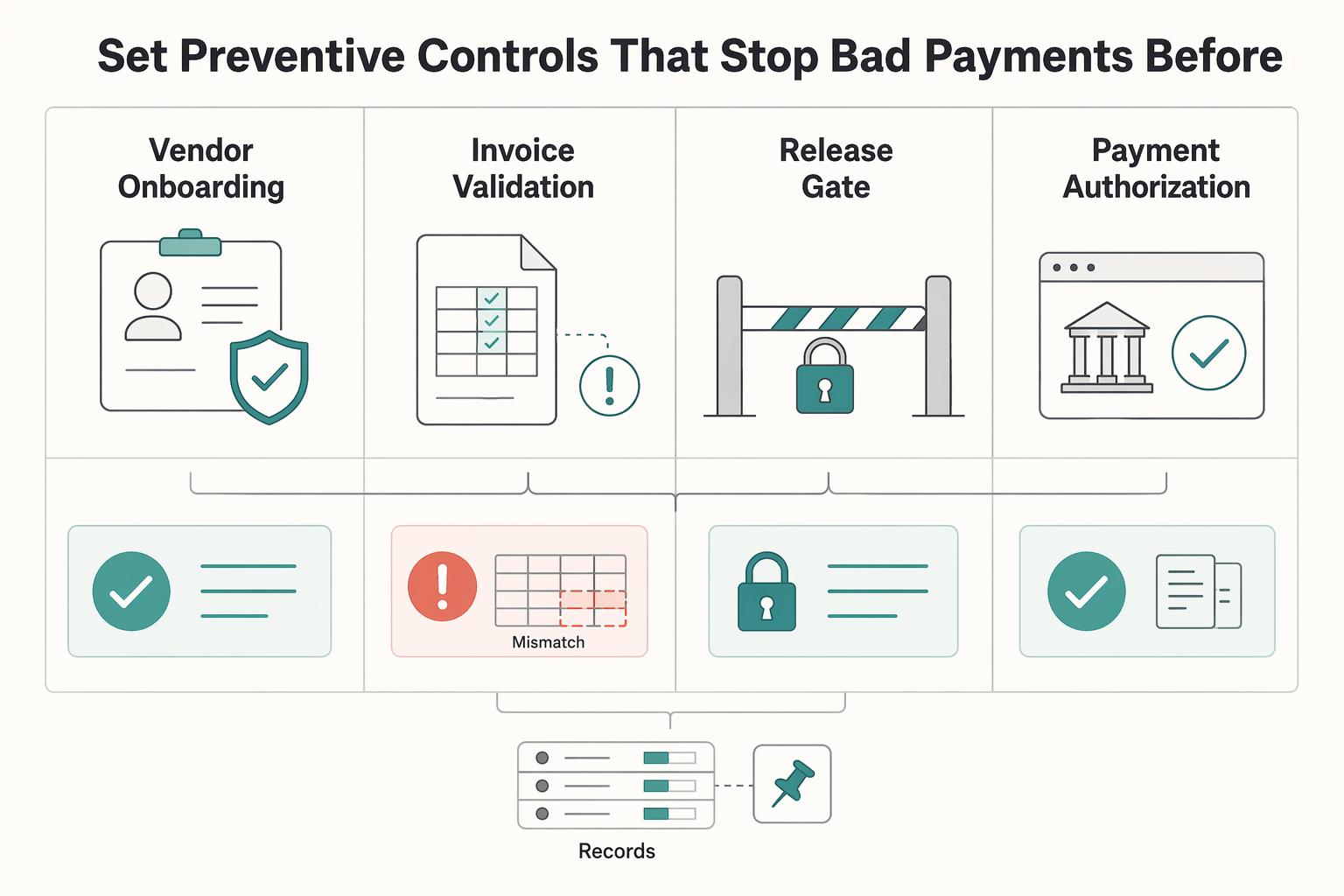
Internal Controls for AP Platforms to Prevent Fraudulent Disbursements
Start here: your AP control design should reduce fraudulent disbursements and payment errors without turning every payout into a bureaucratic exercise. In practice, that means clear escalation points at the moments where money can move incorrectly, not extra approvals added just to look controlled.

FATCA Compliance for Marketplace Platforms: Identifying and Reporting Foreign Account Holders
For marketplace teams handling cross-border payouts, FATCA work is mostly a control-design problem. You need to decide what to implement first, what evidence to keep, and what to escalate before a payout creates avoidable reporting or withholding risk. The practical question is not whether FATCA exists, but which controls actually reduce reporting errors and potential 30% withholding outcomes.
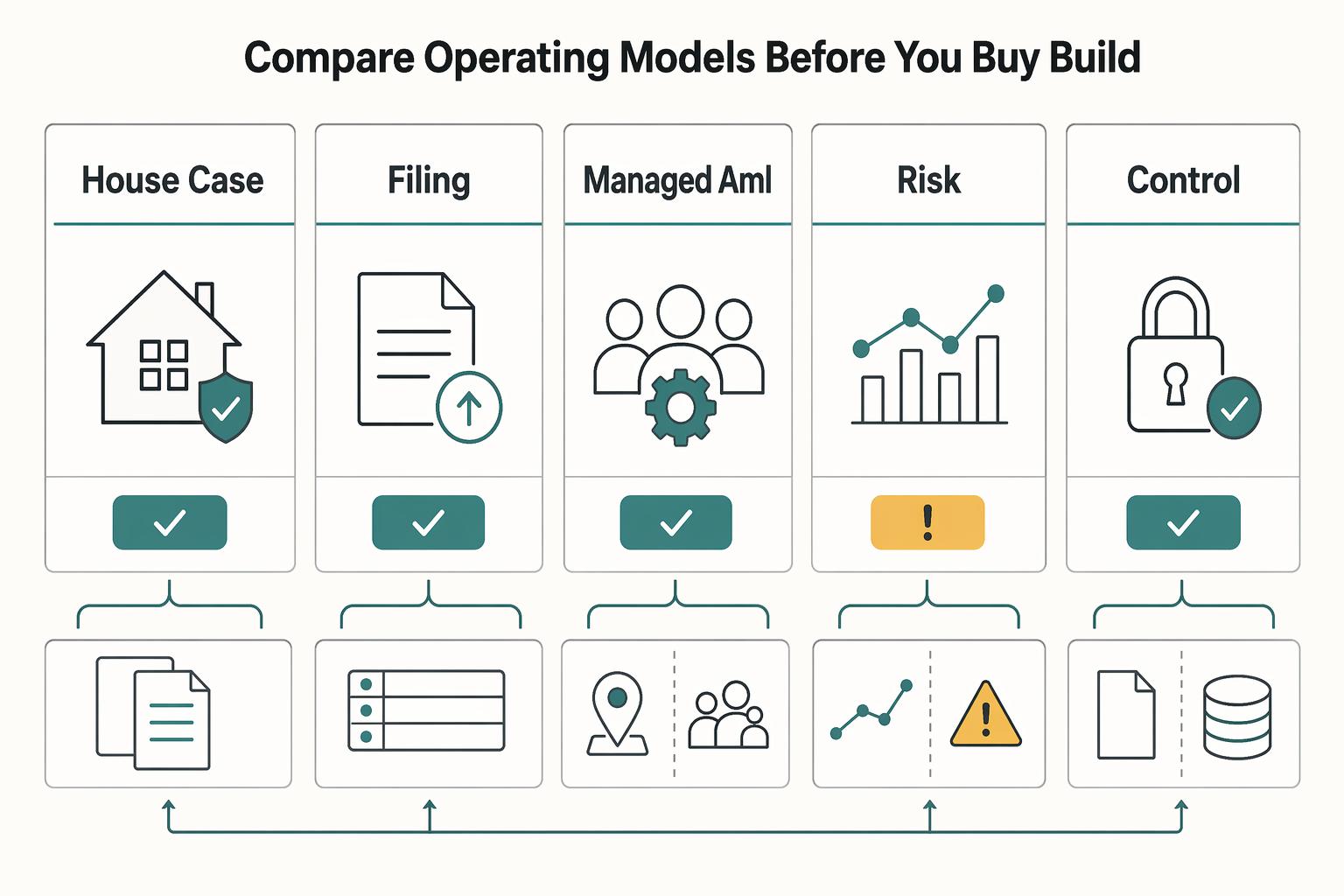
Choosing a Defensible SAR Filing Model for Payment Platforms
For platforms moving contractor, seller, or creator funds, when SAR filing applies, the goal is an operating approach your team can run consistently, not a system that tries to catch everything. You need alerts that get reviewed, cases backed by evidence, and filings you can defend. FFIEC describes suspicious activity reporting as the cornerstone of BSA reporting and emphasizes that SAR content quality is critical to the effectiveness of that system.