

Quick Answer
In Gruv's highest-friction modeled scenario, a UK freelancer splitting GBP 3,000 between Fiverr and Stripe loses about GBP 411, or 13.7% of gross income, to platform commissions, modeled FX costs, and card-processing friction. That figure is a modeled scenario, not a universal freelancer tax: it shows how common payment choices compound once income crosses platforms, currencies, and settlement rails.
What this audit measured#
The money rarely disappears through a single, easy-to-spot fee. The real loss is stacked. A marketplace takes its commission, a processor adds a charge for international cards, a bank or payment company converts the currency at a spread, a platform holds the funds before release, and a wire sheds a little to intermediaries on the way in. Each layer looks defensible on its own, but the worker feels the combined result as a smaller deposit and a later payday.
This report models that combined result. Using public fee schedules, provider help pages, and conservative scenario assumptions, it follows three example freelancers — Maya in the US, Arjun in India, and Chloe in the UK — and estimates two forms of payment friction for each:
- Financial leakage: the amount lost between gross invoice value and modeled net received amount, before income tax and ordinary business expenses.
- Predictability gap: the number of business days between completed work or initiated payment flow and usable liquidity, based on published platform holds and modeled settlement timing.
This is a modeled audit, not a census of every freelancer. It does not say that every independent worker loses 14% of their income. What it shows is how a high-friction mix of platforms, currencies, and payout choices can compound to roughly that level.
Executive findings#
| Freelancer | Monthly gross income | Modeled financial leakage | Leakage as gross income | Weighted liquidity gap |
|---|---|---|---|---|
| Maya (US designer) | USD 5,000 | USD 440.34 | 8.81% | 5.4 business days |
| Arjun (India developer) | USD 4,000 | USD 101.49 | 2.54% | 3.0 business days |
| Chloe (UK seller) | GBP 3,000 | GBP 411.35 | 13.71% | 8.5 business days |
The largest percentage loss belongs to Chloe, the UK seller, where half of monthly revenue flows through Fiverr and half through Stripe for international card payments. Arjun, the India-based developer, sits at the low end, but his income still leaks because cross-border receiving, conversion, GST, and eFIRC/FIRA documentation costs are attached to the act of receiving overseas income.
Methodology and assumptions#
The model starts with three realistic monthly income mixes, then applies published or explicitly modeled costs to each income source. When a provider publishes a range instead of one universal fee, the report uses a stated scenario assumption and labels it as modeled. That distinction matters because payment fees change by account country, payment method, contract type, volume, currency pair, card origin, and provider eligibility.
The fee inputs come from official provider pages where possible. Upwork states that its freelancer service fee ranges from 0% to 15% per contract, and its hourly contract help states that funds are typically available 10 days after the weekly billing period ends. Fiverr states that freelancers receive 80% of the client's cleared payment and that funds are subject to a 14-day clearing period before withdrawal. Stripe's UK pricing page lists card and currency conversion fees by transaction type. Wise and Payoneer publish pricing that varies by corridor, fee type, and account setup. PayPal publishes US merchant fee schedules and international commercial transaction additions.
The report excludes income tax, sales tax or VAT charged to clients, software subscriptions, account monthly plans, chargeback losses, refunds, dispute reversals, financing costs, and proposal spend unless noted. Those costs can matter, but including them would blur the narrower question: what happens to the money between gross payment and spendable receipt?
What counts as leakage#
Leakage includes platform commissions, processing fees, international card uplifts, modeled FX spreads, incoming wire charges, intermediary deductions, and mandatory payment-document costs tied to the receipt flow. It does not include income tax because that is a legal obligation, not payment infrastructure friction.
What counts as the predictability gap#
The predictability gap is measured as a business-day estimate for when money becomes usable. It combines platform hold periods and settlement timing where relevant. It does not assume every delay is avoidable or bad. Delayed liquidity has a real planning cost for solo operators who may need to pay rent, collaborators, tax deposits, tools, or card balances before platform funds become available.
How to read the percentages#
Read each percentage as a scenario output. If the same worker moved more revenue through domestic ACH, the percentage would fall. Push more income through high-commission marketplaces, card-not-present international transactions, or forced FX conversion, and it would climb. What matters here is the compounding pattern, not the exact number.
Maya, a US-based designer#
Maya is a US-based designer earning USD 5,000 per month across three sources: USD 2,500 through Upwork, USD 1,500 through PayPal from a UK client, and USD 1,000 through an international bank wire from a European client.
Income source 1: Upwork#
Upwork now describes its freelancer service fee as a per-contract range from 0% to 15%. For this scenario, the model uses a 10% contract fee because that is a common planning assumption for standard marketplace work, not because every contract uses that rate. On USD 2,500 of Upwork revenue, a 10% platform fee removes USD 250.
The timing cost is separate. Upwork's hourly contract support material says payment is usually available 10 days after the weekly billing period ends. The model expresses that as an 8-business-day platform availability gap from the end of the work week. Any bank-transfer settlement after funds are released can add extra time depending on the withdrawal method.
| Upwork line item | Modeled calculation | Net after line item |
|---|---|---|
| Gross billed amount | USD 2,500.00 | USD 2,500.00 |
| Modeled service fee | 10% of gross = USD 250.00 | USD 2,250.00 |
| US ACH withdrawal fee | Modeled as USD 0.00 for Direct to U.S. Bank | USD 2,250.00 |
| Modeled leakage | USD 250.00 | USD 2,250.00 |
| Modeled predictability gap | 8 business days to platform availability | N/A |
Connects are not included in the leakage table because they are proposal acquisition costs, not deductions from a completed payment. They still matter for freelancers who bid often. Upwork's Connects calculator describes Connects as paid virtual tokens and lists a USD 0.15 per-Connect cost, so heavy proposal activity can create pre-revenue friction before a project is won.
Income source 2: PayPal international business payment#
The second source is a UK client paying USD 1,500 equivalent through PayPal. For a US merchant, the model uses PayPal Checkout at 3.49% plus USD 0.49 and adds the 1.50 percentage-point international commercial transaction layer. That creates a transaction-fee layer of USD 75.34 on a USD 1,500 payment.
The model then applies a 3.00% currency conversion spread assumption. PayPal's fee documents state that when PayPal performs a currency conversion, the transaction exchange rate includes a conversion spread. Because the exact spread can depend on the transaction type and terms in force, this report treats 3.00% as a modeled assumption for the scenario, not a universal PayPal rate.
| PayPal line item | Modeled calculation | Net after line item |
|---|---|---|
| Gross billed amount | USD 1,500.00 | USD 1,500.00 |
| Commercial + international transaction fee | 4.99% + USD 0.49 = USD 75.34 | USD 1,424.66 |
| Modeled FX spread | 3.00% of gross = USD 45.00 | USD 1,379.66 |
| Modeled leakage | USD 120.34 | USD 1,379.66 |
| Modeled predictability gap | 2 business days | N/A |
PayPal friction can become worse on smaller invoices because fixed fees take a larger percentage share of each payment. Disputes and chargebacks can also change the economics, but this model excludes dispute losses so the base payment route remains clear.
Income source 3: International SWIFT wire#
The third source is a USD 1,000 equivalent incoming wire. Wire costs are harder to model because the final deduction can depend on sending bank, receiving bank, intermediary banks, currency, and charge instruction. Chase's business account disclosures note that financial institutions may deduct processing fees or charges from incoming and outgoing wire transfers and that foreign exchange spreads may be separate from listed wire fees. Wise's SWIFT help also explains that correspondent banks can charge fees as money moves through the SWIFT network.
For this scenario, the model applies a USD 20 intermediary-bank deduction, a USD 15 incoming wire fee, and a 3.50% bank FX markup assumption. These are planning assumptions designed to show the shape of a cross-border wire, not a claim that every US bank wire will land with the same deductions.
| Wire line item | Modeled calculation | Net after line item |
|---|---|---|
| Gross billed amount | USD 1,000.00 | USD 1,000.00 |
| Modeled intermediary deduction | USD 20.00 | USD 980.00 |
| Incoming wire fee | USD 15.00 | USD 965.00 |
| Modeled bank FX markup | 3.50% of gross = USD 35.00 | USD 930.00 |
| Modeled leakage | USD 70.00 | USD 930.00 |
| Modeled predictability gap | 4 business days | N/A |
Maya's result: she loses a modeled USD 440.34 on USD 5,000 of monthly gross income, or 8.81%. The weighted liquidity gap is 5.4 business days. Over a full year, that monthly leakage would equal USD 5,284.08 if the same income mix and provider assumptions repeated.
Arjun, an India-based developer#
Arjun is an India-based developer earning USD 4,000 per month from international clients: USD 2,000 received through Payoneer and USD 2,000 received through Wise. He has the lowest percentage leakage of the three, but his numbers still show how cross-border receiving, conversion, and documentation costs turn global income into operational work.
Income source 1: Payoneer#
Payoneer's India pricing page and receiving-account support material show that fees depend on country, receiving account, payment method, and currency. For this scenario, the model uses a 1.00% receiving fee on a USD payment and a 2.00% cross-currency withdrawal cost as the money moves to local spendability.
Those assumptions matter. A same-currency withdrawal, a marketplace payout, a client-paid card payment, or a different volume tier can change the final number. The modeled scenario is meant to represent a common freelancer planning problem: the client thinks they paid USD 2,000, while Arjun needs to know how much actually lands in local operating cash.
| Payoneer line item | Modeled calculation | Net after line item |
|---|---|---|
| Gross billed amount | USD 2,000.00 | USD 2,000.00 |
| Modeled receiving fee | 1.00% = USD 20.00 | USD 1,980.00 |
| Modeled FX withdrawal cost | 2.00% of USD 1,980.00 = USD 39.60 | USD 1,940.40 |
| Modeled leakage | USD 59.60 | USD 1,940.40 |
| Modeled predictability gap | 4 business days | N/A |
Income source 2: Wise, GST, and eFIRC/FIRA documentation#
Wise is more transparent than many legacy bank routes because it shows fees upfront and uses the mid-market rate for conversion. That does not make a transfer free. Wise's India pricing pages state that GST is charged on Wise fees and that receiving business money can include eFIRC-related costs. Wise help pages also explain that FIRC or FIRA documents act as proof of a foreign transfer to India, and partner-bank advice fees can vary by bank and transfer age.
For this scenario, the model uses a 1.65% Wise conversion fee, a USD 2.50 eFIRC/FIRA-equivalent document cost, and 18% GST applied to the Wise fee plus the document fee. The 1.65% fee is a scenario assumption because Wise fees vary by amount, currency, payment method, and live quote.
| Wise line item | Modeled calculation | Net after line item |
|---|---|---|
| Gross billed amount | USD 2,000.00 | USD 2,000.00 |
| Modeled Wise conversion fee | 1.65% = USD 33.00 | USD 1,967.00 |
| Modeled eFIRC/FIRA document cost | USD 2.50 | USD 1,964.50 |
| GST on modeled Wise + document fees | 18% of USD 35.50 = USD 6.39 | USD 1,958.11 |
| Modeled leakage | USD 41.89 | USD 1,958.11 |
| Modeled predictability gap | 2 business days | N/A |
Arjun's result: he loses a modeled USD 101.49 on USD 4,000 of monthly gross income, or 2.54%. The weighted liquidity gap is 3.0 business days. The percentage is lower than the marketplace-heavy examples, but repeated monthly, it still equals USD 1,217.88 per year before any other business costs.
Chloe, a UK-based seller#
Chloe is a UK-based seller earning GBP 3,000 per month from productized services. Half of her revenue comes through Fiverr; the other half comes through independent website sales processed via Stripe from US buyers. Hers is the highest-friction case in the model because it combines a high marketplace commission with international card and conversion costs.
Income source 1: Fiverr#
Fiverr's freelancer help material states that after an order is completed, freelancers receive 80% of the client's cleared payment. In practice, the model treats that as a 20% marketplace commission on the seller's gross order value. On GBP 1,500 of monthly Fiverr revenue, the platform commission removes GBP 300.
The model then applies a 2.50% FX conversion assumption on the remaining balance and a GBP 2 withdrawal fee assumption. Those assumptions depend on withdrawal method, settlement currency, provider route, and account setup, so they should be replaced with Chloe's actual statement data in a live audit.
Timing is the bigger operational issue. Fiverr says funds are subject to a 14-day clearing period before withdrawal, with shorter availability for some eligible programs. This model treats the standard clearance plus withdrawal timing as a 12-business-day predictability gap.
| Fiverr line item | Modeled calculation | Net after line item |
|---|---|---|
| Gross billed amount | GBP 1,500.00 | GBP 1,500.00 |
| Marketplace commission | 20% = GBP 300.00 | GBP 1,200.00 |
| Modeled FX conversion cost | 2.50% of GBP 1,200.00 = GBP 30.00 | GBP 1,170.00 |
| Modeled withdrawal fee | GBP 2.00 | GBP 1,168.00 |
| Modeled leakage | GBP 332.00 | GBP 1,168.00 |
| Modeled predictability gap | 12 business days | N/A |
Income source 2: Stripe international card payments#
Chloe also processes GBP 1,500 through Stripe across three GBP 500 transactions from US cardholders. Stripe's UK pricing page lists 3.25% plus 20p for international cards under standard integrated pricing, and Stripe support explains that currency conversion fees apply when Stripe converts currencies. This model applies a 2.00% currency conversion fee, creating a 5.25% percentage stack plus 20p per transaction.
The model uses Stripe because many freelancers leave marketplaces to avoid commissions, then discover that independent checkout has its own economics. Moving off-platform can still be the right decision, but the saved marketplace commission should be compared against card fees, dispute exposure, refund treatment, website costs, and reconciliation work.
| Stripe line item | Modeled calculation | Net after line item |
|---|---|---|
| Gross billed amount | GBP 1,500.00 | GBP 1,500.00 |
| International card + modeled conversion stack | 5.25% = GBP 78.75 | GBP 1,421.25 |
| Fixed fees | 3 x GBP 0.20 = GBP 0.60 | GBP 1,420.65 |
| Modeled leakage | GBP 79.35 | GBP 1,420.65 |
| Modeled predictability gap | 5 business days | N/A |
Chloe's result: she loses a modeled GBP 411.35 on GBP 3,000 of monthly gross income, or 13.71%. The weighted liquidity gap is 8.5 business days. The percentage is high mainly because a 20% marketplace commission applies to half the revenue base, then FX and card costs compound on the rest.
Why the same freelancer can see very different leakage#
The model shows why payment friction should not be summarized as one platform fee. A freelancer's real net income depends on income mix. Four variables usually matter most: marketplace dependence, cross-border share, invoice size, and currency conversion control.
1. Marketplace dependence#
Marketplace commissions are usually the largest visible cost, and they may buy real things: demand, trust, dispute tooling, and collection. So the question is not whether the fee exists, but whether the take-home amount, the clients it brings, and the timing still beat the freelancer's direct-sales alternative.
2. Cross-border share#
Domestic bank transfers often behave differently from cross-border cards, SWIFT wires, and multi-currency wallets. When a client, card, platform account, settlement account, and local spending currency sit in different countries, fees tend to multiply. The most expensive path is rarely a single charge; more often, a card fee, an international uplift, a conversion spread, and a settlement delay all land on the same payment.
3. Invoice size#
Fixed fees hurt small invoices. A USD 0.49 fixed fee is minor on a USD 1,500 invoice and material on a USD 10 microservice. The same applies to certificate fees, withdrawal fees, and minimum transfer charges. Freelancers who sell many small services need a different payment strategy from freelancers who send a few large invoices.
4. Currency conversion control#
A freelancer who controls when and where conversion happens can forecast better. One who gets pushed into provider conversion gives up control of the spread, the timing, and the accounting record. That is why multi-currency balances, local account details, and local-currency pricing can matter even when the headline processor fee looks competitive. For a practical setup view, see How to Get Paid in Multiple Currencies Without Forced FX.
The predictability gap changes cash planning#
A delayed payout is easy to dismiss if the money eventually arrives. For independent workers, timing can be as important as the fee. A five-day or twelve-day gap affects when rent gets paid, when subcontractors get paid, whether a credit card balance carries interest, and whether the worker can accept the next project without bridging cash.
This report does not claim that every platform earns interest on every held balance, or that every delay exists for the same reason. Risk controls, chargeback windows, banking cutoffs, compliance review, and settlement rails can all create valid timing constraints. The audit's narrower claim is that the worker carries the liquidity effect when completed work turns into spendable cash later than expected.
| Freelancer | Main source of timing drag | Planning effect |
|---|---|---|
| Maya (US designer) | Upwork hourly availability cycle plus mixed rails | Invoice income is split across multiple availability dates |
| Arjun (India developer) | Cross-border transfer and documentation workflows | Local spendability depends on conversion and receipt documentation |
| Chloe (UK seller) | Fiverr 14-day clearance and card settlement timing | Half of income can remain unavailable for nearly two work weeks |
How freelancers can run their own payment friction audit#
A personal audit does not need a complex finance system. It needs consistent fields. Track each invoice through the payment route, then compare expected gross to actual net received.
- Invoice amount and invoice currency
- Client country and payment method
- Platform or processor used
- Explicit platform or processing fee
- FX rate used by the provider
- Mid-market reference rate at the time of conversion
- Fixed withdrawal, wire, or certificate fees
- Net amount received
- Date work was completed
- Date funds became available inside the platform
- Date funds became spendable in the operating bank account
After three months, group payments by route. Do not average everything too early. Keep marketplace income, direct card payments, bank transfers, and wallet transfers separate. That makes the real decision visible: which route deserves more future volume, and which route should be priced higher or retired.
Price for net received, not gross billed#
If a route consistently costs 8%, a freelancer billing USD 1,000 is not earning USD 1,000 before tax. They are starting closer to USD 920 before ordinary expenses. Pricing should reflect the route clients prefer to use. A client who insists on an expensive card or marketplace route may need a higher quote than a client who pays by low-cost bank transfer.
Separate acquisition cost from payment cost#
A marketplace commission may be acceptable if the platform reliably brings profitable clients. It becomes dangerous when the freelancer treats the gross platform order value as their revenue baseline. Separate the platform's marketing value from the payment route's financial friction, then decide whether each is still worth buying.
Reduce small-invoice fixed-fee damage#
Small invoices magnify fixed fees. Batch work into larger milestones where client relationships allow it, or use payment routes with lower fixed costs for small-ticket services. If the business depends on many low-value transactions, fixed-fee economics should be part of product pricing, not an afterthought.
Control conversion when possible#
When clients are international, choose whether to quote in your settlement currency, the client's local currency, or a third currency such as USD. Each choice changes who sees the FX risk, who pays the conversion cost, and how predictable the final deposit becomes. The best setup is usually the one that makes net received visible before work begins.
What this means for platforms and financial products#
Independent workers increasingly operate like small global businesses, but many still receive money through consumer-grade wallets, marketplace balances, card processors, and bank wires. That creates a mismatch. The worker has business obligations, but the tools often expose retail-style uncertainty: unclear FX spread, delayed payout timing, fragmented receipts, and manual reconciliation. For a deeper look at spread economics, read How EOR Platforms Use FX Spreads to Make Money.
The next generation of freelancer finance should make four things visible before the worker accepts a job: the expected net amount, the expected spendable date, the conversion route, and the document trail. A platform does not have to promise zero fees to put the worker ahead. Mostly it has to take out the surprise, leave the routing choice with the worker, and keep payment records audit-ready.
Gruv is building toward that operating model: multi-currency collection, payment routing, virtual accounts, reconciliation, and clean records in one workflow. The aim is plain. A freelancer should know what they will receive, when they can use it, and which records back the payment, all before the money starts moving.
Reporter notes: what this audit supports#
The strongest PR claim is not "all freelancers lose 14%." The stronger, more defensible claim is: in Gruv's highest-friction modeled scenario, stacked platform, card, FX, and withdrawal costs reached 13.7% of gross monthly income, while the weighted liquidity gap reached 8.5 business days.
The audit also supports a broader market story: independent workers can face enterprise-like cross-border payment complexity without enterprise-grade treasury tooling. That story is grounded in published provider fee schedules and clear scenario math. It becomes weaker if the claim drifts into intent, such as saying every platform designs delays to profit from float. Keep the pitch focused on observable fee schedules, modeled timing, and worker cashflow impact.
Final takeaway#
The freelance payment penalty is a repeatable pattern, not one universal tax. The more a worker leans on marketplaces, cross-border cards, forced currency conversion, wire transfers, and delayed payout cycles, the further gross income and usable cash drift apart.
That difference should be measured. Once a freelancer knows the true cost of each payment route, they can price more accurately, negotiate better terms, choose cleaner rails, and avoid treating a gross invoice as money they have already earned.
Frequently Asked Questions
Does this report say every freelancer loses 14% of income?
No. The 13.7% result belongs to the highest-friction modeled scenario in this audit. It depends on the assumed income split, provider routes, fee schedules, modeled FX costs, and payout choices.
Why are income taxes excluded?
Income taxes are excluded because this audit measures payment infrastructure friction. Tax obligations vary by jurisdiction, entity setup, residency, deduction profile, and treaty position.
Are FX spreads always hidden?
Not always. Some providers show conversion fees upfront, some include spreads inside the rate, and some publish fee categories but not the exact effective spread until checkout or transfer creation.
Should freelancers leave marketplaces because of these fees?
Not automatically. A marketplace can be worth its commission if it brings profitable demand, reduces trust risk, or handles collection. Freelancers should compare customer acquisition value, net received, payout timing, and dispute risk before shifting volume.
What is the fastest way to start a personal audit?
Export the last 90 days of invoices and deposits. For each payment, record gross amount, provider, explicit fees, FX rate, net received, invoice date, platform availability date, and bank deposit date. Then group by route.
Try a related tool
Where Gruv fits
Researched and edited by the Gruv editorial team. Gruv builds cross-border billing, payouts, and finance-operations software for global businesses.
Sources
Includes 1 external source outside the trusted-domain allowlist.
- docs.stripe.com/payments/balancestrusted
- docs.stripe.com/refundstrusted
- paypal.com/us/business/paypal-business-feestrusted
- stripe.com/gb/pricingtrusted
- support.stripe.com/questions/understanding-your-currency-conver...trusted
- wise.com/in/pricing/business/receivetrusted
- wise.com/in/pricing/receivetrusted
- chase.com/content/dam/chase-ux/documents/personal/chec...external
Educational content only. Not legal, tax, or financial advice.
Related Posts
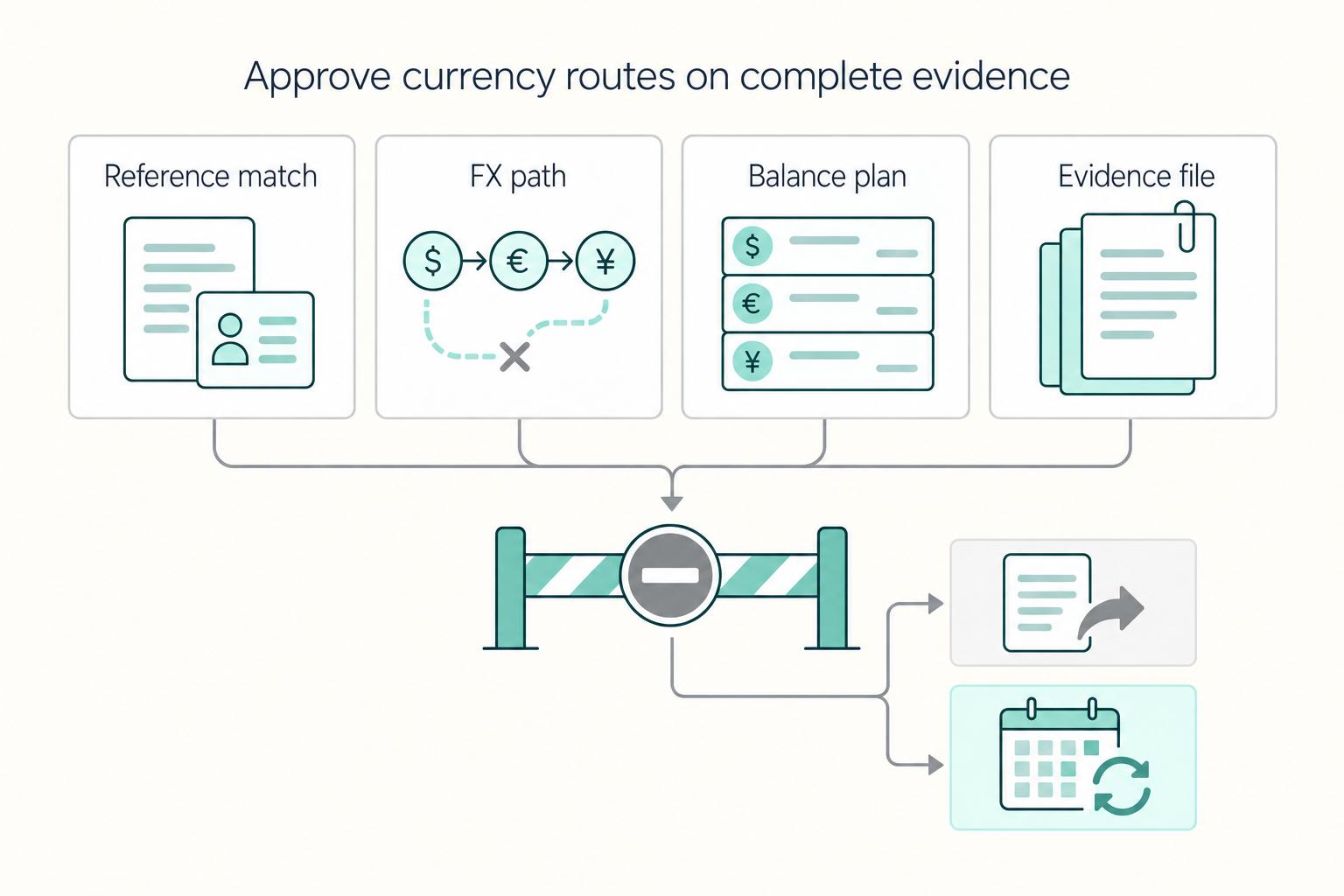
How to Get Paid in Multiple Currencies Without Forced FX
If you want to **get paid in multiple currencies** while protecting margin, separate collection from conversion. Receive the client's currency first, then decide if, when, and where to convert it.

How EOR Platforms Use FX Spreads to Make Money
You can control more of your payout outcome than it first appears. As the CEO of a business of one, separate unavoidable costs from avoidable ones, then manage the compliance exposure that cross-border money movement creates.
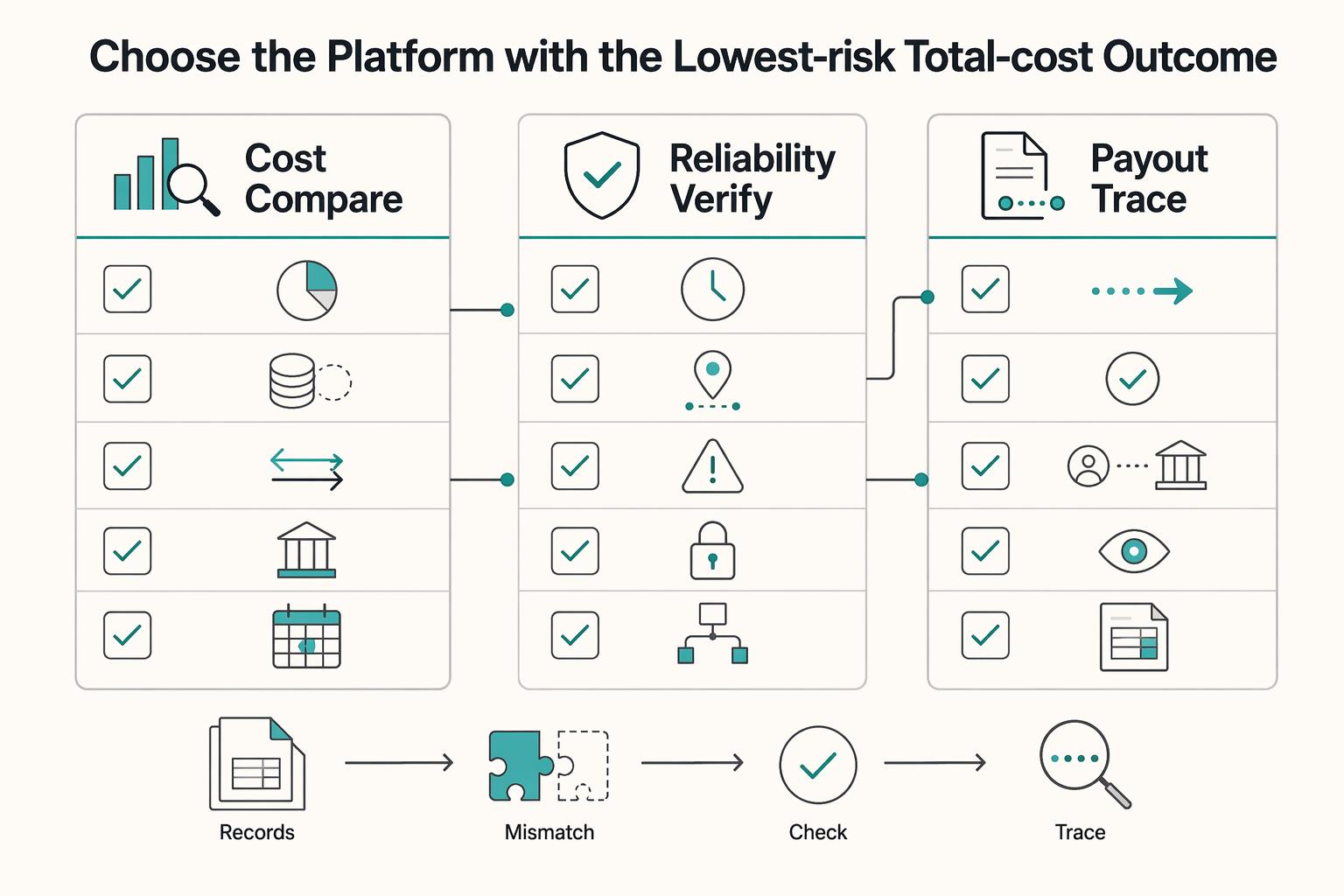
The Race to Zero on FX Fees Is a Losing Bet for FinTech Buyers
A zero FX fee headline is not the same thing as a low-cost payment. If you are choosing a setup for cross-border payments, the real goal is the lowest-risk total cost, not the cheapest number on a fintech landing page.