
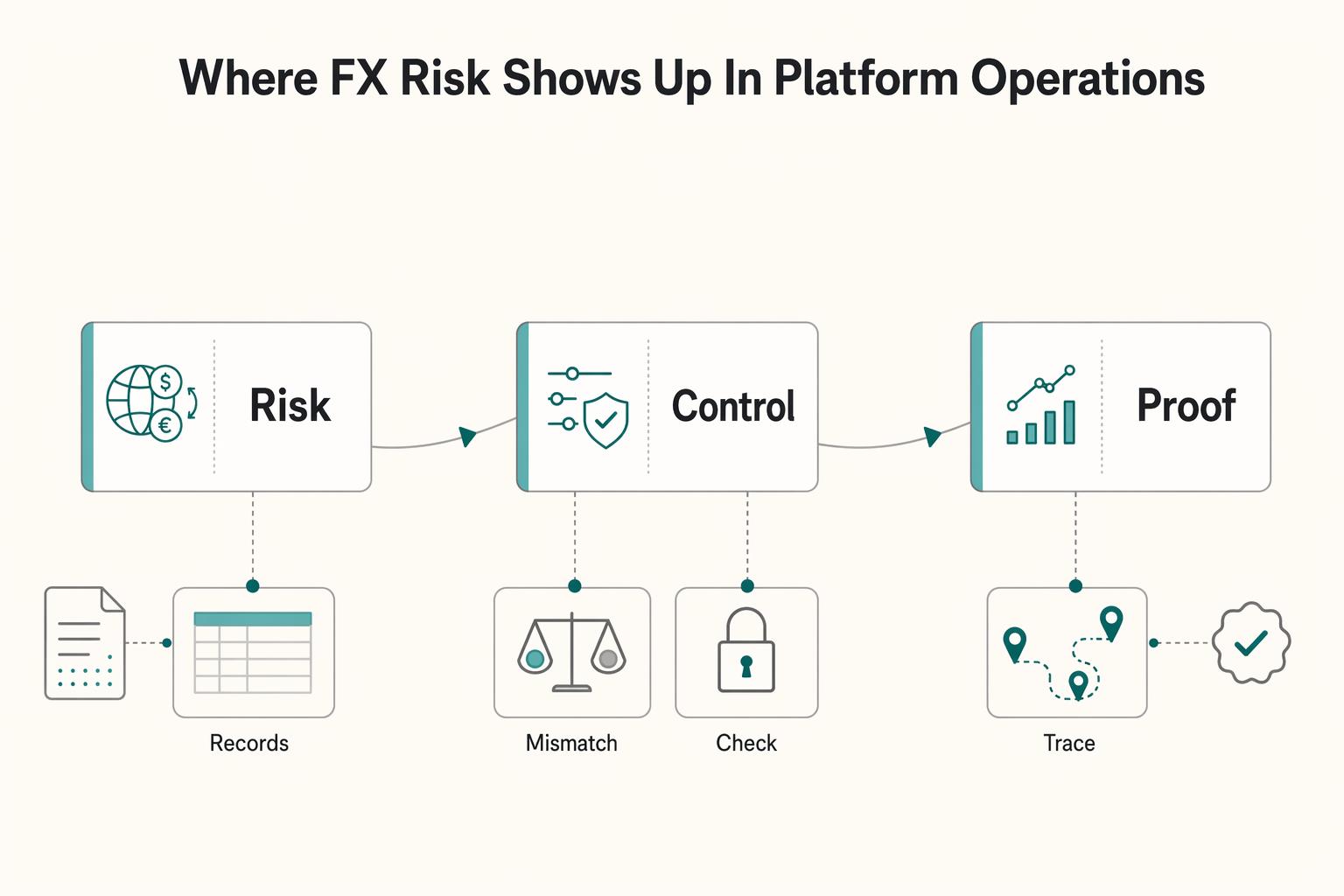
Quick Answer
Map FX exposure by workflow first, then measure materiality by currency pair and timing, and only then choose mitigation. For platform operators, the practical sequence is to classify transaction versus translation versus economic risk, tie committed items to payout and conversion records, and review open positions on a standing cadence. Use the simplest instrument your team can operate and reconcile, and reject stale quote paths so retries do not create duplicate financial events.
Where FX Risk Shows Up in Platform Operations#
Foreign exchange risk is not just a problem for large multinationals. If your marketplace, embedded payments product, or contractor payout stack touches more than one currency, exchange-rate moves can affect margins and financial stability in very practical ways.
FX risk is the risk that exchange-rate moves change business outcomes. For platform operators, that exposure can show up quickly. You do not need a treasury desk to feel it.
A payout approved today may be funded later. A balance may sit in a non-functional currency. A pricing decision may be made in one currency and settled in another. Any of those can create losses or volatility.
The most useful starting point is to stop treating FX as one bucket. Most teams need to separate three exposure types early:
- Identify transaction risk in committed inflows and outflows where a rate move changes what you actually pay or receive.
- Separate translation risk from cash risk so reporting volatility does not distract you from live payout exposure.
- Flag economic risk where longer-term pricing, supplier, or market decisions are sensitive to currency moves.
That split is more than accounting hygiene. It changes what you do next. If the issue is transaction risk in cross-border payouts, you may need tighter timing, funding, or conversion controls. If the issue is broader profit volatility, hedging may help. Forward contracts, broader hedging approaches, and multi-currency accounts are all common options, but none is right for every flow.
This guide takes an execution-first approach. You will map where exposure is created in real workflows, measure which currency pairs and timing gaps are actually material, and then choose mitigation tactics with explicit tradeoffs. The goal is not theoretical completeness. It is to give finance, product, ops, and engineering the same exposure picture so you can act without creating fresh reconciliation problems.
Trace committed exposure to invoices, balances, conversions and payout records. Forecast and economic exposure instead need documented assumptions, confidence and scenario dates; they need not have a live payout ID. Keep the categories separate so treasury can see both current obligations and uncertain future volume.
As you work through the next sections, keep evidence showing how each exposure was classified, what data fed the measurement, and who approved the mitigation choice. That record is what makes the process credible when rates move against you.
What to prepare before you start#
Start by locking ownership, data, and compliance records in one place. Otherwise your FX analysis can look right on paper and still fail in execution.
Assign named owners#
Finance owns policy and hedge approval, payments ops owns execution, engineering owns automation and data movement, and compliance owns KYC, KYB, and AML gates. Put one person's name next to each role so escalation is clear when payouts fail, webhooks lag, or document gaps appear.
Build one source file for all foreign-currency flows#
Include receivables, payables, Virtual Accounts inflows, payouts, and treasury conversions tied to your Ledger. Each line should map to entity, product, currency, and transaction state so you can tell whether exposure is still open or already closed.
Keep policy and funding records with the inventory#
Keep the approved hedge policy, counterparty terms, funding plan and payout SOP with the exposure inventory. Assign applicable tax and onboarding records separately rather than making them universal FX prerequisites.
If you want a deeper dive, read How Platforms Are Reshaping the Market of Foreign Exchange: A 2026 Deep Dive.
Step 1 identify your real FX exposure by workflow#
Start by separating cash-impact FX risk from reporting effects. Classify every foreign-currency flow as transaction exposure, translation exposure, or economic risk before you discuss mitigation.
Classify each flow before you map it#
Use the table below as your working definition for each flow.
| Exposure type | Where it shows up | Article signal |
|---|---|---|
| Transaction exposure | Revenue or expenses in multiple currencies | A rate move can change what you actually collect or pay on an open item |
| Translation exposure | Converting foreign operations into presentation-currency reports | The effect is mainly in reported balances or results |
| Economic risk | Longer-term competitiveness and company value | Exchange-rate moves affect competitiveness and company value |
For a USD-functional-currency entity owing EUR, an increase in USD per EUR raises the USD funding cost of a fixed EUR payable. Translation concerns converting foreign operations into presentation-currency reports; remeasurement of an individual foreign-currency monetary item is a separate accounting issue. Economic risk concerns longer-term effects on prices, demand and competitiveness.
Map the workflow where exposure is created#
After classification, trace the operating flow end to end for each in-scope entity and currency:
- invoice or receivable creation
- customer collection
- conversion event
- wallet credit or balance hold
- payout batch creation
- final settlement timing for cross-border payments
Your map should show where exposure is created, transferred, and closed. Use that map to decide whether operational changes or hedge design should come first.
Trace committed exposures to operational records and forecast or economic scenarios to dated assumptions and confidence. A spreadsheet can be a controlled inventory if its inputs, changes and review are documented; it does not make an exposure invalid.
Step 2 measure materiality before picking instruments#
Before you choose any hedge or treasury instrument, decide what is material. Measure exposure by currency pair, and keep committed obligations separate from forecast volume so your totals stay decision-useful.
Illustrative USD funding example: a fixed EUR100,000 payable costs USD110,000 at USD1.10/EUR and USD115,000 at USD1.15/EUR, a USD5,000 increase before fees. If EUR40,000 of same-date receipts is available to this entity, the remaining EUR60,000 costs USD66,000 or USD69,000: USD3,000 remains exposed. A binding hedge changes this calculation and must be measured separately; these rates are hypothetical, not market quotes.
Start with two exposure lanes:
- Committed obligations: amounts tied to an existing operational record (for example, an issued invoice, payout file, funding event, or settlement instruction).
- Forecast risk: expected volume that is relevant for planning but not yet locked by a concrete record.
Then add timing buckets to each line so you can see when rate risk is still open and what event closes it.
| Timing bucket | What it should answer |
|---|---|
| Same day | What is still open today, and what closes today |
| Short lag | What stays open into the next operating cycle |
| Longer lag | What remains open beyond the next cycle |
Publish a review pack on an agreed cadence, increasing frequency when exposure or market movement warrants it:
- Open FX exposure (by pair, flow type, owner, timing bucket)
- Realized conversion variance
- Unreconciled exceptions
- Coverage status by flow type (committed vs forecast)
Treat this as a documented, repeatable risk assessment process and refresh it on a standing cadence. If you use bank-style governance references, apply them to your own context rather than copying another institution's setup.
Document the source and confidence of every exposure line. Committed amounts need operational records; forecasts need dated assumptions. Net only funds the entity can legally and operationally use for the same currency obligations at the relevant dates. Exclude safeguarded customer or seller funds that cannot fund the platform’s own obligations.
Step 3 choose mitigation tactics with explicit tradeoffs#
Choose the tactic your team can execute and reconcile reliably under real liquidity constraints; precision is secondary if execution breaks. After Step 2, the decision is less about finding the right instrument in theory and more about avoiding a setup that cannot be funded, operated, or explained when timing shifts.
Use the same screening standard for every tactic: clear underlying exposure, clear owner, clear close event, and a clear reconciliation path. If those are missing, defer complexity until the operating controls are in place.
| Tactic | What to confirm before approval | Operational tradeoff to document |
|---|---|---|
| Forward contract | Fixed currency direction, amount and value date; ability to deliver | Binding obligation; timing changes, cancellation, credit/collateral and roll costs |
| Purchased currency option | Permitted right, expiry, exercise rules and covered exposure | Premium cost and residual exposure; does not remove all funding needs |
| Futures contract | Standard contract size/date and underlying exposure fit | Margin funding, daily cash effects and basis/size mismatch |
| FX swap | Near and far exchanges, value dates and funding purpose | Counterparty exposure, funding and roll risk; not interchangeable with every longer-term currency swap |
| Natural offset | Usable inflows/outflows in same currency, entity and timing window | Residual amount/timing mismatch and limits on customer or seller funds |
Put funding and payout timing ahead of apparent hedge precision. Confirm cash needed for delivery, premiums, collateral and margin under stressed conditions. A hedge can reduce rate exposure while increasing immediate funding needs; approve both under the treasury policy.
Define limits for covered currency, amount, value date, forecast confidence, counterparty and funding capacity. A hedge that outlives its underlying payable or covers cancelled volume creates a new position. Record who can change, close or roll the instrument and how costs and accounting treatment are approved.
Build controls into product and ops#
Treat these controls as launch criteria, not post-launch cleanup. In embedded payments and high-frequency payout programs, small execution failures can turn ordinary FX risk into duplicate conversions, blocked payouts, and unreconciled cash movement.
| Control step | Main action | Key evidence |
|---|---|---|
| Reject stale execution paths and make retries non-destructive | Validate quotes before submission; resolve unknown outcomes before requoting or replacement | Durable operation identity, all linked provider/attempt records, and no duplicate economic effect |
| Put compliance gates exactly where money can still move | Enforce applicable program holds and route material changes to the responsible owner | Review before continuing payouts if party details, account details, or transaction behavior changes |
| Make every state transition auditable end to end | Trace the path from internal request to provider reference to Ledger posting; record each status change with timestamp, trigger, and owner | Request ID, idempotency key, provider reference, webhook event IDs, final settlement status, and Ledger entry IDs |
Step 1 Reject stale execution paths and make retries non-destructive#
Before submission, validate quote expiry and the exact approved amount, currency direction, fees and value date. After an uncertain response, do not requote and resubmit the same obligation: persist the original operation, request and key, retrieve provider status and reconcile the outcome. Retry the original payload only within the provider’s documented contract; an expired key or new quote must not authorize duplicate execution.
For a retried request, preserve the durable operation identity and all linked provider, attempt, conversion and payout records. A workflow may legitimately have multiple references or journal entries; prove they reconcile to the authorized amount and effects without duplicate execution. The common failure is split ownership, where engineering sees a timeout, ops sees no confirmation, and both re-initiate. Keep the unresolved-outcome block until authoritative status is reconciled.
Step 2 Put compliance gates exactly where money can still move#
Apply verification, tax and AML controls according to the entity, activity, program and jurisdiction. Internal approvals cannot release a provider or legal hold. Route material changes in recipient or account information to the required review, and give failed or unresolved operations a named owner.
Keep this practical, not static. If party details, account details, or transaction behavior changes, require review before continuing payouts under prior approval.
Step 3 Make every state transition auditable end to end#
Link the approved exposure and conversion request to provider execution, posted journals and later cash settlement. Verify event signatures, deduplicate deliveries and protect financial effects under concurrent processing. Retrieve authoritative status for missing or out-of-order events rather than posting or reversing solely from arrival order.
Keep request identity, provider attempt and execution references, event IDs, journals and settlement records linked. Missing evidence slows reconciliation and can leave exposure unresolved. A controlled spreadsheet can support bounded reconciliation when its inputs, changes, review and duplicate controls are reliable; scale tooling according to volume and exception risk.
Common mistakes that create avoidable FX losses#
Misclassified exposure, unowned funding and unsafe retry behavior can turn market movement into an avoidable loss. Review those control failures alongside the underlying currency position.
Compare committed and forecast exposure before hedging#
Prioritize material committed obligations while keeping credible forecast exposures visible. Match currency direction, net amount, value date and owner to the hedge. Document cancellation and timing risk rather than assuming every forecast should wait or every payout batch needs a separate instrument.
Treat translation volatility and cash exposure as different problems#
Reporting volatility can matter, but open payout obligations create immediate cash risk. Prioritize exposures that can force a currency buy or sell to complete payouts, and keep accounting translation effects from crowding out transaction-risk controls.
Assign tax and onboarding records to their own scope#
Keep required tax and onboarding records linked to the relevant entity or payment, with their own owners and deadlines. FATCA, Form8938 and FBAR concern specific reporting scopes; they are not generic FX execution or payout-release checks. Determine applicability separately and do not infer a hold from the existence of a tax reporting topic.
When losses spike, reduce complexity before changing strategy#
Do not add instruments, currencies, or looser hedge rules during a control failure. Freeze new hedge complexity, reconcile Ledger-to-bank mismatches, confirm provider references and settlement states, then restart with narrower scope and clear ownership across finance and ops.
Your first 30 days and a copy-paste operating checklist#
The following 30-day outline is an illustrative control pilot, not a universal rollout deadline. Advance when exposure definitions, funding ownership and tested execution controls are ready.
| Week | Focus | What to put in place |
|---|---|---|
| Week 1 | Inventory exposures and assign owners | Map committed records and forecasts with dated assumptions; classify entity, currency, timing and usable funds; assign owners |
| Week 2 | Stand up a measurement cadence | Use the treasury-approved cadence; retain operational inputs and dated forecast assumptions; set escalation thresholds by owner |
| Week 3 | Pilot one mitigation tactic on one corridor | Keep scope to one tactic and one currency corridor, with documented entry and exit rules and dated evidence |
| Week 4 | Run one end-to-end control test | Test applicable holds, quote expiry, uncertain outcomes, duplicate/concurrent events, accounting and cash reconciliation |
Week 1: inventory exposures and assign owners. Map committed exposures from invoices, balances, payouts and conversions. Add forecasts and economic scenarios with dated assumptions and confidence. Record entity, currency direction, timing, usable funds, source and owner; publish shared definitions before combining totals.
Week 2: stand up a measurement cadence. Build a review pack with committed records and dated forecast assumptions, separating amounts by entity and timing. Use the cadence and escalation thresholds agreed by treasury rather than requiring every line to have a live provider reference.
Week 3: pilot one mitigation tactic on one corridor. Keep scope tight: one tactic, one currency corridor, and documented entry and exit rules. Define who approves exceptions and what happens when payout timing slips. Keep dated evidence for the rule, approvals, execution, and reconciliation.
Week4: run an end-to-end sandbox test covering applicable holds, duplicate and concurrent events, a lost provider response, quote expiry, posting and cash reconciliation. Confirm no replacement conversion or payout is submitted while the first outcome remains unresolved. Retain the approved policy and evidence.
Exposure map completeMeasurement pack liveHedge rule documentedControls testedException process assignedAudit evidence archived
Need the full breakdown? Read How to Handle Realized and Unrealized Gains/Losses on Foreign Currency.
Frequently Asked Questions
What are the three types of FX risk platform operators must track first?
Track transaction exposure on foreign-currency obligations, translation exposure from converting foreign operations for reporting, and economic exposure from longer-term currency effects on demand and competitiveness. Do not double-count the same amount across these categories.
How is transaction risk different from translation risk in a payout-heavy marketplace platform?
Transaction exposure concerns the currency cost or proceeds of a specific obligation. Translation exposure concerns reporting foreign operations in a presentation currency and can change reported amounts without current cash movement. Accounting remeasurement of monetary items requires its own approved treatment.
When should we use a forward contract instead of a currency option?
A forward creates an obligation for a specified currency amount and date at agreed terms, so it can fit a sufficiently certain exposure but needs funding and cancellation plans. A purchased option gives a right rather than an obligation and costs a premium. Compare uncertainty, cash needs, contract terms and hedge-policy limits before choosing.
What is a natural hedge for cross-border payments, and when is it enough?
A natural offset aligns usable inflows and outflows in the same currency and timing window. It reduces the amount needing conversion but leaves any timing, amount or legal-entity mismatch exposed. Do not net customer or seller balances against platform costs unless their use is authorized.
How often should a platform review FX exposure and hedge performance?
There is no universal review cadence in the evidence, so avoid treating weekly or monthly reviews as a fixed rule. Set a written cadence that fits your payout profile and exposure, then revisit it when volumes, corridors, or hedge behavior change.
Which controls are mandatory before scaling payout batches across new currency corridors?
No checklist applies universally. Before scaling, determine the program’s legal and provider requirements and prove funding availability, approvals, quote validation, unknown-outcome handling, duplicate protection and reconciliation. Required provider holds remain in force until the responsible party releases them.
Try a related tool
Researched and edited by the Gruv editorial team. Gruv builds cross-border billing, payouts, and finance-operations software for global businesses.
Sources
Includes 2 external sources outside the trusted-domain allowlist.
- bis.org/committees/bcbs/basel-consolidated-guideline...trusted
- docs.stripe.com/api/idempotent_requeststrusted
- docs.stripe.com/webhookstrusted
- legacy.export.gov/articletrusted
- cmegroup.com/trading/fx/files/PM23-FX010-FX-Margin-Key-Fa...external
- ifrs.org/issued-standards/list-of-standards/ias-21-th...external
Educational content only. Not legal, tax, or financial advice.
Related Posts
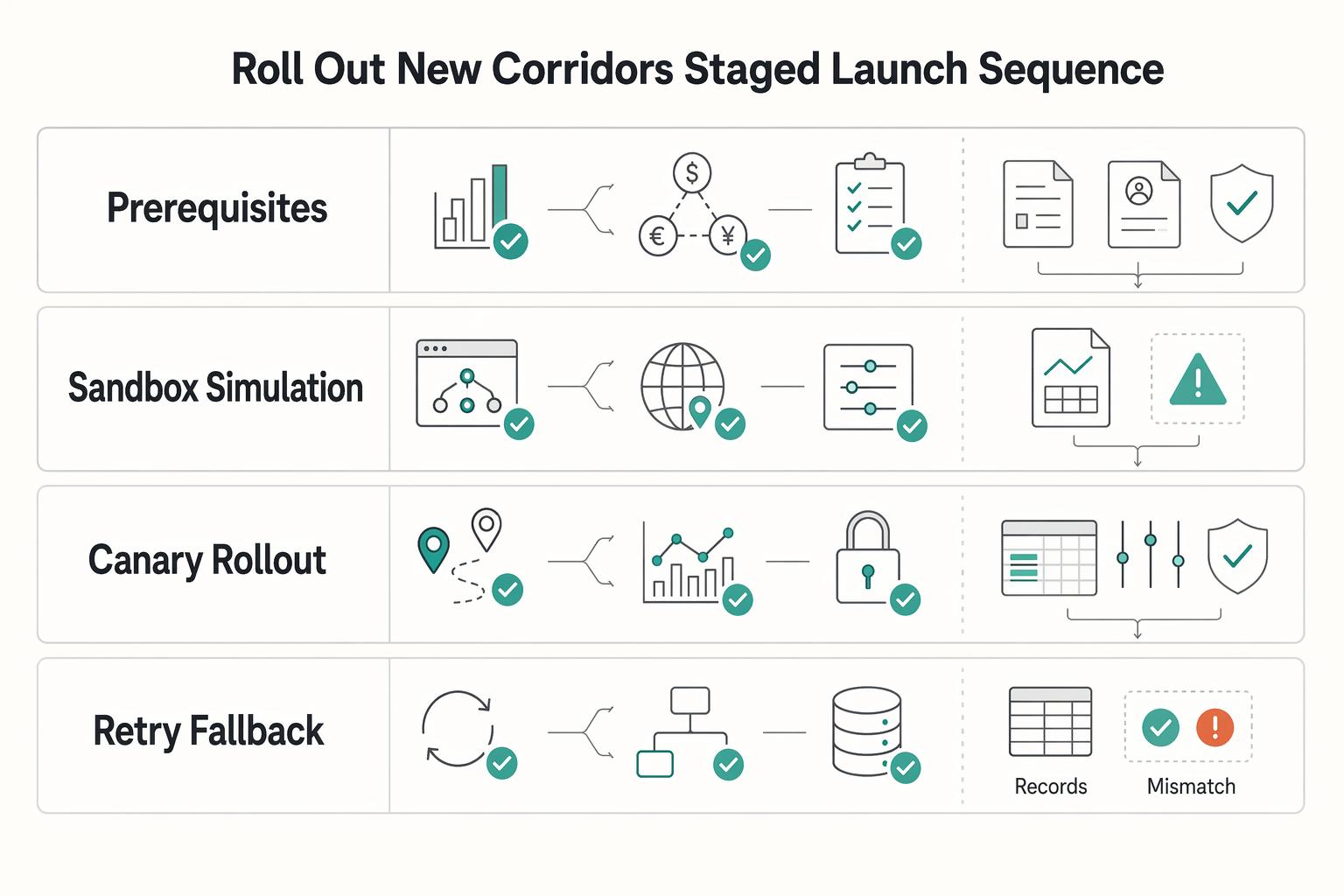
How Platforms Are Reshaping Foreign Exchange in 2026
Treat Foreign Exchange (FX) as an early product and operations decision, not a setting you clean up after launch. Global standard-setters still describe [cross-border payments](https://www.fsb.org/work-of-the-fsb/financial-innovation-and-structural-change/cross-border-payments) through the same four frictions: high costs, low speed, limited access, and insufficient transparency. If your platform pays people or businesses across borders, those frictions show up in user pricing, payout timing, and operational handling.
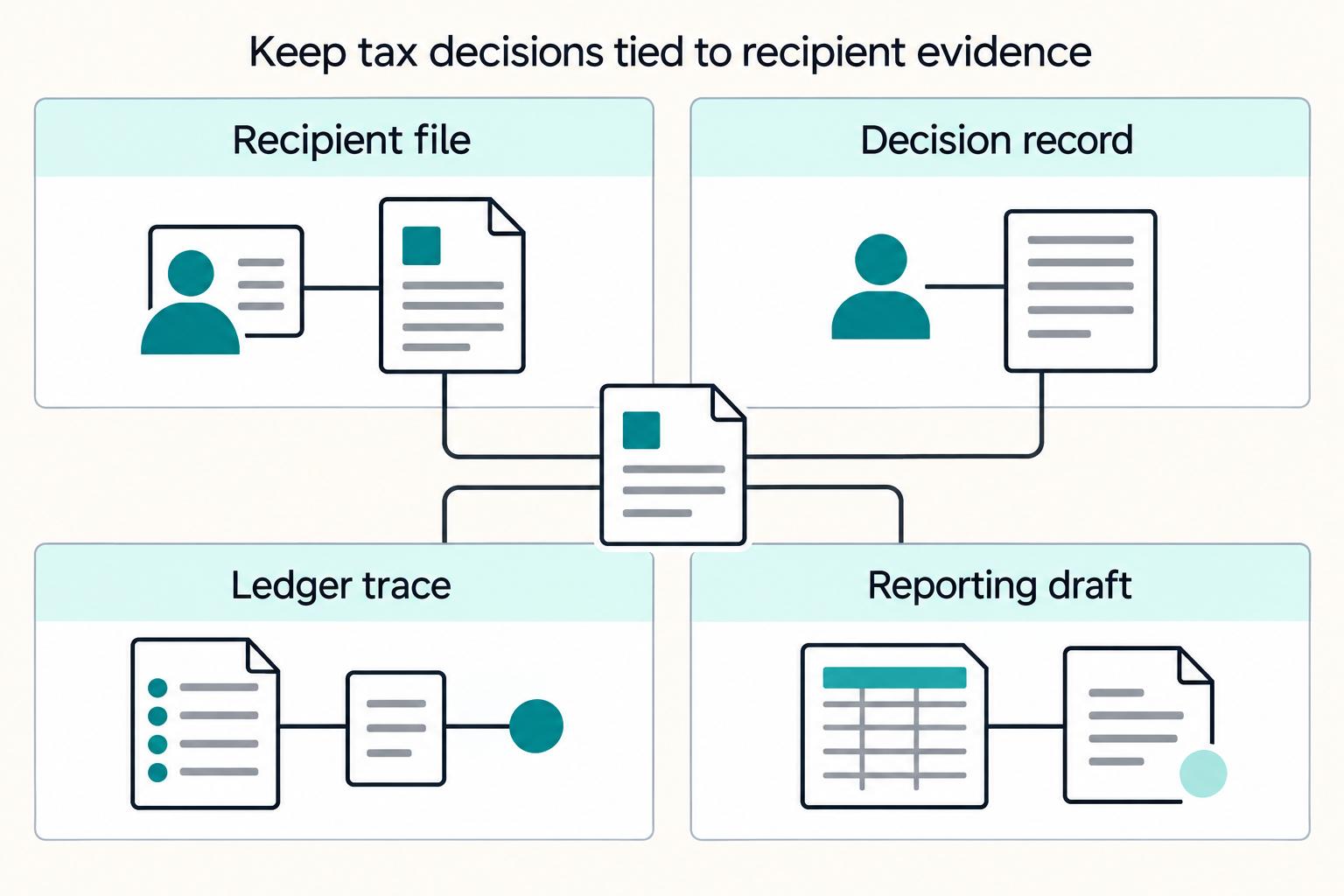
IRS Form 1042-S for Platform Operators: How to Report and Withhold on Foreign Contractor Payments
If you own compliance, legal, finance, or risk for a platform paying foreign contractors, sellers, or creators, you may need to make **Form 1042-S** operational. That means clear decisions, reliable checks, and escalation points your team can apply and defend.

FATCA Compliance for Marketplace Platforms: Identifying and Reporting Foreign Account Holders
For marketplace teams handling cross-border payouts, FATCA work is mostly a control-design problem. You need to decide what to implement first, what evidence to keep, and what to escalate before a payout creates avoidable reporting or withholding risk. The practical question is not whether FATCA exists, but which controls actually reduce reporting errors and potential 30% withholding outcomes.