
When a client requires you to use Deel Shield, it introduces risks to your autonomy, tax compliance, and direct client relationship. The core advice is to perform rigorous due diligence by scrutinizing the contract for red flags, analyzing the impact on your financial obligations, and proactively managing communication to keep the partnership direct. This strategic framework empowers you to protect your business and maintain control, ensuring the platform serves as a simple administrative tool rather than an obstacle to your client.
Your Client Wants to Use Deel Shield. Here’s Your Due Diligence Framework.#
If a client wants to use Deel Shield, start with a verification step: Deel Shield-specific terms aren't confirmed here. Treat any product shorthand as unverified until you review the full agreement package.
In plain language, here are the key terms supported by the available excerpts:
- FMCSA legal minimums: public liability baselines can vary by cargo and are often cited in a
$750,000-$5,000,000range. - Broker/shipper requirements: being legal at the minimum may still be insufficient for market access; higher limits are often requested.
- BMC-91/91X and BOC-3 filings: required filings must be on file when operating under your own authority, or authority may not activate.
Start with documents, not product shorthand. Request the full agreement set and confirm what is explicitly stated versus assumed. If core terms are missing, treat legal structure, payment flow, and compliance allocation as unresolved. For primary U.S. classification and withholding references, review IRS Publication 2104 and the U.S. Department of Labor resources.
| Issue | What may change | What does not change by label alone |
|---|---|---|
| Evidence scope | Client shorthand may describe a setup | Without contract text, Deel Shield-specific legal terms remain unverified |
| Legal minimums vs market access | Legal minimums can vary (for example, by cargo) | Meeting a legal minimum does not guarantee broker acceptance |
| Required filings | Filing status can determine whether authority activates | Missing required filings can still block activation |
Use a business-owner filter throughout. If a client is reducing its own exposure, check whether unclear terms or extra approvals shift uncertainty to you.
Before moving on, follow this sequence:
- Confirm which claims are supported by the actual agreement text.
- Separate legal minimum requirements from counterparties’ practical requirements.
- Verify all required filings and activation dependencies before relying on go-live assumptions.
For adjacent tax-audit context, see How to Handle a Tax Audit When Your Income is Paid Through Deel or Remote.
What Is Deel Shield (and Why Is Your Client Using It)?#
Start with the contract structure, not the label. You cannot confirm the legal setup from the product name alone, and you should not treat it as a trust signal about you. You need the signed agreement set.
Clients may use platform workflows to standardize onboarding and payments. That business goal may be understandable, but it does not tell you who contracts with you, who pays you, or how disputes are handled.
Terms like “Deel Shield” and “Deel Premium” do not prove anything on their own in conversation. For your engagement, those labels only matter if they match the governing documents.
Pin the model down in writing before you discuss rates, scope changes, or signature timing. Ask: “What is the exact product or tier for this engagement, and which documents control?”
| What the client says | What you can conclude now | What to verify before accepting |
|---|---|---|
| “We’re putting you on Deel Shield.” | A product label is being used. | Exact tier name in writing, legal counterparty, governing documents, payment instructions, governing law. |
| “We’re using Deel Premium.” | A different label is being used. | Which document controls, who signs with you, and whether any separate terms apply. |
| “It’s just Deel onboarding.” | Internal wording may be loose. | Full agreement pack, signatory entity, payer name, dispute notice process, override clauses. |
Record these points from the documents so nothing is assumed:
| Topic | Record this from the documents |
|---|---|
| Contract party | Exact legal entity that signs with you |
| Payment flow | Named payer and payment records you will receive |
| Compliance ownership | Clauses that assign tasks to each party |
| Dispute handling | Notice path, withholding rights, and claim venue/process |
Do not treat announcements or product pages as contract proof. If a public reference is incomplete, unavailable, or vague, rely on your agreement set instead.
Before moving to autonomy review, complete this handoff checklist. If any item is missing, you are still in document-identification mode, not decision mode.
- Confirm the exact tier in writing.
- Identify the legal counterparty in the signed documents.
- Save one evidence pack: main contract, incorporated terms, order form or engagement summary, and payment instructions.
- Flag clauses for autonomy review: approval rights, work-method control, exclusivity, substitution limits, reporting duties, and termination triggers.
Related: What to Do If You've Been Misclassified as an Independent Contractor.
Does This Arrangement Threaten Your Autonomy? A Framework for Vetting the Contract.#
This is the first real decision point. If the platform handles admin but someone else controls how you work, your independence may be at risk. Start with one test across the agreement set: who controls the work, who carries the business risk, and who owns the client outcome?
Step 1. Run an autonomy audit on the documents, not onboarding language#
In an Agent of Record model, a provider may handle contracting, onboarding, payroll processing, compliance, and contractor relationship management. That can stay administrative, or it can drift into work control. Check the signed documents and the actual workflow together.
Use this as a practical contract review checklist, not a jurisdiction-specific legal test.
| Control signal | Pass if documents show | Fail if documents show |
|---|---|---|
| Scope and outcome | Defined deliverables or a clear statement of work | Open-ended duties "as assigned" |
| Schedule | Deadlines or milestones, with you choosing work time | Fixed hours, attendance windows, or required availability blocks |
| Supervision | Output review by the end client | Ongoing line-management behavior or approval of your work method |
| Tools and methods | You choose tools and process, with reasonable security constraints | Mandated internal tooling or methods for all work, or constant task-level monitoring |
| Substitution or help | Limited ability to use help, subject to confidentiality or security | Absolute no-delegation terms with no practical justification |
| Other clients | No exclusivity, or narrow conflict-only limits | Broad exclusivity or non-compete limits that block normal client work |
If the contract says one thing but the workflow enforces another, treat that as a real issue to resolve before signing. Some issues are drafting cleanups. Others point to a misfit model.
Step 2. Triage issues into "acceptable with edits" or "pause and escalate"#
Acceptable with edits
- Administrative terms that do not direct how you work, such as invoice format, compliance documents, payment steps, and reasonable security requirements.
- Deposit language, if present, with a clear refund trigger and timing in writing. One AOR FAQ model states no extra fees but a fully refundable security deposit returned at engagement end.
Pause and escalate
- Terms that hand over practical control. Examples can include fixed hours, broad exclusivity, method-level approval rights, or broad language about "managing the contractor relationship."
- Some AOR FAQ descriptions of traditional staffing-agency-style models include longer setup times, higher fees, manual approvals, and inconsistent reporting. Treat those as operational tradeoffs to pressure-test in your own workflow.
Step 3. Tighten key wording and keep a defensibility file#
Where contract wording is broad or vague, ask for specific language before signing. Keep a defensibility file so you can show how the engagement operated in practice.
| Evidence to keep | Why it matters |
|---|---|
| Statement of work and change orders | Confirms outcome-based scope |
| Scope and approval communications | Shows who directed what, and when |
| Invoice and payment trail | Confirms payer flow and approval friction points |
| Independence signals | Supports your operating reality, including other clients, your own tools and process, and your business setup |
If control stays with you and the end client, sign. If the issues are mostly wording, renegotiate. If control over schedule, methods, or day-to-day operation shifts away from you, pause and get legal review before proceeding.
If you want a deeper dive, read GDPR for Freelancers: A Step-by-Step Compliance Checklist for EU Clients.
Before you redline terms, create a clean baseline contract to compare against platform language using the Freelance Contract Generator.
How Does Deel Shield Impact Your Tax & Compliance Reality?#
Treat this as a contract and documentation check, not a tax shortcut. In this setup, you can still be treated as an independent contractor (self-employed, not an employee), and unclear classification can still create legal, penalty, and tax-authority risk.
Step 1. Verify what changed in the contract chain#
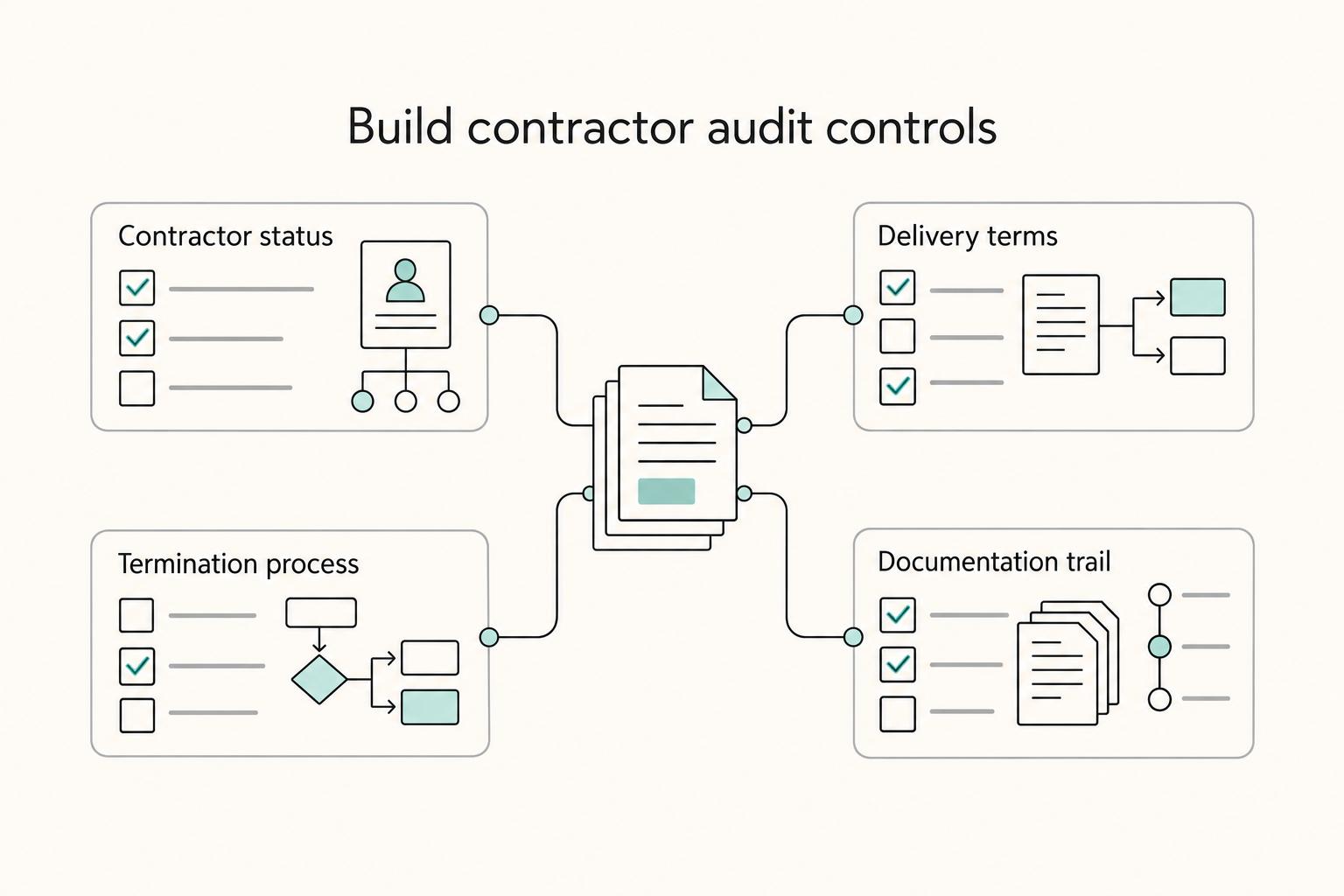
Before work starts, map core points to actual documents so expectations and enforcement are clear:
- Contractor status: confirm the agreement treats you as an independent contractor, not an employee.
- Delivery obligations: confirm what "done" means and how performance is measured against the contract.
- Termination and notice provisions: confirm how either side can end the relationship and what notice is required.
- Liability language: confirm how disputes and responsibilities are allocated in the contract terms.
If the signed agreement and operating instructions conflict on status, delivery expectations, or termination process, pause and request a corrected contract set.
Step 2. Use a scenario check so you review the right risks#
Pressure-test the arrangement against the scenario you are actually in:
- Status boundary check: make sure day-to-day working terms still match independent contractor treatment.
- Performance-risk check: make sure contract delivery expectations are specific enough to assess missed performance fairly.
- Termination-risk check: make sure notice and exit steps are clear before any dispute starts.
- Dispute-readiness check: make sure concerns can be raised and tracked in writing.
Step 3. Build one practical contract-and-audit table#
Build this table early so you avoid messy clean-up later.
| Item to confirm | What to validate | Records to retain |
|---|---|---|
| Contractor status language | Agreement clearly defines independent contractor status | Signed agreement and amendments |
| Delivery terms | Scope, milestones, and acceptance criteria are contract-based | SOW, deliverable logs, acceptance or rejection notes |
| Termination and notice process | Notice method, timing, and any cure steps are explicit | Notice clause excerpt, sent notices, acknowledgments |
| Documentation trail | Concerns and responses are documented in writing | Emails/messages showing timeline and good-faith effort |
Step 4. Keep a documentation pack that can survive scrutiny#
Build the file once, keep it current, and make sure each item can be retrieved quickly:
- Full contract chain: agreement, SOW, change orders, and incorporated terms
- Delivery evidence by date: work logs, submissions, and acceptance records
- Written concerns and responses
- Notice and termination records
- Payment records that match the contract timeline
Step 5. Separate platform protection from your exposure#
Contractors often overread platform labels. Platform-level protection may not automatically remove your exposure. Misclassification can still lead to legal risk, penalties, and tax-authority scrutiny, so review liability language with the same care as rates and payment terms.
Focus on clauses covering liability, cooperation duties, governing law, and termination and notice terms. If terms are unclear or overbroad, raise concerns in writing and keep that paper trail as evidence of good-faith compliance.
Use this decision gate:
- Proceed as-is: contractor status, delivery terms, and termination/notice process are clear and documented.
- Proceed after edits: the core model works, but delivery, notice, or liability language needs tightening first.
- Pause for specialist review: classification risk remains unclear or contract terms conflict in ways you cannot resolve from the current document set.
You might also find this useful: Deel vs. Remote: A Comparison from the Freelancer's Perspective.
How to Maintain a Direct and Powerful Client Relationship#
If you accept the structure, the next risk is quieter. Do not let the platform become the relationship. Keep it as an administrative layer, not the center of the engagement. Protect direct client ownership of scope, feedback, and decisions while using the platform for contract and payment mechanics.
Use these as working definitions for this section (practical labels, not Deel terms):
- A direct relationship means you and the client discuss scope, priorities, feedback, and decisions with each other.
- Platform dependency starts when the only visible record of your work is approvals, invoices, or status updates inside the platform.
- Strategic ownership means the client still engages you for recommendations and outcomes, not just task throughput.
Step 1. Anchor relationship ownership in the agreement#
Start with the independent contractor agreement and any SOW. Those documents define the business relationship. They should state work scope, delivery timing, and compensation. Keep day-to-day execution aligned with that service-based scope by using clear deliverables, due dates, and review checkpoints.
At kickoff, confirm in writing:
- Who sets priorities
- Who approves deliverables
- Where strategy conversations happen
- Who handles platform administration
If scope changes, update those same points in writing.
Step 2. Set channel boundaries early#
Do this early. Once work decisions start happening inside billing threads, it can be hard to pull them back out.
Deel describes a tradeoff between direct contractor management and shifting legal responsibility through Contractor of Record. Treat that as an administrative setup choice, not a substitute for direct working communication.
Use direct channels for work decisions and feedback. Use the platform for contract execution, invoicing, and payout administration. Keep one rule explicit: if scope, acceptance criteria, timeline, or business priority changes, document it in direct written communication and reflect it in updated scope documents when needed.
Step 3. Keep an independent record of your value#
Do not let invoice approvals become your main proof of impact. Keep simple artifacts shared directly with the client: briefs, recommendations, decision logs, and outcome summaries.
That record supports the agreement’s purpose of setting expectations and helping reduce dispute risk. It preserves what was requested, what you advised, what was decided, and what was delivered.
| Objective | Primary channel | Owner | Proof artifact | Corrective action |
|---|---|---|---|---|
| Keep strategy conversations direct | Call + follow-up email | You + client decision-maker | Decision summary with owners | Schedule a recurring strategy review if discussion drifts into admin threads |
| Control scope changes | Email + updated scope doc | Client decision-maker | Change note with deliverables and due dates | Pause new scope until updated terms are confirmed |
| Preserve acceptance clarity | Shared doc + direct sign-off | Functional approver | Acceptance note or reviewed deliverable | Request explicit acceptance if only invoice approval appears |
| Keep admin separate from consulting | Platform for billing and admin only | Admin or finance contact | Invoice + remittance trail | Reset boundaries when project feedback appears in billing workflow |
Step 4. Run a monthly relationship health check#
Run this check before the relationship quietly degrades into a ticketing process.
Review four signals each month:
- Are you included in strategy conversations, not only delivery updates?
- Is feedback substantive and timely, not only approve or reject?
- Do you still have access to a decision-maker?
- Is the platform supporting consultative work rather than replacing it?
If multiple signals weaken, intervene early. Restate scope in business terms, ask for a named strategic owner, and reset communication lanes.
Step 5. Use early, low-friction interventions#
Relationship drift is often easier to correct when you act early and keep the fix simple. Use low-friction interventions such as these:
- If everything is redirected to the platform: reset boundaries and move scope and decision discussion to direct channels, then summarize in writing.
- If strategic feedback is delayed: send a concise recommendation memo with a clear decision request.
- If ownership is unclear: request one operational contact and one decision-maker, with responsibilities documented.
- If platform comments start redefining how work is done: point back to agreed services and request documented scope updates for new asks.
Done well, the platform stays administrative while your client relationship stays consultative and decision-focused.
For a step-by-step walkthrough, see A Deep Dive into Deel's Pricing and Fees for Contractors.
Conclusion: Deel Shield Is a Business Decision, Not a Red Flag#
Treat this as a risk-allocation decision, not a trust signal. The practical question is whether your compliance approach is clear, workable, and proportionate for your business.
Final decision tests before you sign#
- Jurisdiction-mapping test: Have you mapped regulatory requirements across the jurisdictions involved, or are key obligations still unclear?
- Controls test: Are risk assessment and ongoing monitoring defined and operational, with a cadence for regular audits?
- Team-readiness test: Do you have clear cross-functional ownership and training for compliance tasks, or is execution still ad hoc?
| What you see now | Default action | Why |
|---|---|---|
| Jurisdiction requirements are mapped, controls are defined, and audit cadence is in place | Move forward | Risk and operating burden are more knowable |
| One material compliance gap remains and can be resolved before launch | Pause and resolve | You need controls and accountability in place before scaling |
| Multiple unresolved gaps, especially in jurisdiction mapping, monitoring, or ownership | Do not sign yet | Missteps can become costly if core controls are missing |
Immediate close-out checklist#
- Map regulatory requirements across each jurisdiction in scope.
- Document who owns each compliance task and how cross-functional teams will execute it.
- Set up risk monitoring and a regular audit cycle before scaling further.
If your compliance map is complete, controls are explicit, and review cadence is real, this can be a reasonable business choice. If not, tighten the operating model before you proceed.
This pairs well with our guide on How Independent Contractors Should Use Deel for International Payments, Records, and Compliance.
If you need to validate whether a different cross-border payment and compliance workflow fits your setup, talk to Gruv.
Frequently Asked Questions
What is Deel Shield for a contractor?
For you, it means your legal contract is with a Deel entity, not your end client. Deel becomes the 'Contractor of Record,' invoicing your client and then paying you. This alters the contractual chain and requires you to verify its impact on your autonomy and tax obligations.
Does Deel Shield make me an employee of Deel?
No. You are engaged through Deel as an independent contractor, not a salaried employee with traditional benefits. However, you must ensure your contract terms and working practices—control over your work, use of your own tools, and freedom to serve other clients—strongly uphold your independent status.
What are the key risks of Deel Shield for a contractor?
The primary risks to your business are manageable but require attention: Psychological Distance: The intermediary can create a perceived loss of directness with your client if not managed with proactive communication. Contractual Rigidity: These agreements are often standardized, potentially offering less flexibility for negotiating specific terms like IP rights or liability clauses. Compliance Complexity: It can create new administrative hurdles for you regarding invoicing, tax filings, and residency tracking.
How does Deel Shield affect my US expat taxes?
The Foreign Earned Income Exclusion (FEIE) requires foreign-sourced income. Since the source is where you physically work, Deel Shield doesn't change the fundamentals. However, your payment records will now come from a Deel entity, so you must maintain meticulous documentation of your physical location to prove the foreign source of your earnings.
Who is legally responsible if I am misclassified under Deel Shield?
Deel contractually assumes the financial and legal liabilities of misclassification for the client. If a government body were to challenge your status, Deel would be responsible for the defense and potential fines. This does not absolve you of responsibility for your own personal income tax compliance and business registrations.
Can I still work for other clients if I'm under Deel Shield?
Yes, and this is non-negotiable. The ability to serve multiple clients is a cornerstone of being an independent contractor. Meticulously review your agreement for any exclusivity or restrictive non-compete clauses. Such language is a major red flag that must be challenged before you sign.
Researched and edited by the Gruv editorial team. Gruv builds cross-border billing, payouts, and finance-operations software for global businesses.
Sources
- dol.gov/agencies/olms/eventstrusted
- eeoc.gov/laws/guidance/technical-assistance-manual-em...trusted
- ftc.gov/system/files/ftc_gov/pdf/compendium-ftc-poli...trusted
- irs.gov/pub/irs-access/p2104_accessible.pdftrusted
- krex.k-state.edu/bitstream/handle/2097/42981/FrankGiordano202...trusted
- nysd.uscourts.gov/sites/default/files/2024-07/SolarWinds%20Opi...trusted
- pmc.ncbi.nlm.nih.gov/articles/PMC12675782trusted
- scazlab.yale.edu/sites/default/files/files/JAKE_BRAWER_DISSER...trusted
Educational content only. Not legal, tax, or financial advice.
Related Posts

GDPR Compliance Checklist for Freelancers Working With EU Clients
Start by separating the decisions you are actually making. For a workable **GDPR setup**, run three distinct tracks and record each one in writing before the first invoice goes out: VAT treatment, GDPR scope and role, and daily privacy operations.

What to Do If You've Been Misclassified as an Independent Contractor
Treat this as a protection problem first, not a label debate. If your work was treated as an independent contractor arrangement even though the relationship functioned differently, your first goal is to protect pay, rights, and records while you choose the least risky escalation path. You can do that without making accusations on day one, which often keeps communication open while you document what happened.
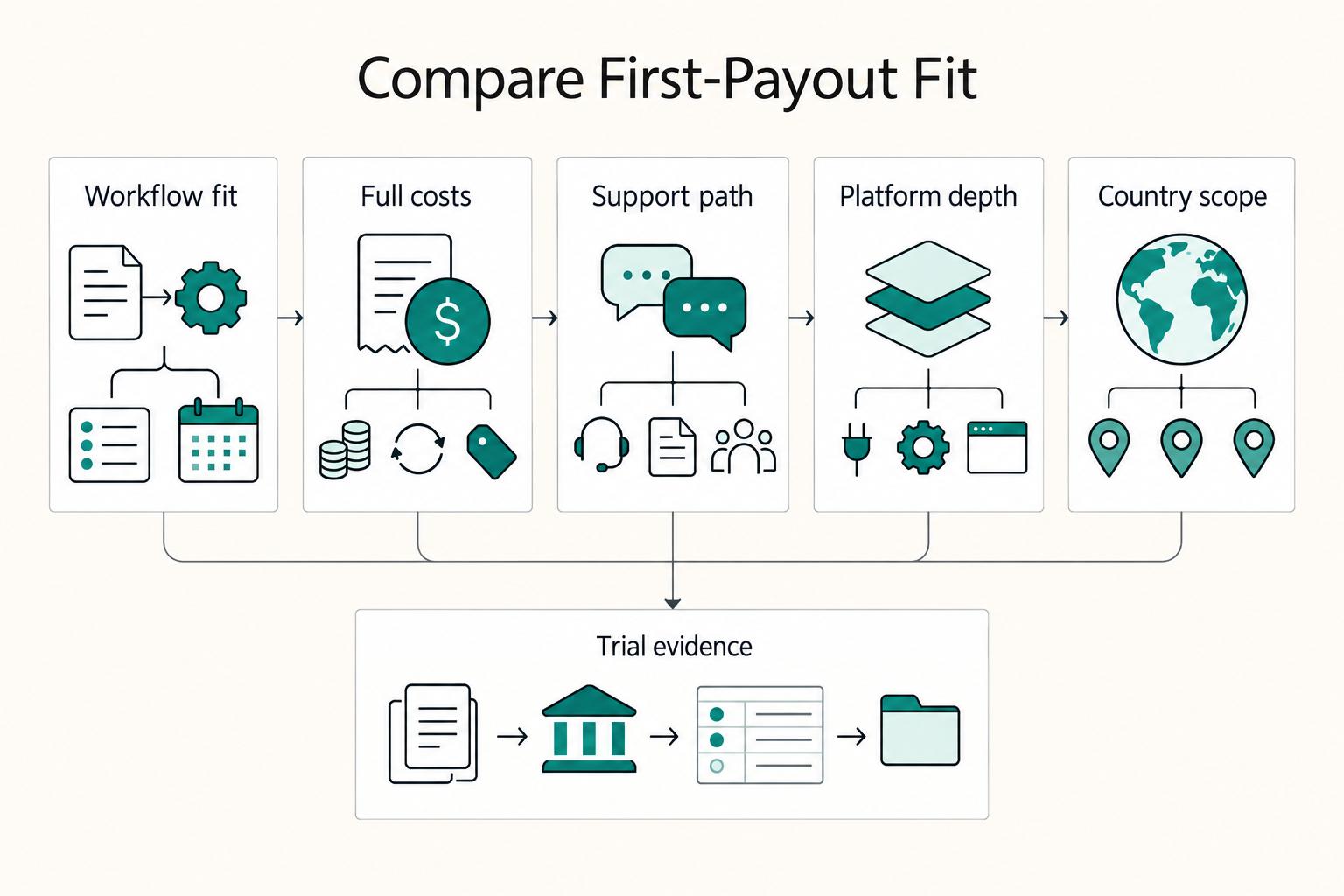
Deel vs Remote for Freelancers Who Need a Clear First-Payout Decision
Choose the platform that makes your first payout cycle predictable and your contracts easier to defend. This is an operating decision, not a brand contest.