
Quick Answer
Set reimbursement and client billing eligibility per line; approve against the applicable agreement and policy; record the liability and any billable customer cost; pay the approved outstanding amount; reconcile payments separately from invoices and collections.
Reimbursement and client billing are separate decisions#
An agency can owe a freelancer reimbursement for an approved purchase even when the client will never see that cost on an invoice. Equally, a client-billable software purchase paid directly by the agency creates no reimbursement owed to the freelancer. Decide who paid, who owes whom, and whether the client contract permits a charge before moving money.
Use two decisions on each expense line: reimbursement eligibility and client billing eligibility. Keep the agency cost category alongside them. Agency overhead is a cost allocation, not an automatic rejection of a worker’s claim. A receipt proves a purchase; it does not prove that the purchase was approved, billable or unpaid.
This workflow suits agencies coordinating contractors, internal staff and client projects. Contract terms and applicable reimbursement obligations govern payment. The examples below are hypothetical amounts before tax, with no claim that every agency must use the same policy.
Set policy without making client recovery a payment condition#
| Purchase | Reimbursement decision | Client billing decision |
|---|---|---|
| Freelancer buys approved project travel | Agency owes approved amount under its agreement | Bill only within the client’s travel allowance and terms |
| Staff member buys approved internal software | May be reimbursable under staff policy and applicable law | Agency overhead; no client charge |
| Agency pays project vendor directly | No worker reimbursement; record vendor payment | Potentially billable if the client contract allows |
| Freelancer buys ordinary equipment for their own business | Usually covered by their fee unless agreement says otherwise | No separate rebill without client authorization |
Write spending caps, approval roles, submission windows, accepted evidence, excluded purchases and exception authority. Where employees are involved, check local reimbursement requirements rather than assuming a contract can remove an obligation. For contractors, record the expense terms separately from the service fee. Do not turn a missing client project code into a finding that the worker’s expense is personal.
Use pending evidence, disputed scope, approved nonbillable and denied as distinct outcomes. A missing receipt can sometimes be resolved with a replacement invoice, card record and documented explanation, subject to policy and required substantiation. It should not silently become permanent denial. Give the claimant a reason, a correction route and a named reviewer.
If a client rejects a charge, revisit the client billing decision. Do not reverse an already valid reimbursement promise automatically. If an agreement lawfully makes reimbursement dependent on client collection, show that term and its timing clearly; do not add it retrospectively in the expense system.
Prepare owners and the minimum record#
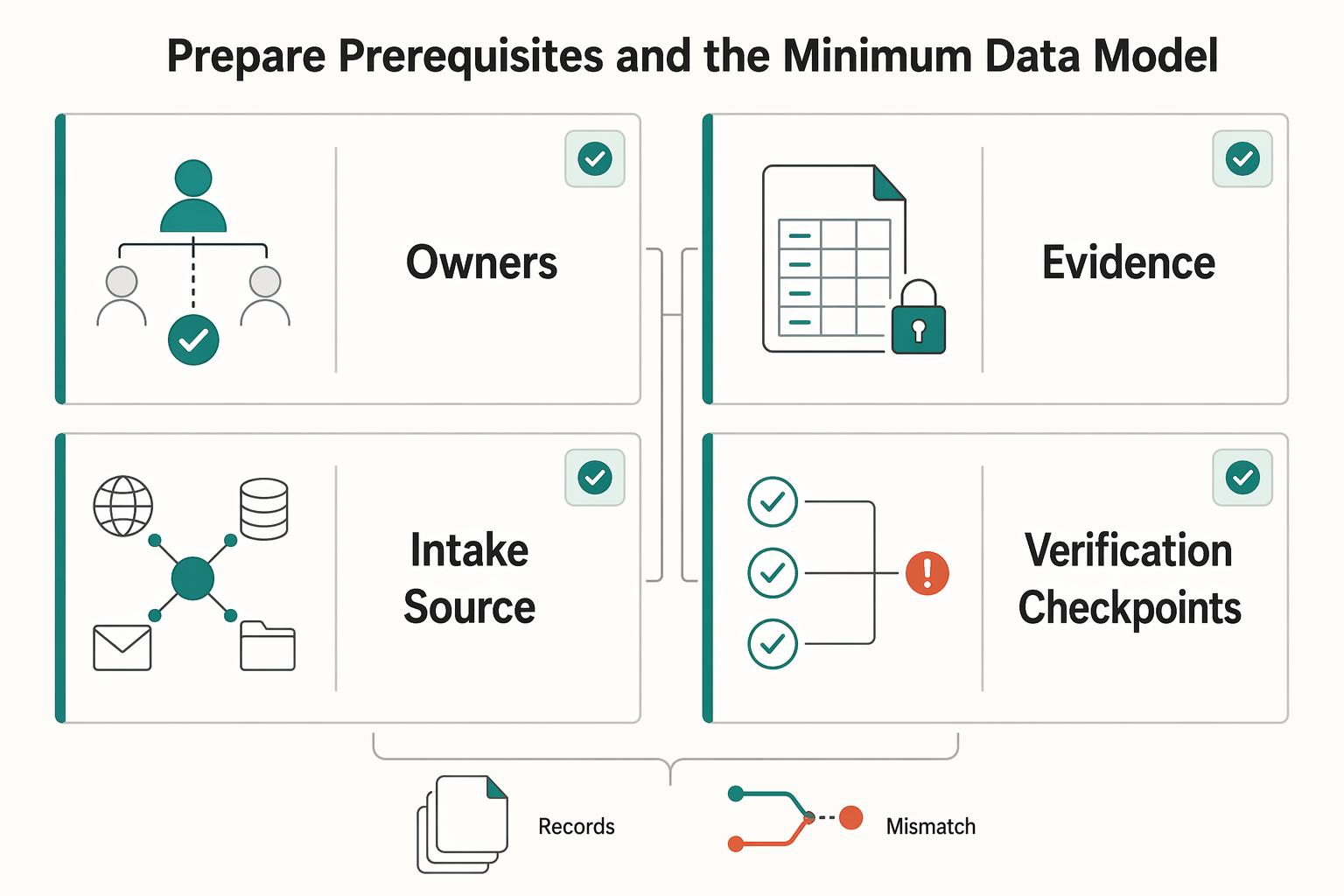
Assign a claimant, a policy reviewer, a client-billing owner and a payment operator. Separate approval from payment release where practical, and provide a backup approver so absence does not leave approved claims without an owner. Keep one expense record as the authority; accounting and payment systems add their own references to it.
| Record group | Fields to keep |
|---|---|
| Identity and evidence | Expense ID, claimant, merchant, purchase date, business purpose, original receipt or replacement evidence, evidence version |
| Amounts | Original currency and gross amount, tax amount and treatment, approved reimbursement currency and amount, FX rate/source/date, approved client charge and markup |
| Decision | Cost category, project or internal cost centre, reimbursement result, billing result, applicable policy/contract version, approver, timestamp and reasons |
| Financial links | Vendor bill or liability entry, invoice and line IDs where applicable, payout obligation ID, attempts, provider references and bank reconciliation status |
A nonbillable overhead claim needs an internal cost centre, not a fictitious client. Where one receipt covers several projects, split it into lines and preserve the original total. Record private or excluded portions separately. Restrict access to personal payment details and redact irrelevant receipt information in client-facing copies without losing the original evidence for authorized reviewers.
Work through a partial approval and markup example#
A freelancer submits $300: $200 approved client travel, $60 software the agency asked them to buy for internal work, and $40 personal spending. The agency approves reimbursement of $260 and denies $40 with a reason. Only the $200 travel is billable to the client. The agency owes $260 even though client recovery starts at $200.
If the client agreement permits a 10% handling charge on that travel, the client charge is $220: $200 cost plus $20 markup. The agency reimburses $260, allocates $60 to overhead and records $20 of handling revenue or other treatment under its accounting policy. Across this expense packet, recovery less reimbursed cost is $220 − $260 = −$40 before payment fees and internal processing costs. The $20 travel spread is not the overall profit from the packet.
If processing costs $8, the packet’s cash recovery less reimbursement and processing is −$48. That is a management comparison, not a prescribed revenue-recognition journal. Determine gross-versus-net presentation, recoverable taxes and expense accounts with the accountant. A client-facing markup percentage alone does not establish the accounting treatment.
Client acceptance of $220, invoice issuance and receipt of $220 are three separate events. Record each date. If client collection takes 30 days but reimbursement is due in 10, forecast the $260 cash outflow in 10 days; a billable flag is not cash in the bank.
Move each line through review, payment and billing#
Start with a submitted claim and original evidence. Run duplicate screening against existing claims and direct agency payments, then send it to the appropriate reviewer. Similar merchant/date/amount combinations should prompt review, because two genuine purchases can share those values. An uploaded receipt already paid on the agency card must not create another reimbursement.
On approval, freeze the approved line amounts, currency, evidence version and decision reasons. Record denied amounts without overwriting the submission. Create the reimbursement obligation only for approved amounts. Separately create a client billing item only for approved billable amounts; a mixed packet may produce one reimbursement and several billing allocations.
Track reimbursement as due, reserved, submitted, outcome unknown, paid, failed or returned. Track billing as nonbillable, ready to invoice, invoiced, disputed, credited or collected. These are example internal states, not provider API names. A failed payment does not cancel a valid client invoice, and a client credit does not prove that the claimant returned their reimbursement.
After approval, corrections require a versioned adjustment and a reason. Before paying, recompute the outstanding obligation after prior payments, credits and recoveries. After payment, use the applicable recovery or adjustment process instead of rewriting a paid record as if the original transaction never happened.
Use QuickBooks for billable expenses, with a separate reimbursement trail#
Intuit’s US instructions identify billable expense tracking in QuickBooks Online Plus and Advanced. Enable customer tracking and billable expenses, record a Bill, Expense or Check with the appropriate category, mark eligible lines billable and select the customer. Check any markup and tax settings. Add the selected billable expense to that customer’s invoice. Confirm your country edition and subscription before planning this workflow.
For an approved but unpaid contractor reimbursement, record the payable using your accountant’s chosen workflow rather than treating an Expense as proof that payment already occurred. For costs already paid, use the appropriate paid transaction. Keep the reimbursement obligation and its payment reference linked to the accounting record. Adding a billable item to a customer invoice handles customer recovery; it does not itself pay the contractor.
Assign one system ownership of creating customer invoice lines. If staff can add them manually while an integration also creates them, match the external invoice line to the expense allocation before retrying. Otherwise the same $200 travel can appear twice. Maintain an unbilled-cost queue and a separate unpaid-reimbursement queue so neither gets hidden by the other.
Keep tax review proportional to the expense#
A commercial reimbursement approval is not a conclusion that a payment is tax-free. Employee and independent-contractor rules differ. IRS Publication 463 describes employee accountable-plan conditions: business connection, adequate accounting and return of excess advances within a reasonable period. It separately addresses accounting for specified contractor travel and gift expenses to a client. Those rules do not make every item labelled reimbursement exempt from income or reporting.
Have finance determine tax treatment by worker relationship, expense type, evidence and jurisdiction. Do not demand a freelancer’s foreign-income-exclusion or foreign-account-reporting evidence for an ordinary expense claim. Form 1099 is an information return when applicable, not a form the claimant must submit before each payment. Missing tax information requires the applicable reporting or withholding response, not an unexplained indefinite hold on all approved expenses.
A payment provider may require beneficiary verification or restrict a destination. Record the actual requirement, owner and resolution path. Keep provider onboarding separate from receipt approval, and arrange an authorized alternative when appropriate. Do not insert universal KYC, KYB or AML gates merely because the claim will be paid electronically.
Recover safely from retries, unknown outcomes and FX changes#
Create a durable reimbursement obligation keyed to the approved claim version and beneficiary. Reserve its outstanding amount before dispatch so another worker or scheduled job cannot submit the same obligation simultaneously. Persist the exact amount, currency, destination, request hash, operation key and attempt state before the external call.
If the call times out, retain the reservation and mark the outcome unknown. Query the original provider reference or operation, and reconcile callbacks and bank activity. Reuse the same key only for the identical operation within the provider’s supported retention window. Do not generate a new key, change the amount or switch providers while the original payment may still succeed. If the window has expired, reconcile the original outcome before any replacement.
Deduplicate incoming event IDs, authenticate callbacks and apply allowed state transitions. Two different events can describe the same payment, so event deduplication alone is insufficient. Prevent a late processing notification from rolling a paid claim backward. A confirmed failure can permit a replacement attempt; a return after payment needs a linked reversal and updated outstanding amount, not erasure of the original payment.
Set the reimbursement currency and FX policy before approval: actual card-settled cost, receipt-date conversion or another agreed basis. Capture the original purchase and reimbursement amounts separately from the provider’s execution rate and fee. If an execution quote expires, refresh it under the provider’s rules and reapprove a changed claimant amount or budget where required. An execution-rate change does not automatically authorize reducing the amount already owed.
Reconcile what is owed, billed and paid#
For the $300 example, retain $260 approved, $40 denied, $220 billable with markup and $60 overhead. After a $260 confirmed payment, outstanding reimbursement is zero. Once the $220 invoice has been issued, receivables are $220 until collection, then zero. Before invoicing, the $220 remains an unbilled allocation in this workflow. These totals answer different questions and should never be forced to match.
At close, reconcile approved obligations minus payments and valid adjustments to unpaid reimbursements. Identify eligible billing allocations not yet invoiced, including explicitly canceled or reopened allocations, using a consistent charge basis that includes authorized markup. Separately reconcile issued invoices minus credits and collections to receivables. An invoice credit reduces receivables; it does not subtract the same charge again from unbilled costs. Decide whether the credit cancels the allocation or reopens it for corrected billing. Reconcile payment references and fees to bank movements and document exchange differences separately. Check a sample from receipt to approval to liability to payment, then from billable allocation to invoice to collection.
Review aging claims, unresolved unknown payments, duplicate warnings, unbilled approved costs and client disputes with owners and deadlines. Test the process with one mixed claim, one direct agency purchase, one missing-receipt exception and one payment timeout before relying on unattended automation.
Frequently Asked Questions
Can agency overhead still be reimbursable?
Yes. An approved internal purchase made by a worker can be reimbursable even though it is not client-billable. Record the internal cost centre and apply the agreement, staff policy and applicable law.
Should reimbursement wait until the client pays?
Follow the reimbursement agreement and applicable law. Client collection is a separate state. Do not add a collection condition after approval; forecast the cash gap when reimbursement is due earlier.
How do we calculate a markup without changing the reimbursement?
Apply the authorized markup to the client-billable base. For $200 of approved travel with a 10% markup, bill $220 and reimburse the $200 travel cost. Other approved nonbillable claims remain owed separately.
What fields must an expense record contain?
Keep the expense ID, claimant, purchase evidence, purpose, original amount and currency, approved reimbursement, client billing decision, policy version, approver and linked accounting, invoice and payment references. Add FX and tax treatment where relevant.
How do we stop duplicate reimbursements after a timeout?
Reserve the approved obligation and persist the payment request before dispatch. Keep an unknown outcome reserved, query the original provider operation and reconcile it before retrying or replacing it. Event deduplication alone does not prevent duplicate payment.
Does QuickBooks billable expense tracking pay the freelancer?
No. It links eligible costs to the customer invoice. Record and settle the reimbursement payable separately, then link its payment to the expense and accounting records.
Researched and edited by the Gruv editorial team. Gruv builds cross-border billing, payouts, and finance-operations software for global businesses.
Sources
Includes 1 external source outside the trusted-domain allowlist.
Educational content only. Not legal, tax, or financial advice.
Related Posts

The Freelance Payment Penalty: A Modeled Audit of Platform Fees, FX Spreads, and Payout Delays
The money rarely disappears through a single, easy-to-spot fee. The real loss is stacked. A marketplace takes its commission, a processor adds a charge for international cards, a bank or payment company converts the currency at a spread, a platform holds the funds before release, and a wire sheds a little to intermediaries on the way in. Each layer looks defensible on its own, but the worker feels the combined result as a smaller deposit and a later payday.

How to Respond to a Subpoena for Business Records
Move fast, but do not produce records on instinct. If you need to **respond to a subpoena for business records**, your immediate job is to control deadlines, preserve records, and make any later production defensible.

A US Expat's Guide to Investing in UCITS ETFs to Avoid PFIC Issues
The real problem is a two-system conflict. U.S. tax treatment can punish the wrong fund choice, while local product-access constraints can block the funds you want to buy in the first place. For **us expat ucits etfs**, the practical question is not "Which product is best?" It is "What can I access, report, and keep doing every year without guessing?" Use this four-part filter before any trade: