

Quick Answer
Freelance client retention improves when clients can predict how you work through clear scope, reliable updates, clean records, and consistent follow-through. Review each account weekly, use 30-60-90 checkpoints, document scope and payment details early, and end every phase with a clear next step. Long-term relationships come from steady execution, not unclear terms, underpricing, or constant exceptions.
Why Weekly Systems Help You Keep Good Clients#
Keeping good clients is easier when they can predict how you work. Use a weekly checklist to keep communication, scope, and admin clean before small issues turn into bigger ones.
Repeat work should not require unclear scope, underpricing, or constant exceptions. The goal is steady re-engagement with clear boundaries, fair pricing, and reliable follow-through.
Repeat work reuses context from earlier projects: goals, approval contacts and working preferences. Count that saved effort against the account’s actual margin and demands. A client who repeats unprofitable work may need a reset rather than an expansion offer.
Relationships can last for years, but duration is not the only measure of success. Track the quality of current commitments: clear approvals, manageable scope, timely payment and a next step the client actually wants.
Treat this as a standing business habit, not a motivational task. Open your client records on the same day each week, check what moved, and decide what happens next before your inbox decides for you. That rhythm helps keep relationships from slipping when delivery gets busy.
Run this review on the same day each week:
- Confirm last contact date and next touch date for each active or recently closed client.
- Flag scope changes that were discussed but are not documented.
- Check payment or document blockers before they become client-facing friction.
- Capture one feedback point that may require a pricing, deadline, or quality adjustment.
Use the rest of this article as a repeatable working sequence. Start by defining retention in measurable terms. Then tighten client selection before kickoff. After that, handle follow-up, records, payment, and compliance in a way that keeps trust visible.
Define client retention in operational terms#
In practice, client retention means keeping existing clients engaged so they continue working with you over time.
A completed project does not automatically become repeat work. Record whether the client has another need, a budget and a decision date. Keep an account active for follow-up only when that follow-up has a purpose.
Use 30-60-90 checkpoints as an example review schedule, adapting it to the project length. These are operating prompts, not a proven churn-reduction formula. Each should clarify delivered value, open issues and the next decision.
Keep one durable record per client so you can verify status, commitments, and the next decision quickly:
30 days: review current engagement status.60 days: review whether value is clear to both sides.90 days: decide the next phase, reset expectations, or close out intentionally.
These checkpoints are most useful when they force a decision, not just a status update. At each point, ask the same short set of questions: did we deliver what was agreed, did the client confirm value, and is there a clear next move? If those answers are unclear, risk is rising.
Use this comparison to keep the decision clean:
| Situation | Decision direction | Practical move |
|---|---|---|
| Value is clear and engagement is healthy | Keep building | Confirm the next step and timeline |
| Value is unclear | Reset | Reassess fit, expectations, and whether to continue |
| No clear path forward | Close | End the engagement with a clear closeout |
Choose the right clients before the first project#
Fit beats speed. If a prospect resists basic clarity on scope, response expectations, or payment terms, pause the deal. High-friction, low-margin accounts often start with an unclear kickoff.
| Fit factor | What to check |
|---|---|
| Budget realism | Does the budget plausibly match the outcome they want? |
| Communication style | Do they answer direct questions with specific answers? |
| Urgency pattern | Is urgency tied to a real deadline or constant pressure? |
| Boundary respect | Can they accept written terms without reopening basics? |
Compare the effort required to start and sustain the account. Repeat work can reuse onboarding, while a poor fit can consume that saving through extra revisions, collection work or urgent requests. Record the actual cost rather than assuming retention is always cheaper.
After each discovery call, run a brief fit screen on those same four factors:
- Budget realism: does the budget plausibly match the outcome they want?
- Communication style: do they answer direct questions with specific answers?
- Urgency pattern: is urgency tied to a real deadline or constant pressure?
- Boundary respect: can they accept written terms without reopening basics?
Before sending a proposal, add one written verification step. Recap scope, response expectations, payment terms, and decision owners, then ask for explicit confirmation. If key details are still moving, treat that as a risk signal.
A concise pre-proposal note can help reduce avoidable churn later. Keep it plain:
- Scope summary: what is included and what is excluded.
- Communication expectation: where updates happen and who approves changes.
- Payment expectation: billing trigger, due date, and who confirms receipt.
- Ownership check: who can approve scope, timelines, and budget changes.
Set continuation expectations from day one. Define what completion looks like, how results are reviewed, and when the next-phase decision happens. Re-engagement then feels planned, not improvised.
Apply the same written baseline to marketplace, referral and direct leads. A recommendation gives context; it does not tell you how this client approves work, pays invoices or handles changes.
Suppose you want to move an hourly rate from $60 to $75: that is a 25% increase. At ten hours a month, the fee moves from $600 to $750 if scope stays constant. Explain the new rate and effective date for future work, respect existing commitments, and offer a narrower scope if the client’s budget cannot change. Do not assume every legacy client will accept.
Build trust fast in the first 30 days#
The first month sets the tone. Clients usually do not need constant messages. They need a clear sequence they can track.
| Step | What it covers |
|---|---|
| Kickoff summary | Confirm deliverables, decision owners, and communication cadence. |
| Milestone schedule | Map key dates so both sides know what happens next. |
| Early updates | Send status before the client has to ask. |
| Delivery recap | State what is done, what is open, and what decision unlocks the next step. |
| Post-delivery follow-up | Close the loop, gather feedback, and define the next scoped step when relevant. |
As the first phase of a 30-60-90 roadmap, your 30-day execution path can look like this:
- Kickoff summary: confirm deliverables, decision owners, and communication cadence.
- Milestone schedule: map key dates so both sides know what happens next.
- Early updates: send status before the client has to ask.
- Delivery recap: at each handoff, state what is done, what is open, and what decision unlocks the next step.
- Post-delivery follow-up: close the loop, gather feedback, and define the next scoped step when relevant.
For kickoff, make expectations explicit enough that a new stakeholder could read your note and understand the plan. For milestones, avoid generic labels and describe what each handoff means in plain terms. This keeps reviews focused on decisions instead of interpretation.
For early updates, use the same structure each time so the client can scan quickly:
- Completed since last update.
- In progress now.
- Risks or blockers.
- Decision needed next.
For delivery recaps, name what success looked like and whether that bar was met. If something changed, state the change directly and confirm the consequence for timeline or scope.
You show reliability over time by meeting deadlines, escalating risk early, and presenting options with clear tradeoffs. In practice, consistency builds trust more reliably than one-off bursts of effort.
Use a follow-up cadence with clear triggers#
Follow-up should be tied to clear moments in the client relationship, not to anxiety. When clients know why you reached out and what decision comes next, they are less likely to drift.
Use a simple follow-up routine instead of ad hoc outreach:
- Define a few repeatable trigger moments in your workflow.
- Keep outreach brief, clear, and tied to one next action.
- Build check-ins into a daily or weekly routine so nothing slips.
A simple trigger map can help:
| Trigger | Message purpose | Close with |
|---|---|---|
| Project milestone | Clarify status and open items | Ask for the next decision |
| Routine check-in | Keep momentum and alignment | Confirm current priorities |
| Unresolved thread | Close the loop on pending items | Propose a clear next touchpoint |
Track cadence in your CRM so follow-up does not rely on memory. Keep client and project details current, then run a weekly sweep for accounts with no next touch or unresolved replies.
If a client goes quiet, send a note naming the unresolved decision and its consequence. For example: “The draft is ready for your review. Please send the consolidated changes or approval by Thursday so we can keep the Monday delivery date. If that timing no longer works, I can propose a revised schedule.” Treat silence according to the contract; do not invent acceptance or cancel an engagement without the required notice.
Keep client memory in one place, not across tabs#
When client context is scattered, you lose time and miss important details. Keep one official client record and use other tools as support.
Choose a CRM or project record that you can keep current and retrieve easily. Check permissions, export options and how it links to contracts and billing records. A tool’s name matters less than having an agreed place for current client context.
Each record should stay current on core details:
- Client details.
- Conversation history.
- Deadlines.
Add context your future self can scan fast:
- Current contract and approved scope changes.
- Tax-document status and a link to restricted storage when required.
- Agreed rates and billing triggers.
- Invoice, client receipt and provider payout status tracked separately.
Make payment experience part of retention#
Payment handling shapes trust as much as delivery quality. Clients remember whether the process was clear, predictable, and easy to follow.
Payment friction often appears between projects, which is a high-risk moment for repeat work. If due dates, approval steps, or post-invoice status are unclear, collections can slow and confidence can drop.
Keep payment operations clear and consistent. Map the payment path in plain language from the start: what triggers invoicing, who approves, where status is checked, and how completion is confirmed. Payment tension often comes from ambiguity between those points, not from bad intent.
When a delay happens, send one concise update with:
What changed: the latest status in plain language.What action is required: who acts next.When you will update again: a specific date and time.
Keep invoice IDs, payment references and status in the client record. Distinguish an unpaid invoice from a client payment received by a platform whose bank payout is pending. Verify the original transaction before sending another collection request or changing payment routes.
After a successful cycle, propose a retainer with a defined monthly block, such as ten to twenty hours, rather than unlimited priority access. Agree deliverables, booking or response windows, rollover or expiry, approval for extra work, billing trigger, due date, cancellation and refund treatment. Extra hours need approval before you incur them; a change order records the revised scope and price.
For example, ten hours at $75 is a $750 monthly block. Four extra hours approved at the same rate add $300, making $1,050 before any separately agreed tax or expenses. If the client has not approved the extra work, reduce or defer scope rather than assuming it is billable. These figures illustrate a proposal, not standard market pricing.
Handle compliance and tax moments before they become friction#
Handle compliance and tax admin early in onboarding. If you wait until payout time, paperwork turns into avoidable client friction.
At kickoff, identify the actual verification and tax documents required for the account and payer. Assign a responsible person, secure submission method and due date to each item. The client record can show status and a restricted file link without exposing identifiers to everyone on the delivery team.
Check document status before the first payment or credit and review it again before the final invoice. A client’s written agreement to defer an administrative task cannot waive a statutory requirement or a provider’s mandatory gate. Explain what is pending, who can resolve it and the real consequence; do not invent an authority to withhold an otherwise due payment.
For U.S. documentation, Form W-9 supplies a U.S. payee’s TIN to a requester with an information-reporting need. Form W-8BEN is for appropriate foreign individuals; foreign entities generally use W-8BEN-E. The correct form depends on status and payment facts, not nationality alone. Provide a requested W-8BEN to the payer or withholding agent, not the IRS; other forms may apply to U.S.-performed services or effectively connected income.
Keep a compact status pack: required item, responsible person, secure submission link, due date, confirmation and unresolved question. A generator creates a draft; confirm the correct form, facts and any treaty claim before signing or submitting it.
Keep your own tax planning separate from client onboarding. Qualifying foreign earned income can be eligible for the foreign earned income exclusion, but claiming it still requires reporting the income on a U.S. return. Maximums are $130,000 per qualifying person for 2025 and $132,900 for 2026; two qualifying spouses can reach $260,000 for 2025. These are limits, not automatic exclusions, and part-year qualification can reduce them.
Keep the qualification review with your tax advisor. Residence or presence tests and a foreign tax home require actual facts. The IRS publishes limited war or unrest time-test waivers by country and effective date; presence that violates U.S. law does not count as qualifying time. Do not promise a client that one tax form or overseas address resolves your personal tax liability.
For client communication, keep tax and compliance wording practical:
- What is required, by whom and by what date.
- Any permissible administrative deferral and who authorized it.
- The actual payment or provider consequence if a mandatory item remains unresolved.
If FBAR applies to your accounts, retain statements and maximum-value calculations in a restricted finance record rather than an ordinary shared client CRM. FinCEN’s maximum-value guidance uses each account’s separate maximum, a reasonable approximation of its greatest value during the year. Periodic statements may be used if they fairly reflect that peak. Convert at the Treasury rate for the last day of the report year where available, then round up to whole U.S. dollars. Use another verifiable rate and identify its source if the Treasury rate is unavailable. Keep the statement period, value calculation, source and unrounded amount; income-tax exclusion and FBAR are separate questions.
Your personal FEIE or FBAR records are generally separate from a client’s onboarding documents. Keep the client informed about actual payment administration; share sensitive personal tax records only where there is a specific, authorized need.
Catch retention risk early and recover deliberately#
Treat small behavior shifts as possible red flags before they become account loss. Most problems look obvious only after they are already unfolding.
| Step | Detail |
|---|---|
| Diagnose the likely cause | Review recent scope, approval, and communication history in your CRM. |
| Acknowledge the impact | State the issue directly so the client sees it is understood. |
| Offer one scoped corrective action | Propose one specific fix. |
| Confirm the timeline | Name the action owner, due date and next client update. |
| Log follow-up and verify the change is visible | Check whether the agreed fix occurred at the review date. |
Watch for patterns like slower replies, repeated scope confusion, payment hesitation, reduced access to decision-makers, or follow-on work turning into disconnected one-off requests.
These signals may not arrive all at once. More often, one subtle change shows up, then another. A delayed response might be normal. Repeated delays plus unclear approvals can indicate a risk that needs active management.
When signals appear, use a fixed recovery sequence:
- Diagnose the likely cause by reviewing recent scope, approval, and communication history in your CRM.
- Acknowledge the impact directly so the client sees the issue is understood.
- Offer one scoped corrective action.
- Confirm the timeline.
- Log follow-up and verify that the change is visible.
During diagnosis, separate symptom from cause. Scope confusion may look like a communication issue, but the root problem could be missing ownership on approvals. Payment hesitation may sound financial, but the trigger may be unclear delivery acceptance.
If the engagement develops more client control over how work is performed, review the actual working arrangement. U.S. federal tax classification considers behavioral control, financial control and the relationship together; no single factor decides it. Calling the contract a retainer or reducing one check-in does not settle status, and other jurisdictions use their own rules.
At follow-up, run a structured reset when the relationship can be repaired on sustainable terms. If repeated boundary, payment or reliability problems make it untenable, check termination, notice and handoff obligations before closing. Record outstanding fees, completed work, deliverable rights and access changes; do not revoke access or withhold files without an applicable right.
A useful reset note is specific: “The last two approvals arrived after the agreed date, so delivery moved each time. For the next milestone, can Maya send one consolidated response by Tuesday? I will confirm the revised delivery date after that response. Let’s review whether this works at Friday’s check-in.” This proposes an observable fix without blaming the client or promising free extra work.
Upsell and cross-sell without sounding salesy#
Expansion usually works best after a clear result, not during unresolved issues. If the last commitment is complete and value is visible, the next offer is more likely to feel practical than pushy.
Upselling upgrades what the client already bought. Cross-selling adds an adjacent recommendation tied to the same goal. Both can increase spend, but timing often determines whether the offer feels helpful or annoying.
Before you send an expansion note, confirm:
- The recent delivery is complete and accepted.
- A measurable result from that work is documented, if available.
- No active delivery, payment, or communication friction is open.
- The next objective is something the client has already signaled.
Then shape the note around one concrete decision. Explain the specific outcome, the scope boundary, and the next approval point. If the reader cannot identify the decision in a quick scan, the offer is too broad.
Keep the offer narrow. Vague language like more services is hard to approve. One clear next outcome with a defined timeline and expected business impact is usually easier to evaluate. This contrast helps:
| Offer type | Sounds vague | Sounds practical |
|---|---|---|
| Upsell | Expand support | Extend current scope to the next defined milestone |
| Cross-sell | Add another service | Add one adjacent deliverable tied to the same objective |
Consider an illustrative expansion from a $250 monthly standalone service to a $1,200 monthly package after the client approves a wider recurring scope. The $950 monthly difference is added revenue, not profit or a forecast: subtract the extra delivery time, expenses and administration before deciding whether it fits. For concrete offers, see How to Upsell and Cross-Sell Existing Clients.
Run a quarterly retention checklist#
Every quarter, make one explicit decision for each active client: expand, maintain, reset, or exit. This keeps retention grounded in account evidence, not impressions.
Start with relationship health for your highest-revenue clients. Review revenue share, responsiveness trend, and referral potential together, then mark trust as improving, flat, or slipping based on recent feedback and access to decision-makers.
Use your CRM records as the source of truth. Each client entry should show:
- Last completed outcome and whether the client confirmed value.
- Oldest open follow-up and owner.
- Current update or nudge template in use.
- Escalation path for communication, scope, or payment friction.
Then run an operational check. Review payout reliability, document status, and unresolved process items, and mark each one as blocked, pending, or complete. Keep this practical: maintain clear records for payout history, exception notes, and open documentation or verification flags where relevant.
Before assigning status, scan for contradiction. A client can look stable on revenue while showing repeated approval delays or unresolved documentation. That account likely needs reset, not maintain.
Assign one status for the next quarter using this table:
| Status | Use when | Next move |
|---|---|---|
| Expand | Trust is rising and value is clear | Offer one scoped growth step with timeline and expected impact |
| Maintain | Performance is steady but upside is limited | Keep cadence, protect margin, and avoid unnecessary add-ons |
| Reset | Revenue is good but trust or process is slipping | Run a corrective plan with owner, due dates, and a review point |
| Exit | Boundary, payment, or reliability issues repeat | Close cleanly with handoff notes and no new commitments |
Turn that status into action immediately. A status with no scheduled next step is just a label. Put the next client-facing move in your CRM while the review is still open.
Measure retention using a consistent review window. For example, eight of ten clients in a chosen starting group commissioning another project means an 80% repeat-engagement rate for that group. Label the period and definition; it is different from the share of monthly revenue from repeat clients. Track margin and open issues alongside it.
A practical quarter-end closeout note can include:
- Current status and why it was chosen.
- Open risks that could change status.
- Next action, owner, and timing.
Leave the weekly review with a decision#
Judge the system by your own account evidence: useful follow-up, fewer unresolved decisions, sustainable margin and client willingness to commission the next phase. Repeat work is valuable when its terms still fit.
Keep the process simple and repeatable:
- Maintain a sustainable cadence for early communication.
- Keep a clear record of decisions and next steps per account.
- Reassess whether to expand, maintain, reset, or exit before quality slips.
Keep checkpoints concrete: send a clear welcome note and project plan, confirm requirements before work starts, and send timely updates during delivery. If growth begins to outpace quality, tighten expectations and delivery commitments before adding volume.
At the next review, choose one unresolved account decision, name its owner and schedule the next client-facing action. Keep the administrative deadline calendar alongside the relationship review so a weekly or quarterly routine does not delay a required response.
Pick one action now, then review your top accounts against a retention checklist. For expansion tactics, read The Best Ways to Upsell and Cross-Sell to Existing Clients.
Frequently Asked Questions
How often should freelancers follow up with past clients without being annoying?
There is no fixed cadence here. Follow up when you have useful value to add, not just to stay visible. Tie outreach to a clear moment like a delivery recap, a relevant update, or a concrete decision. If there is no new value, skip the message.
What improves freelance client retention more, relationship skills or systems?
You need both. Relationship skills build trust, and clear terms and expectations make that trust repeatable. If you need a starting point, standardize post-project notes and next-step ownership.
What should be included in a practical client retention checklist?
Include confirmed value delivered, open actions, communication quality, and whether terms still fit current scope. End each review with one decision: expand, maintain, reset, or exit.
How do you retain clients without overworking or accepting low rates forever?
Tie retention to sustainable terms. Set review points for scope, pricing, and turnaround, and adjust fees or narrow deliverables when requests expand.
What are the earliest warning signs that a client relationship is slipping?
The earliest sign is usually weaker communication quality or unclear expectations. When decisions stall or updates get inconsistent, run one corrective action with a clear owner and follow-up date.
Do compliance steps like KYC or tax forms hurt retention, and how do you handle them professionally?
Set documentation expectations early and explain the actual requirement, owner and deadline. Use secure submission and status tracking. Mandatory tax or provider requirements cannot be waived merely to reduce friction; resolve uncertainty before the relevant payment event.
Try a related tool
Researched and edited by the Gruv editorial team. Gruv builds cross-border billing, payouts, and finance-operations software for global businesses.
Sources
Educational content only. Not legal, tax, or financial advice.
Related Posts
How to Upsell and Cross-Sell Existing Freelance Clients
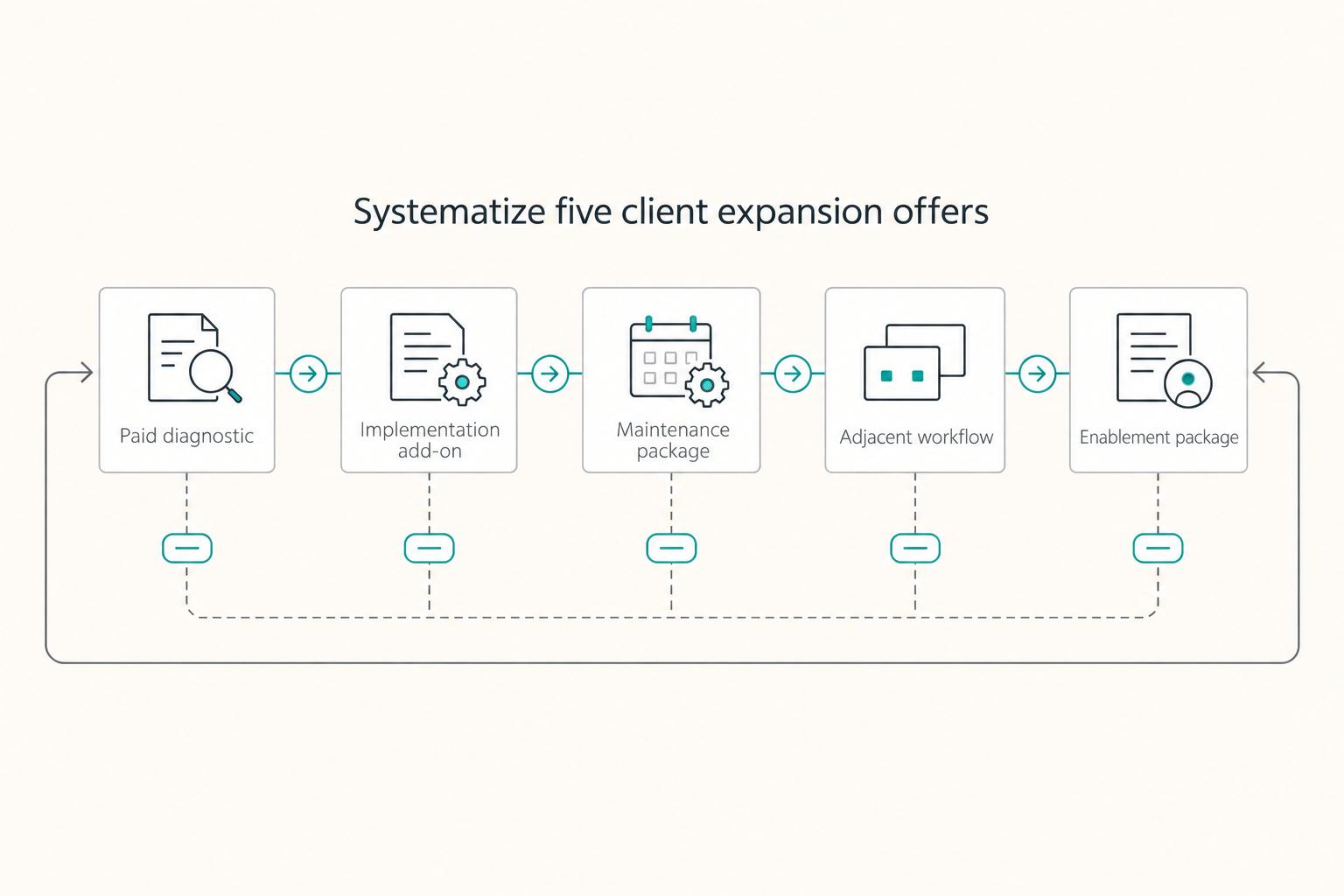
An upsell gives an existing client a more substantial version of the service they already buy. A cross-sell adds a complementary service. Start with a genuine client need, explain the added work and price, and obtain the required approval before delivering it. The five offers below give you practical ways to do that without turning every request into an informal side deal.

The Freelance Payment Penalty: A Modeled Audit of Platform Fees, FX Spreads, and Payout Delays
The money rarely disappears through a single, easy-to-spot fee. The real loss is stacked. A marketplace takes its commission, a processor adds a charge for international cards, a bank or payment company converts the currency at a spread, a platform holds the funds before release, and a wire sheds a little to intermediaries on the way in. Each layer looks defensible on its own, but the worker feels the combined result as a smaller deposit and a later payday.

How to Respond to a Subpoena for Business Records
Move fast, but do not produce records on instinct. If you need to **respond to a subpoena for business records**, your immediate job is to control deadlines, preserve records, and make any later production defensible.