

Quick Answer
Start with sequencing: pick one wave-one objective, then allow only countries with proven payment-method fit, a documented VAT path, and named owners for settlement exceptions. Lock tax ownership before code by choosing Merchant of Record or direct ownership, and require evidence artifacts such as sample invoices, tax determination logs, and PSD2 SCA-tested checkout flows. Pause expansion after the first cohort if payout failures or invoice-tax mismatches remain unresolved.
What Europe Expansion Means for Payments and VAT#
Treat a European launch as an operations sequencing decision first. Lock VAT, payments, and compliance ownership before you scale localization or acquisition.
Separate what is standardized from what still needs local validation. SEPA gives you a broad euro payments zone across 41 countries as of 22 May 2025 and largely removes domestic versus cross-border differences for euro payments. VAT is different. EU rules are shared, but country application still varies, and your baseline should be the post-1 July 2021 B2C e-commerce framework.
Before you start#
Do not treat "EU-compliant" as the same as launch-ready in every country. European Commission VAT guidance is practical, but non-binding, so country-level rates and VAT treatment details still need local tax or legal confirmation before go-live. If an assumption is not tied to a local authority position, provider documentation, or advisor memo, keep it marked unresolved.
- Separate EU-level rules from country-level application.
Build a country matrix before you write code. For each target country, record payment methods, VAT treatment assumptions, invoicing ownership, and open local questions.
- Validate checkout and settlement mechanics before demand spend.
SEPA can simplify collection and settlement, but checkout design still carries compliance risk. Under PSD2, strong customer authentication applies when a payer accesses an account online or initiates an electronic payment transaction. Your auth flow is a launch gate, not a UX detail.
- Lock tax and compliance ownership before live volume.
Decide early what you own directly and what you delegate, for example through a Merchant of Record. Define control points for customer and business verification, AML, and DAC7 exposure where relevant to your model.
This guide follows that sequence: objective and risk tolerance, evidence pack, first-country selection, rails and settlement, tax operating model, compliance gates, then launch controls. For a deeper operations view of tax and rails together, see VAT and SEPA: How European Platforms Combine Tax Compliance with Automated Euro Payouts.
One final caution before you commit budget. DAC7 entered into force on 1 January 2023, and the first exchange for calendar year 2023 took place at the end of February 2024. Platform reporting is already operational, so escalate local legal and tax unknowns before launch, not after first invoices or money-out.
Keep the reporting obligation and the collection obligation apart in your own documentation. One decides who charges tax on a transaction; the other decides what a platform tells a tax administration about a seller after the year ends. DAC7 and DPI reporting for platforms sets out the second of those, element by element, including the quarterly split that trips up exports built for the first.
For a step-by-step walkthrough, see How to Write a Payments and Compliance Policy for Your Gig Platform.
Set your expansion objective and risk tolerance#
Set one primary objective for your first EU phase, then treat the other priorities as hard constraints. If you try to optimize revenue growth, margin protection, and compliance confidence at the same time, ownership usually gets blurry and surprises show up late.
Define the wave-one win condition#
Define the wave-one win condition in one sentence that finance, product, and ops all approve: optimize for X, while not exceeding Y and Z.
If growth is primary, you may accept narrower country scope and more manual work to launch sooner. If margin is primary, focus on payment costs, failed collection, and transfer timing. If compliance confidence is primary, let VAT treatment and onboarding controls set the pace.
Set hard guardrails before go-live#
Set explicit guardrails for VAT exposure, settlement delays, and onboarding friction from customer due diligence and beneficial-ownership checks.
For VAT, decide whether launch requires mapped EU VAT treatment plus a documented One Stop Shop position for in-scope sales and services. Cross-border B2C VAT rules changed on 1 July 2021, and a new EU-wide threshold of EUR 10 000 applies to covered cross-border B2C e-commerce activity, so threshold logic and evidence retention should be explicit before go-live.
For onboarding, plan for ongoing AML workload, not just signup checks. Customer due diligence applies to new customers and, on a risk-sensitive basis, existing customers. Beneficial ownership handling also needs a clear owner and escalation path.
Choose your operating posture early#
Choose an operating posture early: speed-first or control-first.
Speed-first only works with tighter scope, such as fewer countries, fewer payment methods, and cautious transfer promises. Control-first is slower, but usually safer when VAT ownership is unresolved or onboarding and review operations are still maturing.
Do not treat instant euro transfers as a universal experience by default. Funds can be available within seconds, but your promise to users should be based on provider-tested performance in your target markets.
Turn posture into launch gates#
Turn that posture into hard launch gates backed by evidence.
At minimum, require SCA-tested checkout flows, documented VAT decision ownership, and defined manual-review handling for onboarding exceptions. A practical readiness check is one dry-run pack with sample invoices, payment-authentication outcomes, and at least one onboarding case that triggers manual review.
Build the prelaunch evidence pack your team needs before building#
Build the evidence pack before anyone ships checkout or settlement code. It is the fastest way to separate confirmed decisions from assumptions before they turn into tax or settlement rework.
Build the country fact pack#
Start with a country-by-country fact pack for every market still in scope. For each country, capture expected payment methods, your VAT handling assumption, and whether SEPA is for collections, outbound transfers, or both.
Do not plan Europe as one payment market. ECB SPACE reporting shows country-level differences in payment behavior and acceptance, so checkout design should be country-specific. For SEPA, validate reachability against the EPC country list instead of assuming EU-only scope. SEPA scope extends beyond EU member states.
Your VAT line should be just as explicit. OSS can centralize declaration and payment for covered cross-border supplies through one Member State of identification, but OSS returns are additional and do not replace domestic VAT returns where those still apply. Checkpoint: each country has one written tax assumption and one named unresolved question.
Assign accountable owners before build starts#
Assign one accountable owner per decision before build starts. Keep the ownership map explicit across checkout and SCA flow behavior, VAT evidence and invoice outputs, settlement exceptions and monitoring, and AML due diligence and beneficial ownership handling.
This split is an operating choice, not a legal requirement, but it has to be deliberate. Without named ownership, decisions get buried and usually reappear only after launch. Checkpoint: every decision line has one owner, one approver, and one review artifact.
Define the audit artifact list early#
Build the audit artifact list now, not after UI work begins. At minimum, include invoice artifacts, tax determination logs, status history for outbound funds, and policy-gate decisions with timestamps.
For VAT, design records around OSS requirements. Store the information used to determine customer location, keep records electronically available without delay on request, and retain them for 10 years from the end of the transaction year. If you cannot export that data cleanly, your evidence model is incomplete.
Record unknowns with owners and rollback plans#
Treat unknowns as first-class launch inputs. For each unknown, record an owner, decision date, dependency, and rollback plan.
Be especially strict on settlement promises. EU instant-payments rules target transfers within 10 seconds and reachability 24 hours a day, but actual delivery can still vary by provider and bank path across target markets. If timing is unproven, keep promises conservative and log the constraint.
The pack is ready when someone new can answer three questions without guessing: what you believe, why you believe it, and what would change the decision.
We covered this in detail in How to Build a Subscription Billing Engine for Your B2B Platform.
Pick first countries using payment tax and operational fit#
Pick wave-one countries by launch readiness, not market size. Include a country only when you have evidence of payment-method fit, the VAT path is documented, and your team can carry the settlement and support load without improvising after launch.
Score countries on payment, tax, and ops fit#
Score each candidate country on three axes in one shortlist table: payment-method fit, VAT complexity, and settlement and support load. Use country-level evidence, not EU averages, because payment acceptance varies by country and ECB statistics are published at country level.
At euro-area level, non-cash payments in H1 2025 split across cards (57%), credit transfers (22%), and direct debits (14%). That supports a multi-rail view, but it is not enough to make a country decision on its own. For subscriptions, local payment fit still has to be validated country by country.
| Candidate | Payment-method fit | VAT complexity | Settlement and support load | Launch-readiness call |
|---|---|---|---|---|
| Scenario A | Strong local fit with methods you already support; SEPA use is meaningful in the journey | OSS path confirmed; destination-based VAT logic and record-keeping approach mapped | Medium to high; exceptions and compliance reviews need staffing | Include only if ops owners are assigned |
| Scenario B | Card coverage is acceptable, but local preference coverage is weaker | VAT path confirmed and simpler to operate on day one | Lower support and settlement burden | Include only if you can accept lower conversion risk |
| Scenario C | Local payment coverage is weak or unproven | VAT handling is still uncertain | Load is unpredictable because payment and tax edge cases will hit support | Exclude from wave one |
Keep scoring simple, for example red, amber, green or 1 to 3, but require a written reason for every score. Each row should include one payment source, one VAT assumption document, and one named owner for settlement exceptions.
Apply a hard exclusion rule before TAM debates#
Apply a hard exclusion rule before any TAM discussion: if local payment coverage is weak and VAT handling is uncertain, do not include that country in wave one.
That avoids two avoidable failures at once: weak checkout fit and unstable tax execution. For EU cross-border B2C, VAT is destination-based, and OSS can centralize filing and payment through a single online portal, but you still need correct country treatment, rate application, and record retention. With the 1 July 2021 rule change and the EUR 10 000 EU-wide threshold in official guidance, VAT cannot be treated as a minor post-launch task.
Use this readiness check for each country:
- Which payment methods are expected to matter most for this subscription offer?
- What is the VAT treatment assumption for cross-border B2C sales into that country?
- Who owns settlement exceptions, support escalations, and reporting side effects as volume grows?
If any answer is missing, defer the country. SEPA availability alone is not enough. SEPA covers countries outside the EU and outside the euro area.
Choose the tradeoffs you can actually operate#
Choose the country whose tradeoffs you can operate now, and defer the rest.
A market with strong SEPA relevance can be a good first move if your model depends on euro bank payments, but only if your team can absorb the edge cases. A market with easier day-one operations but weaker checkout fit may look cleaner while potentially limiting conversion.
In practice, prioritize the country where payment fit is stronger and the VAT path is already documented, even if support load is somewhat heavier. Operational load is not just ticket volume. For platform models, DAC7 can add seller-data reporting duties, including for some non-Union operators active in the EU.
Treat sequencing as risk control. As one European payments operator put it, international scaling faces "fragmented payment infrastructure that increases costs and complexity." Wave one should include only countries with a documented payment-fit case, a confirmed VAT approach, and a realistic settlement and support owner.
For the full breakdown, read How to Migrate Your Subscription Billing to a New Platform Without Losing Revenue.
Choose payment rails and settlement model by country#
Choose rails country by country, not once for the whole region. If missed recurring collections are your main risk, prioritize collection rails you can support in that country. If transfer timing for sellers or partners is the bigger risk, design outbound settlement first and treat checkout as a separate decision.
Start with the risk you cannot absorb#
For each launch country, name the one risk you cannot absorb: collection reliability or outbound settlement pressure. That choice should drive rail design.
If collection reliability is the risk, favor rails built for repeat charging. SEPA is a harmonized euro framework for domestic and cross-border transfers and direct debits, and SEPA Direct Debit is positioned for recurring collections. Cards may still be enough in some countries, but plan for dispute operations because chargebacks can reverse payments immediately and add dispute-fee exposure.
If timing on money-out is the risk, prioritize settlement design. Availability varies by country and industry, and Stripe Connect payout delay can be calculated in business days or calendar days depending on the connected account country.
Map each rail to its operational burden#
Map each rail to its operational burden before you enable it. A method that looks simple in checkout can add finance and support overhead later.
| Rail | Where it fits early | Main operational consequence | Verification checkpoint |
|---|---|---|---|
| Cards | Baseline where local-method fit is still being validated | Chargebacks can reverse funds and add dispute-fee exposure | Confirm dispute evidence flow, reversal timing, and representment ownership |
| SEPA Direct Debit | Strong candidate when recurring euro collections matter | Recurring collection setup and failed debit follow-up need clear owners | Confirm support by country, currency, product, and API context; if using Stripe, note the documented 10,000 EUR per-transaction limit |
| Bank transfers with virtual account numbers | Useful when reconciliation and customer-specific bank identifiers matter | Recurring reliability depends on customer action to keep funds available | Confirm how virtual account numbers are issued, matched, and exported into your ledger |
Do not assume method availability. Stripe method support depends on country, currency, product, and API context, so verify the exact combination for your flow before you include a country in wave one.
Test collection and settlement as separate systems#
Evaluate collection and settlement separately for platform money-out. Teams that test only checkout can find that transfer timing and failures become the real launch bottleneck.
For Stripe Connect or a comparable provider, compare fund-flow options and settlement schedules with the same criteria every time. Stripe notes that charge-type selection changes fund flow behavior, and the initial live payout is typically scheduled 7 to 14 days after the first successful payment.
Run one explicit failure-mode check: what happens when an outbound payout fails. In Connect, a payout.failed event occurs, and a failure can block further payouts on that external account until details are updated. If ownership for bank-detail updates, user communication, and finance tracking is unclear, defer that country.
Use one scorecard across providers#
Keep vendor testing comparable by using one scorecard across Stripe (including Connect) and any other processor you trial:
- method eligibility by country, currency, product, and API context
- recurring-collection fit and exception handling
- dispute and reversal behavior
- reconciliation outputs, including virtual account numbers or similar bank-transfer identifiers
- settlement timing, failure handling, and connected-account fund-flow options
If a provider is strong at checkout but weak on settlement or reconciliation, treat it as a partial fit, not as launch-ready.
Related reading: Building a Virtual Assistant Platform Around Payments Compliance and Payout Design.
Decide your tax operating model before you ship code#
Lock your tax owner before integration work starts. If your team cannot reliably run tax determination, evidence retention, and filing, use a Merchant of Record for covered transactions instead of embedding direct tax ownership into product code.
Decide who is legally selling#
Decide who is legally selling the subscription, then document it. A MoR is the legal seller entity that takes payment and tax or regulatory responsibility for transactions. Under direct ownership, your business remains the seller and tax tools support execution without transferring the obligation.
This choice drives more than checkout. It determines who appears on invoices, who handles refunds and chargebacks, who keeps audit records, and who files and remits where registrations exist.
If you choose direct ownership, define your VAT route precisely. OSS allows registration in one Member State for covered cross-border supplies, but OSS returns are additional and do not replace domestic VAT returns. Union and non-Union OSS returns are quarterly. The import scheme is monthly.
Use a one-page decision memo as your checkpoint:
- seller of record
- invoice issuer
- filing owner
- record-retention owner
If any owner is still TBD, do not ship tax logic.
Use a capacity test, not a feature checklist#
Use a capacity test, not a feature checklist. If you cannot operate the full tax chain consistently, lean toward MoR.
Direct ownership with tools like Stripe Tax or Avalara can be the right choice when you need tighter control of tax logic, billing behavior, or reporting. But your team still owns the outcome. You must file and remit tax in every location where you are registered. Partner-based filing automation can help, but it also shows that filing is a separate operating task. Avalara's positioning from calculation through filing and remittance points to the same reality.
As Josh Reardon, Head of Tax Technology at Zoom, said: "We saw automation as a mandatory requirement." Treat that as baseline, plus process discipline for registrations, exceptions, invoice review, and exportable records.
| Decision area | Merchant of Record (MoR) | Direct ownership with tax tools |
|---|---|---|
| Launch speed | Can be faster where MoR coverage applies | Can be slower because registration, filing ownership, invoice design, and record controls must be defined |
| Internal burden | Often lower for covered calculation, filing, and audit handling | Higher because your team runs determination, filing, remittance, and evidence retention |
| Control and customization | Can mean less control over tax logic and sometimes invoicing or commercial flexibility | Can offer more control over tax treatment, invoice behavior, and reporting |
Red flag: if the plan is "finance will sort it out after launch," direct ownership is not ready.
Set minimum acceptance criteria#
Set minimum acceptance criteria before engineering starts. A tool that can return a tax rate is not enough.
| Criterion | Requirement |
|---|---|
| Accurate EU VAT treatment | For your product and transaction type, with a clear explanation of the result |
| Invoice quality | Aligned with the EU VAT invoice information baseline, then validated country by country |
| Exception handling | For refunds, chargebacks, and corrections, with named owners in support and finance |
| Audit-ready exportability | Records are electronically available outside the vendor UI |
Validate with a sample evidence pack, not a demo: invoice artifacts, transaction-level tax records, and a filing-period view finance can reconcile. If you are using OSS, test retrieval against the real duty. Keep records for 10 years from the end of the transaction year and make them electronically available on request without delay.
Watch this failure mode: teams validate only the happy path in checkout, then refunds, corrected invoices, or exports break filing later.
Write the tradeoff plainly and set a stop rule#
Write the tradeoff in plain language and set a stop rule. You are choosing speed versus control, and lower internal burden versus higher customization.
If MoR fits your product and geography, document exactly what it offloads and what remains with your team. Stripe Managed Payments, for example, positions MoR as taking VAT, GST, and post-sale compliance responsibility across 75+ countries. Treat that as scope to verify for your products and countries, not as a blanket answer.
If you keep direct ownership, explicitly accept the ongoing duties: registrations, return cadence, remittance, invoice compliance, and electronic record access. Then enforce one stop rule: if you cannot produce a compliant sample invoice, an electronic transaction export, and a named filing owner, do not ship.
If you want a deeper dive, read How to Expand Your Subscription Platform to APAC: Payment Methods Currency and Regulatory Market.
If your MoR vs direct-tax decision is still unresolved, compare the operational model and ownership boundaries here: Merchant of Record overview.
Design compliance gates that will not block growth later#
Build compliance gates around specific risk events, not blanket friction. In the EU, apply KYC, KYB, and AML controls on a risk-sensitive basis: verify before establishing a business relationship or executing a transaction, then reapply checks when customer circumstances change.
Map gates to concrete events#
Map each gate to a concrete event and decision. A risk-sensitive model is the baseline, and wholesale de-risking by customer category is not aligned with standards. Ongoing monitoring should continue through the relationship, including transaction scrutiny.
Use clear triggers such as:
- account creation
- first paid transaction
- first transfer enablement
- beneficial-owner change
- unusual transaction pattern
- updated business details
Make evidence requirements explicit. For legal entities, require proof of registration or a register excerpt. For identity checks, keep timing strict: customer and beneficial-owner verification must happen before relationship creation or transaction execution.
Define failure handling before launch#
Define failure handling before launch so reviews and money-out controls do not stall silently.
| Outcome | Required details |
|---|---|
| Pass | Timestamp, rule version, evidence reference |
| Pending review | Queue owner, review target, customer-visible status |
| Restricted | Onboarding can continue, but transfer activation or selected transactions are blocked |
| Escalate | Suspicious or attempted transactions are routed for assessment and reporting as required |
If a transfer hold exists, surface it in ops tooling with a named case owner.
Keep an end-to-end audit trail#
Keep an audit trail that explains decisions end to end. Verification records should capture actions taken and any verification difficulties, not just final status.
At minimum, log:
- trigger event
- documents requested and received
- review outcome
- reviewer or rule engine
- timestamps
- related transaction IDs
- settlement status changes tied to the decision
For relevant AML records, retain records for five years after the business relationship ends.
Run a prelaunch checkpoint on real journeys#
Run a prelaunch checkpoint on real user journeys, not just rule screenshots. Validate flows for an individual, a legal entity, a failed verification, a suspicious attempted transaction, and a settlement hold that later clears.
Launch only when ops can explain from logs:
- why the user was gated
- what evidence was used
- who reviewed the case
- whether funds movement was blocked or released
If that chain is unclear, pause and fix the control path before you open volume in the EU.
Implement launch sequence from sandbox to first live cohort#
Use this sequence as an internal rollout rule, not as an OSS legal checklist. Start your first live cohort only after your OSS tax position is settled, and do not add countries while your VAT scheme or Member State of identification is still unclear.
Decide your OSS path before launch#
Decide your OSS path before first external launch, because it sets how you select the Member State of identification. Under OSS, you register in one single Member State.
For the Union scheme, the Member State of identification is tied to where the taxable person is established, or to fixed-establishment rules if not established. For the non-Union scheme, a taxable person with neither a business establishment nor a fixed establishment in the European Union (EU) may choose any Member State of identification.
Use a short approval record that names:
- the OSS scheme selected
- the Member State of identification selected
- the basis for that choice
Lock VAT identifier handling before billing#
Lock VAT identifier handling before live billing. In the non-Union scheme, the Member State of identification allocates an individual VAT identification number in the format EUxxxyyyyyz.
That number is limited in scope: it can only be used for supplies under the non-Union scheme. Before launch, confirm billing, reporting, and internal guidance do not treat it as a general-purpose tax number.
For launch evidence, keep:
- OSS registration confirmation
- assigned VAT identifier, if issued
- selected Member State of identification
- reporting owner
- the European Commission Explanatory Notes reference material
Keep OSS readiness separate from internal launch controls#
Keep OSS readiness separate from internal launch controls. The OSS material reviewed here does not define your internal dry-run design, webhook and idempotency tests, money-out state handling, or KYC and AML gate behavior.
Run those controls, but track them as internal requirements with separate owners. This helps avoid passing sandbox checks with an unresolved VAT position, or completing registration while payment and reporting controls are still not production-ready.
Use a stop rule after the first live cohort#
Use a stop rule after the first live cohort. If you see unresolved tax exceptions, uncertainty about the Member State of identification, or misuse of the OSS VAT number, pause expansion before opening the next country in Europe.
Be stricter when multiple fixed establishments are involved. In specified Union-scheme cases, the Member State choice is binding for the current calendar year plus the two following calendar years, with limited exceptions such as dissolution or relocation of the fixed establishment.
Define finance ops controls for reconciliation and month end#
Your month-end control is ready only when finance can reproduce every material movement from collection through settlement to ledger and VAT evidence without ad hoc handoffs.
Standardize the reconciliation artifact set#
Use one standard reconciliation artifact set for every money movement. Anchor provider-side evidence on the payout reconciliation report plus the underlying balance transactions. Then link each item to the provider reference, internal ledger entry, bank statement line, relevant customer or invoice reference, and tax-document status.
Test it directly: select one payout and rebuild the full trail from bank deposit to underlying transactions with no missing links.
Separate close-critical controls from later automation#
Separate close-critical controls from later automation. The must-haves are the controls that let finance close predictably now: repeatable exports or scheduled report delivery, clear mapping from provider references to ledger records, and a named owner for each exception queue.
Treat fuller bank-reconciliation automation, richer dashboards, and auto-routing of low-risk exceptions as later efficiency layers. If close depends on a custom manual pull from ops, the control is still incomplete.
Set exception SLAs against the OSS calendar#
Set internal exception SLAs against the OSS calendar. Returns and payment are due by the end of the month following the tax period, with calendar-quarter periods for Union and non-Union OSS and calendar-month periods for the Import scheme.
| Scheme | Tax period | Due timing |
|---|---|---|
| Union OSS | Calendar quarter | By the end of the month following the tax period |
| Non-Union OSS | Calendar quarter | By the end of the month following the tax period |
| Import scheme | Calendar month | By the end of the month following the tax period |
That means unmatched deposits, failed automatic payouts, and tax-document gaps need named owners and resolution deadlines early enough to avoid blocking return preparation. Treat unresolved failed automatic payouts as escalation items, and remember that instant payouts still require your own reconciliation against transaction history.
Require reproducibility before each close#
Require reproducibility before each close. Have finance and ops recreate samples of collections, fees, conversions or adjustments, and money-out end to end using stored records only.
Include invoice treatment in that test. EU VAT invoicing is context-dependent, with most B2B supplies requiring invoices under EU rules while OSS guidance also notes no general supplier invoice obligation in some contexts. Keep records electronically retrievable and retained for 10 years from the end of the transaction year. If they cannot be produced without delay, the control is not finished.
Common failure modes and how to recover quickly#
Containment first: if a Europe launch starts breaking, pause expansion on the affected setup, isolate the fault, prove the path end to end, and reopen in controlled waves.
Step 1 Pause new-country rollout and revalidate tax logic#
If a market launched before the tax path was stable, pause adding countries on that same configuration until the tax path is revalidated. EU VAT logic can drift over time, and ViDA was adopted on 11 March 2025 with progressive rollout through January 2035.
Recheck a sample of live transactions using stored evidence: location inputs, product classification, tax outcome, invoice output, and filing ownership. Keep scope clear. Stripe Tax can calculate recurring-payment tax amounts, but filing and remittance still sit with your business where registered, location estimation may be imprecise, and reporting and filing rules vary by jurisdiction.
Step 2 Fix payout routing before scaling what looks like good conversion#
Strong checkout conversion does not mean settlement operations are healthy. Treat instability on money-out as a scale blocker, then tighten routing and monitor pending and failed states until outcomes are predictable.
Validate recent payouts for returns and compliance pauses. On Stripe, failed payouts can return funds to Stripe, some payouts can stay pending for up to 10 days, and missing required tax information can pause payouts. If you use SEPA Direct Debit, use R-transaction reason codes to choose the right recovery action.
Recalibrate compliance gates with a manual fallback#
When KYC or AML controls overfire, recalibrate using a documented risk-based model rather than broadly loosening controls. Define which events trigger enhanced checks, which cases route to manual review, and who is authorized to release holds.
This can shift work to analysts in the short term, but it can help restore decision quality while reducing unnecessary blockage.
Enforce one tax source of truth across vendors#
Cross-vendor toolchains can create process seams when ownership is split. If you run multiple tax tools, designate one authoritative source for tax decisions, invoice outputs, and finance exports, then require downstream systems to reconcile to it.
Audit one month of transactions and confirm agreement on jurisdiction, tax amount, and filing owner. Treat fragmented workflows as a red flag, especially when one tool calculates tax, another prepares reports, and finance resolves mismatches in spreadsheets.
Related: Music Royalty Tax Compliance: How Platforms Handle 1099-MISC vs. 1099-NEC for Artist Payments.
Final decision checklist before you commit go to market budget#
If any of these checks is still unclear, do not commit budget. Approve the first Europe launch on operational readiness, not TAM assumptions.
1) Confirm first-country scope is operationally ready#
Choose the first country, or small country set, based on what you can run end to end on day one: checkout, VAT ownership, invoice output, and support for failed collections or stalled settlement. Run a live-like flow and confirm you can show the full evidence trail from signup to settlement.
Since EU cross-border B2C VAT rules changed on 1 July 2021, tax setup is a pre-launch requirement. If OSS is in scope, confirm ownership clearly. It allows registration in one Member State for certain VAT declarations and payments, and OSS VAT returns are additional and do not replace domestic VAT returns.
2) Confirm payment and settlement choices are mapped to real ops work#
Map your payment rails, including cards, SEPA, and Virtual Accounts where enabled, to reconciliation, retry behavior, customer support load, and exception handling before launch. SEPA supports cashless euro payments across the EU and some non-EU countries, and SEPA Direct Debit is payer-authorized and payee-initiated, which can be useful for recurring billing.
Your finance team should be able to trace one payment to a ledger entry, provider reference, and bank movement without guesswork. Configure idempotent retries so repeated requests do not create duplicate side effects.
3) Confirm tax model ownership and fallback are explicit#
Decide the model before implementation spreads responsibility across teams. For a Merchant of Record, verify that the contract states who the legal seller is and which obligations that entity assumes.
For direct tax setups, decide which entity is responsible to collect and report tax, because liability can sit with the platform or the connected account. Keep a fallback plan and evidence pack, including tax determination logs, invoice samples, filing owner, and registration assumptions, and get advisor review if ownership is unclear.
4) Confirm compliance gates are tested with recovery paths#
Test KYC and AML controls, and KYB where required, with realistic scenarios, including manual-review and transfer-hold outcomes. Connected accounts must meet KYC requirements before they can accept payments and send payouts, and AML customer due diligence includes identifying and verifying customers and beneficial owners.
Document recovery paths for blocked accounts or stalled flows. Assign clear ownership for monitoring requirement updates, since compliance requirements can change and missed updates can disrupt access to payments and financial services.
5) Confirm launch governance before each country rollout#
Set pass or fail checkpoints, pause criteria, required evidence artifacts, and named approvers before launch. Minimum evidence should include end-to-end test proof for onboarding, verification, payment, payout, invoice, and settlement, plus tax ownership and filing notes, including OSS handling, reconciliation proof, and documented stop rules for tax mismatches, transfer failures, or growing compliance queues.
If you cannot produce these artifacts on demand, you are still funding discovery rather than executing a controlled rollout.
Once your launch gates are defined, validate market coverage and implementation fit for your rollout plan with a scoped review: Contact Gruv.
Frequently Asked Questions
What must be ready before launching subscriptions in a new European country?
Have four items locked before go-live: an end-to-end payment path, a named VAT owner, tested invoice output, and a fallback for settlement or compliance stalls. If your sales may fall within One Stop Shop scope, decide your OSS approach before launch. EU cross-border B2C VAT rules changed on 1 July 2021, and the OSS framework references an EU-wide EUR 10,000 threshold. Run a live-like order test to confirm location inputs, tax determination, invoice artifact, and settlement status all align.
How do payment method choices change VAT and compliance workload?
Payment method choice by itself does not remove VAT responsibility. It changes where the operational work shows up. PSD2 applies Strong Customer Authentication to specified payment actions, and SEPA is designed so cross-border euro payments work as easily as domestic ones. In practice, each rail changes your evidence handling, retry behavior, support workload, and finance reconciliation.
When is Merchant of Record (MoR) the better choice than direct tax ownership?
MoR can be the better fit when your team cannot yet run tax determination, evidence retention, invoice controls, filing ownership, disputes, and support exceptions with confidence. A Merchant of Record is the entity legally responsible for processing customer payments, and some providers explicitly state that as MoR they assume broader payments and tax-compliance complexity. Validate the contract and liability model directly instead of assuming a billing or tax tool shifts responsibility by default.
Is a tax engine like Stripe Tax, Vertex, or Avalara enough on its own?
No. A tax engine can calculate VAT, but calculation alone is not filing and remittance. Stripe Tax states that you must file and remit where you are registered. Validate real transactions against one source of truth for jurisdiction, tax amount, invoice output, and filing owner.
How should we phase KYC, KYB, and AML controls without killing conversion?
Use a risk-based approach, then apply stronger checks where risk justifies them. EU AML customer due diligence is triggered when establishing a business relationship and includes identifying and reasonably verifying the beneficial owner. Keep the first gate as light as your risk posture allows, route edge cases to manual review, and keep a clear decision trail for holds and releases.
Which signals should make us pause expansion after the first country goes live?
Pause expansion if tax outcomes and invoices do not match, transfers stay unresolved, or compliance queues start blocking normal activity without a clear recovery path. Also pause when ownership is fragmented across tools and finance is reconciling by spreadsheet instead of through a single operating model. For platforms, confirm DAC7 reporting is built into operations, since the reporting obligation on platform operators has applied since 1 January 2023.
Try a related tool
Payment fee comparison
Compare fee assumptions and estimate net received.
EU VAT number validator
Validate EU VAT IDs and keep evidence for invoicing (informational only).
DAC7 seller data checker
Check a seller export against the OECD DPI XML Schema in your browser and get a chase list of the gaps.
Researched and edited by the Gruv editorial team. Gruv builds cross-border billing, payouts, and finance-operations software for global businesses.
Sources
- consilium.europa.eu/en/press/press-releases/2024/05/30/anti-mone...trusted
- docs.stripe.com/tax/filingtrusted
- eba.europa.eu/publications-and-media/press-releases/eba-cl...trusted
- ecb.europa.eu/paym/retail/sepa/html/index.en.htmltrusted
- ecb.europa.eu/stats/ecb_surveys/space/html/index.en.htmltrusted
- eur-lex.europa.eu/eli/dir/2015/849/oj/engtrusted
- europa.eu/youreurope/business/taxation/vat/vat-rules-r...trusted
- legislation.gov.uk/eudr/2015/2366/article/97/adoptedtrusted
Educational content only. Not legal, tax, or financial advice.
Related Posts
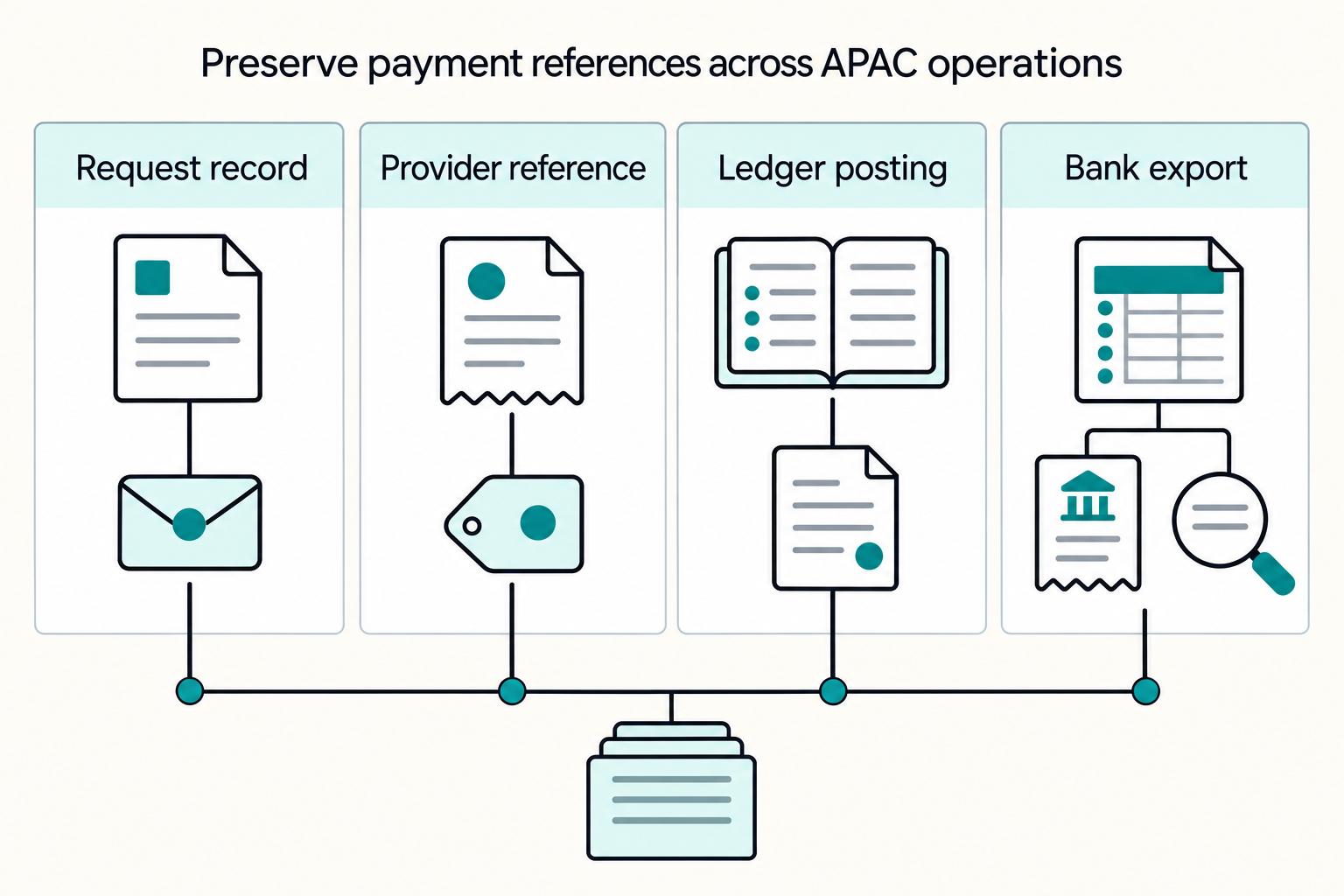
How to Expand Your Subscription Platform to APAC: Payment Methods Currency and Regulatory Landscape
Asia-Pacific (APAC) expansion requires country-by-country launches, not one regional motion. This guide helps you decide with payment, currency, and regulatory evidence so you do not mistake a strong regional headline for real launch readiness in your subscription platform.
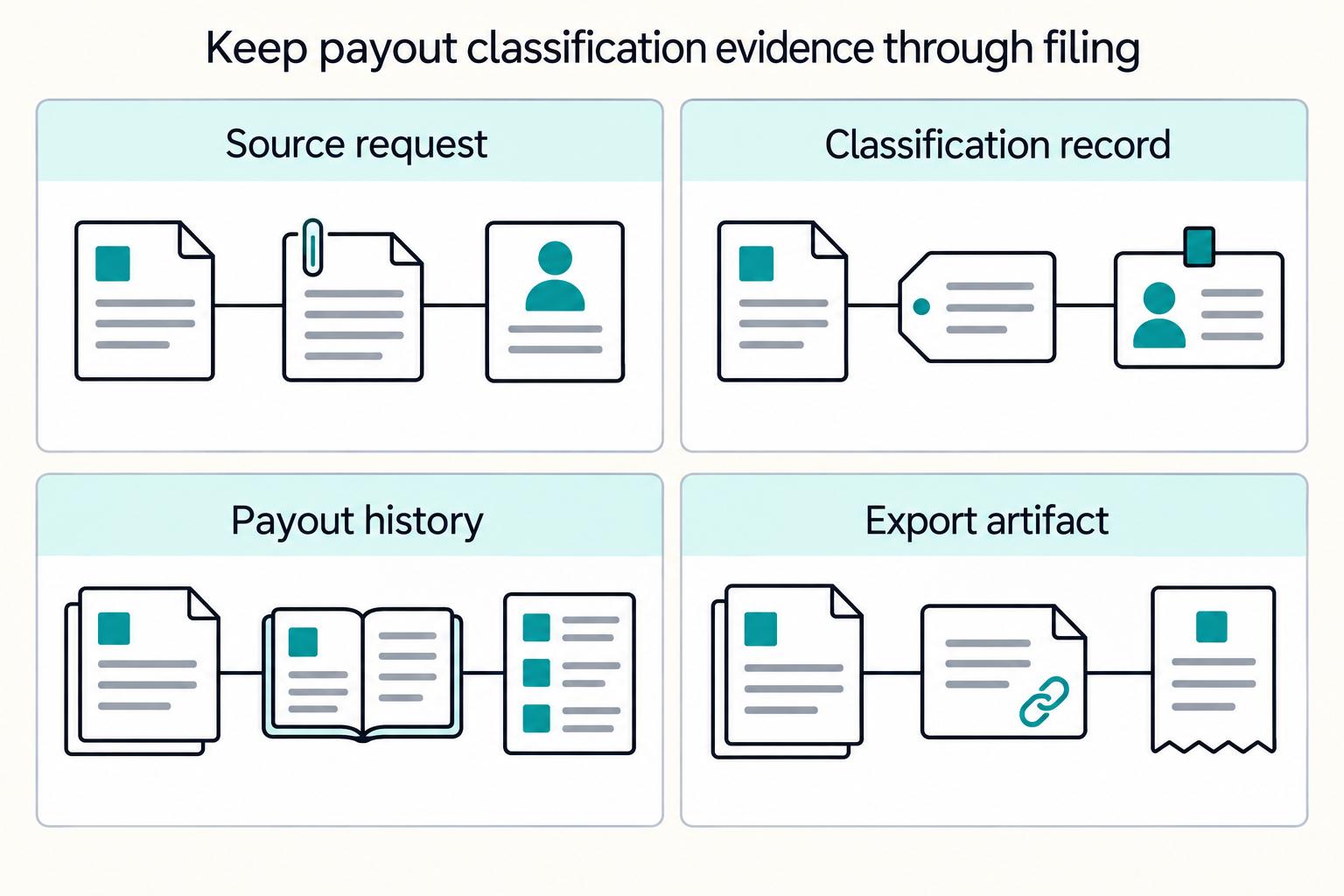
Music Royalty Tax Compliance: How Platforms Handle 1099-MISC vs. 1099-NEC for Artist Payments
This is an operating-model decision, not a year-end form choice. A team can ship quickly and still end up with misclassified payouts, correction cycles, and filing risk if the classification logic is weak. If you run creator payouts, you need the classification rule before your first batch, not after your first correction cycle.
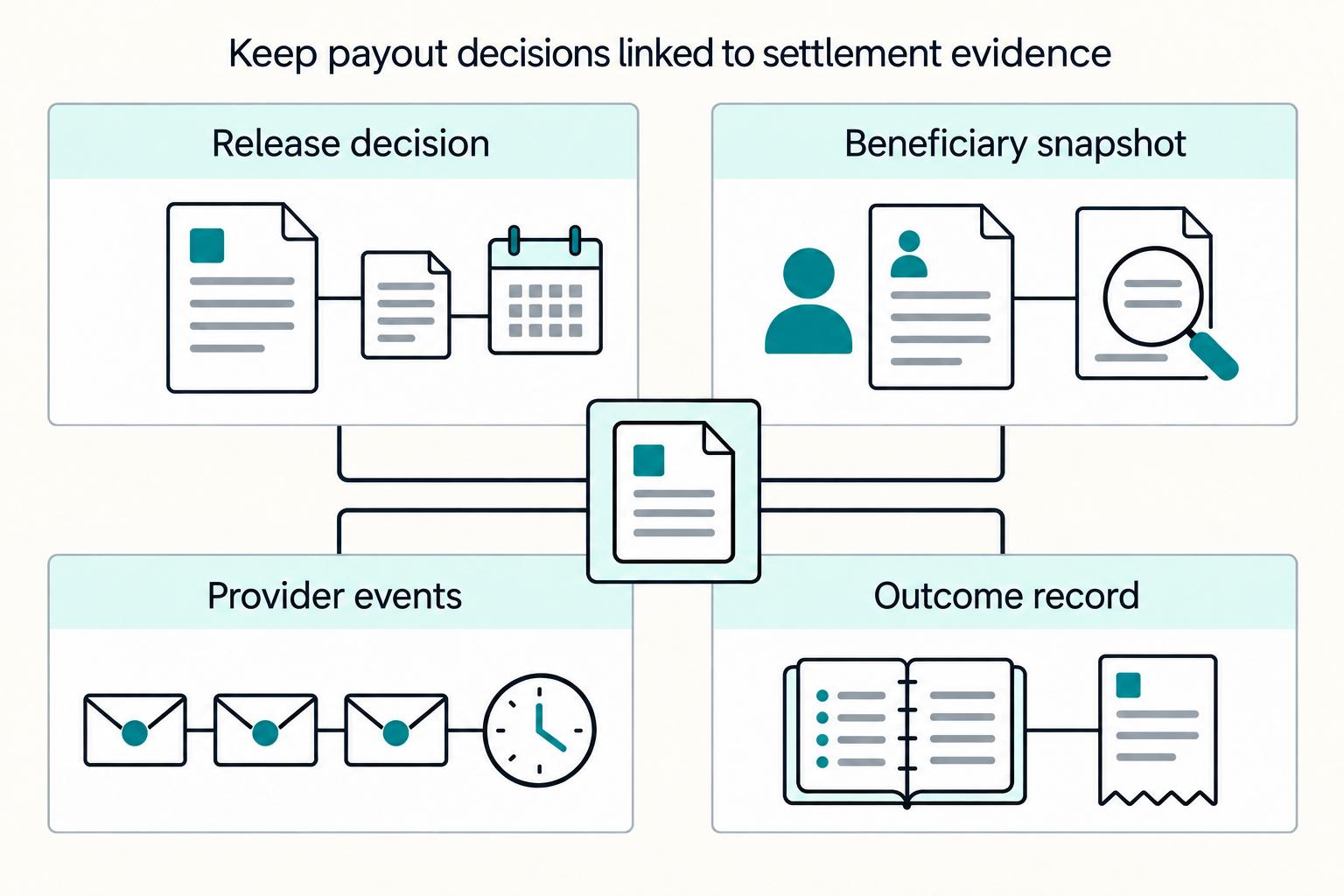
VAT and SEPA: How European Platforms Combine Tax Compliance with Automated Euro Payouts
The hard part is not VAT on one side and SEPA on the other. It is keeping tax treatment, beneficiary checks, and euro payout execution aligned when your platform pays across multiple European markets at speed.