
Quick Answer
Automate one journal family with reliable source data, finance-approved mapping and required controls. Preserve event-time evidence and durable financial-effect identity, recover unknown ERP writes before retries, and reconcile results through one authoritative posting path. Expand using measured pilot evidence.
Why Platform Finance Teams Automate Accounting#
Treat manual journal work as a chain, not a single task#
If you are asking whether reducing manual journal entries helps you close faster, the short answer is that it can, especially when automation removes the handoffs around journals, not just the typing. Manual journal work is rarely just someone typing into the General Ledger. It is often a chain of accruals, spreadsheet handoffs, approval waits, reconciliation checks, and final ERP posting that turns month-end close into one of the most time-sensitive and resource-intensive jobs in finance.
That chain matters because partial automation can look impressive while leaving the real bottleneck untouched. You can auto-create journal entries and still lose time if finance is waiting on offline files, missing source data, or late approvals. Many companies still rely on manual accounting processes that consume time and increase error risk. That drag does more than slow accounting. It also limits timely financial insight, which can slow decision-making across the business.
Scope the problem to platform payment operations#
This guide is for teams running contractor, creator, marketplace, or embedded-payments flows, where finance depends on product events, payout statuses, provider updates, and ERP imports lining up cleanly. In that environment, journal automation is not just an accounting feature. It sits between your source transaction data and your close process, so upstream assumptions often show up as noisy exceptions at month end.
Start with a simple checkpoint. Trace one journal from source event to posted entry without using a spreadsheet that lives on someone's desktop. If you cannot do that today, your close pain is probably coming from handoffs and missing evidence as much as from manual entry itself. A common failure mode is thinking the problem is finance rekeying when the real issue is inconsistent source data, unclear ownership, or reconciliation breaks that surface only near close.
Decide what should automate first and what should stay reviewed#
The goal is not a hands-off close. It is to move repetitive accounting work out of manual queues so your team can spend time on policy judgments, material exceptions, and investigation. Repetitive tasks like data entry, transaction coding, and reconciliation are the right place to start. Entries that depend on unusual business context, disputed transactions, or unclear timing usually still need human review.
By the end of this guide, you should have three decisions made. First, which journal family is repetitive enough to automate first, often accruals or other high-volume entries. Second, which exceptions must stay in an approval path because they carry real accounting risk. Third, how you will verify that improvement is real: fewer manual touchpoints, fewer reconciliation breaks, fewer late adjustments, and a cleaner month-end close, not just more entries posted automatically.
Faster posting helps only if finance can trace and reconcile the result. Measure close effort, corrections and decision-ready reporting on your own flow. Related: What Is an Accounting Cycle?.
What eliminating manual journal entries actually means in practice#
Eliminating manual journal entries means removing rekeying and handoff work, not removing finance judgment. In practice, approved source events generate entries, those entries post to the General Ledger (GL) without manual re-entry, and people focus on policy decisions and material exceptions.
Define the target state#
Use a testable standard for each in-scope flow: you can trace an entry from source event to GL post, confirm its approval history, and match it in reconciliation without pulling an offline spreadsheet.
An interface can hide upstream work. Check whether people still reshape spreadsheets, attach support or email approvals before posting; count that labor in the pilot.
Separate typing from judgment#
"No typing" is not the same as "no judgment." Repeatable entries, including accruals and auto-reversal journal entries, are often good automation candidates once triggers, account mapping, and reversal timing are agreed.
Keep material exceptions in approval workflows, especially when entries involve disputed transactions, missing source data, or unclear cut-off. A common failure mode is automating the standard path while exceptions pile up offline near close.
Measure close speed as an outcome#
Treat "faster close" as an operational result you verify, not a vendor promise. The checks are straightforward: less GL rekeying, fewer spreadsheet-based reconciliations, and tighter reconciliation flow.
The goal is fewer manual handoffs and explainable results, not a higher count of auto-posted entries. Measure preparation, approval, reconciliation and correction effort. See Choosing Value Pricing for Accounting and Bookkeeping Services.
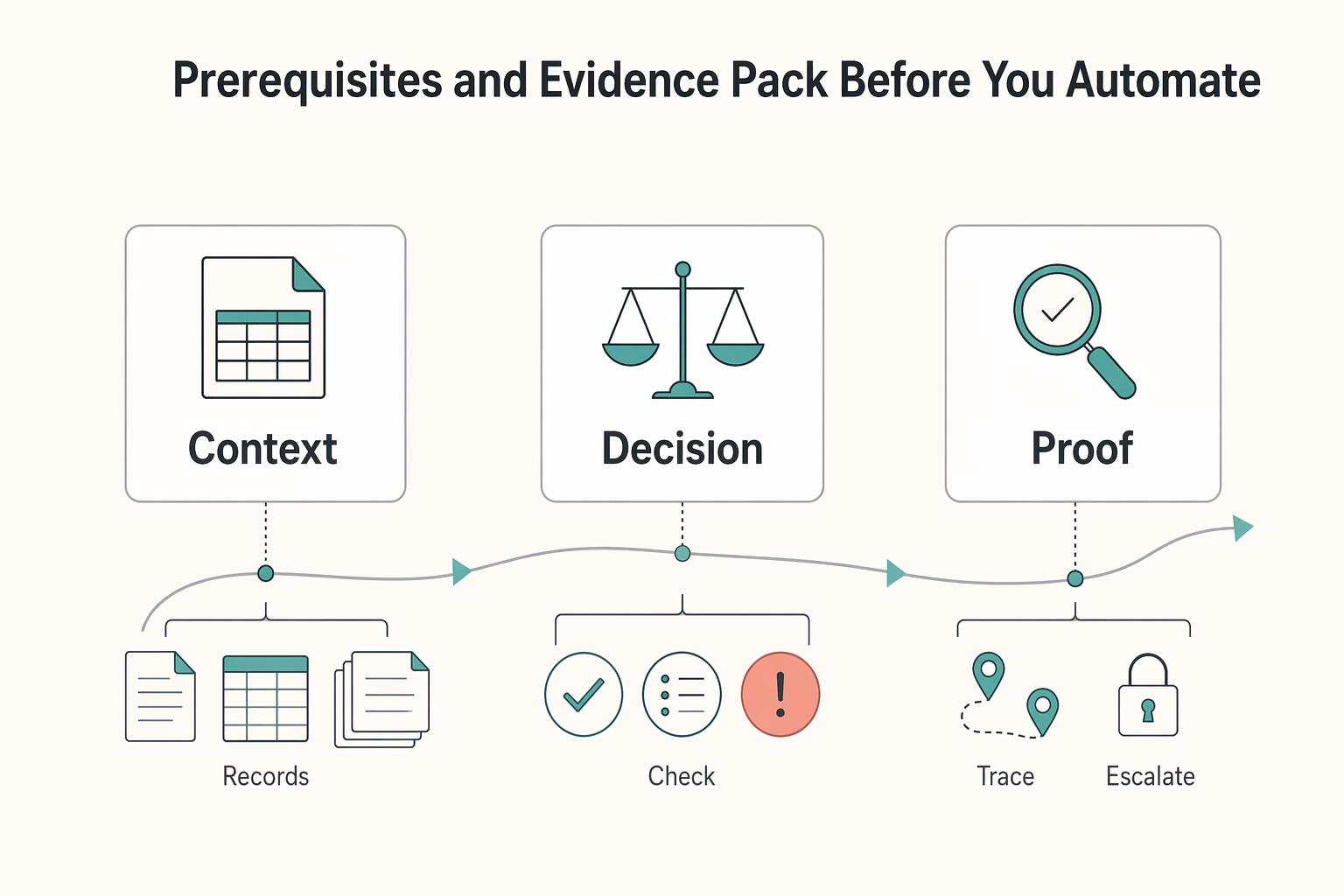
Prerequisites and evidence pack before you automate#
Before you change tooling, build an evidence pack for the current close. The goal is simple: make automation reduce manual work you can verify, not just move it around.
Step 1: Build a baseline pack for the current close. Document each in-scope journal path end to end. Capture manual touchpoints, late adjustments, reopen reasons, and reconciliation breaks by journal type. Keep it specific: which spreadsheet is used, who rekeys into the General Ledger (GL), what support is attached, and what usually triggers post-entry corrections.
Use this control sample for shadow/parallel reporting while keeping one authoritative live posting path. Shadow output must not independently post the same financial effects to the ERP.
Step 2: Confirm system boundaries and owners. Map where the source event starts, where posting decisions are made, and where the final entry lands in the Enterprise Resource Planning (ERP) system. Assign clear owners at each layer: ERP admins (posting access and import behavior), product/engineering owners (event creation and data quality), and finance owners (posting policy, approval tiers, and period rules).
If ownership overlaps or exception decisions have no owner, fix that before automation design.
Step 3: Inventory audit artifacts up front. For each in-scope entry, confirm you can retain source transaction IDs, approval history, posting logs, and exception disposition records. You should be able to answer four questions from records, not memory: what triggered the entry, who approved it, when it posted, and how exceptions were resolved.
Software can handle reconciliations and journal-entry tasks, but it cannot reconstruct missing evidence later.
Define one authoritative live posting path. Persist each financial-effect identity, mapping version and pending ERP write intent durably before dispatch. If an ERP response is lost, reconcile the existing journal by supported reference/status before retrying; local deduplication alone cannot make an external write atomic. Keep controlled exception ownership and an audit trail of completion or recovery.
Document approval thresholds and approval tiers before build starts. In practice, platform design is an operating-model decision: who does what, when, with which approvals, and under which audit trail. This matters because disconnected systems are a known source of finance-team drag.
Choose your architecture based on volume risk and ERP maturity#
Choose the architecture based on where manual risk begins, not where posting ends. If most close pain sits in one journal family (for example, accruals), start with point automation in the Accounting Journal. If pain spans approvals, intercompany, reversals, and reconciliation before ERP posting, start with end-to-end orchestration from source event to ERP post.
Decision rule: point-first vs end-to-end#
Point-first automation is the faster, narrower path: automate one journal stream with tighter posting rules and lighter integration effort.
End-to-end orchestration connects data acquisition, validation, approvals, posting and reconciliation. If failures span source quality, approvals or handoffs, test that broader design on one journal family before committing to it.
Use this rule:
- Go point-first when one journal family drives most of the manual workload.
- Go end-to-end when delays and reopen work cross teams and control points.
Sanity-check "automated" claims before you commit#
Treat vendor demos as hypotheses. Ask the vendor to execute your sample from original source evidence through validation, approvals, ERP outcome and reconciliation, showing every manual step.
Validate four items from your evidence pack:
- Where source data is prepared: if teams still export, reshape, or merge files, core risk is still manual.
- How exceptions are handled: out-of-policy items should pause, route, and log in a controlled queue.
- Whether traceability is complete: each posted line should map to a source event and approval record.
- Who owns reversals and replay: unclear ownership here causes drift and duplicate corrections.
Your pass/fail check is not "did it post?" It is whether source transaction ID, approval history, posting logs, and exception disposition all survive into ERP records.
Go or no-go table#
| Criteria | Point automation in Accounting Journal | End-to-end orchestration to ERP | Go or no-go signal |
|---|---|---|---|
| Integration effort | Lower initial effort for a narrow journal scope | Higher effort across source events, approvals, and ERP behavior | Go point-first only when this journal family has ready, reliable source data and stable approved posting rules |
| Exception handling depth | Usually limited to posting/journal validation | Can cover pre-post exceptions, approval pauses, and replay | No-go point-first if delays mostly come from upstream exceptions |
| Audit traceability | Strong at post level, weaker if upstream prep stays manual | Stronger when source event through reconciliation is connected | Go end-to-end if evidence breaks before the GL |
| Close-cycle impact confidence | Higher when one journal family dominates close effort | Higher when close drag spans multiple handoffs/teams | No-go point-first if reopen reasons are mostly approvals/reconciliation |
Do not pick architecture on feature density alone. Pick the option that preserves a single source of financial truth and removes manual work before posting, not only at posting.
For a step-by-step walkthrough, see Merchant of Record for Platforms and the Ownership Decisions That Matter.
Map payout and money-movement events to clean journal logic#
A shared event-to-journal map is the control point that removes manual close work. Without it, manual effort usually reappears in reconciliation, spreadsheet fixes, and late adjustments.
Define the accounting moment for each operational event#
Start with lifecycle events, then map journals. Finance data often sits across multiple systems and inconsistent formats, which is exactly what slows journal entry and reconciliation, so each event needs a clear accounting role: informational, obligation-creating, or settlement-confirming.
For a platform workflow, map invoice facts, payout updates and actual balance/bank movements to distinct accounting effects. Finance defines recognition, account coding and clearing; engineering identifies authoritative evidence, event-time context, durable effect identity and recoverable ERP writes. This is an architecture example, not a claim about a currently shipped Gruv capability.
Late or correctable evidence does not automatically create an accrual or payable. Recognize actual obligations and cash under the approved accounting policy and reliable evidence, independently of payout readiness. Preserve prior event-time facts and post linked subsequent effects/corrections where required rather than replacing history with the latest status.
Translate lifecycle states into journal behavior and reversal rules#
Use one sign-off table that finance and engineering both approve before production posting:
| Lifecycle event | Finance outcome to decide | Journal behavior | Verification before post |
|---|---|---|---|
| Invoice/source obligation established | Recognition under actual contract and accounting policy | Record supported accrual/payable or other effect | Reliable source facts, required dimensions and applicable approvals |
| Payout marked sent | Submission is not universal proof of cash or discharge | Record only supported policy effects; preserve unresolved state | Actual provider status meaning, action reference and prior effects |
| Provider confirms paid | Actual settlement/discharge meaning for this route | Clear/reclassify only balances supported by evidence and policy | Provider meaning, recipient/balance/bank evidence as applicable |
| Failure or return update | Failure before movement differs from return after movement | No blind reversal; record linked actual return/correction where required | Original attempt, existing journals and actual financial effect |
| Bank/provider-balance movement reconciled | Actual direction, amount and account movement | Clear appropriate pending/unmatched balances under policy | Source linkage, amount/currency/date and applicable references |
Keep auto-reversal logic explicit. Reversal drift is a common failure mode when accruals post automatically but clearing triggers are inconsistent.
Lock required dimensions before ERP import#
Define dimensions in the mapping, not during import. If ERP posting requires department, class, location, entity, or similar reporting segments, each in-scope event needs a deterministic source rule and a missing-data rule.
This is especially important in multi-entity ERP setups across subsidiaries, divisions, or geographies. If event context cannot reliably identify the right reporting slice, fix the source design before posting. Otherwise, spreadsheet-based reconciliations grow, close takes longer, and accuracy drops.
Put edge cases in scope before go-live#
Map unmatched movements, returns and delayed confirmations before launch. Missing payout approval or final settlement does not itself erase a valid liability. Record the supported accounting effects under policy and route unresolved evidence or coding to an owned exception; preserve correction/reclassification links.
This is where governed workflows matter: integrating ERP, payroll, and subledger data while automating validation, approvals, and posting with traceability intact.
Before production, require one signed mapping artifact approved by both finance and engineering. If both teams cannot sign, the posting logic is not ready.
Build controls that speed close instead of slowing it down#
Once your event-to-journal map is approved, controls should stop risky entries, not every entry. If every batch needs the same review, you have not removed manual work in data entry, transaction coding, and reconciliation; you have delayed it into close.
Tier approvals by risk#
Approve by risk, not by journal volume. Low-risk entries from approved source events with complete dimensions and clean validation should flow through with minimal review. Higher-risk entries, such as missing attributes, unexpected reversals, or source-to-settlement mismatches, should pause for decision.
A control is only real if you can verify it from logs. For each posted entry, you should be able to trace source transaction ID, assigned risk tier, approval requirement, approver (if required), and ERP posting result.
Narrow exception queues to true anomalies#
Exception queues should contain only items that can cause wrong posting or require policy judgment. Route issues like missing source IDs, duplicates, failed idempotency checks, amount mismatches, or failed document validation; keep expected lifecycle timing changes out of the queue.
If finance is treating the queue like a daily inbox, the rules are too noisy. Each exception should carry an owner, reason code, and clear disposition: corrected, approved, reversed, or rejected.
Use IDP for intake, then validate before ERP posting#
Use Intelligent Document Processing (IDP) to extract and organize document data where invoices or receipts are part of the flow. That helps when accruals are recorded before all supporting documentation is available, but extraction is not a posting decision.
Treat document extraction as intake, then validate source facts, dimensions and amounts before posting. Retain document/event references, extracted values, validation, required approval and the actual ERP journal outcome; extraction does not make an accounting decision.
If billing complexity is part of the issue, see Subscription Billing Platforms for Plans, Add-Ons, Coupons, and Dunning. It covers the upstream billing workflows that often create downstream accounting work.
Roll out in phases with hard verification gates#
Choose an explicit expansion gate, for example two stable close cycles for this pilot. Treat the count as your proposed operating policy, not a universal accounting requirement. Establish required controls before the first live post.
| Step | Action | Verification gate |
|---|---|---|
| Step 1 | Pilot one high-friction journal family | Confirm a clear before/after delta in close effort and error correction, with evidence your team can review quickly |
| Step 2 | Connect posting and reversal into NetSuite or your current ERP | Verify effect IDs, recoverable ERP write, journal references and configured reversal links |
| Step 3 | Establish required controls before pilot; tighten before expansion | Watch for three signals across consecutive closes: exceptions stay focused on true anomalies, approvals stay within your close window, and reopen reasons trend down |
| Step 4 | Scale after the selected reviewed-close gate | For example two stable reviewed closes; retain traceable source/effect, required approvals, ERP outcome and reconciliation |
Step 1. Pilot one high-friction journal family. Start with one repeat-heavy family (often accruals) and keep scope tight enough to measure. Your gate is not just successful posting. Confirm a clear before/after delta in close effort and error correction, with evidence your team can review quickly.
Connect supported posting and configured reversal flows to the ERP. Verify source/effect IDs, mapping versions, ERP journal references and applicable reversal links. Persist write intents and recover unknown ERP outcomes before retrying. Do not blindly reprocess an already posted effect.
If you are implementing NetSuite, use this deeper checklist: How to Integrate Your Payout Platform with NetSuite: Sync Journal Entries and Close Books Faster.
Required authorization, validation, effect uniqueness, ERP recovery and audit controls must exist before live pilot posting. Before expanding scope, tighten exception rules, response expectations and reopen thresholds using the pilot evidence.
Use the selected pilot expansion gate, such as two reviewed close cycles, with traceable source facts, required approvals, ERP outcomes and reconciliation. This demonstrates the chosen controls; it does not certify continuous compliance or eliminate accounting judgments.
Common failure modes and how to recover fast#
When a rollout stalls, identify the failed handoff or rule before adding manual work. Correct the source problem and keep the affected journal family controlled until recovery is understood.
Failure mode 1: "Automated" posting still depends on offline spreadsheets. Recovery: remove pre-post manual handoffs, not just the final upload. If entries still start in Excel templates, email approvals, or side-file cleanup, move preparation, approvals, and support into one controlled flow. The practical test is simple: trace posted entries to source records and approval history without opening a separate inbox or spreadsheet.
For wrong GL coding, pause affected posting, identify existing ERP journals, approve the corrected mapping and execute linked corrections/reversals under policy. Resume only unposted effects through the recoverable write path. Preserve impacted entries, mapping versions, approvals and disposition; do not duplicate existing journals through blind reprocessing.
For configured auto-reversing accruals, track original and reversal entries, approved timing and actual ERP outcomes. Cash settlement and every other journal do not universally require automatic reversal.
Failure mode 4: Exceptions accumulate near close. Recovery: triage early with clear reason codes, explicit ownership, and escalation inside approval workflows. Manual processes do not scale well and backlogs are a common outcome, so the queue should hold true anomalies, not routine unresolved work.
For a broader operations view, read Business Process Automation for Platforms: How to Identify and Eliminate the 5 Most Expensive Manual Tasks. It complements the finance-specific workflow changes covered here.
Want a quick next step? Try the free invoice generator.
Final checklist to shorten close without losing control#
Use a proof-first checklist before you scale: shorten close only when speed and control both hold.
Step 1. Define the target state and align finance and engineering#
Define the target state clearly and align finance and engineering on it. In practice, that means in-scope journal work posts from approved source events, while exceptions that need judgment still get explicit human review.
Be strict about what "automated" means: it should be traceable and reviewable, not just rekeyed through a different interface. That standard matters because close teams can still carry manual work even with modern tooling.
Step 2. Approve control and evidence requirements before live posting#
Approve your control and evidence requirements before live posting. You should be able to trace posted results back to source records and show approvals and reconciliation support without relying on side spreadsheets or inbox threads.
If that evidence path is fragmented, fix it before rollout. Faster posting without clean evidence usually shifts risk into audit and post-close cleanup.
Step 3. Run one scoped pilot and verify against your baseline#
Run one scoped pilot, then verify results against your baseline before expanding. Check both speed and control outcomes, including whether exceptions are actually going down instead of stacking up late in close.
Treat one smooth demo as signal, not proof. Scale by journal family only after outcomes are repeatable.
Step 4. Keep claims narrow and documented before wider rollout#
Report your measured baseline, pilot scope, close duration, corrections and remaining manual work. A change in one journal family is not a universal close-speed forecast.
Treat timely, traceable reporting as the goal. Pending evidence, estimates, accrual judgments and reconciliations still need review; a zero-day-close aspiration does not mean every book is complete at every moment.
Frequently Asked Questions
What close tasks can be fully automated, and which still need human judgment?
Routine, repeatable work is the best automation target: data entry, transaction coding, and reconciliation prep. Depending on your controls, teams may also automate repeatable journal workflows such as accrual and reversal posting. Human judgment should stay on accounting policy, material exceptions, unusual intercompany flows, and anything where source data is incomplete or contradictory. If a journal cannot be clearly traced to source records and approvals, do not treat it as fully automatable yet.
How do automated accruals and auto-reversals actually reduce month-end close time?
Automated reversals can remove rekeying and waiting for journal families that use them. Standardize triggers, timing, original/reversal links and recovery, then measure your own close-cycle results. They are not a universal requirement or a guaranteed time saving.
What controls are mandatory so accounting automation does not increase risk?
You need traceability from source event to ERP post, controlled approvals for higher-risk items, duplicate protection, and an exception queue with owners and resolution history. A practical checkpoint is whether you can pull one posted entry and see the source ID, GL mapping used, approval status, posting log, and final disposition without opening email or Excel. If the evidence only exists in side files, the control is weak even if the post was automated.
How should a platform team evaluate vendors when benchmark data is limited?
Ask each vendor to run your sample journal family end to end and show remaining spreadsheet preparation, approval handoffs, exceptions and ERP recovery. Compare observed effort and accuracy to your baseline rather than importing a customer percentage or country count.
What are the most common implementation failures in ERP journal automation?
The most common failure is pseudo-automation: manual work hidden behind a polished interface. Another common miss is automating the final ERP import while leaving cleanup and support gathering manual upstream. Data gaps across systems can also leave teams relying on gut decisions instead of consistent evidence. If your team is still entering numbers into Excel templates, attaching support, and emailing approvals, you have changed the interface, not the process.
How do we prove "faster close" came from process improvement instead of delayed controls?
Baseline manual touches, reopen reasons and exceptions for the same journal family, then compare results across the selected reviewed pilot window, for example two close cycles. Confirm approvals, support and reconciliation were completed rather than shifted past close. A shorter close with rising backlog or corrections is not a successful pilot.
Try a related tool
Researched and edited by the Gruv editorial team. Gruv builds cross-border billing, payouts, and finance-operations software for global businesses.
Sources
- docs.stripe.com/webhookstrusted
Educational content only. Not legal, tax, or financial advice.
Related Posts
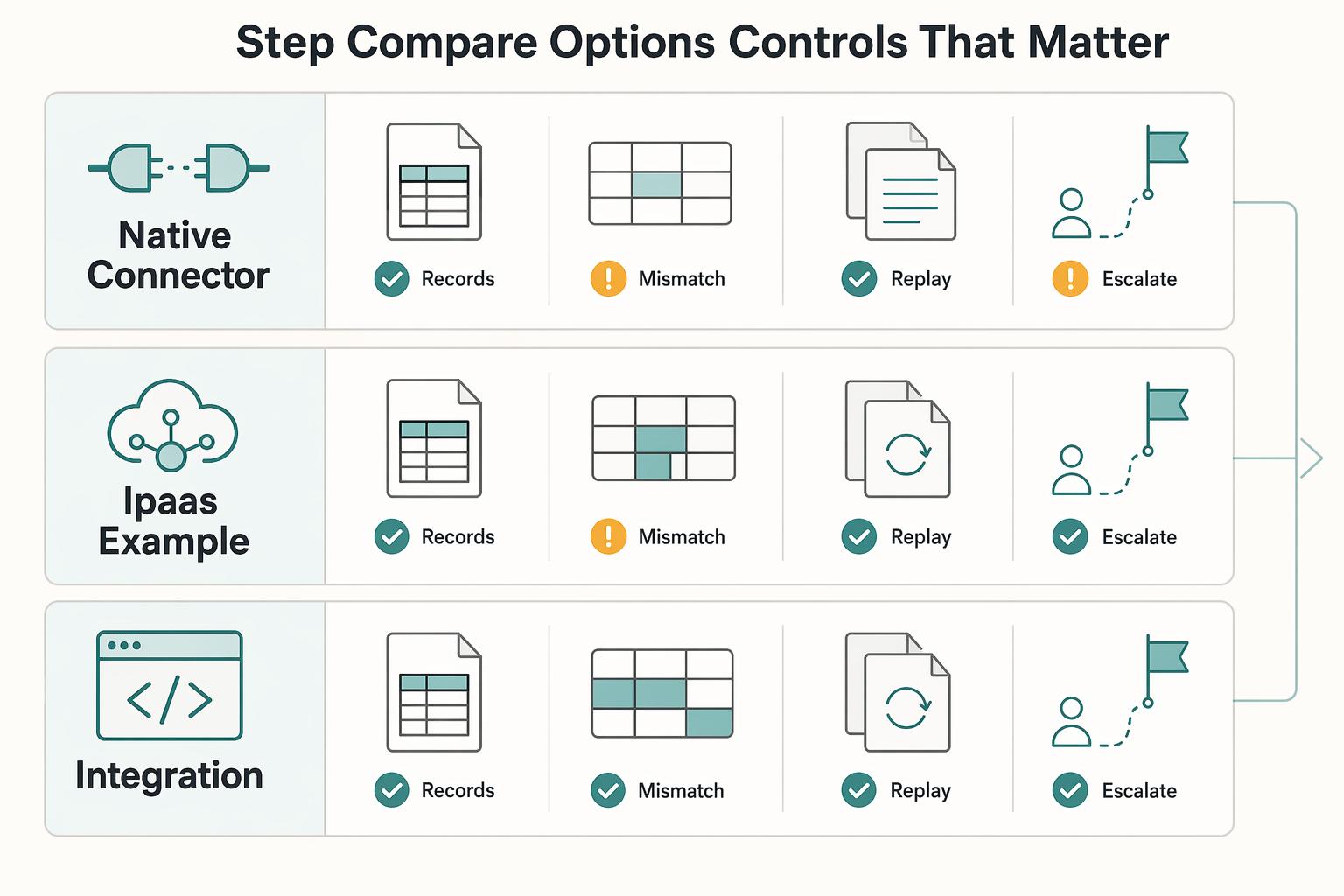
Integrate Your Payout Platform with NetSuite for Cleaner Journal Syncs
If you need a decision-ready way to handle payout-to-NetSuite journal syncs, start with one goal: bring payout activity into NetSuite in a way that keeps journal entries accurate, auditable, and easier to close at month end. The right design does more than move data faster. It reduces avoidable general ledger cleanup, gives finance a clear approval path, and makes posted results easier to trust.
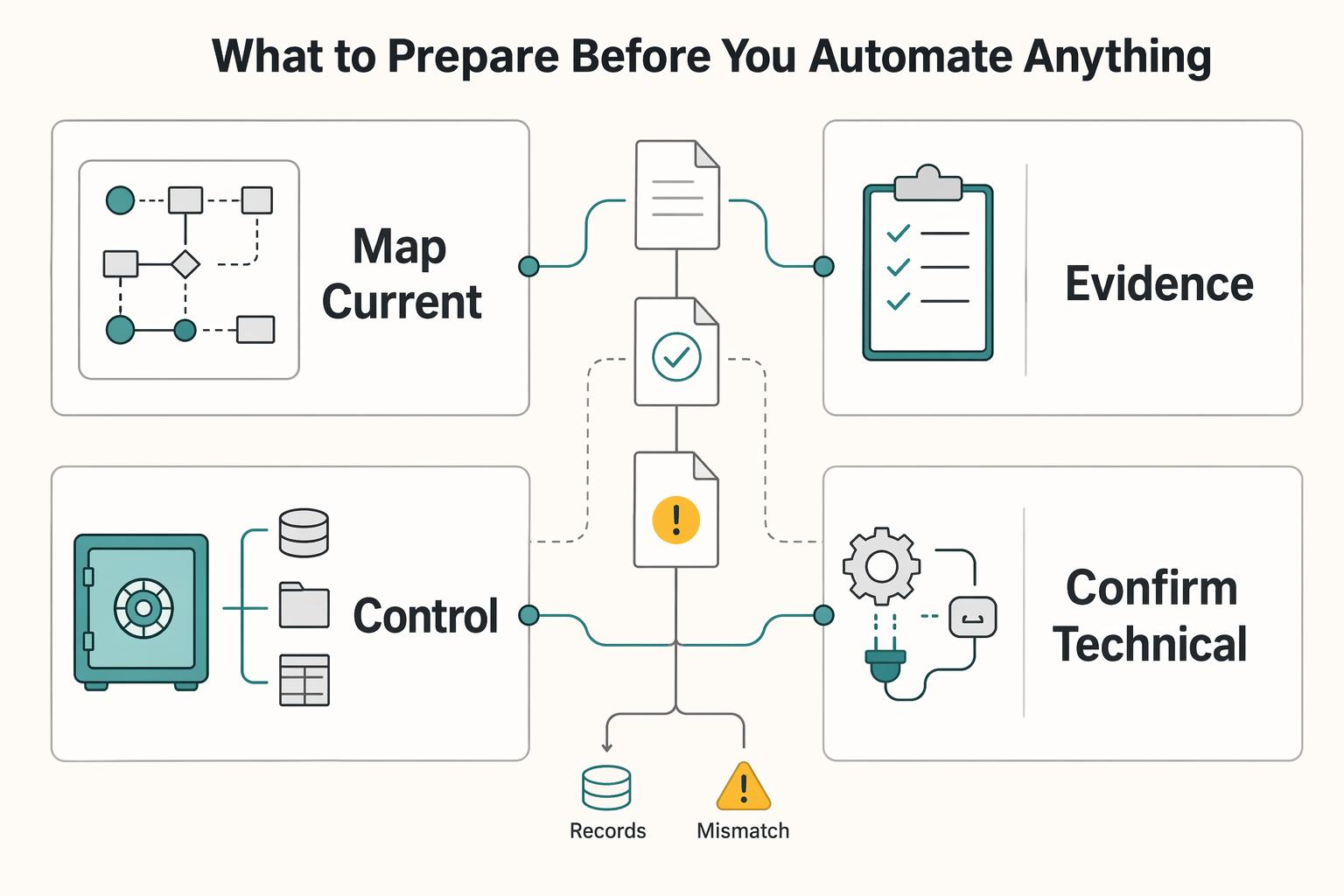
Business Process Automation for Platforms: How to Identify and Eliminate the 5 Most Expensive Manual Tasks
Start with the manual work that repeats across people and applications. That is where business process automation usually earns its keep. It is also where teams get into trouble if they automate messy ownership or bad data instead of fixing it first.
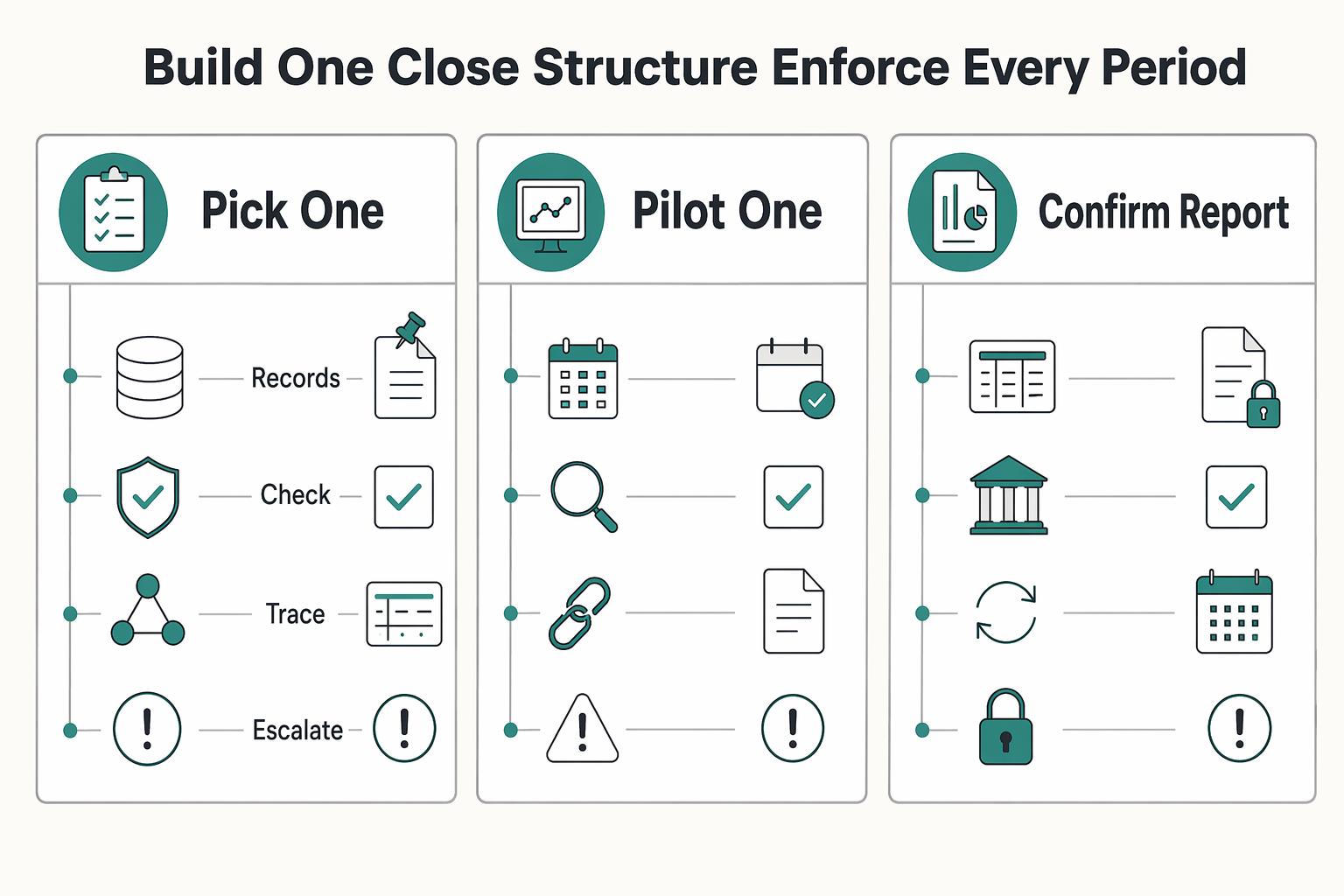
Accounting Cycle for Payment Platforms: How to Structure Month-End and Quarter-End Close
Month-end close on payment platforms usually breaks in three places: timing mismatch, explanation debt, and unclear ownership. The fix is to choose a close structure you can actually run, assign clear ownership for each tie-out, and set verification checkpoints for month-end and quarter-end. That keeps financial statements accurate without pushing cleanup into the next period.