

Quick Answer
Choose a 1042-S reporting platform that can calculate the aggregate e-file threshold, use the correct Form 1042-S channel for the tax year, reconcile detail to Form 1042, and preserve an approved dataset and submission record. For 2026 Forms 1042-S due in 2027, the IRS requires IRIS. Confirm the correction path and prevent duplicate paper and electronic submissions.
What to Look for in a 1042-S Reporting Platform#
Choose a defensible 1042-S reporting platform based on filing duty and control quality first, not feature lists. For platforms paying foreign persons, the practical test is whether finance and compliance can generate, review, submit, and correct filings in a way that stands up to IRS scrutiny.
The filing scope is broader than many teams expect. The IRS states that every withholding agent must file Form 1042-S for reportable amounts paid to foreign persons, and if Form 1042-S is required, Form 1042 is also required. Form 1042-S can be required even when no withholding applied to the payment, so a design built only around withheld-tax scenarios is usually too narrow.
Complexity also rises quickly in ordinary operations. The IRS notes that separate Forms 1042-S are required across recipient, income-type, and tax-rate dimensions, so one payout stream can turn into multiple reportable records. That is why this article compares operating models, not software brands. Transmission alone is not enough if data mapping, reconciliation, and correction handling are weak.
For tax year 2026 Forms 1042-S due in 2027, the IRS requires IRIS. Ask a provider to show how it validates the file or API submission against the applicable IRIS rules, confirms acceptance, and preserves the submitted version. FIRE and its Publication 1187 format belong to the earlier filing path.
Use the current 2026 Form 1042-S instructions for the filing year in scope. They generally require e-filing at 10 or more aggregated information returns, for partnerships with more than 100 partners, and for financial institutions regardless of count. They also specify IRIS for tax year 2026 Forms 1042-S.
This ranking is for recurring cross-border payout operations where edge cases are normal. It focuses on models that still work when documentation is stale, files fail validation, or corrections require amended forms and reallocation across joint owners without exceeding amounts actually paid and withheld. You will get selection criteria, a side-by-side model comparison, and clear escalation points for provider verification or tax counsel.
This pairs well with our guide on Creator Platform Tax Reporting for 1099 and W-8 Expansion Decisions.
How we rank 1042-S reporting platform options#
We rank options on control reliability first. For a U.S. withholding agent with recurring cross-border payouts, the right option is the one that can produce accurate filings, handle corrections, and preserve a clear record of who did what. It is not the one with the longest feature list.
| Criterion | Higher-ranked signal | Lower-ranked signal |
|---|---|---|
| Coverage of the actual filing duty | Supports real Form 1042-S obligations, not just exports, and can explain how obligations fit TD 9972 and IRS cases | Only cites the older 250 returns threshold without context |
| Tax-year channel output quality | Shows how data is locked, transformed, and generated into submission-ready output without last-mile manual edits | Creates duplicate-submission risk through electronic and paper filing of the same return set |
| Correction handling | Keeps corrections controlled and traceable, with original and corrected records linked in the required channel | Depends on manual spreadsheet work or one person remembering prior file state |
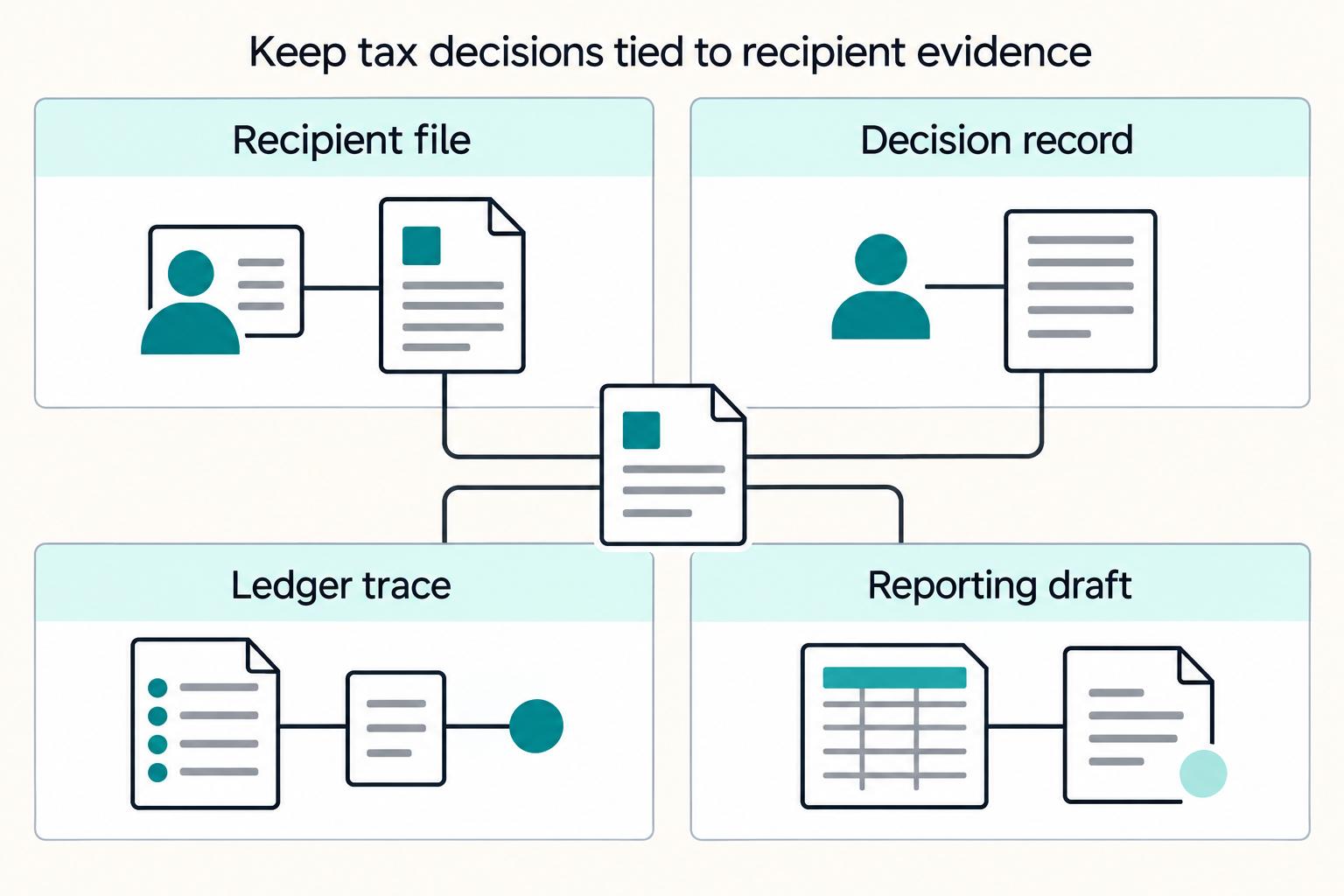
| Evidence quality and ownership clarity | Produces an evidence trail linking tax documentation, filing data, file generation, and submission activity | Depends on inbox approvals, manual exports, and tribal knowledge |
This section is for teams that make repeat payments to non-U.S. contractors, sellers, or creators, where filing counts can shift, tax documentation may arrive late, and submitted returns may need correction. It is not aimed at one-time filing projects.
- Coverage of the actual filing duty
We score an option highest when it supports real Form 1042-S obligations, not just exports. Under TD 9972, filers generally must e-file at 10 or more returns in a calendar year beginning in 2024 (tax year 2023). The count uses aggregated covered information return types. Strong options can explain how your obligations fit those rules, including the cases the IRS calls out. Financial institutions reporting Chapter 3 or Chapter 4 payments must e-file Forms 1042-S regardless of volume, and partnerships with more than 100 partners must also file electronically. If a vendor only cites the older 250 returns threshold without context, we rank it lower.
- Channel output quality, not just transmission access
For tax year 2026 Form 1042-S, IRIS submission quality matters more than interface polish. Higher-ranked options show how approved data is transformed, validated against the current filing specification, submitted, and archived without last-mile manual edits. Check the filing-year channel, pre-file tests, final submission evidence, and controls against duplicate paper and electronic returns.
- Correction handling under real filing pressure
Corrections are core work for repeat payout operations. Corrected returns are not counted for the aggregate e-file threshold, but an electronically filed original requires an electronic correction. Rank options higher when originals and corrections stay linked with a clear IRIS correction path for tax year 2026. Manual spreadsheets and undocumented prior file state make that harder to prove. Penalties can apply separately to original and amended returns.
- Evidence quality and ownership clarity
A filing that succeeds but cannot be reconstructed later does not rank well. Show who approved tax documentation, who generated the filing dataset, which checks passed, and what the IRS accepted. Higher-ranked models link tax documents, approved data, submission evidence, and corrections.
This comparison does not rank provider pricing, service levels, or implementation time. Validate those terms directly with shortlisted vendors after testing filing-year channel support and control fit.
If you want a deeper dive, read IRS Form 1042-S for Platform Operators: How to Report and Withhold on Foreign Contractor Payments.
IRS rules you must lock before tool selection#
Lock these IRS rule decisions before vendor selection, or you risk building a process that fails even if the tooling looks strong.
- Mandatory e-file trigger
Start with TD 9972 and the Taxpayer First Act changes. The general rule is 10 or more returns in a calendar year, beginning in 2024 (tax year 2023), and the count uses an aggregate of almost all covered information return types, not Forms 1042-S alone. Document exactly how you counted, which return types you aggregated, and why. Corrected returns are not counted toward that aggregate threshold, but if the original was e-filed, the corrected return must also be e-filed.
- Submission channel separation
Keep Form 1042-S in its own electronic submission lane: IRIS is required for tax year 2026 forms due in 2027; either IRIS or FIRE could be used for tax year 2025 forms. Form 1042 uses MeF when electronically filed. Ask vendors to show supported tax years, each form's channel, reconciliation, and correction handoffs. A generic "IRS filing" stage hides those distinctions.
- Chapter 3 and Chapter 4 classification
Treat Chapter 3 and Chapter 4 classification as an upstream control, not cleanup after file generation. IRS electronic-reporting guidance flags that financial institutions reporting Chapter 3 or Chapter 4 payments must e-file Forms 1042-S regardless of volume. If your team cannot show how classification is set before files are generated, fix that first.
- Duplicate filing risk
Build controls that prevent duplicate paper and electronic submissions of the same return set. The IRS states that if you file electronically, you should not file the same returns on paper, and duplicate filing may generate penalty notices. Your evidence trail should keep one final file version, one submission record, and a clear decision log confirming paper was not used for that same set.
Comparison table of the best operating models#
If you meet the 10 or more returns aggregate threshold, use a model that clearly owns Form 1042-S filing through IRIS for tax year 2026 and separately assigns Form 1042 ownership. Partial-output models can create duplicate-filing and correction risk. If e-filing is required and no approved Form 8508 waiver applies, penalties can follow unless reasonable cause is established.
Use the table below to test operating design. Focus on who approves the filing dataset, who submits through the tax-year channel, and what records prove corrected-return handling.
| Model name | Best for | Core filing channel (Form 1042-S) | Documentation control | Corrected-return handling | Audit-evidence depth | Regulatory confidence | Failure mode | Verification checkpoint |
|---|---|---|---|---|---|---|---|---|
| Centralized tax-document and filing suite | Teams that want one governed lane from intake to filing | IRIS submission for tax year 2026 owned in one lane; related Form 1042 ownership is explicit | One controlled dataset is approved before submission | Originals and corrections stay in one queue; corrected returns follow the original filing method | Deep when approvals, dataset versions, submission records, and correction logs are stored together | High when aggregate-count, filing-channel, and waiver decisions are documented | Duplicate filing across paper and electronic channels | Pre-file: aggregate-count test (excluding corrected returns), channel decision, approved dataset. Post-file: IRIS submission record, approval log, correction log, no-duplicate-filing check |
| Filing-first provider plus internal controls | Teams that already own classification and need filing transport | Provider submits through IRIS for tax year 2026 Form 1042-S; Form 1042 ownership is mapped separately | Internal controls approve the source dataset before provider submission | Internal controls enforce corrected-return rules and original-return linkage | Moderate when evidence is split between provider records and internal logs | Medium when transmission is clear but controls are split across teams | Split ownership can cause duplicate filing or missed correction controls | Pre-file: locked source data, aggregate-count decision, reconciled totals. Post-file: provider submission record, internal signoff, correction tracker |
| API-led custom stack | High-volume platforms needing event-level traceability | Internal pipeline generates IRIS output for tax year 2026; Form 1042 ownership is explicitly assigned | Version-locked datasets and approval gates before submission | Correction events are versioned and tied to original filing method | Potentially deep when snapshots, transforms, approvals, and submission artifacts are immutable | Medium to high when filing ownership and correction controls are explicit | Ownership drift can break channel consistency or correction handling | Pre-file: schema validation, aggregate-count decision, totals by income and withholding, locked-dataset signoff. Post-file: file/version ID, IRIS submission record, audit trail |
| Compliance-led model | Higher-risk populations needing heavier exception review | IRIS submission for tax year 2026 with formal review gates; Form 1042 accountability defined in policy | Exception and approval controls are defined before filing | Corrected-return ownership is explicit and tracked separately from originals | High for approvals and exceptions; automation evidence varies | High when both forms and filing ownership are explicit; medium if ownership is partial | Unresolved exceptions near filing close can disrupt required channel decisions | Pre-file: exception queue cleared, filing population approved, waiver/no-waiver decision documented. Post-file: reviewer notes, escalation log, submission record, correction authorization |
| Lean hybrid | Smaller teams needing a defensible federal baseline | Provider-assisted or manual IRIS filing for tax year 2026 Form 1042-S; Form 1042 handled separately | Checklist-based dataset approval before submission | Thin when correction volume rises and handoffs are manual | Light to moderate unless evidence packaging is deliberate each cycle | Medium to low when ownership and records are fragmented | Manual handoffs increase duplicate-filing and correction-tracking risk | Pre-file: checklist complete, aggregate-count decision, duplicate-filing check. Post-file: submission confirmation, archived source file, reviewer checklist, correction log |
How to read regulatory confidence#
"High" means the model explicitly covers Form 1042-S e-file obligations and does not leave Form 1042 ownership vague. "Medium" usually means 1042-S transmission is clear, but counting, correction handling, or waiver decisions are split across tools or teams.
That distinction matters because corrected returns are excluded from the aggregate threshold count, but corrected returns must still be e-filed when the original was e-filed, and penalties apply separately to original and amended returns.
A practical selection rule#
Do not start with filing-first or lean-hybrid designs if you cannot prove the approved filing dataset, aggregate-count determination, and filing-channel decision before submission. If governance is already strong, lighter models can work, but only with a formal post-filing archive that includes submission confirmation, approval history, and correction tracking.
Centralized tax-document and filing suite#
Choose this model when you need one governed workflow for tax year 2026 Form 1042-S filing through IRIS, with Form 1042 ownership named explicitly.
Best fit#
This model fits teams that want one controlled lane for tax-document status, withholding decisions, filing data, and corrections instead of splitting those steps across tools. For mixed payee populations, that can mean managing different documentation records in the same operating flow.
Why it can be defensible#
The pressure point here is consistency from original filing through corrections. Under the final e-file rules tied to TD 9972, filers at the 10-or-more aggregate threshold generally must e-file. Corrected returns are not counted toward that threshold, but they must still be e-filed if the original was e-filed. A centralized flow can make that easier to prove when approvals, file generation, and submission records stay linked.
Lock the approved filing dataset before IRIS submission, then retain proof of the exact accepted version. Without that evidence chain, centralization in name may not reduce filing risk.
Tradeoffs to test before committing#
This model only works if the provider can handle Chapter 3 and Chapter 4 edge cases with enough clarity. Validate the process, not the marketing:
- How originals and corrections are linked and versioned
- How the no-paper-after-e-file control is enforced, since duplicate filing can trigger penalty notices
- How Form 1042-S filing responsibility is separated and assigned
If those controls are unclear, treat the model as unproven.
Practical use case#
For teams with frequent correction cycles, this model can reduce handoff risk when you need to assemble evidence quickly. If your current integrations cannot already prove that filing output matches approved tax-document status, centralizing first may be the lower-risk path. Stitched tools are more defensible once that evidence is already reliable.
Filing-first provider plus internal controls#
Consider this model when your team already has documented, testable tax controls and mainly needs Form 1042-S submission support. The provider handles filing transport to the IRS, while your team keeps ownership of Form W-8 governance, withholding-agent logic, approvals, reconciliation, and corrections.
The scope is narrow. You replace filing mechanics, not tax-document operations. That is most defensible when your team can classify Chapter 3 and Chapter 4 payees, maintain recipient records, and build an approved filing dataset without relying on the provider to decide what is reportable.
When this model is defensible#
This model is most defensible when controls are written and reproducible, not person-dependent. Ask a simple stress-test question: if the provider disappeared a week before filing, could your team still show why each Form 1042-S record was approved, why it was included, and how totals flow into Form 1042 summary preparation?
E-file rules are central here. Final regulations issued February 21, 2023 generally require e-filing at 10 or more aggregated information returns, beginning in 2024 for tax year 2023. Financial institutions reporting Chapter 3 or Chapter 4 payments must e-file Forms 1042-S regardless of volume, and partnership withholding agents with more than 100 partners must also e-file.
What to verify before relying on a filing-only provider#
- Threshold determination
Keep a dated record showing how aggregate return counts were calculated and whether special e-file rules apply to your entity type.
- Locked filing dataset
Freeze the approved dataset before submission and retain proof of the exact version transmitted.
- Correction handling
Corrected returns are excluded from the aggregate threshold, but corrections must be e-filed if the original was e-filed. Define who authorizes corrections and how each change is logged.
- Channel confirmation
The 2026 Form 1042-S instructions require IRIS for tax year 2026 forms due in 2027. Ask which tax years and channels the provider supports, including corrections to earlier returns.
Where teams get burned#
Filing transport does not remove tax-ops accountability. In this model, your team still needs recipient-data validation, tie-out between Form 1042-S detail and Form 1042 totals, and correction decisions.
The second failure mode is duplicate filing. IRS guidance warns that filing the same returns electronically and on paper may generate duplicate-filing penalty notices. If required e-filing is not used, an approved waiver on record matters for penalty exposure.
For teams with documented internal controls and a narrow need for filing transport, this model can work. If those controls are undocumented, person-dependent risk stays high.
API-led custom stack for high-volume platforms#
Choose this model when you need event-level traceability from onboarding through payout, Form 1042-S reporting, and corrections, and you can keep tax policy aligned with code over time.
Where this model actually fits#
This setup fits engineering-heavy platforms with large payout batches, embedded onboarding, and multi-entity routing complexity. Its main benefit is data lineage: which tax profile was on file, which withholding attributes were applied, which payout event became reportable, and which record became Form 1042-S.
That level of control matters because Form 1042-S reports income and amounts withheld, and Form 1042 is a related filing artifact. If your process depends on exports, manual joins, or spreadsheet tagging, an API-led stack can reduce reconstruction work by creating traceability at record creation, not after period close.
The IRS checkpoint that matters most#
A core risk here is control drift, not just file generation. If tax logic, API contracts, and filing outputs diverge, the integration can keep running while your control story weakens.
Use the 2026 Form 1042-S instructions as your anchor. They require IRIS for tax year 2026 forms and allow either IRIS or FIRE for tax year 2025 forms. Record the channel decision by filing year. Preserve each form's unique identifier and its link to later corrections.
Order of operations that keeps it defensible#
- Collect the tax profile
Capture the tax-document state in force when reporting eligibility was approved, with reproducible tax-document status context.
- Validate withholding attributes
Freeze the attributes that drove withholding so you can explain the treatment later, including correction decisions.
- Lock the filing dataset
Approve and freeze the entity and period dataset before generation, and retain proof of the exact approved version.
- Generate the filing file
Generate from the locked dataset, and log generator and version assumptions plus the target submission channel.
- Run pre-submit checks
Check identifier integrity, tax-document linkage completeness, and reconciliation between detail records and Form 1042 preparation inputs.
- Submit through the channel in scope
Treat submission as a controlled release step and retain transmission confirmation plus an immutable copy of what was sent.
- Archive the evidence pack
The 2026 instructions include a record retention checkpoint, so archive source snapshots, approvals, generated output, submission proof, identifier mapping, and correction history together.
Where teams get burned#
A common failure mode is silent policy drift across services. Another is weak correction handling that cannot cleanly connect corrected records to original identifiers, approvals, and source events.
Channel lock-in is another risk. A provider that only supports FIRE cannot submit tax year 2026 Forms 1042-S due in 2027. Test its IRIS path and its handling of corrections to earlier returns.
Compliance-led model for sensitive or mixed-risk populations#
Choose this model when your biggest risk is unresolved classification, not processing volume. You accept slower throughput so FATCA, treaty, and related cross-border exceptions are reviewed before withholding positions are finalized.
1. Best fit#
This model fits teams with mixed contractor and seller flows, uneven tax-document quality, and onboarding paths that produce different levels of support across payees. The trigger is ambiguity, not scale. IRS withholding-agent examination guidance explicitly lists both FATCA Withholding vs. NRA Withholding Tax and Treaty Benefit Requirements, so exception handling should have named owners and documented signoff.
2. Key advantage#
The main advantage is tighter governance on edge cases. Instead of forcing every record through a standard queue, you hold records when FATCA status or treaty support is still unclear and require specialist or legal review before release.
3. Main tradeoff#
The tradeoff is slower movement near deadlines because more cases need review and approval. You feel this most when documentation quality varies by jurisdiction or intake path.
A common failure mode is accepting an unsupported treaty or Chapter 4 classification near the deadline. Keep unresolved cases with a named tax owner, document the decision, and plan any required extension or correction under the applicable Form 1042-S instructions.
4. Concrete use case and decision rule#
Consider a platform with mixed contractor and seller flows where documentation quality varies by jurisdiction and onboarding path. Some records are straightforward, while others involve unresolved treaty positions, uncertain FATCA classification, or conflicting jurisdiction facts.
Decision rule: escalate unresolved classification before filing cutoff to a qualified tax reviewer. Document the filing or extension decision for the affected return rather than silently dropping the record.
Lean hybrid model for smaller teams#
Consider this model when your team is lower-volume but still needs defensible Form 1042-S operations. One finance lead owns the federal filing path, while compliance reviews exceptions and signs off on defined checkpoints before submission to the IRS.
1. Best fit#
This is often a practical fit for growth-stage teams that need defensible Form 1042-S operations without an enterprise buildout. The ownership split stays simple: finance ops prepares the file, confirms totals, and manages submission; compliance reviews edge cases, unresolved documentation, and archive completeness.
Keep the process version-controlled to the 2026 Form 1042-S instructions. They require IRIS for tax year 2026 forms due in 2027; a FIRE-only workflow cannot meet that filing path.
2. Why it works#
The main benefit is faster execution with defined control points. Finance handles recurring mechanics, and compliance steps in only for specific triggers like missing withholding support, unclear foreign status, or totals that do not reconcile to Form 1042 coordination work.
Keep your minimum evidence pack fixed each cycle:
- approved source-record snapshot for each payee population
- pre-file reconciliation of Form 1042-S totals to the annual Form 1042 coordination process
- submission confirmation and final file copy
- archive folder mapped to the instructions' Record Retention section
If the electronic filing path is not available, check whether Form 8508 applies instead of assuming paper filing is acceptable.
3. Where it breaks#
A common stress point is correction volume. If amended records cluster after filing, single-owner workflows get harder to manage and evidence quality can slip.
Separate state obligations can still need review. Give any state-source or state-filing question its own owner and deadline rather than assuming federal Form 1042-S submission resolves it.
4. Concrete use case and decision rule#
Consider a platform where one finance lead runs the filing calendar and compliance provides part-time review. This model works if that lead can show four controls before submission: current IRS channel confirmed, totals reconciled, reviewer approval logged, and archive packet complete. If you expect frequent corrections or unresolved state handling, move up from the lean model before filing season.
Failure modes and escalation checkpoints#
When a lean model starts to strain, add clear filing blockers before you add more reviewers. If evidence is incomplete, duplicate-submission risk exists, or provider coverage is unverified, stop filing until it is resolved.
| Issue | Escalation point | Minimum record |
|---|---|---|
| Missing withholding-document support | Escalate to compliance or legal before file lock | Source snapshot showing the governing tax document, the version used, and the approver |
| Form 1042-S detail does not reconcile to Form 1042 | Finance ops owns first triage; pause submission if pre-file reconciliation fails | Documentation showing whether the break sits in the source extract, mapping logic, or summary build |
| IRIS and MeF output defects | Engineering owns remediation | MeF availability or status for Form 1042 and re-approval for any regenerated file after signoff |
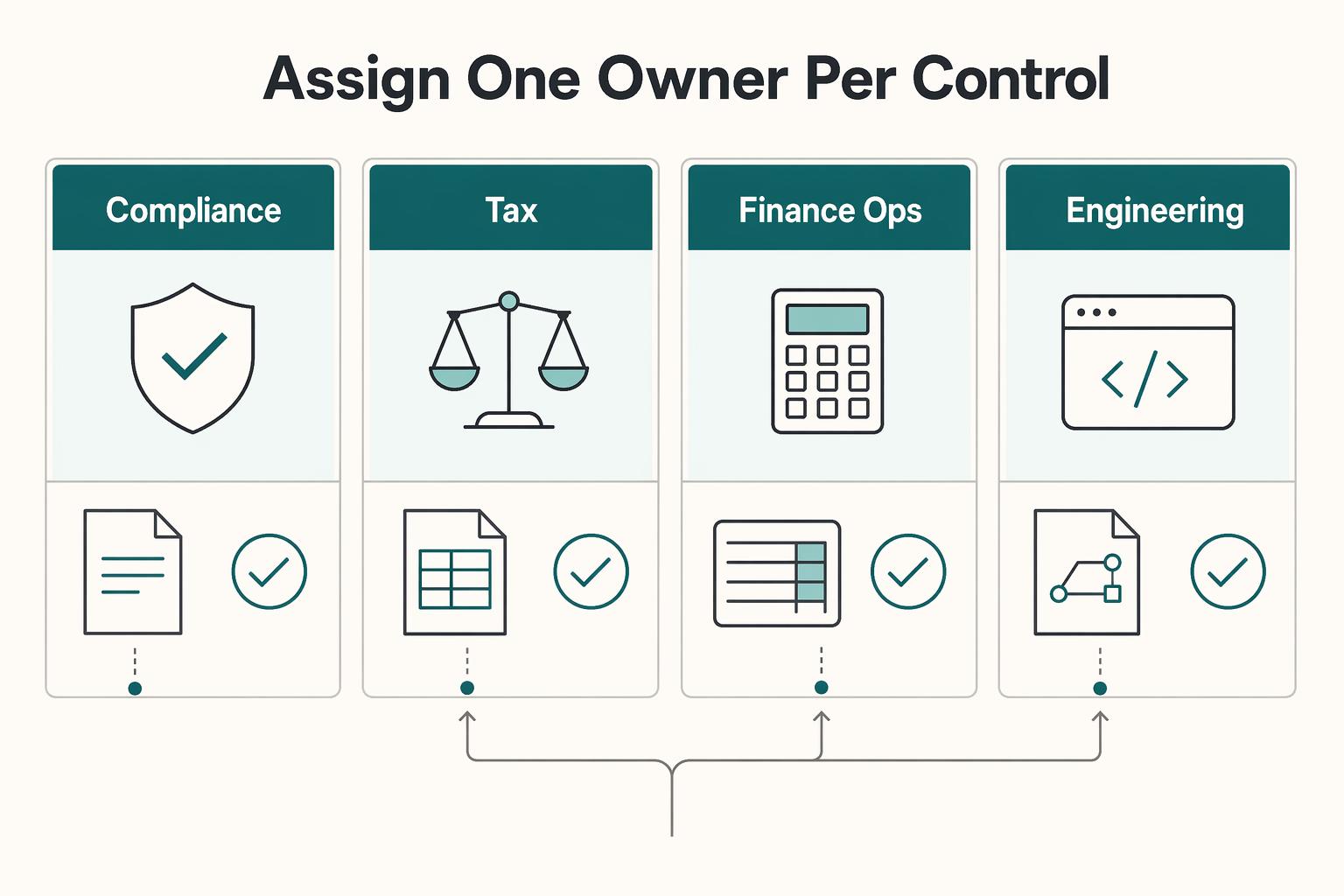
| Correction ownership and duplicate filing risk | Assign one correction owner before filing season | Resubmission tracking, closure evidence, and proof that corrected returns were e-filed when the original was e-filed |
| Evidence pack, provider verification, and state checkpoint | Stop filing until provider coverage is verified; confirm the state path separately | Approval log, source record snapshot, submission confirmation, and correction ledger |
This matters even more under the reduced e-file threshold, generally 10 or more returns in a calendar year beginning 2024, tax year 2023. For certain financial institutions reporting Chapter 3 or Chapter 4 payments, Form 1042-S must be e-filed regardless of filing volume. A paper fallback is not a safe assumption when e-filing is required, and failure to e-file when required can trigger penalties unless an exception applies.
1. Missing withholding-document support#
Missing or incomplete withholding documentation can be a tax-determination issue, not just a formatting issue. If the payee record does not support the withholding treatment, or Chapter 3 and Chapter 4 classification is unclear, escalate to compliance or legal before file lock.
Checkpoint: for the filing population, the source snapshot should show the governing tax document, the version used, and the approver. A common failure mode is filling gaps from onboarding notes or payout history instead of documented tax support.
2. Form 1042-S detail that does not reconcile to Form 1042#
If Form 1042-S detail and Form 1042 summary do not reconcile, finance ops should own first triage. Test whether the break sits in the source extract, mapping logic, or summary build before any submission attempt.
Stop-filing trigger: if pre-file reconciliation fails, pause submission until the variance is understood and resolved.
3. IRIS and MeF output defects#
Treat channel defects as a separate escalation lane. Tax year 2026 Form 1042-S is filed through IRIS; Form 1042 uses the separate MeF route when electronically filed.
If output is malformed, incomplete, or fails submission checks, engineering should own remediation. Before transmission, confirm MeF availability or status for Form 1042, and require re-approval for any regenerated file after signoff.
4. Correction ownership and duplicate filing risk#
Corrections fail when ownership is unclear. Assign one correction owner before filing season, with end-to-end responsibility for amendment decisions, resubmission tracking, and closure evidence.
Apply the IRS hard rules: if the original return was e-filed, corrected information returns must also be e-filed. Sending the same return on paper and electronically creates duplicate-filing risk and may generate penalty notices. Corrected returns are excluded from the aggregate e-file threshold count, but penalties apply separately to original and amended returns.
5. Evidence pack, provider verification, and state checkpoint#
Keep one evidence pack per cycle that an independent reviewer can follow. At minimum, include:
- approval log
- source record snapshot
- submission confirmation
- correction ledger
Do not treat provider listing as full-coverage proof. IRS-listed 1042 MeF providers have passed ATS requirements, but listing is not a guarantee that every schedule or attachment is supported. Confirming fit is still the filer's responsibility. If your tool or provider cannot confirm coverage for your required outputs, stop filing until that is verified.
Where state exposure exists, add a checkpoint for state filing obligations. Confirm with the relevant state authority whether federal filing alone satisfies state requirements, and confirm the state path separately.
Before filing season, run your escalation matrix against a dry-run workflow and compare each checkpoint to your implementation notes in the Gruv docs.
Conclusion#
The right 1042-S reporting platform is the one you can defend with clear records, checkpoints, and named owners, not the one that only produces a submission file. If you cannot show how tax documents were reviewed, how the Form 1042-S output was produced, and who owns corrections, you still carry risk after a "successful" filing.
- Choose verifiable control over convenience
Filing accuracy comes first. Form 1042-S reports income and amounts withheld, so weak inputs create risk before IRIS submission. Keep a clear trail from tax-document intake to submission confirmation and corrections.
For each filing cycle, keep a compact evidence pack: source-record snapshot, approval log for tax-document and withholding decisions, submission confirmation, and a correction ledger. Also prevent duplicate filing. Sending the same return electronically and on paper can generate penalty notices, so confirm status before any paper fallback.
- Match the model to your current operating reality
Pick the operating model your team can execute today, then add automation where the risk justifies it. If ownership and tax-document controls are weak, extra tooling will not fix the core issue.
Apply the e-file rules as a control gate. The general trigger is 10 or more returns, using aggregation across almost all information return types in the calendar year. Corrected returns are excluded from that count, but if the original return was e-filed, the corrected return must also be e-filed. A partnership withholding agent with more than 100 partners must also e-file Forms 1042-S.
- Identify breakpoints early, before deadlines force low-confidence decisions
Check four items first: complete tax-document intake, reconciliation controls, assigned correction ownership, and retained submission evidence. If gaps exist, prioritize filing accuracy first, evidence quality second, and automation scale third. For unresolved Chapter 3 or Chapter 4 classification questions, involve qualified tax counsel before filing.
If you want a second pass on your operating model before deadlines lock, use contact to review control ownership, evidence expectations, and rollout constraints.
Frequently Asked Questions
When is electronic filing mandatory for Form 1042-S?
Electronic filing is generally required when you file 10 or more returns, using the IRS aggregate test across almost all covered information return types, not just 1042-S. It is also required for a withholding agent partnership with more than 100 partners. Certain financial institutions reporting Chapter 3 or Chapter 4 payments must e-file Forms 1042-S regardless of volume.
What is the practical difference between Form 1042-S and Form 1042 for platform operators?
Form 1042-S is used to report foreign-person U.S.-source income and amounts withheld. Form 1042 is the annual withholding tax return for U.S.-source income of foreign persons. In practice, treat reconciliation between 1042-S detail and Form 1042 totals as a filing gate, not a post-file cleanup task.
Which IRS channel should we use for Forms 1042-S and 1042?
For tax year 2026 Forms 1042-S due in 2027, the IRS requires IRIS. The IRS permits either IRIS or FIRE for tax year 2025 Forms 1042-S. Form 1042 uses the separate MeF channel when filed electronically. Confirm the filing year and channel before choosing a provider.
Are IRS-listed 1042 MeF providers endorsed by the IRS?
No. IRS-listed 1042 MeF providers have passed ATS requirements, but that is not an endorsement. The IRS states that it is the filer's responsibility to confirm the software meets their needs.
What happens if we submit on paper when electronic filing is required?
If e-filing is required and you do not have an approved waiver on record, penalties can apply. Filing the same return both on paper and electronically can also create duplicate-filing penalty notices. Keep submission confirmation and block paper fallback unless paper filing is confirmed as allowed for that return.
Do corrected returns follow different electronic filing rules?
Yes. Corrected information returns are excluded from the aggregate count test. But if the original return was filed electronically, the corrected return must also be filed electronically, and penalties apply separately to original and amended returns.
What should we verify before selecting a 1042-S reporting platform vendor?
Verify support for Form 1042-S via IRIS for tax year 2026 and Form 1042 via MeF where applicable. Confirm corrections, submission evidence, and the filing years the vendor supports. An IRS provider listing is one checkpoint, not proof of fit for your return.
Try a related tool
Researched and edited by the Gruv editorial team. Gruv builds cross-border billing, payouts, and finance-operations software for global businesses.
Sources
Educational content only. Not legal, tax, or financial advice.
Related Posts
IRS Form 1042-S for Platform Operators: How to Report and Withhold on Foreign Contractor Payments
If you own compliance, legal, finance, or risk for a platform paying foreign contractors, sellers, or creators, you may need to make **Form 1042-S** operational. That means clear decisions, reliable checks, and escalation points your team can apply and defend.

FATCA Compliance for Marketplace Platforms: Identifying and Reporting Foreign Account Holders
For marketplace teams handling cross-border payouts, FATCA work is mostly a control-design problem. You need to decide what to implement first, what evidence to keep, and what to escalate before a payout creates avoidable reporting or withholding risk. The practical question is not whether FATCA exists, but which controls actually reduce reporting errors and potential 30% withholding outcomes.
1099-K Reporting Threshold After the IRS Delay: Control Updates for Platform Operators
For federal third-party network reporting, a TPSO generally must file Form 1099-K for a payee who exceeds both $20,000 in gross reportable payments and 200 transactions in the calendar year. The 2025 law restored that threshold retroactively. Update the rules built for the earlier phase-in, while keeping payment-card reporting, backup withholding and state rules separate.