
Quick Answer
Virtual receiving numbers can reduce sharing of the underlying bank account and improve inbound attribution. Confirm the actual provider model; they do not prevent invoice tampering or remove return risk. Persist recoverable event processing, enforce one posting per transfer effect, and record evidenced cash while unresolved customer allocation remains under review. Apply the actual release restrictions separately from receipt.
How virtual account numbers protect your bank details#
If your goal is to protect freelancer payout bank details, focus on the receiving bank detail, not card-masking tools. In practice, the question is whether to give payers a purpose-built receiving detail, often a virtual bank account number, instead of exposing the underlying account behind your payout setup.
That distinction matters because similar language gets used for different products. A virtual bank account number is a receiving detail for money sent over bank rails. A virtual card number is a card-linked number for online purchases without sharing the physical card number. Helpful for spend, but not for collecting inbound freelancer payments.
The real tradeoff is privacy versus operational load. Dedicated receiving details can support inbound bank-transfer collection, and in Stripe's flow the virtual account number is used for both inbound reconciliation and reduced exposure of the real account details underneath. That is the appeal. You share a controlled receiving detail with clients or marketplace payers instead of the underlying account number.
Set the boundary early. Hiding bank details can reduce exposure, but it does not remove fraud risk, compliance checks, or payment operations. In treasury contexts, virtual accounts are often sub-ledger accounts linked to a physical demand deposit account. So this decision reaches beyond a feature launch into legal entity structure, technology requirements, and resource availability.
In Stripe's collection flow, unmatched money remains in the customer's cash balance pending reconciliation. Retention is not indefinite: Stripe documents an attempted return after 75 days and, if customer account information remains unavailable, a sweep to the Stripe balance at 90 days. Own the exception queue before these provider actions occur.
That is why operational readiness matters more than the demo. Treasury guidance points teams back to legal entity structure, technology requirements, and available resources before they adopt virtual accounts. So the decision is not just "should we issue virtual numbers?" It is also "can we run the full lifecycle around them?" If yes, these products can support local-style receiving details in some programs. If not, a narrower launch is usually the better move.
This guide stays focused on that decision. It covers when dedicated receiving details are worth the extra complexity, what to build before launch, how to verify inbound matching, and what to do when it fails. The goal is to protect bank details without creating compliance and operational debt you later have to unwind.
Start with the right object you are protecting#
Choose a provider-supported receiving identifier for inbound bank transfers. A tokenized account number and an addressable virtual account number can have different acceptance and lifecycle rules; confirm which product your payer can actually use.
Pick a receiving identifier, not a spend credential. Start by confirming the rail. If the job is receiving bank transfers, you want a virtual account number or similar receiving identifier shared instead of the real account number. Some programs also position virtual bank account numbers or virtual IBANs for receiving international payments. Virtual card numbers do a different job: spend credentials such as card number, expiration date, and CVV for purchases.
Quick check: if the tool is meant for inbound bank transfers, you are in the right category. If it is for card purchases, you are looking at spend tooling.
Draw the risk boundary correctly. Masking a debit card number and CVV is not the same control as protecting payout bank details. Card masking reduces exposure of spend credentials. It does not protect the bank account details payers use to send money.
If the requirement is to protect freelancer payout details, name the exact receiving detail in scope.
Treat reduced exposure as useful, not complete. Dedicated receiving details can reduce the blast radius of oversharing because the underlying account number is not broadly exposed. That is useful, but it is not the whole control story.
You still need ongoing risk and compliance operations, and provider documentation describes additional obligations beyond the masked identifier itself. Use dedicated receiving details to limit exposure, then plan for reconciliation and compliance checks after funds arrive.
Decide whether virtual account numbers are worth it for your payout model#
If you need reliable payer attribution, cleaner inbound matching, and less exposure of core bank details, dedicated receiving numbers are often worth the extra build. If volume is still low and ops capacity is thin, direct bank-detail sharing or a wallet rail can be a reasonable phase-one choice.
The point is not just to pick a payment label. You are deciding who owns matching effort, exception handling, and market constraints.
Compare the three realistic models#
| Option | Best fit | Main upside | Main tradeoff |
|---|---|---|---|
| Direct bank detail sharing | Low volume, minimal engineering | No virtual-account issuance setup | Real receiving details are shared with payers, and attribution is weaker without payer-specific references |
| Virtual account numbers or Virtual IBANs | Platforms that need per-user or per-payer attribution | Provider-generated receiving details can reduce bank-detail exposure and improve auto-matching | Additional integration for delayed notifications, exception handling, and market/program limits |
| Wallet-first rails such as PayPal | Segments already using wallet accounts | Wallet rail that can send and receive money | Country availability and service scope vary by market |
Virtual cards are digital spending credentials, so they are not the same as inbound bank-transfer receiving details.
Direct sharing can work early on, but matching burden tends to increase as inbound payer volume and exceptions grow.
Dedicated receiving numbers solve an operations problem as much as a privacy problem. These programs are built to issue unique receiving references while routing back to an underlying account structure, which can improve attribution when funds arrive.
Wallet rails are a separate rail choice, not a direct replacement for bank-transfer receiving details in every market. PayPal can send and receive money, but service availability varies by country.
Apply the decision rules before you build#
Use these rules before you commit engineering time:
| Situation | Direction | Note |
|---|---|---|
| Need per-user traceability | Favor dedicated receiving numbers | VBAN or Virtual IBAN style where available |
| Matching is the main pain | Dedicated numbers can be a strong lever | Auto-matching can improve hit rates, but unmatched transfers still need manual handling |
| Inbound volume is still small | Start simple | Define ownership for unmatched transfers and escalation timing |
| Ops cannot trace a deposit without manual joins | Prioritize dedicated receiving references | Trace from provider reference to internal ledger entry |
If your team cannot trace a deposit from provider reference to internal ledger entry without manual joins, dedicated receiving references are likely worth prioritizing.
Weigh the operational tradeoffs, not just privacy#
If you adopt this model, the real cost sits in operational ownership, not just setup.
- Operational scope: you still need processes for delayed-funds states, event handling, and matching exceptions.
- Webhooks: retries and recovery windows require disciplined processing. With Stripe, undelivered events can retry for up to three days, and manual event-list recovery is limited to 30 days.
- Idempotency: retry-safe posting is mandatory to avoid duplicate side effects.
- Failure modes: unmatched transfers can still require manual reconciliation, inbound bank-transfer funds can be delayed, and wallet support can vary by country.
Check hard constraints early#
Check availability first. It can depend on country, business type, account type, and charge type, so do not assume one market's setup applies everywhere.
Confirm issuance limits, country and currency support, accepted payer types and closure behavior in the chosen program. Availability of a receiving detail does not establish outbound contractor-payout coverage.
Choose dedicated receiving details when reducing underlying-account exposure or payer-attribution work justifies the additional controls. Start with a narrower flow when the team cannot yet support its exceptions.
Gather prerequisites before any build starts#
Before you provision dedicated receiving numbers, lock the operating decisions first: ownership, success criteria, and payout controls. Issuing virtual account numbers too early can create avoidable rework when exceptions, matching, or withdrawal rules are still undefined.
| Artifact | What it covers | Key details |
|---|---|---|
| Ledger mapping doc | How provider references map to journal entries and balance updates | Provider references, journal entries, balance updates |
| Webhook event catalog | Which event types you handle and what each handler does | Handled event types, handler actions |
| Support SOP | Operator handling for states in the internal model | Credited, held, returned |
| Reconciliation output format | What the reconciliation output should include | Provider reference, posting result, exception status, next owner |
Assign ownership and success criteria. Set ownership for each failure path before launch. If your teams split by function, define that split clearly. One workable split is: Product for user-visible states and scope, Payments Ops for unmatched or returned transfers, Risk for payout-block rules, and Engineering for event intake, retries, and ledger posting.
Define success in operational terms. At minimum, you should be able to answer who resolves unmatched transfers, who can release held balances, and what evidence is required.
Prepare the four build artifacts. Have these artifacts ready before implementation:
- Ledger mapping doc: how provider references map to journal entries and balance updates.
- Webhook event catalog: which event types you handle and what each handler does.
- Support SOP: operator handling for states in your internal model, for example credited, held, and returned.
- Reconciliation output format: provider reference, posting result, exception status, and next owner.
This matters because webhook handling is event-type specific, and unreconciled bank transfers can stay unmatched until someone manually reconciles them.
Receiving money and releasing money are separate decisions. Confirm required verification and actual provider restrictions for the account and capability involved. In Stripe Connect, required fields and deadlines depend on the account; a pending requirement alone does not establish that all payouts are disabled.
Set name-check and velocity policy for the actual market and rail. Confirm whether the provider offers Confirmation of Payee, Verification of Payee or another validation service, and distinguish its result from the complete authorisation decision.
Step 1 map account identity to ledger identity#
Lock this mapping before you issue any receiving numbers. If account identity and ledger identity are not aligned early, holds, matching, and support handling get harder later.
In treasury terms, a virtual account is a sub-ledger account linked to a physical demand deposit account. That means you can present a dedicated receiving number to a freelancer or payer while funds still settle to the mapped physical account. The real design choice is how much identity each receiving number should carry.
Choose the smallest mapping that still keeps attribution clear#
Common patterns include:
| Mapping model | When it fits | Main upside | Main risk |
|---|---|---|---|
| One dedicated bank account number per freelancer | You want straightforward ownership and support tracing | Can map inbound transfers directly to one user identity | Can increase the number of accounts to provision and maintain |
| One per freelancer per client corridor | The same freelancer needs different receiving identities by payer group, country, or flow | Can give cleaner segmentation for routing and controls | Can add product and ops complexity |
| Pooled model with attribution rules | Lower volume or constrained provider setup | Fewer receiving identities to manage | Can increase dependence on references and unmatched exceptions |
There is no universal best model. If traceability is the priority, start with the most direct mapping you can operate. If one user needs separate paths, assign one or more virtual accounts to that counterparty instead of forcing all traffic through a shared pool.
Set a canonical event key before you write posting logic#
Retain the provider event ID to identify duplicate deliveries. Also derive a stable business-effect key from the underlying transfer and effect type: separate event objects can describe the same transaction.
Persist the event as pending, exclude concurrent processing and commit the unique business-effect key with the journal entry and completion state atomically, or use an equivalent recoverable transaction design. A stored event ID must not cause an unfinished posting to be skipped after a crash. Stripe request keys, which may be pruned after 24 hours, are separate from durable ledger uniqueness.
Define what stays masked and what stays visible for operations#
Decide exactly what appears in operator tooling, support views, and exports. A practical default is provider reference, mapped user, receiving-account label, amount, state, and masked sender details where present. Some provider payloads already return masked sender account numbers, for example XXXXXX0011, which is a useful baseline.
Keep full bank details out of routine support screens, and limit unmasked access to narrower roles with explicit logging.
Add a launch checkpoint for traceability#
Before launch, run a controlled trace on one inbound deposit and verify each handoff your team relies on, including provider reference to ledger journal and then to user-visible balance. If any handoff is unclear or still needs ad hoc manual joins, fix the mapping and reporting flow before rollout. Related: Identity Theft Prevention for Freelancers: How to Protect Your Financial Accounts.
Illustrative collection: a client receives a virtual number assigned to freelancer F. A $600 receipt carries transfer T-9; event E-1 reports it and E-2 later reports the same receipt. Both events belong in the evidence history, but the receipt effect T-9/credit posts only once. If attribution is unclear, the cash is recorded in controlled clearing while allocation is reviewed. A subsequent confirmed return uses a separate T-9/return effect. If the client is tricked into paying a different number, hiding F's underlying bank details does not recover the money; verify changed instructions through a trusted channel.
Step 2 build inbound event handling with hard failure controls#
Once mapping is locked, the main risk shifts to bad ledger effects from duplicate, delayed, or ambiguous inbound events. Treat callbacks as untrusted until you verify them, and run operations from your own internal states such as credited, held, and returned, even when provider labels differ.
Define internal states before you write handler code#
Use a small internal state model with explicit legal transitions and named owners in exception queues. Do not let raw provider statuses drive support actions directly, and do not assume webhook delivery order.
| Internal state | Typical trigger | Owner action |
|---|---|---|
| Credited | Deposit confirmed and matched to the correct user and receiving identity | Post once to the ledger, expose funds per policy, archive as processed |
| Held | Match is uncertain, sender metadata is incomplete, or policy blocks release | Record evidenced cash in controlled clearing; restrict availability as applicable and assign allocation/release review |
| Returned | Later event reverses or rejects the inbound transfer | Post a linked return adjustment once and update availability under policy |
Keep every transition visible. If an item moves from credited to returned later, your ops team should be able to see when the credit happened, which event changed the state, and what balance impact followed.
Make idempotent posting a ledger rule, not just an API feature#
Idempotent posting means retries produce the same outcome, not another journal entry. Provider request idempotency helps, but ledger dedupe needs its own control.
On retry, return the prior result only for a completed operation. Resume pending work safely after a crash; enforce uniqueness on the underlying transfer and posting effect as well as on event delivery IDs. A return has its own linked effect and must not be discarded as a duplicate of the original credit.
Stripe can retry failed live webhook deliveries for up to three days. Test duplicate delivery, different events for the same transfer, concurrent workers and a crash between intake and journal commit. Each legitimate effect should post once, and pending work must remain recoverable.
Route unmatched deposits into evidence-based exception queues#
Unmatched allocation should not hide received cash. Record evidenced funds in a finance-controlled clearing or suspense account while the customer match is reviewed. Set queue-aging targets separately from rail return deadlines, which vary by transfer type and reason.
Minimum evidence for manual resolution:
- Provider event ID, receipt timestamp, amount, currency, receiving identifier
- Candidate account mapping, sender metadata received, missing field(s) that blocked auto-match
- Operator notes, final decision, and reason code for hold, release, or return handling
Assign clear ownership and next action in the exception queue. If sender metadata is incomplete, route it for manual review.
Verify origin and transport, then validate business rules#
Use a strict intake order: verify transport, verify signature, parse payload, then run business validation. HTTPS is required for public Stripe webhook endpoints, but encrypted transport alone is not enough.
Business validation should confirm the expected event type, an existing receiving identity, a sane amount, and a legal state transition from the current internal state.
Run these checks before each release:
- Duplicate webhook simulation: same event delivered multiple times, one ledger effect
- Delayed return simulation: credited item later receives returned event and moves correctly with full audit trail
- Partial outage replay test: missed events are replayed from provider unsuccessful-delivery mechanisms without gaps or double posting
Step 3 enforce risk and compliance before money moves out#
Apply the provider's and your programme's actual release restrictions. Incomplete required due diligence or conflicting risk evidence needs a recorded review decision; do not infer a blanket restriction from a generic active or pending label.
Gate release on KYC and AML posture#
Use a risk-based gate, not a generic "user is active" flag. FATF frames AML/CFT controls around understanding exposure to money-laundering and terrorist-financing risk. Its standards state that if core customer due diligence cannot be completed, institutions should not open the account, start the relationship, or perform the transaction.
Before money moves out, your release service should read a compact set of compliance facts: identity status, screening result where applicable, account restrictions, and unresolved review cases. Do not let a clean inbound match bypass outbound checks. Accurate inbound attribution is not the same as an approved outbound release.
Test release controls with an account missing required due diligence or carrying an actual provider restriction. The payout must follow that restriction, and the decision log should identify the missing requirement, responsible owner and conditions for release. Incomplete optional profile data alone should not imply a hold.
Check the payee name before you send funds#
If your rail or provider supports name-match controls, run them before payout initiation. The ECB describes Verification of Payee as a pre-initiation check that returns outcomes like match, close match, no match, or other before payment is sent. Federal Reserve Financial Services describes the same control as verifying payee name against routing and account details before issuing payment.
| Outcome | Release action | Keep on record |
|---|---|---|
| match | Eligible for release only if all other required gates pass | Outcome, timestamp, input name, payout destination used for the check |
| close match | Manual review unless a narrower exception path is approved | Outcome, timestamp, input name, payout destination used for the check |
| no match | Manual review unless a narrower exception path is approved | Outcome, timestamp, input name, payout destination used for the check |
| other | Manual review unless a narrower exception path is approved | Outcome, timestamp, input name, payout destination used for the check |
Input quality matters. For personal-account payments in the Pay.UK context, the exact registered account name is required. So your form and support workflow should request the legal or registered account-holder name, not a nickname, handle, or display name.
Use a clear release rule:
- A match permits the name-check gate to pass; it does not authorise payout by itself.
- Route
close match,no match, andotherto manual review unless compliance owners approve a narrower exception path. - Store outcome, timestamp, input name, and payout destination used for the check.
Add velocity controls for destination changes#
Treat new or recently changed payout destinations as potentially higher risk than established ones. Velocity controls fit this pattern because they cap or score how often transactions are attempted in a time window. Adyen documents velocity rules as thresholds on transaction frequency over time, but your threshold should come from your own fraud pattern and ops capacity.
A proposed conservative pilot policy can route repeated attempts or a new destination to review. Set the trigger, response time and authorised override explicitly; this is an internal design choice, not a universal requirement.
Your override record should capture:
- who approved the release
- why the exception was allowed
- what evidence was reviewed, for example identity status, name-match result, and destination-change history
Route weak signals to manual review, not partial automation#
When required identity is incomplete or evidence conflicts, apply the actual restriction and route the case to its owner. A recent destination change may trigger your chosen policy; preserve the reason and the evidence needed to resolve it.
That is the tradeoff to accept. Reducing exposure of bank details does not remove pre-disbursement control requirements. Bias early versions toward reviewable evidence and controlled release decisions, not payout speed.
For a step-by-step walkthrough, see Setting Up a Business Bank Account for a New LLC.
Step 4 design freelancer-facing payout UX that reduces exposure#
Once release controls are in place, make the sharing surface hard to misuse. Show only the receiving details needed for the job, warn on card-data mistakes, and make status outcomes explicit enough that support can work from facts.
Show purpose-specific receiving details, not a permanent banking profile#
Present virtual or tokenized receiving details in a dedicated "receive payment" view, not as a general account-profile field. The goal is narrow sharing for inbound funds without broadly exposing personal bank account details.
Mask for recognition, not reconstruction. Stripe recommends showing last4 in user-facing selectors, so list and confirmation screens can show "ending in 4821" with payment purpose or corridor, while the share flow reveals only what the payer needs.
Check this operationally: support should be able to identify the payment from masked display plus provider reference, without full account details appearing in ticket threads.
Warn when users try to share card data for a bank-transfer flow#
Make the warning direct: for bank-transfer flows, users should not be asked for a debit card number or CVV. Put that guidance near chat, invoice, and payout instruction fields, and route suspicious requests to support.
This is a real control, not copy polish. PCI SSC defines CVV/CVC as the 3- or 4-digit card code and says it must not be stored after authorization. So free-text surfaces should detect likely card data and prevent it from being saved into notes, exports, or downstream systems.
Make status labels map to real event states#
Use status labels only when each one maps to a real provider or internal event, and keep the mapping consistent across freelancer UI, admin tools, and support macros. Stripe's webhook model is a useful baseline: monitor status-change events so teams can respond correctly to success and failure.
Do not make users infer outcomes from balance movement alone. Show the current state, latest update time, and next action in plain language.
Offer fallback paths with the tradeoff stated up front#
Plan for cases where some clients will not accept assigned virtual receiving details. If you offer a fallback to real account details, explain the tradeoff clearly before the user switches.
If you offer real receiving details as a fallback, confirm its matching behavior and explain the increased exposure before sharing. Do not assume direct account sharing always disables reconciliation: provider features and reference quality determine that outcome. Confirm refresh or relink behavior separately for tokenized details.
Step 5 make reconciliation and audit evidence automatic#
Do not scale on faith. If your team cannot explain yesterday's credits, returns, and payout outcomes from one evidence trail, you have an exposure problem.
Virtual accounts are sub-ledger identifiers tied to a physical demand deposit account, so the control is not the identifier by itself. The control is whether you can match each inbound movement, posting result, and payout release or hold to the ledger without manual detective work.
Define the reconciliation cadence first#
Set the cadence before volume grows: daily checks, payout-day checks, and month-end close checks.
| Cadence | What to match | Verification point | Red flag |
|---|---|---|---|
| Daily | Provider credits and returns to ledger journals and projected balances | One operator can trace a sample item from inbound reference to journal entry to user-visible balance change | Items require spreadsheet joins or ad hoc log pulls |
| Payout-day | Authorised withdrawals to their provider and bank records | Each payment traces to the correct payable and confirmed cash movement | Payout total matches cash, but transaction linkage is missing |
| Month-end | Cash movement to bank activity and monthly account activity summary | Ledger ending balance, provider ending balance, and bank cash reconcile | "Timing difference" becomes a bucket for unresolved errors |
Use the provider report's actual time zone, cutoff and accounting period, and document how late events are treated. Align those windows before comparing provider, ledger and bank totals.
Stripe's automatic payout reports associate eligible transactions with their payout. Manual or instant payouts need a different reconciliation approach. This merchant-settlement association is not a substitute for mapping a freelancer's collection record to an authorised withdrawal.
Publish a standard evidence pack#
For every credited, held, returned, or paid-out item, generate the same evidence pack:
- inbound reference from the provider or rail
- posting result, including journal IDs or posting status
- decision status, including release, hold, or return details where available
- relevant policy or risk flags when your workflow captures them
Consistency is the control. Reconciliation reports can include custom metadata, which improves matching speed and strengthens audit review. A practical checkpoint is whether support, finance, and risk can resolve the same case from the same packet without engineering pulling raw event history.
Retain the evidence required by your legal and accounting policy independently of the provider dashboard's export window.
Age exceptions like open risk, not background noise#
Treat exception queues as active risk. Track owner, oldest-item date, and next deadline for unmatched deposits, failed payouts, returned transfers, and manual-review cases.
For ACH exceptions, identify the transfer type, return reason and applicable participant deadline with the banking provider. A support target or a request-for-return response deadline is not a guarantee that a transfer can be reversed.
If your provider exposes failed automatic payouts as a separate breakdown, surface that directly in the exception queue.
Set a hard expansion rule#
Set a clear go or no-go rule: do not expand volume, corridors, or freelancer segments until unmatched items and returns close within your target operations window for that rail and provider.
There is no universal SLA, so set your target deliberately and review it against the deadlines and failure patterns you actually run. If you cannot show trend reporting and exception reporting over time, you are not ready to scale.
Common mistakes and how to recover fast#
Many rollout failures here are control and ownership failures, not feature failures. The fastest recovery is to fix controls first at the money-movement layer and the exception-queue layer.
Treat the account number as an exposure control, not a fraud control#
Virtual account numbers reduce exposure of real bank details, but they are not a complete fraud stack. In virtual-account models, the virtual identifier is also for attribution and matching, not a standalone funds-holding account.
Recovery: add layered controls on payout release. Where your provider and jurisdiction support it, use a name-match control such as Confirmation of Payee or an equivalent. Review first payouts, destination changes and unusual transfer bursts under a documented risk policy. Hold funds only when a provider or program restriction, or that chosen policy, requires it; record the review owner and release criteria.
Harden webhook dedupe before retries create double postings#
Deduplicate completed event deliveries and enforce uniqueness on the underlying transfer and posting effect. Keep pending work recoverable so a crash cannot turn a saved event ID into a lost credit.
For an outbound API operation, preserve the original request and reference, use the same key and parameters within the provider's documented window, and resolve unknown outcomes before another payment is authorised. Test replay, concurrency and crash recovery for the ledger separately.
Assign owners and deadlines for returns and unmatched items#
Returns and unmatched items need explicit owners, coverage, and escalation paths, or they age into unresolved risk. Recovery starts by assigning queue owners and response windows by exception type.
Return exposure can outlast the initial receipt. Confirm applicable rail rules and provider procedures, then track owner, transfer type, reason, age and escalation deadline. Do not apply one generic return window to every inbound credit.
Require minimum evidence before the first payout release#
If onboarding speed outruns traceability, disputes become harder to resolve. Recovery is to enforce a minimum evidence pack before first payout release.
Require these fields before funds move:
- provider inbound reference or event ID
- ledger mapping to the freelancer account
- posting result, credited or held
- payout destination state, including recent-change flag
- policy decision trace for name-match, velocity review, or manual override
Use one practical test: support, finance, and risk should all be able to resolve the same sample case without engineering pulling raw event history.
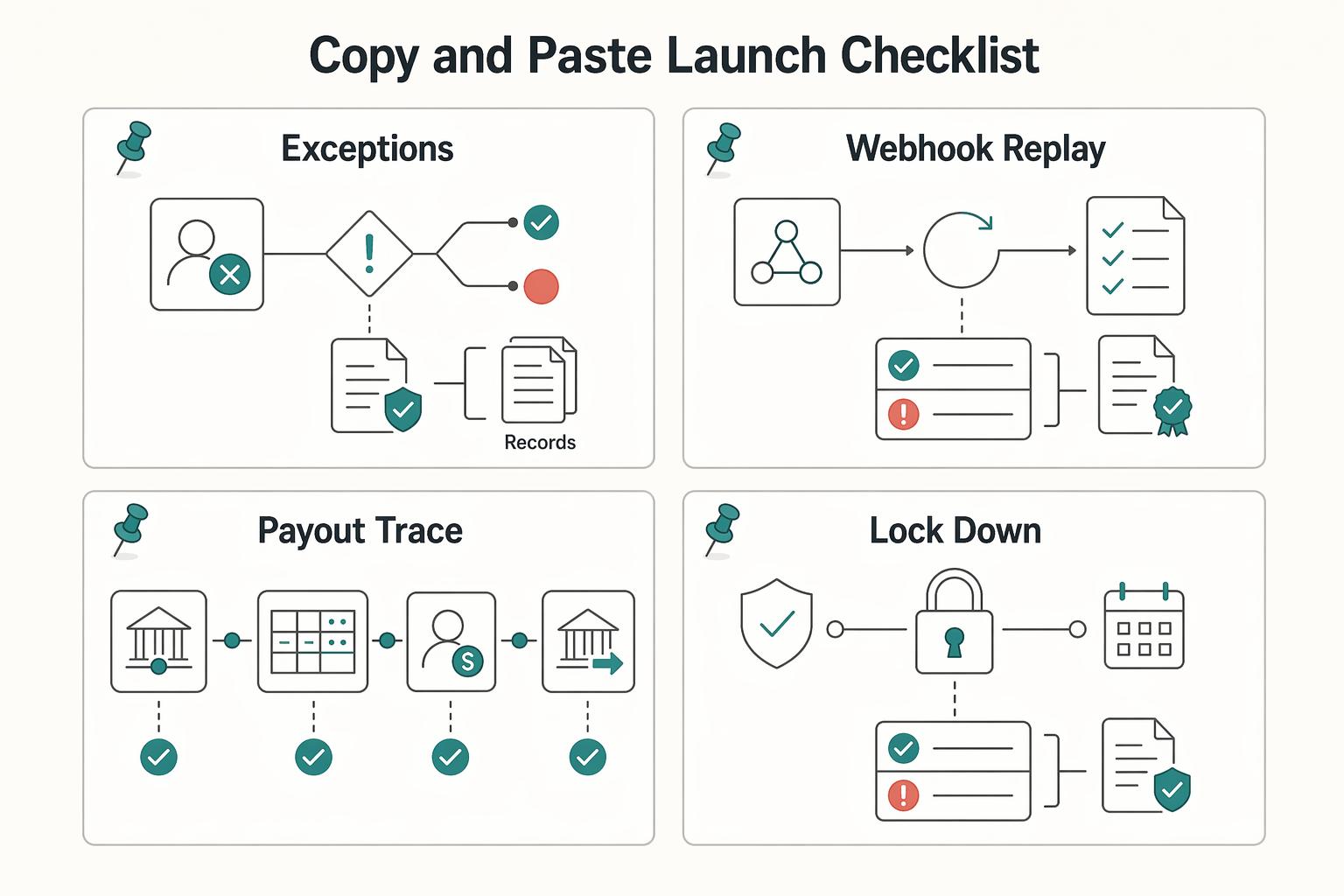
Copy and paste launch checklist#
Launch only when every item below is verified in a test case. If any item fails, treat it as a no-go.
- Document the chosen model. Decision complete: document why you chose virtual account numbers, direct receiving details, or a wallet-first rail, and record the rejected alternatives.
Use one traceable sample deposit as the checkpoint: provider reference to ledger journal to freelancer balance to payout destination. No-go signal: your decision record cannot explain what happens when a client cannot use the assigned receiving details.
- Turn on posting and payout controls. Verify signatures, recover pending work after a crash, enforce transfer-effect uniqueness and resolve unknown outbound outcomes before another payment.
Payout release gates are wired to real outcomes and have owners. That includes verification-based holds where supported, name-match controls where available, for example CoP in UK-supported flows, and velocity controls for repeated attempts and sudden bursts. No-go signal: rules exist in config, but no one owns the held queue.
- Prove operations can work the states. Operations ready: tools clearly show the credited, held, and returned states your flow uses, and reconciliation output is generated before launch in the payout-settlement view finance will use.
Verification test: support, finance, and risk can all resolve the same sample case from the evidence pack without engineering pulling raw event history.
- Lock down data access and incident handling. Security and privacy are ready when operator views minimize exposure of bank account details and access is restricted by least privilege.
Document the incident path with clear ownership and escalation for exposed details, then run a quick tabletop to confirm the response works in practice.
If your launch checklist is mostly green, pressure-test module fit and rollout constraints for this payout model in Virtual Accounts.
Conclusion#
Virtual account numbers are most useful when you treat them as treasury infrastructure, not as a bolt-on privacy feature. A virtual account is a sub-ledger account linked to a physical demand deposit account, so the practical value is cleaner attribution, better visibility, and less manual handling, not risk elimination.
The core tradeoff is simple: abstracting receiving details can help operations, but it only pays off if operations are reliable. The durable pattern is disciplined webhooks, strict idempotent posting, and enforceable policy gates before funds move out. Webhooks can be delivered more than once, so retries have to be safe by design.
Use one hard test before expansion: trace a sample deposit from provider reference to ledger journal to user-visible balance without manual joins. If that trace fails, stop and fix state handling for duplicate deliveries, unmatched deposits, and returns.
Payout holds need named owners, reasons and provider-specific deadlines. Determine whether a hold blocks a new instruction, pauses an existing one or can result in cancellation; do not assume the same behavior across programs.
If you are moving from decision to launch, keep phase one narrow and observable:
- Run decision and checklist cross-functionally
Review with Treasury, Finance, Accounting, IT, and banking partners, with concrete owners for ledger mapping, event handling, support states, and policy-gate behavior.
- Pilot one operating slice
Start with a select group and segment by region, entity, or business unit so exceptions can be monitored and resolved quickly.
- Expand only after evidence is routine
Widen scope only when duplicate retries post safely, returns land in correct states, and payout holds are visible and handled in time.
Treat virtual accounts as infrastructure, and earn rollout breadth through traceable operations. Related reading: The Best Bank Accounts for Freelancers in Italy. When you are ready to scope phase one, map webhook events, idempotency keys, and status handling in Docs.
Frequently Asked Questions
Do virtual account numbers actually protect freelancer bank details, or only reduce exposure?
Virtual account numbers reduce exposure; they do not eliminate risk. They are system-generated receiving numbers that differ from the real underlying account number, so real bank details can stay private when those virtual details are accepted. You still need controls for returns and payment matching.
What is the practical difference between virtual account numbers and virtual credit card numbers?
They are different products for different rails. Virtual account numbers are for receiving bank transfers, while virtual card numbers substitute for a real credit card number in online spending. For freelancer payout intake or inbound transfer collection, virtual cards do not replace receiving account details.
When is it still acceptable to share direct bank account details?
Sharing direct receiving details can be reasonable where the payer or program supports them. Use a verified channel, share only required details and explain the exposure. Matching can still use reliable references or provider tooling; automatic matching behavior depends on the actual product.
What risks remain after launching virtual account numbers?
Key risks remain around duplicate posting, matching errors, returns, and transfer variability. Bank transfers can arrive with different timing and amounts, including underpayments. Incorrect account or ABA routing details can also lead to rejected and returned transfers.
Which controls are mandatory on day one for a safe rollout?
Verify event authenticity before using it, persist recoverable pending work, and enforce one posting per transfer effect. Commit completion with the ledger effect. Provider request idempotency is separate: follow its scope and retention, and investigate unknown results before retrying a payment after expiry.
How should teams handle unmatched deposits and returned transfers?
Keep allocation exceptions and linked returns traceable. Record evidenced cash under finance's policy, hold unsupported customer allocation and post any confirmed return as a separate linked adjustment. Obtain timing and return rules from the actual provider and rail.
What is the smallest implementation that still supports reliable reconciliation?
The smallest viable setup is stable receiving-detail mapping plus duplicate-safe posting and visibility into credits and returns. In practice, that means a consistent mapping from each receiving detail to the correct ledger identity, idempotent processing, and a view that includes credits and returns. If you cannot trace one sample deposit end to end, the implementation is still too thin.
Try a related tool
Where Gruv fits
Researched and edited by the Gruv editorial team. Gruv builds cross-border billing, payouts, and finance-operations software for global businesses.
Sources
Includes 3 external sources outside the trusted-domain allowlist.
- csrc.nist.gov/glossary/term/least_privilegetrusted
- docs.stripe.com/payments/bank-transferstrusted
- docs.stripe.com/webhookstrusted
- ecb.europa.eu/paym/retail/instant_payments/html/instant_pa...trusted
- finance.ec.europa.eu/publications/clarification-requirements-inst...trusted
- blog.pcisecuritystandards.org/faq-can-cvc-be-stored-for-card-on-file-or-re...external
- fatf-gafi.org/content/dam/fatf-gafi/recommendations/FATF%2...external
- frbservices.org/financial-services/multiservice-solutions/pa...external
Educational content only. Not legal, tax, or financial advice.
Related Posts
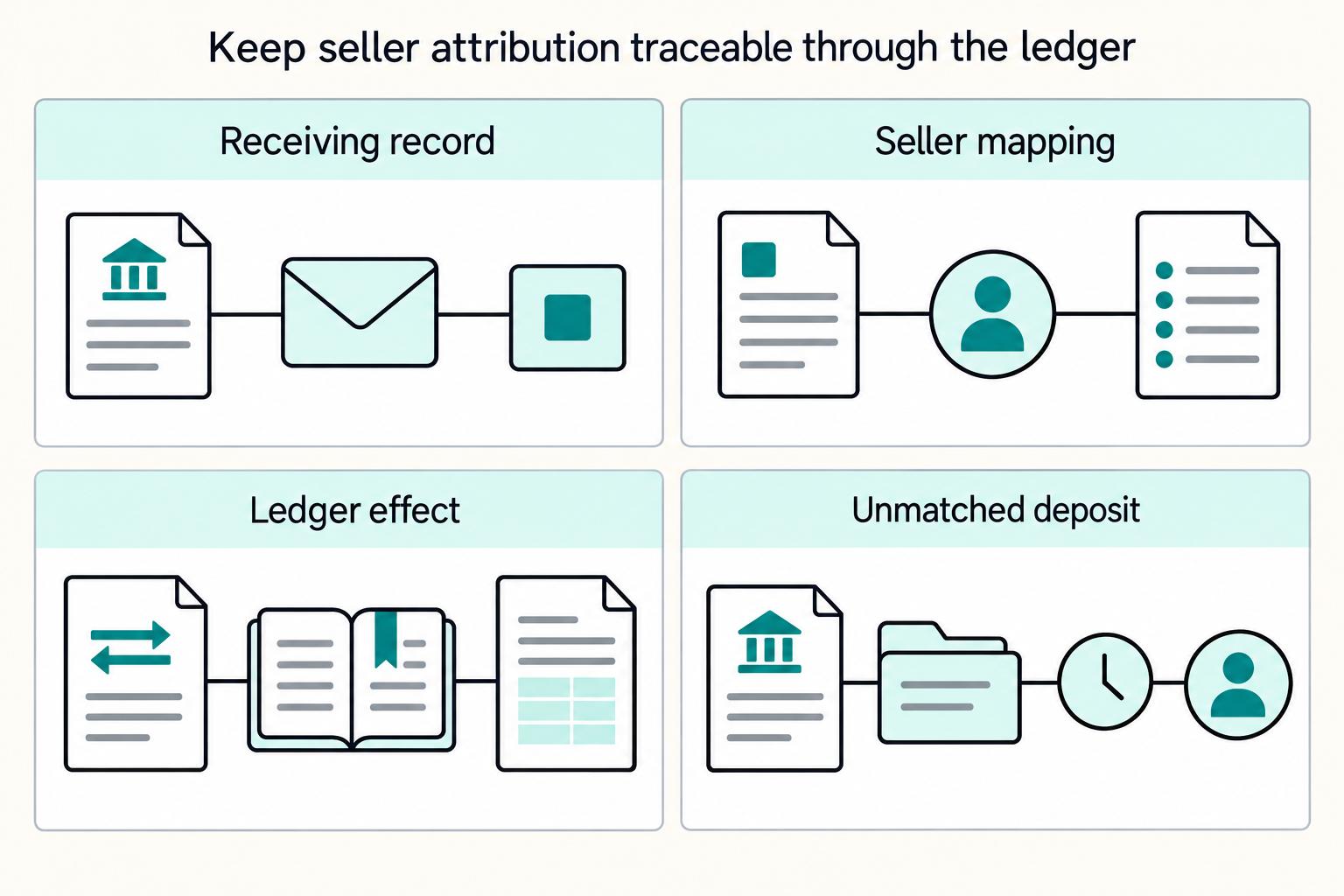
Virtual IBANs for Platforms: How to Give Every Seller Their Own Dedicated Bank Account Number
If you want to give each seller their own receiving bank details without opening a separate traditional account per seller, start by treating this as an account-mapping and controls decision, not just a UI feature. In common setups, a virtual IBAN looks like a standard IBAN but points to an underlying master payment account rather than a standalone account.

High-Interest Business Checking Accounts for Freelancers
Choose a business account that accepts your legal form, owners and operating location before comparing its yield. This shortlist covers Bluevine and Axos business-checking products documented on their own sites. The recommendations below are based on published terms and illustrative arithmetic, rather than hands-on testing or an exhaustive ranking of every account.
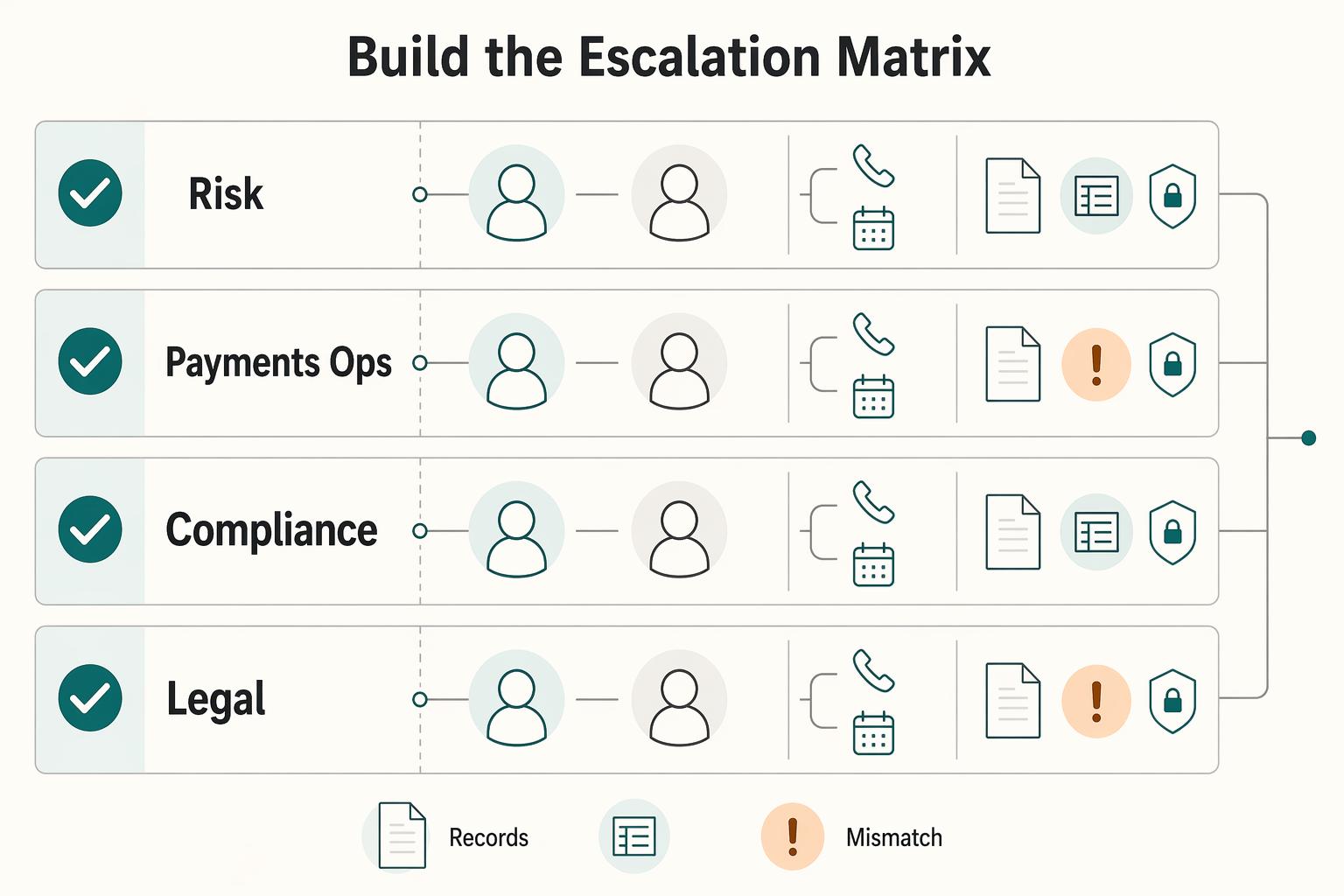
Identity Theft Prevention for Freelancers in Payout Operations
This guide is for platform teams that own contractor, seller, or creator payouts. If you work in Compliance, Legal, Finance, Payments Ops, or Risk, your goal is a practical identity-theft prevention program: one that protects financial accounts, creates clear stop-and-review points, and leaves audit-ready records.