
Quick Answer
Choose an OTA payment model by who collects traveler funds, which entity owes each supplier, and the release rule for hotels, hosts and agents. Trace booking, charge, transfer, payout, refund and bank receipt separately, then prove recovery and reconciliation before expanding.
What a workable OTA payment structure needs to do#
Travel payment operations are not standard ecommerce operations. In travel, you often deal with deposits, chargebacks, and high-ticket bookings that may not be fulfilled for months. Much of the complexity sits in the gap between charge, fulfillment, and payout, where finance exceptions and reconciliation issues surface.
This article is for product, finance, and engineering owners at online travel agencies, travel agencies, and travel startups managing supplier payouts at scale. If your platform collects funds in one step and pays out later, the real decision is not just checkout. It is how much control you have over settlement timing, payout routing, and the records your finance team needs when transactions do not reconcile cleanly.
A booking creates several obligations with different dates: the traveler charge, supplier payable, agent commission, possible refund and eventual bank receipt. Payment design must keep those dates and liabilities separate even when checkout presents one total.
IATA's Billing and Settlement Plan centralizes airline sales reporting and remittance for accredited agents. That is a different flow from lodging supplier payouts or affiliate commissions. Booking.com's Payments API exposes reservation-level bank-transfer and virtual-credit-card information for eligible Payments by Booking.com properties.
This guide stays practical. Pick a payment model, understand the tradeoffs, and leave with checkpoints you can verify in your own stack before volume amplifies mistakes. You should be able to answer:
- Who gets paid, when, and by which method: bank transfer, VCC, or a mix.
- What evidence ties each booking to money movement: booking identifier, charge event, payout reference, refund record, and ledger match.
- How exceptions are contained: delayed fulfillment, chargebacks, and country or property coverage constraints.
If you cannot explain your end-to-end money flow on one page, do not scale traffic yet. At minimum, you should be able to trace one booking from customer charge to supplier payout and through refund or dispute handling.
How to choose the right payment model for your OTA#
Choose based on money movement control, not checkout polish. For OTA or booking platform teams that own supplier integrations and back office operations, these four filters should drive the decision.
| Filter | What to verify | Grounded detail |
|---|---|---|
| Who collects traveler payment | Whether the platform or intermediary collects at booking or the property collects directly from the traveler | The article contrasts Expedia Collect with Hotel Collect and says to confirm this per booking type in the contract and supplier configuration |
| Settlement timing control | Whether you can hold funds and decide when suppliers are paid, or timing is mostly fixed by the provider | Airbnb's published ACH and wire times measure arrival after release; they do not define the booking's release date. |
| Supplier payment eligibility | Whether supplier types and payout methods work for your actual onboarding cases | Booking.com managed payments depend on eligibility and property settings; if a property is not eligible, that property must manage guest payments itself |
| Reconciliation in production | Whether a payout reconciliation report or equivalent export ties each bank payout to the settled transaction batch | Minimum evidence in the article includes identifiers to match transactions, provider references, payout batches, refunds, and ledger postings |
- Who collects the traveler payment
If your setup is closer to Expedia Collect, the platform or intermediary collects at booking. If it is closer to Hotel Collect, the property collects directly from the traveler. Confirm this per booking type in the contract and supplier configuration, since partners can operate under different business models.
- How much settlement timing control you really have
"Payouts supported" is not enough. Verify the contractual release trigger, when collected funds become available and how long the destination method takes after release. For example, Airbnb lists ACH at three business days in the USA/Puerto Rico and international wires at three to seven business days after payout release. These are provider examples, not universal OTA timing.
- Whether supplier payment eligibility works for your real mix
Do not rely on broad availability claims. Test supplier types and payout methods against your actual onboarding cases. For example, Booking.com managed payments depend on eligibility and property settings. If a property is not eligible, that property must manage guest payments itself.
- Whether reconciliation proves the model in production
A payment model is only viable if finance can reconcile B2C and B2B flows without heavy manual work. Require a payout reconciliation report, or equivalent export, that ties each bank payout to the settled transaction batch. Minimum evidence should include the identifiers needed to match transactions, provider references, payout batches, refunds, and ledger postings.
If you run a single-property booking engine with no split payouts, this may be more infrastructure than you need. If you pay hotels, hosts, and agents under different terms, this is baseline operating discipline.
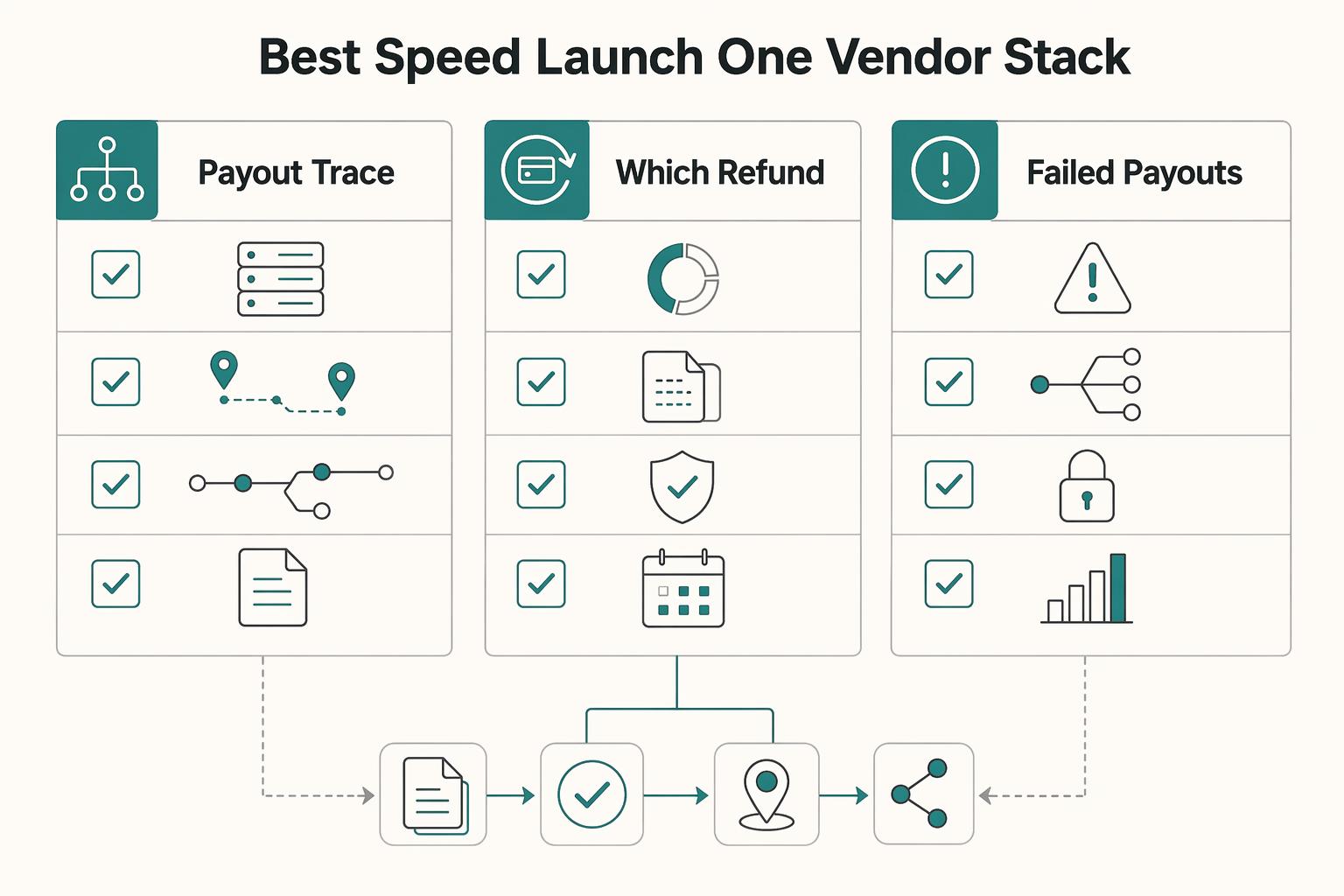
Best for speed to launch with one vendor stack#
A unified booking engine can reduce the initial integration surface when its booking, supplier and payment modules fit your operation. PHPTRAVELS is one vendor example: its B2B product page describes agent accounts, supplier connections, payment rules and reporting. Confirm the exact supplier and payment integrations rather than treating the product category as a complete supplier-settlement system.
A vendor's setup plan is not a guaranteed delivery date. Obtain a scope-specific schedule covering credentials, supplier certification, payment configuration, agent workflow testing and production cutover. An already-built connector can still require your commercial agreement and production access.
Custom payment behaviour can still require development in a unified engine. Ask which gateways and payout integrations are included in your contract, what is configurable and who maintains custom integrations when a provider changes its API.
If your OTA runs a merchant model, where you collect traveler funds and pay suppliers later, validate payout and reconciliation workflows directly in demo and sample exports. Public product pages are not enough to assume detailed control over payout release logic or exception handling. Before signing, confirm:
- Whether booking ID, payment reference, refund record, and payout reference can be traced together in one admin view or export.
- Which refund, dispute, and chargeback rules are configurable versus developer-only.
- Whether settlement timing can vary by supplier or booking type.
- How failed payouts are surfaced and reprocessed operationally.
Decision rule: choose this model when fast launch and lower integration overhead matter most. Treat it as a starting point if your contracts already require granular settlement and audit-ready payout controls.
Best for control over payouts and ledger integrity#
Choose this model when your booking platform stays in place but finance needs tighter control over payout timing, refund liability, and ledger treatment. The core move is to decouple the customer charge from supplier and partner disbursements so payout rules follow contract terms instead of one default pattern.
| Example | Relevant detail | Type |
|---|---|---|
| Booking.com Payments API | Reservation-level bank-transfer/VCC payout details and price breakdowns are available for the supported property integration | Supplier payout evidence |
| Airbnb longer stays | Monthly-stay payments are collected and released in installments; release and destination processing are distinct | Installment obligations |
| Stripe Connect | Separate charges/transfers decouple customer charge from connected-account transfer; payout scheduling then governs money leaving that account | Collection, transfer and bank payout |
| Adyen | Split instructions allocate payment/refund amounts to balance accounts; payment and balance-platform webhooks track different stages | Allocation and refund evidence |
That matters when one booking creates multiple obligations. Stripe Connect supports separate charges and transfers, where the charge sits on the platform account and funds can then be transferred to multiple connected accounts. In practice, one traveler payment does not have to force one payout pattern.
Why this model fits mixed seller classes#
This model is strongest when seller classes need different payout logic. You might pay hotels on one cadence, release host funds only after a milestone or stay condition, and pay agents based on commission timing after checkout conditions are met.
Booking.com's reservation payout endpoints illustrate the evidence needed: expected partner payout, bank-transfer details or VCC information, and a price breakdown including commission and applicable charges. Retrieve those records for the supported integration instead of inferring the supplier payable from the traveler total.
Airbnb shows a different payout behavior for longer stays. Reservations of 28 nights or more are collected and released in monthly installments. In some cases the initial payout is released by the end of the business day 28 days after scheduled check-in. The point is not to copy those timings, but to recognize that seller-specific payout behavior is normal.
Match release rules to each seller class#
Airbnb's published payout calculations show that monthly-stay payments are collected and released in installments. Record each installment as its own obligation and release event, with the reservation linking them. Check the current reservation-specific schedule before copying a provider's timing into your seller contract.
Stripe's schedule controls bank payout timing, subject to fund availability and the account configuration. A daily, weekly, monthly or manual schedule is distinct from the preceding transfer to a connected account. Confirm who controls each setting and the holding limit before promising a supplier release after a long stay.
Separate three controls: when payment funds become available, when you transfer them to a connected account, and when that account pays out to its bank. Changing the payout interval does not speed settlement. Manual payouts can delay bank release within provider and country limits, but they are not an escrow product or permission to hold funds indefinitely. Stripe currently documents manual-payout limits of 10 days in Thailand, two years in the US and 90 days elsewhere; confirm the applicable account setup and rules before promising a long travel hold.
Decide the refund allocation and liability before sending the request, then preserve the refund and balance-account references through every later status change. Reconcile the confirmed amounts to the supplier payable and fees under your accounting policy; a webhook is event evidence rather than a universal recognition rule.
Track refunds and allocation separately#
For Adyen refunds, keep the request, validation/submission result and balance-account allocation separate. A successful REFUND notification indicates validation and submission to the card scheme; later REFUND_FAILED or REFUNDED_REVERSED events can change the result. Balance-platform transfer events track allocation changes. Request acceptance or one webhook is insufficient to prove final customer receipt and complete reconciliation; apply the accounting policy to the actual event and evidence.
This model gives you more control, but it also gives you more engineering and operational ownership across supplier integrations, webhook handling, and back office processes. Before committing, verify in a live demo or test environment:
- One booking is traceable across charge, each transfer, any refund event, and the final payout record.
- Payout rules can differ by seller class and cadence, including manual holds and scheduled weekly or monthly release.
- Failed disbursements create clear operational events, such as Stripe's
payout.failed.
If contract-specific settlement timing is already creating finance pain, this model is often a strong fit. If not, the added ownership may be more than you need right now. For a related pattern, see How MoR Platforms Split Payments Between Platform and Contractor.
Best for cross-border expansion with heavier compliance support#
Choose this model when cross-border launch risk is driven more by compliance and payout eligibility than by the lowest transaction cost.
- Best for: OTAs expanding into multiple jurisdictions where onboarding rules, verification, payout setup, and audit evidence vary by country.
- Key pros: can give you a clearer compliance posture, stronger traceability from charge to payout, and fewer ad hoc back office exceptions.
- Key cons: potentially higher transaction economics and tighter operating discipline.
- Concrete use case: a booking platform adding new countries where recipient verification, settlement currency, and payout method requirements differ.
- Decision rule: if market-entry delay or compliance failure is the bigger risk, prioritize this over the lowest-fee architecture.
Why this model matters more than fee minimization#
Cross-border payments still underperform domestic rails on cost, speed, access, and transparency, and global progress reports indicate end-2027 targets may still be missed at a satisfactory global level. In practice, home-market assumptions usually do not transfer cleanly to new payout corridors. For expansion teams, the tradeoff is straightforward: accept more process discipline up front, which can reduce launch and post-launch compliance friction.
What changes in practice#
The main change is structural: compliance moves into payment design, not back office cleanup. That affects onboarding, authentication, payout eligibility, and recordkeeping.
| Area | What matters | Operator check |
|---|---|---|
| CDD and AML | Determine whether the platform or a partner is the regulated party, then apply its jurisdiction-specific AML/CDD duties. Do not assume every OTA is a US money-services business. | Confirm who is the regulated party, what data must be collected, and where evidence is stored. |
| EU CDD direction | Regulation (EU) 2024/1624 generally applies from 10 July 2027; its application dates and implementing measures must be distinguished from the current national AML framework. | Maintain current onboarding requirements and a dated change plan for applicable future requirements. |
| SCA under PSD2 | SCA can apply to relevant electronic payment actions, and responsibility for SCA compliance cannot be outsourced away by the issuer. | Verify where SCA can trigger in the journey and how failures are surfaced operationally. |
| Payout geography and currency | Country-specific payout constraints apply, including cases where bank accounts must be in the country of the settlement currency. | Test real country-currency-method combinations, not generic sandbox assumptions. |
The red flags to catch before rollout#
Do not treat "cross-border coverage" as one universal number. Product scope matters, and documented country counts can differ across product pages, so validate the exact payout product, method, and country pair you plan to run.
Do not treat verification as one global checklist. Requirements vary by country, so a simple "verified yes/no" flag is weak evidence without country, document type, collection timing, and review outcome.
Do not assume successful collection guarantees successful payout. Cross-border launches can stall operationally when funds are captured but recipient payout setup does not satisfy local requirements.
What you should verify before choosing it#
Require country-and-product-level proof, then mirror that detail in your own internal evidence pack. At minimum, you should be able to retrieve:
- recipient country, settlement currency, and payout method
- verification status, document type, and collection timestamp
- the transaction ID funding the payout and the payout ID completing it
- any policy gate that blocked release, and who approved an override
If those links are not clear, "compliance support" is mostly positioning. If they are clear, this model can be a stronger choice for cross-border OTA expansion despite the added process overhead.
Best for bank-transfer-heavy B2B travel sales#
Use this model when your B2B motion already runs on invoices, remittance schedules, and bank instructions, and card checkout is secondary. It fits travel agencies and tour operators that need scheduled settlement behavior for supplier payouts, but it only scales if reconciliation is designed before volume.
A credit transfer is payer-initiated, so operations are less synchronous than card flows. Funds can arrive at different times or in amounts that do not match invoice totals, and some transfers require manual matching to bookings or invoices. That pushes more work into exception handling.
Why this can still be the right fit#
IATA BSP is a useful example of centralized airline remittance, not a universal supplier-payout architecture. Accredited agents report and remit under the relevant BSP calendar. A hotel payable or affiliate commission may have a separate contract and ledger even when the booking also includes a flight.
Where teams break it#
The main failure is treating bank transfer as simple money movement. It is asynchronous, transfer amounts may not match invoice totals, and unmatched funds can sit in customer balance until manual reconciliation.
That becomes a scaling bottleneck quickly. If reservations move ahead before deposits are matched, exception queues grow and payout eligibility drifts from booking status.
Faster rails do not remove this risk. SEPA Instant has supported transfers within ten seconds since November 2017, but speed does not fix unmatched transfers or amount mismatches.
What to verify before committing#
Make payout release conditional on a complete transfer-to-booking link. At minimum, track:
- transfer reference, received amount, received date, and sender name
- expected booking or invoice ID
- variance between expected and received amount, and who approved it
- downstream payout batch ID for supplier disbursement
- hold reason when funds are received but not yet releasable
If you cannot produce these links in one place, month-end reconciliation becomes the bottleneck.
Practical decision rule#
Choose this when scheduled remittance is already how you operate. Use the actual BSP or provider reporting and remittance calendar, with the reporting cut-off and clearing-bank credit deadline recorded separately.
A concrete fit is corporate reservations paid by transfer, with downstream disbursements released after finance verifies receipt and clears variances. If that is your normal flow, this model is strong. If not, unmatched deposits usually fail first.
Best for mixed supply with different payout promises#
If your platform promises different payout timing to hotels, hosts, and travel agents, a hybrid payout setup is often the practical choice so each seller type can follow its own release rules and rails.
A single remittance rhythm can work in bank-transfer-heavy B2B flows, but mixed supply often needs different payout behavior by contract. One group may need faster access to funds, another may accept scheduled installments, and some agent commissions may run on a separate monthly cycle.
| Seller type | Example payout promise | Grounded timing or rail detail | What you need to control |
|---|---|---|---|
| Hotels | Release after the agreed booking event | Bank transfer or VCC according to the property's supported payment arrangement | Rail eligibility, VCC activation/charge evidence, reservation matching |
| Hosts | Optional fast access after release | Airbnb Fast Pay: eligible US cards, normally within 30 minutes after release; 1.5% fee capped at $15, with review delays possible | Separate release eligibility, arrival estimate, fees and holds |
| Travel agents | Commission on its own cycle | Illustrative policy: approved commission run after checkout and invoice acceptance; actual thresholds come from the agreement | Separate commission payable, approval, fees and booking reference |
Why this model works#
The upside is controlled orchestration: supplier-specific transfer rules can coexist with supported automatic, manual or instant bank payouts. Eligibility and settlement limits still apply. Store the actual account schedule and decision rather than assuming the provider's default matches the seller contract.
This matters most when your travel agency acts as merchant of record. If you collect funds and manage supplier settlement directly, you also own the gap between what product promises and what finance can safely release.
Where teams get into trouble#
The tradeoff is back office complexity. Product should define the seller promise, finance should define release conditions, and engineering should ensure booking, payout, and commission events stay linked. If payout timing changes informally, manual exceptions pile up and month-end reconciliation gets harder.
A common failure mode is offering instant payout without storing its real constraints. Fast payout behavior can vary by platform, market, payout method, and fee model. Another is treating agent commissions like supplier payouts even when their timing and thresholds are different.
What to verify before you commit#
Before launch, make sure each seller profile can store these fields in one place:
- seller type, contract payout promise, and fallback settlement timing
- payout rail by supplier class, such as bank transfer, VCC, or card-based instant payout
- release trigger, such as check-in, check-out, manual approval, or monthly commission run
- contracted fees, thresholds, rounding and who bears each charge
- payout batch ID, booking or commission reference, and hold reason
Store the contracted fee, threshold and rounding rule for each payout product. For example, Airbnb's published Fast Pay fee is 1.5% capped at $15; that is a host payout-method fee, not the platform's general service fee or an agent-commission rule.
If you cannot surface these fields in one place, delay differentiated payout promises until the data model and controls are in place.
Side by side comparison of the five models#
These five patterns can overlap. Compare the authority, data and obligations your own implementation provides, rather than assigning a vendor a fixed score from a marketing page. Ask for a representative booking, refund and failed payout in the proposed configuration.
| Model | Best for | Payout orchestration control | Settlement timing flexibility | Supplier integrations burden | Reconciliation workflows effort |
|---|---|---|---|---|---|
| Unified booking plus payment stack | Fewer initial integration seams | Depends on included payout modules | Contract/provider defaults unless custom rules supported | Supplier credentials, certification and integration scope still needed | Require charge-to-payout exports and exception coverage |
| Modular orchestration plus ledger controls | Different seller release rules | Explicit collection/transfer/payout controls where supported | Provider settlement and holding limits still apply | Team owns integrations, state handling and recovery | High implementation effort; lower lookup effort when links are complete |
| Compliance-first cross-border platform | Countries with differing onboarding and eligibility | Gated by verified recipient and product capability | Country/currency/method specific | Local requirements and provider scope must be mapped | Maintain verification, policy and transaction evidence together |
| Bank-transfer-heavy B2B remittance | Invoice-funded and scheduled remittance | Release after receipt and approved matching | Reporting and remittance calendar | Bank matching and supplier instructions | Unmatched or partial receipts need explicit queues |
| Hybrid by supplier type | Mixed hotels, hosts and agents | Separate rules for each payable class | Separate trigger and arrival estimate by class | More paths and contracts to maintain | Combined reporting with class-specific exceptions |
| Responsibility row | Unified booking plus payment stack | Modular orchestration plus ledger controls | Compliance-first cross-border platform | Bank-transfer-heavy B2B remittance | Hybrid by supplier type |
|---|---|---|---|---|---|
| Disputes handling responsibility | Identify the contracted merchant/acquirer and dispute owner | Clear in Stripe by charge type: direct charges debit the connected account; destination and separate charges and transfers debit the platform | Implementation-specific; public Adyen split docs emphasize configurable booking treatment for chargebacks | Not defined as a full dispute-liability matrix in BSP public material | Varies by merchant and agency mix; must be defined per supplier class |
| Chargebacks handling responsibility | Require contractual chargeback liability and recovery procedure | Clear in Stripe by charge type, and configurable booking treatment in Adyen split setup | Configurable, but policy ownership depends on your setup | Not documented as a full chargeback-ownership model in BSP public material | Mixed responsibility model; requires explicit contract and system mapping |
| Refunds handling responsibility | Identify refund initiator, funds source and final outcome evidence | Adyen split logic supports refunds as well as payments and captures; Stripe responsibility depends on charge model | Configurable within platform split and account design | Not documented as a full refund-liability model in BSP public material | Depends on whether each supplier flow runs agency-like or merchant-like |
| Operational visibility across B2B and B2C backoffice management | Depends on linked booking, charge, payout and exception exports | High when payment, split, and payout states are explicit in one operating model | High for compliance traceability, with added process overhead | Medium for centralized remittance visibility; lower for non-BSP exceptions | Medium to high only if supplier class, payout state, and exception status are tracked together |
The money flow every OTA team must be able to defend#
Your money flow is only defensible if product, finance, and engineering can all explain the same path from booking to bank payout. That means modeling the flow as a chain of distinct events, not one vague "paid" state.
| Step | What to track | Grounded detail |
|---|---|---|
| Booking-to-payment anchor | One durable booking anchor linked to each payment/installment object and its attempts, with purpose, installment ID and state-change timestamps | Link all payments to one booking; deposits and later balance charges can be separate PaymentIntents. |
| Authorization and capture | Separate states such as authorized, captured, and canceled, plus the triggering booking event | Store the actual capture_before deadline; card network, transaction type and extended authorisation eligibility affect validity. |
| Charge, split, and supplier payout release | Booking event, payout reference, recipient reference, payout batch ID, and decision metadata | Facilitator flows separate guest collection from supplier transfer, and Stripe's separate charges and transfers model does the same |
| Refunds, chargebacks, and disputes | Provider reference, internal case identifier, booking identifier, affected payout or transfer ID, and the ledger posting that moved the balance | The article says these exceptions are core money-flow events and should have a named owner before launch |
| Evidence pack and payout failures | Provider references, internal transaction IDs, payout batch IDs, ledger postings, and a distinct returned or failed payout state until corrected | Collection success does not settle a failed supplier payout; retain the payable and recovery trail. |
- Create one booking-to-payment anchor
Create one durable booking ID, then attach each payment object and attempt to it. Stripe recommends one PaymentIntent per order or customer session for a particular payment, but a travel booking can have a deposit and a later balance charge, refunds or revised amounts. Store the purpose and installment number with each PaymentIntent so multiple legitimate charges are distinguishable from duplicates.
- Separate authorization from capture, especially for hotel-style inventory
Authorization and capture are separate events. For a card payment, store the charge's actual capture_before deadline rather than assuming a universal seven-day window. Stripe's published windows differ by card network and transaction type; eligible Japan-based JPY transactions and eligible extended authorizations can have longer windows. A booking months away normally needs an agreed deposit/later-charge strategy rather than an ordinary authorization held until checkout.
- Treat charge, split, and supplier payout release as separate events
Do not infer supplier payout from customer collection. Facilitator flows separate guest collection from supplier transfer, and Stripe's separate charges and transfers model does the same by decoupling the platform charge from connected-account transfers. Each payout release to a hotel, host, or agent should be traceable to one booking event, with stored payout reference, recipient reference, payout batch ID, and decision metadata.
- Assign refunds, chargebacks, and disputes to a named owner before launch
These exceptions are core money-flow events, not side workflows. Stripe's marketplace guidance requires clear responsibility for refunds, chargebacks, and disputes, and Stripe defines disputes as bank-initiated contestations of payments. For each case, store the provider reference, internal case identifier, booking identifier, affected payout or transfer ID, and the ledger posting that moved the balance.
- Build an evidence pack for both month-end close and payout failure paths
Reconciliation must tie bank movement to transaction movement. For Stripe automatic payouts, the payout reconciliation report links the payout to its settled transaction batch; manual or instant payouts need your own transaction allocation. Use Adyen's settlement or balance-platform reports appropriate to your integration. Keep report type, batch and transaction references with the actual ledger entries.
Minimum evidence pack: booking and installment IDs, payment and transfer references, payout batch IDs, ledger postings and bank receipt. If collection succeeds but payout fails, retain the supplier payable and record the failed attempt. Verify and correct destination details independently, retrieve the original transaction state, then approve a new attempt only after non-execution or return is established.
For each conversion, retain source and payout currencies and amounts, the applied FX rate, conversion fees and any rounding residual. Record who bears each charge under the supplier agreement. Finance should reconcile these fields to the supplier obligation and bank receipt, and assign unexplained differences to an owner rather than hiding them in the commission total.
Controls that keep payouts reliable during growth#
Payout reliability during growth comes from controls before release, replay-safe execution, and clear ownership when exceptions occur.
- Pre-release policy gates
Put payout gates before execution for new agents and sellers with incomplete onboarding. Check payout eligibility, not just available funds. For connected accounts, missing capabilities or required verification information can block payouts, so record the gate result and reason before queueing payout work. If a payout cannot be completed, a payout.failed event occurs, and no further payouts can be made to that external account until details are updated.
- Idempotent payout retries
Persist one idempotency key per intended mutation and reuse it with the same parameters for a transport retry within the provider's retention window. Stripe also stores error responses, including 500s; repeated errors do not establish non-execution. Retrieve and reconcile uncertain outcomes before creating a replacement. Keep a durable payable/attempt ledger after provider keys expire.
- Incident ownership for disputes, chargebacks, and refunds
Assign a dispute owner and record the provider's exact response deadline, including time zone. Network, case and provider rules differ, so do not configure one universal 7–21-day period. Link the booking, payment, dispute, supplier exposure, evidence and fee postings; escalate an approaching deadline to the named owner.
- Monitoring by remittance pattern
Monitor by remittance pattern, not only aggregate success. IATA's January 2026 notice changes the weekly BSP credit deadline from June 2026: the relevant clearing-bank account must be credited by the specified fifth working day or seventh calendar day following the reporting date. This applies to the covered BSP schedule, not hotel payouts or every agency commission. Track collection availability, release and destination arrival separately for each supplier flow.
- Pause onboarding when manual exceptions start to dominate
If manual exception queues start to dominate, consider pausing new supplier onboarding until controls stabilize. Use that pause to reduce repeat failures such as verification rechecks and payout-failure handling. Track coded hold reasons and weekly queue direction so each exception maps to a product or controls fix, not ongoing manual effort.
30 day implementation checklist by owner#
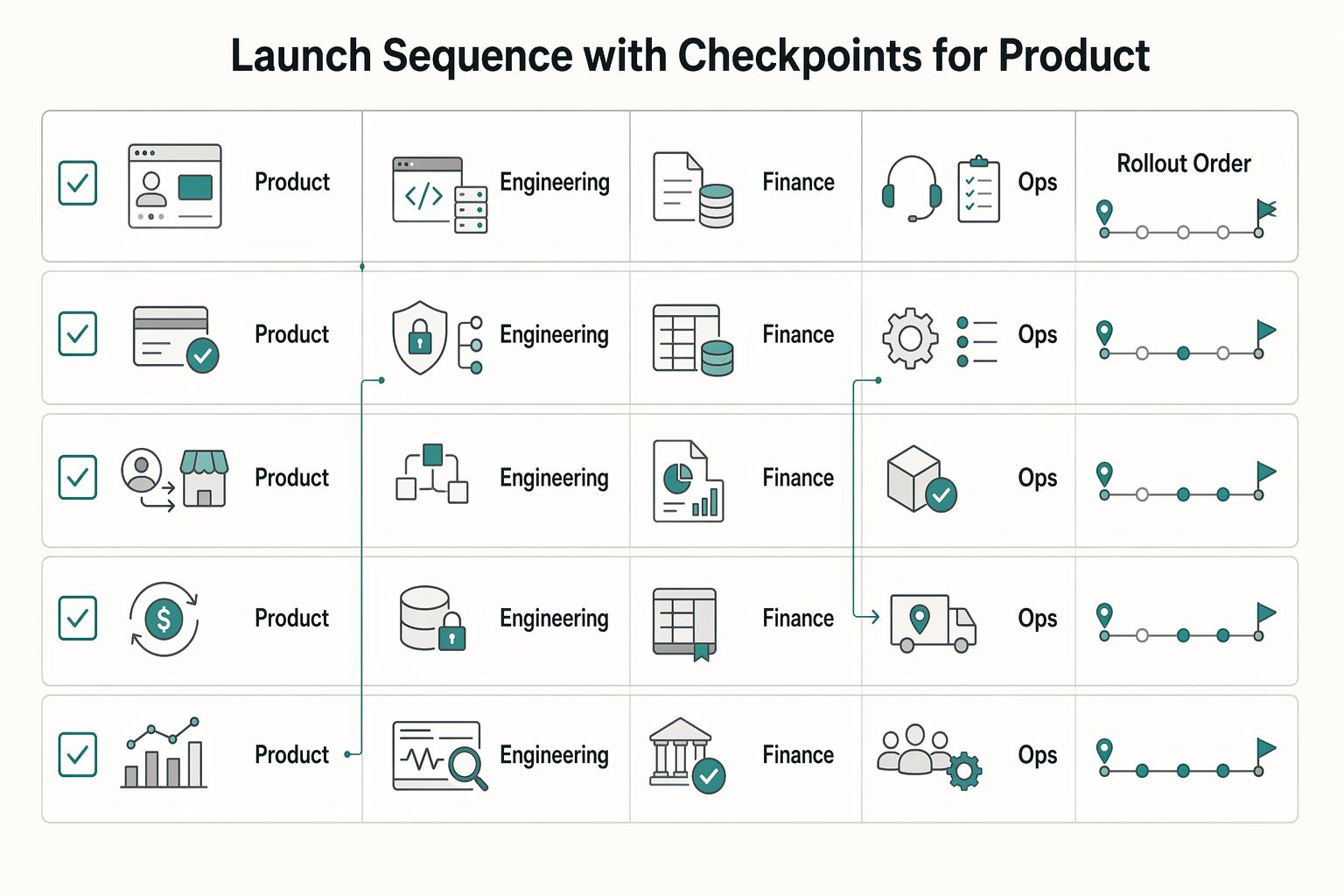
Use this 30-day plan as a proving cycle, not a guaranteed rollout. If any owner cannot show evidence at week end, do not scale traffic.
- Week 1 Product
Finalize the money-movement model, then define the payout promise for each seller class in plain language. Hotels, hosts, and travel agents should not share one generic rule when contracts or risk differ. Lock settlement timing in a short policy note that names the trigger, release point, and exceptions. Confirm you can explain for one booking when money is captured, when it becomes payable, and what can delay release.
Put confirmed provider timings beside each contract promise. Booking.com's supported Payments API exposes bank-transfer and VCC reservation payout details; verify the property's actual arrangement. Airbnb separately describes installment collection/release, payout-method processing times and possible review holds. Your policy should identify the release trigger, hold conditions, expected destination arrival and owner when the dates diverge.
- Week 2 Engineering
Implement the booking event model before wiring payouts. Use a state-based payment lifecycle, for example a PaymentIntent lifecycle, to track payment progress from creation through checkout and required actions. For payout orchestration, define explicit internal states such as eligible, blocked, queued, sent, failed, and reconciled, and record the policy decision at each transition.
Make recovery safe in the same week. Persist mutation keys and booking/payable/attempt IDs; deduplicate repeated webhook events. Reuse the key for a compatible transport retry, but retrieve an uncertain result before approving any replacement. If the provider's key expired, the durable attempt ledger must still prevent duplicate payment. Exports must distinguish delayed, failed, returned and reconciled outcomes.
- Week 3 Finance Ops
If you run both B2B and B2C flows, run a parallel close with representative sample data using the reports you will use in production. If automatic payouts are enabled, test the payout reconciliation report that maps each payout to the transaction batch it settles. If you use settlement reconciliation reporting, confirm payout frequency is configured first, then verify each payout batch includes payment, refund, and chargeback records at transaction level.
The checkpoint is whether finance can reconcile the bank statement against the bank register or ledger without manual reconstruction. Test at least one refund and one dispute (chargeback). Disputes can reverse funds and add fees, so month-end treatment should show both the principal reversal and fee impact.
- Week 4 Joint sign-off
Run one joint review with product, engineering, and finance ops using the actual back office view. Confirm the dashboard shows payout state by seller type, aged exceptions, unreconciled batches, and open disputes with owner and deadline. Have each team trace one booking from customer charge to final payout or reversal using only dashboard data and exports.
Sign off only when the audit pack is complete: booking event history, policy decision, provider references, payout batch details, ledger entries, and bank reconciliation proof. For adjacent decisions, read Online Marketplace Payments: The Complete Guide to How Two-Sided Platforms Process Money. You may also want Travel and Hospitality Membership Billing: How Platforms Manage Annual Passes Credits and Refunds. Related reading: How to Avoid Dynamic Pricing When Booking Travel.
Before go-live, pressure-test your week-by-week plan against real payout statuses, idempotent retries, and reconciliation exports in the Gruv docs.
What to do next#
Keep the next phase operational: choose for payout complexity, document the full money flow before adding supply, and scale only after finance can close the month cleanly.
- Choose the model by payout complexity, not roadmap appeal.
Start with the most complex payout case you already support or will add soon. Travel payments carry higher operational risk because customers often pay well before fulfillment, and collection may be staged with a deposit now, balance later, or split dates. If one supplier group can run on provider-controlled cadence, a simpler model can work. If hotels, hosts, and agents need different release rules, use a model that supports those differences without manual workarounds. The right model survives your hardest payout case without spreadsheets becoming the control layer.
- Write the end-to-end money flow and evidence pack before adding markets or suppliers.
Approve the chain: charge, capture, availability, transfer, payout, refund/dispute and reconciliation. Store provider and internal booking/ledger IDs, payout batches and independent bank evidence. For example, on an illustrative €1,000 booking with €100 commission, the supplier payable is €900 before any separately agreed fees or taxes. A €200 customer refund needs an agreed allocation; under an illustrative 90/10 split it reduces supplier entitlement by €180 and commission by €20. If €900 was already transferred, the €180 recovery is a separate action or receivable, not an automatic consequence of the refund.
- Launch with hard checkpoints, then expand only after a clean month-end close.
Gate rollout on release rules, recovery and reconciliation. Monitor provider-specific processing, failed, returned and cancelled states with owners and reason codes. Reconcile settlement batches and bank movement to charges, refunds, fees and supplier obligations. Manual or instant payouts require explicit allocation work. Scale after these controls hold under representative volume and a clean close.
When your money-flow map is approved, align release gates and supplier disbursement rules with Gruv Payouts.
Frequently Asked Questions
Who holds funds before payout in an OTA payment flow?
Identify the funds holder and customer claim from the provider agreement, account arrangement and booking terms. Booking.com's supported property payment arrangements include bank-transfer and VCC payout evidence. In a modular stack, funds may be in platform or connected-account balances; an available balance is not itself permission to hold or redirect funds indefinitely.
How are hotel payouts different from host payouts and travel agent commissions?
Hotels, hosts and agents can have separate contractual release rules. Monthly stays can create installment obligations, while agent commissions require their own calculation and approval. BSP airline remittance is a separate centralized reporting flow. Record the relevant trigger and payable class instead of copying a single host-payout schedule.
When should an OTA choose a unified online booking engine instead of a modular payments stack?
A unified setup can be a fit when you can operate within one provider's payout model. This model can bundle guest payment collection and supplier payout, including rails like bank transfer and VCC. A modular stack can be a better fit when you need tighter control of payout timing, payout mode, and fund retention.
What breaks first when payout volume grows across multiple currencies?
Settlement-currency and country-rule mismatches are a common early break point. Settlement currency support varies by country, so a payout design that works in one market can fail in another. A common failure mode is funds being collected but payout release being delayed because settlement-currency or eligibility requirements are not met.
What must be in a travel payout readiness checklist before launch?
Start with a clear money-flow map and payout rules that define when funds move from collection to pending and then available for payout. Confirm onboarding and KYC verification are complete before enabling payouts on rails that require them. Also validate that your process can explain one booking from charge through payout outcome without manual reconstruction.
How should teams handle refunds, chargebacks, and disputes without breaking reconciliation?
Define ownership by charge and transfer model. In Stripe separate charges and transfers, the platform charge and connected-account transfers are separate: refunding the charge does not automatically reverse those transfers. Record customer refund, transfer recovery, fees and any remaining supplier receivable independently, with webhooks and reports confirming their outcomes.
What should you do when vendor documentation does not clearly explain settlement timing?
Treat unclear settlement timing as a launch blocker. Ask for a booking-level flow that explicitly shows collection, availability, payout trigger, delay conditions, and destination payout rail, then validate it with a low-risk transaction. Keep rollout scope tight until those timings are explicit, because providers may limit payment solutions by country or property type.
Try a related tool
Researched and edited by the Gruv editorial team. Gruv builds cross-border billing, payouts, and finance-operations software for global businesses.
Sources
Includes 4 external sources outside the trusted-domain allowlist.
- docs.stripe.com/payments/place-a-hold-on-a-payment-methodtrusted
- docs.stripe.com/connect/manage-payout-scheduletrusted
- ecb.europa.eu/paym/retail/instant_payments/html/index.en.htmltrusted
- eur-lex.europa.eu/legal-content/EN/TXTtrusted
- airbnb.com/help/article/425external
- airbnb.com/help/article/459external
- developers.booking.com/connectivity/docs/payments-api/understanding...external
- developers.booking.com/connectivity/docs/payments-api/managing-paym...external
Educational content only. Not legal, tax, or financial advice.
Related Posts
Six Marketplace Payment Setups for Two-Sided Platforms: Checkout, Payout Control, and Reconciliation
A marketplace payment does more than take money at checkout. It creates obligations to sellers, a fee for the platform and an exposure to later refunds or disputes. The setup must explain each obligation even when the buyer pays once and several sellers are owed money.
Travel and Hospitality Membership Billing for Annual Passes, Credits, and Refunds
If you run a pass or membership program, the hard part is not the charge. It is what happens after the sale. The pressure shows up later: when someone wants to cancel before renewal, asks for a refund, or accepts a credit that does not get redeemed cleanly. In travel and hospitality, those post-purchase events can make reconciliation unmanageable fast if support, finance, and billing are not working from the same record.

Agentic Commerce for Platform Operators: How to Prepare Your Payment Infrastructure for AI Agents
Move now, but do not launch on hype alone. Agentic commerce is moving from concept into practical implementation. Your payment risk still comes down to the same core controls: who authorized the transaction, what the agent was allowed to do, and who is accountable when a transaction is fraudulent or incorrect.