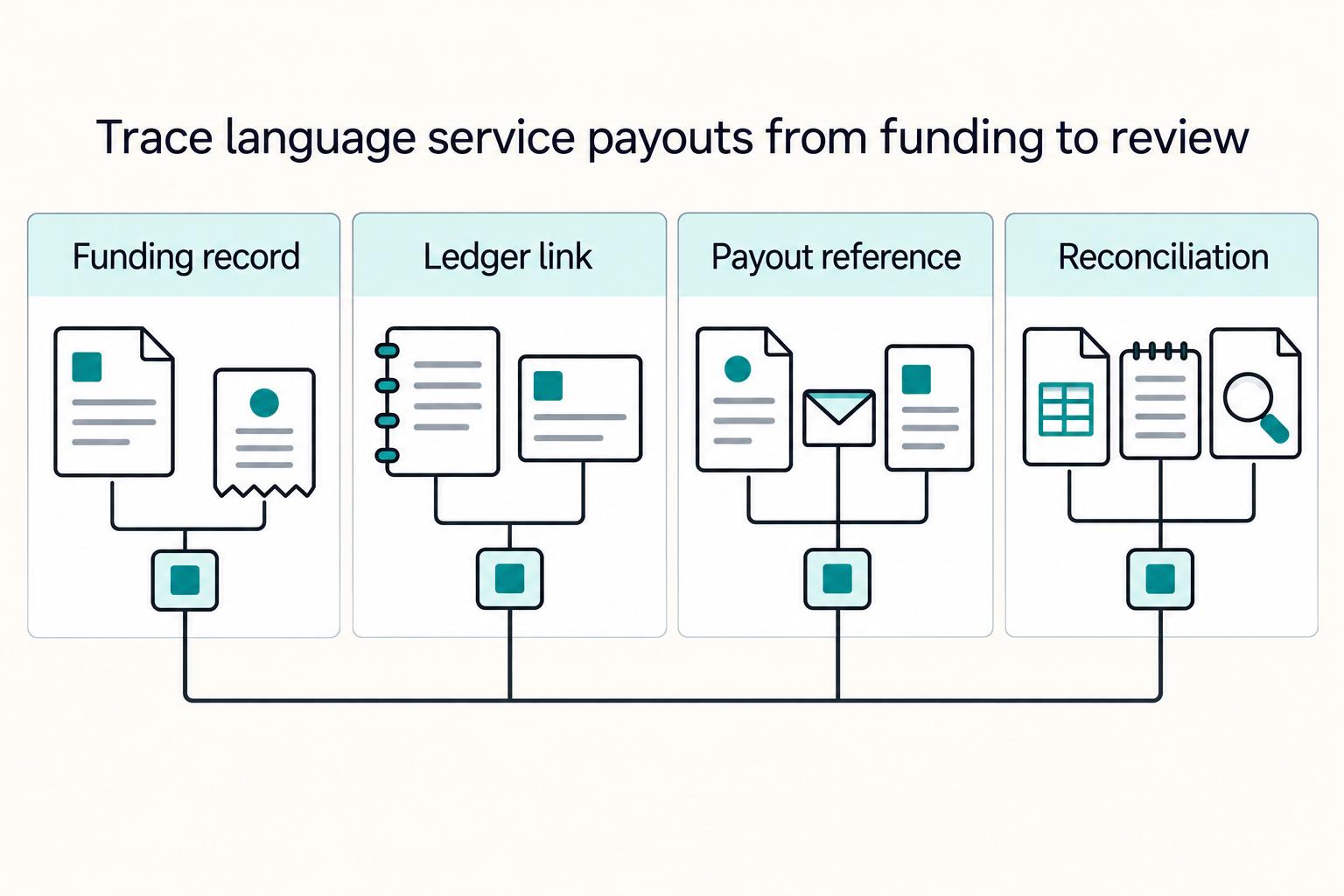
Start by selecting a payment operating model, then validate country readiness with written evidence before launch. For "translation language service platforms pay interpreters translators globally," the article’s direct guidance is to separate service marketing from payout execution, compare marketplace, managed-provider, and subscription paths, and confirm ownership for rejects, mismatches, and reconciliation. Claims from providers like RWS, LanguageLine Solutions, ATL, or Payoneer are useful for positioning, but launch decisions require traceable status data and exception closure controls.
Step 1. Start with the payment model question, not the vendor list. If you are evaluating this category, the first useful decision is not which language company looks strongest on a landing page. It is which model lets you source work, verify completion, release funds, and close payout exceptions in the countries you actually want to enter. This article helps you choose that model market by market, so you can make a grounded call before you commit product scope or go-to-market time.
Step 2. Separate service positioning from payout evidence. Search results in this space lean heavily toward service quality. LanguageLine, for example, markets "Language Services for Critical Communications." It also highlights "24/7 interpreting, translation, and AI-powered solutions." XTM's comparison article, published March 3, 2026, goes further and labels LanguageLine Solutions the "Best language service provider." Those are useful signals if you are buying interpretation or translation capacity. They are not proof that a provider, marketplace, or partner can support the payout method coverage, failure handling, status visibility, or reconciliation controls you need to pay translators and interpreters at launch.
Step 3. Judge launch readiness market by market. That is the core tension behind this topic. Provider pages and comparison roundups can help you assess service breadth, but founders still need payout and operating answers that those materials may not provide. The 2025 Nimdzi Interpreting Index includes a "Pricing Challenges" lens. That is a better clue to the real work here. Money movement, margins, and exception ownership sit inside the operating model, not beside it. If you skip that distinction, you can mistake broad language coverage for actual country readiness.
By the end of this article, you should be able to make three decisions with much less guesswork. First, you will know when a managed provider model is the better starting point and when direct payout ownership is worth the extra effort. Second, you will be able to sequence countries by payout friction and support burden, not just by demand. Third, you will have a go or no-go set of checks to run before engineering, finance, and operations spend real effort on launch.
The standard throughout is simple: ask for evidence you can verify, not claims that sound complete. Check who owns beneficiary verification before payout release, who resolves rejected payouts, what status data you can monitor weekly, and how translator and interpreter payment flows differ once scheduling, attendance, or delivery proof comes into play. If those answers are unclear, that market is not ready, even if the provider story is polished. For a related payout design example, see Solving Esports Prize Payment Distribution: How Tournament Platforms Pay Winners Globally.
Pick the operating model before you compare brand names. If speed and low internal ops overhead are the priority, start with a managed model; if margin control and payout ownership are the priority, move sooner toward direct payout infrastructure.
A long list of language pairs or broad Translation and Localization Services positioning does not prove payout readiness in your launch market. Service coverage helps you assess demand fulfillment; payout capability determines who verifies work, releases funds, sees failures, and closes exceptions.
| Model | Best starting fit | Main advantage | Verify early |
|---|---|---|---|
| Freelance translation marketplace paths | Fast access to freelancer supply | Flexible sourcing with lower upfront setup | Who owns payout failures, what payout status you can see, and who handles identity/beneficiary issues |
| Enterprise managed language-service provider paths | Fast launch with less internal handling | Managed execution and lower day-to-day payout admin | Lock-in risk, payout visibility limits, and who handles payment disputes or timing issues |
| Subscription-based translation service paths | Predictable service packaging | Simpler coordination and budgeting | Whether packaging hides payout exceptions, reconciliation detail gaps, or vendor dependency |
Nimdzi's interpreting analysis separates a dedicated Money area and a Pricing Challenges lens, which is the right signal for this decision: commercial and payout operations need their own scrutiny, not just service-quality scoring.
Use a simple rule before launch: get the evidence in writing. Confirm payout lifecycle visibility (initiated, paid, failed, returned, resolved), clear ownership for rejects and mismatches, and a reconciliation sample that ties approved work to final payout status. If those are unclear, you have service coverage, not payout readiness.
For legal-services workflows, see How to Pay Interpreters and Court Reporters: Compliance for Legal Services Platforms.
Do not move a country into rollout until you have a written evidence pack that clearly separates demand, compliance, and payout assumptions. Without that separation, attractive markets can fail quickly once live operations begin.
Build country briefs first, not one global plan. For each target country, state the worker mix you expect to pay (interpreters, translators, or both) and the service mix you will actually launch: document translation, video and audio translation, software localization, and website localization.
This distinction matters operationally. Real-time interpretation is live (phone, video, or on-site), so timing and handoff pressure differ from batch translation work. If legal or court interpretation is in scope, treat certified or registered interpreter requirements as a launch gate, since some markets require them.
For each country, include three required artifacts:
| Artifact | Include | Owner |
|---|---|---|
| Payout methods by worker type | Expected payout methods, even if marked as assumptions pending vendor proof | One owner per artifact |
| Compliance gating assumptions | Certification, registration, or identity checks | One owner per artifact |
| Operating SLAs | Payout initiated, paid, failed, returned, resolved, and time to closure | One owner per artifact |
Assign one owner per artifact. A practical check is simple: finance, ops, and vendor management should be able to read the same country brief and reach the same go or no-go decision.
Use RWS, LanguageLine Solutions, and ATL materials for service positioning, not payout conclusions. Nimdzi 100 2025 can help identify large LSPs, but ranking is not operating proof.
Ask each vendor for redacted evidence that maps to your pack: supported payout methods by country, who owns compliance exceptions, who owns failed payouts, and one sample reconciliation tied to real service categories. If a provider can describe language coverage but cannot map those claims to evidence, keep that market in discovery, not launch.
Design the payout flow before launch so each approved earning can be traced to a closed reconciliation outcome. Keep one auditable path end to end, and split translator and interpreter payment flows from the start.
Step 1. Map the canonical payable record. Start from the event that makes the earning payable, then carry one canonical record through initiation, status updates, reconciliation, and exception closure. Build the record so retries and reviews stay tied to the same earning instead of creating a second payable line, and verify weekly that finance and ops can trace the same payout without side spreadsheets.
Step 2. Split translator and interpreter flows early. Do not use one release rule for both flows, even when both sit under Translation and Localization Services. Translation and interpretation are often conflated, but interpretation includes simultaneous and consecutive modes, and the 2025 Nimdzi Interpreting Index tracks demand shifts between interpreting service types.
Use separate release evidence packs:
Across freelance channels, enterprise LSPs, and subscription offers, ask the same operational question: what completion evidence comes back before payout release. ATL may market "no platform fees," but that alone does not establish exception ownership.
Step 3. Gate payout release and duplicate prevention. Define hard checkpoints before initiation: corridor identity/compliance readiness, service-specific completion evidence, and provider-response clarity for safe retry handling. If provider status is pending or ambiguous, hold the case in exception review instead of issuing a fresh transfer, and document owner handoffs for each exception type.
Step 4. Run weekly checks that can stop expansion. Use a short weekly checkpoint set: payout success by corridor and worker type, time to resolution for failed or returned payouts, and reconciliation completeness from approved earnings through terminal outcomes. If you cannot reconcile sample translator and interpreter batches to closed outcomes with named owners, pause expansion until controls are stable.
Treat vendor selection as an operating-risk decision, not a brand or feature comparison. If a provider cannot document failure-recovery ownership and show where reconciliation status is visible, treat that market as not launch-ready.
The language services market includes translation, localisation, and interpreting, but broad coverage does not prove payout execution quality. LSPs are commonly positioned as helping buyers handle localization and access qualified linguists, and TMS platforms are commonly positioned as workflow automation tools. Use those as context, not proof of payout control.
| Vendor | Payout control proof to request | Visibility and reconciliation proof | Ownership and integration checkpoint |
|---|---|---|---|
| Payoneer | Who can create, pause, retry, or cancel payout instructions, and from which reference ID | A sample status feed or report showing initiated, pending, rejected, returned, and paid states tied to your job ID and worker ID | Confirm who handles rejected or returned payouts and test field mapping against your canonical payable record |
| RWS | Whether linguist payment is fully managed by RWS or whether payable detail returns to you for release | An export or report tying accepted work, worker, currency, amount, and terminal settlement outcome | Separate ownership for delivery disputes versus payment exceptions, and map job data into your ledger |
| LanguageLine Solutions | For interpreting, who controls payment release after completion, cancellation, no-show, or duration change | A surface including booking ID, scheduled window, attendance/completion proof, actual duration where relevant, and terminal payment status | Confirm where scheduling exceptions end and payout exceptions begin, then test reconciliation to finance records |
| ATL | In a subscription or Language Operations as a Service offer, who owns worker payouts and beneficiary-detail changes | Invoice detail and any worker-level or task-level reconciliation surface available to you | Verify whether lower internal build effort reduces exception visibility, and require export or API proof before signing |
Ask each vendor for one real file, API payload, or report that traces a payout from approved earning to terminal outcome. Brochures, screenshots, and generic diagrams are not enough.
AI-powered workflows, expert linguists, and in-market translators can indicate delivery positioning, but they do not answer payout-control questions. Even with projected TMS growth (from USD 2.2 billion in 2024 to USD 5.7 billion by 2030), you still need payment evidence tied to how money moves and closes.
For translators, validate accepted-deliverable proof, pricing basis, dispute state, and beneficiary details at release. For interpreters, validate booking ID, scheduled window, attendance/completion proof, actual duration where relevant, and cancellation/no-show outcome. If the vendor can only show aggregate job completion, stop and treat the setup as not ready.
When legal or procurement sees ISO-certified translation services, confirm what the scope actually covers and whether it maps to payout evidence, status tracking, and audit access. Apply the same test to Language Operations as a Service: managed delivery can reduce internal build work, but it may move payout events farther from your own records.
Get these points in writing:
| Written point | What to confirm |
|---|---|
| Exception ownership | Who owns rejected payouts, returned funds, beneficiary corrections, and disputed sessions |
| Reconciliation surface | File format, field list, and delivery cadence |
| Terminal statuses | How terminal statuses are defined, and when pending becomes an exception |
| Audit access | What audit access, retention period, and change notice apply to payout-matching data |
Do not approve on service-quality review alone. Approve only when ops, finance, and legal can all confirm control, visibility, and failure ownership from the same documented evidence.
Roll out countries in evidence order, not TAM order: start where your team can already prove the workflow and ownership, then expand.
Prioritize the markets where your evidence pack is least ambiguous. For each target country, require one real end-to-end sample (report, API payload, or export) tied to your internal job and worker records before it enters wave one.
Global footprint claims are not enough on their own. A provider can present global language solutions and production centers across Europe, the Americas, and Asia, but that does not by itself confirm launch readiness for your process in a specific country.
Use explicit, written go/no-go gates before launch. At minimum, document how you will verify payout-method fit, run compliance checks, support worker issues, and escalate exceptions with clear owners.
| Gate | What to document |
|---|---|
| Payout-method fit | How you will verify payout-method fit |
| Compliance checks | How you will run compliance checks |
| Worker support | How worker issues will be supported |
| Exception escalation | How exceptions will be escalated, with clear owners |
Do not treat a country as ready until ops, finance, and the vendor contact align on the same country evidence pack and failure path.
Sequence by workload shape as well as market demand. Translation-heavy rollouts and interpreting-heavy rollouts create different operational pressure, so validate the release and exception path for the dominant workflow before you go live.
If support instructions are unclear, rollout risk rises quickly. Research on migrant workers in Thailand highlights how language barriers can limit access to services, and pilot findings emphasize clearer tool instructions for functions such as voice input and camera mode.
Tie sequencing back to your operating model, but treat model choice as an internal design decision rather than proof of country readiness. Launch first where your current controls and evidence are already strong.
For a step-by-step walkthrough, see How Streaming Platforms Calculate and Pay Mechanical Rights.
After go-live, contain failures quickly so one payout issue does not cascade into support, reconciliation, and launch risk. Treat process as the control point: classify first, recover by clear owner, and only pause expansion when repeat patterns persist without a verified fix.
Step 1. Classify the incident before acting. Start every case in one bucket: payout reject, beneficiary mismatch, delayed settlement, unresolved provider status update, or reconciliation break. If teams skip classification, ops, finance, engineering, and the vendor counterpart will solve different versions of the same incident.
Use one record of truth for triage: job or booking ID, worker ID, payout ID, amount, release trigger, and latest provider status. If that record is incomplete, treat the case as a reconciliation break until proven otherwise.
Step 2. Run owner-based recovery with explicit closure criteria.
| Owner | Primary recovery action | Escalate when | Close when |
|---|---|---|---|
| Ops | Confirm worker-facing facts, correction requests, and whether retry is appropriate; hold manual retries until finance confirms payable state. | Similar tickets repeat in the same corridor or worker communication is blocked by unclear status. | Worker communication is sent and the next action is unambiguous. |
| Finance | Validate payable amount, release approval, duplicate risk, and ledger-to-provider match. | Funds remain delayed with no clear payable-state confirmation. | Ledger entry matches final payout outcome or explicit cancellation. |
| Engineering | Verify status mapping, webhook/import health, idempotency, and nonterminal vs terminal status handling. | Platform status interpretation conflicts with provider status. | Status handling is corrected and the incident is tagged to the right failure bucket. |
| Vendor counterpart | Confirm whether the payout is rejected, returned, pending review, or settled, with a reference your team can map to internal records. | Provider status cannot be tied to your transaction record. | Provider reference and internal record align on final state. |
Step 3. Pause corridors for repeated failure patterns, not isolated misses. Do not pause a country for a single bad payout. Pause a corridor or country rollout when the same failure type recurs and you still cannot prove owner, release trigger, or recovery path. The signal is recurrence without a verified fix, especially when the pattern appears across multiple workers or across both translation and interpreting payouts.
Step 4. Convert incidents into rollout decision rules. Each material incident should update the next-country evidence pack before expansion continues. Keep four artifacts: incident timeline, sample transaction records with IDs and statuses, owner-by-owner actions, and the decision rule that changed.
This is the safeguard against cascading operational failures: the review is complete only when the next rollout decision is measurably clearer than the last one.
Related reading: How Bug Bounty Platforms Pay Ethical Hackers Across Borders.
Use this as a go/no-go screen, not as proof that a market is fully ready.
Lock the model and document the tradeoff you accept. Choose explicitly between freelance translation sites, enterprise language service providers, or subscription-based translation, and write down what you gain and what you give up.
Approve the country evidence pack before spending. Include payout constraints and compliance assumptions, and make sure they are explicit and reviewable. Language is part of compliance, not just experience, and weak auditability or unsecured translation workflows increase operational exposure.
Test the payout flow end to end with real status and reconciliation checks. If your team cannot reliably trace status and reconcile outcomes, treat the test as failed.
Confirm vendor accountability for exceptions, not only service delivery. Make sure ownership is clear for rejects, corrections, delays, and unresolved statuses before budget is committed.
Pass first-country launch gates and predefine rollback criteria. Start with a narrow first-country cohort, then expand only after you can show repeatable controls and a clear rollback trigger.
The main takeaway is simple: broad language service coverage is not the same thing as payout readiness. A company can call itself a language service provider and still leave you with unanswered questions about who releases funds, who fixes rejects, and how finance closes the ledger.
Translation and interpretation are often grouped together for buyers, but they can create different payment events depending on how work is delivered. That matters because the language services category is broad, non-specialists often blur translation and interpretation together, and even the underlying business models in translation are not uniform. If your team has not written down who owns onboarding, payout initiation, status tracking, reconciliation, and exception closure, you are still reacting to marketing, not making a launch decision.
The expected output here is a one-page ownership map with named parties and release triggers. If any box on that page says "shared" without a clear closer, treat that as a red flag.
Before you approve spend or expansion, assemble the evidence pack for a single corridor and test it end to end. That pack should tie the worker record to the service type, release event, payable amount, provider status, and final ledger entry. Release triggers can differ by service type and contract terms, so translation and interpretation flows should be checked separately.
The verification point is not "the vendor says they can support the market." It is whether your team can trace one live-like transaction cleanly from booking or job completion through payout status to reconciliation. If beneficiary mismatches, unresolved statuses, or ledger gaps appear in that first corridor, pause there.
One successful payout is not proof that the operating path is ready to scale. You want a short but credible record of clean execution, including failed-case handling, before you add countries, worker types, or pricing variants. In a market that can include high volume, low rate translation work with tight deadlines, small control gaps turn into repeated finance noise very quickly.
The practical next step is straightforward: run one country validation against the launch checklist, close every exception to completion, and keep expansion frozen until that first corridor is operationally stable. If you want a deeper build-out of the payment path itself, use this companion guide: How to Pay Translators and Interpreters Globally: Language Services Platform Payout Infrastructure.
No. Broad language coverage or large language pairs counts show service reach, not payout execution. From these excerpts alone, you cannot verify payout rails, settlement behavior, exception ownership, or country-level launch readiness.
Translators are often tied to per-word pricing, and Globalization Partners says translation pricing is usually calculated per word based on the language pair, with rates varying by subject matter complexity. Interpreting is different because GPI says it may be billed hourly or as a flat project fee. In practice, that means billing inputs differ and should be handled explicitly.
Compare them on verifiable operating detail, not branding. Ask for written clarity on pricing mechanics, invoicing flow, tax treatment, and exception handling. If an offer is mostly marketing language without those details, treat it as unverified.
These excerpts do not provide enough evidence to confirm country launch readiness on their own. At minimum, require documented pricing structure, billing logic, currency and tax handling, and named operational ownership before go-live.
From this grounding set, prioritize verifiable billing detail over broad quality or brand claims. Useful signals include whether pricing basis is clear (per-word vs hourly/flat), whether language-pair and complexity effects are defined, whether minimum charges are explicit, and whether quote flows expose practical options like currency and GST/VAT handling.
The provided excerpts do not define failure ownership. Require one named owner for exception closure in writing before launch.
Pause when core operating details are still incomplete or inconsistent. If pricing logic, billing basis, currency/tax handling, or exception ownership is still unclear, expansion adds risk instead of confidence.
A former tech COO turned 'Business-of-One' consultant, Marcus is obsessed with efficiency. He writes about optimizing workflows, leveraging technology, and building resilient systems for solo entrepreneurs.
Includes 3 external sources outside the trusted-domain allowlist.
Educational content only. Not legal, tax, or financial advice.

Use Indeed, ZipRecruiter, and Vaia Talents for market signal only: they help you gauge demand and pricing, but they do not tell you how to run cross-border payouts.
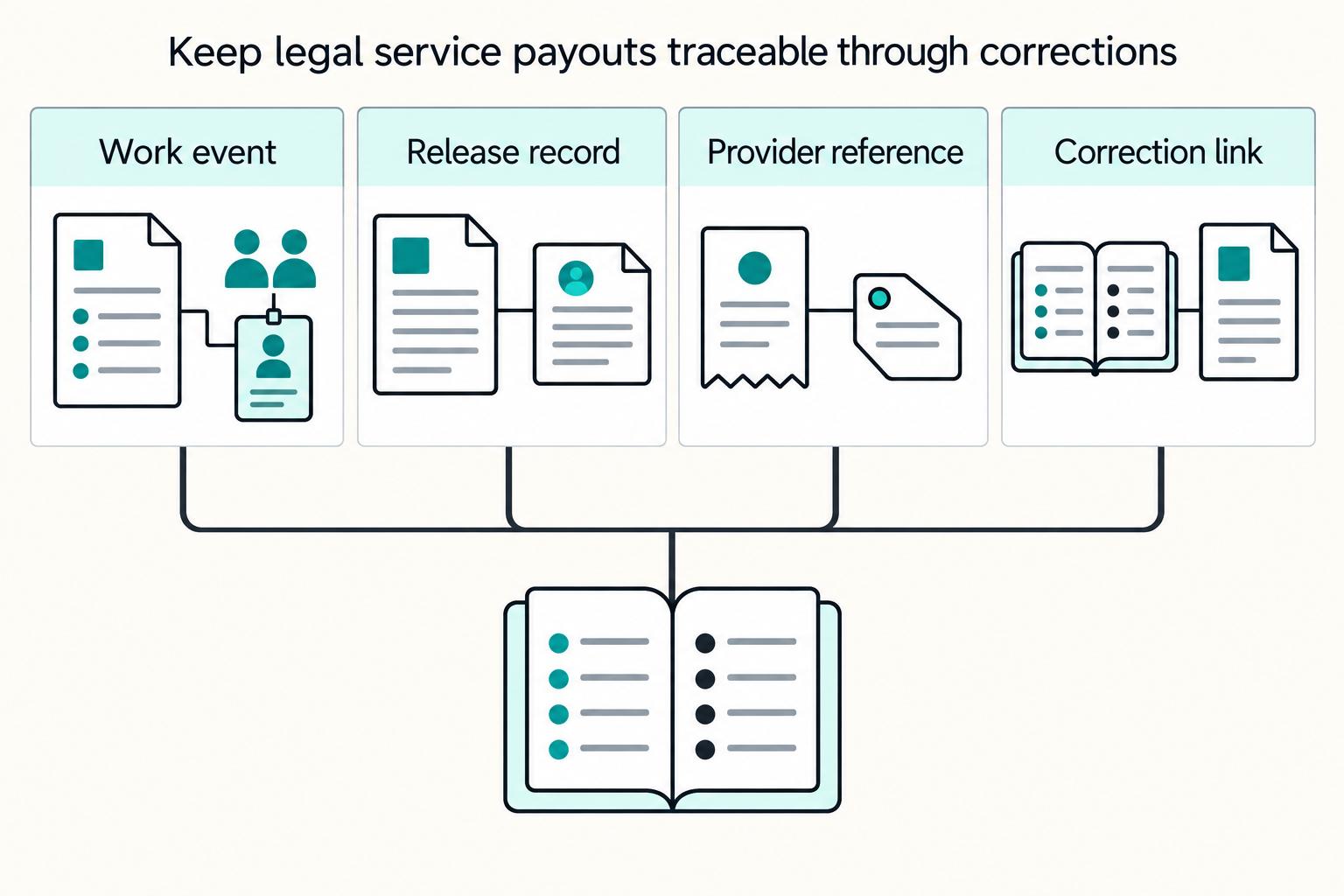
If you are launching a legal-services payout workflow in 2026, the hard part is not sending money. The hard part is classifying the role, collecting the right tax record, deciding which payout state is releasable, and preserving enough evidence to defend those choices later.
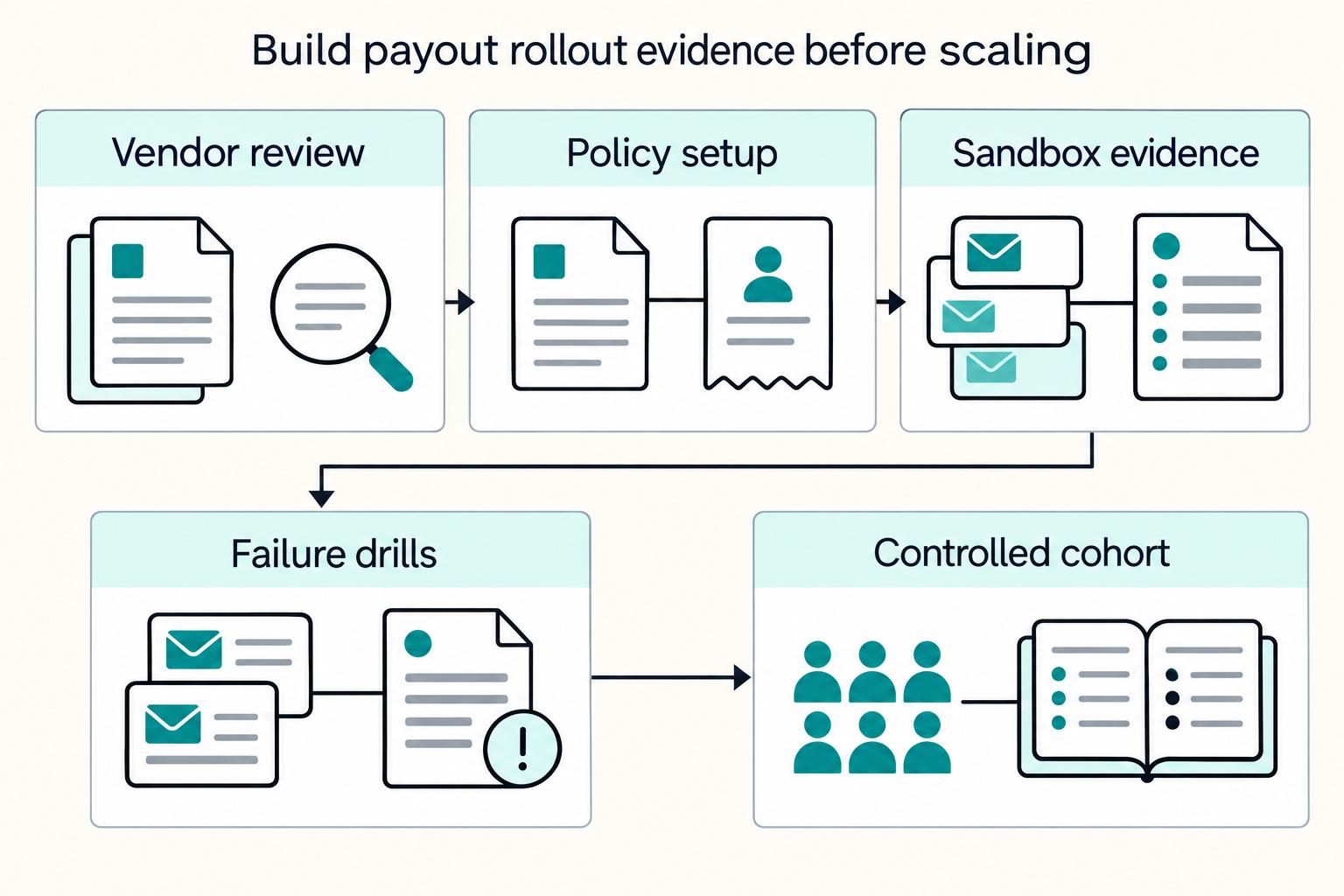
Choose your payout path based on your operating model and control requirements, not on esports messaging alone. Public pages from Payment Labs, Dots, and i-payout are useful for a shortlist, but they are not enough on their own to sign confidently or run payouts without finance and engineering surprises.