
Quick Answer
Choose an operating model first, then wire calculations to that model’s reporting duties. In U.S. interactive streaming, 17 U.S.C. 115(a) and the Music Modernization Act tie mechanical obligations to monthly reporting and payment through The MLC, not just rate math. Build around traceable records, clean metadata, and controlled adjustments. If your team cannot follow one disputed line from source usage through rights assignment to the filed statement, expansion should wait.
Mechanical Rights Are an Operating Model, Not a Flat Rate#
Mechanical rights in interactive streaming can fail at the operations layer before they fail in a legal memo. If you are building or expanding a platform, the real question is not just what counts as a mechanical royalty. It is whether your licensing, data, reporting, and payout choices will hold up once monthly usage starts moving.
- Treat interactive streaming as a reporting obligation, not just a rights concept.
In the U.S., an interactive stream is treated as a digital phonorecord delivery for mechanical licensing purposes. So product decisions quickly become rights administration decisions. Under the Music Modernization Act, the blanket mechanical license in 17 U.S.C. 115(a) comes with reporting obligations, not just payment obligations, and the Mechanical Licensing Collective is the designated entity that collects and distributes those royalties. If your team is still debating mechanics as a legal definition without mapping the monthly reporting path, you are already behind.
- Choose your operating model before you hard-code payout logic.
Teams often jump straight to rate math, but that can obscure the harder operating choices. The bigger decision is whether you will operate direct, rely on an intermediary, or launch with a narrower rights-clean catalog first. That choice determines what metadata you need, who handles corrections, and how quickly you can explain a disputed line item back to a songwriter or publisher. A good checkpoint is whether every usage event can be traced to a rights assumption and then to a statement output without relying on stitched-together spreadsheets. If not, the product is not ready for mechanicals.
- Prove your controls in one market before you scale.
The U.S. framework is a useful baseline because the cadence is explicit. Digital music providers report and pay monthly, and reporting is due within 45 calendar days. Recordkeeping is not optional. Blanket licensees must retain the records and documents needed to support reported usage information for at least seven years. In practice, one failure mode is launching with weak usage lineage, then trying to patch ownership and adjustments after the fact until disputes pile up faster than finance can close them.
That is the lens for the rest of this article. The goal is not to hunt for one universal per-stream answer, because there is no such answer. It is to help you choose an operating model that produces credible mechanical payouts, auditable reporting, and enough control to expand without turning each new market into a reconciliation problem.
Choose your rollout model before you build payout logic#
Pick the rollout model your team can report, reconcile, and defend, then build payout logic around it. This section is for operators launching or expanding a streaming platform with auditable royalty reporting, not creators looking mainly for collection help from a publishing administrator or distributor.
- Licensing ownership
Decide who carries the reporting duty before launch. In the U.S., a blanket licensee reports and pays royalties to The MLC monthly, with annual cumulative reporting and a mechanism for prior-period adjustments. If your team is the reporting party, you need support for each rights and usage assumption, not just a final payout number.
- Metadata quality
Treat metadata quality as payout-critical. The MLC ties sound recording metadata to accurate, timely matching and payment, and DDEX RDR-N provides a structured way to exchange recording metadata and rights claims. Before statement generation, confirm each usage event can be traced to a musical work claim and associated sound recording metadata.
- Country scope
Set scope based on reconciliation capacity, not roadmap pressure. In the U.S., the blanket license covers permanent downloads, limited downloads, and interactive streaming under a defined reporting structure. Expand only after your first market closes cleanly without persistent exception backlogs.
- Reconciliation burden and dispute exposure
Assume reconciliation is ongoing, not one-and-done. Mechanical statements can include initially matched royalties and later adjustments, so first-pass matching is only part of the work. If you cannot show ownership lineage, usage support, adjustment history, and statement outputs without patchwork, do not treat launch as MVP-ready.
For a step-by-step walkthrough, see Sync Royalties for Video Platforms and What You Owe for Music Licensing.
Option 1 direct US interactive streaming operations with MLC reporting#
Use this model when you want direct control of U.S. mechanical reporting and your team can carry the monthly operational load end to end.
- Best fit
This fits a U.S.-only interactive streaming launch with in-house finance and rights ops coverage. Under the U.S. blanket licensing framework, The MLC receives DSP notices and reports, then collects and distributes covered digital mechanical royalties. If you are the reporting party, that responsibility stays with your team.
- Why teams pick it
Direct reporting gives you clearer visibility into assumptions and correction loops. The MLC administers blanket mechanical licenses for eligible U.S. streaming and download services, and interactive streaming uses a formula-derived rate basis that results in an amount per play. The benefit is traceability: you can investigate payout issues in your own usage, metadata, and rights inputs instead of waiting on partner-side reporting logic.
- What you must get right
Matching quality is the core risk. The MLC matches DSP-reported streams and downloads to registered songs before calculating royalties owed, so your internal control point is whether each usage line can be traced to the sound recording metadata, the musical work claim, and the monthly file submitted. If that chain breaks, delayed or unresolved lines and later adjustments become more likely.
- Where this model hurts
The downside is recurring operational pressure. DSPs under the blanket license submit usage data and royalties monthly, and The MLC distributes monthly, so weak inputs repeat quickly. A common failure mode is hitting top-line accrual targets while leaving usage-to-work linkage unresolved, which makes statement challenges harder to resolve cleanly.
A concrete use case is a U.S.-first service with relatively clean catalog rights and dedicated payout ops staffing. Keep an evidence pack each cycle: submitted usage files, rights assumptions, statement outputs, and prior-period adjustment logs. Since The MLC has administered blanket royalties starting in January 2021, this path is more standardized than pre-MLC workflows.
Go direct only if you can run monthly exception review and handle songwriter-side and publisher-side disputes without relying on ad hoc spreadsheet fixes.
Option 2 partner-led operations through a publishing administrator or licensing intermediary#
Choose this option when speed to market matters more than owning every calculation step in-house. It fits lean teams that need mechanical rights coverage quickly, especially across multiple territories, and do not yet have strong internal rights operations.
The ownership model is the key difference from Option 1. The MLC administers the U.S. blanket compulsory mechanical license, while other firms can still administer voluntary licenses between DSPs and rightsholders and provide royalty administration services to publishers. In practice, you are also buying operating capacity: monitoring, registration, collection, and statement handling.
Why teams pick it#
Teams use this model to reduce upfront process design and staffing pressure. Publishing administrators often market worldwide royalty collection and, in some cases, transparent royalty tracking. That can help in multi-market pilots where legal and finance coverage is thin and early traction matters more than margin precision in month one.
Some administrators also claim broad collection networks, including direct relationships with 65 pay sources, collection coverage across 215 countries/territories, and reach into 98% of the world's music market. Treat these as partner network claims to validate against your own catalog, usage, and reporting needs.
What you give up#
The tradeoff is transparency and control over reconciliation detail. If a partner sits between your usage data and final statements, you may have limited visibility into matching assumptions, registration gaps, or territory-level handling choices. As volume grows, unresolved variance between internal accruals and partner reporting becomes harder to diagnose quickly.
Another common issue is ledger drift when partner statements are treated as final without internal traceability checks. Voluntary mechanical flows typically pay publishers, publishing administrators, and self-administered songwriters/composers/lyricists, so payee paths may be more complex than your initial product model.
What to verify before you scale#
Before you expand country scope, require period-by-period reconciliation evidence. Keep, at minimum:
- partner contract scope by territory and right type
- catalog registration status and rights assumptions for included works
- usage files submitted, statement outputs received, and prior-period adjustment logs
If partner reporting is not reconcilable to your ledger at each close, pause geographic expansion until the gap is explained.
Option 3 constrained launch with a rights-clean catalog first#
Choose this when you need to prove mechanical-close reliability before you expand rights complexity. Start with directly controlled works you can evidence cleanly, then phase in cover songs and other U.S. Section 115 compulsory-license cases later.
A constrained launch is operationally sound because interactive-streaming mechanical payouts depend on match quality. In the U.S. blanket-license flow, The MLC matches DSP-reported streams and downloads to registered songs, then calculates royalties owed. If ownership and metadata are clean at launch, each monthly close is easier to reconcile.
- Start with directly controlled works
Prioritize titles where publisher, administrator, or self-administered writer authority is documented. Before launch, confirm each work is findable in The MLC tools (50 million+ songs) and retain the ownership basis you used per title.
- Use monthly reporting as a control loop
For U.S.-first interactive streaming, blanket-license operations run on monthly usage and payment reporting. Use that cadence to check match quality period by period and fix metadata issues before unresolved lines accumulate.
- Add cover songs after exceptions stabilize
In the U.S., later recordings can be made under compulsory licensing rules once a composition has been published on phonorecords. But legal availability is not the same as operational readiness: add these works only after your exception queue and claim review process are consistently controlled.
The tradeoff is narrower catalog appeal in the short term. The benefit is lower reconciliation risk while you prove that each title can be traced from ingestion record to rights assumption to monthly usage line without patchwork.
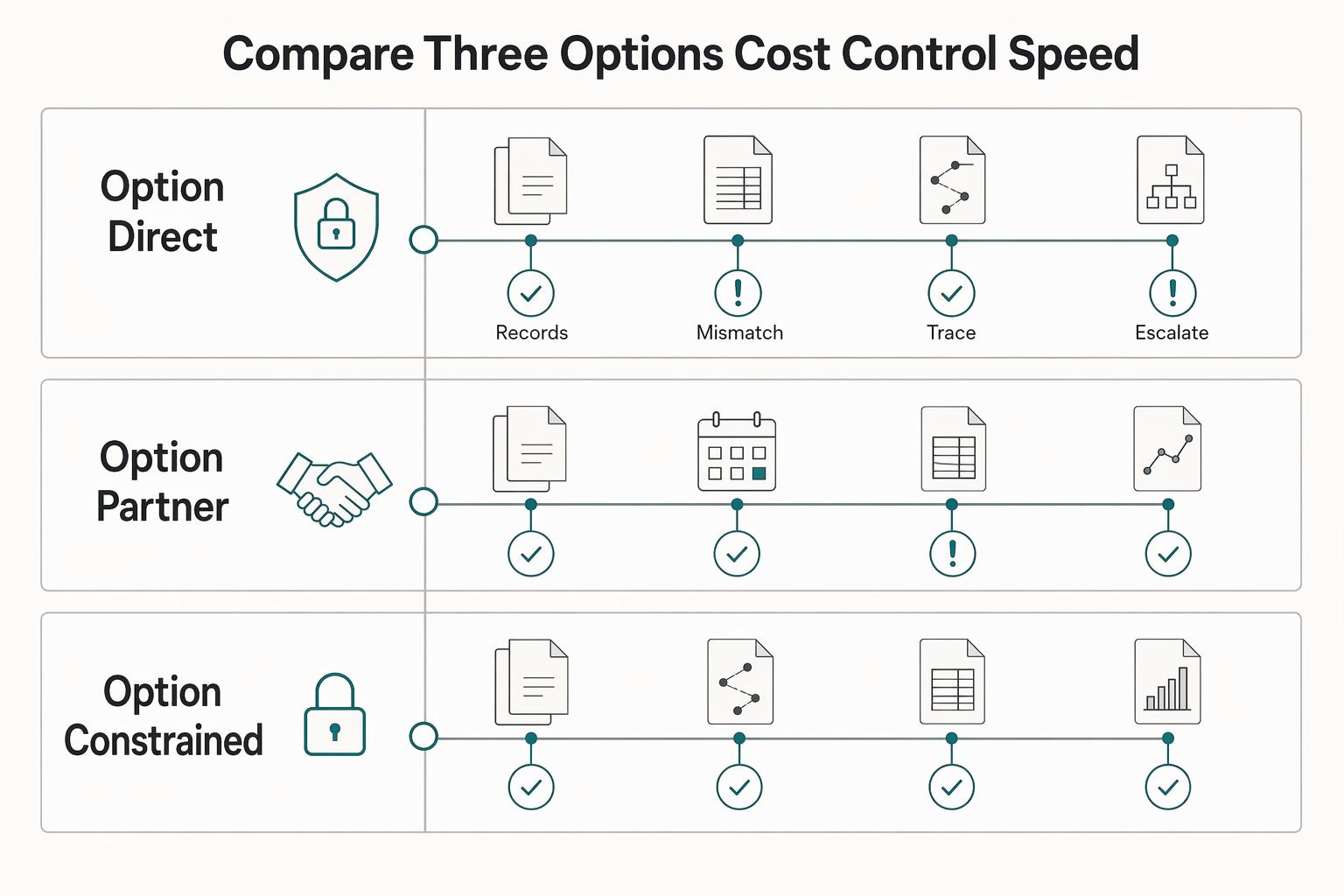
Compare the three options on cost of control and speed#
Choose based on what you can defend in a dispute: Option 1 maximizes direct control, Option 2 maximizes launch speed, and Option 3 usually gives the cleanest early proof of payout reliability before expansion pressure increases.
| Option | Launch speed | Ops headcount | Transparency | Dispute risk | Expansion readiness |
|---|---|---|---|---|---|
| Option 1 direct US interactive streaming ops with MLC reporting | Usually slower because setup, reporting, and reconciliation stay in-house | Higher relative need across finance, rights, and exceptions | Higher because your team can trace usage, rights assumptions, and reporting outputs directly | Can be lower with strong metadata, but execution risk remains internal | Strong once U.S. close cycles are consistently clean |
| Option 2 partner-led ops through a publishing administrator or intermediary | Usually fastest because more setup and processing sits with the partner | Leaner internal team at launch | Lower unless partner statements reconcile cleanly to your ledger and title data | Moderate when root-cause analysis depends on partner visibility | Good for entry speed, weaker if reporting detail cannot support audits or corrections |
| Option 3 constrained launch with a rights-clean catalog first | Fast in practice because launch scope is narrower | Moderate: direct controls still needed, but over fewer works | High for in-scope works because ownership evidence is cleaner | Often lower early because harder rights edge cases are deferred | Strong first operating model when rights data quality is uneven |
What is fixed and what stays variable#
In the U.S., some structure is clear: the Music Modernization Act moved digital music providers from song-by-song compulsory licensing to a blanket system, and The MLC administers digital audio mechanical royalties. That clarity helps, but it does not merge mechanical, performance, and master-side payouts into one stream.
| Payout lane | What it covers | Routing note |
|---|---|---|
| Mechanical royalties | Publishing-side payments for the musical work | Keep separate from performance and master-side payout lanes |
| Performance royalties | Routed through other organizations, including PROs in the U.S. | Do not merge with mechanical payouts into one stream |
| Artist royalties tied to master rights | A separate economic stream | Distinct administrators and rules, for example non-interactive sound-recording flows |
Phonorecords IV is useful context, not a universal calculator. Docket No. 21-CRB-0001-PR applies from January 1, 2023 through December 31, 2027, and the cited determination includes classes such as physical phonorecords, permanent downloads, ringtones, and music bundles. Use it for rate-and-term context, but do not treat it as one market-proof streaming formula, especially where publisher-DSP direct deals can change payouts.
Keep payout lanes separate in your systems and language:
- Mechanical royalties: publishing-side payments for the musical work.
- Performance royalties: routed through other organizations, including PROs in the U.S.
- Artist royalties tied to master rights: a separate economic stream, with distinct administrators and rules (for example, non-interactive sound-recording flows).
If a statement mixes these categories without clear labels, treat that as a reconciliation risk.
What you know vs what stays unknown in each model#
- Option 1 direct control
You gain the strongest title-level traceability when operations are disciplined. The open risk is execution quality when exceptions accumulate.
- Option 2 partner speed
You can launch faster, but visibility depends on partner reporting depth. The open risk is dependency if statements cannot be mapped cleanly back to internal usage and title data.
- Option 3 constrained launch
You reduce early complexity by limiting scope to rights-clean works. The open risk is commercial breadth, not core payout defensibility.
Decision checkpoint for a weaker-data expansion market#
If your first expansion market has weaker rights data quality than the U.S., Option 3 is usually the safest model to carry forward first. It keeps expansion tied to directly controlled works while you test whether metadata quality supports reliable automated exchange and repeatable close cycles.
Option 2 can still work if partner statements are detailed enough to reconcile without patchwork. Option 1 is better deferred until you can repeatedly align usage files, title matches, rights assumptions, statement outputs, and correction logs in that market. Related: How Music Royalties Work: Mechanical Performance Sync and Master Rights Explained.
Build the calculation and reporting sequence in the right order#
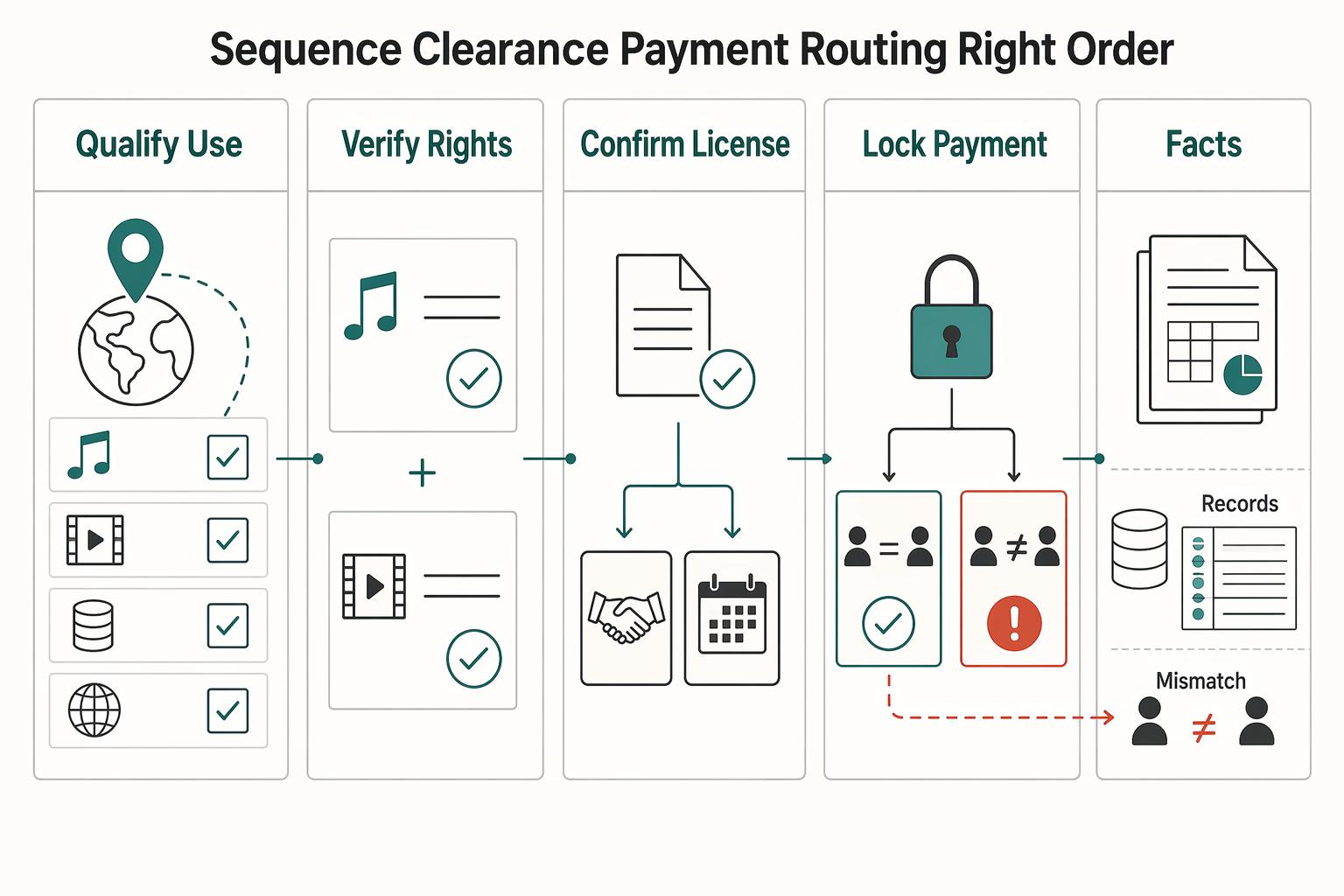
For U.S. interactive streaming mechanicals, the safest sequence is: rights scope -> metadata validation -> usage aggregation -> calculation -> reporting -> reconciliation -> adjustments. Build to The MLC's monthly reporting and payment cycle. Do not calculate first and patch rights later.
| Step | Action | What this controls |
|---|---|---|
| 1 | Define rights scope first | Whether a line can be reported cleanly at month close or moves into exceptions |
| 2 | Validate metadata before usage becomes money | Rights gaps are handled at intake instead of becoming late payment disputes |
| 3 | Aggregate usage on a controlled monthly snapshot | One stable usage base for the monthly report of usage |
| 4 | Run calculations only on assigned rights | Calculation output reflects known rights assumptions, while unresolved items stay isolated |
| 5 | Generate royalty reporting as a formal submission | Your close package is submission-ready, not just numerically complete |
| 6 | Reconcile with a complete evidence pack every cycle | Reconciliation quality comes from versioned evidence, not approximate totals |
| 7 | Resolve exceptions through tracked adjustments | Corrections stay auditable over time instead of becoming silent overwrites |
- Define rights scope first
Start with what your U.S. service is reporting under the blanket license The MLC has administered since January 2021. Keep mechanicals separate from performance and master-side payout lanes in the data model, not just in labels. What this controls: whether a line can be reported cleanly at month close or moves into exceptions.
- Validate metadata before usage becomes money
Treat ingestion as a control point, not a passive import. Confirm each work has enough composition and ownership detail for rights assignment, and quarantine records that do not. What this controls: rights gaps are handled at intake instead of becoming late payment disputes.
- Aggregate usage on a controlled monthly snapshot
Under 37 CFR 210.27, blanket licensees report usage and pay royalties monthly, and The MLC states submissions are due no later than 45 days after the usage month. Freeze usage by service, month, and report version so inputs are reproducible. What this controls: one stable usage base for the monthly report of usage.
- Run calculations only on assigned rights
Do not compute gross totals first and attribute rights later. That pattern creates compounding rework because later corrections must unwind both amount and payee logic. Keep unresolved lines visible as exceptions. What this controls: calculation output reflects known rights assumptions, while unresolved items stay isolated.
- Generate royalty reporting as a formal submission
The monthly report of usage is not just an internal finance export. The MLC requires a monthly usage cover sheet, and blanket licensees must provide certifications for monthly reports of usage. What this controls: your close package is submission-ready, not just numerically complete.
- Reconcile with a complete evidence pack every cycle
Keep usage files, rights assumptions, statement outputs, adjustment logs, and approval records together for each songwriter and music publisher payment batch. Each payout line should trace from usage event to rights assignment to final mechanical statement without ad hoc spreadsheet joins. What this controls: reconciliation quality comes from versioned evidence, not approximate totals.
- Resolve exceptions through tracked adjustments
The framework allows adjustments to prior usage reports and royalty payments, and The MLC publishes technical guidance for DSP adjustments in its AroU v1.0 materials. Keep the original report, report of adjustment, reason, and approval trail together. What this controls: corrections stay auditable over time instead of becoming silent overwrites.
A practical operator test: take one disputed line and verify you can trace source usage, rights assumption, statement output, and any later adjustment from one controlled record set.
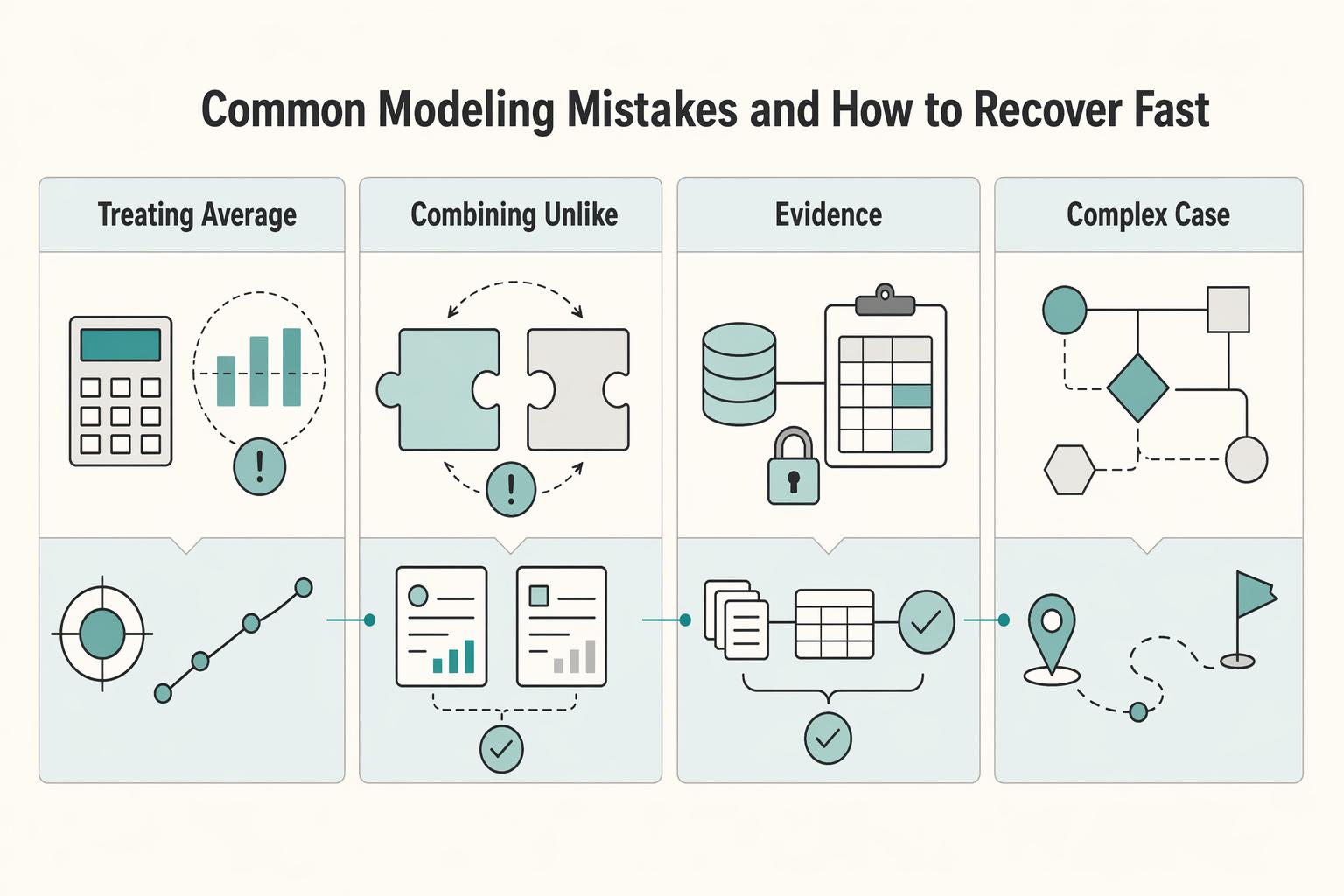
Avoid the mistakes that make mechanical payouts non-credible#
Mechanical payout credibility usually breaks in a few repeatable places: payout math gets simplified faster than rights routing, metadata controls, and reconciliation controls can support.
| Mistake | Why it matters |
|---|---|
| Using one per-stream number as if it applies everywhere | Numbers may look clean, but they will not reconcile to service terms, territory logic, and rights scope |
| Routing mechanical and performance money through the same logic | Late-stage routing cleanup creates payee confusion and expensive corrections |
| Treating metadata as cleanup work instead of payment infrastructure | Unmatched recordings can delay payment to songwriter and music publisher parties |
| Expanding markets before your first market can absorb disputes and corrections | Expansion multiplies ambiguity when dispute handling is still unstable |
| Accepting partner statements as final truth | If one line cannot be traced across those records, it is not truly closed |
- Using one per-stream number as if it applies everywhere
Do not treat per-stream math as universal for interactive streaming. Spotify states royalties are not based on a fixed per-stream rate and are calculated on streamshare, so a single flat input is the wrong base for forecasting or payout QA. Why it matters: numbers may look clean, but they will not reconcile to service terms, territory logic, and rights scope.
- Routing mechanical and performance money through the same logic
Keep publishing flows separated before statements are generated. Publishing royalties include both performance and mechanical rights, and Spotify says payments are issued to publishers, PROs, and mechanical agencies based on territory of usage. Why it matters: late-stage routing cleanup creates payee confusion and expensive corrections. If you need a refresher on that split, see Performance Royalties Explained: How PROs Collect and Platforms Distribute Performing Rights Payouts.
- Treating metadata as cleanup work instead of payment infrastructure
Metadata quality directly affects whether usage can be paid accurately and on time. The MLC emphasizes proper musical-work registration with associated sound-recording metadata, and its monthly process depends on matching reported sound-recording uses to musical works data. Why it matters: unmatched recordings can delay payment to songwriter and music publisher parties.
- Expanding markets before your first market can absorb disputes and corrections
Prove your first-market correction loop before adding countries. In the U.S., The MLC blanket-license framework has been in effect since January 1, 2021, so unresolved close-and-correct issues should be fixed before adding more territory-specific rules. Why it matters: expansion multiplies ambiguity when dispute handling is still unstable.
- Accepting partner statements as final truth
Treat partner statements as inputs, not final verdicts. The MLC explicitly advises statement review to identify uses not paid, so reconcile external statements against your own usage ledger, payout records, and adjustment history every cycle. Why it matters: if one line cannot be traced across those records, it is not truly closed.
Mechanical rights and artist royalties are separate payout tracks. For the performer-side model, read How Streaming Platforms Calculate and Pay Artist Royalties: Per-Stream Rates Explained.
Conclusion#
The last FAQ test is the right place to end: if a payout line cannot be traced cleanly, scaling becomes a risk decision, not a growth decision.
- Choose coherence over the headline rate. In U.S. interactive streaming, statutory royalty rates vary by distribution type, and interactive offerings use a formula that results in an amount per play. So the better decision is not the model that looks simplest on a slide. It is the model your team can explain from rights scope to usage to statement output without hand-waving.
The difference between a durable choice and a fragile one is whether you can answer basic audit questions quickly. If finance, legal, or partner ops asks why a line moved, you should be able to point to the offering logic and the underlying usage, not to a spreadsheet patch. That is the operating advantage when rate mechanics are variable.
- Scale only after reporting and correction work feels routine. Under the U.S. blanket compulsory license administered by The MLC, a monthly report of usage accompanies monthly royalty payments, and 37 CFR 210.27 also requires annual reporting. The same rule also supports a report of adjustment for correcting previously delivered usage reports and related payments. If your process can calculate a payment but cannot cleanly produce the monthly report, annual record, and any needed adjustment trail, you are not finished.
What matters here is correction maturity. Your team should be able to recreate a prior period, explain what changed, and show the before-and-after payment impact from records rather than memory. Keep this conclusion narrow: these are U.S. blanket-license mechanics, not an automatic template for every market you may enter next.
- Treat metadata as payment infrastructure. The MLC is explicit that accurate metadata is important to getting contributors credited and paid. In practice, that means you should sample statement lines before expansion and verify that each one traces back to the underlying usage record, the rights assumption, and the contributor data used to route payment. If that lineage breaks even on a small rights-clean catalog, a broader launch adds risk.
The blanket-license structure created by the Music Modernization Act of 2018 has been operational through The MLC since January 2021. Internal credibility still depends on whether each mechanical payout can be explained end to end. If it cannot, pause expansion and fix the lineage first.
Related reading: How Payment Platforms Really Price FX Markup and Exchange Rate Spread.
Frequently Asked Questions
How do streaming platforms calculate mechanical royalties without relying on a single per-stream number?
In U.S. interactive streaming, start with formulas, not one universal penny rate. The MLC notes that different interactive offering types use formulas that result in an amount per play, so your calculation logic needs to start with the specific offering and rights scope under the U.S. blanket license. If you cannot explain which offering type produced a line item, your model is too blunt to audit.
Who pays mechanical royalties in interactive streaming, and who actually receives them?
Under the U.S. blanket license, the DSP pays royalties to The MLC, and The MLC pays songwriters, composers, lyricists, and music publishers. Since January 2021, The MLC has administered blanket mechanical licenses for eligible U.S. streaming and download services. Your payment counterparty may be The MLC, but the economic recipients sit on the songwriting and publishing side.
Are mechanical royalties and performance royalties paid through the same operational pipeline?
No. Mechanical rights cover reproduction of the musical work, while BMI states its royalties are performing right royalties earned from public performance. If your statement logic routes both through the same payee channel, you are creating a dispute that will show up late. If you need the split mapped cleanly, see Performance Royalties Explained: How PROs Collect and Platforms Distribute Performing Rights Payouts.
What data does a platform need in metadata to pay mechanical rights accurately?
At minimum, treat titles plus identifiers as payment infrastructure, not enrichment. The MLC explicitly calls out creator identifiers and role codes such as IPI, IPN, and ISNI, plus ISWC for the musical work and ISRC for the recording. One identifier alone will not rescue weak matching if your work, recording, and party data disagree.
When should a platform work with a publishing administrator instead of operating direct reporting?
If rights administration has already been assigned to a publisher or administrator, that path is supported because they can handle collection and registration. It can be a practical option when your team cannot reliably sustain monthly reporting, annual reporting, and metadata maintenance without manual patching. If direct reporting depends on spreadsheet cleanup every cycle, use an administrator before you scale.
How should operators handle cover songs and forced licenses during early rollout?
Be conservative. Section 115 is a compulsory license, but it applies only under defined conditions, including nondramatic musical works that have already been distributed as phonorecords to the public in the United States. Do not ingest covers into your first rights-clean launch unless you can document that eligibility and keep the evidence with the title record.
What is the minimum reporting and reconciliation evidence needed before expanding to a new market?
For U.S. blanket-license operations, monthly payment and reporting to The MLC are required, and there is also an annual reporting obligation under 37 CFR 210.27. For reconciliation, keep a consistent cycle packet, such as the monthly report, annual report record, usage ledger cut, rights assumptions, payout register, and adjustment history. If a payout line cannot be traced from usage to rights assignment to reported amount, expand later.
Try a related tool
Researched and edited by the Gruv editorial team. Gruv builds cross-border billing, payouts, and finance-operations software for global businesses.
Sources
Includes 1 external source outside the trusted-domain allowlist.
- copyright.gov/rulemaking/mma-notices-reportstrusted
- copyright.gov/rulemaking/mma-designationstrusted
- ecfr.gov/current/title-37/chapter-II/subchapter-A/par...trusted
- ecfr.gov/current/title-37/chapter-II/subchapter-A/par...trusted
- federalregister.gov/documents/2023/02/01/2023-02118/music-modern...trusted
- federalregister.gov/documents/2022/12/16/2022-27237/determinatio...trusted
- law.cornell.edu/uscode/text/17/115trusted
- cisac.org/services/education-program/collective-manage...external
Educational content only. Not legal, tax, or financial advice.
Related Posts
How Streaming Platforms Calculate and Pay Artist Royalties Per Stream
Per-stream headlines are useful for orientation, but they are a bad operating assumption. If your product, pricing, or artist messaging depends on one blended payout number, you are already skipping the part that usually breaks in production: settlement reality.

How PROs Collect Performance Royalties and How Platforms Distribute Payouts
Treat this as an infrastructure decision, not a music-rights explainer. If you cannot connect PRO collection to a payout process you can verify, reconcile, and audit, you are not ready to ship a royalties product, no matter how strong the demand story looks.
How Platform Teams Decide Music Royalty Readiness Before Launch
If you are deciding whether a music feature is worth building, start with rights complexity before you spend on product, partnerships, or go to market. The real question is not what mechanical, performance, sync, publishing, and master rights mean in theory. It is whether your feature creates obligations you can actually clear, route, and verify with confidence.