
Quick Answer
Yes: recurring revenue recognition vs cash accounting should be managed together, not chosen as a single method. Use accrual logic to record what was earned by service period, and use cash logic to track when money was actually received and available. The split is expected whenever timing differs. A practical anchor is ASC 606, which centers recognition on transfer of goods or services rather than collection timing.
Why Platform Teams Need Both Views#
Recurring revenue recognition vs cash accounting is not a choice between competing methods. If you run a subscription or platform business, you need both views at once because they answer different questions on different clocks.
Accrual accounting asks when revenue was earned. Under the IRS accrual method, income is generally reported in the tax year you earn it, regardless of when payment arrives. Revenue recognition follows that logic, and ASC 606 centers it on the transfer of promised goods or services to the customer, not simply on cash collection. Cash accounting asks a different question: when did money actually arrive? Under the cash method, income is generally reported in the tax year you receive it.
| Decision lens | Revenue recognition / accrual view | Cash view |
|---|---|---|
| Recognition trigger | Service is earned or delivered | Cash is received |
| Main question answered | Did we earn the revenue yet? | Did the money actually arrive yet? |
| Core posting concern | Revenue schedule, earned revenue, period accuracy in the general ledger | Payment receipt, cash availability, and movement of funds |
| Typical timing break | Service delivered before payment | Cash collected before or after the earning period |
That timing gap is normal, not automatically an error. A subscription can be active and earning revenue while payment is still late, or cash can arrive upfront before the related service period is complete. Both records can be correct at once. The real work is making sure you can explain the gap, post it cleanly, and reconcile it before month-end close.
The practical rule is simple: use the accrual side to judge what has been earned, and use the cash side to judge liquidity and where money is actually moving. Problems start when teams force those two views into one. A common failure mode is treating a paid invoice as fully earned revenue, or treating earned revenue as proof that cash has already been collected. That can create reconciliation noise and cash-side surprises.
As you read, focus on four operator decisions. What event should trigger a posting? When should that posting hit the ledger? What records need to reconcile across billing and payments data? How should you handle mismatches without rewriting history? One checkpoint matters from the start: every invoice, service-period event, and payment receipt should carry a usable timestamp and a source record you can tie back during close. If you cannot trace those events cleanly, the difference between earned revenue and collected cash becomes hard to defend.
The rest of this guide turns that split into working rules. You will get a side-by-side comparison, event-timeline decision points, exception handling steps, and a month-end close checklist built for finance, ops, and product owners.
Related: NetSuite and Subscription Billing Integration: How to Sync Revenue Recognition and Cash Flow.
At-a-glance comparison for recurring revenue and cash views#
Use the accrual view to judge performance, and the cash view to judge liquidity and payout readiness. Both can be correct at the same time, even when timing does not match.
| Decision area | Recurring revenue recognition (Accrual accounting) | Cash accounting |
|---|---|---|
| Trigger event | Recognize revenue when it is earned (when promised goods or services are transferred). | Recognize revenue when payment is received. |
| General ledger impact | Tracks earned revenue by period, with deferred revenue (contract liability) when cash is received before transfer. | Tracks receipt and movement of cash, including pending and available balances. |
| Reporting use | Period performance and earned-revenue reporting. | Liquidity and cash-position monitoring. |
| Common failure mode | Treating payment or invoice status as proof revenue is fully earned. | Treating collected cash as immediately usable without checking availability timing. |
| Timing risk | Upfront cash can sit as deferred revenue until service is delivered. | Settlement timing can delay when collected funds become available for use or payout. |
| Operational owner | Typical owner: finance/accounting for revenue schedule integrity and period accuracy. | Typical owner: payments/treasury ops for cash movement and payout readiness. |
| Decisions to follow | Use for performance, period comparisons, and earned-revenue decisions. | Use for disbursement timing, payout release, and funds-availability decisions. |
The timing gap is normal, not automatically an error. If consideration is received before related goods or services are transferred, that amount is a contract liability (commonly called deferred revenue). On the cash side, settlement timing can still delay availability after payment is captured, and payout schedules do not remove pending-to-available lag.
A practical controller view: cash reporting gives visibility into actual cash, while many businesses still run accrual books. That is why dual-view reporting is operationally safer at close.
What to verify before close#
Use two checks, not one.
- Accrual side: each invoice or subscription event maps to a revenue schedule, and earned amounts tie to the period ledger.
- Cash side: receipt is confirmed, and pending versus available status is validated before payout or liquidity actions.
If you are deciding business performance, follow the accrual signal. If you are deciding whether money can move, follow cash plus availability status.
For the accrual mechanics behind recurring contracts, see A Guide to Revenue Recognition for SaaS Companies.
Map the event timeline from invoice to close#
Use one shared timeline, but keep accrual and cash triggers separate. If service is delivered and cash is late, keep accrual-side recurring revenue recognition tied to delivery and open a separate cash follow-up.
A practical control spine is: invoice issued in subscription billing, service period delivered, cash collected, GL journals posted, then month-end close. Treat this as a control sequence, not a rigid claim about payment order. In SaaS order-to-cash, invoice and payment order can vary by operating model, so checkpoints should preserve true timing instead of forcing one pattern.
| Stage | Timestamp to lock | Typical owner | System of record | Reconciliation handoff |
|---|---|---|---|---|
| Invoice issued | Invoice created date and service start/end dates | Billing or revenue ops | Subscription billing | Send invoice details and coverage dates to accounting for schedule review |
| Service period delivered | Period earned/delivered | Finance with service-data support | Revenue schedule plus service-period support | Tie earned amount for the month back to invoice coverage |
| Cash collected | Payment receipt timestamp | Payments ops or treasury | Payment processor or cash ledger | Match receipt to invoice, then track funds status separately where needed |
| GL journals posted | Journal posting date and batch ID | Accounting | General ledger | Confirm deferred and earned entries agree to the schedule |
| Month-end close | Cutoff date and sign-off time | Finance close owner | General ledger plus reconciliation file | Carry unmatched timing items into close evidence with owner and target date |
Watch two event types closely because they can shift the revenue timeline even when cash timing barely changes. Proration can change current-cycle billable amounts when billing-cycle changes affect the current period. Renewal can create a new term event at term end; in Zuora auto-renew, the renewal amendment is created on the last day of the initial term at 01:00 by default.
For each stage, preserve the source event ID, timestamp, owner, system of record, and next handoff target. Missing one link usually turns close into manual reconstruction.
The failure mode to avoid is letting invoice date or payment date override service-period logic. Keep the rule firm: delivery drives earned revenue, cash drives collection and liquidity follow-up. When timing disagrees, document the gap instead of rewriting one side to resemble the other. For a parallel example of tracing money and records, see How Authors Audit Hollywood Accounting in Book Publishing Deals.
Build the recurring revenue engine in your general ledger#
After you lock the event timeline, make the ledger follow it. Post customer consideration to deferred revenue first, release earned revenue by period from the revenue schedule, and post reclassification entries that tie back to that schedule.
Recurring models are easier to control when schedule integrity stays at the line level instead of being inferred from invoice totals. If a contract has multiple lines, terms, or service windows, keep that detail through recognition.
| Ledger component | Minimum structure | Control purpose |
|---|---|---|
| Deferred revenue | Balance by source invoice line or contract line | Holds unearned amounts until service is delivered |
| Revenue schedule | Line-level service start/end dates, period amount, source event ID | Defines what is earned in each accounting period |
| Reclassification journal | Debit deferred revenue, credit earned revenue, tied to schedule line and batch ID | Creates an auditable link from delivery to posted revenue |
Post from the schedule, not from intuition#
Use a strict traceability rule: if a journal line cannot be tied to a schedule line, the posting is too loose. At minimum, each schedule line should carry the billing event ID, coverage dates, recognized amount, and posted journal batch reference.
Before month-end close, tie period totals both ways: sum earned amounts in the schedule, then match them to the deferred debit and earned-revenue credit in the ledger. If they do not match, resolve the exception before close.
Handle proration in open periods#
Proration and mid-cycle plan changes need explicit schedule updates. Mid-term upgrades can require reallocating revenue across the remaining term, so update open schedule lines from the effective date forward and post updated reclassification amounts for those open periods.
| Item | Treatment |
|---|---|
| Proration and mid-cycle plan changes | Need explicit schedule updates |
| Mid-term upgrades | Can require reallocating revenue across the remaining term |
| Open schedule lines | Update from the effective date forward and post updated reclassification amounts for those open periods |
| Posted, closed history | Keep intact; if an adjustment is needed, book a distinct current-period entry with approval |
Keep posted, closed history intact. If an adjustment is needed, book it as a distinct current-period entry with approval so the audit trail stays clear.
Red flags to treat seriously#
Treat these as early warning signs that close quality is slipping:
| Red flag | Why it matters |
|---|---|
| Manual spreadsheet overrides | Spreadsheet logic becomes the real recognition engine, so scale and control weaken |
| Broken term-to-term traceability | When new-term schedules are not clearly linked to prior source records, deferred movement is harder to explain |
| Reversals without source linkage | If corrections or reversals are not tied to original schedule and journal references, verification gets fragile |
The operating rule is simple: line-level schedules, open-period adjustments, and hard close checkpoints. That keeps recurring revenue recognition vs cash accounting as a timing decision, not a reconciliation fire drill.
If your platform mixes subscription and transaction revenue, Choosing Between Subscription and Transaction Fees for Your Revenue Model covers the tradeoffs behind each model.
Run cash accounting in parallel for liquidity and settlements#
Use cash accounting as a separate control layer for liquidity and payout execution, not as a substitute for earned-revenue reporting. Keep accrual reporting tied to what was earned, and keep payout decisions tied to confirmed cash state.
Cash and accrual are different timing lenses. Under cash accounting, income follows when cash is received; under accrual accounting, income follows when revenue is earned. In practice, your revenue schedule and ledger should drive performance reporting, while your cash-state checks should drive disbursements.
| Signal | What it proves | Payout-safe? | Best use |
|---|---|---|---|
| Invoice marked paid | Billing status changed | No | Billing operations and collections follow-up |
| Payment receipt recorded | Cash event occurred, but funds may still be pending | Not yet | Receipt logging and forecasting |
| Funds pending settlement | Funds are not yet available for use | No | Liquidity monitoring |
| Available balance confirmed | Funds have settled and can be used for payouts, refunds, or other debits | Yes, with reserve controls | Payout release and treasury decisions |
Settlement lag is normal: settlement time is the delay between a payment event and funds becoming available. Payout schedule settings change disbursement cadence, but they do not remove that lag. Even with daily payouts, a 3-business-day settlement timing can still apply before funds move from pending to available.
Apply the same logic to virtual accounts. They improve attribution and reconciliation because unique account numbers can map receipts by customer or transaction type, but they do not hold funds directly. A virtual-account receipt helps identify who paid and why; it does not prove payout-ready cash.
For payout batches, do not rely on invoice status alone. Confirm all three checkpoints before release:
- Payment receipt exists and is matched to the intended party or obligation.
- Pending funds have moved into available balance.
- Remaining liquidity is sufficient for refunds or disputes.
This matters because auto-paying the full available balance can leave insufficient funds when refunds or disputes arrive. Keep the cash-side data model focused on receipt date, cash-status stage, available date, and payout batch ID, and keep accrual records focused on deferred revenue, earned revenue, and the revenue schedule.
If deferred revenue is part of your monthly close, What is 'Deferred Revenue' and How to Account for It is the next step.
Handle exceptions before they break revenue reconciliation#
Treat exceptions as accounting events immediately, or your accrual and cash views will drift. For each failed payment, late collection, refund, chargeback, and reversal, update both the ledger path and the cash-availability path before close.
Compare the exception paths#
Use this rule: one exception can affect accrual records, cash records, or both, so classify it first and then post it through the right path.
| Exception | Accrual-side impact | Cash-side impact | Critical check |
|---|---|---|---|
| Failed payment | No completed payment transaction to recognize from the failed event | No usable cash from that event | Confirm the failure event and prevent duplicate handling |
| Late collection | Keep revenue and collection tracking clearly separated | Cash stays outstanding until collected and available | Keep the open item tied to the original invoice/subscription |
| Refund after recognition | Post the reversal path explicitly in the ledger and re-tie revenue reconciliation to the original transaction | Cash leaves, or is set to leave | Verify refund amount, original transaction ID, and affected period |
| Chargeback / dispute | Reassess recognized amounts or estimates as needed | Issuer action can reverse funds immediately | Remove disputed funds from payout assumptions and flag close risk |
| Reversal | Reverse or correct the related accounting path based on cause | Reverse prior cash movement or availability expectation | Match the reversal to the exact prior receipt or payout event |
When a refund lands after recognition, do not treat it as cash-only cleanup. Record the revenue-side reversal path and rerun the tie-out so the transaction trail remains intact. If return or refund estimates change, update those accounting judgments on the revenue side as well.
Duplicate webhook delivery is another common break point. Engineering should enforce idempotent processing for failure, refund, dispute, and reversal events so retries do not create double postings.
Set owners and a weekly exception report#
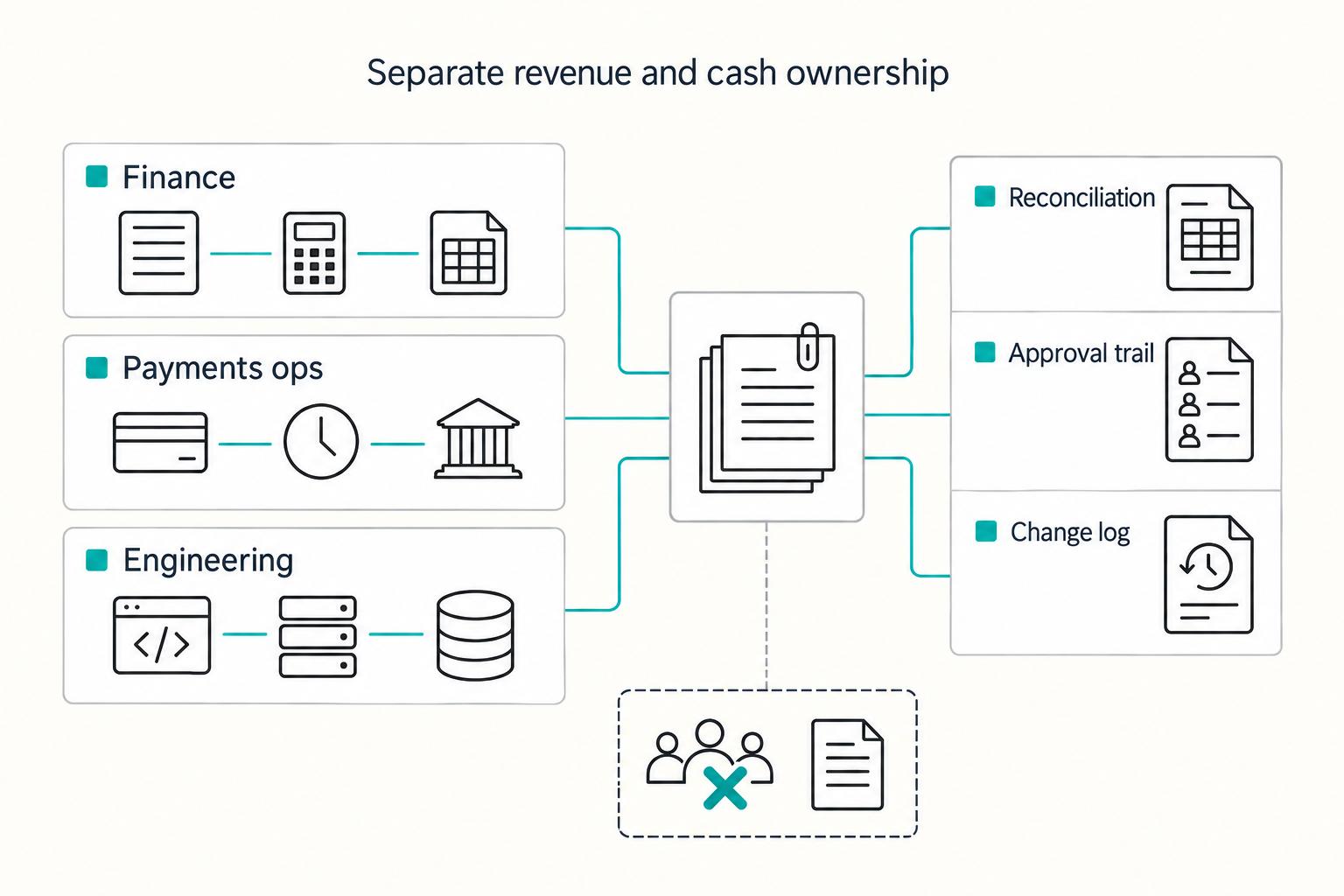
Use explicit ownership boundaries as an operating control: finance approves accounting treatment, payments ops executes settlement actions, and engineering maintains retry-safe, idempotent event processing and replayability.
| Weekly report item | Detail |
|---|---|
| Counts | By exception class |
| Unmatched items | With aging buckets |
| Unresolved root causes | By owner |
| Close-risk status | For items likely to miss cutoff |
Publish a weekly exception report with:
- counts by exception class
- unmatched items with aging buckets
- unresolved root causes by owner
- close-risk status for items likely to miss cutoff
If an item remains unmatched after a week, assign an owner, target date, and evidence reference. That keeps small exceptions from becoming month-end reconciliation breaks.
For a step-by-step walkthrough, see Accrual vs Cash Basis Accounting for Small Agencies.
Apply decision rules by business scenario#
After exception ownership is clear, pick the control layer that protects your main failure mode, then run both views in parallel. In practice, that usually means accrual controls for subscription complexity, cash-side controls for payout risk, and compliance or tax-document controls for regulated flows.
| Scenario | Dominant control layer | What you should verify | Common break point |
|---|---|---|---|
| High-growth SaaS with heavy Renewal and Proration activity | Accrual-side revenue schedule quality and period controls | Verify every current-cycle billing change is reflected in the schedule, and Renewal or schedule-phase updates do not rewrite closed periods | Orphaned proration lines or manual backdating that breaks the tie between earned revenue and the source subscription |
| Marketplace with high payout velocity | Cash accounting, settlement certainty, and payout batch gating | Release funds only after proceeds move to an available balance, not just when an invoice is marked paid | Payouts triggered from invoice status alone, then dispute exposure appears later while the platform remains liable |
| Cross-border programs with compliance gating | Compliance checks before cash release | Confirm required KYC/KYB and AML checkpoints are complete, including risk-based identity procedures and beneficial-owner verification for legal entities where applicable | Releasing funds after onboarding only, before required verification is complete |
| Tax-document-heavy cohorts | Tax record completeness tied to payee operations | Align payer records to W-9 for U.S. payees, relevant W-8 forms for foreign beneficial owners, and Form 1099 workflows where enabled | Missing tax status, TIN, or entity classification fields that block accurate reporting or withholding workflows |
If your program involves foreign financial accounts, add an FBAR checkpoint. The trigger is aggregate account value above $10,000 at any point in the calendar year, with an annual due date of April 15 and an automatic extension to October 15.
Final decision rule: choose the dominant control layer by risk, but keep both reporting views live. Accrual answers when revenue is earned; cash accounting answers when funds are received and available.
Use a month-end close checklist that catches timing drift#
Use the checklist to prove your accrual totals, cash availability, and exception flows all tie to source transactions before sign-off.
| Close area | What must agree | What to verify before sign-off |
|---|---|---|
| Accrual side | Revenue schedule, earned revenue, and Deferred revenue in the general ledger | Confirm period revenue-recognition journals posted and deferred-revenue reclassification was run at period end. If cash was collected before delivery, keep the remaining amount in liability treatment until the good or service is transferred. |
| Cash side | Payment receipts versus funds-availability state | Separate pending from available funds, then tie receipts to what actually settled and was paid out using transaction-level settlement detail where available. |
| Exceptions | Refund, Chargeback, and Reversal entries versus source transactions | Confirm each negative transaction is posted, linked to the original payment or transfer, and reflected in both ledger and cash views where applicable. |
| Evidence | Reconciliation output, approvals, and change history | Archive the reports used, approver trail, and change log, including late adjustments, overrides, and unresolved items. |
The common failure is false agreement: accruals tie internally and cash ties internally, but pending funds are treated as available or a late exception is missing. When that happens, log the unmatched item with an owner and target resolution date instead of forcing a plug.
Treat the evidence pack as part of the close itself. Keep both corroborating tie-outs and contradictory items in the same archive so the close is audit-ready.
Make both views agree before you scale#
Scale with dual-view discipline: use accrual accounting for performance truth and cash accounting for liquidity and execution truth, and do not let one replace the other.
This separation matters most once proration, renewals, refunds, and late collections are routine. Invoice status cannot reliably represent both earned revenue and available cash.
| Decision area | Accrual accounting | Cash accounting |
|---|---|---|
| Primary truth | What was earned or incurred in the period | What cash moved into or out of the business |
| Main posting trigger | Service delivered or obligation incurred | Cash receipt, cash disbursement, or other cash movement |
| Best use | Performance reporting, revenue schedule integrity, deferred revenue rollforward | Liquidity monitoring, payout readiness, and timing of available funds |
| Financial reporting role | Required basis for GAAP reporting | Useful operating view, but not a substitute for GAAP reporting |
| Month-end checkpoint | Tie earned revenue and deferred revenue balances to the ledger | Tie receipts and disbursements to cash and availability records |
| Common failure mode | Manual schedule overrides or unposted reversals distort period revenue | Pending or delayed availability gets mistaken for spendable cash |
| Primary owner | Finance | Payments ops or treasury-style cash owner |
Where agreement actually comes from#
Agreement comes from explicit posting rules, named exception ownership, and a month-end close process that includes reconciliation, journal review, and accrual posting before financials are finalized. If revenue is marked earned, it should tie to the ledger; if cash is marked available, it should tie to receipt and cash-status records, not only an invoice marked paid.
Run checks at the period level before close sign-off. Reconcile earned revenue, deferred revenue, and ledger totals, then separately reconcile cash-side totals to payment-receipt and funds-availability states. Assign each unmatched item to an owner with a target resolution date.
What to lock before scale#
If you are redesigning your stack, use the comparison table and close checklist as the baseline, then implement system-by-system with clear owners. Finance should own accounting treatment and schedule integrity. Payments ops should own cash movement and follow-up on pending versus available funds. Engineering should ensure posting flows stay reliable and repeatable.
The main red flag is mixed ownership without close evidence. At close, retain reconciliation outputs, approval trail, and change log so you can explain why revenue was recognized, why cash was or was not available, and how exceptions were resolved. Management remains responsible for internal control over financial reporting, so one team "handling everything" is usually a control gap.
Scale on dual-view discipline, not on whichever report is easiest to pull. Keep accrual as the reporting anchor, keep cash as the execution anchor, and reconcile both every month before relying on either.
Frequently Asked Questions
What is the difference between recurring revenue recognition and cash accounting in one sentence?
In recurring revenue recognition vs cash accounting, the accrual view records revenue when it is earned, while the cash view records income when payment is received. For subscriptions and other over-time services, that timing difference is often the whole issue.
Can cash accounting understate recurring revenue before the customer pays?
Yes. If you have already delivered part of the service period, accrual accounting can show earned revenue even when cash has not arrived yet. Under accrual accounting, income is generally reported when earned rather than when received. That is a normal timing gap, not automatically an error, but you should track it clearly so collections follow-up does not get buried inside the ledger.
Do platform teams need both accrual accounting and cash accounting at the same time?
Some do, especially if you manage subscriptions, pending balances, refunds, or payouts. The accrual view tells you performance by earned period. The cash view tells you what actually came in. If your operation is simple, one view may be primary, but cash receipts should not overwrite the earned-revenue schedule.
How does deferred revenue differ from collected cash in day-to-day operations?
Deferred revenue is a contract-liability-style balance: you have received consideration, or it is due, but you still owe goods or services. Collected cash is the receipt itself. In practice, cash received before delivery often creates both a cash entry and a liability. Your check is simple: if the customer paid early, the undelivered portion should still sit in deferred revenue until the service period is earned.
What are the first controls to implement to reduce revenue reconciliation breaks?
Start with three controls. First, require each revenue schedule line to map back to a source invoice or subscription event. Second, keep payment receipt status separate from earned-revenue tracking so timing differences stay visible. Third, require explicit handling for refunds, reversals, and similar negative items so recognized revenue is not left overstated.
How should proration, renewals, and refunds be handled across both views?
Treat each event by what actually changed. For proration, only changes that affect billable amounts in the current billing cycle should create proration entries, so do not post adjustments for every subscription edit. For renewals, evaluate the new terms as a new or continuing service obligation and review whether they represent advance payment for future goods or services. For refunds, post the reversal path explicitly so recognized revenue is not left overstated, then re-tie both the accrual side and the cash side to the original transaction.
Try a related tool
Researched and edited by the Gruv editorial team. Gruv builds cross-border billing, payouts, and finance-operations software for global businesses.
Sources
Educational content only. Not legal, tax, or financial advice.
Related Posts
Revenue Recognition for SaaS Companies Under ASC 606
Use revenue recognition as an operating control, not a year-end cleanup task. If you make decisions from cash balance alone, you can spend against cash that is not earned yet. Under ASC 606, cash collected before you transfer the promised service is a [contract liability](https://dart.deloitte.com/USDART/home/codification/revenue/asc606-10/roadmap-revenue-recognition/chapter-14-presentation/14-2-contract-liabilities), commonly called deferred revenue, until that service is delivered.
NetSuite Subscription Billing Integration for Reliable Revenue Recognition and Cash Flow
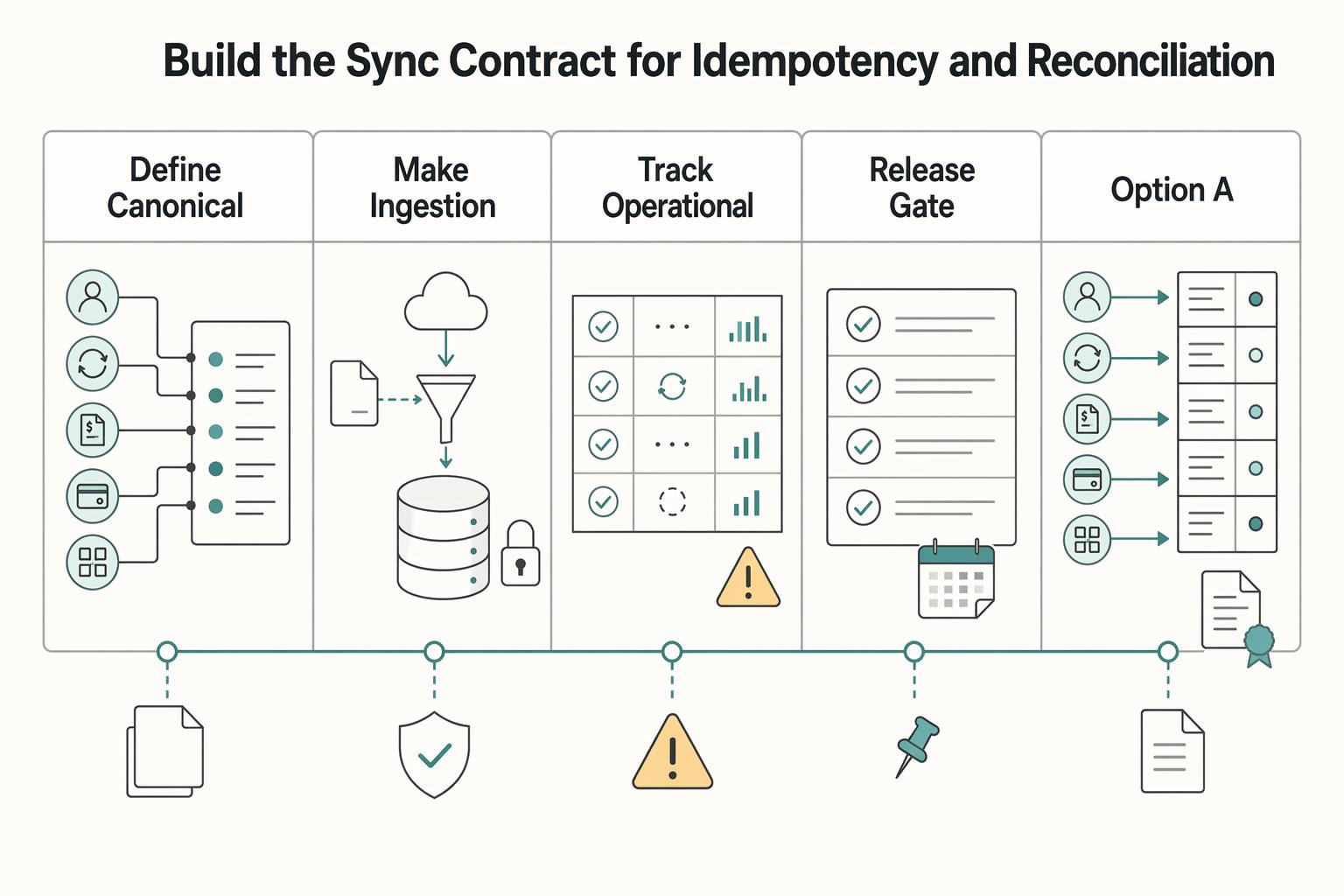
For **netsuite subscription billing integration revenue recognition** work, the connector demo is not the hard part. The hard part is deciding where the accounting truth lives, how billing events map to `Revenue Element` and `Revenue Arrangement` records in `Oracle NetSuite`, and what finance will verify before month-end close.
Deferred Revenue Accounting for Client Prepayments
A client prepayment is not earned revenue on day one. Under ASC 606 and [IFRS 15](https://www.ifrs.org/issued-standards/list-of-standards/ifrs-15-revenue-from-contracts-with-customers), cash you receive before transferring the promised service is presented as a **contract liability**, often labeled deferred revenue, until the work is actually delivered.