
Quick Answer
Choose the structure your team can prove in an audit-style review, not the one that seems easier to form. LLCs place authority in member agreements, while C-corps rely on stock ownership with board and officer roles that can be simpler to interpret when records are current. The article also stresses that licensing exposure is not solved by entity label alone, so legal escalation should happen before product scope includes holding, routing, or disbursing third-party funds across states.
Why entity structure matters for payment platforms that move third-party funds#
For a marketplace operator, choosing between an LLC and a C corporation is often a governance-and-control decision, with tax implications alongside it. If your platform moves contractor, seller, or creator funds, entity form affects who has authority, how that authority is documented, and how easily you can prove it under review.
In the US, LLCs and C corporations are the two main entity types in this discussion. An LLC is organized through an operating agreement among members that defines how the company is run. A C corporation follows a more standardized structure: stock ownership, board governance, and officer-led day-to-day operations. That difference shapes how approvals, escalation paths, and ownership rights are understood by legal, finance, compliance, risk, and outside reviewers.
A useful checkpoint is simple: from the core documents alone, can a reviewer identify who can commit the company and who can overrule an exception? In an LLC, that may require reviewing the operating agreement and, in some cases, other member contracts. That flexibility can help, but it can also create friction when control mechanics are harder to read.
A C corporation does not remove risk, and it is not automatically the right choice. It offers a more standardized governance shape, which can make responsibility easier to assign and explain. An LLC can still be a strong fit if governance terms are clean, current, and well understood. The common mistake is treating this as a filing preference instead of a control-clarity decision.
This article keeps a narrow scope: US entity selection for platforms moving third-party funds with multi-market exposure and partner dependencies. Entity choice does not settle regulatory analysis by itself. State laws can differ on which entities they cover and which activities they limit, so formation is one layer of a broader risk framework.
What follows is practical: a side-by-side comparison, scenario-based recommendation rules, a role-based checklist for legal, finance, compliance, and risk owners, and clear points where specialist counsel should step in. Use one standard throughout: choose the structure whose governance you can document, verify, and operate consistently when someone asks hard questions.
LLC vs C-Corp at a glance for payment platforms#
For payment platforms, the practical choice is the structure your team can explain and run cleanly under review. On the facts supported here, the clearest difference is governance readability, not an automatic advantage in payments, licensing, or partner onboarding.
| Criterion | LLC | C corporation | Known baseline | Unknown or needs review |
|---|---|---|---|---|
| Governance model | Governed through an Operating Agreement among members that sets how the company is run. | More standardized structure with stock ownership, a Board of Directors, and Corporate Officers handling day-to-day operations. | LLC governance can require review of the Operating Agreement and possibly other member contracts; corporate governance is more standardized on its face. | Whether your actual documents clearly assign signing authority, escalation rights, and override power. |
| Tax treatment | Described here with Pass-Through Taxation, framed as avoiding double taxation. | Confirm C-corp tax treatment with your tax adviser. | Pass-through treatment for LLCs avoids double taxation. | Your actual federal, state, and owner-level outcome still needs tax review. |
| Fundraising fit | Flexible ownership and economics can be set in the Operating Agreement. | Standardized stock, board, and officer structure can be easier for outside parties to evaluate. | Jurisdiction choice can affect investor perception, and the corporate form is more standardized. | Whether Venture Capital or other Institutional Investment sources will require a corporation, a specific state of formation, or different governance terms. |
| Operational burden | Flexibility can add review work when authority is spread across the Operating Agreement and related member contracts. | Standardization may reduce interpretation work, but governance records still must be current and clear. | LLCs can be harder to evaluate without examining core documents. | Confirm exact cost, timing, and admin burden differences with your registered-agent or legal adviser. |
| Partner onboarding readiness | Verify onboarding advantages for LLCs with your sponsor bank or payment partner. | Verify onboarding advantages for C corporations with your sponsor bank or payment partner. | What is supported is document structure, not partner acceptance outcomes. | No supported rule says a Sponsor Bank or Card Network will prefer one entity type across all payment platforms. |
| Licensing posture | Entity type alone does not resolve licensing; confirm with the relevant licensing authority. | Same caveat for corporations. | Entity type alone does not determine Money Services Business (MSB) status or Money Transmission Licensing exposure; confirm with the relevant authority. | The key licensing drivers are not established and still need legal review. |
| Cross-border admin load | Confirm cross-border filing workload differences with your international tax adviser. | Same caveat for corporations. | We can confirm LLC pass-through tax framing here. | This does not establish concrete Cross-Border Tax Filing workload differences between the two forms. |
Use this table to separate settled baseline facts from open issues. If you form an LLC, verify the Operating Agreement and any related member contracts. If you form a corporation, verify stock ownership, board governance, and officer authority. Neither label, by itself, closes licensing analysis or guarantees smoother partner diligence.
On fundraising, keep the claim narrow: corporations are more standardized, and incorporation jurisdiction can affect taxes, privacy, and investor perception. Stripe also notes that over 68% of Fortune 500 companies are incorporated in Delaware. That is a signal that jurisdiction matters, not proof that every payment platform should be a Delaware C-corp.
For the payments-specific rows, treat items as "not resolved yet" until legal and partner review is complete. That keeps the decision anchored to what is confirmed versus what still needs diligence.
Related: How to Structure an S-Corp for a Husband and Wife Partnership.
What entity choice changes and what stays constant#
If your team cannot keep approvals, authority records, and evidence artifacts consistent, entity optimization is premature. Entity choice changes governance mechanics, ownership mechanics, and tax handling, but it does not remove the need to show who approved what and under which policy.
| Area | LLC | C corporation | What stays constant |
|---|---|---|---|
| Governance mechanics | Authority is set among members in the Operating Agreement, including how the company is run and how economic burdens and returns are split. | Ownership is represented by stock, with governance by a Board of Directors and day-to-day operations handled by officers. | You still need clear approval paths for exceptions, contracts, and key decisions. |
| Ownership instruments | Ownership and economics are defined contractually among members. | Ownership is represented through stock. | If you plan ownership grants, documents should match how ownership is actually granted and approved. |
| Tax handling | The structure affects taxes. | The structure affects taxes. | Tax posture changes do not reduce reconciliation, filing discipline, or review burden. |
Start with two checks. First, confirm you are using a recognized business structure and that state registration is active before signing contracts as the business. Second, confirm the authority documents you show counterparties are current and readable. For an LLC, that usually means the Operating Agreement. For a corporation, it means current ownership, board, and officer records.
A common failure mode is treating flexibility as readiness. An LLC can create diligence friction because counterparties may need to read the Operating Agreement to confirm authority. C corporations are comparatively more standardized, but counterparties still need current records to confirm authority.
Optimize second. First make sure your policy gates, audit trail, reconciliation support, and escalation ownership work in real operations.
Governance design differences that affect day-to-day payments operations#
For day-to-day operations, the practical question is simple: can you show exactly who has authority, in current governance documents, for the decisions your team makes most often?
Where authority lives#
In an LLC, authority lives in two layers: the state-created legal shell and the owner-created operating rules. Because the Operating Agreement and related owner rules shape decision-making power, you can tailor approvals, but custom authority language still has to be clear and easy to verify.
In a C corporation, the company is a separate legal entity from its owners, with governance tied to formal corporate process. That structure is easier to explain when the records are current. That includes regular board meetings and corporate minutes.
| Decision point | LLC | C corporation | What to verify |
|---|---|---|---|
| Source of authority | Operating Agreement and other owner-defined rules | Formal corporate governance records | The named authority in records matches who actually decides |
| Owner structure | Owners can define governance rights by agreement | Shareholders are owners, separate from the company entity | Ownership records are distinct from operating authority |
| Diligence evidence | Reviewers may need to read custom authority language | Reviewers look for current governance records and minutes | Documents are current, readable, and consistent |
Policy exceptions and remediation accountability#
The owner-versus-shareholder split can matter when assigning exceptions and follow-up accountability. LLC flexibility lets you assign approval rights in different ways, but custom authority language needs to stay clear and verifiable.
A corporation separates ownership from company-level governance. Accountability is often easier to explain when records show who had oversight and who had execution authority at the time of the decision.
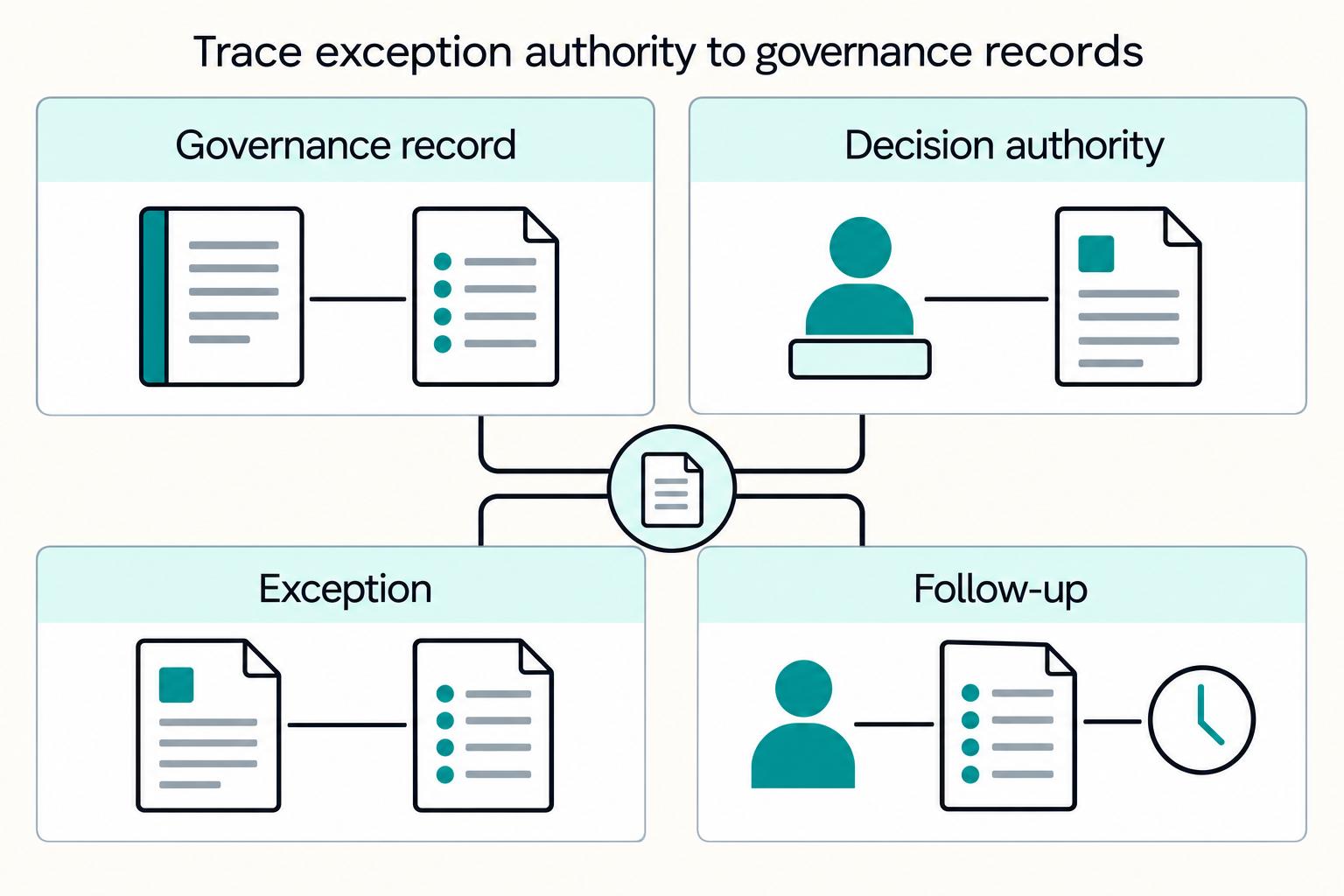
For either structure, use the same control test: authority for material exceptions should be traceable to core governance records, not informal messages.
The minimum artifact set before diligence gets uncomfortable#
There is no universal checklist, so treat this as a baseline governance pack rather than a guarantee of sufficiency:
| Structure | Baseline artifact | Named in section |
|---|---|---|
| LLC | Current Operating Agreement and related owner-defined authority rules | Owner-defined authority rules |
| Corporation | Current governance records with regular board meetings and corporate minutes | Regular board meetings and corporate minutes |
| Either structure | Records that identify who had decision authority | Decision authority |
- For an LLC, the current Operating Agreement and related owner-defined authority rules
- For a corporation, current governance records with regular board meetings and corporate minutes
- For either structure, records that identify who had decision authority
Most avoidable friction comes from inconsistency. Choose the structure your team can keep accurate and defensible as operations grow, not just at formation.
Tax structure implications for multi-market platform operators#
Tax treatment changes finance operations directly. An LLC can look lighter at first, but cross-border ownership or added entities can reduce that simplicity quickly.
Where pass-through and double taxation change operations#
For an LLC, the core treatment is pass-through: profits flow to the owner and are taxed once. For a C-corp, income is taxed at the entity level, described here as 21% federal, and again when profits are distributed as dividends. In practice, finance teams feel this through filing load and evidence requirements, not just the headline tax label.
| Finance lens | LLC with pass-through taxation | C-Corp with double taxation | Operational consequence |
|---|---|---|---|
| Profit treatment | Profit flows to the owner and is taxed once | Taxed at entity level, then again on dividends | Affects retained-earnings vs distribution planning |
| Core annual tax artifact | Can be lighter, but non-resident structures can add specific filings | Full Form 1120 corporate return | Can affect close calendar and external tax support needs |
| Recurring records | Less standardized; reviewers may need the Operating Agreement | More standardized; documented board and shareholder meetings | Changes how quickly finance can assemble annual support |
The tradeoff is not only tax cost. A C-corp can produce a more standardized annual package, but with heavier recurring obligations. An LLC may be lighter in a simpler setup, yet review effort can rise when authority and structure have to be interpreted from custom operating terms.
Where cross-border filing complexity usually increases#
Cross-border risk can rise with non-US ownership. The grounding here is specific: some home countries may not recognize LLC pass-through treatment, which can create double-taxation risk.
One concrete example is a non-resident single-member LLC that is treated as a disregarded entity for IRS purposes. It can trigger annual Form 5472 filing, with a cited $25,000 penalty for non-compliance. If your planning assumes "LLC always means lighter admin," this can become a failure point.
Complexity can also rise as entities are added. Finance still needs a clear map of which entity earns revenue, which funds payouts, and what supports intercompany movement. If that record is unclear, close and annual filing support get harder regardless of the top-level entity choice.
When S-Corp is a distraction#
For this decision, S-Corp is often adjacent, not primary. It is reasonable to note that general structure comparisons include LLC, S-Corp, and C-Corp, but payment-platform-specific cross-border tax criteria for S-Corp selection are not established. Treat it as an advisor discussion item, not the first branch in your decision path.
Finance checkpoints that should exist before deadlines#
Before deadlines arrive, finance should already know how the structure works in practice. Use checkpoints like these:
| Checkpoint | Confirm | Named artifacts or filings |
|---|---|---|
| Before launch windows | Revenue-earning entity, owner residency profile, whether any non-resident single-member LLC is in scope, and whether external tax advisors have reviewed the structure | External tax advisor review |
| At month-end close | Payout activity, cash movement, and booked revenue align to the correct legal entity, and intercompany support is documented where multiple entities operate | Intercompany support |
| For annual filing cycles | Required artifact pack is complete | Form 1120 support plus current board and shareholder meeting records for a C-corp; Form 5472 review and filing-calendar owner for LLC structures with non-resident exposure |
- Before launch windows: Confirm the revenue-earning entity, owner residency profile, whether any non-resident single-member LLC is in scope, and whether external tax advisors have reviewed the structure.
- At month-end close: Confirm payout activity, cash movement, and booked revenue align to the correct legal entity, and that intercompany support is documented where multiple entities operate.
- For annual filing cycles: Confirm the required artifact pack is complete. For a C-corp, that includes Form 1120 support plus current board and shareholder meeting records. For LLC structures with non-resident exposure, verify whether Form 5472 applies and who owns the filing calendar.
If you expect non-US ownership, dividend distributions, or multi-entity expansion, escalate tax review early and choose the structure your finance team can support repeatedly, not only at formation.
For a step-by-step walkthrough, see How to Set Up a Multi-Entity Payment Structure for Global Platform Operations.
Licensing and partner-readiness constraints teams miss#
Entity formation alone is not a complete licensing answer. There is no universally correct structure, so licensing questions should move into pre-launch legal work, not post-launch cleanup.
When product scope forces escalation#
Use product behavior as an input, not just the formation document. Exact MSB and money transmission triggers are outside this section, so escalate legal review early instead of relying on assumptions.
A practical test is one plain-English payment flow: which entity contracts with the user, which entity receives funds, whether funds are held before payout, who can place or release holds, and who approves exceptions. Use that map to frame legal review instead of assuming a partner setup resolves licensing questions.
If your team relies on public regulatory text during scoping, verify it against an official edition before relying on it for legal conclusions.
Why partner diligence often surfaces the same gaps first#
Counterparty diligence does not replace legal analysis, but it can surface governance gaps early. Those gaps often show up in the same three areas:
| Diligence lens | LLC | C-corp | Practical effect |
|---|---|---|---|
| Authority evidence | Reviewers may need the Operating Agreement and other member contracts | Governance is typically mapped through board oversight and officers | Reviews can slow when signing authority is spread across custom documents |
| Ownership clarity | Economics and control may be defined across operating and member agreements | Ownership is typically represented through stock records | Reviewers can often map control faster in a standardized corporate model |
| Day-to-day accountability | May require reviewing the operating agreement and related contracts | Officer-run operations are part of the standard model | Escalation paths are easier to evidence when role records are current |
A valid entity is not automatically partner-ready. The real question is whether you can produce current, coherent governance evidence when a reviewer asks for it.
Direct operator vs PayFac: avoid false certainty#
Direct-operator and PayFac labels are not a universal shortcut for legal responsibility. Treat model choice, product behavior, and contract terms as one combined legal and compliance decision.
Keep the rule simple: do not use LLC versus C-corp as a proxy for licensing comfort. Escalate legal analysis before go-live and choose the structure your team can document and govern cleanly.
Related reading: Accounting for a Payment Infrastructure Business: How to Structure Finance Ops.
If you are this type of platform choose this direction#
Choose based on your real funding path, ownership map, and expected cash flow now, then set explicit revisit triggers as those inputs change.
If you expect sponsor-bank or investor diligence this quarter, you should choose the form your reviewers can read in one sitting. We use that test because our goal is control clarity, not abstract tax elegance.
| Platform situation | Choose now | Why this direction fits | Verify before you lock it in | Revisit trigger |
|---|---|---|---|---|
| Bootstrapped U.S. platform, tight founder group, limited complexity | LLC may be workable for now | An LLC is commonly described as built for flexibility and personal protection. That can fit when control stays concentrated and financing plans are still simple. | Use a reviewed business plan, test expected cash flow, and document who holds authority and how key approvals are made. | Outside funding becomes active, employee equity plans expand, or ownership/control terms become more complex. |
| High-growth platform targeting Venture Capital, broader Equity Issuance, and employee grants | Prioritize LLC vs C-Corp analysis with investor/equity fit first | Entity choice influences investor access and how employee equity plans are structured, so financing design is a primary decision input here, not a later detail. | Confirm the business plan and expected cash flow support the fundraising and equity path you are actually pursuing. | Fundraising timing changes materially, grant scope narrows, or the original growth assumptions no longer hold. |
| International founder group with complex ownership and cross-border plans | Do not decide from a single tax headline alone; escalate early | Entity choice affects taxes, liability handling, growth financing, and control, so a one-factor decision can miss material tradeoffs. | Use a reviewed business plan, map ownership and decision rights clearly, and test expected cash flow before locking a structure. | Major ownership, financing, or geography assumptions change. |
The practical rule is that there is no universal "best" entity. Pick the structure that fits your current plan, then revisit when financing, ownership, or geography changes. Forward-looking assumptions often look cleaner on paper than they do in operation.
Hidden costs and failure modes in both structures#
Misalignment can matter more than the entity label alone. If ownership, control, and tax handling rest on different assumptions, problems can surface when decisions, diligence, or exceptions need clear proof.
A useful lens from the source material is straightforward: ownership and control, asset protection, and tax implications. Treat entity selection as a governance decision, not just a filing task.
| Structure | Hidden cost that shows up later | What to verify before launch work keeps moving | Self-inflicted failure mode |
|---|---|---|---|
| LLC | LLC governing documents that are hard to apply in day-to-day decisions | Confirm who the LLC members are, what needs member approval, and what management can approve directly | Teams give inconsistent authority answers because approval paths are unclear in practice |
| C-Corp | Governance roles that are formally documented but not clearly mapped to execution | Verify who holds key decision rights and who signs finance-critical actions | Decisions escalate unpredictably because responsibilities are not aligned |
| Both | Formation records, tax assumptions, and operating records drift apart over time | Reconcile governance docs, ownership records, tax position, and counterparty-facing details before onboarding accelerates | Teams assume formation solved control design, then scramble when asked for evidence |
For an LLC, authority should remain usable under pressure. A simple check is to compare current governing documents with your approval matrix and confirm they point to the same people and decisions.
For a C-corp, formal structure alone is not enough. A clean setup may still fail operationally if decision rights and finance signoff ownership are not explicit in practice.
A high-value checkpoint is basic record consistency. The SEC Form F-1 example underscores that agent-for-service fields are concrete filing data, including name, address, zip code, and telephone number. Mismatches across governance, tax, and partner-facing records are a serious warning sign.
Red flags that should pause launch timing#
Pause expansion if any of these are true:
| Red flag | Area | What is not aligned |
|---|---|---|
| Entity documents do not match current ownership and control, including who can bind the company | Governance and ownership | Current ownership and control do not match the documents |
| Finance cannot explain intended tax treatment clearly or map it to the current operating model | Tax handling | Intended tax treatment is not clearly mapped to the current operating model |
| Core evidence is fragmented: formation and governance records, ownership records, tax position, and service-of-process details are not current in one place | Evidence pack | Core records are not current in one place |
| Legal, finance, and operations give different answers to the same authority or ownership question | Cross-functional alignment | Authority or ownership answers differ by team |
| Exceptions are being approved in practice, but there is no reliable written record of what was approved and by whom | Exception handling | No reliable written record of what was approved and by whom |
- Entity documents do not match current ownership and control, including who can bind the company.
- Finance cannot explain intended tax treatment clearly or map it to the current operating model.
- Core evidence is fragmented: formation and governance records, ownership records, tax position, and service-of-process details are not current in one place.
- Legal, finance, and operations give different answers to the same authority or ownership question.
- Exceptions are being approved in practice, but there is no reliable written record of what was approved and by whom.
Neither structure removes the need for clear control design and disciplined records. If authority, ownership, and tax handling do not line up now, pause and fix that before expanding launch scope.
Decision checklist legal finance risk teams can use this week#
Use this as a pass/fail gate: if any line is Fail or Unknown, treat expansion work as not ready.
- Confirm signatory authority in writing. If your bank asks today, you should be able to show the exact approver and backup approver.
- Match ownership records to the real cap table or member ledger. Your legal file and your operating reality should tell the same story.
- Name one exception owner. We expect one person to stop launch when legal, tax, or risk records drift.
However, you should slow launch if your team cannot show who approves exceptions, who signs bank-facing documents, and who updates ownership records. We recommend fixing that operating file before you argue about labels.
| Check area | Pass this week | Fail or unknown trigger |
|---|---|---|
Governance baseline (Board of Directors or Operating Agreement) | Core governance document is current, internally consistent, and usable for approvals in practice; platform-specific completeness criteria are tracked as Unknown pending counsel | Document is missing, outdated, contradictory, or teams cannot use it to answer who can approve what; confirm platform-specific completeness standards with your legal adviser |
Ownership clarity (Shareholders or Company Members) | Current ownership record is clear across internal records; platform-specific ownership-clarity standards are tracked as Unknown pending counsel | Ownership records conflict across documents or cannot be confirmed quickly; confirm platform-specific ownership standards with your legal adviser |
| Entity and registration operations | Entity registration, tax IDs, and license/permit status are documented for the operating model | Registration, tax ID, or license/permit status is incomplete or cannot be evidenced |
| Address and legal-document handling | Operating address and registered-agent handling are explicit and fit legal/tax document intake | Address/agent setup is unclear, inconsistent, or not fit for reliable document handling |
Corporate tax-operational fit (for corporations filing Form 1120) | Team has an owner to track IRS Form 1120 updates, and refund/overpayment handling is pre-decided (37b + 37c-37e direct deposit, or 37a credit-forward) | No owner for IRS updates, or return-processing choices are unresolved; late-filing exposure is unmanaged (for returns required to be filed in 2026, the minimum penalty context includes returns more than 60 days late: smaller of tax due or $525) |
Payments-model compliance risk (MSB, money transmission, partner diligence) | Team has a documented internal view plus explicit open items | Trigger logic or requirements are still unknown; confirm MSB/MTL thresholds and partner-specific diligence standards with the relevant authority |
If you are adding rails or geographies and internal legal, finance, and risk owners cannot produce one consistent answer on governance authority, ownership status, tax filing approach, or payments-licensing applicability, escalate to outside legal and tax specialists.
Before your legal and compliance review meeting, map each pass-fail item to policy gates and evidence fields in Gruv Docs.
Implementation order for the first 90 days after entity choice#
Use a three-phase sequence: assemble core records, prove controls work in practice, then begin external onboarding with a defensible evidence pack. This is an operating sequence, not a legal requirement, and it is meant to reduce rework.
| Phase | Primary owner | Move forward only when | Documentation output to retain | Verification checkpoint |
|---|---|---|---|---|
| Foundation | Program lead with legal/compliance support | Governance, ownership, and approver-authority records are complete and consistent | Signed governance and authority records used by your entity type, current ownership record, and a dated legal-source review log | Ask an independent reviewer to identify who can approve a payout exception using only signed records. If they cannot, stop. |
| Internal control activation | Compliance, finance, and risk leads | Policy gates, evidence standards, reconciliation ownership, filing calendar, and exception handling are defined and usable | Approval matrix, sanctions/business-model review memo, reconciliation procedure, filing calendar, exception log template, evidence retention folder structure | Run one dry run: approve a mock exception, log it, reconcile it, and show stored evidence. If any step depends on tribal knowledge, stop. |
| External readiness | Cross-functional lead with legal support | Counterparty-facing pack, escalation path, and document version control are ready | Diligence pack with governance and ownership summaries, control evidence narrative, exception governance summary, and legal research files in final form | Run a mock diligence review with someone outside the build team. If answers vary by speaker, stop. |
In phase one, test authority in operational terms, not just document existence. Confirm binding and approval authority using your counsel-approved entity records.
In phase two, assign named owners in a way that fits your organization (for example across legal, compliance, finance, and risk). The goal is repeatable operation, not heavy process.
Also in phase two, harden the legal-source file set. If a control decision references a Federal Register item, retain the official PDF on govinfo.gov linked from the entry. FederalRegister.gov is informational and prototype, and XML text alone does not provide legal notice. Teams should verify against an official Federal Register edition. Retaining the official file also reduces operational risk if a FederalRegister page is unavailable, for example because of a 500 Server Error.
For sanctions-sensitive work, keep a dated memo of what was reviewed and why. If review includes OFAC FAQ 1247 or possible reliance on GLs 46B, 51A, or 52, copy the exact conditions into the memo. Then test each one, including whether payment terms are "commercially reasonable." In the cited FAQ context, conditions include organization on or before January 29, 2025 and routing conditions tied to Executive Order 14373 of January 9, 2026. Do not advance phases when documents and operations disagree. Resolve that mismatch before onboarding.
Conclusion#
Choose the entity your team can run with clear authority, consistent approvals, and records you can produce when challenged. For a payment business, governance discipline is critical, and headline tax simplicity alone is not enough.
Entity type will not fix weak operating discipline by itself. If legal, finance, compliance, and risk describe different approval owners or escalation paths, resolve that mismatch first and document the final model before launch.
For an LLC, the Operating Agreement is a core governance document. It is described as a key LLC document; once signed by members, it acts as a binding contract and can define voting rights and responsibilities. Without an official agreement, state default rules govern, misunderstandings can arise, and liability protection can be weakened. Whether the agreement is legally required depends on state law.
Use one decision meeting as your practical next step. Put legal, compliance, finance, and risk in the same room. Run the checklist, confirm that documented authority matches day-to-day practice, and record every unresolved item with an owner and deadline before launch. For agreement design, involve legal and finance directly, consistent with guidance to consult an attorney and accountant. If you are choosing an entity structure across multiple markets, pressure-test your rollout assumptions with Gruv's payments team.
Frequently Asked Questions
Is an LLC or a C-corp usually better for a US payment platform operator?
There is no universally correct answer. The choice depends on business model, growth plans, tax situation, and expansion goals. A corporation is the preferred structure for businesses seeking venture capital because corporations issue stock. An LLC can be a fit when simplified taxation is a priority, but governance still needs to be explicit through the Operating Agreement.
Does entity type change regulatory obligations or mostly governance and tax handling?
In practice, entity type mainly changes governance and tax handling. The cited FinCEN enforcement context ties BSA obligations to being a bank or other domestic financial institution, not to choosing an LLC versus a C-corp by itself. Keep the regulatory analysis focused on what your payment product actually does.
When does a platform need to escalate `MSB` or `Money Transmission Licensing` analysis?
There is no hard trigger or state-by-state threshold here. Treat that as an explicit unknown and escalate for specialist review early when payment flows may involve regulated activity. If legal, compliance, and finance describe fund flows differently, pause and resolve that mismatch first.
How do `Sponsor Bank` and `Card Network` expectations affect entity choice?
This guide does not support a rule that one entity type automatically performs better in sponsor-bank or card-network diligence. What is supported is governance clarity: for an LLC, authority should be clear in the Operating Agreement; for a corporation, decision authority should also be clearly documented. If decision authority is inconsistent across leaders, the diligence package is not ready regardless of entity type.
What minimum controls should be in place before scaling payouts across multiple markets?
There is no external minimum-controls checklist to lean on here. Treat this as an explicit unknown and define the controls with qualified legal, compliance, and finance reviewers before scaling.
How should international founders weigh `Pass-Through Taxation` against operational simplicity?
The sources describe an LLC as combining liability protection with simplified taxation, while a C-Corp is taxed at the entity level and shareholders are taxed again on dividends. That is the core tradeoff reflected in this material, but cross-border tax outcomes are not resolved in the excerpts and require specialist advice. The same excerpts also state an S-Corp is not viable for businesses with foreign investors and is capped at 100 shareholders.
Can you start as an LLC and convert later without major disruption?
Do not assume conversion from an LLC will be low-friction without jurisdiction-specific legal and tax review. If venture financing is already likely, decide the structure early rather than relying on a later conversion.
Try a related tool
Researched and edited by the Gruv editorial team. Gruv builds cross-border billing, payouts, and finance-operations software for global businesses.
Sources
- bsaaml.ffiec.gov/docs/manual/BSA_AML_Man_2014_v2_CDDBO.pdftrusted
- calosba.ca.gov/for-small-businesses-and-non-profits/set-up-...trusted
- congress.gov/crs-product/R47662trusted
- congress.gov/crs-product/R46751trusted
- cpuc.ca.gov/-/media/cpuc-website/divisions/office-of-gov...trusted
- dhs.gov/termstrusted
- dopl.idaho.gov/wp-content/uploads/2023/11/pwc-Public-Contra...trusted
- federalregister.gov/documents/2022/09/30/2022-21020/beneficial-o...trusted
Educational content only. Not legal, tax, or financial advice.
Related Posts
Choose a Freelance Business Structure: Liability, Tax and Costs
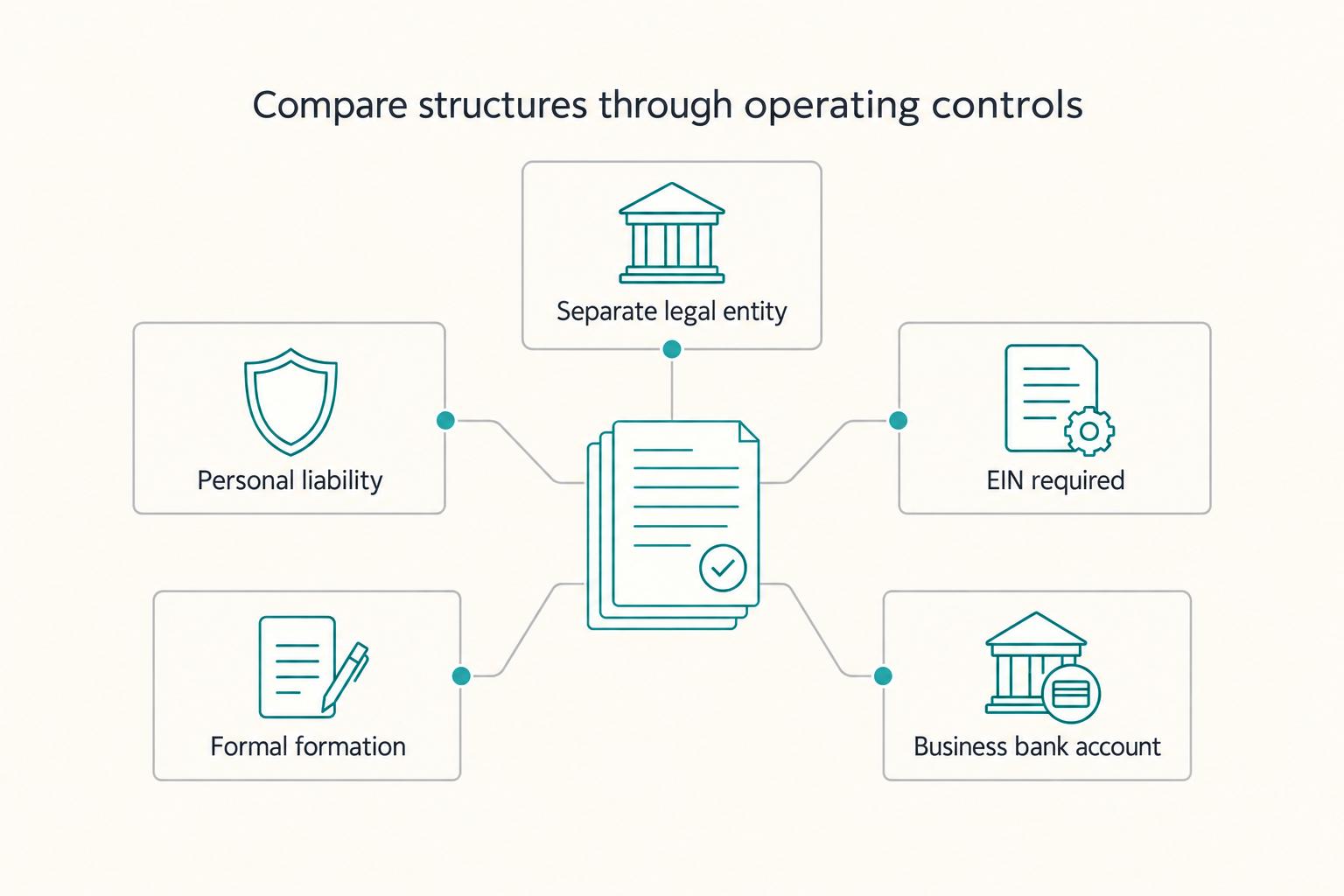
For a US freelance business, compare the work’s liability exposure, ownership, expected profit and the ongoing administration you can support. A sole proprietorship is often a practical starting point for one owner. An LLC can provide a separate legal entity, while an S corporation election changes the federal tax treatment of an eligible entity. Neither forming an LLC nor making a tax election is an automatic requirement when you gain a large client or hire help.
How to Structure an S-Corp for a Husband and Wife Partnership
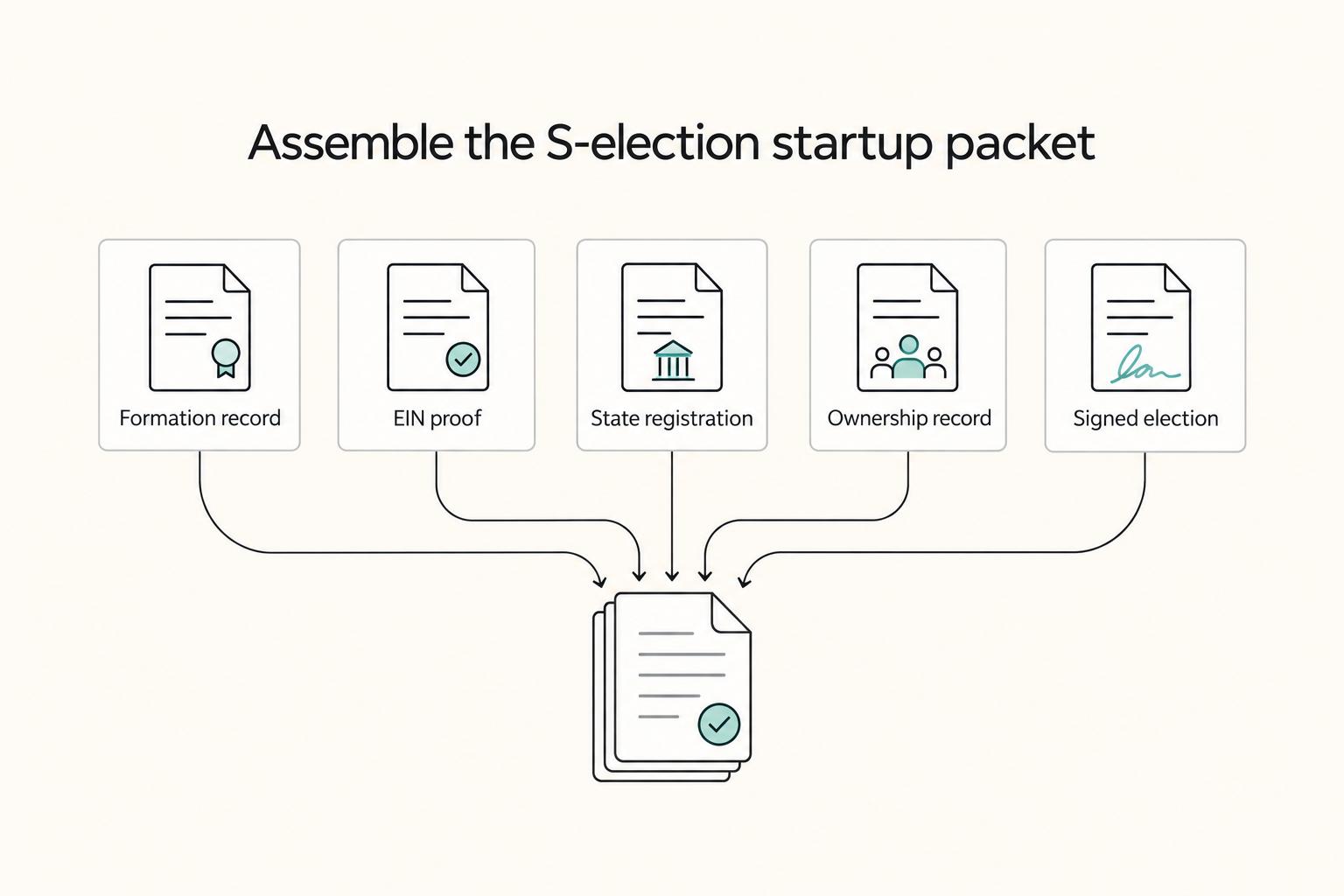
You can usually sort this out in one sitting if you classify the facts first. Start with federal tax treatment, then look at state-law ownership issues only when they matter.
How Nevada LLC Legal Protections Work for Independent Professionals
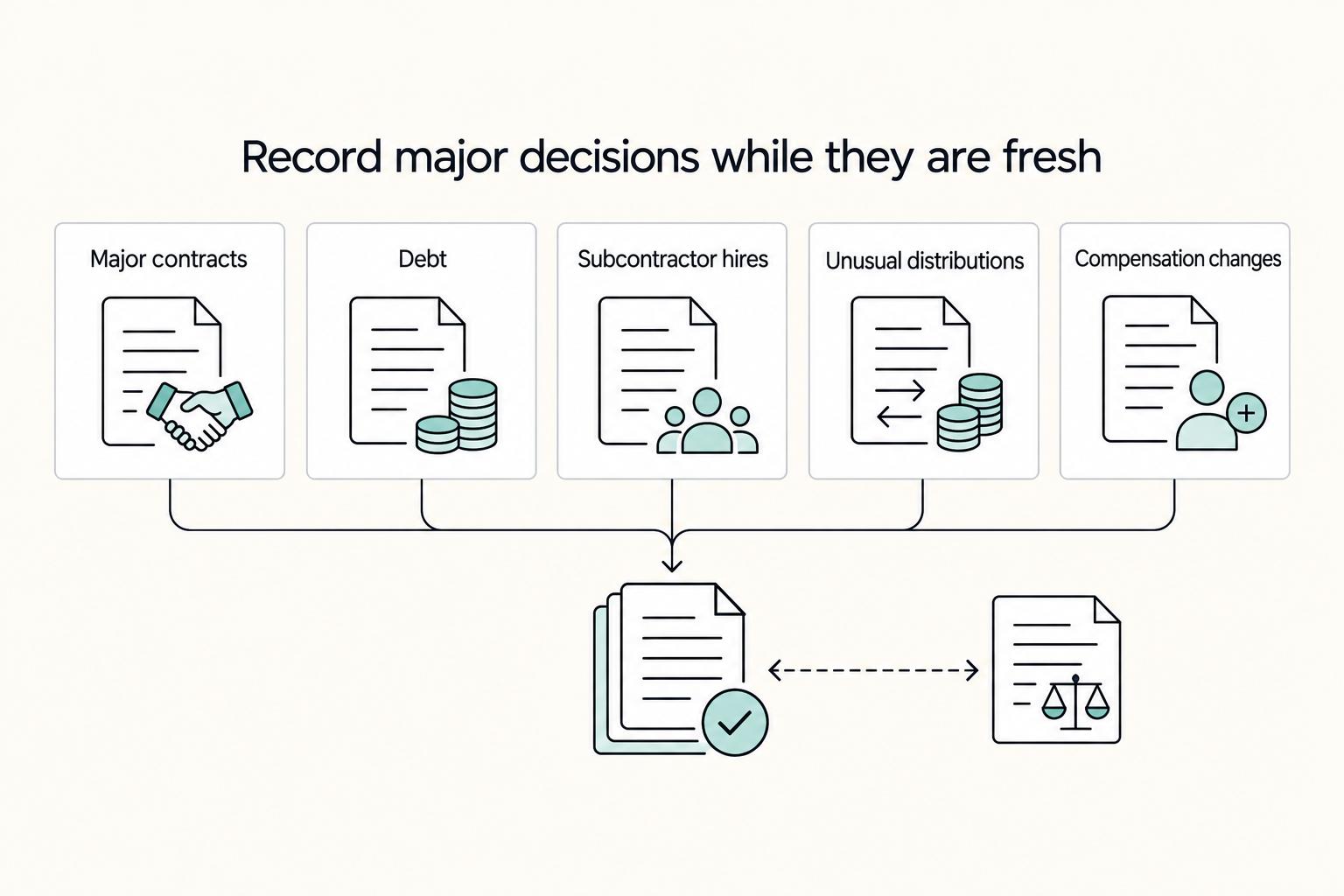
If you work for yourself, the core legal risk is that a business dispute can spill into your personal life. A Nevada LLC can help create separation, but it is not a complete protection system. The practical question is which risk the LLC reduces and which risks still stay with you.