
Quick Answer
Validate your role under BCEAO documents before you build anything. The article recommends checking your model against Instruction No. 001-01-2024 and treating Notice No. 004-03-2025 as a signal to avoid transitional assumptions. Then choose direct operation or a licensed-partner route, define one end-to-end payout flow, and test failure handling before live sends. If legal, product, and payments ops cannot agree on the same funds-flow diagram and responsibility matrix, stop and resolve that first.
What to confirm before putting Wave in scope#
Senegal is attractive for contractor payouts, but the first useful question is not whether you can connect to Wave. It is whether your planned role fits an operating model you can defend under applicable BCEAO and local payment rules.
The market context matters. A cited Senegal payments guide reports that online commerce volume surpassed $450 million in 2023, growing 18% year over year. The same source says digital payments account for over 60% of e-commerce transactions, and that mobile commerce represents about 70% of online sales. It also names Wave and Orange Money as leading mobile money brands.
Those figures make the country commercially interesting, especially if your users already expect phone-first payment behavior. But they are market signals, not permission to launch a specific payout setup.
Before you start#
Your anchor documents should include BCEAO materials and the payment rules that apply to your model. This guide uses them as the baseline for decisions. It does not assume that any specific Wave-connected model is allowed, and you should not assume that either until your legal and compliance review maps your role against the relevant rules.
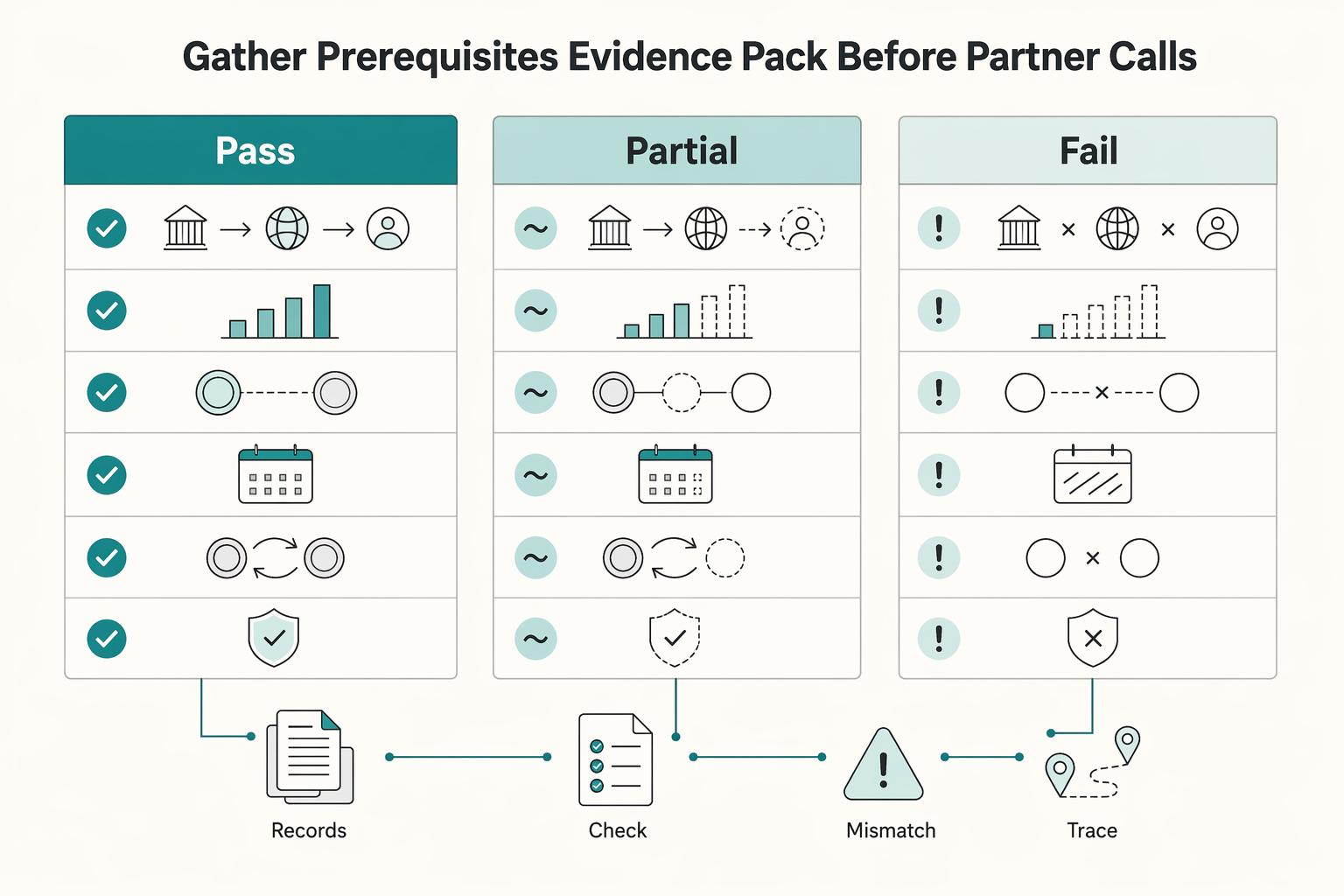
Before product or engineering starts, build a short evidence pack. At minimum, include your entity structure, the user types you plan to serve in Senegal, the first payout rail you want to use, whether your platform ever controls or holds funds, and which licensed or registered party is responsible for each payment step.
Add one-page diagrams for funds flow and message flow. If legal, payments ops, and product cannot sign off on the same diagram, stop there. That checkpoint is worth more than a fast prototype.
One common failure mode is easy to miss early. Teams treat the project as an integration problem, wire up a provider assumption, and only later discover that the real issue is operating perimeter, settlement responsibility, or missing fallback coverage. Rebuilding after contractors are promised payouts can be much more expensive than pausing up front.
Follow the sequence#
Use the sections below in this order:
- Validate the regulatory perimeter first.
- Pick the operating model second.
- Design onboarding, payout, and reconciliation controls.
- Test failure paths before any live send.
- Approve launch only after evidence checks.
That sequence matters. Senegal's digital commerce growth and mobile money adoption can make the opportunity look fast, but if your team cannot clearly explain who does what under BCEAO oversight, the right move is a no-go on integration work until that answer is clear.
What changed in Senegal payout oversight#
The core change is oversight framing: BCEAO is the authority you need to map against, because the payment-services rules are set at UMOA/WAEMU level, not only at Senegal level. If your team starts from a Wave integration and treats BCEAO as background, you are likely solving the wrong problem first.
Start with the BCEAO instruction#
Use Instruction No. 001-01-2024 Relating to Payment Services in the West African Monetary Union as your baseline. It is issued under BCEAO authority, Article 1 sets conditions and modalities for payment services in UMOA member states, and Article 2 includes banks, payment institutions, and electronic money institutions in scope.
In practice, your payout design should map to a defined regulated role, not just a product feature description.
Treat the end of transition as a live signal#
Treat Notice No. 004-03-2025 Relating to the End of the Transitional Period as a live oversight signal. Do not infer mechanics the notice text does not explicitly provide. The safe takeaway is to avoid relying on transitional assumptions when assessing payment-service licensing or payment-service registration.
A practical check is an article-by-article memo: legal or compliance should be able to show which entity in your model covers each regulated payment step under the instruction.
Stop build work if the role is unclear#
Pause integration work if your team cannot clearly map your role and the licensed or registered parties you rely on, including mobile money operators. This is where late surprises happen, especially when a platform model appears to move from messaging or orchestration into accepting, processing, or transferring funds.
At minimum, keep three artifacts aligned before build proceeds: a funds-flow diagram, a responsibility matrix, and a list of the licensed or registered party for each payment action. If those documents conflict, stop and resolve perimeter first.
For a step-by-step walkthrough, see How Platform Operators Pay Creators Globally Across YouTube, Twitch, and Substack.
What to prepare before building the payout flow#
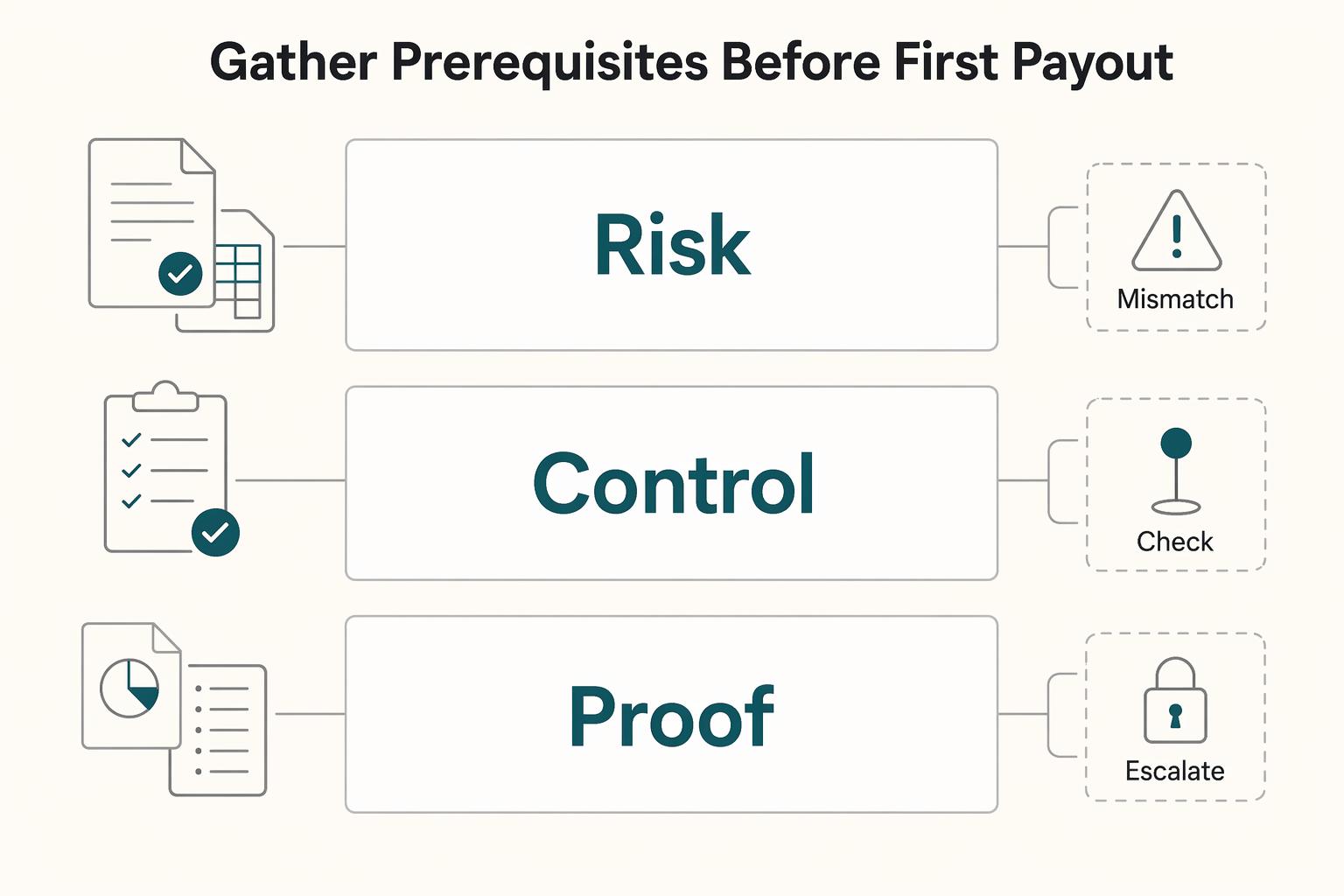
Before engineering starts, align on one prep packet that legal, payments ops, and product can read the same way. In Senegal, teams lose time when they design around one provider first, for example Wave, before role and partner assumptions are explicit under BCEAO-framed oversight.
Build one evidence pack for your launch model#
Create a single evidence pack for the exact model you plan to launch: entity structure, target user types, intended payout rails, and which party is responsible for each payment step. If Wave is in scope, state that directly.
If you expect additional bank-connected options, record them as partner assumptions until confirmed. Your checkpoint is simple: someone outside the project should be able to trace the funds flow end to end and see where responsibility changes hands without guessing.
Define currency assumptions before payout logic#
Write down how currency should behave before you implement payout logic. Be explicit about what the recipient should receive, where conversion might happen, and who carries any mismatch risk.
Keep this at the assumption level until legal and payments partners confirm the mechanics. Unstated currency assumptions tend to surface later as reconciliation issues and payout disputes.
Prepare internal control artifacts before sprinting#
Prepare core control artifacts early: AML/CFT policy mapping for the flow, an escalation owner for holds or anomalies, and a business continuity draft for provider disruption.
Use an internal launch gate: start build sprints only after legal, payments ops, and product align on the same scope and partner assumptions. Related: How to Pay Contractors in Sri Lanka: LankaPay and CBSL FX Rules for Platform Operators.
Choose the operating model before integrating Wave#
Start with the operating model, then choose rails. Mobile money is a multi-actor system, so selecting Wave alone does not define who owns onboarding, disbursement, reporting, or exception handling.
Use two clear model definitions in your prep packet:
- Direct platform operation: your platform takes primary responsibility for the payment role it performs, including related controls, records, and reporting.
- Partner-led model: a licensed partner owns the regulated payment activity, while your platform focuses on product and instruction flow agreed in contract.
Compare both paths before product scope is locked:
| Criterion | Direct platform operation | Partner-led model | What to verify now |
|---|---|---|---|
| Time to launch | Depends on internal readiness and legal clarity on role | Depends on partner onboarding, contracts, and integration readiness | A dated plan with explicit assumptions |
| Licensing exposure | Potentially closer to platform activity | Potentially centered on partner-owned steps | Counsel-confirmed role mapping |
| Dependency risk | Less partner dependency, more internal dependency | More dependency on partner uptime and policy decisions | Suspension terms and escalation owners |
| Operational burden | More internal load for controls and operations | Shared load, with partner-assigned duties for owned steps | Named owners for onboarding, disbursement, and reporting |
| Shutdown risk under BCEAO scrutiny | Sensitive to role mismatch | Sensitive to partner fit and contract boundaries | Evidence that contracts, product behavior, and funds flow align |
| Fallback coverage | Must be arranged beyond one provider | Must be confirmed in partner capabilities | Written confirmation of supported routes and failure handling |
In Senegal context, Wave and Orange Money are both notable mobile money players. Treat any bank or interbank fallback claims, including references to GIM-UEMOA, SICA-UEMOA, or STAR-UEMOA, as unconfirmed until a partner documents exact support and handling.
If role boundaries are still unclear, phase rollout through a partner-led setup first and reassess direct operation only after legal review confirms fit.
Map funds and statuses end to end before launch#
Before launch, lock one end-to-end payout flow and one status model that every team uses. If you cannot trace when funds move, when an outcome is final, and how exceptions are recorded, you are still in design mode.
Step 1. Define one canonical payout sequence. Use one ordered flow across product, finance, support, and engineering: payer funding, internal ledger posting, payout initiation, provider acknowledgment, terminal outcome, reconciliation close. Keep one internal payout ID through the full lifecycle, with batch ID, beneficiary ID, amount, currency, and provider reference once available. Run a control walk on one XOF payout in Senegal from funding to close using your records plus partner records; if a handoff depends on ad hoc dashboard checks, your model is incomplete.
Step 2. Make payout creation idempotent and inbound updates replay-safe. Retries are normal, so repeated create requests must not create duplicate disbursements. Use a stable key tied to the original payout instruction, not a new key per retry. Treat callbacks the same way: duplicate events should be no-ops, and late events should not move a payout backward from a terminal state outside an explicit reversal path.
Step 3. Standardize ops statuses and governance. These BCEAO report excerpts do not prescribe product status labels, so define one operational set and enforce it everywhere: pending, processing, paid, failed, reversed, held for compliance review. For each state, define who can apply it and what evidence is required. Keep the same vocabulary across API responses, dashboard views, finance exports, and support workflows.
Step 4. Reconcile every XOF batch before close. For each XOF batch in Senegal, match internal ledger records to provider references and terminal outcomes before marking complete. At minimum, compare payout count, total amount, currency, internal payout ID, provider reference, and closing status. If any record is unmatched or status-misaligned, keep the batch open and log the exception. This is especially important if a partner introduces bank or interbank paths linked to SICA-UEMOA or STAR-UEMOA, which BCEAO tracks in payment-system reporting. Keep a daily reconciliation file, an exception log, and a named close approver. Related reading: Mobile Payment Apps for Contractors: iOS and Android Comparison.
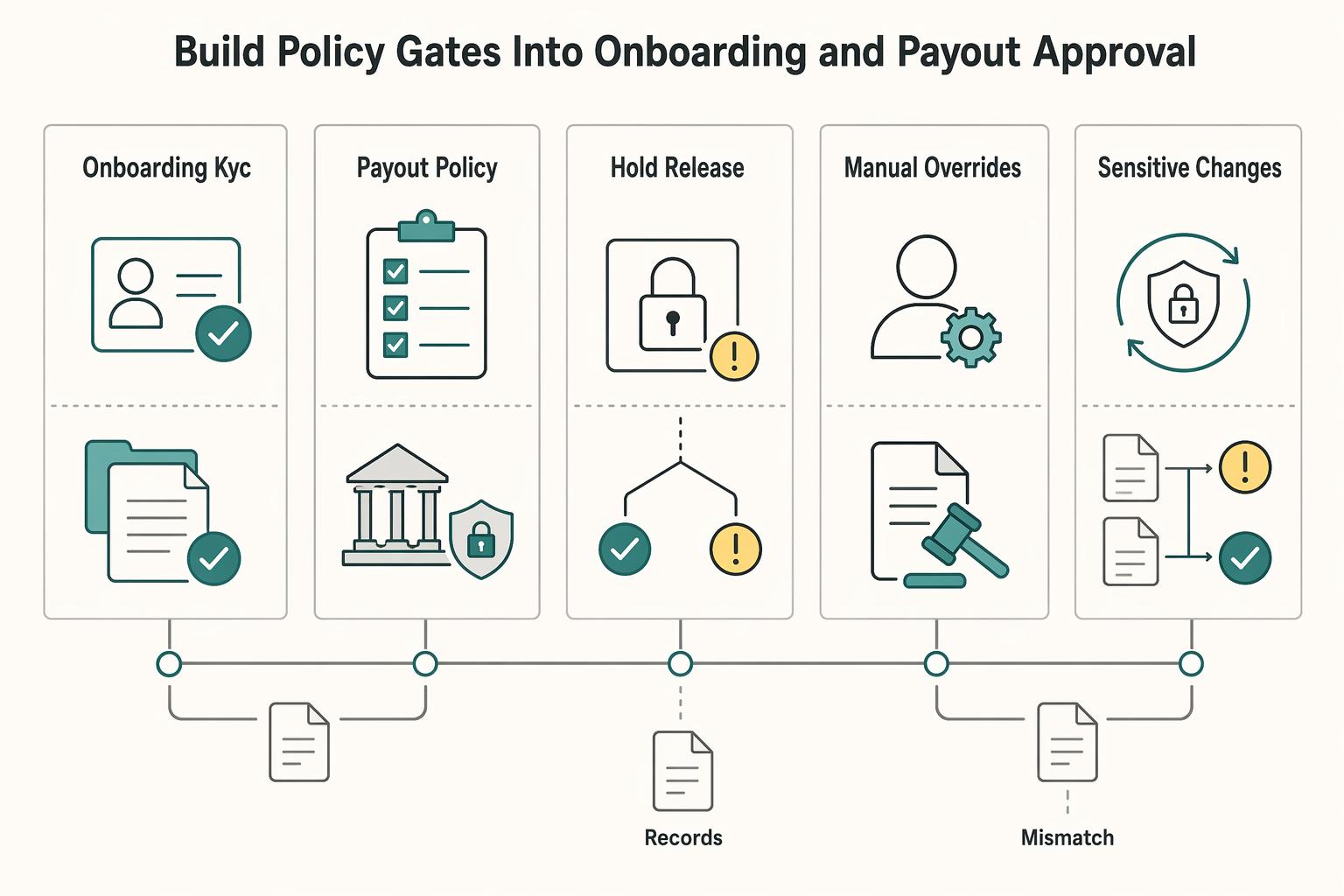
Build policy gates into onboarding and payout approval#
Keep onboarding approval and payout approval as separate gates. Passing KYC at onboarding should not mean every later payout is automatically approved, especially in a Senegal setup that depends on your licensed PSP and operates in a BCEAO-governed payment environment.
| Control | When | Record |
|---|---|---|
| Onboarding KYC activation | Before a contractor profile can be activated and linked to a payout method | Record the evidence, decision date, and reviewer or vendor result on the profile |
| Payout policy checks | Before a payout moves from pending to processing | If checks are incomplete or flagged, move it to held for compliance review and keep a case note tied to the payout record |
| Hold and release authority | Before launch | Set who can place holds, who can release them, and what minimum evidence is required |
| Manual overrides | If manual overrides are allowed | Keep explicit approval records showing who approved it, what they reviewed, and when |
| Sensitive changes or unusual payout behavior | For Senegal routes that may use providers such as Wave or Orange Money | Apply release-time checks; where stronger customer authentication is supported, use it for editing payout details or releasing held payouts |
Step 1. Gate activation on identity. Use onboarding KYC to decide whether a contractor profile can be activated and linked to a payout method. Record the evidence, decision date, and reviewer or vendor result on the profile so approval is auditable without digging through support threads.
Step 2. Gate each payout with your policy checks at release time. Treat onboarding approval as the start, not the end, of control. Before a payout moves from pending to processing, run the checks defined in your internal policy; if anything is incomplete or flagged, move it to held for compliance review and keep a case note tied to the payout record.
Step 3. Define hold-release authority before launch. Set clear roles for who can place holds, who can release them, and what minimum evidence is required. If you allow manual overrides, require explicit approval records so each release shows who approved it, what they reviewed, and when.
Step 4. Add release-time controls for mobile money risk. For Senegal routes that may use providers such as Wave or Orange Money, apply release-time checks for sensitive changes and unusual payout behavior. Where your product or partner supports stronger customer authentication, including two-factor authentication, use it for high-risk actions like editing payout details or releasing held payouts.
Plan rail failures and continuity before they happen#
Rail disruption should be treated as a normal operating case, not an exception. Once payout approval is controlled, define your fallback path before the first live batch in Senegal.
Step 1. Predefine failover by route, not by improvisation. Set a clear rule for when a payout retries on the same rail, when it reroutes to an approved alternative, and when it pauses for manual review. Keep rerouting gated to beneficiary details that are verified for the destination rail, rather than leaving decisions to support during an incident.
A practical checkpoint is to review one contractor record and confirm you can see the approved primary rail, allowed fallback rail, and any extra beneficiary evidence required before rerouting.
Step 2. Document failure modes in your status model. Do not collapse different incidents into a single failed state. Track at least provider timeout, compliance hold, beneficiary mismatch, and reversal after provisional success as separate states so reconciliation and customer messaging stay accurate.
If a provider response is missing, keep the payout non-final and reconcilable until you have partner confirmation or a defined reversal path.
Step 3. Test the incident path against your business continuity plan. Run a tabletop or controlled test with ops, support, finance, and your partner team before scale. Confirm you have three artifacts after the test: an escalation path, customer message templates, and an evidence note showing who decided to retry, reroute, or hold.
The preparation cost is real, but it is lower than creating policy while funds are in flight.
Common rollout mistakes and how to recover#
Most costly rollout failures start before implementation details: if your legal role, settlement path, and exception records are unclear, pause scale-up.
| Mistake | Recovery | Checkpoint |
|---|---|---|
| Treat market narratives as legal readiness | Get a written role review that is explicit about who contracts with the payer, who instructs payouts, and which entity moves F CFA funds under your BCEAO-facing setup | Use one shared, signed memo across legal, product, and ops; if it is missing, stop expansion and fix the model first |
| Leave settlement assumptions buried in partner calls or engineering notes | Document each payout route with provider, reconciliation owner, and failover condition | If routes are already live and this mapping is incomplete, freeze new route rollout until the dependency map is complete and reviewed |
| Miss the evidence trail for exceptions | Keep a payout-linked record with actor, timestamp, reason, supporting evidence, and status transition for each hold, release, override, or reroute | If support or finance cannot reconstruct why a payout changed state, treat it as a control gap and fix it before scaling |
Step 1. Do not treat market narratives as legal readiness. High-growth narratives can help with prioritization, but they do not confirm that your operating model is inside the right perimeter. Before you increase volume, get a written role review that is explicit about who contracts with the payer, who instructs payouts, and which entity moves F CFA funds under your BCEAO-facing setup.
Use a simple recovery gate: one shared, signed memo across legal, product, and ops. If it is missing, stop expansion and fix the model first.
Step 2. Make settlement dependencies explicit in your design docs. Do not leave settlement assumptions buried in partner calls or engineering notes. Document each payout route with provider, reconciliation owner, and failover condition so incident handling is based on known dependencies, not guesswork.
If routes are already live and this mapping is incomplete, recover by freezing new route rollout until the dependency map is complete and reviewed.
Step 3. Keep an evidence trail for exceptions. Exception handling should be explainable after the fact, not just at the moment of approval. For each hold, release, override, or reroute, keep a payout-linked record with actor, timestamp, reason, supporting evidence, and status transition.
Before go-live, test one real exception path end to end. If support or finance cannot reconstruct why a payout changed state, treat that as a control gap and fix it before scaling.
Conclusion#
If you are still filling gaps with provider claims, market-adoption narratives, or internal guesswork, do not launch yet. Use this checklist to make the go or no-go call based on evidence.
- Confirm the regulatory perimeter first.
Put the exact legal and policy text in front of the team, including current BCEAO materials and the specific documents your counsel is relying on. The checkpoint is simple: legal, product, and ops should all describe your role the same way in one sentence. If those descriptions differ, stop before you spend more time on integration.
- Choose the operating model based on legal clarity, not rail availability.
If your legal fit is clear in writing, you can evaluate a more direct model. If it is not, a partner-led setup may be the lower-risk starting point while you close open questions. The tradeoff is obvious but worth stating: partner-led can slow product control and add dependency, yet it can reduce launch risk when key assumptions are still unresolved.
- Lock the funds flow and status design before you touch volume.
You need one end-to-end view from funding to final payout state, with your internal payout ID tied to the provider reference and final outcome. Make retries replay-safe so a timeout does not turn into a duplicate payout, and make reversals visible instead of burying them as support exceptions. A good verification test is one clean success case and one broken case that finance can reconcile without spreadsheet patchwork.
- Implement onboarding and payout policy gates with evidence attached.
Keep contractor activation separate from payout approval so a user being onboarded does not automatically mean they are ready to be paid. For each hold, override, or manual release, keep actor, timestamp, reason code, and linked payout ID. The failure mode here is not just a delayed payout. It is being unable to explain later why money was held, released, or rerouted.
- Test rail failure before go-live, not after the first incident.
In Senegal, public market summaries describe Wave and Orange Money as part of the digital payments network, but that is context, not launch proof for your exact use case. Run internal readiness tests for timeout, beneficiary mismatch, provider-side failure, and provisional success that later reverses. You also want one manual exception path so support and ops are not inventing responses during an outage.
- Approve launch only on cross-functional signoff.
Final approval should come from legal, ops, and finance reviewing the same evidence pack, not separate summaries. If any one of those teams cannot verify the model, documents, or exception path, you are not ready to pay contractors in Senegal with confidence.
Frequently Asked Questions
Can a foreign platform pay contractors in Senegal through Wave directly, or must it operate through a licensed partner?
Do not assume the answer from market adoption or from the fact that Wave is active in Senegal. Wave is part of the local digital payments market, but that does not establish whether your platform can access it directly for contractor payouts. If that point is not already confirmed in writing by counsel and the provider side, treat a partner-led route as the lower-risk starting position.
Which BCEAO rule layer should operators check first before committing product resources?
Use BCEAO materials as a core reference point, since BCEAO is a regional payments authority in this market context. Confirm the exact text your legal team is relying on before turning a provider conversation into an engineering commitment. The checkpoint is simple: legal, product, and ops should all be able to describe your role the same way.
When does a partner-led model beat a direct model for speed and risk in WAEMU?
It can be the safer starting point when your licensing perimeter, reporting duties, or settlement ownership is still unclear. A partner-led approach can reduce the number of open legal and operational questions you must answer before launch, even if it adds dependency on another party. If your team cannot yet explain who contracts with the payer, who instructs the payout, and who actually moves funds, direct is too early.
What fallback rails should be in place if Wave payouts fail at scale?
Have at least one alternate disbursement path and one manual exception path, but verify real availability with partners instead of assuming named rails are live for your use case. Public materials describe both Wave and Orange Money as part of Senegal’s digital payments landscape, which is helpful context, not a launch guarantee. The failure mode to test is not just a hard failure, but a timeout or provisional success that later reverses.
How should we handle XOF settlement and reconciliation to avoid finance-team surprises?
Keep your payout ledger and reconciliation view explicit in XOF from funding through final status, even if another currency exists upstream in your business. Every payout should tie together your internal payout ID, provider reference, amount, fees if any, and final state such as paid, failed, reversed, or held. Before go live, run one batch with a success case and one with an exception case. If finance cannot close both without spreadsheet guesswork, your design is not ready.
What minimum controls should exist before first live payout under AML/CFT obligations?
Legal minimums are not something you can pin down in the general case, so treat legal requirements as a counsel-confirmed item. As an operational baseline, use a named compliance owner, documented hold and release rules, and a durable audit trail for every exception. You also want evidence attached to each hold or override, with actor, timestamp, reason code, and linked payout ID. If support or finance cannot reconstruct why a contractor was delayed, you are missing a control that matters in production.
Try a related tool
Researched and edited by the Gruv editorial team. Gruv builds cross-border billing, payouts, and finance-operations software for global businesses.
Sources
- documents1.worldbank.org/curated/en/103411620240414592/pdf/Senegal-Jo...trusted
- documents1.worldbank.org/curated/en/380191643961292189/pdf/Digital-Se...trusted
- elibrary.imf.org/view/journals/087/2025/004/article-A001-en.xmltrusted
- fastpayments.worldbank.org/sites/default/files/2021-11/Fast%20Payment%2...trusted
- imf.org/-/media/files/publications/cr/2022/english/1...trusted
- openknowledge.worldbank.org/bitstreams/ebf598a7-bb45-54df-9d18-1b21b1870...trusted
- pmc.ncbi.nlm.nih.gov/articles/PMC12658536trusted
- thedocs.worldbank.org/en/doc/4746c2466bf5e1b173d5f2e45e9d23cb-0360...trusted
Educational content only. Not legal, tax, or financial advice.
Related Posts
Pay Contractors in Nigeria Under FX Controls and Mobile Money Limits
You can launch Nigeria successfully, but not on vague payout assumptions. Treat payout currency behavior and rail coverage as core product constraints from day one, not cleanup work for Ops after go-live.

Paying Contractors in Sri Lanka with CBSL and LankaPay Decision Checks
Start with regulatory certainty. For a platform operator, Sri Lanka should not be screened from a payout product page or a rail feature list first. Real institutional signals exist, but they still do not prove that your exact contractor payout flow is permitted, eligible, and operationally supportable.
Paying Contractors in Morocco with CIH, CMI, and Bank Al-Maghrib FX Constraints
Treat Morocco as an operational validation decision, not just a commercial opportunity. The real question is whether you can verify, with current primary evidence, that your contractor payout path works through the institutions you plan to use.