
Quick Answer
Pay contractors in India by treating TDS, FEMA review, and payout execution as one controlled workflow from intake to release. Collect a complete contractor evidence pack, assign owners for tax and remittance decisions, separate confirmed facts from unresolved FEMA items, and release funds only when the invoice, beneficiary details, bank data, and approval trail all match. Bank transfer works at low volume, but tools help as exceptions grow.
What Paying Contractors in India Actually Requires#
If you want to pay contractors in India without cleanup later, treat TDS, FEMA, and payout execution as one operating path from day one. When teams split those decisions, payouts that look fine in internal queues can still run into remittance issues.
Start with one combined question: what tax treatment applies, what the remittance must satisfy, and how the money will move. You need one clear handling path across the regulatory and payment side, and businesses are expected to follow TDS and GST rules. Before the first live payout, make sure contractor records clearly cover payment terms, IP rights, and confidentiality.
Use operating checkpoints, not legal optimism. Set minimum documents before launch, run the same controls on every payout, then verify filings, the remittance trail, and exceptions on a defined cadence. Payment tools can reduce errors, but only when the underlying record is complete.
Keep confirmed facts and legal uncertainty in separate lanes. FEMA regulates cross-border financial transactions, and FEMA tests are not the same as Income Tax Act tests, so do not assume a one-to-one mapping. Escalate unclear remittance classification, residency treatment, or weak documentation to India legal or tax counsel before release. In other FEMA contexts, non-compliance is described as potentially leading to blocked repatriation and legal proceedings.
This guide uses that approach. It gives you one execution path that combines TDS, FEMA-sensitive review points, and payout controls, with clear checkpoints for what your team can confirm internally and what should go to counsel.
For a related breakdown, read How to Pay Contractors in Tanzania with M-Pesa and BoT FX Boundaries.
Decide whether India contractor payouts fit your current model#
Treat this as a go or no-go gate before you set launch dates. If your team cannot reliably run recurring INR payouts, tax handling, and transfer follow-through with current staffing, pause and fix the model first.
Map your payout pattern first#
Start with payout pattern, not market size. Contractor payments in India are generally made in Indian Rupees (INR), so decide early whether you are handling occasional payouts or recurring volume across many contractors.
Map the next few payout cycles before launch. Count expected contractors, payout frequency, and how many payments would need manual review when bank details, invoices, or documentation are incomplete. If one person will spend each cycle chasing exceptions, treat that as a warning sign in the model.
Choose manual or tooling based on volume#
Use manual payment workflows only when volume is low enough that you can monitor each payment from approval through confirmation. That can work for a small lane, but it gets fragile when recurring INR payouts and exception tracking grow.
As volume rises, evaluate payment tools. The tradeoff is operational: payment tools can simplify processes and reduce errors, while manual setups get harder to manage once status tracking moves into inboxes and chats.
Confirm who owns compliance#
Pressure-test compliance ownership before launch commitments. India contractor payment compliance includes TDS and GST obligations, so confirm who handles applicability questions, exception review, and pre-release checks.
Keep this concrete. Assign owners and define the minimum document set required before payout release, including payment terms, IP rights, and confidentiality policies to reduce misunderstandings. If the plan is still "we will sort it out later," the model is not launch-ready.
Launch only when the model and ownership align#
Launch only when the payout model and compliance ownership line up. If payouts are occasional, contractor records clearly cover payment terms, IP rights, and confidentiality, and you can realistically monitor them manually, start with a controlled lane.
If recurring volume is expected and the team cannot yet sustain the required tax and transfer discipline, consider implementing payment tools first, then launch.
Gather prerequisites before your first live payout#
This is release control, not admin cleanup. Before money moves, your contractor record should show who is being paid, why, how tax is handled, and who can stop a payout.
Build the contractor evidence pack#
Build a minimum evidence pack for every contractor before the first payout. Keep the signed contractor agreement, scope or milestones, payment terms, and classification notes that explain the engagement. If your team flags classification risk patterns, record review status explicitly instead of handling it informally.
Make sure the agreement also covers IP rights and confidentiality. Use that record as a release check so the invoice amount, milestone, and payee match what was approved.
Capture tax fields at intake#
Define tax fields at intake because TDS and GST handling starts before payout week. Capture whether the payee is being reviewed as a resident contractor under Section 194C, who owns that decision, and the supporting notes.
Treat timing as a hard checkpoint. Under Section 194C, TDS is tied to payment or credit, whichever happens first. Intake and approval should surface the tax decision before either event. Where rates are being evaluated, keep the distinction visible. The excerpt cites 1% for individual/HUF contractors and 2% for other entities, and those are conditional, not universal.
For GST, keep tax notes and any applicable registration context in the same intake trail so review stays visible before release.
Lock payout data before release#
Lock payout data requirements at the same time as tax requirements. Common fields include beneficiary legal name, bank details for international bank transfer, invoice ID, invoice date, contract reference, payout currency, and a named approval owner.
| Field | Requirement | Check |
|---|---|---|
| Beneficiary legal name | Common field to lock before release | Align across invoice, contract, and bank instructions |
| Bank details for international bank transfer | Common field to lock before release | Use a name-match check before release |
| Invoice ID | Common field to lock before release | Part of payout data requirements |
| Invoice date | Common field to lock before release | Part of payout data requirements |
| Contract reference | Common field to lock before release | Part of payout data requirements |
| Payout currency | Common field to lock before release | Part of payout data requirements |
| Named approval owner | Common field to lock before release | Part of payout data requirements |
Use a name-match check before release. Payee details should align across the invoice, contract, and bank instructions. This matters even more with manual wires, where processing can vary due to intermediary banks, time zones, compliance checks, and currency conversion.
Assign owners before launch#
Assign ownership before launch so exceptions do not stall payouts. Name owners for payout exceptions, TDS operations, and FEMA-related questions, and assign filing operations ownership up front.
Keep FEMA handling explicit about scope. The available grounding is cross-border banking focused, not contractor-payout specific, so some remittance questions should stay marked as unresolved until confirmed by counsel. Use a simple release rule: do not release any payout unless the evidence pack is complete, tax handling has a named owner, and bank data has passed the name-match check.
Separate what is known and unknown on FEMA before launch#
Treat FEMA as its own launch gate, even when your tax workflow looks complete. An FDI reporting and compliance example from 08-Feb-2014 does not by itself confirm contractor-payout-specific FEMA handling. In that scenario, remittance is presented together with issuance and RBI reporting/compliance, so treat remittance checks and reporting checks as linked.
Keep a confirmed vs unresolved register#
Use a two-column register for each cross-border payout path: operationally confirmed and requires legal confirmation. When we say confirmed, we mean directly verifiable items in your records. Keep only those items in the first column, such as remittance details on record and any confirmed reporting/compliance steps already completed.
| Register lane | Example | Handling |
|---|---|---|
| Operationally confirmed | Remittance details on record | Keep only directly verifiable items here |
| Operationally confirmed | Confirmed reporting/compliance steps already completed | Keep only directly verifiable items here |
| Requires legal confirmation | Unclear remittance purpose | Assign a named legal or tax owner before launch |
| Requires legal confirmation | Unclear bank documentation requests | Assign a named legal or tax owner before launch |
| Requires legal confirmation | Open questions on linked RBI reporting or compliance | Assign a named legal or tax owner before launch |
Move interpretive items to the second column: unclear remittance purpose, unclear bank documentation requests, or open questions on linked RBI reporting or compliance. Assign a named legal or tax owner to every open item before launch.
Do not equate TDS clearance with FEMA clearance#
Keep tax certainty separate from FEMA certainty. Even when tax treatment looks complete, do not treat that alone as proof that the remittance path is fully cleared from a FEMA perspective.
That separation prevents a common miss. A payout can be marked ready after tax review, then delayed when remittance documentation or compliance interpretation is challenged later.
Set one escalation rule before release#
Set one explicit internal escalation rule before first release. If payout purpose or remittance documentation is unclear, hold release until legal or tax review closes the item. This is an internal control choice, not a statutory quote.
When a hold is triggered, log the exact missing item against the contractor and invoice records, and store any follow-up bank requests in the same evidence trail.
Run the TDS sequence from invoice receipt to certificate issuance#
Treat this as one controlled sequence, not a series of disconnected tasks. TDS is not operationally complete at deduction. When we say complete, we mean the case is classified, the deduction basis is recorded, deposit evidence is retained, the return workflow lane is assigned, and certificate tracking is visible.
Open one case file before approval#
Start by opening a single case file before payment approval. Keep the invoice, agreement, contractor record, beneficiary-name match, and a tax note in that file. The note should state which TDS treatment the team is evaluating, or that the case is being sent for specialist review.
Make classification explicit and visible in that file. If status is unclear, block release and route to review instead of letting payment operations infer treatment from partial signals.
Record the deduction basis#
Record the deduction trigger basis for each case and apply it consistently. This section does not provide a contractor-specific legal conclusion on exact trigger timing. The control is to document the basis your tax owner approved and keep it attached to the invoice record.
Before release, make sure the file can be traced end to end. At minimum, you should be able to pull invoice ID, contractor ID, deduction decision, payout reference, and reviewer approval from one place.
Assign every case to a filing lane#
Route cases into explicit filing lanes instead of ad hoc handling. Keep a return-preparation lane, an unresolved-treatment review lane, and a certificate-tracking lane in your tracker or ERP workflow.
Keep lane assignment auditable. If a deducted case has no return lane, treat it as a control failure and escalate immediately.
Track deposit evidence and certificates#
Close the loop with evidence and certificate tracking. A TDS receipt can be retained as supporting acknowledgement of deposit in the payee's name. Verify this with your tax adviser before treating it as your sole proof.
Use legal-source hierarchy when guidance conflicts. This guidance states it is guidance and not a legal document, and where guidance differs from Acts, Rules, or Regulations, the legal text prevails.
| TDS step | Owner | Timing class | Evidence artifact | Failure escalation |
|---|---|---|---|---|
| Invoice intake and tax-status assignment | AP ops + tax reviewer | Before payment approval | Invoice, agreement, contractor record, tax-status field | Block release and escalate when status is missing or unclear |
| TDS treatment assessment note and trigger-basis documentation | Tax owner | Before deduction event | Review note naming treatment assessed, trigger basis, reviewer/date | Hold payout if basis is absent or conflicting |
| Deduction record and deposit-evidence capture | Finance/treasury | At deduction event and after evidence is available | Ledger entries, payout reference, deposit acknowledgement/TDS receipt | Escalate if deduction exists without evidence trail |
| Return-lane assignment | Tax filing owner | Per internal compliance calendar | Case assigned to the defined return workflow lane | Escalate if deducted case has no lane assignment |
| Certificate tracking | Tax filing owner | Per internal compliance calendar | Certificate status, dispatch/archive proof | Escalate if certificate record cannot be matched to case |
Related reading: Pay Contractors in Ghana with GhIPSS, MoMo, and GRA Controls. If you want this flow to run with policy gates, idempotent retries, and clear payout statuses, review Gruv Payouts.
Choose the payout rail with a scale and control lens#
Choose the rail based on control coverage, not payment convenience. If you need batch payouts, exception visibility, and audit-ready exports, a platform rail may be a better fit than a fully manual bank workflow, but validate that in your own process. If volume is still low and each case can be reviewed end to end, bank transfer can still work.
Compare rails by control coverage#
Compare rails by verified controls, not marketing claims. Fee tables, payout-speed SLAs, and batch-capacity benchmarks for international bank transfer, contractor payment platforms, or global payroll software are not independently verified here — treat those as diligence questions.
Use this first-pass test: where does the evidence burden sit for each payout, and can you export it cleanly?
| Rail | Best fit to start | What you must verify before commit | Main control risk |
|---|---|---|---|
| International bank transfer | Low volume with named reviewers | Can each payout be tied to invoice ID, contractor ID, approval, and tax note, with usable exports? | Evidence can fragment across bank portal, ERP, email, and sheets |
| Contractor payment platforms | Growing contractor volume and recurring payouts | Batch controls, exception queues, payout-level metadata, and audit exports | Payment status may be stored, while compliance context can still be incomplete |
| Global payroll software | Teams consolidating worker-payment operations | Contractor payout records have equivalent evidence fields and export quality | Contractor flows can become a weaker side path unless equivalent controls are enforced |
Attach compliance records to each payout#
Test whether compliance records stay attached at the payout level. The key question is not just whether money can be sent, but whether each payout can carry and export the records that justify release.
For this workflow, keep the invoice, contractor record, beneficiary-name match result, TDS classification note, and any FEMA review note or escalation outcome linked to the payout record. That attachment matters because 2026-27 policy context indicates FEMA review may occur, so assumptions may need revision and should remain auditable.
Use the RSM contents as planning checkpoints: TDS and TCS Rates (page 119) and Direct Tax, GST & FEMA Compliance Calendar (page 132). Treat them as control prompts for review sequencing, not as legal text.
Test failure paths before rollout#
Pressure-test operational failure paths before rollout. Return handling, beneficiary-data mismatch, and approval gating can create downstream reconciliation cost.
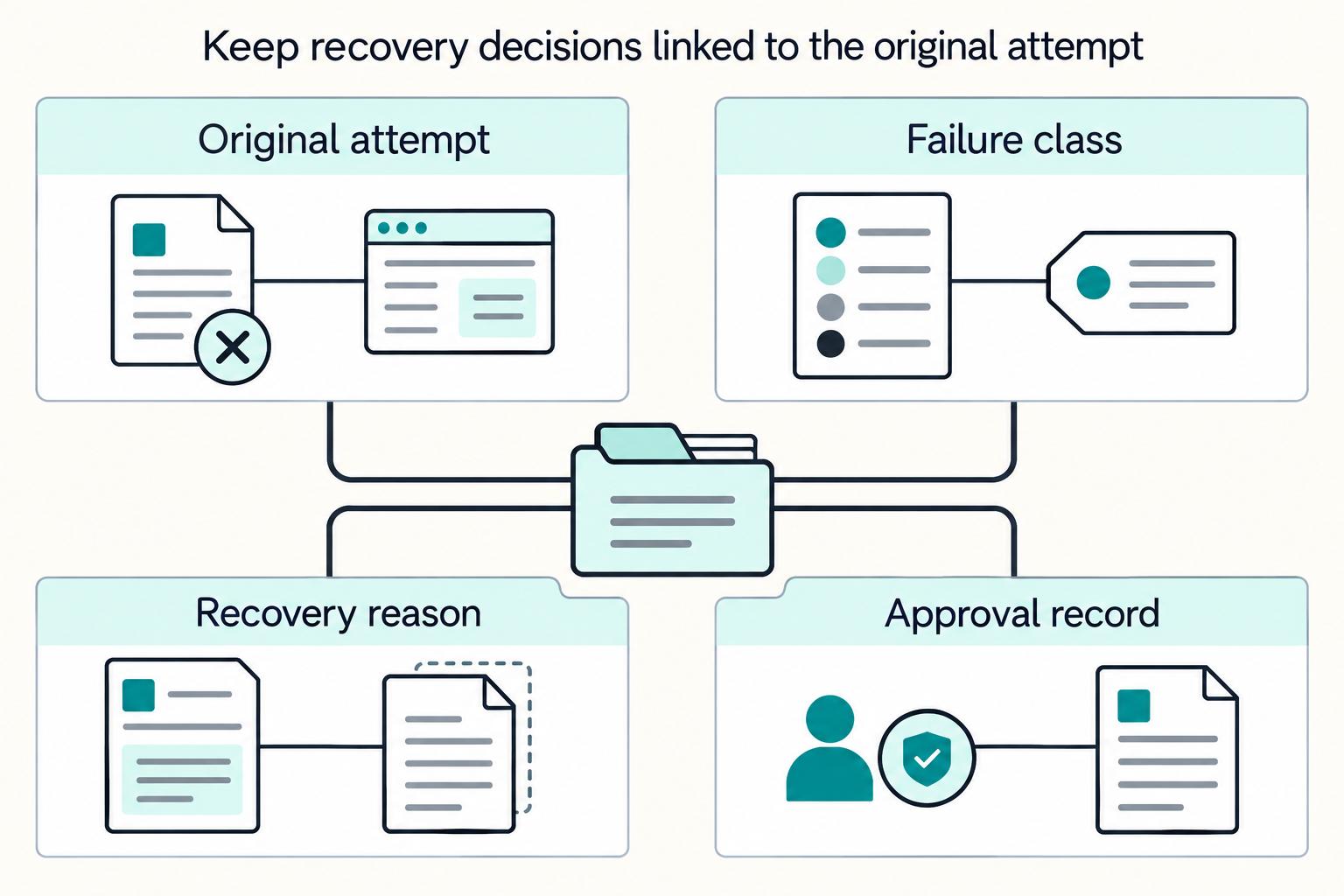
Run pilot cases with deliberate errors and confirm the rail can block release, record the reason, and preserve the failed attempt in audit history. Also confirm rejected or returned payouts stay linked to the original invoice and approval chain instead of restarting as disconnected events.
Do not rely on stale material for live FEMA decisions. Guidance from June 2018 should not be treated as current authority for a 2026 operating design.
Set migration triggers now#
Start with one rail, but define migration triggers now. Lock-in risk can rise when teams wait until volume has already outgrown controls.
A practical phased path:
- Use bank transfer when volume is low and every case can be individually reviewed.
- Move to a contractor payment platform when batch approvals, exception queues, and exportable audit history become necessary.
- Evaluate global payroll software when you are consolidating worker-payment operations and contractor traceability is equivalent.
Write migration triggers in advance, such as manual reconciliation across multiple systems, approval evidence no longer visible in one case file, or quarterly filing prep depending on spreadsheet merges. The right rail is the one that preserves payout-level evidence, blocks incomplete releases, and supports defensible exports for tax, finance, and legal review.
For a step-by-step walkthrough, see How to Pay Contractors in Czech Republic with CZK Routing and CNB Controls.
Implement bank transfer mechanics that survive real operations#
For internal operations, design each payout around one complete case file, one retry-safe key, and one traceable record from approval to outcome. Do not assume India-specific bank-transfer mechanics are fully settled, so treat the workflow below as an internal control pattern, not a legal requirement.
Assemble one initiation packet#
Treat each transfer as a controlled release, not a one-off instruction. Before submission, assemble one initiation packet with the internal approvals and transfer details your team requires, for example, invoice, contractor record, beneficiary details, FX decision, and release authorization.
Keep all supporting notes in that same payout record so review does not depend on email or chat trails. A reviewer should be able to open one case and see the obligation, approval, transfer details, and review notes without cross-tool reconstruction.
| Packet item | Why it sits in one packet | Must match |
|---|---|---|
| Invoice | Shows the obligation being paid | Invoice ID and invoice amount |
| Contractor record | Shows approved payee context | Contractor ID and agreement |
| Beneficiary details | Supports release instructions | Name match across records |
| FX decision | Keeps payout handling visible | Payout currency and release path |
| Release authorization | Shows who approved release | Named approval owner |
Use a retry-safe payout key#
Use an idempotent payout key before release so retries do not create duplicate payouts. This is an internal safeguard, not a regulatory mandate established here.
Build the key from stable fields you already control, and do not overwrite a live attempt in place when those fields change. Void or cancel internally, issue a new key, and keep the prior attempt in the same evidence trail.
Define holds and returns in advance#
Define holds and returns before first live payout so the team does not improvise when a transfer does not move as expected. Missing beneficiary-name match, unresolved tax handling, unresolved FEMA review, or incomplete approval should push the payout into a hold state instead of informal handling.
Returned transfers should follow a mapped path as well. Keep the original attempt visible, route the case back through review, and decide from the case file whether the next step is data correction, legal or tax review, or a fresh release attempt.
Keep one traceable reference chain#
Keep one traceable reference chain from contractor and invoice through approval, payout key, bank reference, and final status. That chain should survive holds, returns, and retries.
Do not let a corrected payout become a disconnected second story. A reviewer should be able to open one case file and see what was attempted, what changed, who approved the next step, and what finally settled.
Set compliance gates and approvals before money leaves your system#
Make release readiness a controlled state, not a judgment call in the bank portal. Your team should know which facts make a contractor payable in principle and which facts make a specific payout releasable today.
Separate "eligible to pay" from "ready to release"#
Separate contractor eligibility from payout release readiness. A contractor can be eligible to pay under an approved engagement while a specific payout is still not ready because bank data, tax handling, or FEMA review is incomplete.
| Gate | Meaning | Minimum evidence before state is true |
|---|---|---|
| Eligible to pay | Contractor can be paid under the approved engagement | Signed contractor agreement, scope or milestones, payment terms, IP rights, confidentiality, and classification notes |
| Ready to release | This payout can leave the system now | Approved invoice, beneficiary-name match, bank details locked, named approval owner, TDS note, and any FEMA review note or escalation outcome |
That split keeps the team from confusing an approved relationship with an approved payout. When we say "ready to release," we mean the second state, not the first.
Verify critical facts independently#
Verify critical facts independently before money leaves your system. Recheck beneficiary-name match, invoice against contract reference, bank details, payout currency, and the tax note instead of relying on a copied status.
The point is not duplication for its own sake. It is to catch the mismatch that turns an approved payout into a returned transfer or a weak audit trail.
Assign role-based approvals#
Assign approvals based on the fact being confirmed. AP ops + tax reviewer can confirm invoice and tax-status handling, finance/treasury can confirm release execution, and legal or tax owner should close unresolved interpretation items.
Do not compress those approvals into one blanket click when the underlying questions are different.
Log overrides as decision records#
If a payout moves forward after a control exception, log it as a decision record, not a silent workaround. Keep the missing item, the reason the override was accepted, the named approver, and the required follow-up in the same evidence trail.
That keeps later review anchored to what was known at release time.
Close month-end and quarter-end without reconciliation debt#
Close routines should prove what was released, what cleared, what is still open, and what filing artifacts are linked to each case. Do not wait until quarter-end to reconstruct payout history.
Prepare a BRS for each payout account#
Prepare a BRS for each payout account and keep it tied to the payout ledger. Every settled, held, and returned item should map back to a payout reference or sit in an exception list with an owner.
Isolate exceptions before final close#
Isolate exceptions before final close. Held payouts, returned payouts, missing deposit evidence, and unmatched items should not be absorbed into a clean close just because the bank movement exists.
Tie quarter-end tax work to filing artifacts#
Tie quarter-end tax work back to filing artifacts. Deducted cases should connect to filing lanes, deposit evidence, and certificate tracking without spreadsheet reconstruction.
If a case cannot be matched from deduction decision to filing artifact, treat it as open.
Track filing and documentation as SLAs#
Track filing and documentation as SLAs so cases do not disappear into trackers. Use internal SLA status for return-lane progress, certificate tracking, and missing documentation resolution, then escalate when the case remains open.
| Close area | What must tie out | Evidence artifact |
|---|---|---|
| BRS | Payout account activity to payout references | BRS linked to payout ledger |
| Exceptions | Held, returned, or unmatched items | Exception list with owner |
| Quarter-end tax work | Deducted cases to filing lane and deposit evidence | Filing artifacts in the case file |
| Certificates and documentation | Case status to certificate tracking and archive proof | Tracker or archive record |
Handle failures and recover quickly without policy drift#
Failures are part of the operating model. Recovery should be pre-mapped so pressure does not turn one exception into a duplicate payout, a broken audit trail, or policy drift.
Classify before any retry#
Classify the failure before any retry. Start by separating beneficiary-data mismatch, unresolved tax or FEMA review, returned payout, and disputed payout, because each needs a different recovery path.
Apply the mapped recovery rule#
Apply the mapped recovery rule that matches the class. A data correction case goes back through name match and approval, a review case stays blocked until the named owner closes it, and a returned payout keeps the original attempt closed with any next step linked to it.
Keep retries traceable#
Keep retries traceable in the same case file. Do not replace the failed attempt or recycle the same live key after a material change. Keep the original status, the reason for the next attempt, and the next approval together.
Review incidents for repeat causes#
Review incidents for repeat causes so the process gets tighter over time. Missing intake fields, weak release gates, and fragmented evidence exports are operating issues, not one-off bad luck.
Update the control, not just the case.
| Failure class | First action | Recovery rule | Evidence to keep |
|---|---|---|---|
| Beneficiary-data mismatch | Hold release | Correct data, rerun name match, then re-approve if needed | Original attempt, corrected details, approval trail |
| Unresolved tax or FEMA review | Do not release | Escalate to the named owner and wait for closure | Review note, hold reason, escalation outcome |
| Returned payout | Stop any retry | Reopen case review, keep the original attempt closed, and issue a new payout key only if needed | Return status, bank request or return note, linked retry record |
| Disputed payout | Hold further release activity on the case until review | Route to the assigned owner and keep follow-up notes in the evidence trail | Dispute note, invoice record, approval chain |
Avoid the mistakes most India payout guides leave vague#
Most preventable payout problems start before submission. These are the failure patterns to keep explicit.
Treat compliance as a release checkpoint#
Treat compliance as a release checkpoint, not a side review that can finish later. If the evidence pack, tax handling, or FEMA escalation rule is incomplete, the payout is not ready to release.
Extend TDS beyond deduction#
Extend TDS beyond deduction. The operating sequence includes the deduction basis, deposit evidence, return lane, and certificate tracking.
Choose rails by exception workload, not fee headline#
Choose rails by exception workload, not fee headline. Fee tables and payout-speed claims are not independently verified, so compare each rail by whether it can block incomplete releases, preserve exceptions, and export clean evidence.
Keep GST handling and contract terms explicit#
Keep GST handling and contract terms explicit in the same record. Payment terms, IP rights, confidentiality, tax notes, and invoice linkage should not be split across informal notes.
Conclusion and copy paste launch checklist#
India contractor payouts work better when tax handling, FEMA-sensitive review, and payout mechanics run as one controlled path. The fastest way to create cleanup later is to approve invoices first and figure out remittance evidence, tax basis, and exception ownership afterward.
Use this copy paste launch checklist before the first live payout:
- Confirm the payout model fits current volume, staffing, and monitoring capacity.
- Map the payout pattern for the next cycles, including exception workload.
- Decide whether the lane starts manual or with tooling.
- Assign named owners for payout exceptions, TDS operations, FEMA-related questions, and filing operations.
- Build the contractor evidence pack with agreement, scope or milestones, payment terms, IP rights, confidentiality, and classification notes.
- Capture tax fields at intake and surface the TDS decision before payment or credit.
- Keep GST notes in the same intake trail.
- Lock payout data before release, including beneficiary legal name, bank details, invoice ID, invoice date, contract reference, payout currency, and named approval owner.
- Run the beneficiary-name match before release.
- Maintain a confirmed vs unresolved FEMA register for the payout path.
- Set one escalation rule for unclear remittance purpose or documentation.
- Open one case file before approval and keep invoice, agreement, contractor record, beneficiary-name match, and tax note together.
- Record the deduction basis and assign each deducted case to a filing lane.
- Track deposit evidence and certificate status in the same evidence trail.
- Choose the payout rail based on control coverage, exception handling, and export quality.
- Assemble one initiation packet for each transfer.
- Use a retry-safe payout key and keep prior attempts visible.
- Define holds and returns before first live release.
- Separate "eligible to pay" from "ready to release."
- Verify critical facts independently before money leaves the system.
- Assign role-based approvals and log overrides as decision records.
- Prepare a BRS for each payout account.
- Isolate exceptions before final close and tie quarter-end tax work to filing artifacts.
- Track filing and documentation as SLAs.
- Classify failures before any retry, apply the mapped recovery rule, and keep retries traceable.
- Review incidents for repeat causes and update the controls.
Frequently Asked Questions
Do I need Tax Deducted at Source (TDS) every time I pay a contractor in India?
Do not treat this as a blanket yes or no. Make and document a tax decision before each payment is released, because contractor payouts in India involve TDS and GST compliance. If that decision is missing, treat it as a control gap.
When exactly is TDS triggered under Section 194C of the Income Tax Act, 1961?
This guide does not set an exact Section 194C trigger, rate, or threshold. Use a consistent internal review point so the tax treatment is decided before funds move. If facts are unclear, escalate instead of guessing.
What is the practical difference between being TDS-compliant and being FEMA-ready for cross-border payouts?
TDS compliance covers tax handling for the payment. FEMA readiness is broader because it concerns the cross border remittance context and supporting documentation. Residency treatment can also differ between FEMA and the Income Tax Act, so one status should not be used as a shortcut for the other.
Is international bank transfer enough for compliant India payouts at scale?
No. Bank transfer is only a payment rail, not a full compliance model. You still need documented payout decisions, required compliance documents, and an audit ready record for each payout.
When should a team move from manual transfers to contractor payment platforms or global payroll software?
Move when manual exception handling starts driving errors or slowing operations. A practical trigger is when recurring volume makes status tracking, approvals, or exportable audit history hard to manage in manual workflows. The article's grounded case for tools is that they help simplify processes and reduce errors.
Which records should I keep to defend payout decisions in an audit?
Keep the contractor agreement, scope or milestones, payment terms, and records covering IP rights and confidentiality. Keep those with the invoice, beneficiary match result, payout record, and required compliance documents so the decision trail stays traceable. The article stresses one case file that ties the release decision to the payout outcome.
What should I do first if a payout is held, returned, or disputed?
Pause automatic retries and classify the issue before sending funds again. Preserve the payment and compliance documentation so the original payout stays traceable. If the issue may involve cross border compliance and the answer is unclear, escalate for review before reprocessing.
Researched and edited by the Gruv editorial team. Gruv builds cross-border billing, payouts, and finance-operations software for global businesses.
Sources
Includes 3 external sources outside the trusted-domain allowlist.
Educational content only. Not legal, tax, or financial advice.
Related Posts

The Freelance Payment Penalty: A Modeled Audit of Platform Fees, FX Spreads, and Payout Delays
The money rarely disappears through a single, easy-to-spot fee. The real loss is stacked. A marketplace takes its commission, a processor adds a charge for international cards, a bank or payment company converts the currency at a spread, a platform holds the funds before release, and a wire sheds a little to intermediaries on the way in. Each layer looks defensible on its own, but the worker feels the combined result as a smaller deposit and a later payday.

How to Respond to a Subpoena for Business Records
Move fast, but do not produce records on instinct. If you need to **respond to a subpoena for business records**, your immediate job is to control deadlines, preserve records, and make any later production defensible.
A US Expat's Guide to Investing in UCITS ETFs to Avoid PFIC Issues
The real problem is a two-system conflict. U.S. tax treatment can punish the wrong fund choice, while local product-access constraints can block the funds you want to buy in the first place. For **us expat ucits etfs**, the practical question is not "Which product is best?" It is "What can I access, report, and keep doing every year without guessing?" Use this four-part filter before any trade: