
Quick Answer
Define how the royalty is calculated, required by the actual sale path and delivered to the creator. Ordinary token standards do not guarantee collection. Verify current collection/venue behavior, then trace direct wallet receipt or a contractual payable through custody, conversion and bank payout. A guarantee can create debt despite missing collection; recover unknown payouts before submitting another.
Why royalty design decisions break NFT marketplace expansion plans#
Step 1 Choose the enforcement layer before you promise creators anything#
Royalty design has three separate questions: how the expected amount is signaled, whether the sale path requires payment, and how the creator receives collected funds. A royalty can be calculated off-chain and paid on-chain, or collected on-chain and converted for a later bank payout. Document each step before promising creators a result.
ERC-721 alone does not require a resale royalty. ERC-2981 is a royalty-information interface; transfer-control extensions and exchange settlement logic are separate mechanisms. Contract code can constrain supported routes, while a marketplace policy can govern what its own checkout includes. Neither label guarantees every economic sale across every venue.
For each collection and sale path, identify the royalty interface, exchange/validator behavior, policy version, receiving address and payout arrangement. A successful royaltyInfo query proves an amount can be read, not that it was transferred.
Step 2 Separate durable controls from reversible ones#
ERC-2981 explicitly treats royalty payments as voluntary. The standard supplies a receiver and amount and uses the sale currency; it does not itself enforce collection. By contrast, an exchange may include a royalty transfer in its settlement transaction, and a transfer validator may reject a trade that lacks required authorization. Verify both against the deployed path.
Contract restrictions have dependencies too: administrator powers, upgradeability, validator configuration, permitted operators and wallet compatibility. They may reduce supported trading routes without proving that every transfer corresponds to a reported sale price. Evaluate enforcement coverage and its distribution cost together.
The failure mode is predictable: product markets a creator-friendly payout promise, finance forecasts with royalties included, and operations later discovers that a venue or route lets those royalties be skipped. At that point, the problem is no longer just technical. It becomes who absorbs the shortfall, who approves exceptions, and whether you can still enter the next country or vertical without rewriting the offer.
Step 3 Use this guide to make a commit or pause decision#
Use the comparisons and procedures below to choose a scoped creator promise, record the economics and operate collection and payout. Treat the checks as a proposed operating design. The current documentation review is dated October 5, 2026; collection-specific behavior still needs its own evidence.
If you are planning expansion by country, by collection type, or by payout corridor, read it at that level. You need enough detail to decide whether to harden enforcement up front, accept policy volatility and price for it, or pause until your evidence pack is strong enough. If your current assumptions cannot survive one marketplace policy change, do not scale the plan yet.
Gather the inputs before you choose a royalty model#
Do not choose a royalty model until your team has four inputs in one place: verified evidence, explicit priorities, operating constraints, and a knowns-vs-unknowns log.
-
Build a one-page evidence pack. Start with the actual chain, collection address, token standard, exchange and creator agreement. Ethereum-specific interfaces and validator integrations do not automatically apply to Enjin Blockchain or another chain. Include only relevant live venue paths plus legacy routes that still need reconciliation; keep chain documentation separate.
-
Set non-negotiables in plain language. Decide up front whether creator trust, policy control, or launch speed wins when they conflict. Royalty distribution is contested, and teams use different solutions, so avoid treating one model as universally stable. If creator trust is a hard promise, do not let launch speed force a model you cannot defend later.
-
Collect operating constraints. Identify direct wallet receipt versus platform custody, conversion and bank payout; required onboarding, legal rights, network/provider coverage and reconciliation evidence follow the actual arrangement. Assign legal and operational owners before live money moves.
-
Add a knowns-vs-unknowns block and get cross-functional sign-off. Missing data is not proof, especially where misunderstanding NFT transaction mechanics is already a known risk. This is where expansion plans usually fail: product and finance fill gaps with assumptions that operations cannot validate later.
Compare enforcement options before touching payout logic#
Choose a collection mechanism and a separate payout mechanism. Transfer controls can strengthen a scoped sale route, while exchange collection depends on that implementation and configuration. Off-chain payout adds custody, conversion and provider obligations. Decide which combinations meet the creator agreement and distribution requirements.
Step 1 Compare paths by control, not preference#
Compare royalty signaling, constrained exchange settlement and marketplace-policy collection. Ethereum’s ordinary token standards do not provide universal protocol-level resale-royalty enforcement. Any other chain-specific feature needs its own documentation rather than an Ethereum assumption.
| Path | What you control | What to verify before launch | Main failure mode |
|---|---|---|---|
| Royalty signaling: ERC-2981 | Receiver/amount information exposed by the NFT contract | Exact contract, token, sale price/currency and royaltyInfo result | The sale path can ignore the signal. |
| Exchange collection with transfer constraints | Implemented settlement logic and configured validator permissions | Supported exchange/collection path, validator/admin changes and real royalty transfer | Unsupported routes may be blocked; permitted transfers are not proof every economic sale pays. |
| Marketplace-policy collection | The venue’s settings and terms for its sale flow | Current applicable checkout terms, deductions and receipt | Policy or settings change; a displayed royalty is not a collected payment. |
| Off-chain settlement after collection | Contractual creator payable, custody/conversion and bank payout process | Collected funds, liability, provider eligibility, fee allocation and receipt | Collected royalty can be delayed, misallocated or paid twice. |
Step 2 Set one decision rule before payout modeling#
If the creator agreement guarantees a payment, identify the platform obligation and its funding even if a venue does not collect. If payment is expressly conditional on collection, disclose that condition. Select tested transfer controls when their supported routes and administrative dependencies fit the distribution plan; do not market ordinary ERC-721 as enforced royalties.
Step 3 Freeze only verified assumptions#
Treat marketplace policy chatter as a volatility signal, not proof. Log the exact page checked, the date checked, and the specific statement you verified. Mark everything else unknown until confirmed.
Step 4 Assign failure ownership before launch#
Document who detects royalty mismatches, who approves exceptions, and who authorizes remediation when payouts miss expectations. Without that, disputes turn into a cross-team escalation with no clear owner.
Choose using the verified coverage of the actual collection and sale path, plus the cost of restricted distribution or off-chain operations. A shortfall under a guaranteed creator agreement is a funding/liability issue as well as a collection issue; assigning a remediation owner does not erase it.
Build a marketplace policy volatility map for your launch markets#
Treat marketplace royalty rules as provisional until you verify them with current evidence. Build one live map per launch wave, and do not rely on memory, chat threads, or old screenshots.
Step 1 Create the matrix shell and make unknowns explicit#
The matrix below records documentation findings as of October 5, 2026, rather than inventing a live transaction test. Recheck collection eligibility, venue availability and order route before rollout. A legacy service belongs in reconciliation planning, not an assumed new-market launch list.
| Venue/path | Primary documentation finding | What remains to verify | Operational decision |
|---|---|---|---|
| OpenSea/Seaport enforcement | Documents ERC721-C/ERC1155-C integration using hooks and a transfer validator. | Your deployed validator, authorization/order configuration and actual royalty transfer. | Consider for a supported collection; do not extend the claim to every OpenSea sale. |
| Rarible Protocol Exchange | Documents royalty querying and payment for supported royalty interfaces. | The target contract/version, supported order path and fee allocation. | Trace the exchange transfer; distinguish protocol behavior from an unrelated aggregator route. |
| Foundation | Published help describes secondary royalty payment when possible, without a universal external-sale guarantee. | Current service availability, contract, sale route and creator agreement. | Do not use an archived help page as proof a new route is available. |
| Blur | Public marketplace is reachable; this review did not establish collection-specific royalty terms. | Current order/collection royalty behavior and actual settlement transfer. | Exclude an unverified path from guaranteed-collection promises. |
| Nifty Gateway | Gemini announced closure for February 23, 2026. | Legacy balances, asset movement and any outstanding creator obligations. | Legacy reconciliation and recovery; not a new launch route. |
| X2Y2 | Current primary trading availability was not verified in this review. | Legacy order/contract records and any specifically supported current route. | Do not assume a historical marketplace name supplies a live collection service. |
Step 2 Separate marketplace messaging from enforceable mechanics#
OpenSea’s enforcement documentation describes Seaport hooks, a configured transfer validator and authorized order fulfillment for compatible collections. Limit Break’s creator-token implementation adds configurable transfer security. Record the exact deployed versions, administrator powers and supported order route. This article has reviewed documentation; it has not executed those contracts.
Classify dependencies separately: collection code, configurable validator rules, marketplace order construction/signature service and payout terms. Lazy minting describes when a token is minted, not royalty collection enforcement. An order signed off-chain and settled through an exchange contract can still pay a royalty on-chain.
Step 3 Score reversal risk by operational impact#
Define reversal risk by what breaks first if a venue policy shifts:
- Creator churn risk: higher when your promise is strong but enforcement is policy-bound.
- Dispute volume: higher when support cannot produce a dated rule, transaction hash, and payout record.
- Revenue forecasting reliability: lower when expected secondary-sale royalties depend on venue behavior you do not control.
Primary venue sources include Rarible royalty interfaces, Foundation royalty help and Gemini’s Nifty Gateway closure notice. Archive source date and route scope. The USPTO/USCO March 2024 report also identifies confusion about NFT ownership and associated IP rights; do not turn a token sale into an unsupported promise of copyright ownership.
Step 4 Revalidate before each launch wave and freeze a dated snapshot#
Run this review before every launch wave and freeze a dated snapshot for auditability. Include the source page or doc export, capture timestamp, contract address, tested wallet or collection, one transaction hash when available, and reviewer sign-off.
If that packet is incomplete at go/no-go, pause the launch wave. In practice, no fresh snapshot means no new market.
Design payout economics and ledger controls that survive policy changes#
Track the expected collection calculation, actual receipt, creator liability and settlement independently. Expected royalty is a control calculation, not necessarily a receivable or cash. Whether a creator payable exists before collection depends on the creator contract and applicable accounting treatment, not merely a provider status.
Write the economics before you build payout code#
Illustration, with no gas or taxes included: a secondary sale is 2 ETH, an agreed creator royalty is 5% of gross sale price, and a hypothetical venue fee is 2% deducted from the seller’s proceeds. Royalty is 0.10 ETH, venue fee 0.04 ETH and seller net 1.86 ETH. The buyer pays 2 ETH under those assumptions. A venue charging fees on top would produce a different buyer debit. State the basis, payer and deduction order; these percentages are illustrative, not current venue prices.
For the collected 0.10 ETH royalty, compare two payout models. Direct on-chain receipt goes to the configured creator wallet; verify the actual transfer and do not also create an unpaid platform payable for money already delivered. In an off-chain payout example, the platform receives 0.10 ETH and owes the creator. If an agreed conversion yields $3,000 per ETH, $300 is converted; after a disclosed $5 payout charge the creator receives $295. Reconcile custody, conversion, fee and bank receipt. A contractually forbidden deduction cannot be justified by this example.
- Sale observed: chain ID, exchange, transaction hash, log/order identity and block hash.
- Sale accepted for accounting under the chain-specific confirmation policy; reorganization adjustments remain traceable.
- Expected royalty calculated using the actual sale-time rule and price/currency.
- Actual transfer verified with asset, amount and receiving address; direct creator receipt is marked delivered once.
- Creator payable recognized from the applicable agreement, with collection or funding evidence shown separately.
- Off-chain settlement approved and reserved under one durable operation before submission.
- Provider/bank outcome reconciled, or an explicit processing/collection exception opened.
Your control check: start from any creator payout and confirm you can trace back to the originating sale and status changes without relying on ad hoc notes.
Build for disappearance, not just success#
If a venue does not collect the expected amount, open a sale-specific shortfall record. Keep metadata expectation, enforceable venue obligation and any platform guarantee separate. An optional route yielding zero may be expected behavior under that route; it is still a useful variance from the creator’s preferred royalty.
Example: the 0.10 ETH expected royalty above is not collected. Under an agreement conditional on collection, the expectation alone does not establish collected cash or a payable. Under a platform guarantee of 0.10 ETH, the platform may still owe the creator and must recognize/fund the obligation as applicable. Record the contract basis and responsible party; a collection exception cannot erase an existing debt.
Keep creator funds and platform-funded make-good payments distinct. A make-good uses approved legally available funding and a recorded liability/adjustment; unrelated creators’ balances do not become a subsidy pool because another sale is missing royalty collection.
Match creator-facing disclosure to the mechanics you can evidence#
Your creator payout messaging should match what your system can prove: royalty basis used, deductions applied, and settlement timing logic. If collection depends on marketplace policy rather than contract enforcement, state that directly instead of implying sale completion guarantees royalty receipt.
For a dispute, retain the sale-time contract/rule, exchange order, actual price and currency, recipient transfer evidence and creator agreement. Record whether the issue is missing collection, an unpaid contractual obligation or a processing delay. These require different remedies.
Monitor concentration before it distorts the book#
Track concentration so headline collections do not hide structural payout weakness. Keep a regular view of royalty expected, royalty collected, open exceptions, and manual remediation by collection and venue.
If a small set of collections drives most royalty volume, escalate review on those accounts before aggregate performance masks the risk. Related: How Blockchain and Smart Contracts Will Change Marketplace Payouts by 2030.
Roll out by market with compliance gates and operational checkpoints#
Once your ledger can show expected, collected, and exception states, expand in controlled steps rather than all at once. Roll out one market at a time, start with a narrow pilot, and agree hard stop conditions before launch.
Start with a pilot cohort you can reconcile by hand#
Start with a pilot you can fully reconcile, even by hand if needed. Use one jurisdiction, one payout-provider path, and a small creator cohort with enough volume to produce both normal settlements and exceptions.
Use approved genuine low-value transactions or a suitable test environment to validate normal and exception paths; do not manufacture wash trades to create volume. For each pilot sale, trace sale to direct creator receipt or a valid payable/payout/exception. Required legal checks precede live activity; manual review is acceptable when it follows an authorized procedure and preserves source evidence.
Keep a compact pilot evidence pack ready: policy snapshot at launch, onboarding status, payout-provider coverage confirmation, transaction identifiers, and named owners for exception approval. If this cannot be assembled quickly, the market is not ready.
Gate each expansion with market-specific checks#
Gate each market expansion with checks that match that market's legal and operating context. Do not assume the previous market's setup transfers cleanly.
Review the activity and parties for each jurisdiction: token sale, royalty receipt, custody, conversion, bank disbursement and any guarantee can have different obligations. Determine applicable licensing, sanctions/AML, tax, consumer and IP requirements for that role. Record the current jurisdiction-specific determination, its source, reviewer and activity scope.
Before adding a country or creator segment, confirm:
- Required entity/creator verification, legal rights and licensing checks are complete for the actual activity and market.
- Network, asset, wallet/bank destination, custody and conversion/payout providers support the actual route.
- Creator agreement states collection conditions, any guarantee, permitted deductions and expected settlement.
- Named ops, finance and support owners can reconcile direct receipt, payable, unknown outcome and shortfall without paying twice.
If those owners cannot clearly explain how an off-chain royalty shortfall is reviewed and resolved, pause expansion.
Pause expansion the moment reconciliation breaks#
If reconciliation breaks after a marketplace policy change, pause expansion immediately. Treat it as a control failure and fix accounting and creator messaging before adding new markets.
A royalty mechanism does not establish all IP or resale rights. State which copyright/license rights, if any, are transferred under the separate agreement. Keep that legal agreement distinct from the token’s transfer mechanics and the creator’s royalty collection terms; do not claim universal first-sale protection for every digital transfer.
For a step-by-step walkthrough, see How Photo and Stock Image Platforms Pay Photographers with Royalty and Licensing Payout Models.
Monitor and recover when royalties fail in production#
Treat royalty failures as a production incident class, not a support edge case. If detection starts only after creator complaints, recovery slows and payout errors compound across integrated venues.
Instrument venue-level mismatch alerts from the sale event forward#
Alert on any gap between expected and collected royalty at the sale-event level, with the expected value tied to the exact rule in force for that sale.
For a collection exposing royaltyInfo, record the response at the sale-time block where practicable, not only a current query after settings changed. Preserve chain ID, transaction/order identity, block hash, exchange, collection/token, actual sale price/currency, royalty rule and transferred asset/amount. A token Transfer event alone is not proof of a priced sale or royalty payment. Include off-chain sale records when the royalty agreement covers them.
Classify the failure before anyone approves money#
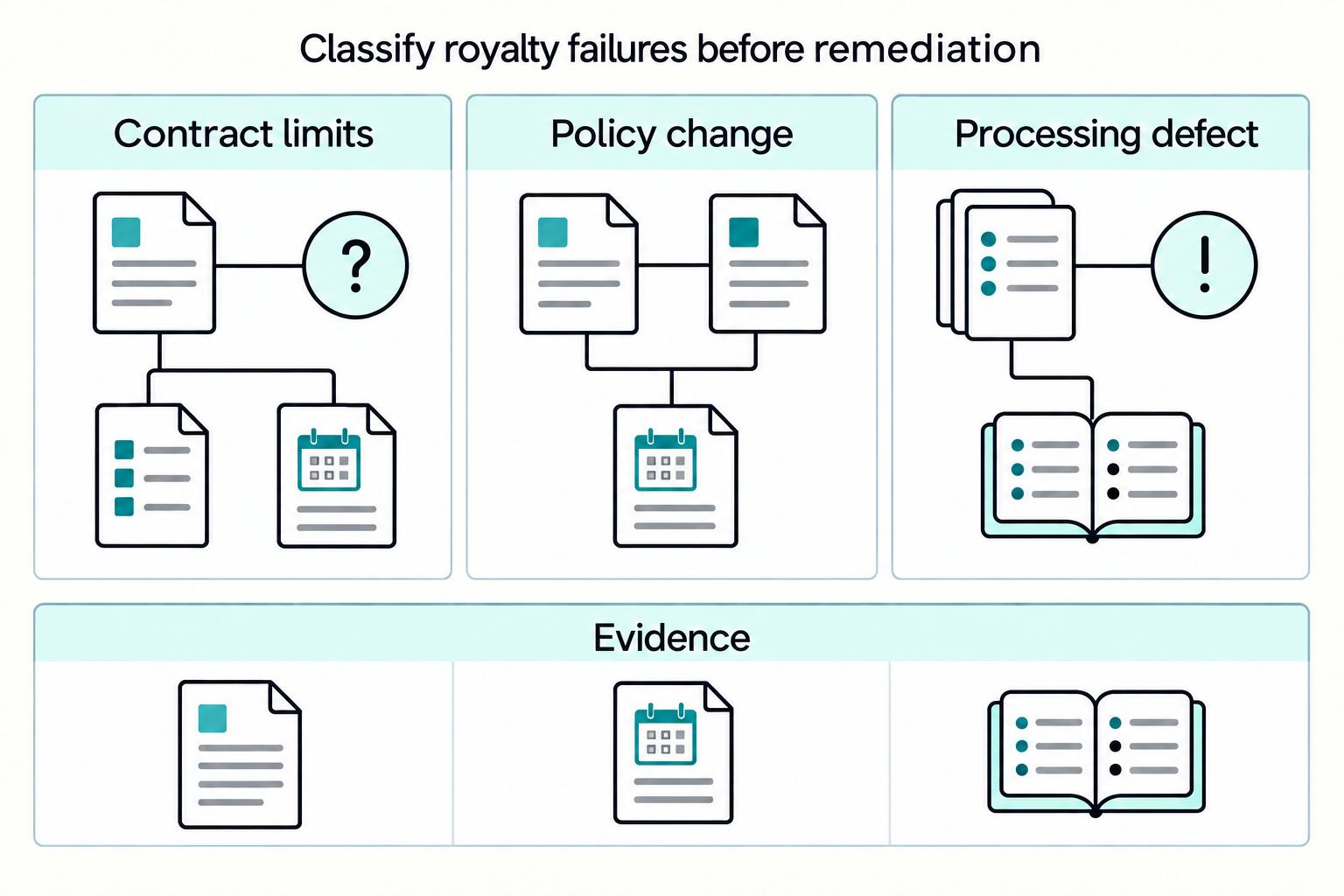
Classify first, then approve remediation. Keep three root-cause buckets distinct:
| Failure type | How it shows up | Evidence |
|---|---|---|
| Contract design limits | Royalty metadata is missing or unusable, royalty logic is incomplete, or on-chain controls are not active for the venue or sale path | Sale-time interface result, validator/admin configuration, order and actual transfer evidence |
| Marketplace policy change | Order/checkout behavior differs from the documented sale-time rule | Policy snapshot |
| Payout-processing defects | Royalty was collected correctly, but internal mapping, batching, or settlement caused payment errors or delays | Unique payable/operation, journal, provider/bank references and authoritative outcome |
Keep those buckets separate throughout the incident. Mislabeling policy failures as payout defects creates repeated finance patches without fixing the underlying exposure.
Run a fixed recovery sequence and document every handoff#
Use one recovery sequence every time:
- Detect a mismatch and preserve affected sale, block/order and rule evidence.
- Isolate the affected obligations, creators and routes; apply any necessary release gate to that scope.
- Determine the contractual payer, actual collection, existing debt, direct receipt and any unknown in-flight payout before calculating a shortfall.
- Approve and fund a valid adjustment/make-good with authorized funds; persist and reserve one operation before submitting. Retrieve/reconcile unknown outcomes before a retry.
- Reconcile and communicate the confirmed transfer or bank result, journal and creator update; record root cause and required control change.
Match your evidence pack to the failure type: policy snapshot for venue issues, royalty metadata and royaltyInfo output for design issues, and journal or batch IDs for payout-processing issues.
Track leading indicators weekly, not just incident totals#
Track shortfall value, uncollected expectations versus actual debts, aged unpaid liabilities, unresolved processing outcomes, manual adjustments and time-to-confirmed receipt. Time-to-approval alone does not show the creator has been paid. Keep chain-finality and custody/conversion exposure visible where they affect release.
Investigate an increase in manual adjustments alongside sales volume, changed agreements, policy changes and detection coverage. It may reflect better detection rather than worse controls. Contain the affected route when the evidence shows a release or accounting problem, and reconcile before expansion.
Common mistakes that turn a good royalty model into a liability#
Most royalty failures are predictable: small setup decisions at launch get expensive once policy shifts, volume arrives, and disputes pile up.
- Calling a model "on-chain" without verifying where enforcement actually happens.
On-chain settlement does not alone guarantee royalties. Check ordinary token transfer behavior separately from validator and exchange rules. A code-enforced permitted route can coexist with adjustable administrator settings and unsupported economic transfers; map its limitations rather than classifying every difference as purely off-chain policy.
- Launching without a current, dated marketplace policy matrix.
Royalties are mostly policy-driven, and policy can change under fee pressure and zero-royalty competition. Before each launch wave, freeze a matrix with venue, snapshot date, eligibility, whether buyers can skip royalties, and any contract-specific conditions. Treat stale internal notes as a launch blocker.
- Running payout flows without a traceable evidence pack.
Disputes get expensive when you cannot quickly reconstruct what happened. For each payout path, keep the transaction hash, venue, token or collection ID, sale price, expected royalty basis, policy snapshot date, and payout batch or journal ID. Without that pack, exceptions increase and resolution quality drops.
- Ignoring concentration risk until a few collections drive payout noise.
Aggregate metrics can hide concentrated exposure. Track royalty variance, exception volume, and manual adjustments by collection, then route high-impact collections into separate review and approval paths. Otherwise a localized setup or policy issue can look like a platform-wide failure.
Make the call with a decision-ready checklist#
Decide market by market, and treat any missing checkpoint as a stop signal. Approve launch only when enforcement choice, policy evidence, payout traceability, and failure ownership are all documented and testable.
- Confirm the enforcement layer for each launch market.
Record royalty signaling, exchange/validator constraints, configurable administrators and payout settlement separately for the actual chain, collection and venue. Do not label ERC-721 itself a royalty enforcement layer.
- Freeze a dated marketplace policy snapshot before launch.
Freeze documentation and sale-path evidence for the venues you actually intend to use. Keep historical venues in a separate legacy reconciliation list; Nifty Gateway’s announced closure excludes it as an assumed new launch option. Do not require new teams to prepare live test sales on obsolete services.
- Validate payout traceability from sale event to creator settlement.
Run a test sale and confirm you can trace sale event to creator payout in auditable journals. Your evidence pack should include transaction hash, venue, token or collection ID, sale price, expected royalty basis, journal reference, settlement batch, and final paid amount.
- Define failure ownership and remediation SLA before launch.
Assign who detects royalty bypass or mismatch events, who approves remediation, who communicates with creators, and how escalation works across support, finance, and product.
- Gate expansion on operating readiness, not launch pressure.
Move forward only after compliance requirements, reconciliation checks, and trust-and-safety setup pass together, including moderation tooling, analytics dashboards, support playbooks, content screening, wash-trading controls, and takedown handling.
Copy/paste checklist:
- Confirm signaling, collection enforcement and settlement for each actual chain, collection and venue.
- Freeze dated policy/configuration evidence for supported live paths and retain legacy records separately.
- Trace each sale to actual direct receipt, contractual payable, funded settlement or a scoped exception.
- Define shortfall liability, authorized make-good funding, unknown-outcome recovery and creator communication.
- Complete applicable legal/verification checks before live rollout and expand only after reconciled controls are demonstrated.
Related reading: What Is Reverse Factoring? How Supply Chain Finance Lets Platforms Pay Contractors Early at Low Cost.
Frequently Asked Questions
What is the practical difference between on-chain royalties and off-chain royalties for operators?
Separate calculation, enforcement and settlement. A contract can signal a royalty amount without requiring payment; an exchange contract can transfer it during sale; a platform can later convert collected funds and pay a bank account. Off-chain order signing or calculation does not mean settlement occurs off-chain. Verify the actual transfer or bank receipt, not just the label.
Are NFT creator royalties ever truly guaranteed across marketplaces?
No universal cross-marketplace guarantee follows from a royalty interface or token standard. Transfer constraints and exchange collection can strengthen supported routes, but have configuration and distribution limits. A separate platform guarantee can create a contractual debt even if collection fails; identify its funding and scope.
Who usually pays NFT creator royalties during secondary sales?
The venue/order and agreement determine the economic payer. A royalty may be deducted from seller proceeds or included on top of the buyer’s price. Direct wallet receipt and platform collection for later bank payout have different records. Show gross price, buyer debit, seller net, creator amount and fees separately.
Why do marketplace royalty policies change so quickly?
Venue settings, commercial terms and configurable contract dependencies can change independently. Recheck the actual sale path and its administrators, not just an old royalty percentage. Record a dated policy/configuration snapshot and verify transferred amounts so a change is detected before a creator promise relies on it.
When should a team choose ERC721-C over marketplace-level enforcement?
Consider ERC721-C-style transfer controls when the supported venues and wallet routes meet your distribution needs and you can operate their validator/admin dependencies. Compare compatibility, settings changes and actual collection with the looser marketplace-policy option. Ordinary ERC-721 is not an enforced-royalty alternative, and a control can restrict trading without guaranteeing every resale payment.
What should founders verify before expanding to a new country with NFT royalty payouts?
Verify current venue/network/provider availability, the creator agreement and liability, custody/conversion/payout roles, and applicable jurisdiction-specific legal checks before live activity. Then trace a sale to direct creator receipt or a properly funded payable and settlement. Preserve deductions, tax/reporting facts, unknown outcomes and exception ownership; reconciliation alone does not clear all legal requirements.
Try a related tool
Researched and edited by the Gruv editorial team. Gruv builds cross-border billing, payouts, and finance-operations software for global businesses.
Sources
Includes 7 external sources outside the trusted-domain allowlist.
- copyright.gov/policy/nft-study/Joint-USPTO-USCO-Report-on-...trusted
- blur.ioexternal
- docs.opensea.io/docs/creator-fee-enforcementexternal
- docs.rarible.org/docs/royaltiesexternal
- docs.rarible.org/docs/tokens-fees-and-royaltiesexternal
- eips.ethereum.org/EIPS/eip-2981external
- gemini.com/blog/announcing-nifty-gateways-closureexternal
- github.com/limitbreakinc/creator-token-standardsexternal
Educational content only. Not legal, tax, or financial advice.
Related Posts
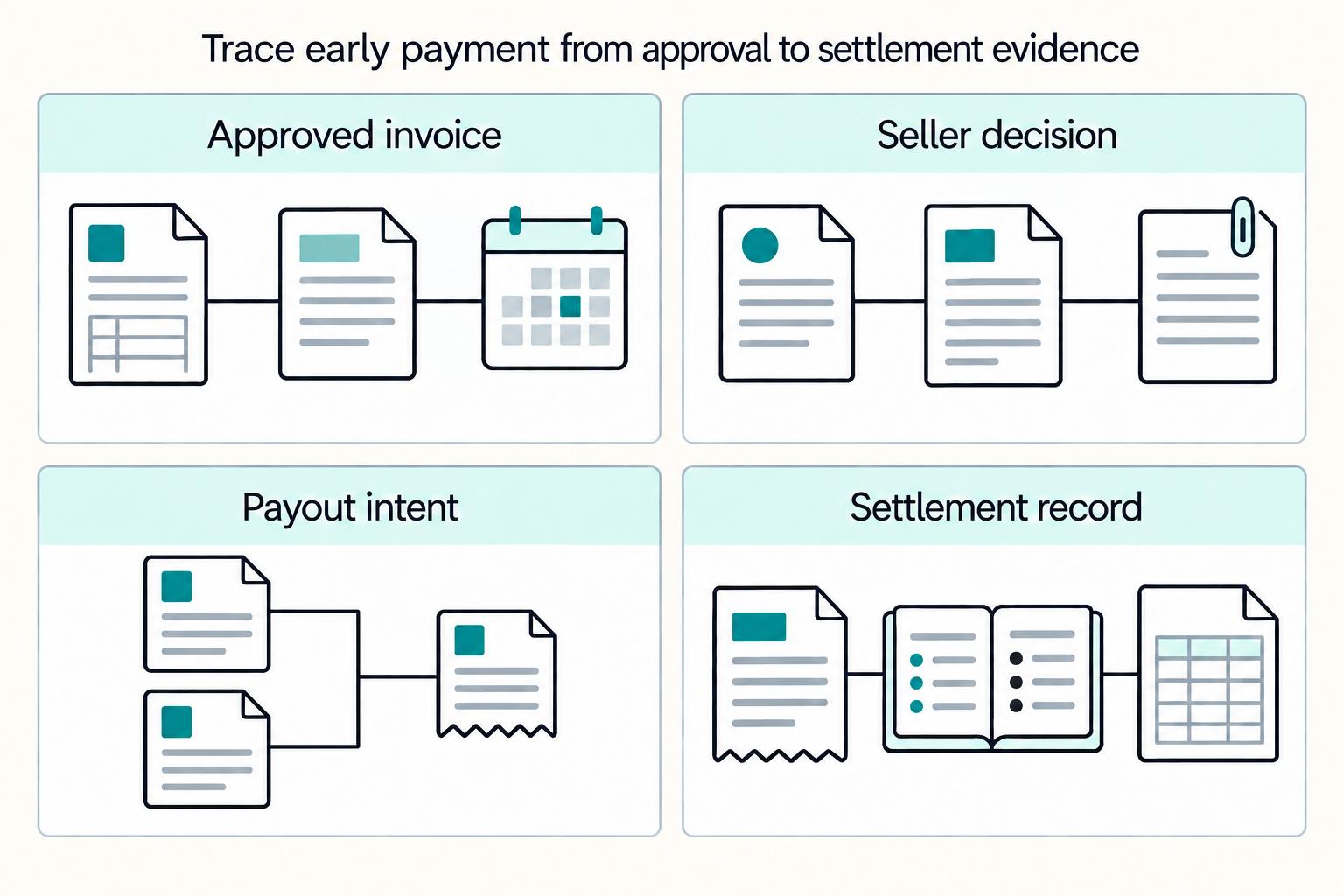
Supply Chain Finance for Marketplaces: How Early Payment Programs Can Attract and Retain Sellers
Treat an Early Payment Program as both a funding decision and a payout-control decision. In a marketplace, it can shape seller experience, payout reliability, exception volume, and who carries cash and credit exposure when payment happens before standard terms.
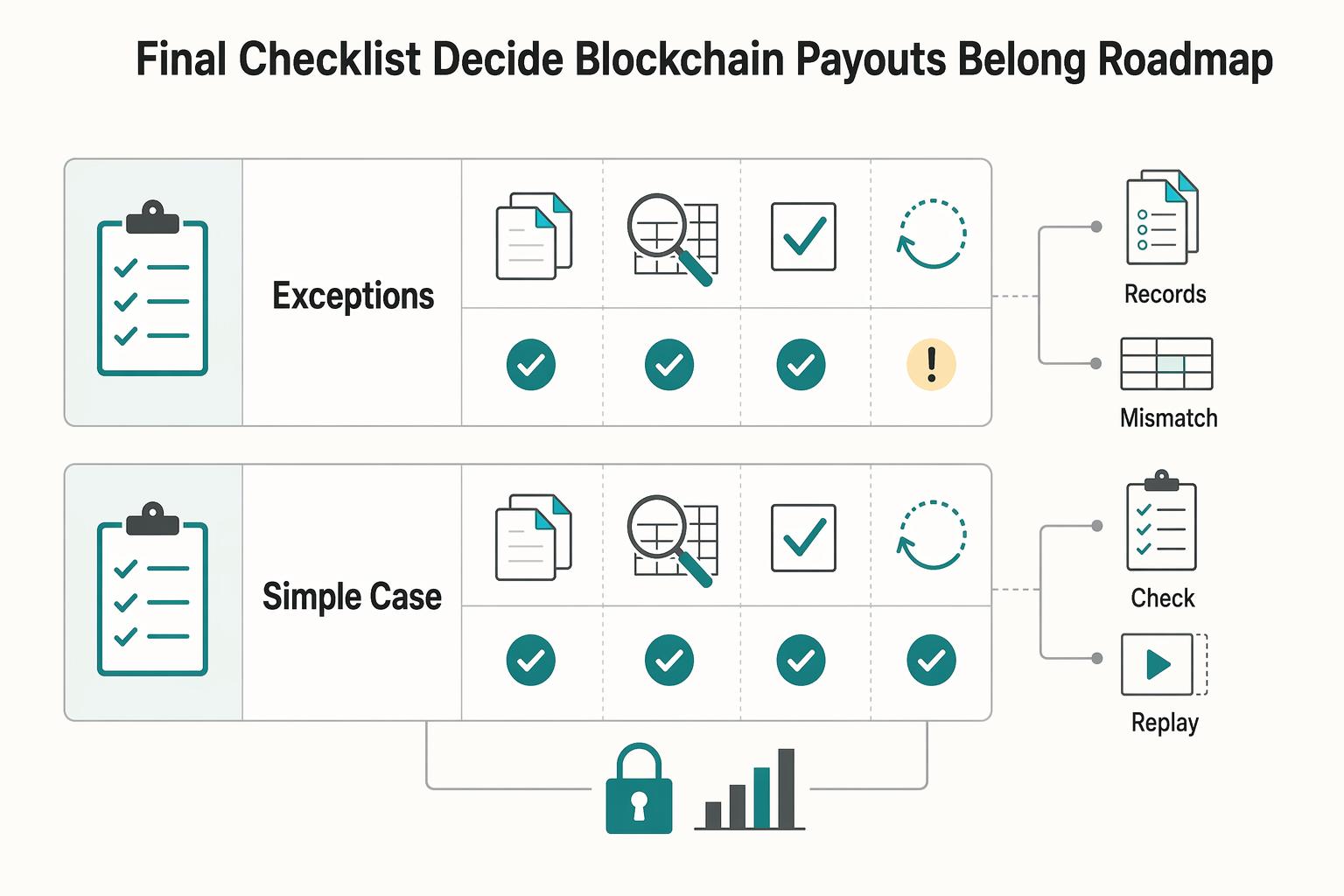
How Blockchain and Smart Contracts Will Change Marketplace Payouts by 2030
2030 blockchain narratives can be useful directional context for marketplace payouts, but they are not proof that payout operations, compliance, or reconciliation are solved. The real production question is not chain mechanics alone. It is whether you can run an end-to-end payment flow that Finance, Compliance, and Treasury can actually operate, with regulated money handling, wallet infrastructure, and clear ownership when something fails.
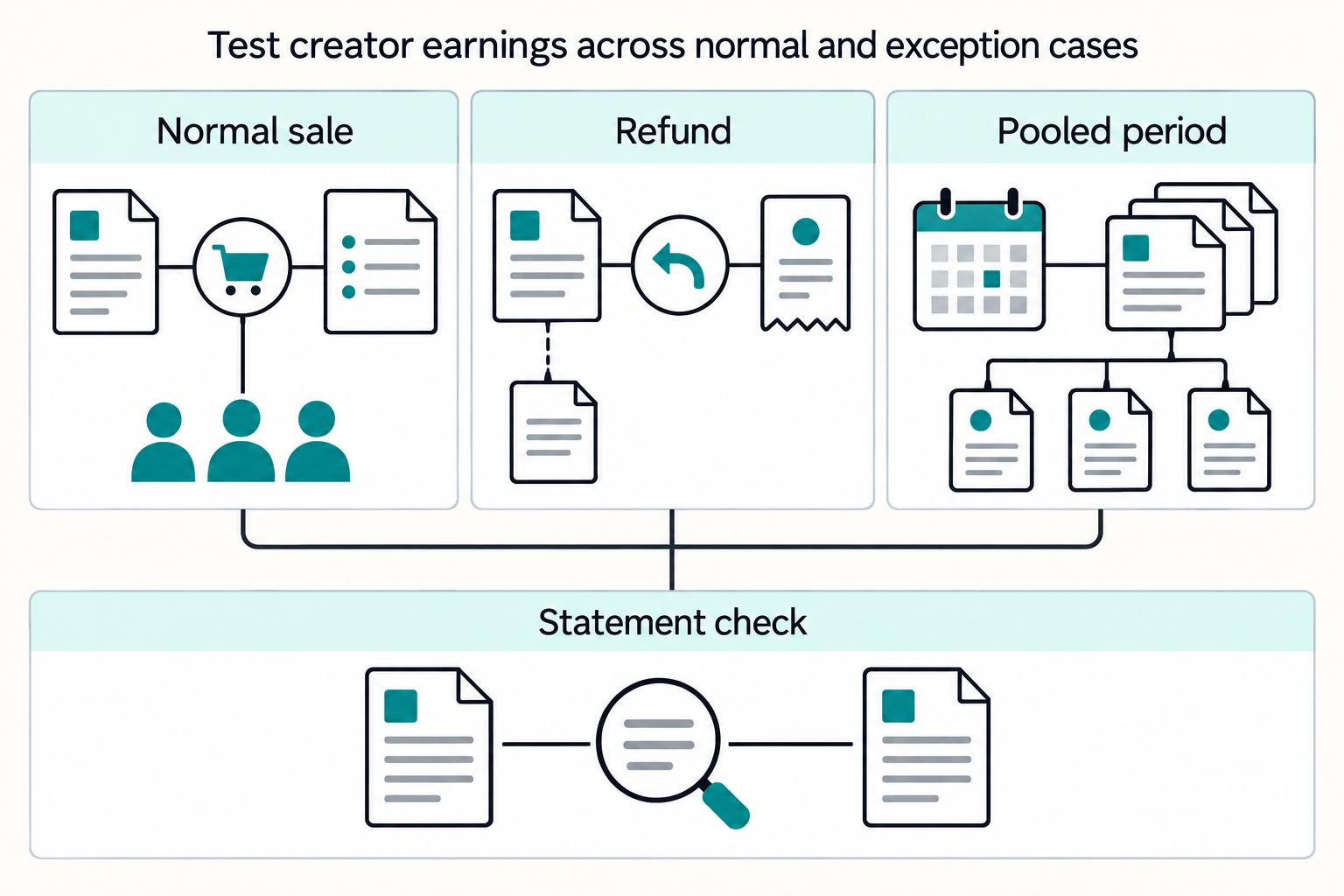
How E-Learning Content Marketplaces Pay Course Creators: Royalty Models and Tax Compliance
Choose your payout and tax operating model before you commit product or go-to-market resources in a new country. In the United States, Canada, and similar multi-jurisdiction rollouts, that early choice shapes who controls creator earnings, who carries tax obligations, and how much operational complexity your team takes on.