
Quick Answer
Prioritize the blocking side first, then sequence around completed matches. If supply quality or responsiveness is failing, run supply-first activation before broad demand spend; if demand is present but conversion lags, fix pricing and trust friction first. Use a weekly evidence pack with funnel visibility by side, failed-match reasons, and payout or collection exceptions, then set continue-adjust-stop gates. As product-market fit gets closer, shift reviews toward CAC, payback trend, and contribution margin so early incentives do not outlive their purpose.
Why Early Marketplace Liquidity Has to Be Targeted#
Treat the cold start as an operating problem, not a branding exercise. In a two-sided marketplace, your job is to make matching reliable fast enough to prove demand.
Do that without letting early tactics harden into expensive acquisition, weak pricing, or damaged unit economics as you get closer to product-market fit.
A lot of marketplace advice points in the same early direction: push hard on liquidity, spend on acquisition and incentives, and keep pricing low to reduce friction. That can be right at 0 to 1. It also creates a trap. As Dan Hockenmaier notes in his writing on marketplace phases, advice that helps you solve the cold start problem can become dangerous as the marketplace heats up. If you keep subsidizing behavior that no longer needs subsidy, or keep buying demand before supply can fulfill it, you risk growth that looks good in signups while match completion lags.
The practical tension is simple: reliable matching needs speed, but speed can hide waste. Large marketplaces have had to grow both sides, with especially strong attention to supply.
That matters because the first question is usually not "How do we grow?" but "Which side is actually blocking completed matches?" If supply quality, availability, or responsiveness is the constraint, broad demand spend can make the numbers noisier, the ops load heavier, and the user experience worse.
Before you start#
Bring a small evidence pack before you debate strategy, so the conversation starts with evidence instead of opinion:
- A crisp target segment for the first market
- One definition of a completed match that product, ops, finance, and engineering all use
- Current funnel visibility by side, including where activation stalls
- A weekly log of failed-match reasons, plus payout or collection exceptions if money is already moving
The verification point is straightforward: if each function is quoting a different match count, you are not ready to scale anything. Fix the instrumentation and shared definitions first. One common failure mode is mistaking interest for liquidity. Waitlists, signups, and app installs can rise while actual match reliability stays flat.
This guide is for phase-based decisions, not theory. Founders should leave with sequencing rules and stop conditions. Product leaders should know where trust and matching friction need work before more acquisition. Finance and ops should have checkpoints for acquisition spend, incentives, pricing drift, and whether transaction activity is operationally real. Engineering owners should know what status events and traceability need to exist so liquidity is visible in actual marketplace behavior, not inferred from vanity metrics.
By the end, you should have decision checkpoints for each owner group and a copy-and-paste checklist you can use in your next weekly review.
If you want a deeper dive, read Two-Sided Marketplace Dynamics: How Platform Supply and Demand Affect Payout Strategy.
Set the liquidity target and failure definition#
Set your liquidity target around reliable completed matches, not signups. In practice, demand liquidity and marketplace liquidity show up in transaction behavior, not top-of-funnel growth.
| Step | Decision | Signals |
|---|---|---|
| Define liquidity in transaction terms | Use one shared definition of a completed match | Supply availability; response time; quote acceptance; time to first transaction; unsuccessful transaction volume |
| Name the blocking side | Identify the side currently blocking completed matches | Supply thin, slow to respond, or not activating; or quote acceptance stays weak and time to first transaction remains long |
| Set the failure definition before scaling spend | Define failure as match reliability not improving from one cycle to the next | Failed-match reasons by side and the exact stall point in the transaction flow |
Step 1 Define liquidity in transaction terms#
Use one shared definition of a completed match, then track signals tied to real flow: supply availability, response time, quote acceptance, and time to first transaction. Liquidity is improving when buyers and sellers can find each other and complete transactions without unusual manual rescue.
Review unsuccessful transaction volume every week, not just completed volume. If you cannot see where matching failed, you are still measuring interest more than liquidity.
Step 2 Name the blocking side#
Identify the side that is currently blocking completed matches. If buyer requests exist but supply is thin, slow to respond, or not activating, treat it as a supply constraint. If supply is available but quote acceptance stays weak or time to first transaction remains long, demand, trust, or pricing is more likely the constraint.
This is the cold start and chicken-and-egg dynamic in operational terms: sequence around the active bottleneck instead of pushing both sides equally.
Step 3 Set your failure definition before scaling spend#
Define failure as match reliability not improving from one cycle to the next. When that happens, treat it as a trigger to fix the bottleneck before expanding broad acquisition.
Keep an evidence pack with failed-match reasons by side and the exact stall point in the transaction flow. That gives you a clear handoff from diagnosis to execution.
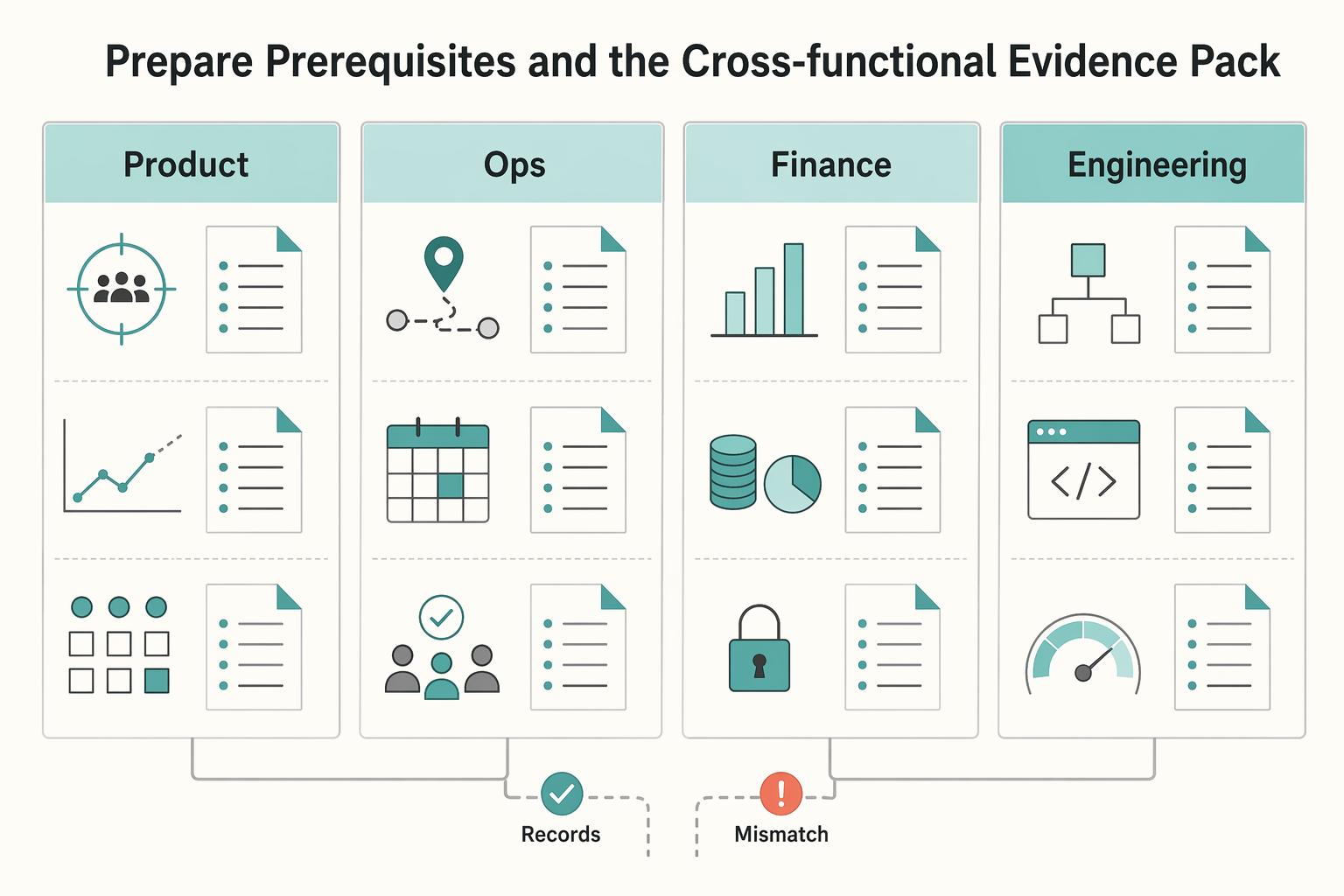
Prepare prerequisites and the cross-functional evidence pack#
Build a minimum evidence pack before launch so your team can test assumptions quickly instead of debating narratives after traffic starts.
Step 1: Write a short, testable readiness pack. Define your target segment, initial pricing strategy, incentive budget, and your starting assumptions for GMV, CAC, and payback. For each assumption, name the event or report that will confirm or disprove it so product, ops, finance, and engineering are working from the same definition of progress.
Step 2: Assign one owner per operating risk. Set clear ownership by function before acquisition spend ramps.
| Function | Primary owner scope | Weekly proof to review | Red flag |
|---|---|---|---|
| Product | Matching UX | Funnel by side, response time, acceptance points | Intent exists, but users stall before confirmation |
| Ops | Onboarding quality | Approval flow, activation quality checks, payout readiness | Approved participants still cannot transact cleanly |
| Finance | CAC and unit economics | Acquisition by side, incentive spend, GMV, payback trend | Volume rises while payback or margin trend worsens |
| Engineering | Event instrumentation | Coverage across onboarding, matching, payout, and collection events | Failed transactions cannot be reconstructed |
Step 3: Review proof artifacts weekly, not just rollups. Use a standing packet: onboarding funnel by side, match completion logs, failed-match reasons, and payout or collection exceptions. Keep a small set of raw failed-match examples in each review so each failure has one named reason and one next owner.
Step 4: Pre-wire compliance and traceability before growth. For payments-heavy marketplaces, implement KYC, KYB, and AML controls where applicable before scale. Your team should be able to trace each payout or collection from match record to beneficiary or business record, including review status and exception outcome. If you support stablecoins or other crypto rails, separate onboarding paths where users buy in versus earn in, because those paths carry different operational risk.
For a step-by-step walkthrough, see Payoneer Marketplace Payments Review: Test Channels, Costs, and Controls First.
Choose first-side sequencing with explicit decision rules#
Pick your first side by the blocker in completed matches, not by a generic cold-start narrative. If supply constraints are driving failed matches, go supply-first; if demand exists but conversion stalls, fix pricing presentation and trust friction before adding more supply-side incentives.
Network effects explain why marketplaces get stronger as they aggregate both sides, but they do not pick your launch sequence for you. Your launch question is narrower: in your first segment, use case, and geography, which side is currently preventing completed matches?
Use your readiness-pack evidence to decide: onboarding funnel by side, request-to-match funnel, failed-match reasons, approval rates, and payout or collection exceptions.
| Entry path | Speed to Demand liquidity | Cost pattern | Operational risk |
|---|---|---|---|
| Supply-first | Fastest when supply constraints are the main blocker | Front-loaded onboarding, verification, activation, and early incentives | You can grow approved supply that still does not transact |
| Demand-first | Fastest when responsive supply already exists | Front-loaded demand acquisition and support | You can create disappointed demand if response time, availability, or trust is weak |
| Constrained dual-seeding | Moderate when both sides are thin and scope is tightly bounded | High coordination cost across both sides | You can hide the true bottleneck by scaling both sides at once |
Apply two hard rules in weekly reviews:
- If supply constraints are the primary blocker to completed matches, prioritize supply onboarding quality and activation before broad demand spend.
- If demand is present but conversion stalls, fix pricing strategy and trust friction first, then retest on the same traffic source before increasing supply incentives.
Keep active supply and passive supply separate in your plan. Active supply usually needs tighter activation and retention operations; passive supply can often onboard faster but still needs validation that listed supply is current and can convert into completed matches.
Related: Mercury vs. Brex: Which is Better for a Bootstrapped SaaS Business?.
Want a quick next step? Try the free invoice generator.
Execute the 0-1 bootstrap in weekly operating sprints#
Run the 0-1 phase as weekly operating sprints with one testable goal: increase completed matches on controlled demand. If a sprint does not improve completion or remove a known failure reason, keep demand intake flat and fix that blocker before widening the market.
Step 1 Set a one-week operating loop#
Keep the same loop each week so cause and effect stay visible:
- Recruit and activate the constrained side. Focus on the side that is currently blocking matches.
- Run controlled demand intake. Keep volume narrow enough to inspect failed or delayed matches.
- Review failed matches by primary cause. Code each failure once, then prioritize the most common cause.
- Ship one friction fix. Make one constrained change and retest on the same segment next week.
Track progress by completed first transactions and fewer exceptions, not signup growth alone.
Step 2 Apply incentives with intent#
Use supply-side incentives only for a named bottleneck, and tie rewards to match quality or successful fulfillment, not raw applications. Define the bounds before launch: cohort, start and stop dates, budget cap, and success metric.
Use token incentives even more cautiously. NIST IR 8301 (February 2021) frames this area as "Token Design and Management Overview," which is a useful reminder that token design is a system choice, not just a promotion format.
Step 3 Use tokenized marketplace lessons carefully#
Early incentives can increase participation, but durable liquidity still depends on repeat utility and earnings quality. One recurring pattern in crypto onboarding is that users either buy in or earn in; for labor or services flows, earning in can align incentives more directly with delivered work.
Plan the transition path up front. The Incentiv whitepaper (updated 22 September, 2025) explicitly names a "Transition to Fee-Based Sustainability." Treat that as a practical checkpoint: if activity drops when rewards stop, you boosted activity, not retention.
Step 4 Anchor every sprint in traceable payments operations#
Treat liquidity gains as real only when payment operations are traceable end to end. In each sprint, verify that invoicing, payouts, status events, and reconciliation all reflect the same completed transactions.
If match counts rise while payout exceptions or reconciliation breaks also rise, pause expansion and fix the money flow before scaling demand.
Instrument economics and matching before product-market fit#
Before Product-market fit, use instrumentation to decide what to keep, change, or stop each week. Treat this as an internal operating framework, not a benchmark standard.
- Keep a small weekly scorecard tied to decisions.
Track match reliability, time-to-match, repeat participation by side, blended CAC, and contribution margin trend so each growth motion is judged on outcomes, not activity alone.
- Read quality by side, not just total volume.
Split demand and supply results, and separate new from repeat participation on each side, so Network effects are assessed through actual repeat behavior rather than raw signup or approval counts.
- Verify that your money and event paths are auditable.
Review whether retries are idempotent, whether ledger records are traceable across key transaction states, and whether payout or collection failures are visible to ops quickly enough to act during the sprint.
- Apply weekly gates to each growth motion.
Label each motion as continue, adjust, or stop based on match quality and Unit economics together, then retest narrowly before expanding scope.
You might also find this useful: Supply Chain Finance for Marketplaces: How Early Payment Programs Can Attract and Retain Sellers.
Rewire the system after product-market fit#
After Product-market fit, treat growth as a path-selection decision, not a default continuation of launch tactics. There is no single post-PMF route that is universally best, so choose based on what your own evidence says fits your risk, operating model, and goals.
Step 1. Audit launch-era interventions#
Review each launch-era intervention and decide whether it still belongs in the core system. Keep only what supports repeatable outcomes in your core segment, and retire concessions that now add cost or complexity without clear ongoing value.
Step 2. Reprice deliberately#
If launch-era pricing no longer fits your post-PMF model, reprice in focused segments instead of using one blanket change. Use segment-level evidence to decide where to adjust, where to hold, and where to phase changes more slowly.
Step 3. Tighten channel efficiency and expansion discipline#
Be stricter about channels and expansion after PMF. If a growth path only works with heavy intervention or repeated concessions, treat that as a signal to pause and re-evaluate before scaling it.
Apply the same standard to Total addressable market (TAM) narratives: broad frameworks can help, but they are not exhaustive, and they do not replace proof from your current operating context. Do not assume Network effects will fix economics that already look weak in your own data.
Common mistakes and recovery moves#
After PMF, the biggest mistake is scaling before your validation is strong enough to show where matching fails. Keep one rule from the cold start: do not widen spend until your evidence shows reliable matches and acceptable economics in the segment you are pushing.
Step 1. Split active and passive supply before diagnosing performance#
Treating all supply as one pool can hide the real bottleneck, so use a practical split, such as active vs passive participation, before diagnosing performance. This is a diagnostic choice, not a universal template, but it helps you see which group needs activation support versus cleaner availability and response handling.
Use separate reporting instead of one blended supply number. Track onboarding completion, first successful match, repeat participation, and non-response patterns by group so a strong total does not mask weak fulfillment depth.
Step 2. Freeze broad demand when supply constraints are unresolved#
If supply constraints are unresolved, freeze broad demand campaigns until the bottlenecks are repaired. More buyer traffic rarely fixes weak onboarding, poor quality control, or inconsistent availability, and can make outcomes worse for both sides.
Fix blocked points first, then verify with completed transactions and failed-match reasons rather than lead volume. Keep a short evidence pack for each change: the bottleneck, what changed, and whether match reliability and support or payout exceptions improved.
Step 3. Demand evidence before you scale the story#
Narrative is not validation, so do not scale on brand story alone. Startups that survive tend to test assumptions stage by stage, and generic advice is not always suitable for your exact situation.
Require proof from your weekly scorecard before scaling: match reliability, repeat behavior by side, and contribution-margin trend. If those are unstable, pause, correct the assumption, and retest.
Conclusion and next step checklist#
Treat the next phase as two jobs, in order: get matching reliably working, then tighten the economics as traction becomes real. In many two-sided marketplaces, sequencing and instrumentation can matter more than generic growth advice, and weak execution is not automatically rescued by hoped-for network effects.
Step 1. Define the quarter's pass and fail conditions#
Write down what counts as real marketplace liquidity for this quarter, and make it observable in transaction behavior. Keep it tied to outcomes you can verify, such as completed matches, failed matches, and repeat participation by each side.
Your checkpoint is simple: can someone on the team open the logs and show whether matching got more reliable this cycle? If the answer still depends on signup volume, pipeline stories, or unverified supply count, your definition is too soft.
Step 2. Name the primary blocker#
Force a call on whether supply constraints or demand constraints are the main reason completed matches fail right now. If demand exists but stalls because quality, availability, response time, or fulfillment is weak, fix supply first. If supply is present but buyers hesitate or drop at the last mile, look at pricing, trust, and conversion friction before you buy more traffic.
A common failure mode is treating both sides as equally broken and spreading effort across everything. That usually gives you more activity but not more completed transactions.
Step 3. Set near-term decision gates#
For the next operating cycles, choose one sequencing path and define a continue, adjust, or stop gate for each cycle. This can be supply-first, demand-first, or a tightly constrained dual-seeding motion, but the gate should always depend on match quality plus basic economics, not narrative momentum.
Useful evidence pack for each review:
- onboarding completion by side
- first successful match by cohort
- failed-match reasons
- payout or collection exceptions
- repeat behavior by side
If you cannot review those items cleanly, fix instrumentation before expanding acquisition.
Step 4. Launch bounded incentive tests#
Run incentives as experiments, not permanent policy. Predefine what would make you continue, narrow, or stop each test, and tie that decision to reliable matching and earnings quality rather than raw signups.
This is where the cold start often gets mishandled. Teams keep incentives running after they stop improving real behavior, which hides poor pricing health and trains low-quality participation.
Step 5. Add a post-traction economics review#
Once traction appears, shift faster than feels comfortable into CAC, unit economics, pricing health, and retention quality reviews. You do not need magic thresholds to know what to watch. You need a regular check on whether each growth motion still produces repeat usage and whether any launch-era discounting or incentives are now weakening margin quality.
If you want one operating rule to carry forward, use this: when matching reliability stops improving, pause expansion and repair the bottleneck before spending your way past it.
Related reading: How to Write a Cold Email Sequence That Converts for a SaaS Product.
Frequently Asked Questions
What is marketplace liquidity in practical terms during a cold start?
In practice, it means participants can get a reliable match without constant manual rescue. A useful checkpoint is completed transactions, not signup totals alone. If your team is still explaining away failed matches with "we have enough users," you likely do not have real liquidity yet.
Should we bootstrap supply first or demand first?
There is no universal rule, so choose the side that is currently blocking completed matches. If supply constraints are the main blocker, start with onboarding and availability, including incentives where appropriate, before broad demand spend. If demand exists but conversion stalls, address that bottleneck before adding more incentives or traffic.
What is the difference between active supply and passive supply, and why does it matter?
Active supply has to keep showing up and participating continuously, while passive supply usually needs initial setup and then much less ongoing effort. That distinction matters because passively supplied marketplaces can often scale supply faster without equivalent demand, but their stickiness is harder to secure, while active supply can be stickier and more defensible at scale. If you blend them into one supply number, you can hide where fulfilled demand is actually coming from.
When do liquidity-first tactics become dangerous after product-market fit?
They can become dangerous as the marketplace matures if the same cold-start playbook remains the default. One marketplace operator put it plainly: "the cold start can rapidly become dangerous as your marketplace heats up." A practical red flag is continuing to rely on heavy acquisition spend, incentives, and low pricing without re-evaluating whether those tactics still fit the current stage.
Can network effects fix weak execution in a two-sided marketplace?
Treat execution gaps as operating problems to solve directly, rather than expecting scale alone to resolve them.
What should we do if supply appears to be the main failure point but evidence is still incomplete?
Pause broad demand expansion and tighten the evidence before making a bigger bet. Check whether supply onboarding and ongoing participation are the bottleneck, and split performance by active supply versus passive supply. If the data still conflicts, run a bounded test on one repair at a time and verify whether completed matches improve before spending more.
Try a related tool
Researched and edited by the Gruv editorial team. Gruv builds cross-border billing, payouts, and finance-operations software for global businesses.
Sources
- business.uc.edu/programs-degrees/graduate/specialized-master...trusted
- courses.cs.northwestern.edu/325/programs/linuxdict.txttrusted
- engineering.nyu.edu/sites/default/files/2021-10/How_I_Became_a_Q...trusted
- ftc.gov/sites/default/files/documents/reports/evolvi...trusted
- govinfo.gov/content/pkg/GOVPUB-C13-20a930aa9b87b3b9f7cd0...trusted
- macos.utah.edu/documentation/security/lab_security/password...trusted
- nvlpubs.nist.gov/nistpubs/ir/2021/NIST.IR.8301.pdftrusted
- som.yale.edu/sites/default/files/2025-04/Patterns%20in%20...trusted
Educational content only. Not legal, tax, or financial advice.
Related Posts
How Supply and Demand Dynamics Should Set Your Marketplace Payout Strategy
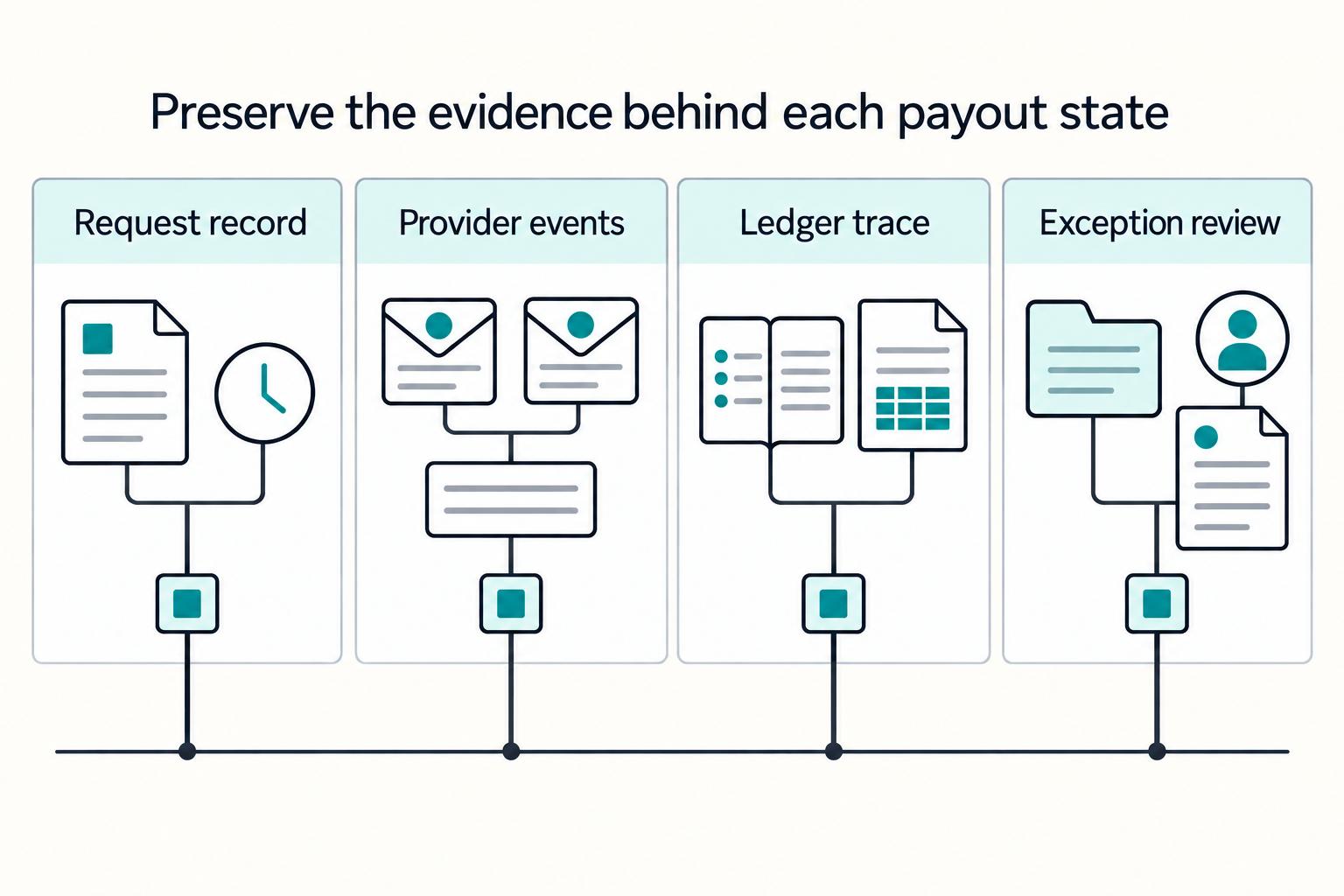
In a two-sided marketplace, payout strategy is not back-office plumbing. It can shape whether sellers stay active, whether transactions complete reliably, and whether buyers can find supply that is ready to transact.
Mercury vs. Brex for Bootstrapped SaaS Businesses
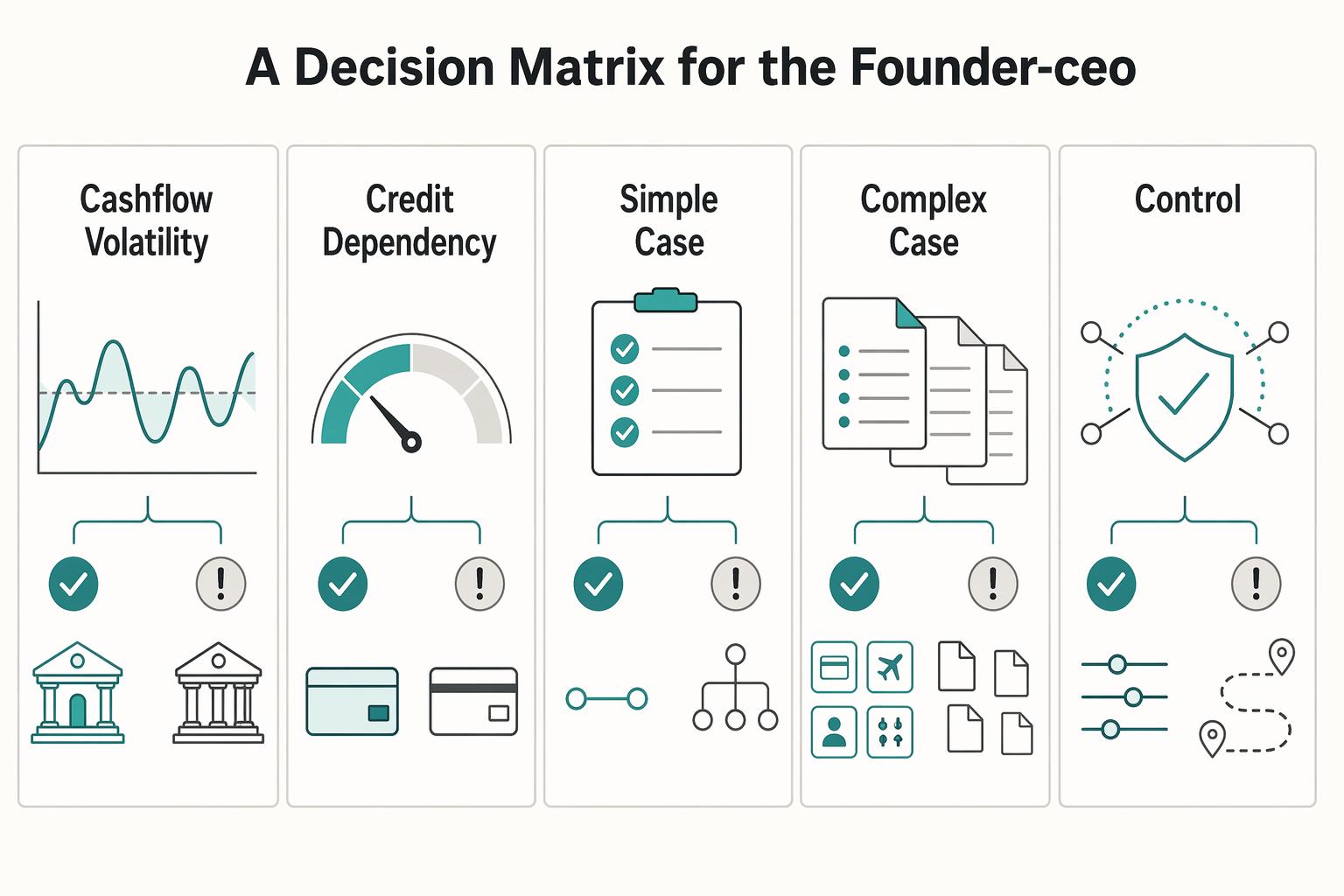
For a bootstrapped SaaS operator focused on runway control, predictable cash flow, and clean separation between personal and business finances, this is mostly a model choice once eligibility is confirmed. Mercury is closer to a banking core, while Brex is closer to a corporate card plus expense-control stack.
Supply Chain Finance for Marketplaces: How Early Payment Programs Can Attract and Retain Sellers
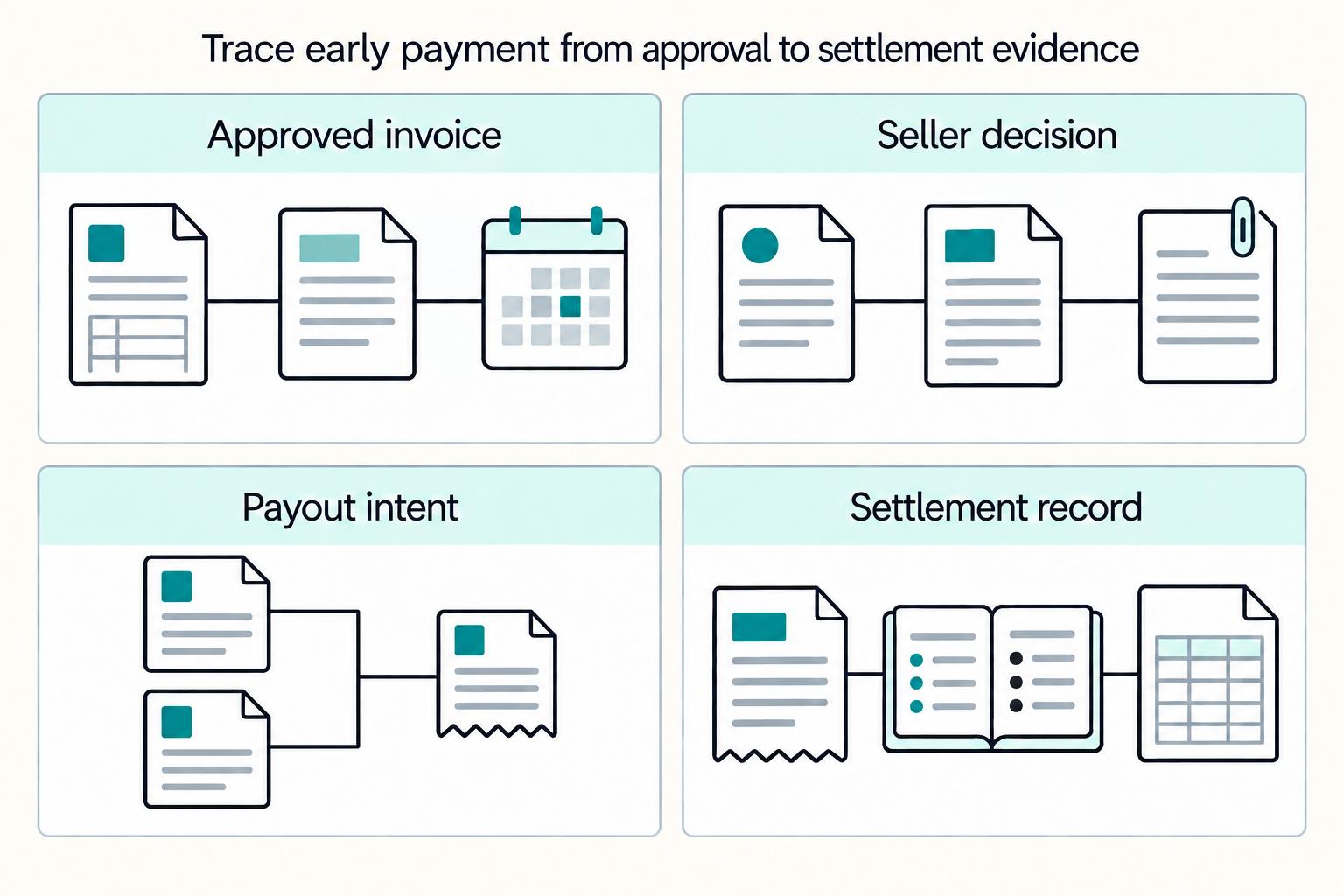
Treat an Early Payment Program as both a funding decision and a payout-control decision. In a marketplace, it can shape seller experience, payout reliability, exception volume, and who carries cash and credit exposure when payment happens before standard terms.