

Quick Answer
Start with a written CAP, then classify each payee as a natural person or legal entity before checks run. Use low, medium, and high lanes with hard-trigger overrides, and send unclear files to an Exception queue with reason codes and dated notes. Keep inconclusive separate from fail, pause payout release until evidence is complete, and log timestamps plus decision artifacts so each approval or hold can be reconstructed.
Why this guide exists for compliance and risk teams#
For teams onboarding thousands of contractors and sellers, the challenge is to complete required verification without putting every file in a manual queue. Move clear, lower-risk cases through automated checks, escalate conflicting evidence, and retain enough detail to explain each decision.
Set expectations for risk-based review. You do not need to treat every applicant as high risk to run a serious compliance program. A risk-based model should let low-risk users pass with minimal friction while routing higher-risk cases to deeper checks and more human review.
Blanket manual review creates avoidable friction and operational strain. When every file waits in a manual queue, onboarding slows for people who expect verification in minutes, and delays and risk usually grow with volume.
Set one governance checkpoint early: a written Customer Acceptance Policy (CAP). It should define risk appetite, prohibited categories, and which profiles require extra evidence. Publish it internally and review it regularly so decisions stay consistent as you scale.
Reduce AML-related surprises without forcing full manual review. This guide does not promise zero risk. It is designed to reduce surprises while creating less friction than a manual-only model.
That usually means combining automated identity and risk checks with targeted escalation. The control artifact that matters most is an audit-ready log for each approval, rejection, and escalation: what you captured, which checks ran, and why the decision was made. If you cannot sample a case and reconstruct the logic end to end, the control is weaker than it looks.
As volume and markets expand, fragmented processes create compliance gaps. Centralizing KYC helps keep policy logic, evidence capture, and decision records consistent across flows.
Keep the scope tight around onboarding decisions. This guide is scoped to contractor and seller verification flows where identity checks and risk controls intersect. The focus is the onboarding decision: whether a customer is verified enough to move forward.
Customer type and risk profile still matter. Some journeys can pass with minimal checks, while unclear or higher-risk cases should trigger more evidence and review. The operating objective is narrow and practical: faster pass-through for low-risk cases, explicit escalation for unclear or higher-risk cases, and decision evidence you can defend later.
Set scope first with KYC KYB and legal triggers#
Start by classifying the payee, then map the legal basis for the onboarding flow. The first onboarding risk is often unclear classification, not just missing tools.
Classify the payee before selecting checks#
Begin with one intake decision: are you paying a natural person or a legal entity? Depending on the program and legal analysis, individual contractors may start on a Know Your Customer (KYC) path, while incorporated suppliers may need Know Your Business (KYB) review and, in some programs, Ultimate Beneficial Owner (UBO) checks. The deciding factor is not the label the applicant selects, but whether your file clearly identifies the contracting counterparty and the payout recipient.
Run an early consistency check. The contract name, onboarding profile, and payout account should align to the same person or the same registered business. One common failure mode is a mixed file, such as personal identity documents plus a company bank account, without clear entity classification.
Map legal anchors by market and program#
Once payee types are defined, document the legal and compliance anchors for each market and program before you finalize workflow settings. Treat KYC and KYB as part of AML controls, then confirm obligations with compliance and legal based on your product and program structure.
Where your legal analysis says they matter, include the applicable legal frameworks in that mapping. The key control is a written policy note or legal memo tied to each onboarding flow, so analysts can trace why that flow exists.
Route unclear cases to an Exception queue#
When entity status is unclear, route the case to a temporary Exception queue and pause payout release until classification is resolved. Treat this as a pre-settlement verification control, not a clerical delay.
Require a reason code, a missing-evidence list, and a dated reviewer note in the case record. If resolution needs exceptional identity disclosure or an override, apply stronger approvals such as dual control and keep an audit-ready trail.
Prepare the control inputs before you automate anything#
Before you automate, lock down the inputs. If evidence, signals, and ownership stay ambiguous, automation can scale rework instead of reliability.
Define the evidence pack you need to defend a decision#
Set a minimum case record that lets another reviewer reconstruct the outcome without guesswork. In practice, that can include the identity record, what was captured, which checks ran, and the final outcome with timestamps and approvals.
Use an explainable decision trail as the standard: inputs, reasoning, and approvals. A quick audit test is whether an analyst can answer four questions from one case record: who was verified, what was captured, which checks ran, and why the case passed, failed, or escalated.
Separate risk signals from decision outcomes#
Do not collapse signals into outcomes too early. Signals such as screening results and document anomalies are easier to review and defend when they stay separate, instead of disappearing into one opaque score.
Use a risk-based design. Lower-risk users should face less friction, while higher-risk journeys can require more evidence. For document controls, concrete checks are easier to trust and audit, such as MRZ-to-printed-field matching, OCR format-rule guards, and NFC/chip signature verification where supported.
Assign owners before traffic arrives#
If ownership is unclear, disputed cases can turn into policy debates. Set and document ownership before queue volume grows, with clear decision authority for policy and escalation, queue handling, and system execution and logging.
The practical test is simple. For any disputed case, one accountable owner should be clear at each layer. That includes who decides true escalation, who manages aging queues and handoffs, and who prevents duplicate or conflicting records on resubmission.
Decide what to retain, what to mask, and what to verify legally#
Retain enough evidence for later review, but limit routine exposure of full PII. Define what is masked by default, who can unmask it, and when you need full document images versus extracted fields.
If verification vendors or overseas teams can access U.S. sensitive data, assess the DOJ Data Security Program. It took effect on April 8, 2025 and prohibits or restricts specified transactions that give countries of concern or covered persons access to U.S. government-related data or bulk sensitive personal data. Map the data, access recipients, and transaction type before deciding whether the program applies.
Build a risk-tier decision matrix before onboarding traffic scales#
Define your risk-tier outcomes before volume increases, or automation will scale inconsistency instead of control. If a reviewer cannot tell from the case record why a contractor is in low, medium, or high risk, the case is not ready for auto-approval.
Define lanes and default outcomes#
Use three lanes tied to risk scoring, but keep the score as an input rather than the final decision. Each lane should have a clear default outcome and a clear condition for leaving that lane.
Write the matrix so analysts and engineers can implement the same rule: required checks, acceptable evidence, escalation triggers, and release conditions for each lane.
| Risk lane | Default outcome | Move out of lane when |
|---|---|---|
| Low | Auto-approve | A hard trigger fires, a required check is unavailable, or evidence is incomplete |
| Medium | Step-up checks | Sources conflict, identity data does not reconcile, or step-up is inconclusive |
| High | Manual review | A hard trigger applies or the case cannot be resolved from available evidence |
Add hard-trigger overrides#
A low-risk lane needs override rules. Define triggers such as conflicting identity records, unresolved screening alerts, or unavailable required checks, and document who can resolve each one.
Keep thresholds and counts as internal policy choices unless you can defend them with your own evidence. The key control is that hard triggers overrule score-based defaults and force step-up or manual review. Treat "could not verify" as different from "verified." If checks are inconclusive or unverifiable, the case should not pass by default.
For each hard trigger, log the source, timestamp, raw result or reason code, and decision. If a provider is unavailable, preserve its error and request reference and keep the required check unresolved.
Assign escalation owners for Exception queue cases#
A trigger without an owner turns into queue aging. Define ownership per trigger so each exception has a decider, a next action, and a handoff path.
| Owner | Scope |
|---|---|
| Compliance | Policy and disposition issues |
| Operations | Queue handling and resubmissions |
| Engineering | Execution failures, provider outages, and logging defects |
This split prevents mixed risk-plus-tooling cases from stalling. A useful queue check is whether each case shows four fields immediately: trigger, current owner, next action, and last action timestamp.
Expand auto-approve only after audit evidence supports it#
Start with a conservative auto-approve lane and widen it only after audit evidence shows the matrix is working as intended. Expanding too early can hide false negatives, and tightening later can be harder.
Review samples across approved, stepped-up, and manually reviewed cases. Use recorded inputs, timestamps, reviewer notes, and matrix-version history to tune rules, then log what changed, who approved it, and why.
Before widening auto-approval, review a sample of approvals as well as escalations. Track later fraud or identity findings where available; an absence of detected failures is not proof that no false negatives exist.
Once your risk tiers and trigger rules are defined, translate them into clear payout states and escalation paths in Gruv Docs.
Design onboarding stages that protect conversion without weakening controls#
Stage verification so you reduce avoidable friction without weakening control quality. Capture enough evidence to classify risk early, then trigger heavier checks when risk signals or control gates justify the extra burden.
Capture the minimum evidence needed to classify the case#
Start with the smallest set of identity data your policy needs to open a case and make an initial decision. The goal at this stage is to establish a usable record, detect obvious conflicts, and decide whether the case stays in a lower-risk lane or moves to step-up checks.
Begin with foundational identity verification requirements rather than running every available check at signup. Dynamic onboarding can route users to different tools at different points, so move to the next resolving check when early data conflicts. Your checkpoint is the case record. It should show what was captured before step-up, which signals appeared, and why the case advanced.
Sequence checks so each step answers a specific question#
Run lower-friction checks first, then escalate on purpose. In practice, that can mean required ID document checks before adding selfie or live-capture steps.
Use liveness and biometric verification when required by the program or justified by the risk tier and document results. These checks can help confirm presence and an ID match, but they also add steps. Test decision quality against a labeled dataset, then measure retries and abandonment in a limited live rollout; offline results alone cannot establish user friction.
Put heavier controls at the payout gate when your policy allows it#
Where policy allows staged verification, put the highest-friction controls at enforceable payout gates instead of front-loading every case at signup. Require stronger checks before releasing funds or before higher-risk activity.
Support this with compensating controls such as time delays and value, volume, or velocity limits while cases are unresolved. If you cannot reliably block release when verification is failed or unresolved, move heavier checks earlier. No AML design removes risk entirely, so the standard is defensible risk reduction with enforceable controls.
Give inconclusive cases a clear next action#
Treat inconclusive outcomes as a defined state, not a silent loop. Give the user one clear next step at a time, such as resubmitting a document, completing a selfie step, or moving to manual review.
Internally, keep the evidence needed for an audit trail: outcome details, timestamps, and provider or reviewer context where applicable. This keeps decisions explainable and reviewable later while avoiding unnecessary friction.
Implement the verification engine with deterministic fail states#
Once onboarding is staged, decisioning has to be predictable. Define one policy order for your program, enforce it before approval or payout release, and keep every status transition explainable.
Define one policy order and enforce it before action#
Choose a clear evaluation order for your contractor program and keep it stable in code. You can run identity match, document quality, sanctions screening, PEP checks, and final decisioning in a consistent sequence, but the exact order should follow your risk appetite, regulatory context, and policy design.
Run that decision gate before approval or fund release. Post-action controls can reduce impact, but they do not prevent an unauthorized action.
Keep hard fail and inconclusive as separate states#
Do not hide inconclusive inside failure if you use it as a state. It needs different handling, user messaging, and reporting than a terminal fail.
Use a defined review path for inconclusive cases when they occur, including an exception queue if that is how your operations team works. Capture the context your team needs to triage and age cases without guesswork.
Record decision artifacts for a defensible audit trail#
Store decision artifacts for each check and the final outcome, including status and relevant references or timestamps when present. That is what makes approvals, blocks, and review routing explainable later.
If your stack supports signed decision records, use them to strengthen evidentiary integrity. At minimum, make sure each status change is tied to a clear reference and time.
Make retries idempotent and status progression consistent#
Design retries so they do not create duplicate cases or conflicting current states. The same case input should resolve through one case record with one authoritative current status and a complete event history.
Test this with replay scenarios, including delayed provider responses and repeated submissions, before you rely on the process at scale.
Operate the exception queue with SLA and escalation discipline#
Run the exception queue by risk exposure and case age. Give significant alerts an escalation path and track whether owners resolve them within your internal handling targets.
Prioritize by exposure, not by arrival time#
Work high-exposure cases first, then lower-risk document-quality issues. Define and document your internal risk rubric instead of relying on arrival time alone.
Keep that priority logic visible in the analyst workflow, and require a written reason whenever low-risk work is handled ahead of high-risk work.
Escalate significant compliance alerts early#
Escalate unresolved screening matches, suspected identity misuse, and other significant alerts to the compliance owner. Where the program has reporting obligations, keep that assessment with the designated reporting team rather than treating every onboarding alert as a filing decision.
Escalations should include a complete evidence pack: alert details, identity inputs, screening outputs, provider references, timestamps, analyst notes, and current payout state. Incomplete records create downstream error risk.
Review queue health every week#
Track queue health weekly with stable definitions for aging, reopen, and unresolved high-risk AML cases. Use internal targets.
Look at distribution, not just totals. A manageable backlog can still hide stale high-risk cases.
Standardize resolution notes for an auditable record#
Use a resolution template so every case records the same core fields: trigger, evidence reviewed, disposition, rationale, escalation actions, approver if any, and timestamp. This keeps the record defensible when decisions are reviewed later.
Handle market variability without rewriting your whole process#
Use shared decision states across markets, then adapt requirements to local law, provider coverage, accepted documents, and risk evidence. A shared engine can still apply different checks and release conditions; an evidence adapter alone is not enough when those conditions differ.
| UK case | Record path | Section note |
|---|---|---|
| Sole trader | Self Assessment registration when required; individual identity evidence | No Companies House entry is not, by itself, a red flag |
| Private limited company | Registers with Companies House | Files annual accounts and statements published online |
| UK contractor declaring a limited company | Should map to a Companies House record | Use that as a checkpoint |
Anchor classification to the market’s actual record path. A UK sole trader operates as an individual and must register for Self Assessment when gross trading income exceeds £1,000 in a tax year; registration is not required merely to start trading. A private limited company is a separate legal entity registered with Companies House. Use the business type to choose the evidence path, rather than treating the absence of a Companies House entry as a sole-trader failure.
Use that as a checkpoint. A UK contractor declaring a limited company should map to a Companies House record. No Companies House entry is not, by itself, a red flag for a sole trader.
Document where public-record checks are validated. Record the exact registry or filing artifact used per market. In the UK, that can be a Companies House record plus published annual accounts or statements. For jurisdictions you have not validated yet, mark public-record checkpoints as "not yet validated" until your team confirms the local record path and fields.
Keep channel changes cosmetic, not decision-changing#
If onboarding runs through a channel-led flow, keep decision rules the same and vary only the interface and evidence capture. Required fields, consent capture, document images, and reason codes should reach the decision engine in the same structure as web onboarding.
Check channel parity by comparing manual-review reasons across channels. If one channel produces more inconclusive cases, compare image quality, missing fields, and consent capture before changing the decision rules.
Connect verification decisions to payout controls in Gruv#
Treat verification outcomes in your policy as explicit payout-control inputs during payout operations. Keep the payout path traceable from request to release and reconciliation, including retry or failure outcomes.
Map each verification outcome to a payout action in your policy#
Do not leave payout handling to ad hoc analyst judgment during a payout cycle. Define a short decision map and apply it consistently.
| Outcome | Payout action |
|---|---|
| Approved | Allow progression to the next approval or send step |
| Failed | Keep the payout blocked until a new decision is recorded |
| Inconclusive or manual review | Hold the payout and route it to exception handling |
| Missing or outdated evidence | Keep the payout on hold until requirements are complete |
Keep this mapping in the payout operating model as an enforceable gate. Verify that every send path, including manual operations, checks the current decision before releasing funds.
Use payout status checkpoints to show exactly where processing stopped#
Status checkpoints should answer one operational question fast: did the payout stop at compliance checks, or later in the flow?
For every held case, record the payout ID, blocked stage, and internal reason code. A progress view should make the compliance hold visible without requiring the support team to reconstruct it from screenshots.
Preserve approval and audit evidence for reconciliation#
Keep payout-side records complete enough that finance and risk can reconcile holds, releases, and retries from audit artifacts and exports.
Link approval records, audit events, and payout exports to your internal case record so one payout ID can be traced back to its request and decision. Confirm that your configured payout workflow exposes the references needed for this join.
Define override approvals for high-impact exception releases#
When an exception is resolved and a held payout is reconsidered, require a documented override path with clear approver accountability.
For example, an internal policy might require a second approver above $1,000, while a sanctions-related hold remains blocked at any amount until the designated compliance team resolves it. Amount thresholds supplement the risk gate; they do not authorize bypassing required checks.
Related: How to Automate KYC Refresh: Re-Verification Schedules for Existing Contractors.
Report monthly with a board-ready control pack#
Your monthly pack should let the board see quickly whether controls are working and where onboarding friction is rising. If timing, execution, and downside risk are unclear, expect follow-up cycles instead of decisions.
Freeze a small KPI set and keep definitions stable. Use one consistent monthly scorecard with a small set of control and conversion measures, including where delays and abandonments are increasing. Treat this as an operating set for clear oversight, not a regulator-mandated template.
Define each metric so it is reproducible month to month. Keep definitions clear enough that results can be presented, shared, and acknowledged across stakeholders.
Break results down by the categories you already operate with. Aggregate rates can hide where pressure is building. Use consistent internal segments for onboarding and control checks so you can see where delays or drop-off are concentrated.
Use the breakdown to separate conversion issues from control-design issues. When abandonment clusters at one step or delays rise in one part of onboarding, treat that as a targeted problem and respond there.
Pair KPIs with governance outputs. Keep this as a decision pack, not just a dashboard. Alongside KPI trends, include policy changes, escalation outcomes, and open remediation items tied to KYC and AML controls where applicable.
Support those items with a compact evidence set: current policy version, escalation log, and remediation register with owner and target date. When unresolved onboarding issues remain flat month over month, state whether that reflects deliberate holds, ongoing investigations, or missed internal timelines.
Recover quickly from common failure modes#
When pressure shows up in your monthly pack, fix the specific control that is misfiring, then confirm the change appears in queue health, abandonment, and your Audit trail.
Recalibrate weak review thresholds with analyst samples#
If manual review is rising faster than risk, tune Risk scoring before adding headcount. Manual handling introduces human-error risk and does not scale well, so start by checking whether low-value cases are being routed to analysts.
Pull a recent sample and compare each trigger reason with the analyst’s final adjudication. Look for repeat patterns that push otherwise clear applicants into review. Tune optional scoring signals only after documenting the evidence and approval; keep required checks and hard-trigger overrides intact.
Use one checkpoint: reviewed cases should contain a higher share of genuinely ambiguous or high-risk files, not just fewer files overall. Keep the sample, adjudication notes, and updated logic together as evidence.
Reduce document retry loops before they become drop-off#
Repeated document retries can point to control-design issues, not just user intent. Because slow or confusing onboarding can frustrate users, fix Document integrity checks guidance and routing before asking for another upload.
Start with the documents you already accept, such as passports, driver's licenses, utility bills, and bank statements, then review top reject reasons. Rewrite instructions around those exact failures, and add a targeted step-up path for users stuck in repeat retries.
Also validate extracted identity data against trusted databases before treating a case as failed. This can help separate poor image quality from a real identity conflict. If users still loop after guidance and routing updates, review reject logic directly.
Tighten compliance-change triage before backlog hardens#
Regulatory-change drift is a common failure mode: when teams miss updates, non-compliance risk, fines, and operational delays can follow. The fix is not ad hoc exceptions. It is clear triage so teams address the highest-impact updates first.
Review open policy and control changes by impact, status, and owner. If one change pattern repeatedly stalls, simplify the handoff and decision path for that class of update.
Pair this with built-in safeguards and an Audit trail for every change. The checkpoint is active closure of open compliance updates rather than quiet accumulation.
Add release checks that prove audit completeness after changes#
System changes can break evidence capture before they break decisioning, so every release touching identity checks, document processing, or decision routing should include end-to-end Audit trail verification.
For a test case in each major path, confirm the record includes the submitted document set, decision outcome, and validation steps used. Verify you can trace how extracted identity data was checked, whether trusted-data validation ran, and what final status was written.
If any link is missing, hold the release until the evidence chain is complete. When controls change faster than audit evidence, the risk of regulatory drift and operational delays increases.
Copy and use this launch checklist#
Launch only when required checks, decision paths, and payout holds are explicit and testable.
- Confirm verification and data-handling requirements by market and program.
Keep a one-page register per market and program with the applicable identity, business, screening, and data-handling requirements, their legal or provider basis, and an accountable owner. Foreign-account reporting is a separate analysis; it is not a contractor-verification launch requirement.
- Publish your risk-tier matrix with auto-approve, step-up, and manual-review rules.
Each tier should map to one outcome only. If the same case can be routed differently by different reviewers, tighten the matrix before rollout.
- Validate onboarding sequence and fallback states for inconclusive checks.
Test non-happy paths, confirm clear user next steps, and confirm internal reason codes and final statuses do not loop or conflict. Keep evidence of what the user saw and how the case resolved.
- Stand up queue ownership, escalation paths, and a fixed review cadence.
Set internal handling timelines and named ownership for each queue, plus an escalation path for higher-risk items. Report outcomes by tier, manual-review volume, aging, unresolved escalations, and policy changes on your chosen cadence.
If you want to validate your checklist against real payout controls and exception workflows, talk to Gruv.
Frequently Asked Questions
What does kyc at scale contractor verification include?
It includes payee classification, the identity and business checks required by your program, screening where applicable, and clear routing for unresolved cases. Keep a record of the evidence, policy version, and decision. Automated checks can handle clear cases while analysts focus on exceptions.
Do we need KYC, KYB, or both for contractor payouts?
It depends on payee type and your program rules, not on a single universal standard. Individual payees are typically handled through KYC, while business entities may require KYB with ownership checks such as UBO verification using registered documents and government databases. Classifying payee type correctly is a practical first control.
How do we protect conversion while staying compliant?
Use a step-up approach so heavier checks are triggered by risk signals instead of being applied to everyone up front. Overly complex onboarding can push legitimate users to abandon the flow, so keep initial checks lean and escalate only when policy and risk indicators require it. That can preserve control strength while reducing avoidable friction.
What should automatically trigger manual review?
Use documented triggers such as conflicting identity records, unresolved screening matches, and failed or unavailable required checks. Distinguish an alert needing adjudication from a confirmed prohibition, and keep the payout on hold until the designated owner records a decision.
What should compliance report every month?
Report completion and abandonment by onboarding stage, time to decision, manual-review volume and age, sampled decision quality, and open remediation work. Include policy changes and evidence that audit capture still works after releases. Keep metric definitions stable so changes are interpretable.
What is still uncertain in this space?
Required verification depth and refresh timing depend on the jurisdiction, payment program, provider requirements, and risk profile. Maintain those requirements in a versioned policy register and use new risk signals or material profile changes to trigger reassessment.
Try a related tool
Researched and edited by the Gruv editorial team. Gruv builds cross-border billing, payouts, and finance-operations software for global businesses.
Sources
Includes 2 external sources outside the trusted-domain allowlist.
Educational content only. Not legal, tax, or financial advice.
Related Posts
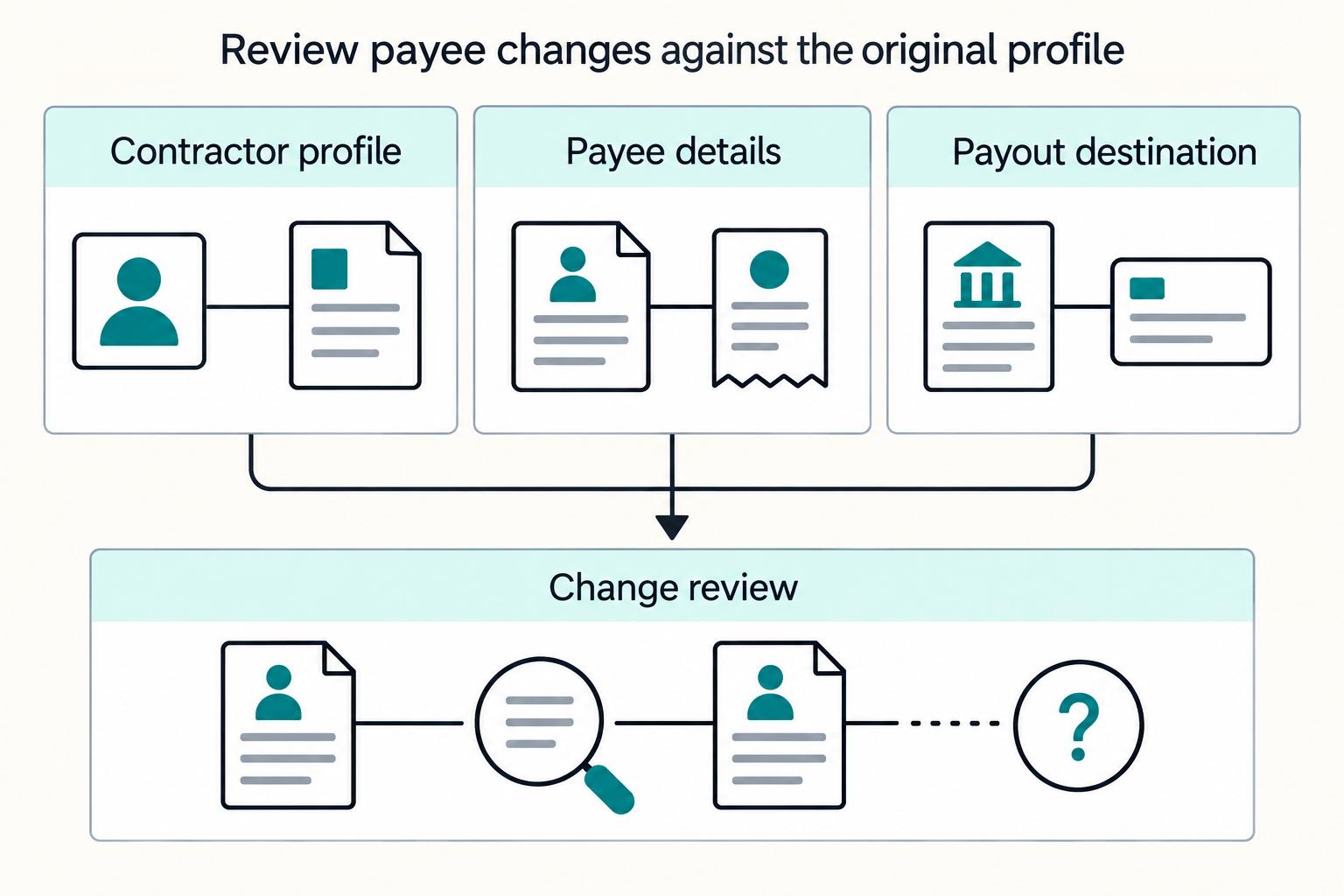
Contractor Onboarding Checklist for KYC, Tax, and Bank Checks
Before the first payout goes out, your contractor onboarding process should answer a small set of high-stakes questions. Who is this contractor? What work are they doing? What risk do they create? What evidence supports the decision? Who can override the controls when something does not line up?
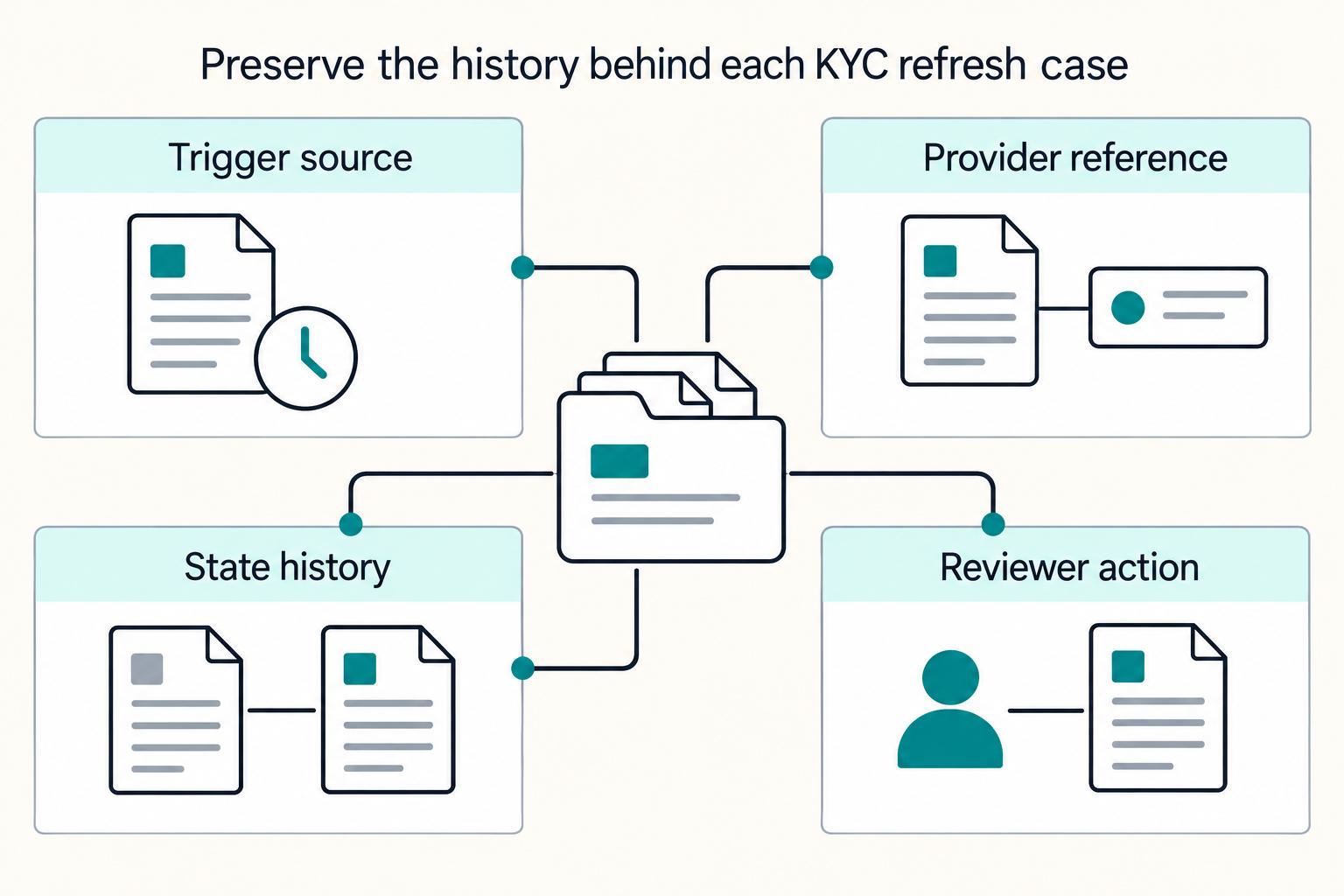
Automate KYC Refresh for Existing Contractors with Risk-Based Re-Verification
Automating KYC refresh for existing contractors is mainly an operating model change. The move is from manual, calendar-based reviews to risk-based, event-driven monitoring with clear decision rules and defensible records. That shift matters because manual KYC is often slow and error-prone, and fragmented periodic reviews can become a structural bottleneck.
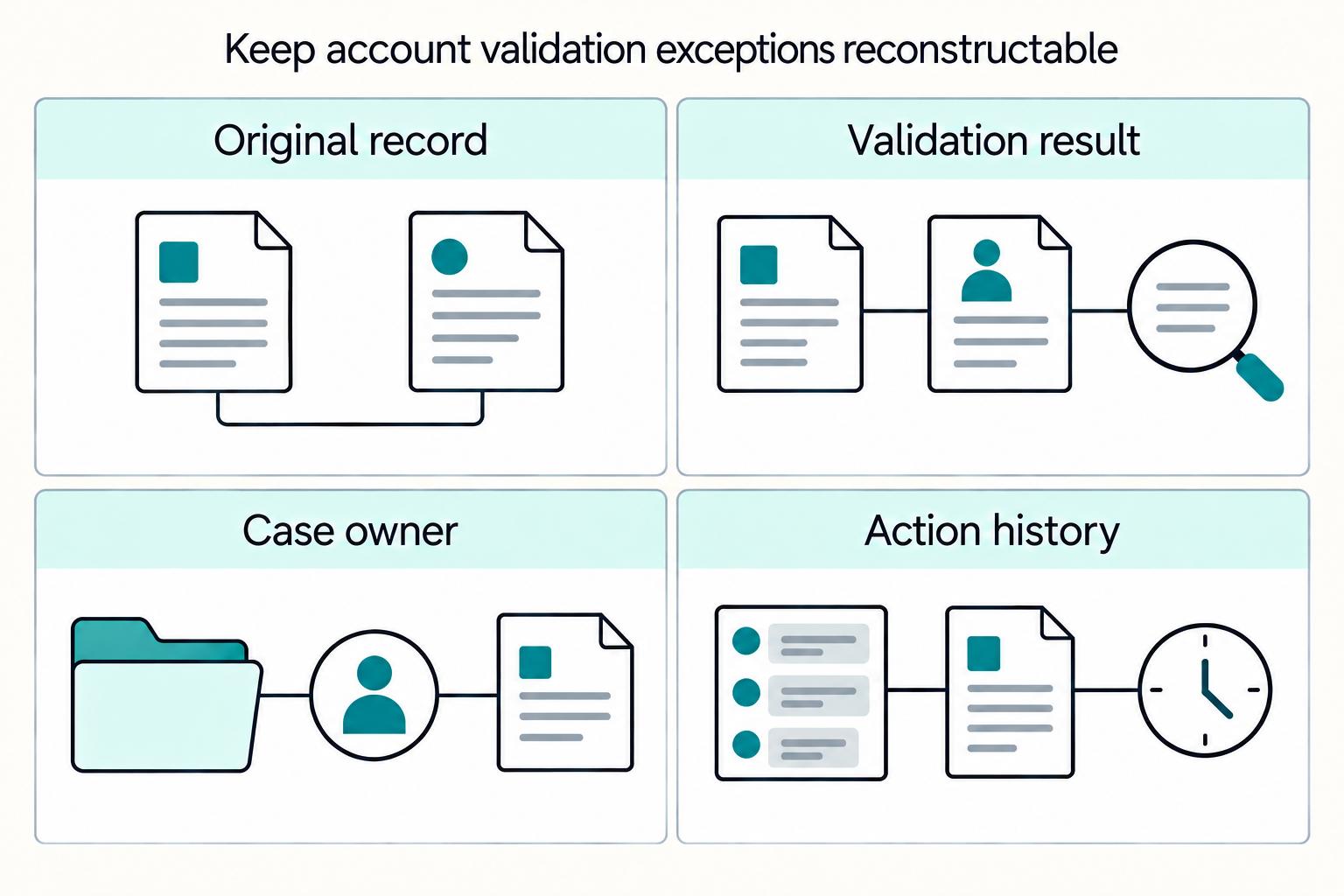
How Platforms Validate Bank Accounts Before Mass Payouts
For mass payouts, the real question is not whether to verify payees. It is how much verification you require before release, who can override it, and what evidence you can produce later. If you cannot show that evidence on demand, your release rule is weaker than it looks.