
Quick Answer
Redline the seven freelance contract negotiation clauses before signature, then force each disputed term to end in sign, no-sign, or legal escalation. Prioritize indemnification, liability caps, termination compensation, payment mechanics, and the Governing Law/Jurisdiction/Dispute Resolution block when wording is vague or one-sided. Require the executable contract to match approved edits, and hold first payout until tax-form and operations checks are complete.
What to review before you sign#
In cross-border programs, treat freelance contract negotiation clauses as a pre-signature risk control, not paperwork. Governing law, jurisdiction or forum, and dispute resolution language decide which law applies, where litigation can be brought, and whether disputes go to court or arbitration.
These are separate drafting choices, even when they sit in one block of boilerplate. Governing law selects the law for the dispute. Forum-selection and jurisdiction terms address venue and court authority. Arbitration is a private, legally binding process. When those points are unclear or blended, uncertainty and delay can follow, and the dispute-resolution process can be hindered. For compliance, legal, and finance owners, the operating decision is straightforward:
- Reject terms that leave core dispute mechanics unclear or transfer risk without clear limits.
- Redline terms that are workable in principle but incomplete, especially when governing law, venue, and dispute steps are mixed together.
- Escalate to counsel when speed pressure conflicts with material legal exposure, particularly around Governing Law, Jurisdiction, and Dispute Resolution.
Before redlining, run two quick checks. First, confirm the draft uses distinct language for governing law, forum or jurisdiction, and dispute resolution. Second, confirm the approved wording is in the executable draft, not only in comments or email threads.
A failure mode is false familiarity: standard-looking language that is internally inconsistent. If a contract names one governing law, points to a different venue, and adds broad arbitration wording without clear process detail, treat it as legal escalation. It is not routine procurement cleanup.
This is operational guidance, not jurisdiction-specific legal advice. These terms can materially affect rights, and enforceability can turn on the applicable law and drafting quality, so involve counsel early when they materially change risk.
Next, identify the clause families that should always trigger review before approval. We covered part of this in detail in The Assignment Clause in a Freelance Contract.
The 7 clauses you should never accept as written#
Treat these seven clause families as automatic review triggers, not harmless boilerplate: Indemnification, Limitation of Liability, Termination, payment terms, the intellectual property clause, Dispute Resolution, and Governing Law or Jurisdiction. WorldCC's 2024 study of 937 organizations reports limitation of liability, price, and indemnification among the most negotiated terms.
- Stop on risk-transfer language.
Indemnification means one party promises to cover specified losses, and hold-harmless wording allocates liability between parties. If you see broad hold-harmless wording or a so-called double-indemnity clause, pause and narrow it before approval. Confirm which claims are covered, what conduct triggers payment, and whether the clause could require payment even when a claim is weak or unfounded. Because hold-harmless enforceability varies by jurisdiction, escalate unclear language for legal review.
- Treat unilateral commercial edits as risk events.
Unilateral changes to termination, payment terms, pricing or rates, invoicing, or revisions can materially change commercial outcomes. Validate the executable draft for the agreed rate, invoice trigger, acceptance point, revision limit, and what is payable for completed or partially completed work if termination happens early.
- Require precision on ownership and dispute mechanics.
If IP ownership is vague, require redlines before approval. Under 17 U.S.C. § 204, copyright transfers require a signed writing, so informal wording is not enough. Apply the same discipline when defamation, privacy, copyright, and originality warranties are bundled loosely: make allocation explicit. Also treat blanks or mismatches across Governing Law, forum or jurisdiction, and arbitration as hard review triggers. Those terms can control applicable law, venue, and whether disputes go to court or arbitration.
For more on ownership language, see Negotiating the 'Intellectual Property' Section of an Enterprise Contract.
Build the contract intake packet before redlining#
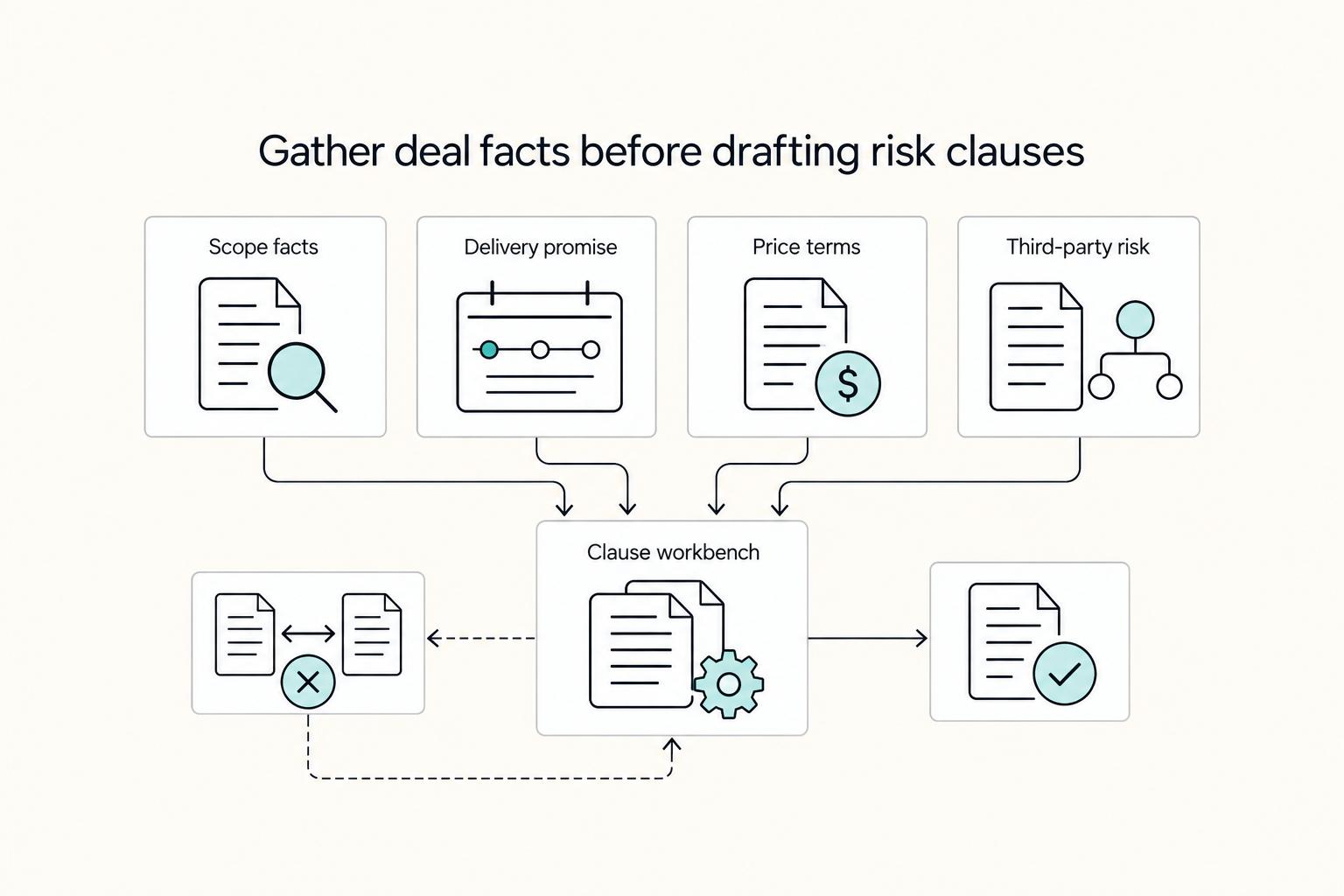
Build the intake packet before you touch clause language, because payment flow, tax documentation, and verification dependencies decide whether proposed redlines will actually work in operations.
Keep the packet small, but complete. If you use an MSA and SOW structure, use the current executable draft. Include prior vendor paper only for comparison, along with your payout model, the compliance gates your program actually runs, and the tax-form path you expect to collect.
Start with documents that change the clause answer#
Use this minimum set:
| Packet item | What to include | Why it matters |
|---|---|---|
| Current contract draft | MSA, SOW, order form, or the freelancer paper if that is the live draft; confirm version and date | Redlines need to attach to the right file |
| Commercial payment facts | Who pays whom, from which entity, on what trigger, and against which invoice or milestone | Payment flow can decide whether proposed redlines actually work in operations |
| Tax documentation path | U.S. payee: W-9; foreign individual: W-8 BEN when requested by the payer or withholding agent; foreign entity: W-8 BEN-E; capture residency and status before signature if Form 1042-S reporting and withholding may be required | Tax documentation should be captured before signature |
| Verification dependencies | Identity and compliance checks, including beneficial-owner and VAT dependencies where applicable; store the timestamped VIES valid or invalid result as intake evidence | Keeps required intake evidence with the packet |
- Current contract draft
MSA, SOW, order form, or the freelancer paper if that is the live draft. Confirm version and date so redlines attach to the right file.
- Commercial payment facts
Who pays whom, from which entity, on what trigger, and against which invoice or milestone.
- Tax documentation path
U.S. payee: W-9 for correct TIN collection tied to information return filing. Foreign individual: W-8 BEN when requested by the payer or withholding agent. Foreign entity: W-8 BEN-E for chapter 3 and chapter 4 status documentation. If the payee is a nonresident alien, IRS guidance points to Form 1042-S reporting and notes withholding may be required, so residency and status should be captured before signature.
- Verification dependencies
List the identity and compliance checks your program requires, including beneficial-owner and VAT dependencies where applicable. For EU VAT, VIES returns a binary result, valid or invalid, so store the timestamped result as intake evidence.
Classify risk by operating model#
Classify clause risk by operating model before negotiating fallback text, because the same wording can work in one setup and fail in another.
- Direct engagement: your team usually carries more responsibility to align contract terms, tax intake, and payment reporting.
- Platform-mediated: responsibilities split across platform and internal owners, which increases handoff risk.
- Merchant of Record (MoR): responsibility shifts because the MoR is the legally authorized payment-processing entity and carries transaction-related legal and compliance liability.
A MoR setup does not remove risk. It changes where obligations sit. If draft terms assume your entity controls invoicing, tax collection, or payment timing when the MoR is responsible for those functions in your setup, fix that operating assumption before redlining.
Name owners before negotiation starts#
Assign one owner per lane up front, or the draft will drift between functions:
- Legal: clause language
- Finance: payment terms, invoicing mechanics, and reporting dependencies, including Form 1099-NEC handling
- Compliance: identity checks and beneficial-owner checks where applicable, plus VAT validation dependencies
Do not rely on unnamed shared ownership. Bank AML rules explicitly call for designated day-to-day compliance responsibility, but do not assume those bank-specific provisions automatically apply to every freelancer program.
Also include a tax-year verification note in intake. IRS materials currently show conflicting 1099-NEC threshold language in different sources, so avoid hardcoding a threshold without tax-year confirmation.
Produce one output everyone can use#
Produce a one-page clause register with four required fields: risk tier, decision owner, target fallback text, and escalation deadline. If approval depends on a W-9 or W-8, a VIES result, or payout-path confirmation, record that dependency in the same row.
The register is not a legal requirement. It is a control that keeps clause review from dissolving into unowned email threads.
Use a redline decision table that turns clauses into actions#
Once intake is complete, move review into one decision table and force each disputed term to end as sign, no-sign, or escalate. That is what turns clause review into an approval process instead of a comment trail.
Build the table so each row answers one approval question#
Use these columns exactly: clause name, unacceptable wording pattern, acceptable fallback, evidence required, escalation owner, and sign or no-sign decision. Set controlled outcomes for the last column:
- Sign as drafted
- Sign only with fallback
- Sign only after evidence
- Escalate
- No-sign
This avoids a common failure mode: legal accepts wording in principle, finance assumes payment can run, and compliance later finds the clause conflicts with onboarding or tax controls.
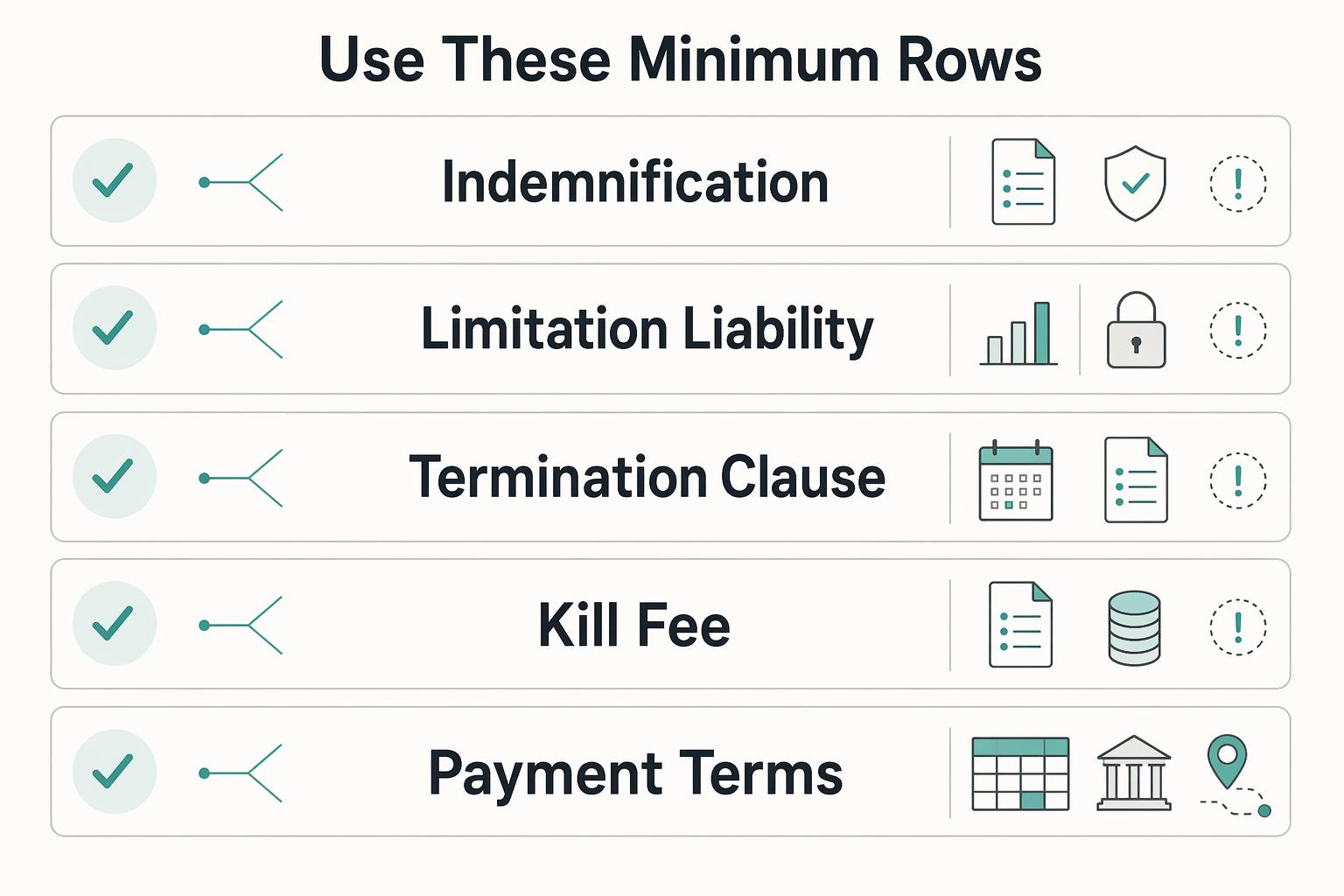
Use these minimum rows#
| Clause name | Unacceptable wording pattern | Acceptable fallback | Evidence required | Escalation owner | Sign/no-sign decision |
|---|---|---|---|---|---|
| Indemnification | Unlimited, fault-agnostic, or covering losses beyond defined claims | Narrowed to specified losses or third-party claims tied to breach, fault, or defined conduct | Exposure note; confirm clause does not assume controls your entity does not perform | Legal | No-sign if uncapped and fallback rejected |
| Limitation of Liability | One-way cap, or carve-outs that remove the cap only for your side | Balanced cap structure and balanced carve-outs | Exposure summary tied to deal value and service risk | Legal | Escalate if materially one-sided |
| Termination clause | At-will termination with no payment language for work already performed | Notice period plus payment for completed or committed work, including partial deliverables | Milestone status and acceptance record | Legal and Finance | No-sign if compensation path is missing |
| kill fee clause | Client can stop after kickoff with no compensation | Fee tied to milestone stage or documented work completed | SOW milestones, delivery record, evidence of started work | Finance | Sign only if aligned with termination language |
| payment terms | Invoice trigger unclear, acceptance undefined, or payment contingent on internal approvals outside your control | Clear invoice start, dispute window, payment timing, and late-payment handling | Payout model, payer entity, W-9 or W-8 path, 1099 route where relevant | Finance | No-sign if your team cannot pay as drafted |
| revisions clause | Unlimited revisions at fixed fee or unilateral scope expansion | Defined included rounds and paid change process for extra work | Scope definition and change-order method | Business owner and Legal | Escalate if scope cannot be measured |
| deadline clause | Freelancer liable for dates that depend on client inputs or approvals | Dates tied to dependency assumptions and extensions for client delay | Dependency list and approval turnaround assumptions | Business owner | No-sign if breach risk depends on client action |
| Governing Law | Chosen with no commercial rationale and high enforcement friction for your side | Law your team and counsel can realistically administer | Short rationale note if cross-border risk is material | Legal | Escalate if burden is disproportionate |
| Jurisdiction | Exclusive court or venue where records, witnesses, or counterparties are hard to reach | Forum that is realistically reachable for both sides | Entity location and records or witness practicality note | Legal | Escalate with Governing Law |
| Dispute Resolution | Ambiguous mix of mediation, arbitration, and litigation | Clear sequence and timing, for example mediation first, then arbitration or court | Written dispute path and settlement-authority owner | Legal | No-sign if wording is unclear |
Keep Governing Law and Jurisdiction as separate decisions. One sets which law applies. The other sets where disputes are heard.
Add three forced verification checks to every row#
Under evidence required, include these checks even if the answer is "none identified":
| Check | What to confirm | Required action |
|---|---|---|
| CDD/AML conflict | Whether the wording assumes onboarding, payment release, or entity status before your controls finish | For covered financial institutions with beneficial-owner procedures, do not approve language that bypasses that step |
| VAT validation impact | Whether invoicing or tax treatment depends on EU VAT status | Attach the VIES valid or invalid result and timestamped output |
| Tax-form collection impact | Whether the payee path requires W-9, W-8BEN, or W-8BEN-E | If payment timing starts before documentation is collected, mark no-sign or sign-only-after-evidence; flag the 24 percent backup-withholding risk if TIN issues could trigger it |
- CDD/AML conflict
Does the wording assume onboarding, payment release, or entity status before your controls finish? For covered financial institutions with beneficial-owner procedures, do not approve language that bypasses that step.
- VAT validation impact
If invoicing or tax treatment depends on EU VAT status, attach the VIES valid/invalid result and timestamped output.
- Tax-form collection impact
Confirm whether the payee path requires W-9, W-8BEN, or W-8BEN-E. If terms start payment timing before documentation is collected, mark as no-sign or sign-only-after-evidence. If TIN issues could trigger backup withholding, flag the 24 percent rate risk.
The payment row is often where this breaks first. If payer identity, invoice timing, or payee documentation is unclear, reporting ownership becomes uncertain. That includes recipient-copy timing for 1099-NEC by January 31.
Keep a versioned redline log, not just the latest draft#
Track each negotiation turn by draft version, date, clause, proposed change, decision, approver, and linked evidence. Before signature, compare the executable draft against approved table outcomes row by row. If they do not match, treat the contract as unsigned until corrected.
As you finalize each row, verify counterparty VAT number status up front so tax checks do not block signature: VAT Number Validator.
Negotiate Indemnification and Limitation of Liability with explicit fallback language#
Start with indemnity and limitation of liability together. A broad or uncapped indemnity can blow through the protection you thought the liability cap gave you, so reviewing them separately creates false comfort.
Indemnity is a promise to compensate the other party for loss or damage. A limitation clause narrows recoverable damages or sets a cap. In practical terms, indemnity assigns who pays certain losses, while limitation of liability sets the damages boundary.
Redline indemnity first, then negotiate the cap#
Begin with fault and scope. Flag indemnity language that is not tied to your breach, fault, negligence, or other defined conduct, and flag wording that sweeps in claims too broadly.
Also check whether the draft pushes beyond third-party claims without saying so clearly. If first-party losses are being shifted to you, require explicit wording and a clear commercial rationale.
A workable fallback is concrete: limit indemnity to third-party claims arising from your defined conduct under the agreement. If the counterparty asks for more, require a named category instead of a blanket "all losses" standard.
| Draft problem | Fallback to ask for | Why it matters |
|---|---|---|
| Indemnity is uncapped and not tied to your fault | Limit to third-party claims tied to your defined conduct | Fault-agnostic wording can shift risk and cost beyond your actual role |
| Indemnity appears to cover first-party and third-party losses | Keep third-party scope unless a specific first-party category is expressly negotiated | Broad scope can expand damages beyond what operators expect |
| Liability cap exists, but indemnity sits outside it with no clear limit | Reconcile both clauses so indemnity does not override the liability structure | Uncapped indemnity can undermine the negotiated limitation framework |
Rebalance carve-outs, not just the headline cap#
A cap number alone is not enough if carve-outs remove protection mainly for your side. One-way treatment can be intentional, but it should be explicit, justified, and tied to actual service risk.
Ask for balanced cap mechanics and balanced carve-outs. If the counterparty wants asymmetry, request the business reason in writing and compare it to the risk profile of the work.
Use one checkpoint before signature: what losses remain uncapped, and for whose benefit? If uncapped exposure sits mostly on your side, escalate.
Escalate when both protections fail together#
If the counterparty rejects both a narrowed indemnity and a balanced liability structure, escalate with a short residual-risk note before signing. Then decide whether to pause, proceed with controls, or pursue alternatives.
Do not assume insurance closes the gap. Confirm whether the proposed indemnity exposure is actually covered, because coverage may not align with expanded indemnity obligations.
Check governing law as part of that escalation. Indemnity enforceability is jurisdiction-sensitive, and some state rules can limit or restrict parts of indemnity wording.
Match risk tolerance to work impact#
Residual risk decisions should follow impact. For narrower, lower-impact work, teams sometimes accept residual risk with written approval and aligned payment and termination terms.
For work with meaningful regulatory or reputational exposure, tighter clause protections are usually warranted, and unresolved clause gaps should be escalated before signature. At that point, these are not drafting preferences. They are explicit risk-acceptance choices.
For a closer look at liability clauses and indemnity terms, read Freelance Liability Clauses That Limit Risk Without Stalling the Deal.
Lock payment certainty and scope control before execution starts#
If payment certainty and scope control are not locked before signature, you can end up delivering work while still arguing about timing, amount, or both.
1. Make payment terms depend on two clear triggers#
Your payment clause should define four mechanics in plain language. State what counts as acceptance, when the invoice clock starts, how long invoice disputes can stay open, and what happens if payment is late.
A practical model is to separate a proper invoice from acceptance, then tie due timing to the later trigger, even though federal rules do not automatically govern private freelance contracts. Define acceptance as confirmation that services meet agreed quality and quantity requirements. Then state when invoicing is allowed and when payment is due.
The red flags are predictable: "client approval" with no owner or standard, and dispute language with no response deadline. If an invoice can be disputed indefinitely, the payment term is not operationally reliable.
2. Tie price to scope so revisions do not eat the deal#
Pricing only protects you if scope and revisions are bounded. If revisions are open-ended, fixed pricing becomes open-ended labor.
Define scope by required results and measurable standards, then map that scope to commercial terms. State which deliverables, assumptions, and included revision rounds are covered by the fee. Require a written scope change plus price adjustment for new deliverables, extra revision cycles, or assumption changes.
Use this checkpoint: if revisions are unlimited, pricing is not controlling risk.
3. Put kill fee logic on evidence, not emotion#
If termination is allowed mid-project, tie kill-fee and in-progress payment to milestone status and documented work completed.
Keep an evidence pack ready:
- milestone map from the SOW
- dated drafts or submission records
- approval or feedback emails
- time or production records for hourly or mixed models
- records of client-caused dependency delays
If the contract allows stop-work at will but says nothing about in-progress compensation, fix that before kickoff.
4. Verify operations can actually perform the contract#
Before execution, confirm your payment operations can perform what the contract promises once acceptance, reconciliation, and tax-document dependencies are included.
Name tax-document prerequisites up front. Form W-9 is used to provide a correct TIN for information reporting. Form W-8BEN is used by a foreign individual to establish foreign status and, if applicable, claim treaty-rate withholding relief. If Form 1099-NEC applies, IRS timing says file and furnish by January 31 of the following year. IRS requester instructions also cite 24% backup withholding for reportable payments.
Operational rule: do not route the first invoice into payment until contract terms, vendor setup, and required W-8 or W-9 records are aligned. If contract timing starts earlier than your real intake and reconciliation flow, you create avoidable breach risk at launch.
For a step-by-step walkthrough, see 10 Freelance Contract Red Flags That Scream 'Run Away'.
Set hard boundaries for Termination, revisions, and deadlines#
Once payment and scope are settled, the next control point is preventing drift, stalled work, or a messy exit. If the termination clause is at-will and silent on payment for work already performed, consider pausing signature until you add clear in-progress compensation terms (which can include a negotiated kill fee).
| Clause area | What to set | Supporting proof |
|---|---|---|
| Termination | Require written notice stating the extent of termination and its effective date; state what is owed mid-project, when it is due, and whether termination costs or a termination fee apply | Cross-check ownership of completed and partially completed materials against the intellectual property clause or copyright clause |
| Revisions | Define what is included, what counts as one revision round, who approves it, and when a request becomes out of scope | Use a written, signed change mechanism and update scope, price, and contract time together |
| Deadlines | State that delivery timing depends on required client inputs, access, and approvals; if those are late, incomplete, or materially changed, require schedule revision rather than treating delay as freelancer default | Keep dated submissions and delivery receipts, approval and feedback timestamps, written requests for missing inputs or access, and signed change records |
1. Make the termination clause operational#
A workable termination clause should require written notice that states both the extent of termination and its effective date. Without that, disputes can fall back to basics: what ended, what stayed active, and what was still due.
Your redline should also answer three payment questions in plain language: what is owed if termination happens mid-project, when it is due, and whether termination costs or a termination fee apply. A common drafting model ties convenience termination to payment for work performed, termination-related costs, and any agreed termination fee. You only get that protection if the contract says so.
Then align ownership at termination. State who owns completed and partially completed materials, and whether drafts, plans, source files, or other in-progress work can be used before final payment. Cross-check this against the intellectual property clause or copyright clause so the clauses do not conflict.
2. Cap revisions and force extras into written change control#
If the revisions clause is open-ended, fixed-fee work becomes open-ended labor. Define what is included, what counts as one revision round, who approves it, and when a request becomes out of scope.
You do not need a one-size-fits-all cap, but you do need a hard boundary. If a request changes deliverables, assumptions, format, audience, channels, or acceptance criteria, route it through a written, signed change mechanism instead of informal requests. Update scope, price, and contract time together when changes are agreed.
Use a verification checkpoint: read the SOW, pricing or rates clause, and revisions language side by side. If the SOW is specific but revisions are unlimited, the revisions language can control day-to-day outcomes in practice.
3. Put client dependencies inside the deadline clause#
A deadline clause should say that delivery timing depends on required client inputs, access, and approvals. If those prerequisites are late, incomplete, or materially changed, the clause can require schedule revision rather than treating the delay as freelancer default.
That is the core of excusable-delay allocation: nonperformance is not default when causes are beyond a party's control and without that party's fault. Whether that allocation is enforceable still depends on contract wording and governing law, so make it explicit before kickoff.
Keep a simple evidence pack if timing slips:
- dated submissions and delivery receipts
- approval and feedback timestamps
- written requests for missing inputs or access
- signed change records that adjusted scope or contract time
If these clauses do not tie termination, revisions, and deadlines to written notice, written changes, and documented dependencies, you are relying on goodwill to resolve disputes.
For a practical look at ending the relationship cleanly, read How to Fire a Freelance Client and End the Contract Professionally.
Choose Governing Law, Jurisdiction, and Dispute Resolution intentionally#
Do not treat these clauses as boilerplate. If governing law, jurisdiction, and dispute resolution do not work as one package, enforcement can get slower, costlier, and harder to run.
Compare the clause package, not single lines#
Governing law selects which law applies. Jurisdiction selects which court can decide the case. Dispute resolution sets the path if a dispute starts. Review them together:
| Clause pattern | Enforceability burden | Expected legal-cost pressure | Operational friction |
|---|---|---|---|
| Same governing law and court forum in one clearly named place | Often easier to administer because law and forum are aligned | Often less pressure than split-law structures | Depends on whether records, witnesses, and counterparties are realistically reachable there |
| Governing law in one place, court jurisdiction in another | Higher burden because the forum may need proof of foreign law | Can increase cost from added legal argument | Harder for cross-border teams to coordinate evidence and counsel |
| Arbitration with a defined seat, rules, and sequence | Can support cross-border enforcement, but outcome still depends on treaty conditions and drafting quality | Cost varies by institution, seat, counsel, and claim profile | Can be practical cross-border when the clause is precise |
If arbitration is positioned as the cross-border fix, consider where enforcement would likely be needed, including where the counterparty's assets may sit. The New York Convention, in force since 7 June 1959 with 172 parties on the referenced status snapshot, is an important enforcement framework. Enforcement is not automatic.
Pick a forum you could actually use#
Choose jurisdiction based on where the case can be built with real evidence and witnesses. Practical factors like access to proof, witness availability, and convenience are central in forum analysis.
For most teams, that means checking where records, approvals, notices, and payment-trail documents actually live before naming venue. Avoid vague drafting. Wording like "the courts of the United Kingdom" has been identified as ambiguous enough to create enforceability risk.
Make the dispute path explicit and sequential#
State the process in order, in contract text. Institutional model clauses commonly sequence mediation before arbitration, and that clarity helps avoid procedural fights that create delay.
At minimum, the clause should clearly state:
- Which step comes first: negotiation, mediation, arbitration, or litigation.
- Who administers each step, under which rules, and in which seat or forum.
- What starts each step, for example written notice, filing, or a failed settlement meeting.
If jurisdiction is high-friction and the dispute clause is one-sided, escalate before signature as a commercial-risk issue. Forum fights can bog down a case for months or longer.
Define escalation points and approval gates#
Set escalation points before signature, and treat high-risk clauses as decision gates, not cleanup items. The control is simple: no known red flag moves forward without a named reviewer, an explicit decision, and a risk owner.
Escalate immediately when you see:
- Uncapped indemnification, especially with broad scope. Indemnity clauses allocate risk and are often triggered by third-party claims, so uncapped language can create unlimited-loss exposure.
- One-way limitation of liability that leaves risk allocation materially unbalanced.
- Missing Governing Law, which creates uncertainty about which law applies in a dispute.
- Forum-selection terms that materially affect where disputes are decided.
- Silent or vague Dispute Resolution terms. Unclear drafting increases uncertainty and delay.
Split approvals by control owner#
Use segregation of duties so one function does not approve everything:
- Legal: approves clause language and any accepted imbalance on indemnity, liability, governing law, forum, and dispute-resolution terms.
- Compliance: validates CIP and AML implications where those controls apply to your onboarding model.
- Finance: approves payment and invoicing terms, including timing, dispute windows, and operational fit with payout and reconciliation.
Record the final sign-off#
Before signature, use one sign-off record that includes:
- clause diffs from the latest counterparty draft
- open residual risks accepted as commercial decisions
- a named risk owner for each accepted exception
If a red flag remains open, mark the contract as approved with exception or hold it, rather than treating it as fully approved.
Run sanity checks before signature and before first payout#
Approval is not the last control. Before signature, and again after the first invoice, confirm the signed terms match how payouts, tax intake, and exceptions actually run.
-
Match contract language to the real payout path. If a Merchant of Record (MoR) model is involved, name the correct MoR and keep that designation consistent with customer-facing payment materials. In Stripe Connect, MoR responsibility can change by charge configuration, so confirm operations and contract ownership are aligned.
-
Confirm tax and reporting readiness before any payout. For U.S. independent-contractor workflows, collect Form W-9 first and retain it for 4 years. For a non-U.S. beneficial owner in the relevant withholding context, collect Form W-8BEN when requested by the payer or withholding agent. Confirm who owns 1099-NEC reporting and verify the payment-year threshold before relying on it.
If your onboarding mentions FBAR or FEIE, keep that guidance narrow. FBAR is a separate FinCEN filing for qualifying filers with foreign financial accounts when aggregate account value exceeds $10,000 at any time in the year. It is due April 15 with an automatic extension to October 15, and it is not filed with a federal tax return. FEIE is a personal tax claim that requires qualification and Form 2555 attached to Form 1040/1040X.
-
Reconcile every negotiated redline into the executable contract. If payment, invoicing, or liability language exists only in email threads, treat it as untrusted until it appears in the final signed version. Under the U.S. parol evidence rule, prior communications may carry limited weight when the final writing is treated as fully integrated.
-
Run a first-invoice checkpoint. After the first invoice, verify invoice timing, dispute handling, and exception paths against the signed terms. Keep an evidence pack with the signed agreement, tax form, invoice, payment confirmation, and exception approvals, and correct any mismatch before it repeats.
Related reading: How to Write a Limitation of Liability Clause for a Freelance Contract.
Conclusion#
Strong freelance contract negotiation clauses come from consistent decisions on risk transfer and enforceability, not from relying on a template alone. If your team cannot explain why it accepted an indemnity clause, a liability cap, a governing law provision, and a forum selection clause, the contract is moving forward by habit instead of control.
Contractual indemnification shifts future-loss risk from one party to another, while a limitation of liability clause allocates risk at contract formation, often by capping or excluding exposure. Those are not cosmetic edits. They define who carries the downside if the relationship breaks down.
Treat dispute terms as operating choices#
Dispute terms are operating choices, not boilerplate. A governing law provision determines which law applies in a dispute, and that choice is generally honored by courts. A forum selection clause sets the court and location for dispute resolution, which can change the practical path to enforcement.
Use a simple closeout check: can you state, in one sentence each, why this law, this venue, and this dispute path are acceptable for this engagement? If not, unresolved commercial risk is still in the paper.
Keep the process light, but make it traceable#
You do not need a heavy process, but you do need consistency and traceability. Standardized drafting and negotiation workflows, including review, approval, and escalation paths, reduce ad hoc negotiation unpredictability and make approvals more repeatable.
The core control is version discipline: track every draft, edit, and approval through signature, with timestamps and a clearly identified final executable version. Keep the signed agreement, redline history, approval record, and final clause decisions together so the record remains auditable later.
A short checklist to carry forward#
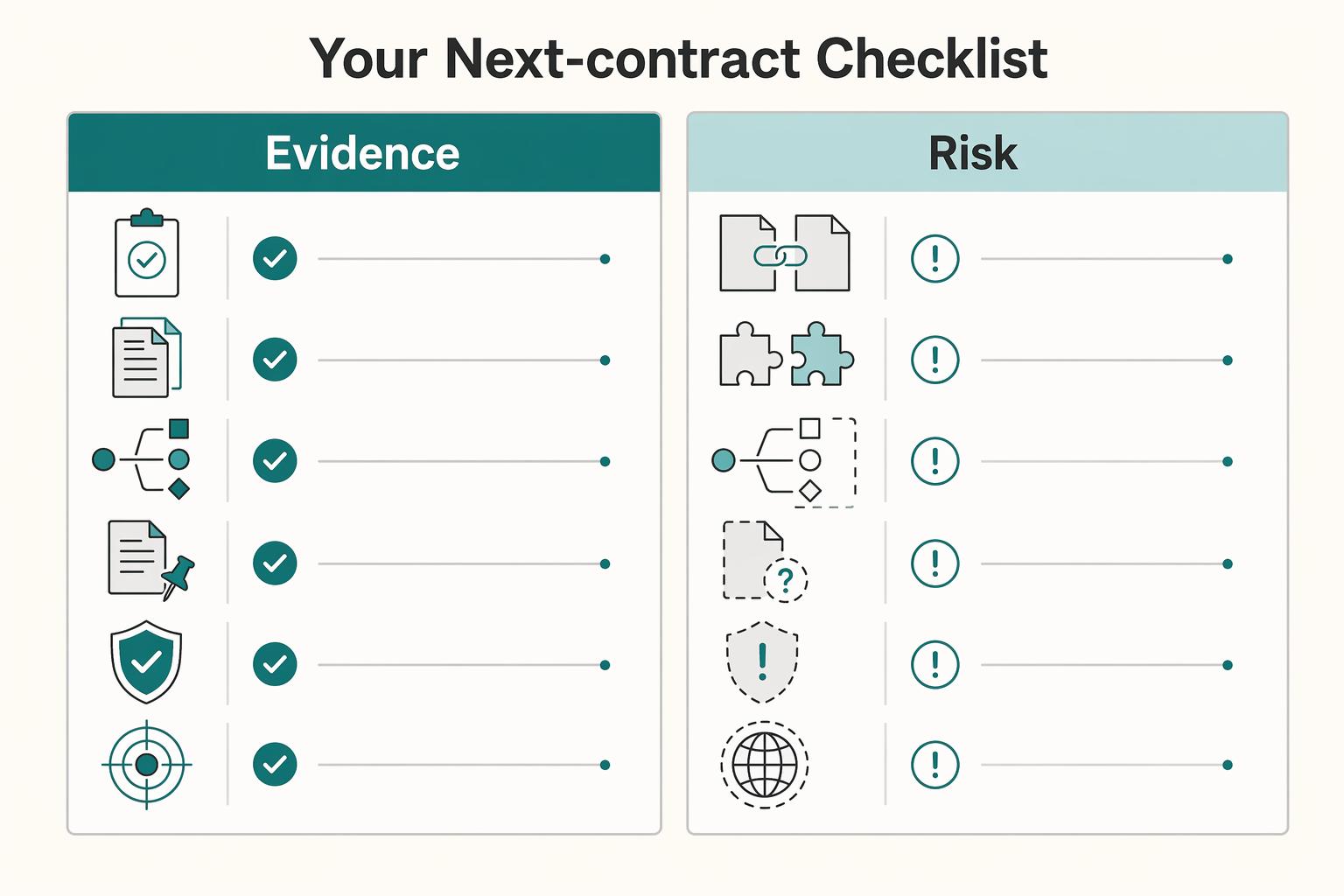
Use this as a minimum closeout standard:
- Name the risk allocation. Confirm whether indemnity and liability limits are acceptable for this engagement, or whether residual risk is knowingly accepted.
- Confirm enforceability choices. Verify governing law and forum terms match where your team could realistically defend or enforce the contract.
- Lock the signed text. Confirm negotiated terms appear in the executed version, not only in comments, tracked changes, or email.
- Preserve the record. Retain version history, approvals, and final contract terms together for audit and review readiness.
The goal is not a perfect template. It is a contract you can explain, defend, and operate after signature.
When you are ready to connect contract controls to cross-border payout operations, review Merchant of Record for Business.
Frequently Asked Questions
What clauses should I never accept in a freelance contract without edits?
Treat indemnification, limitation of liability, payment terms, dispute resolution, and governing law or jurisdiction as automatic redline items, not universal auto-rejects. Pause approval if you see broad "hold harmless" language, bundled "indemnify, defend, and hold harmless" duties, or uncapped exposure. Also redline unilateral change terms for pricing, invoicing, or revisions and assess payment and scope risk before signing.
How do I negotiate an Indemnification clause without taking open-ended liability?
Narrow indemnity to specific claims tied to defined triggers, instead of accepting "any and all losses." Keep indemnify, defend, and hold harmless separate in drafting, because they are distinct obligations and can expand exposure when combined. If indemnity stays in, push for mutual obligations and a cap, then confirm those terms appear in the signed contract text.
What is the practical difference between Indemnification and Limitation of Liability?
Indemnity allocates who compensates whom for specified loss or damage. Limitation of liability, often through an exculpatory clause, limits or excludes certain damages or liability exposure. In practice, indemnity assigns responsibility for claims, while limitation of liability constrains financial impact.
What should I do if the client refuses redlines on Governing Law or Jurisdiction?
Treat this as a commercial-risk decision, not drafting trivia. Governing law determines which law applies, and forum selection determines where disputes are heard. U.S. courts may give forum-selection clauses substantial weight except in unusual cases. If venue and process are one-sided or operationally expensive, escalate and either reprice, propose a mediation-then-arbitration structure, or walk away.
Which clauses most directly protect payment timing and scope control?
Payment terms, invoicing, pricing or rates, revisions, and termination clauses usually give you the strongest protection on timing and scope. Before first payout, collect Form W-9 or Form W-8 BEN as applicable, and verify TIN status because certain TIN issues can trigger 24% backup withholding. For U.S. nonemployee compensation, Form 1099-NEC reporting generally applies at $600 or more and is generally due January 31, so confirm ownership and timing before payment starts.
When should we escalate to legal instead of accepting commercial risk?
Escalate when you see uncapped indemnity, one-way liability outcomes, unclear governing law or forum, or one-sided dispute-resolution language. Escalate quickly when the engagement is regulated, customer-facing, or reputationally sensitive, because these risks may be harder to manage after a dispute starts. Send legal a working evidence pack with the current draft, redline log, payout model, and tax-form status so review is based on real operating terms.
Try a related tool
Researched and edited by the Gruv editorial team. Gruv builds cross-border billing, payouts, and finance-operations software for global businesses.
Sources
Educational content only. Not legal, tax, or financial advice.
Related Posts
Freelance Liability Clauses That Limit Risk Without Stalling the Deal
Start with one written freelance contract, then negotiate liability-related terms from that same text. That keeps payment, scope, and risk terms tied to the same deal. If you skip that step, both sides are more exposed to misunderstandings and avoidable disputes.
Negotiating the 'Intellectual Property' Section of an Enterprise Contract
The biggest mistake independent professionals make with enterprise contracts is reacting to the client's paper as if it sets the baseline. Once you do that, you are already negotiating from their definitions, their ownership model, and their risk allocation. The stronger move is to show up with a clear, usable inventory of what is yours before you ever see the first draft.

International Freelance Contract Clauses for Payment and Dispute Control
Send a written contract before any work starts. In cross-border freelance work, this is one of the simplest ways to reduce misunderstandings and protect the terms that matter most.