
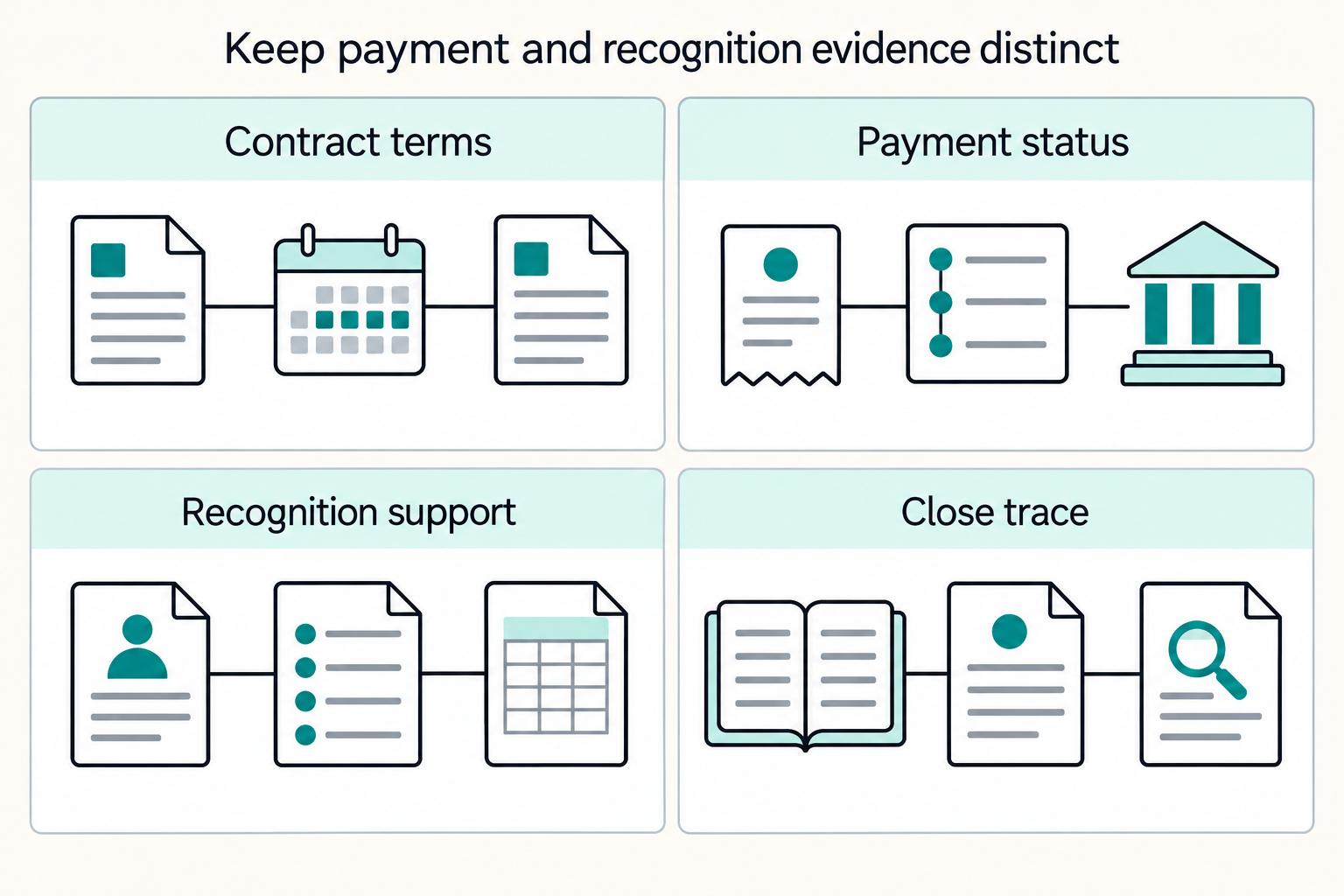
Quick Answer
Prepaid subscription cash generally stays in deferred revenue until the promised service is transferred. For steady annual access, that normally means recognizing revenue over the term. Billing dates and payment milestones do not set recognition timing. Each release needs an approved accounting conclusion, delivery support, and a schedule that ties to the ledger.
How deferred revenue works for prepaid plans and annual contracts#
If you collect cash upfront for an annual plan, you have not automatically earned revenue. For a platform selling prepaid subscriptions across markets, the gap between cash receipt and service delivery is a control issue, not just an accounting entry.
Deferred revenue is money received before performance is complete. Under accrual accounting, revenue is recognized when it is earned, not when payment arrives. Upfront subscription cash sits as a contract liability on the balance sheet until service is delivered.
That timing split needs to be explicit in your reporting logic. If a customer prepays $120,000 for a 12 month subscription, the cash event happens now and the earning event happens over the service period. In a simpler example, a $48,000 annual prepayment is shown as $4,000 recognized monthly across the year. The point is not that one method always applies. It is that recognition timing has to match the service actually delivered under that contract.
For finance and risk owners, weak deferred revenue discipline can create reporting risk and avoidable friction in audit and diligence. It can also affect valuation and purchase agreement discussions in SaaS transactions.
Before you start#
You do not need a full redesign first. You do need three basics before changing entries or schedules:
- one reporting basis, such as U.S. GAAP with ASC 606 or IFRS with IFRS 15
- contract and billing evidence you can retrieve
- a way to show each recognized amount comes from delivered service, not cash timing
A practical first check is to trace one prepaid annual contract from billing and payment through deferred revenue posting and the amount recognized to date. If you cannot walk that chain quickly, we recommend stopping there before you change schedules. If that chain breaks for one contract, scaling the process will scale the error risk.
A common failure mode is spreadsheet-heavy manual handling, which increases the chance of recognition errors.
What this guide helps you produce#
By the end, you should have three usable outputs for finance, legal, and risk discussions:
- a consistent approach for contract interpretation and recognition posting
- a monthly schedule that moves deferred revenue to earned income as service is delivered
- a clear process for reviewing terms that do not fit standard treatment
The aim is practical. You want revenue recognition principles turned into decisions that are explainable, repeatable, and supportable in GAAP, IFRS, and ASC 606 review contexts. To get there, lock scope and evidence before you touch timing.
Confirm scope and gather what you need before you start#
Set scope and evidence before you edit recognition schedules. If you change timing first, you increase the risk of moving prepaid cash out of deferred revenue before you can show service delivery. We recommend writing the evidence rule down before your team touches entries.
Build the contract inventory#
Build a single inventory of the annual subscription contracts and prepaid plans you sell today. Capture service start dates and enough contract detail to separate offers that differ by product or market.
The goal is to avoid forcing unlike contracts into one monthly pattern. For each active prepaid annual plan, you should be able to explain when service starts and whether any term changes the expected service period.
Pull the evidence before changing treatment#
Pull the supporting records for each contract before changing accounting treatment. In practice, teams rely on contract records plus billing and accounting records that show what was sold, when cash was received, and what has already been recognized.
If key evidence is missing, flag the contract before you change timing. Rebuilding from billing data alone can lead to premature revenue recognition, weak audit support, and avoidable tax surprises.
Confirm the policy basis once#
Confirm the policy basis once, then apply it consistently across reviews and postings. Use your named standard basis, such as IFRS 15, SFRS(I) 15, or ASC 606, and document that basis clearly before changes begin.
A simple checkpoint is whether the team can point to the current policy and explain why cash receipt does not set revenue timing under accrual accounting.
Define success before posting fixes#
Define success before anyone posts fixes. A workable target is a clear view of deferred revenue as a liability over the service period, income statement timing that follows service delivery, and an audit trail from recognized amounts back to contract evidence and prior entries. If you need a practical checkpoint, we recommend testing whether your reviewer can trace one recognized amount back to the contract without rebuilding the file.
If you cannot state those outcomes clearly at the start, pause and tighten scope first. That usually means cash events and earned revenue logic are still being mixed. Once scope is set, the next job is to classify exactly what you sold.
Classify what was sold before you touch revenue timing#
Classification comes first. Under accrual accounting, prepaid cash stays in deferred revenue, a balance sheet liability, until delivery occurs. A prepaid annual invoice should not be treated as one automatic revenue line.
Read the contract for delivery#
Read each contract for what the customer receives. Identify its performance obligations, then assess whether each transfers over time or at a point in time. Billing milestones are separate from that assessment.
Twelve equal releases can fit steady annual access. Assess other promises separately: a payment milestone alone neither rules out ratable recognition nor establishes point-in-time recognition.
Build a contract-to-obligation register#
Use a simple contract-to-obligation register so your finance team can apply recognition consistently and explain it later. You can include:
- contract or order form ID
- promise description
- approved transfer pattern: over time or at a point in time
- service start and progress measure, or supported control-transfer point
- evidence reference used for the classification
- initial treatment in deferred revenue and expected income statement path
For each prepaid contract, you should be able to point to one row and explain why cash remains deferred until the related delivery occurs.
Clarify unclear contract language before posting#
If contract language is unclear, pause classification and clarify the delivery pattern before you post recognition changes.
Record the transfer pattern beside the contract. For an over-time obligation, choose a progress measure that reflects delivery; milestones can serve that purpose only when they faithfully measure progress.
Choose recognition logic for each contract type#
Choose recognition from the performance obligation's transfer pattern. Most steady-access annual subscriptions recognize over the term. Point-in-time recognition requires a control-transfer conclusion, not merely a completion clause.
Set one rule per contract type#
Set one plain-language rule per contract type before close starts. Under ASC 606 and IFRS 15, the core principle is the same: revenue is recognized when earned through delivery of the promised good or service, not when payment is received.
For a prepaid annual access contract, recognition is generally gradual over the term because service is delivered over time. Cash collected up front remains a contract liability, deferred revenue or unearned revenue, until the related service is provided.
Document why over-time or point-in-time treatment applies before configuring the schedule.
Tie triggers to evidence before posting#
Tie each contract pattern to a recognition trigger and evidence requirement before you post anything. This table works as a close-ready reference.
| Contract pattern / model | Trigger event for recognition | Required evidence | Recognition frequency | Common failure mode | ASC 606 / IFRS 15 lens |
|---|---|---|---|---|---|
| Steady-access annual subscription (ratable) | Service period passes as access is delivered | Contract terms, service period support, and delivery support | Ongoing over the term | Releasing full prepaid cash at receipt, or releasing on schedule without support | Recognize as services are delivered, not when cash is collected |
| Point-in-time performance obligation | Customer obtains control | Approved transfer-of-control conclusion and supporting delivery records | At the supported transfer point | Treating unclear or unverified events as completed | Recognize when the related performance obligation is satisfied |
| Evidence gap / unclear delivery | Recognition conclusion unresolved | Documented review and unresolved support gap | Investigate before final reporting | Posting revenue because billing occurred or because delivery is assumed | Resolve whether performance occurred; missing records alone do not determine the liability |
Timing mistakes distort reporting and increase compliance and investor trust risk. Evidence discipline is part of the recognition model, not an afterthought.
Use a hard proof-before-recognition rule#
Pause unsupported automated releases and investigate delivery evidence before close. Cash receipt alone cannot justify revenue, but a documentation gap also cannot justify leaving earned amounts deferred indefinitely. Finance must resolve the recognition conclusion for the affected reporting period.
For each release, show the promise, accounting conclusion, and delivery support. Pause unsupported automated postings while investigating, then resolve earned amounts before final reporting.
Keep other prepayment models separate#
Keep non-SaaS prepayment patterns in separate policy lanes. Gift cards, event tickets, prepaid maintenance, and club memberships may all involve prepayment, but they should not automatically inherit a SaaS annual-access template.
Document these as separate contract families in your register and require policy owner review before assigning recognition logic. This prevents template drift, where teams reuse the wrong timing model across different delivery patterns.
Related: Subscription Revenue Forecasting: How Platforms Model MRR Growth Churn and Expansion.
Design the accounting structure that survives audit#
Your accounting structure has to be easy to retrace. Cash should post to deferred revenue first, then move to earned revenue as service is delivered, with reconciliations and overrides documented clearly enough for another reviewer to follow.
Standardize the base journal entries#
Standardize the two core entries first. If your team size allows, assign separate preparer and reviewer ownership so release decisions can be challenged with evidence. For prepaid annual subscriptions, the base flow is to record receipt to deferred revenue, or unearned revenue, and reclassify to earned revenue over time.
Use templates like these:
- Initial cash receipt
Debit Cash - Credit Deferred revenue or Unearned revenue
- Periodic recognition
Debit Deferred revenue or Unearned revenue - Credit Revenue
Keep these templates in your formal policy document so entry logic stays aligned to your reporting rules. For each recognition entry, retain supporting records, for example contract, invoice, payment confirmation, and recognition schedule, so the amount moved in the period can be retraced.
Run a roll-forward every period#
Run deferred-revenue reconciliations monthly at minimum, and move to weekly when activity or risk increases. That cadence keeps timing errors from compounding.
A practical internal format is:
| Roll-forward line | What to include | Evidence to retain |
|---|---|---|
| Opening balance | Prior period ending deferred revenue | Prior close package or approved trial balance |
| Additions | New prepaid billings or cash receipts posted to liability | Invoices, payment confirmations, posting reports |
| Releases | Amounts recognized into revenue this period | Recognition schedule, journal entry report, reviewer sign-off |
| Closing balance | Ending liability balance | General ledger balance sheet balance |
If additions and releases look reasonable but the closing balance does not tie, investigate transaction-level gaps before close.
Perform separate reconciliations#
Reconcile payment transactions to provider and bank records, and separately reconcile recognition schedules to revenue and contract-liability ledger balances. Recognition entries are noncash movements, so a bank match cannot validate their timing.
Where you maintain deferred-revenue and recognition schedules, tie them back to the general ledger as an additional control. Treat mismatches as reconciliation issues, not plug-entry opportunities. This is where duplicate entries, missed transactions, and unauthorized charges are often found.
Log and review overrides#
Keep an exception log for manual overrides so nonstandard recognition decisions remain reviewable after close. Capture enough context for a reviewer to retrace the decision, for example the reason, approver, date, affected contracts or entries, and a reversal plan when temporary.
This protects record quality under diligence and audit pressure. If an override cannot be explained clearly and tied to support, hold it for review before posting. Once the accounting flow is stable, connect it back to billing and ledger events so the same facts always produce the same result.
Related reading: Deferred Revenue Accounting for Client Prepayments.
Connect billing events to ledger evidence and controls#
The control objective is simple: the same contract and event history should always reproduce the same ledger result. To get there, keep billing, cash movement, and revenue recognition as distinct accounting states so deferred revenue does not drift over time.
Map each billing event to one accounting outcome#
Map each event that touches a prepaid subscription to one defined accounting outcome. Under ASC 606, cash timing is not earned revenue timing. Invoice creation, payment receipt, and service delivery should not automatically share the same posting logic.
For each event type, decide whether it creates a journal entry, updates support records only, or has no financial impact. For prepaid contracts, amounts received before delivery stay in deferred revenue, or unearned revenue, until service is delivered. For usage-based services, recognize revenue as consumption occurs, not when credits are prepaid.
Treat posting consistency as an accounting control#
Treat posting consistency as an accounting control, not just an engineering detail. Billing and metering design directly affect reporting quality and compliance outcomes.
Keep a short posting control spec approved by finance and engineering, and test it in a documented, repeatable monthly or quarterly reconciliation cycle. Review exceptions and retain evidence so balances can be validated before close.
Separate payment status from recognition status#
Keep payment operations status separate from revenue recognition status. Operational payment states support treasury and collections, but they are not recognition states on their own.
Use separate fields or separate reports so teams can evaluate payment movement and recognition timing side by side. This prevents treasury timing from driving accrual conclusions and reinforces that cash receipt alone is not earned revenue.
Trace recognized amounts back to source events#
Run traceability checks from contract to close output on a monthly or quarterly cadence. Recognized amounts should be traceable through contract terms, source events, journal postings, and close reporting.
For sampled items, verify that contract terms support the schedule, event history matches the posting period, postings tie to the ledger, and reported revenue matches the close output. Keep the evidence pack together so exceptions can be reviewed before release.
For a step-by-step walkthrough, see Gift Subscriptions and Prepaid Plans for Platform Billing Without Cleanup Chaos.
Run month-end close with explicit checkpoints#
Month-end close should support both aggregate balances and individual releases. Give each checkpoint an owner. An exception may pause automated postings, but the affected recognition conclusion must be resolved before reporting.
Use a close calendar with owners and evidence#
Use a close calendar with named owners, due dates, and evidence artifacts for each key task. That includes contract updates, recognition run, reconciliation checklist completion, and controller review or sign-off. This is a management control choice, not a GAAP or IFRS line-item requirement, but it helps timely detection and supports ICFR evidential matter.
For prepaid annual contracts, confirm contract updates are complete before recognition runs. Then run recognition against that defined contract population, and complete final review only after the checklist and exception log review are finished.
Run three close checks#
Before finalizing deferred revenue, run three practical checks: deferred revenue roll-forward tie-out, negative-balance outlier scan, and unmatched contract-milestone evidence review.
The roll-forward matters because ASC 606 disclosures include opening and closing contract liability balances and revenue recognized from beginning contract liability balances. Deferred revenue is a contract liability, so a roll-forward break raises financial reporting risk, not just a process issue.
Negative-balance and unmatched-evidence checks can identify potential misstatements. Missing support should stop an automated release for investigation, rather than decide the final accounting treatment.
Record checkpoints in a reperformable table#
Record each close checkpoint in a table so the review trail is complete and reperformable. One workable format is:
| Close day | Control name | Evidence artifact | Reviewer | Pass/fail | Remediation due date |
|---|---|---|---|---|---|
| Day 1 | Contract population complete | Contract update report and amendment/cancellation log | Revenue accounting owner | Pass/Fail | Exception log due date |
| Day 2 | Deferred revenue roll-forward tie-out | Roll-forward tied to ending ledger balance | Controller/reviewer | Pass/Fail | Exception log due date |
| Day 2 | Negative-balance outlier scan | Outlier report and investigation notes | Finance ops reviewer | Pass/Fail | Exception log due date |
| Day 3 | Milestone evidence matched | Milestone support cross-referenced to recognition output | Revenue manager | Pass/Fail | Exception log due date |
| Day 3 | Final checklist and sign-off | Completed reconciliation checklist and open-item summary | Controller/reviewer | Pass/Fail | Exception log due date |
Keep evidence descriptions specific enough that another reviewer could reperform the work.
Freeze affected populations when a control fails#
If a control fails, pause automated recognition postings for the affected contracts while finance investigates. Before reporting, resolve the correct amounts and post approved adjustments. A temporary processing hold is a control choice; it does not override the recognition required for delivered service.
Scope the freeze to the impacted population unless the failure is portfolio-wide. If the failure indicates controls may not prevent or detect misstatements on a timely basis, escalate as a potential control deficiency. If severity reaches material weakness, management cannot conclude ICFR is effective.
Before unfreezing, require documented root cause, correction, reviewer approval, and regenerated affected reports. The same discipline matters when contracts change midstream.
If you want a concrete implementation reference for control flows, idempotent events, and audit-traceable states, review the Gruv docs.
Handle contract changes without breaking recognition integrity#
Treat every contract change as an accounting event, not just a billing event. If upgrades, downgrades, term cuts, or refunds can affect deferred revenue handling without a documented decision trail, recognition integrity is at risk.
Define change rules before launch#
Define your treatment rules before the first change goes live. For each change type, document the accounting owner, effective date source, required evidence, and whether the change updates the current schedule or needs escalation.
Keep the core principle explicit: upfront cash remains a contract liability until service is delivered, so a plan change does not make unearned revenue earned by itself. Before updating postings, require linked support for what changed, when it changed, and how the remaining liability moves. If support is incomplete, pause the recognition update and log an exception.
Update schedules from the effective date#
Assess modifications before updating schedules. Depending on distinctness and pricing, treatment may be a separate contract, prospective accounting, a cumulative catch-up, or a combination. Ease of review does not decide it.
Distinguish error corrections from modification adjustments. Explain every resulting liability and revenue movement in the change memo and roll-forward.
Keep a contract-change memo#
For nontrivial amendments, keep a contract-change memo that lets a reviewer reconstruct the decision without relying on verbal context. Keep it simple, but complete.
A practical checklist can link:
- old terms and new terms
- effective date
- revised recognition schedule
- contract-liability roll-forward impact
- any approved refund, credit, or termination records
This memo helps separate accounting corrections from commercial changes and preserve an audit-ready trail.
Escalate amendments that may change the underlying promise#
Escalate pricing or scope changes that may alter the underlying promise instead of forcing them into the prior pattern. Not every amendment needs the same treatment, so require finance and legal review when the updated promise may be meaningfully different from the original one.
If review concludes the amendment needs separate treatment, document that treatment and reflect it in the schedule. If the team cannot clearly explain how the old promise, revised promise, and updated schedule fit together, hold posting until that analysis is documented.
This pairs well with our guide on ASC 606 Revenue Recognition Decisions for Subscription Pricing.
Set ownership and escalation triggers across finance, legal, and risk#
Management is responsible for establishing and maintaining internal control over financial reporting, so deferred revenue decisions should have named owners before close starts. If ownership stays blurred, judgment calls between billing, accounting, and contract review can sit unresolved until they show up in financial reporting.
Assign one owner per decision type#
Assign one accountable owner per decision type and document that ownership in your close process. A practical split can be this: finance owns recognition mechanics and the contract liability schedule. Legal owns contract interpretation and enforceability review. Risk or compliance owns policy alignment, evidence retention, and exception follow-up. That split is a control design choice, not wording prescribed by GAAP or IFRS.
| Owner | Primary responsibility |
|---|---|
| Finance | Recognition mechanics and the contract liability schedule |
| Legal | Contract interpretation and enforceability review |
| Risk or compliance | Policy alignment, evidence retention, and exception follow-up |
For prepaid contracts, you should be able to identify the decision owner, the reviewer where needed, and the evidence retained to support the posting. If ownership for a judgment under ASC 606 or IFRS 15 is unclear, pause the recognition change until it is assigned.
Set escalation triggers in advance#
Define escalation triggers in advance. Escalate when you see:
| Trigger | Reason for escalation |
|---|---|
| Nonstandard milestone language | May change when service transfer is concluded |
| Multi-jurisdiction obligations | Enforceability may differ by jurisdiction |
| Recurring exceptions | The same recognition assumption is repeatedly failing or being overridden |
Treat these as risk signals, not routine cleanup. For multi-jurisdiction or unusual terms, require a contract-specific legal and fact review before concluding recognition. Require escalation records to include the contract version, disputed clause, proposed accounting treatment, and deferred revenue roll-forward impact.
Require specialist review when judgment affects reporting#
Set a specialist-review trigger when a policy interpretation could materially affect GAAP or IFRS reporting. Focus on judgment impact: whether recognition timing changes, contract liability balances change, or prior conclusions about enforceable rights and obligations no longer hold.
As risk increases, evidence expectations should increase with it. If new facts contradict prior assumptions, revise the risk assessment and document why treatment changed, or why it did not.
Fix common mistakes before they become audit findings#
Once ownership and escalation are clear, fix the mistakes that make close outputs look clean but fail under review. The common thread is simple: cash receipt is not the same as earned revenue, and posted numbers are not enough without support.
| Common mistake | Action in the guide |
|---|---|
| Prepaid cash booked to revenue too early | Reverse the premature revenue, post the amount to contract liability, and update the release schedule using your approved recognition logic |
| Recognition without complete support | Pause unsupported automated postings, rebuild support, and resolve recognition before reporting |
| Payment status driving revenue timing | Split payment operations states from recognition eligibility in your reports and data model |
| Manual spreadsheets driving entries without controls | Use controlled logs, named approvers, locked close versions, and retained exports for review, or move that logic into a controlled record before the next close |
Reverse prepaid cash booked to revenue too early#
If prepaid cash was recognized as revenue at receipt, treat it as a classification error first. Until the performance obligation is satisfied, that balance belongs in a contract liability.
Start with the entries: reverse the premature revenue, post the amount to contract liability, and update the release schedule using your approved recognition logic. Then assess whether the issue is current-period only or needs escalation under your GAAP or IFRS correction process. Do not assume every error means a restatement.
Pause recognition when support is incomplete#
Recognition without complete support is an evidence risk, not just a process delay. A defensible record needs procedures performed, evidence retained, and conclusions reached.
If affected contracts were recognized without a complete audit trail, consider pausing automated postings while rebuilding the file and reperforming your reconciliation checklist. Resolve the accounting conclusion before reporting: an evidence gap does not itself prove that delivered service remains unearned.
Separate payment status from recognition status#
Do not let payment operations states drive revenue timing. A payment status can explain cash operations, but it does not by itself determine whether revenue is earned under your revenue-recognition policy, for example IFRS 15.
Split these states in your reports and data model. One state should capture payment operations. A separate state should capture recognition eligibility based on performance obligation satisfaction.
Control manual spreadsheets before they drive entries#
Manual spreadsheets become a control problem when they drive journal entries without change history, approver attribution, or preserved outputs. That weakens your ability to show completeness and accuracy in close review.
If spreadsheets remain in the flow, use controlled logs, named approvers, locked close versions, and retained exports for review. If key logic sits in one local file, treat it as a control gap and move that logic into a controlled record before the next close.
Conclusion#
The reliable approach is simple: classify obligations correctly, apply a documented recognition rule, and run month-end controls you can test. When those pieces line up, prepaid annual cash stays in contract liability until the promised service is transferred, and your balance sheet and income statement remain explainable. When they do not, do not force recognition just because cash was collected.
That logic holds under ASC 606 and IFRS 15. Revenue should reflect transfer of promised goods or services, not billing timing. Prepaid cash is generally a contract liability until the performance obligation is satisfied. The real goal is a process another reviewer, auditor, or future you can trace from contract terms to journal entries without gaps.
If your reporting basis is unclear, settle that first. SEC domestic issuers follow U.S. GAAP and Regulation S-X. Some foreign private issuers may file IFRS financial statements as issued by the IASB without U.S. GAAP reconciliation, but that is not universal across entities and jurisdictions. When contract language, cross-border reporting, or policy interpretation is ambiguous, escalate early.
- Confirm each prepaid subscription plan is mapped to a documented recognition rule.
Tie each plan to its performance obligation at contract inception, then confirm whether recognition is over time with a defined progress measure or at a specified transfer point. For any plan, you should be able to show the contract term, policy conclusion, and resulting schedule.
- Reconcile liability roll-forward to the balance sheet and recognition totals to the income statement.
Show opening deferred revenue, additions, releases to revenue, and closing contract liability. Confirm the closing balance ties to the balance sheet and period releases tie to recognized revenue totals.
- Verify every recognized amount has a complete evidence trail.
Keep a clean path from contract terms to billing and payment support, journal history, and financial statement line. If the amount cannot be traced to sufficient source evidence, it is not close-ready.
- Review and clear open exceptions with dated remediation notes.
Track manual overrides, missing support, unusual reversals, or other unresolved exceptions before sign-off. The log format can vary, but repeated exceptions in the same area usually signal a process design issue, not a one-off.
- Escalate ambiguous contract milestones or policy conflicts before final close sign-off.
Significant judgment calls should be resolved before revenue release, especially where reviewers disagree on performance obligations, progress measures, or contract-change effects.
If you can execute these five checks every month, you reduce surprises. Cash stays separate from earned revenue, contract liability remains transparent, and close decisions stay supportable.
For a policy and integration review tailored to your contract mix and market coverage, talk with Gruv.
Frequently Asked Questions
Is prepaid annual subscription cash revenue immediately?
Usually no. Prepaid consideration is generally presented as a contract liability, commonly called deferred revenue, until the promised goods or services are transferred. Cash receipt alone does not support current-period revenue.
When is deferred revenue recognized for an annual subscription contract?
Deferred revenue is recognized when the performance obligation is satisfied, not when the invoice is paid. If the customer simultaneously receives and consumes benefits as you perform, recognition may occur over time and time elapsed can be an appropriate measure of progress. If over-time criteria are not met, recognition is at a point in time.
Is deferred revenue an asset or a liability on the balance sheet?
Deferred revenue is a liability representing the remaining obligation to transfer goods or services. Cash received is an asset; for an advance before delivery, the corresponding credit is normally a contract liability.
When should a team use ratable recognition versus contract milestone recognition?
Use ratable recognition when over-time recognition applies and time elapsed faithfully reflects transfer of service. Use milestone recognition when over-time recognition applies and milestones better depict progress than time elapsed. The measure should match how the promised service is transferred, not billing convenience.
Who should approve recognition policy changes between finance, legal, and compliance?
ASC 606 and IFRS 15 do not provide a universal approver matrix. In practice, teams often route the accounting conclusion through finance, with legal input on contract terms and compliance or risk input on governance requirements. Significant accounting policy changes should be escalated through your formal governance process, including the audit committee where applicable.
What should be in the minimum evidence pack for an audit-ready deferred revenue process?
There is no single checklist for a minimum evidence pack. Keep records that support the conclusion and postings, such as contract terms, billing and payment support, recognition schedules or journal history, and reconciliations. Also retain documentation of procedures performed, evidence reviewed, conclusions reached, and who prepared and reviewed the file with dates.
When should we escalate to external accounting or legal specialists?
There is no single mandated trigger. Escalate when terms are nonstandard, the timing conclusion depends on significant judgment, or a policy change is significant enough to affect financial reporting outcomes. If you cannot clearly trace the conclusion from contract terms to ledger and reporting, pause and seek specialist input.
Researched and edited by the Gruv editorial team. Gruv builds cross-border billing, payouts, and finance-operations software for global businesses.
Sources
Includes 5 external sources outside the trusted-domain allowlist.
- ecfr.gov/current/title-17/chapter-II/part-229/subpart...trusted
- sec.gov/files/rules/final/33-8238_0.htmtrusted
- sec.gov/files/rules/sro/nyse/2013/34-69914-ex5.pdftrusted
- asc.fasb.org/layoutComponents/getPdfexternal
- assets.pcaobus.org/pcaob-dev/docs/default-source/inspections/do...external
- assets.pcaobus.org/pcaob-dev/docs/default-source/rulemaking/doc...external
- ifrs.org/issued-standards/list-of-standards/ifrs-15-r...external
- ifrs.org/content/dam/ifrs/publications/html-standards...external
Educational content only. Not legal, tax, or financial advice.
Related Posts

The Freelance Payment Penalty: A Modeled Audit of Platform Fees, FX Spreads, and Payout Delays
The money rarely disappears through a single, easy-to-spot fee. The real loss is stacked. A marketplace takes its commission, a processor adds a charge for international cards, a bank or payment company converts the currency at a spread, a platform holds the funds before release, and a wire sheds a little to intermediaries on the way in. Each layer looks defensible on its own, but the worker feels the combined result as a smaller deposit and a later payday.

How to Respond to a Subpoena for Business Records
Move fast, but do not produce records on instinct. If you need to **respond to a subpoena for business records**, your immediate job is to control deadlines, preserve records, and make any later production defensible.
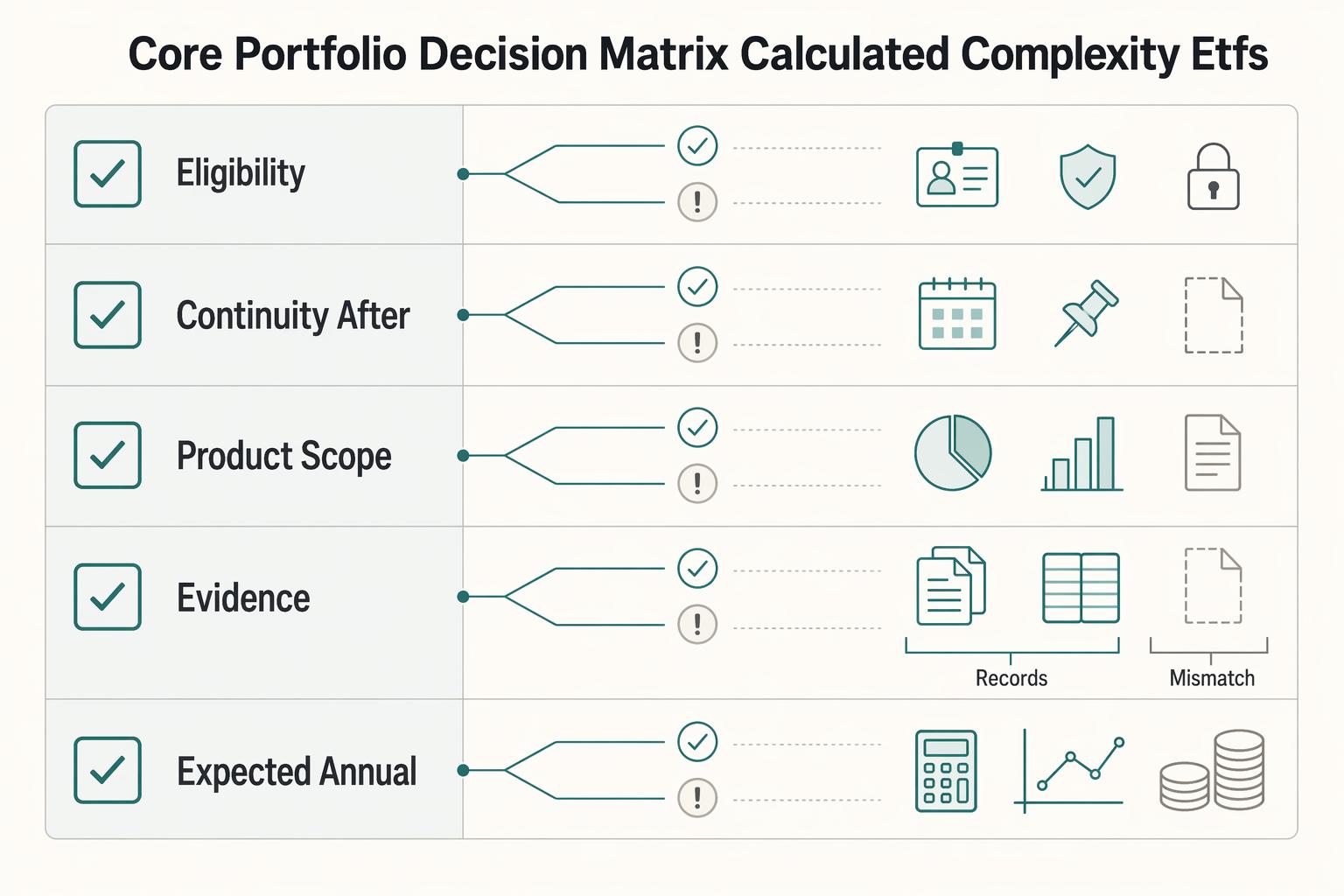
A US Expat's Guide to Investing in UCITS ETFs to Avoid PFIC Issues
The real problem is a two-system conflict. U.S. tax treatment can punish the wrong fund choice, while local product-access constraints can block the funds you want to buy in the first place. For **us expat ucits etfs**, the practical question is not "Which product is best?" It is "What can I access, report, and keep doing every year without guessing?" Use this four-part filter before any trade: