

Quick Answer
Map approved and forecast obligations by currency, location and due time. Calculate the largest funding gap before dependable replenishment, add a buffer from explicit stress scenarios, and compare the target with eligible available funds. Keep this liquidity decision separate from managing exchange-rate exposure; a hedge does not itself provide cash for payouts.
Start with the payouts that must be funded#
A marketplace reserve strategy decides how much usable money to hold, in which currency and location, so approved payouts can meet their commitments when funding or FX execution is delayed. Its first objective is continuity. Rate optimization comes after the obligations can be funded.
A platform collecting dollars and paying euros has two different problems: the euro obligation may become more expensive in dollars, and the euros may not arrive at the payout provider in time. Treat those as separate decisions. A good exchange rate does not help if the payout account is empty.
The calculations below are an operating method and hypothetical examples, not statutory reserve formulas. Any legal safeguarding, permissible-investment, customer-money or capital requirements must be satisfied separately. Customer funds subject to those rules are not a discretionary treasury pool.
Map obligations and genuinely available funds#
Create a forecast by legal entity, currency, account or provider location, and due time. Include approved payout obligations, likely upcoming commitments, expected funding arrivals, conversion steps, transfer times, fees and material refunds or returns. Preserve the obligation references so a forecast can be reconciled to actual payments.
| Field | Question it answers |
|---|---|
| Obligation and due time | What must be paid, in which currency, and when? |
| Funding location | Which account or provider must hold the money to execute? |
| Eligible available funds | Which funds may actually be used for those obligations now? |
| Replenishment | What funding is dependable, and when will it be usable at that location? |
| Conversion and transfer steps | What must happen before another currency or account balance can fund the payout? |
| Stress scenario | What changes if an inflow, conversion or route is delayed? |
Separate booked balances from eligible available funds. Exclude pending receipts, restricted amounts, amounts already committed to other obligations, and other parties’ money unavailable for the intended use. Safeguarded funds may support the corresponding customer obligations where permitted, but cannot simply fund the platform’s unrelated expenses or speculative hedges.
Stripe’s payout documentation illustrates why provider availability and payout timing need explicit treatment. Use the actual account and product’s available-balance rules; another provider or currency can have different funding behavior. An accounting balance alone does not establish dispatch eligibility.
Size the buffer from the largest timing gap#
Choose a planning horizon that covers the time until dependable replenishment, including weekends, holidays and provider cutoffs. For each time point, calculate cumulative obligations and costs less dependable inflows that arrive before those obligations. The largest positive gap is the baseline funding need.
Then run stress cases: a major client receipt arrives late, payout demand rises, an FX venue is unavailable, or a transfer between accounts takes longer. Use the incremental need from chosen scenarios to set a stress buffer. Document the scenario and tolerance rather than call one percentage correct for every corridor.
Worked example: a delayed replenishment#
Suppose a euro payout account shows €95,000, of which €25,000 is unavailable for this batch. Usable funds are €70,000. The platform must pay €60,000 on day one and €40,000 on day two. A €30,000 replenishment is expected before the second payout in the baseline case.
Baseline cumulative need is €60,000 after day one and €70,000 after day two: €100,000 of obligations less the €30,000 timely inflow. With an additional €20,000 operating stress buffer selected for this example, the baseline target is €90,000, leaving a €20,000 gap against the €70,000 usable funds.
Now stress the replenishment arriving on day three. None of that €30,000 can fund the day-two deadline. The need rises to €100,000; with the same €20,000 buffer, the target is €120,000 and the gap is €50,000. The total €95,000 account balance must not be used as the available-funds figure.
The response could be earlier authorized funding or conversion into the account. If that cannot be completed in time, escalate the shortage and communicate the permitted payment plan. Do not treat a desired exchange rate as a reason to ignore due obligations, or use an internal reserve target to invent a legal right to delay them.
Choose local and central reserves deliberately#
| Reserve arrangement | Useful when | Tradeoff |
|---|---|---|
| Local currency buffer | Frequent time-sensitive payouts and slow replenishment | Less dependence on last-minute FX, but more idle cash and local concentration. |
| Central funding currency | Payouts can wait for a dependable conversion and transfer path | Fewer local balances, but more funding and rate exposure near dispatch. |
| Hybrid | Core corridors need local cover while other flows can be funded on demand | Requires clear allocation, top-up rules and visibility across locations. |
Match currency holdings to expected obligations where practical. If euro receipts can lawfully fund euro payouts, that reduces the conversion requirement. A promised future receipt is still not today’s usable cash, and receipts belonging to another entity or restricted purpose may not be available to net.
Set minimum and target levels, a maximum justified by the forecast, and a named top-up owner. Review excess balances as well as shortages. Concentration at one provider, limited conversion access or local transfer restrictions can make money difficult to move precisely when another account needs it.
Separate the risks a reserve must address#
BIS guidance on FX settlement distinguishes principal, replacement-cost and liquidity risks. It is bank supervisory guidance; the distinctions are useful for marketplace decisions without making every bank requirement a marketplace rule.
| Risk | Example | Control to consider |
|---|---|---|
| Currency market risk | The dollar cost of a fixed euro payable rises | Match currency receipts and obligations; consider a hedge for the defined exposure. |
| Funding liquidity risk | Money cannot reach the payout account by the deadline | Available local buffer, dependable top-up route and stress planning. |
| FX settlement principal risk | One currency is paid away but the other is not received | Assess the settlement method, counterparty exposure and payment-versus-payment availability. |
| Operational risk | A lost response leads to a duplicate conversion or payout | Persist operation identity and recover the original result before another dispatch. |
| Concentration or access risk | A large balance is held with one inaccessible provider | Limits and tested alternatives, with funds available for their permitted use. |
Payment-versus-payment means one currency’s final transfer occurs only if the other currency’s final transfer occurs. It addresses settlement principal risk; it does not guarantee a favorable rate or remove the need to fund the legs. BIS’s 2026 settlement study also shows why settlement arrangements matter beyond trading speed.
Ask how your provider settles the currencies and when your exposure begins and ends. A quote being firm is not proof that every settlement risk has disappeared. Limit unprotected exposure according to the company’s policy and the actual counterparty arrangement.
Choose a hedge for an exposure, not as a substitute for reserves#
Define what is being protected: a forecast cash flow, a booked foreign-currency receivable or payable, or another measurable position. Cash-flow and balance-sheet exposures describe the purpose; forwards, swaps and options describe instruments. These are not three mutually exclusive strategies.
BIS’s discussion of FX swaps and forwards explains how forward obligations can hedge currency exposure while creating future currency-payment commitments. Keep maturity, amounts and settlement funding visible. Rolling a contract is not the same as receiving cash for a payout.
For illustration, a €100,000 payable costs $110,000 at $1.10 per euro and $115,000 at $1.15. The $5,000 difference is the currency-price exposure in this simple example. Holding the required euros or a suitably matched hedge can change that exposure, but a forward still needs the agreed funding at maturity.
Set permitted instruments, counterparties, exposure limits, approvals and accounting treatment with the responsible treasury and accounting specialists. Include collateral, early termination and rollover needs where the contract creates them. Do not enter a hedge whose obligations the team cannot monitor or fund.
Execute conversions and payouts with a recoverable trail#
Approve the obligation and funding plan before dispatch. Record the conversion amount, pair, destination, rate, fees, expiry and settlement terms. If a firm quote expires before acceptance, obtain a new valid quote rather than override its expiry. Provider-specific quote and execution semantics must be understood before retries.
Persist the operation identity, original payload and business reference before sending the conversion. If its result is unknown, retrieve or safely replay the original operation under the provider’s guarantees. Do not switch venue and convert again until the first outcome is resolved. Apply the same rule to the payout itself.
Mark purchased currency available only when the provider and local records support that availability. Reserve funds for the relevant payout so two batches cannot spend them. Persist payout intent and provider attempt references; then dispatch after the local reservation and outbound work have committed.
Authenticate and store webhook receipts before acknowledgment. Process valid state changes, local accounting and outbound work together recoverably, then track remote effects separately. A webhook receipt is not processed work, and remote accounting cannot be made atomic with your local database.
Keep quote, conversion, transfer, payout, fee and accounting references linked. A local cancellation or a missing notification does not establish that money never moved. Resolve the actual result before a replacement operation.
Use controls that apply to the actual obligation#
Funds availability and authorization are separate checks. Apply the required identity, sanctions and other program controls to the relevant entity, recipient and route. A vendor timeout is not approval; a statutory restriction is not removed by closing an internal case.
Tax documents and withholding depend on the payer, payee and payment facts. They are not a universal reason to block every cross-border payment or move reserves. Keep personal FEIE and FBAR questions outside ordinary reserve-sizing logic, and apply any actual reporting or withholding obligations through their own defined process.
Review actual performance and stress the next cycle#
Compare forecast and actual payouts, funding arrivals, conversion costs, available balances and reserve breaches. Record why a gap occurred: volume, timing, eligibility, data error or route access. Adjust the forecast and scenario assumptions when experience contradicts them.
Run a drill for a delayed inflow, unavailable conversion route and unknown payout result. Confirm who can approve funding, who investigates the original operation, and what can be communicated to recipients. A backup is useful only if it can be accessed and funded in time for the obligations it protects.
For related operating controls, see How to Build a Float Management Strategy for Marketplace Platforms.
Frequently Asked Questions
What is a marketplace currency reserve strategy?
It is an operating policy for the amounts, currencies and locations of funds available to meet payout obligations through expected and stressed replenishment periods. Legal customer-money requirements remain separate constraints.
How is a reserve different from an FX hedge?
A reserve supplies usable funds for payments. A hedge manages a defined currency exposure and can create its own future funding obligations. The platform may need both.
How do we avoid arbitrary reserve percentages?
Calculate the largest cumulative funding gap before dependable replenishment, then add the need from explicit stress cases. Document timing, volume and access assumptions and compare them with actual outcomes.
Should all reserves be held in dollars?
Not necessarily. Time-sensitive local-currency payouts may justify local cover; dependable conversion routes can support central funding elsewhere. Decide from obligations and replenishment timing, not a universal currency preference.
Does payment-versus-payment remove all FX risk?
No. It addresses principal settlement risk by making final transfers conditional on one another. Rate exposure, funding needs and other operational risks can remain.
Can we reroute a conversion after a timeout?
First recover the original operation’s result. A timeout does not prove failure, so another conversion could create duplicate exposure.
Researched and edited by the Gruv editorial team. Gruv builds cross-border billing, payouts, and finance-operations software for global businesses.
Sources
Educational content only. Not legal, tax, or financial advice.
Related Posts

SaaS International Pricing That Protects Cashflow First
If you are a freelancer or a small team selling software across borders, protect cashflow first. The first job is not maximizing conversion in every market. It is building an international pricing approach that works from quote to invoice to collection.
How to Build a Float Management Strategy for Marketplace Platforms
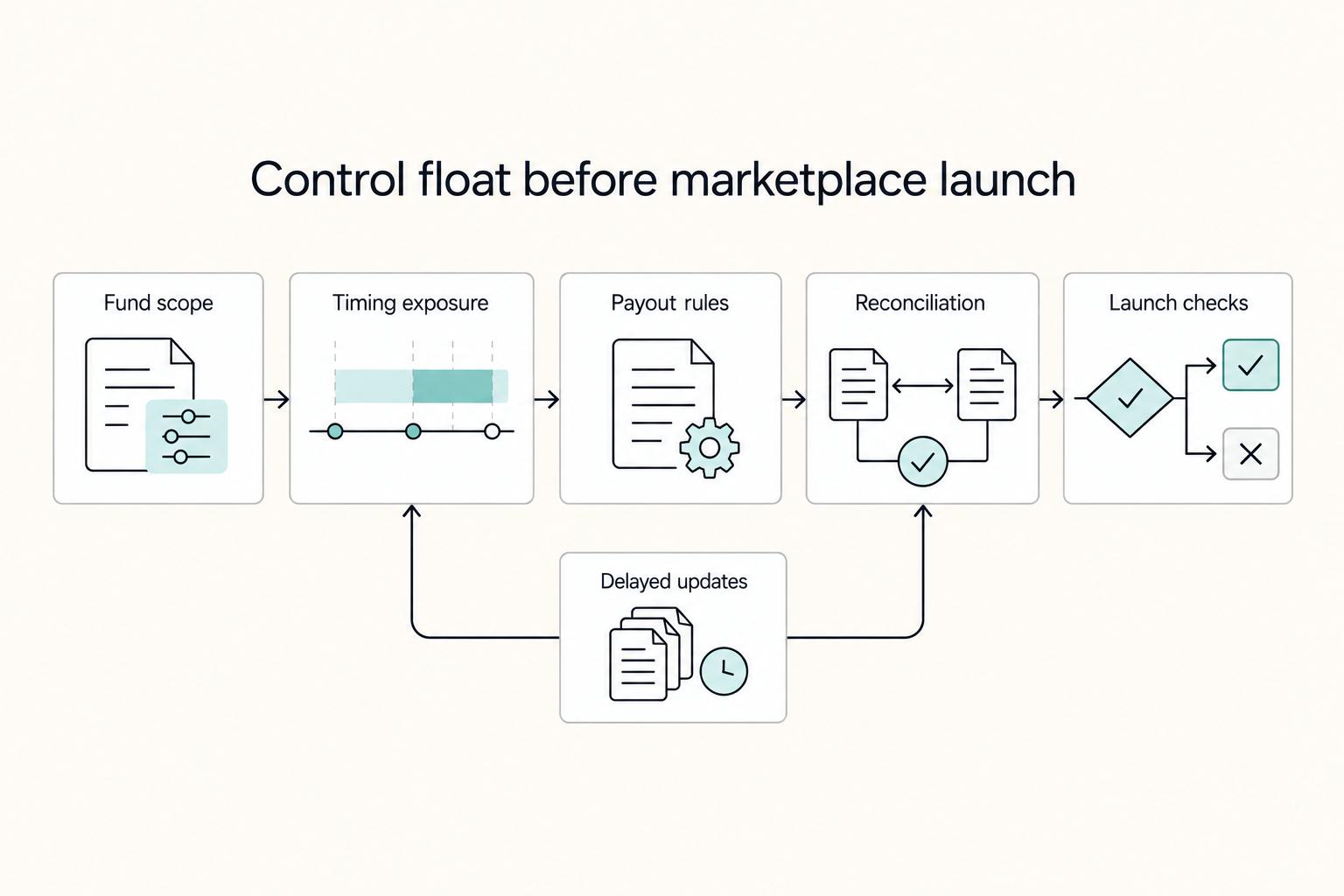
Marketplace float is the timing difference between collecting a payment, being able to use the funds and paying the seller or other beneficiary. A pending collection, an available provider balance and a seller payable can all show different amounts on the same day. Your strategy needs to explain those differences before it promises faster payouts.
Local Currency Payouts vs USD Payouts for Contractor Platforms
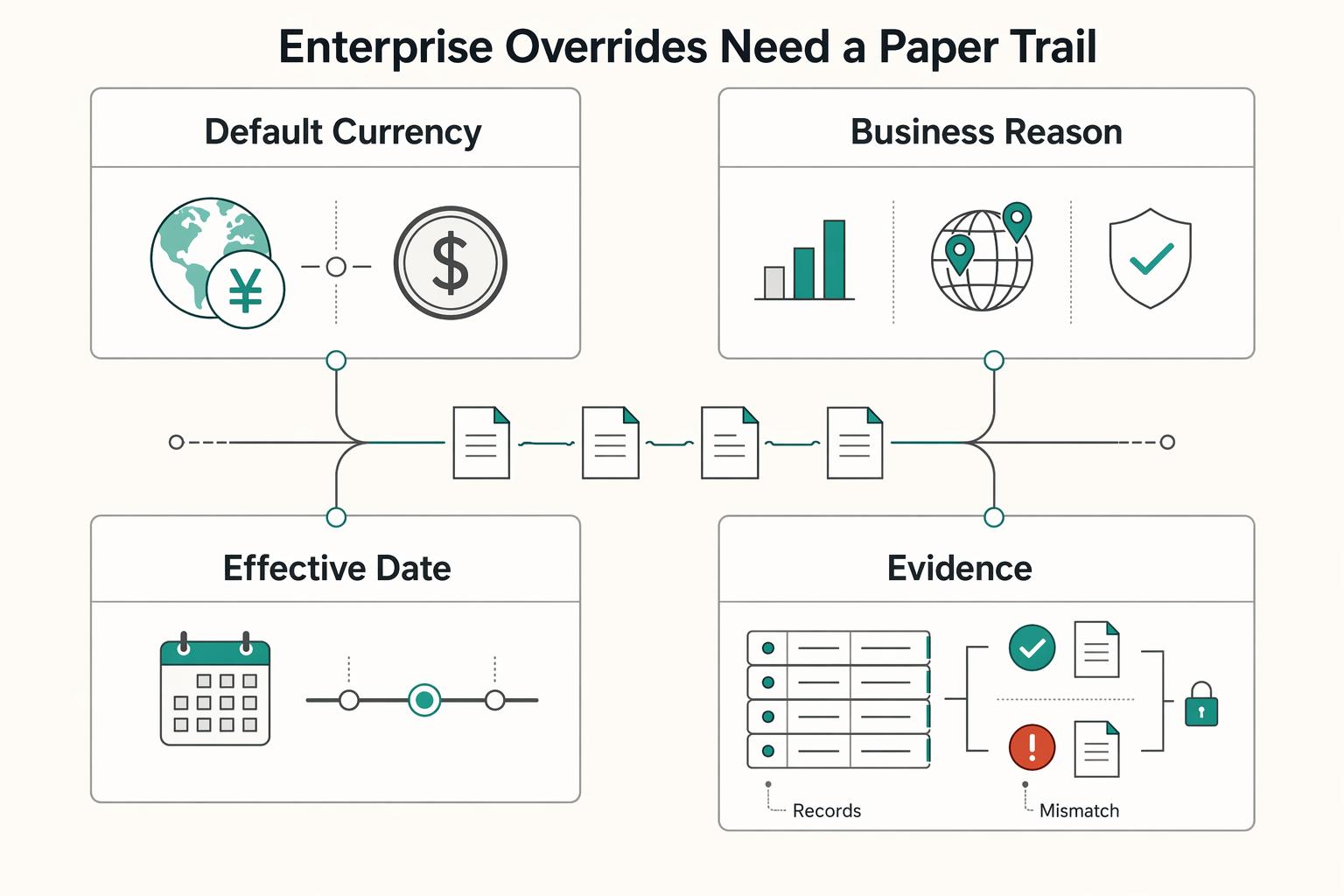
USD versus local currency is not just a finance setting. For a platform, it changes compliance scope, recipient certainty, reconciliation effort, and how much engineering depth your payout layer needs. In practice, many teams avoid picking one currency forever. A common approach is to set corridor-level rules: use local currency where it is legally and operationally supported, and keep USD as a fallback where legal, coverage, or operational constraints are still real.