

Quick Answer
Start with a documented content strategy for agencies that locks outcomes, non-goals, audience evidence, and ownership before anything gets scheduled. Then run a 30-day cycle: pick winnable gaps, rank topics by intent, publish through a live calendar, and evaluate MQL/SQL movement instead of traffic alone. If a planned asset cannot name a pain point, a business outcome, and a next action, defer it.
Start here if you want predictable growth instead of random posting#
If your calendar is full but your pipeline signal is weak, you do not have a posting problem. You have a decision problem. Predictable growth comes from a small set of repeatable choices about what to publish, why it matters, who owns it, and how you will judge whether it helped lead qualification.
The tradeoff is straightforward. More output can increase activity, but volume alone does not guarantee more qualified conversations. Reporting on reach, impressions, and mentions alone misses the point if those assets do not move someone closer to a sales conversation. That gap is common. Content Marketing Institute found 58% of B2B marketers rate their strategy as only moderately effective, and many say unclear goals are the problem.
For a usable strategy, treat these three outputs as non-negotiable:
- A strategy document with decision rules, clear goals, non-goals, and what gets rejected
- A live content calendar that shows what is publishing, when, where, and by whom, including owner handoffs
- A review cadence tied to lead-quality signals, such as SQL movement, not traffic alone
Use this quick checkpoint before you add anything to the calendar. If you cannot point to one owner for drafting, one owner for distribution, and one agreed definition of a qualified lead, do not fill the schedule yet. That is how teams end up publishing consistently while sales still says the leads are a poor fit.
This is an operating sequence, not a motivation piece. You will prepare the baseline inputs, set outcomes and non-goals, and build evidence from real audience pain. Then you will prioritize intent, assign ownership, connect each asset to business development use, and review what moved your pipeline before resetting the next cycle.
What to prepare before day one#
Do not schedule content yet. First, set up three controls: a baseline evidence pack, a realistic channel-capacity table, and a clear decision path for approvals and handoffs.
Step 1. Build a baseline evidence pack#
In Week -2 to 0, build a current-state baseline document before drafting begins. If you run paid campaigns, include the last 90 days of spend by channel. Then add the evidence you already have, such as CRM notes, recurring sales-call objections, top-performing pages, and a short interview synthesis, and pull it into one audience analysis report.
Client interviews matter because they keep the plan tied to how real buyers describe problems. Without that grounding, teams often default to generic tactical topics that sound useful but miss ideal clients.
Use a simple log so each recurring issue is traceable:
| Source | Pattern | Impact | Confidence |
|---|---|---|---|
| Where the signal came from (CRM, call, interview, page) | What repeats | What business outcome it affects | How certain you are |
If a point is not traceable, tag it as a hypothesis instead of treating it as a fact.
Step 2. Audit channel capacity before you promise cadence#
Decide channels by execution load, not ambition. Build this table from your real workflow before you commit to frequency:
| Channel | Required tasks | Owner | Failure risk | Keep/Park decision |
|---|---|---|---|---|
| Website | Brief, draft, edit, publish prep, QA | Owner name | Delays when access or QA depends on one person | Keep if access and QA are covered |
| Adapt copy, prep asset, publish, follow-up | Owner name | Posts go stale when follow-up has no owner | Keep only if follow-up is sustainable | |
| Email newsletter | Adapt copy, segment/select audience, send setup, approvals, reply handling | Owner name | Approval lag misses send windows | Park if approval timing is unreliable |
Then run an access audit: list accounts, permissions, and ownership. Where client-side properties are involved, keep ownership of core data assets on the client side.
Step 3. Confirm decision rights and run a preflight#
Use a go/no-go check before the first publish date:
Gowhen topic approval authority is named, each handoff has an owner, required access is confirmed, and first shipment scope is small enough to execute cleanly.No-gowhen approval authority is unclear, publishing depends on one unavailable person, or launch scope exceeds current capacity.
Define the decision-making hierarchy up front, especially for creative approval and any budget-related distribution choices.
Run one dry pass on a single asset before launch:
- Write the brief with the pain point, intended business outcome, and next reader action.
- Draft it and record each handoff from review through distribution.
- Execute the real publish checklist in the actual tools.
- Note where approvals stall or ownership blurs.
- Fix those blockers before you queue more content.
If execution is the bottleneck, The Best Project Management Tools for Small Agencies can help you tighten the workflow.
Step 1 set business outcomes and explicit non-goals#
Set outcomes before you plan topics, or your calendar will drift. This is the first control point because it turns "alignment" into a pass/fail decision.
| Scope filter | Non-goal |
|---|---|
| Channels | you will not add this cycle |
| Formats | you will not test yet |
| Audience segments | you are not serving right now |
| Request types | you will decline or defer if they do not support the current outcome |
Define each outcome so it links to both a business-development signal and the decision it will drive. "Get more visibility" is too vague to manage. "Increase qualified discovery calls from service-adjacent content so we can decide whether to expand evaluation-stage topics" is specific enough to use. Do the same for lead-stage movement: if MQL-to-SQL handoff quality matters this cycle, state it directly so content can be scoped by awareness, evaluation, and decision intent.
Use this structure for each outcome:
- Signal: what you will observe (for example, qualified discovery calls, sales conversion rate, or MQL-to-SQL movement)
- Decision use case: what you will change based on that signal (for example, expand comparison content, keep focus on service pages, or adjust the CTA)
- Time-bound wording with ownership: clear enough that someone else can see what is being pursued and who owns it
Then set non-goals with equal clarity. Strategy is what you will do and what you will not do. Use non-goals as a scope filter for common drift points:
- Channels you will not add this cycle
- Formats you will not test yet
- Audience segments you are not serving right now
- Request types you will decline or defer if they do not support the current outcome
Before Step 2, run one pass/fail gate on every planned calendar item. If a row does not include the pain point, business outcome, next reader action, and one owner, defer it. Keep the next action explicit, and keep ownership to one person so accountability stays clear.
Common failure mode: outcomes are so broad that everything looks in scope. Fix it by tightening the wording and adding an exclusion rule. For example, replace "build thought leadership" with "help evaluation-stage readers book a discovery call from comparison and how-to content," then add "no net-new awareness cluster this cycle."
Related reading: How to Launch a Podcast for Your Freelance Business.
Step 2 build an audience analysis report from client evidence#
Before you pick topics, build a working audience analysis report from client evidence so your calendar reflects what buyers actually ask, resist, and need.
Define the audience segment for this cycle first. Then gather evidence from the systems where that audience already leaves signals, such as CRM notes, sales call summaries, onboarding feedback, search performance, support themes, interview notes, and survey responses. You are looking for patterns in who buys and how they behave, then pairing those patterns with qualitative context so you can explain why they show up.
Compile the report in a format people can use#
Keep the format simple enough that people will actually use it during planning. A practical entry can include:
- Source
- Observed pattern
- Confidence
- Likely business impact
- Topic implication
- Facts vs interpretation
Keep facts and interpretation separate in every row. For example, "sales calls repeatedly mention implementation timing" is the observation; "we should publish a migration-checklist piece before discovery calls" is your interpretation. If those get blended, assumptions start driving prioritization.
Add one traceability check: someone else should be able to find the original evidence behind each pattern. If they cannot, lower confidence.
Handle disagreement without guessing#
When qualitative and quantitative signals disagree, label the conflict instead of forcing a clean answer. Then state what evidence would resolve it and defer unsupported assumptions until you have it.
Example: if support tickets suggest setup friction is common but search data is weak, collect another month of tickets, review a small set of recent calls, or ask onboarding the same question in a consistent way. Do not turn one loud anecdote into a priority on its own.
The report should be a decision layer, not a data dump.
Set the Step 3 publish gate and keep the report live#
Before a topic moves into Step 3, map it to a pain-point entry and add a short rationale for prioritize now or defer. If you cannot name the pain point, evidence source, and why it matters this cycle, the topic is not ready.
Keep the report live: add new evidence, retire stale assumptions, and make sure briefs reference current entries rather than legacy notes from older cycles.
If you want to tie content planning more directly to pipeline, read How to Build a Client Acquisition System for Your Agency.
Step 3 run competitor analysis and pick gaps you can win#
Before you pick keywords, run a structured competitor analysis and keep only gaps that change what you will publish this cycle. If a finding does not lead to an editorial decision, remove it.
This is where you avoid surface-level monitoring. You are not collecting competitor headlines. You are deciding where you can be clearer at decision time, stronger on proof, and easier for buyers to act on.
Keep the comparison set tight#
Use buyer-stage evidence you can verify in your own pipeline, like lost-deal notes, call summaries, and proposal feedback. Then review the competitor or substitute pages that appear in those records using the same criteria each time: positioning, proof quality, decision clarity, and actionability.
| Competitor | Positioning | Proof quality | Decision clarity | Actionability | Your gap to win |
|---|---|---|---|---|---|
| Competitor 1 | Broad promise, outcome-led | Testimonials with limited detail | Weak fit and non-fit guidance | Book-call CTA only | Publish a buyer guide with fit criteria, non-fit criteria, and a prep checklist |
| Competitor 2 | Specialist angle | Strong examples, thin context | Explains service but not tradeoffs | Helpful article, vague next step | Publish a comparison page that explains when your approach fits and when it does not |
| Competitor 3 | Speed-first message | Generic claims | Mentions pricing but not scope logic | Easy contact path, limited self-serve guidance | Publish a scope-and-pricing explainer with scenarios and proposal FAQs |
Keep the grid small, but keep the criteria consistent.
Keep only winnable gaps#
Move a gap forward only if it passes all checks:
- It maps to a documented pain point in your audience analysis report.
- It becomes one concrete asset concept, not a vague topic note.
- It includes an explicit reader next step.
- You can prove it better, explain it clearly, and operationalize it this cycle.
Use this triage rule: if you cannot prove the advantage, explain it clearly, and ship it now, defer it. Keep only the gaps you can execute this cycle.
Step 4 prioritize keyword and topic choices by intent#
Prioritize intent before volume. If you want leads, a traffic-first queue can look busy while qualified conversations stay flat.
Use Step 3 gaps to build a publish queue around topics, not isolated keywords. A topic is a cluster of semantically similar queries with the same intent. If two terms reflect the same decision need, combine them in one asset instead of splitting them into separate posts.
Keep your calendar in two lanes:
| Lane | Intent signal | Business outcome | Required proof | Publish priority |
|---|---|---|---|---|
| Lane A | Query shows evaluation intent: comparison, pricing, process, fit, or implementation | Qualified calls, proposal support, objection handling | Case studies, process detail, scope logic, FAQs, readiness guidance | Protect first |
| Lane B | Query shows early research intent: education, problem framing, or awareness | Relevant visibility and future demand that can progress to consideration | Clear explanations, examples, and an explicit bridge to consideration | Add only after Lane A is protected |
| Defer | Weak buyer signal, weak service adjacency, or no clear next action | Limited near-term business impact | Thin or generic proof | Hold |
Score each topic cluster with a simple weighted lens:
- intent strength
- service adjacency
- conversion path clarity
- realistic ability to rank with your current topical authority
Raw volume still matters, but it should not outrank buyer intent and business value. A lower-volume topic can be the better choice when intent is stronger and the path to action is clearer.
Before any topic enters the calendar, require:
- lane assignment
- target reader action
- likely objection
- specific evidence needed in the brief
If the brief cannot name the proof you will use, the topic is not ready.
Watch for this failure mode: traffic grows over 3-6 months, but lead quality does not. In the next cycle, protect Lane A first, then add Lane B only when it supports a defined progression toward consideration, for example article to checklist, comparison page, or call.
Step 5 choose formats and distribution channels you can sustain#
Before you draft, decide the format and distribution plan you can reliably run this cycle. If you cannot assign a format, primary channel, repurpose path, and owner, defer the piece.
Keep your format set small and repeatable, and give each format a clear role in your process: authority building, objection handling, or conversion support. Then match distribution to where your audience is actually active, because the wrong channel or timing can waste the work.
| Format | Best-fit channel behavior | Production effort | Distribution cadence | Owner accountability |
|---|---|---|---|---|
| How-to article | Best on your site for readers who want depth, then reused in email or social | Research, practical examples, and an edit pass | Publish on site first, then reshare only at a pace you can sustain, such as twice a week if realistic | Writer owns draft quality; channel owner owns reposts and CTA links |
| Comparison page/article | Best when readers are evaluating options on owned channels and in follow-up email | Proof checks, clear differences, objection coverage | Share when related objections are active, then reuse in nurture and outbound follow-up | Strategist owns claim accuracy; sales/marketing owner owns follow-up use |
| Checklist | Best for quick action in email, landing-page support, and social save/share behavior | Tight copy, clean formatting, clear next step | Reuse around related launches on a repeatable rhythm | Publisher owns asset; distributor confirms links and next-step action |
Use a consistency gate in your calendar: if reliable distribution is not feasible next cycle, defer that channel and document why: no owner, weak audience activity, or limited follow-through time.
As a guardrail, avoid launching a new format and a new channel at the same time. If performance is weak, run a follow-through check before you change strategy: confirm reshares happened, engagement signals were reviewed, and the next-step action (reply, click, or call booking) worked as planned.
Step 6 document the strategy and assign clear ownership#
Document your decisions in a way your team can execute without guesswork. Keep two separate artifacts: one strategy document for decisions, and one live calendar for workflow. If you combine them, priorities blur and handoffs get missed.
Use one time-bound strategy document with only the fields this process needs: audience, goals, priorities, planned assets, channel, owner, and decision rationale from earlier steps. If you cannot trace an asset back to audience evidence, intent, and channel logic, do not schedule it.
Run your calendar as an operations system, not a date list. In the same system, track status, dependency notes, review needs, publish timing, and distribution follow-through. Include a Review/Approval stage, and define Ready and Done up front so handoffs stay clear.
| Workflow stage | Owner | Backup owner | Handoff trigger | Done definition |
|---|---|---|---|---|
| Intake | Strategist | Team lead | Request accepted through one intake point | Goal fit and rationale logged |
| Draft | Writer | Subject reviewer | Brief marked Ready | Draft matches brief and CTA |
| Review/Approval | Editor or approver | Team lead | Draft submitted for review | Claims checked and approval recorded |
| Publish | Publisher | Editor | Approval complete | Content is live and links/metadata are checked |
| Distribution | Channel owner | Publisher | Content is live | Planned distribution actions are completed and tracked |
If work keeps piling up in review, add one small WIP limit to protect flow. Keep started work visible in the workflow instead of pushing it back into the backlog.
Set a lightweight change-control rule for mid-cycle requests. Before you accept a change, log the request reason, expected tradeoff, approver, and what gets deferred. If that tradeoff is not documented, defer the request to the next cycle.
Step 7 connect content to business development outcomes#
Before drafting starts, tie each asset to one business-development action you will take. If a piece will not help you start, unblock, or advance a real conversation with the right audience, it should not enter this cycle.
Use one asset, one primary sales job in the brief. You can repurpose later, but the first use must be explicit so content is purpose-driven instead of piecemeal.
| asset | buyer motion stage | sales trigger | next action | owner |
|---|---|---|---|---|
| comparison page | evaluation | prospect asks how you differ from an alternative | send page and invite a review call | sales |
| how-to article | awareness | inbound lead recognizes the problem but lacks solution clarity | send article and ask for their current approach | marketing |
| objection FAQ | decision | deal slows on implementation concerns | send FAQ and book follow-up with the account lead | account team |
Do not move a brief forward unless it names the audience, motion type, desired conversation outcome, and exact handoff point to sales or account teams. For account-signal prioritization, define the signal category, why it matters now, and which asset variant you will use for that trigger.
Treat promotion and review as part of delivery, not optional afterthoughts. If an asset underperforms, check placement and timing first, then content changes. After each use, capture structured feedback from sales or account teams: who received it, which question or objection it addressed, whether the conversation advanced, and what was missing. Use that record to adjust the next cycle.
For a step-by-step walkthrough, see Content Marketing for B2B SaaS That Holds Up Under Real Work.
Common mistakes that derail agency content and how to recover#
Most agency content fails for repeat operational reasons, not a lack of ideas. Diagnose the issue against your sales cycle, then apply one hard correction at a time.
| Issue | Hard correction |
|---|---|
| Activity that looks busy but does not move pipeline | Freeze anything without a sales-use hypothesis |
| Competitor copying | Require proof before approval |
| Weak measurement rhythm | Require two signal types before calling the cycle successful |
| Channel sprawl | Cut one channel and protect consistency |
- Diagnose activity that looks busy but does not move pipeline. Then freeze anything without a sales-use hypothesis.
If your calendar is full but you cannot explain how a piece supports a real new-business moment, you are tracking motion, not progress. Before drafting, require each asset to name the buyer stage, the business problem, and the next action. If any part is missing, pause it.
Use a quick keep/cut/fix triage before each cycle:
| planned asset | outcome fit | owner coverage | distribution readiness | next decision |
|---|---|---|---|---|
| comparison page for evaluation-stage prospects | strong, tied to objection handling | sales owner named | publish and follow-up plan defined | keep |
| broad trend post with no service tie | weak, no clear stage-specific use | marketing owner only, no handoff | no distribution plan beyond posting | cut |
| case-study article with solid proof but vague CTA | medium, useful for decision stage | owner named, backup unclear | publish-ready, nurture step unclear | fix |
- Diagnose competitor copying. Then require proof before approval.
If topics are approved because "everyone else is covering this," you will sound interchangeable. Require proof before approval: for each topic, attach real evidence such as a case pattern, process view, pricing logic, or documented objection from calls. If you cannot attach proof, send it back for rework.
Also check whether the draft makes your core agency details easy to find: capabilities, specialization, and contact path. Buyers can move on in five minutes or less when the basics are unclear.
- Diagnose weak measurement rhythm. Then require two signal types before calling the cycle successful.
If review meetings focus only on traffic or publishing output, you still do not know whether the cycle worked. Separate signals into two buckets and require both:
- Execution health: published on plan, distribution completed, owner follow-through completed, core agency details easy to verify.
- Business-development impact: movement in qualified conversations, opportunity progression, objection handling, or reactivation.
Use this rule: no "successful cycle" label unless execution health is stable and business-development impact is visible. This is the gap many buyers call out when agencies cannot quantitatively prove impact.
- Diagnose channel sprawl. Then cut one channel and protect consistency.
If you are posting across many channels without reliable follow-through, reduce scope immediately. Cut one under-executed channel this cycle and reinvest in the channel you can sustain with quality, distribution, and owner accountability. Consistency wins over volume.
Run one practical check: can your current team maintain cadence, review, and handoffs for the next 30 days without heroics? If not, scope is too wide.
Your next 30 days in one copy-paste checklist#
Treat the next 30 days as an execution cycle, not a publishing sprint. Use each step to define one outcome, one owner, and one clear finish line.
| Step | Outcome | Owner | Done when |
|---|---|---|---|
| Step 1 lock your strategy in one page | You have a one-page content strategy that states what you will cover, who it is for, where it will appear, and how you will measure success. | You or your marketing lead | The page lists your business outcomes, explicit non-goals, and 3-5 content pillars, and each planned brief must name a pain point, intended outcome, and next action. |
| Step 2 build an audience evidence pack from real language | You have a short evidence pack focused on repeated pain points and desired outcomes. | The person closest to buyer conversations | Each key pain point is written in plain language with its source noted, and assumptions are clearly marked as assumptions. |
| Step 3 run competitor review to find winnable gaps | You have a focused gap list tied to direct alternatives your audience already compares. | Your positioning or strategy owner | Every kept gap includes the competitor angle, your differentiating angle, and the proof asset you can produce. |
| Step 4 validate topics and keywords by intent before scheduling | You have a ranked topic list ordered by intent and business fit. | Your editorial or search planning owner | Each topic has a target query, likely objection, required proof, and next action. |
| Step 5 choose formats and channels you can sustain | You have an execution plan covering formats, cadence, distribution channels, and success categories that match your real capacity. | The person accountable for publishing and distribution | Your 30-day calendar includes topic, format, channel, draft date, publish date, distribution task, and owner for every item. |
| Step 6 publish and track by category, not by noise | Your first assets are live and used in real workflows. | Content owner plus the person applying content in sales or follow-up | Each asset is tracked in three categories: business outcomes, intent-lane signals, and pipeline movement notes. |
| Step 7 run the reset: continue, stop, test, carry forward | You end the cycle with operational decisions, not opinions. | You and the person responsible for pipeline review | Every asset is tagged continue, stop, test, or carry forward, and your next 30-day calendar is updated from that decision set. |
- Step 1 lock your strategy in one page.
Outcome: You have a one-page content strategy that states what you will cover, who it is for, where it will appear, and how you will measure success. Owner: You or your marketing lead. Done when: The page lists your business outcomes, explicit non-goals, and 3-5 content pillars, and each planned brief must name a pain point, intended outcome, and next action.
- Step 2 build an audience evidence pack from real language.
Outcome: You have a short evidence pack focused on repeated pain points and desired outcomes. Owner: The person closest to buyer conversations. Done when: Each key pain point is written in plain language with its source noted, and assumptions are clearly marked as assumptions.
- Step 3 run competitor review to find winnable gaps.
Outcome: You have a focused gap list tied to direct alternatives your audience already compares. Owner: Your positioning or strategy owner. Done when: Every kept gap includes the competitor angle, your differentiating angle, and the proof asset you can produce.
- Step 4 validate topics and keywords by intent before scheduling.
Outcome: You have a ranked topic list ordered by intent and business fit. Owner: Your editorial or search planning owner. Done when: Each topic has a target query, likely objection, required proof, and next action.
- Step 5 choose formats and channels you can sustain.
Outcome: You have an execution plan covering formats, cadence, distribution channels, and success categories that match your real capacity. Owner: The person accountable for publishing and distribution. Done when: Your 30-day calendar includes topic, format, channel, draft date, publish date, distribution task, and owner for every item.
- Step 6 publish and track by category, not by noise.
Outcome: Your first assets are live and used in real workflows. Owner: Content owner plus the person applying content in sales or follow-up. Done when: Each asset is tracked in three categories: business outcomes, intent-lane signals, and pipeline movement notes.
| decision area | keep next cycle when | cut next cycle when | test next cycle when |
|---|---|---|---|
| topic | It matches repeated pain points and shows useful signal quality. | It creates activity but no clear business use. | The pain point is valid, but framing or next action may be off. |
| channel | You can maintain cadence and complete distribution tasks. | Ownership slips and execution is inconsistent. | Audience fit looks plausible, but execution proof is still thin. |
| format | It is repeatable and supports clear next actions. | Effort is high relative to signal quality. | A lighter version could improve feasibility. |
- Step 7 run the reset: continue, stop, test, carry forward.
Outcome: You end the cycle with operational decisions, not opinions. Owner: You and the person responsible for pipeline review. Done when: Every asset is tagged continue, stop, test, or carry forward, and your next 30-day calendar is updated from that decision set. Use the 30-day reset to tighten execution, then use the 90-day review to adjust strategy with broader performance data.
Want to confirm what's supported for your situation? Talk to Gruv.
Frequently Asked Questions
What is the difference between content strategy, marketing strategy, content marketing, and a plan?
Use the right label before you assign work. Marketing strategy sets goals, positioning, and audience direction. Content strategy decides how content will be planned, created, delivered, and governed to meet user needs and business outcomes. Content marketing is the creation and distribution work itself, while the plan covers the specific actions, dates, channels, and handoffs. | term | use this when | primary owner | what success looks like | |---|---|---|---| | marketing strategy | you need goals, positioning, and target audience direction | leadership | the team aligns on goals and market direction | | content strategy | you need a clear approach for planning, creating, delivering, and governing content | marketing lead with sales input | content choices align with user needs and business goals | | content marketing | you are creating and distributing assets for a defined audience | content and distribution owners | assets get published, distributed, and reach the right audience | | marketing plan or editorial calendar | you need actions, dates, channels, and handoffs tracked visibly | day-to-day owner | content is organized, scheduled, and tracked across channels |
What is the minimum viable strategy document for a small agency?
Start with one documented strategy rather than ad hoc notes. Include your audience, goals, positioning, priority topics, channels, and a working editorial calendar. Define who is responsible and accountable for each asset so drafting, review, and publishing do not stall.
Should you prioritize competitor analysis or audience evidence first when time is tight?
Start by clarifying goals and audience needs when uncertainty is high. Then use competitive content analysis to identify topic and keyword opportunities you can actually execute. If capacity is very tight, ship one evidence-backed topic first, then expand the gap review.
How do you choose between high-volume keywords and high-intent topics in practice?
When capacity is limited, prioritize intent fit first. Search intent is the user's goal behind the query, so choose topics that answer real buyer questions and are genuinely useful, even if volume is lower. Use volume as a tiebreaker after intent fit and execution readiness are clear.
Which metrics best show that content is improving lead quality, not just traffic?
Anchor your review in business outcomes first: MQLs, SQLs, and pipeline progression. Then pair those lagging signals with leading indicators such as CTR and engaged sessions. If you use GA4, remember an engaged session is more than a page load. It lasts longer than 10 seconds, has 2 or more page or screen views, or triggers a key event. Before each review, verify that sales and marketing use the same MQL and SQL definitions, because lifecycle stages typically move forward by default.
How often should you revise topic lanes and distribution scope?
Use a fixed review rhythm you can actually complete on time. Revisit topic lanes early when business outcomes change, proof runs thin, or distribution ownership keeps breaking.
Try a related tool
Researched and edited by the Gruv editorial team. Gruv builds cross-border billing, payouts, and finance-operations software for global businesses.
Sources
- connect.ncdot.gov/projects/Roadway/RDM/NCDOT%20Roadway%20Desig...trusted
- digital.gov/topics/content-strategytrusted
- ignet.gov/sites/default/files/files/11_A_Methodology_f...trusted
- le.fbi.gov/cjis-division/cjis-security-policy-resource-...trusted
- mutcd.fhwa.dot.gov/pdfs/11th_Edition/mutcd11thedition.pdftrusted
- online.hbs.edu/blog/post/content-strategytrusted
- pmc.ncbi.nlm.nih.gov/articles/PMC9844195trusted
- samhsa.gov/sites/default/files/nc-smart-goals-fact-shee...trusted
Educational content only. Not legal, tax, or financial advice.
Related Posts

LinkedIn for Freelancers Who Want a Predictable Client Pipeline
Treat LinkedIn as two jobs you run at the same time: a credibility check and a conversation engine. If you only chase attention, you can get noise. If you only send messages, prospects may click through to a thin profile and hesitate.
How to Get Health Insurance in Portugal as a Digital Nomad
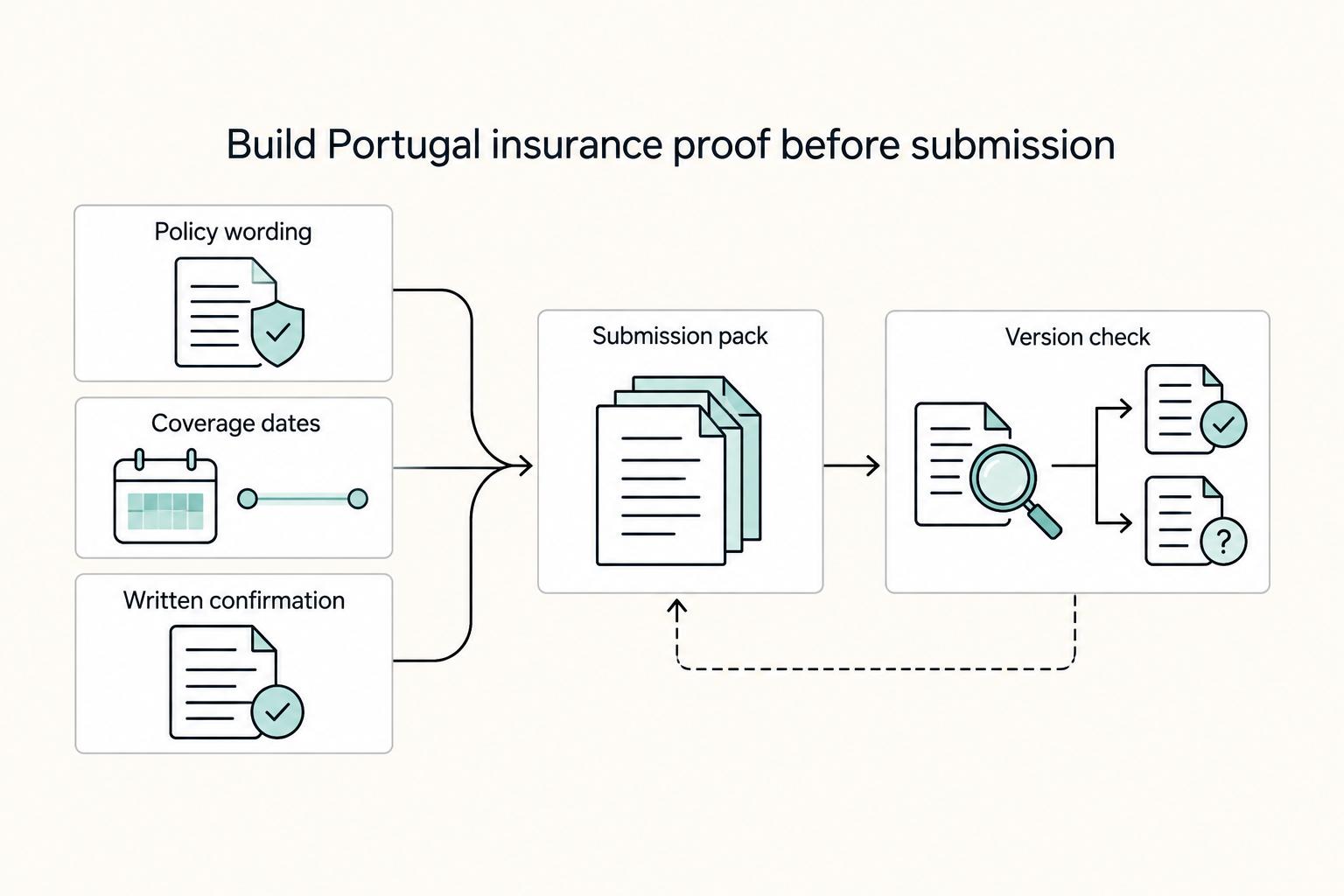
If you are searching for health insurance portugal nomad options, treat the decision as part of your visa file before you treat it as a product search. The policy matters, but timing, wording, and document quality often determine whether your file moves cleanly or turns into a clarification request.

The Best Project Management Tools for Small Agencies
For a small agency, project management software passes or fails on one test: can the setup protect profit while delivery keeps moving. A clean board helps, but it does not tell you who is over capacity next week, what share of this week's time is billable, or which active project is drifting from target margin. Those are the answers that drive weekly decisions.