
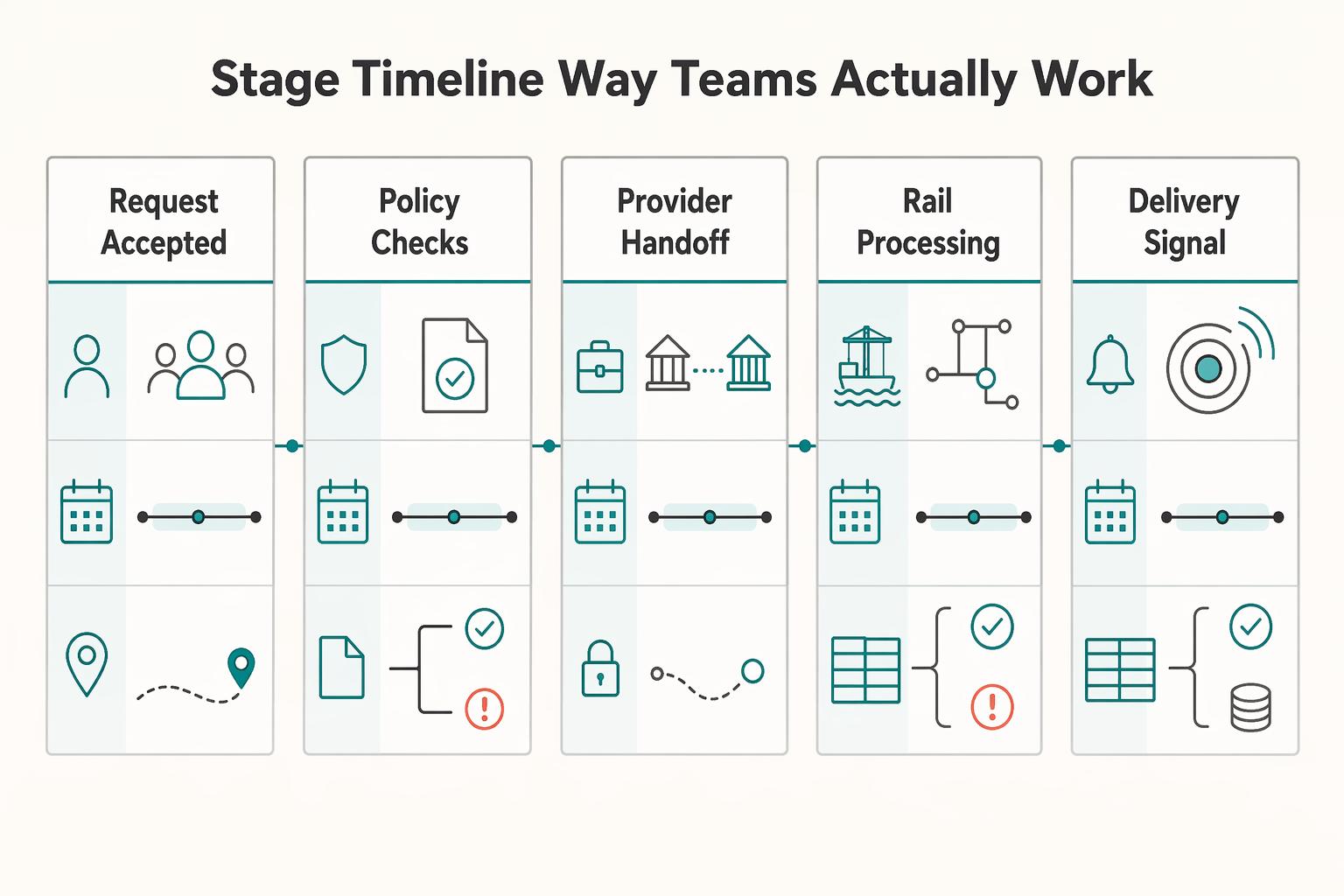
Quick Answer
Build your payout timeline estimator as a stage model, not a single average. Track request acceptance, policy checks, provider handoff, rail movement, delivery signal, and reconciliation readiness as separate checkpoints. Use rail-specific ETA bands for ACH, wire transfer, local bank rail, and SWIFT, then widen bands when corridor evidence is thin. Do not publish a dated promise while KYC, KYB, AML, or tax-profile readiness is still pending.
How to Estimate Cross-Border Payout Timelines#
Most estimator tools answer a different question. A credit card payoff calculator tells you how many months it may take to clear debt at a given interest rate. An amortization schedule maps regular loan payments against a declining balance. CAPE is used to estimate long-term expected real stock market returns. Useful tools, but none helps a finance or ops team answer the question that actually creates payout friction: when money requested today will be available to the recipient.
That is why a payout timeline estimator should be treated as an operations instrument, not a generic calculator. Its job is not to produce one tidy average. It should estimate request-to-availability timing in a way teams can actually use. Some payment programs even market fast, predictable payments tied to submission timing.
If your team is still quoting one blended payout window for every request or program, that is a red flag. Averages can hide the delays that create support tickets and month-end noise. One batch may move cleanly while another takes longer through a different processing path. False precision is worse than a wider estimate band that names real risk.
The practical shift is to estimate by stage, not by wishful end date. You want internal checkpoints you can verify later in your own records. That gives you something to test against reality. It also makes escalations cleaner, because you can ask where time was lost instead of arguing about whether the whole payout was "late."
This article lays out that model in a way a capable team can run in production. We will break timing into stages, identify what changes that timing, and show when uncertainty is too high for a confident estimate. We will also cover practical operational factors like batching, retries, and handoff points where timeline promises can fail.
The goal is simple: fewer payout surprises and faster escalation when timing slips. If you can explain a delay with traceable stage timing instead of a vague "processing" label, your estimate stops being a rough guess and becomes a decision tool.
Define the payout timeline estimator your team can actually run#
Your estimator is only usable in production if your team defines terms, estimation units, and evidence rules up front.
- Define each timeline checkpoint in plain language and keep those labels consistent across product, ops, and support.
- If your workflow exposes both a beneficiary-availability signal and a later provider-completion signal, label them separately instead of merging them into one status.
- Choose one unit of estimation per view, for example individual payouts or grouped runs, so unlike records are not blended into a single misleading average.
- Anchor measurement to one auditable record your team can reconstruct later, and map dashboard views back to that record.
- Set a minimum evidence pack for each payout, such as request acknowledgements, status updates, and webhook receipts where available.
When timing slips, this structure lets you isolate which checkpoint moved instead of debating a single "late vs on-time" label. Related: How Platforms Reduce Cross-Border Payout Costs.
Map the end-to-end timeline stages and measurable checkpoints#
Model the estimator as stage checkpoints, not one continuous timer. Each stage should have one owner, one primary record, and one clear escalation trigger so delays are traceable and accountable.
Do not run the flow as a single clock from API request to funds available. That hides where delay entered and makes every miss look like a rail issue. Keep separate stages for request accepted, policy checks, provider handoff, rail processing, delivery signal, and Reconciliation ready so finance, ops, and product can work from the same map.
Stage the timeline the way your teams actually work#
Treat this as an operating plan, not just a schedule. Timestamps alone are not enough; the stage should also show ownership, expected latency band, and what triggers action.
| Stage | Owner | System of record | Expected latency band | Escalation trigger |
|---|---|---|---|---|
| Request accepted | Platform or API team | API acknowledgement plus request ID | Your documented intake band | No durable request ID, or ack time does not match persisted record |
Policy checks (KYC/KYB/AML) | Compliance or risk ops | Policy status record with last-updated timestamp | Your documented review band | Status remains pending past band, or required review signal is missing |
| Provider handoff | Payments ops | Provider reference tied to payout ID | Your documented handoff band | Accepted internally but no provider reference created |
| Rail processing | Provider and rail operations | Provider status events plus Settlement confirmation when available | Rail and corridor baseline band | No status movement by band end, or cutoff miss pushes to next window |
| Delivery signal | Payments ops | Provider delivery event plus Webhook receipt | Your documented delivery signal band | Provider says sent or delivered but no webhook or contradictory status lands |
Reconciliation ready | Finance or reconciliation team | Ledger journal posting and export-ready status | Your documented reconciliation band | Delivery present but journal posting or export-ready flag is absent |
Define checkpoint evidence before you publish ETA#
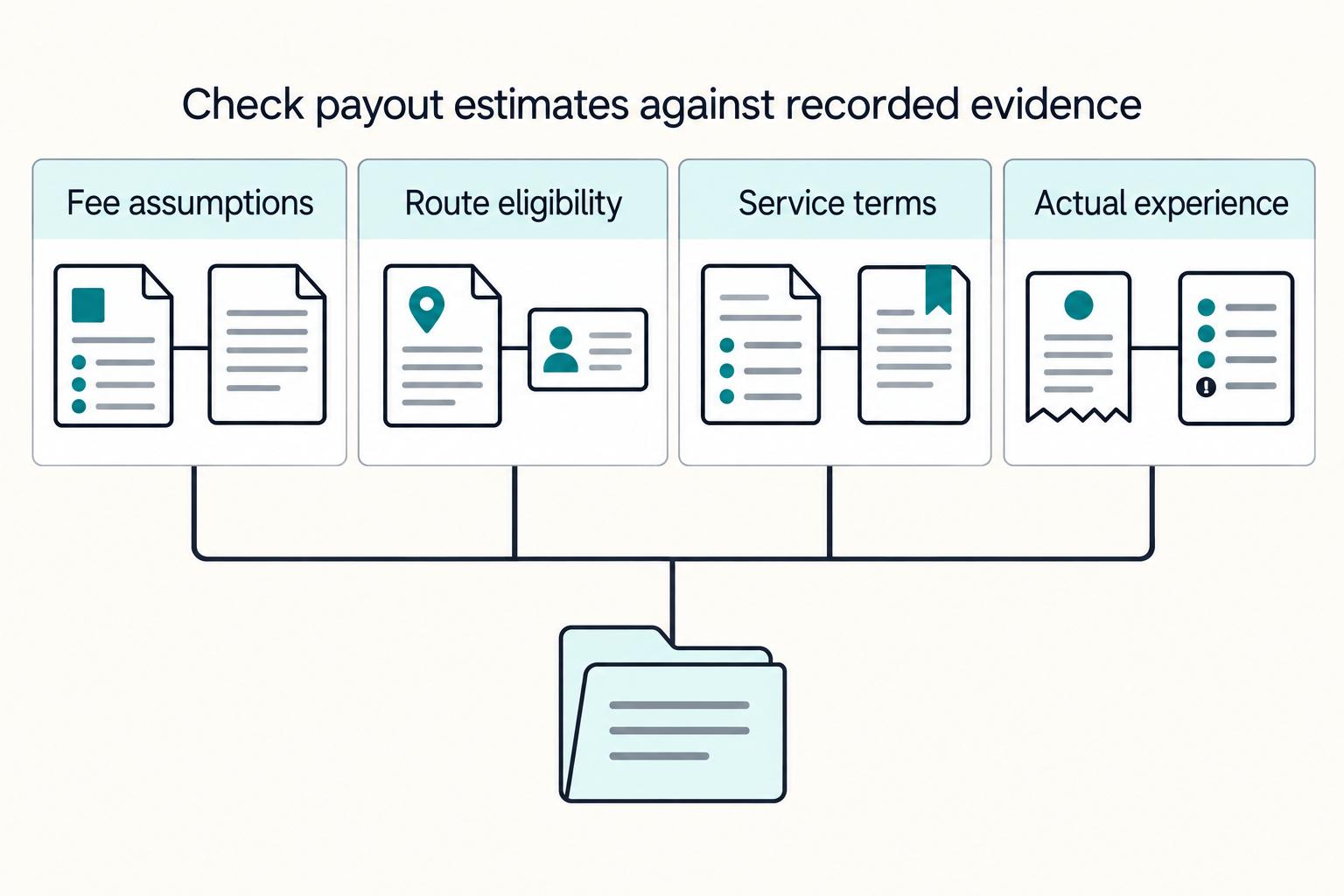
For each stage, define the primary artifact and the confirmation detail your team checks when timing drifts. For example, provider handoff is only complete when the provider reference is linked to your payout ID, and Reconciliation ready requires both Ledger journal posting and export-ready status.
Keep provider event time and Webhook receipt time as separate checkpoints. If you collapse them into one timestamp, you lose visibility into event-delivery lag and blur the true rail baseline.
Make queue effects explicit#
Include queue behavior directly in stage expectations. Cutoff windows, weekend and holiday handling, and asynchronous webhook delivery can shift ETA even when no system is broken.
Roll stage expectations forward when a payout crosses a processing boundary. If request accepted lands after cutoff, treat the next processing window as the earliest plausible handoff. If handoff lands before a non-processing period, avoid implying same-window delivery unless your records support that pattern for that rail and corridor.
When stage movement stalls after handoff, use the table as your reference point: expected evidence, owner, and escalation trigger. For a step-by-step walkthrough, see How Platform Operators Choose Cross-Border Payout Rails by Corridor.
Compare rails by what actually changes delivery time#
Compare rails as an evidence-quality decision, not a speed label. Here, you can support method-level fee differences, but not delivery-time SLAs for ACH, Wire transfer, Local bank rail, or SWIFT from the available source.
If payout certainty matters more than unit cost, choose the method where your own records give clear, repeatable status evidence. If cost is the main constraint, keep lower-cost methods available but publish wider ETA bands until your corridor-level timing evidence is strong.
| Rail | Grounded signal available here | Typical delay drivers to document before ETA | Required beneficiary data quality | Retry behavior to define |
|---|---|---|---|---|
ACH | Method is priced separately ($0.59 standard; $10 same-day in the cited schedule) | Not publicly documented; confirm in your provider and corridor data | Validate required account details per provider rules | Define whether returns are auto-retried, manually retried, or reissued |
Wire transfer | Method is priced separately ($15 domestic wire in the cited schedule) | Not publicly documented; confirm in your provider and corridor data | Validate required beneficiary and bank fields before release | Define correction/resend vs cancel/reissue path |
Local bank rail | No timing or fee detail provided in this source | Must be documented per country, provider, and program | Validate market-specific local banking fields | Define market-specific retry/return handling |
SWIFT | Method is priced separately ($20 international wire (SWIFT USD) in the cited schedule) | Not publicly documented; confirm in your provider and corridor data | Validate beneficiary and bank fields required for your program | Define the minimum status evidence required before resend |
Cost helps route decisions, but it is not a timing proxy. The same source also notes fees can change by funding setup, for example listed ACH/wire/SWIFT transaction fees may be waived when using a Ramp Business Account; fee changes are noted as effective June 1, 2026 with a 3-month grace period for eligible active customers, so keep cost logic versioned separately from ETA logic.
Pair this with the Platform Payout Cost Estimator. You might also find this useful: Contractor Payout Speed Calculator by Rail and Country.
Account for compliance and tax gates before you publish ETA#
Rail timing is only valid after payout eligibility is clear. If KYC, KYB, AML, or VAT validation is still open, show pending compliance review instead of a delivery-time promise.
Treat policy green as a hard pre-rail gate#
Do not start the payout clock at request creation. Keep policy checks as a separate stage with its own timestamped decision, current beneficiary profile, and required program documents. If any of that is missing, treat it as a release-readiness gap, not a bank delay.
Model tax readiness as an ETA dependency#
If your program captures tax-profile data, for example W-8, W-9, FEIE, FBAR, or Form 1099 fields where enabled, include completion and review state in eligibility before bank processing.
FEIE shows why this gate must be explicit. The exclusion applies only to a qualifying individual with foreign earned income, and income still must be reported on a tax return. A key checkpoint is the physical presence test: 330 full days in a foreign country or countries during any 12 consecutive months (the days do not have to be consecutive). If qualification covers only part of the year, adjust the limit by qualifying days, even though the 2026 maximum is $132,900 per person.
Tag controllable delay separately from bank delay#
Separate exception tags so your ETA data stays trustworthy.
| Delay type | Example |
|---|---|
| Controllable delay | missing profile fields |
| Controllable delay | incomplete tax data |
| Controllable delay | unresolved policy review |
| Controllable delay | inconsistent residency or identity details |
| External delay | bank cutoff miss after release |
| External delay | network holiday handling |
| External delay | intermediary status gap |
| External delay | post-handoff processing lag |
If policy status is not green, do not publish a rail ETA. Read Unit Economics for Payment Platforms: How to Calculate True Cost Per Payout.
Design batching and retry logic so estimates stay trustworthy at scale#
Keep estimates trustworthy by treating batching, retries, and webhook timing as measured internal stages, not assumed provider behavior.
Cutoff windows, webhook lag, and idempotency outcomes are behaviors you verify from your own provider responses, event logs, and ledger evidence — not values you can assume in advance.
Separate batch timing from single-request timing#
Use separate ETA logic for single payouts and Payout batches. For each payout, keep an evidence trail that shows batch membership, batch close time, provider handoff time, and status history.
If your records show a batch missed a processing window, update the ETA immediately and surface the reason code in ops views.
Make retries traceable before you make them fast#
Use an Idempotency key for each payout intent, and keep retries tied to that same intent record. On each retry, verify that the request payload, provider reference where available, and Ledger journal intent all map to the same key.
If a retry path creates a second payout ID before the first is clearly terminal, flag ETA confidence as low and require review.
Measure webhook lag as its own stage#
Track Webhook receipt time separately from provider event time, then add your internal processing time and ledger status-write time. Use that timestamp chain to explain "provider says sent, platform still pending" instead of assuming rail delay.
Without those timestamps, treat the cause of ETA variance as unknown.
Related reading: Account Takeover in Payout Platforms and How to Stop Payee Hijacks.
Handle failure modes and escalation without breaking auditability#
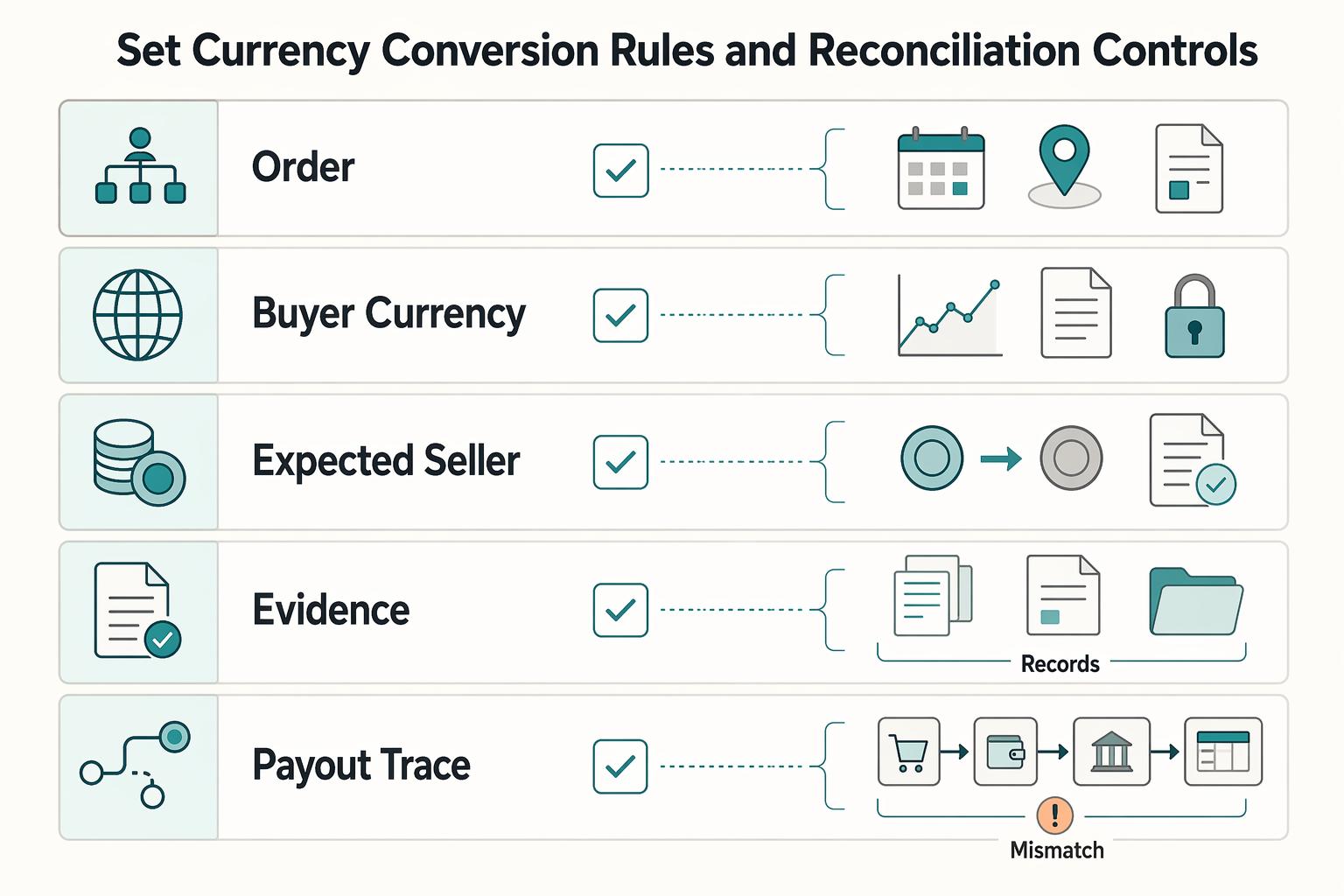
When a payout fails, the priority is a single, auditable record from request through resolution, not just moving funds again. Treat rejected beneficiary details, returned transfers, AML holds, and unmatched credits in Virtual Accounts (VBA) as distinct exception states, but manage them in one connected workflow so context and ownership are not lost.
Fragmented end-to-end handling creates delays and rework even when individual systems seem to work. In practice, that is how a resend can appear to fix the issue while the original attempt becomes hard to explain in audit.
Separate failure states before choosing action#
Keep each case type explicit, and anchor decisions to evidence tied to the original payout intent:
| Failure state | Evidence to review |
|---|---|
| rejected beneficiary details | original payload, beneficiary record snapshot, and provider reject response |
| returned transfers | return event/reason and linked Ledger journal entries for the same intent |
AML holds | hold status, review owner, case reference, and closure decision |
unmatched credits in Virtual Accounts (VBA) | incoming credit record, reference text, and candidate ledger links until match is resolved |
Use a controlled escalation order#
To reduce rework and preserve traceability, apply one internal escalation sequence:
- Validate the payload against the original payout intent and beneficiary data.
- Confirm the provider response and related status events/webhooks for that attempt.
- Confirm
Ledger journalintegrity so state transitions match the cash story. - Reissue only through a controlled retry path that preserves intent and retry history.
Completion rule: do not mark a payout complete on a provider "sent" signal alone. Close only when both a delivery signal and a Reconciliation checkpoint are present; if either is missing, keep it in exception handling.
We covered this in detail in How to Audit Your Payout Platform: An Internal Audit Checklist for Finance Teams.
Build the estimator in product and ops with a practical implementation checklist#
Build the estimator on one consistent, transparent record format, then reuse that same format across ops, customer messaging, and exports. If an ETA cannot be traced from payout record to provider event to Ledger journal, keep it in internal ops until the record is complete.
| Surface | What it shows |
|---|---|
| Internal ops view | full timestamps and references for investigation |
| External status page | plain-language status text that matches the underlying state |
| Exports | the same identifiers and timing fields tied to Ledger journal records for reconciliation |
Use one shared data contract for each payout attempt, with fields such as payout ID, rail, country or program, policy status (KYC/AML), provider reference, event timestamps, and Settlement confirmation. The goal is consistency: a fixed format makes investigations faster, reduces mistakes, and keeps explanations clear.
Before launch, run this checklist:
- Define ETA bands by rail and country/program, and present them as estimates.
- Set stage-level alert thresholds so stalled steps are visible early.
- Use a controlled retry path with an
Idempotency keywhere supported, so retries stay linked to the original intent. - Review estimated versus actual timing on a weekly cadence and adjust logic or messaging when variance persists.
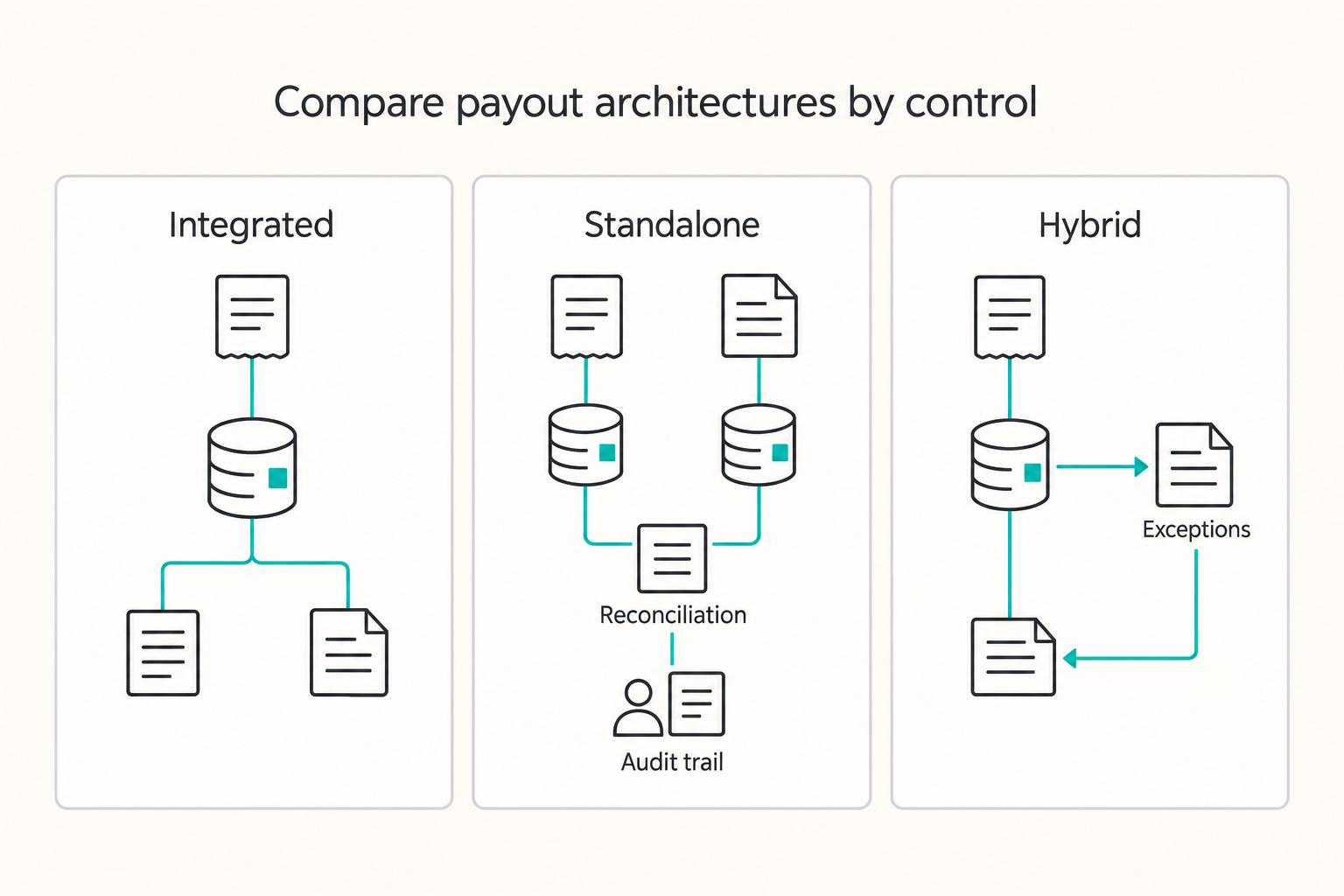
If you are deciding where this should live, start with architecture fit before UI polish: Integrated Payouts vs. Standalone Payouts: Which Architecture Is Right for Your Platform?. For audience-facing examples, see How to Get Paid on eBay as a Cross-Border Seller: Fees Timelines and Payout Options, How to Build a Payout SLA: Setting Expectations for Contractor Payment Timing, and Browse Gruv tools.
Conclusion#
A useful payout timeline estimator earns trust only when your team can explain every estimate after the fact. The practical version is not a calculator sitting on top of averages. It is a stage-based operating discipline tied to routing choices, policy gates, and auditable events that finance, ops, and product can all inspect.
The main takeaway is simple: better math will not rescue weak inputs. Even well-validated estimator logic still depends on accurate operator-entered data, so the quality of the result rises or falls with the payout record you feed it. If key fields are wrong or stale, your ETA can look precise and still be wrong. False precision is worse than a wider range you can defend.
A useful checkpoint pair is payout status confirmation plus a matching Ledger journal record for reconciliation. A provider-side "sent" event is useful, but treat completion and reconciliation as separate checks. If one of those pieces is missing, keep the payout state explicit in ops until the gap is resolved.
Traceability matters just as much as timing logic. If you do not attach an Idempotency key to each payout request, retries can create duplicate execution paths and pollute your estimated-versus-actual data. The same goes for event timing: compare provider event time with webhook receipt time before attributing delays.
From here, resist the urge to roll this out everywhere at once. Start with one high-volume corridor, define the stage timestamps and evidence pack you expect, and review weekly variance for both single payouts and Payout batches. Keep caveats explicit, including input quality limits and compliance holds where configured. If a corridor repeatedly breaks the published ETA band, either widen the promise or change the route before product turns a rough estimate into a customer commitment.
That is when the estimator becomes useful beyond support messaging. It becomes a decision tool for operations, a reconciliation aid for finance, and a product input you can defend in front of customers and internal stakeholders. Keep domain limits explicit: case-specific legal-settlement timelines can vary and are not payout-rail benchmarks.
Frequently Asked Questions
What inputs are mandatory for a reliable payout timeline estimator?
Start with payout policy inputs. For threshold-based payouts, capture the minimum payout threshold, when the threshold is reached, and the payment schedule (weekly, bi-weekly, monthly, or net-30/60/90). A timeline estimator also needs performance metrics to estimate how long reaching threshold takes. In many programs, thresholds are often in a $25 to $500 range; lower thresholds can speed payment timing but may increase transaction-fee tradeoffs.
Why does payout ETA differ from settlement finality?
In this grounding, ETA is a timing estimate based on threshold attainment and payout terms. Settlement finality events are not defined here, so keep any finality or reconciliation status separate from the payout-term ETA.
How do payout batches change timeline accuracy versus single payouts?
This guide does not define separate batch-versus-single timing mechanics. Use the same threshold-and-schedule rules unless your own payout policy adds batch-specific cutoffs, and label those assumptions clearly.
Which checkpoints should be present before a payout is marked complete?
Before marking complete, confirm the threshold condition was met and the payout term was satisfied (next scheduled cycle or net-30/60/90 delay). Any extra completion checkpoints should come from your internal policy.
What are the most common causes of estimated versus actual payout-time gaps?
Most ETA gaps in this model come from threshold timing and term selection: performance differs from plan, thresholds are set higher than expected, or net terms add fixed delay. Another common gap is assuming payment happens at threshold attainment instead of on the next scheduled payout date.
When should we switch from one rail to another for timeline reliability?
If reliability is off, first revisit threshold levels, schedule choice, and ETA assumptions before making provider or rail decisions.
How should we message ETA when compliance checks are still pending?
This guide does not provide compliance-review timing rules. When required payout-term inputs are unresolved, use a plain pending status and avoid publishing a dated ETA until threshold and schedule assumptions are clear.
Try a related tool
Where Gruv fits
See reconciliation and mismatch review
Compare ledger entries, provider payment records, and statement rows to see what matches and what finance needs to review.
Plan and approve payout batches
See how payee status, approval rules, route review, and exception handling sit in one payout workflow.
Researched and edited by the Gruv editorial team. Gruv builds cross-border billing, payouts, and finance-operations software for global businesses.
Sources
- cms.gov/priorities/innovation/files/lead-rfa.pdftrusted
- courts.ca.gov/system/files/2024-12/lpa-journal-technologie...trusted
- federalregister.gov/documents/2023/08/23/2023-17221/updating-the...trusted
- fincen.gov/system/files/shared/sar_tti_09.pdftrusted
- irs.gov/individuals/international-taxpayers/figuring...trusted
- irs.gov/individuals/international-taxpayers/foreign-...trusted
- ofm.wa.gov/wp-content/uploads/sites/default/files/publi...trusted
- oig.dol.gov/public/reports/oa/2023/19-23-011-03-315.pdftrusted
Educational content only. Not legal, tax, or financial advice.
Related Posts
How Cross-Border Sellers Should Validate eBay Payouts Before Launch
Treat this as a source-quality problem first. Before you treat cross-border payouts as a growth lever, separate what eBay confirms today from what third parties, forum posts, or older advice suggest.
Platform Payout Cost Estimator for Wire, ACH, and Local Rails
A useful payout cost estimator is a rail-choice tool, not a retirement calculator with a new label. For a platform finance or operations team, the real question is simpler. When should you send funds by ACH, when does a wire transfer justify its higher cost, and when do local payment rails make sense for a given market and payment flow?
Integrated Payouts vs Standalone Payouts for Platform Architecture Decisions
**Treat integrated and standalone payouts as an architecture decision, not a product toggle.** The real split is the same one you see in payment processing more broadly: either payments are connected to the core platform experience, or they are not. [Lightspeed](https://www.lightspeedhq.com/blog/payment-processing-integrated-vs-non-integrated) puts that plainly in POS terms: your payment terminal either speaks to your point of sale, or it does not. For platform teams, the equivalent question is whether payment flows run through one connected system or sit in separate lanes you manage independently.