
Quick Answer
Start by defining a payable unit and a pass/fail rule, then choose hourly or piecework by country conditions. Use hourly where review queues, adjudication load, or rejection disputes are still unstable; move stable production to per-task pay only after acceptance outcomes are consistent. Before launch, require signed terms, classification approval, payout-profile readiness, and a test showing one worker record can be traced from accepted work to settlement, including any reversal.
How piecework pay works in data labeling operations#
Choosing a pay model before you define the work can create avoidable loss for annotation teams. Piecework versus hourly is not just a compensation choice. It shapes what you need to measure, what workers need to know before they accept tasks, and how much compliance, payout, and dispute pressure your operation can realistically carry across countries.
Research supports that instinct. A 2024 investigation into 52 data work requesters found that requester practices can undermine both data quality and the ethical standards of AI development. A CHI study based on interviews with 25 annotators, 10 industry experts, and 12 ML/AI practitioners described a similar tension: teams want high-quality data at low cost, while annotators are trying to protect their well-being and future prospects. If pay design is separated from quality control and worker treatment, operations can become more fragile on both fronts.
Before you start#
Step 1. Define what a worker can actually complete and what you can actually verify. Before you debate per-task rates or hourly pay, write down the work unit, the acceptance rule, and the rework rule. Your first checkpoint is simple: can an operator look at one finished task and say, with evidence, whether it passed, who reviewed it, and whether it is payable? If not, a piecework model can create argument faster than output.
Step 2. Check the information workers will see before they commit time. One recurring research theme is a transparency gap: workers often do not get the indicators they need to make informed decisions. In annotation, that can show up as unclear qualification logic, opaque acceptance criteria, or shifting task conditions. A red flag is any launch plan that depends on ad hoc qualification tasks or hidden review standards, because those choices can distort earnings expectations and make disputes look like worker error when the design problem is yours.
Step 3. Treat worker classification, legal compliance, and cross-border payments as one decision. This guide is for operators choosing between a piecework model and an hourly pay model across markets, not for teams looking for a generic rate card. If your contractor management setup, payout rails, or country entry plan cannot support the pay model you want, that is not a later ops issue. It is a product-scope issue now.
That is the lens we'll apply. The goal is to give you a decision path you can use before you lock in contractor management tooling, new-country rollout, and launch timing for your annotation platform.
Related reading: Procurement Data Management for Platforms: How to Centralize Vendor Contracts and Payment Terms.
What to prepare before you choose a pay model#
Prepare a minimum evidence pack and clear decision ownership before you debate rates.
Step 1. Build the minimum evidence pack first. Capture only four inputs: target countries, task mix across data labeling and data annotation, projected weekly volume, and payout cadence. Keep the task mix unblended, since compensation can vary with task complexity and required cognitive input. A quick check: someone outside the project should be able to read this and understand what work is done, where, how often, and when payouts run.
Step 2. Set decision ownership across core teams. Assign explicit owners across Product, Payments Ops, Legal, and contractor management so compliance risk is not discovered at launch. Write the exact decision each owner controls and where handoffs happen. If ownership overlaps, payout disputes and exception handling usually become operational drag.
Step 3. Lock non-negotiables before rollout planning. Document your worker classification stance, data security requirements, governance controls, and cross-border payments constraints as fixed inputs. If your workforce includes both high-volume crowd work and higher-value contract roles, separate them in planning so assumptions do not drift across incompatible work types.
Step 4. Mark unknowns instead of treating public rates as benchmarks. If you do not have a verified benchmark for your exact task mix, say that directly. Public figures like $15-$20/hour, EUR12-EUR18/hr, or EUR3-EUR10/task can be directional, but they are not market-wide, decision-grade benchmarks for your model.
Map work units before discussing worker pay#
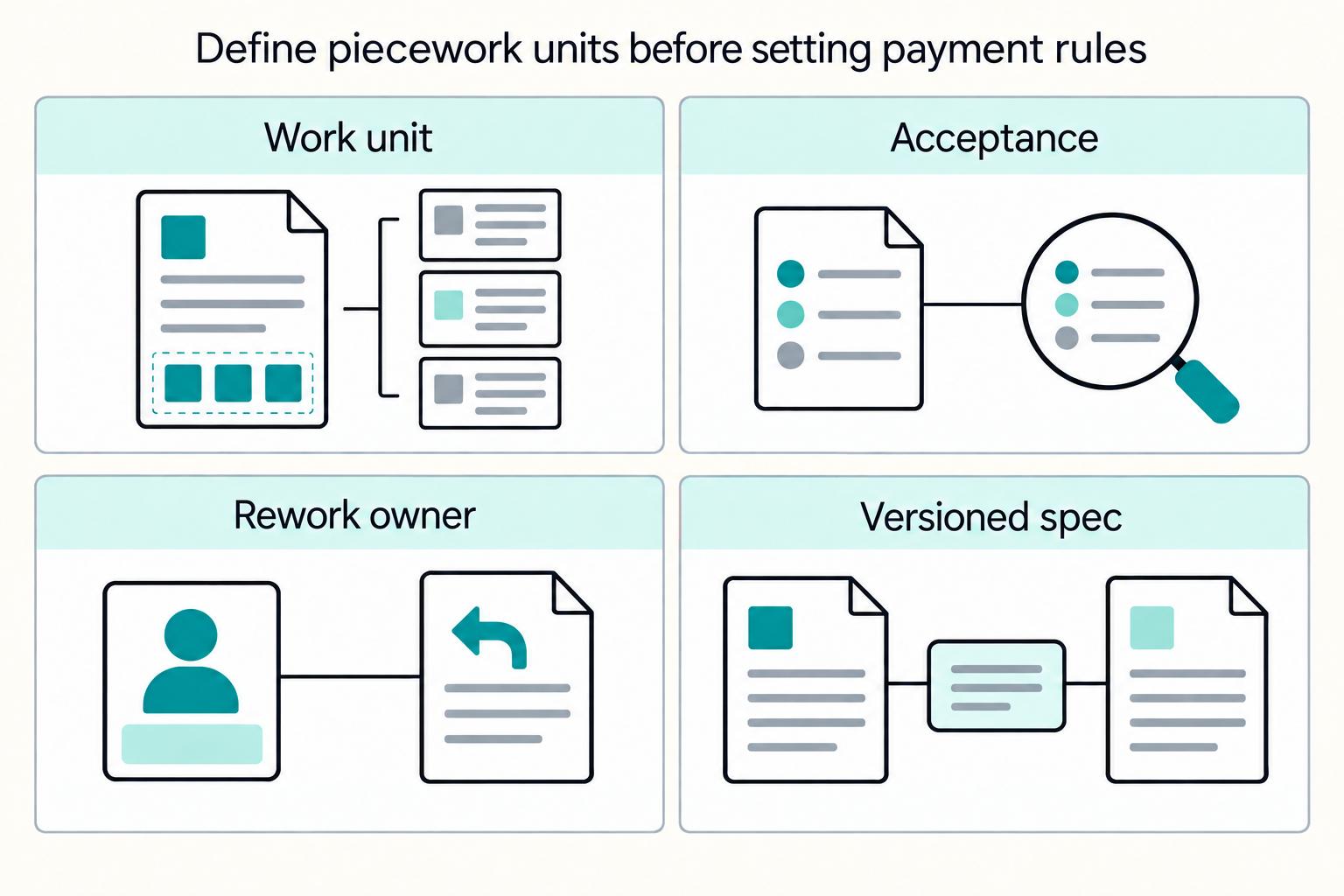
Start by defining the payable work unit, not a blended annotation rate. If the unit is unclear, a piecework model will reward speed over output quality.
| Task layer | Pay model |
|---|---|
| Calibration | Hourly pay |
| Gold-set creation | Hourly pay |
| Adjudication | Hourly pay |
| Stable repeatable production tasks | Piecework |
Step 1. Split each task family into a countable payable unit. Define units that match the judgment you are buying across natural language processing, sentiment analysis, image/video labeling, and code-review work. Avoid one generic "annotation" unit when the underlying tasks differ. Verification point: an operator outside the project can read the spec and identify exactly what one payable unit includes and excludes.
Step 2. Set acceptance criteria before rate debates. For each unit, define pass/fail checks, rework ownership, dispute handling, and when reversals are allowed. Keep these rules in one versioned task spec. Limit reversals to published failure reasons so accepted work is not clawed back because preferences shifted.
Step 3. Model throughput by reviewer layer, not just task type. Estimate units per hour for production, review, and adjudication separately so piecework math reflects supervised output quality rather than raw submission volume. This aligns with platform-work measurement guidance from the OECD/ILO/European Commission effort launched in 2019: measure the work you are actually buying.
Step 4. Use a hybrid model when judgment is scarce or unstable. Use hourly pay for calibration, gold-set creation, and adjudication, then apply piecework to stable repeatable production tasks. Also keep acceptance controls narrow: tie data collection to defined quality and payout rules, and avoid monitoring with no clear quality or payment purpose.
Compare piecework and hourly by market conditions#
Choose the pay model by country, not globally: start hourly when quality variance or dispute volume is high, and move stable production layers to piecework only when task definitions and acceptance rules are consistently tight.
Step 1: Build one country table with evidence in every cell#
Use one row per launch country so product, ops, legal, and finance work from the same assumptions.
| Country | Worker classification risk | Legal compliance burden | Payout cadence feasibility | FX exposure | Dispute handling overhead | Quality volatility | Forecastability | Speed to scale contingent workforce | Reconciliation effort | Confidence |
|---|---|---|---|---|---|---|---|---|---|---|
| Country 1 | L/M/H + legal memo | L/M/H + onboarding check | weekly/biweekly/monthly + payout test | L/M/H + treasury note | L/M/H + pilot ticket log | L/M/H + QA sample | L/M/H + finance model | L/M/H + recruiting test | L/M/H + settlement review | High/Med/Low |
| Country 2 | L/M/H + legal memo | L/M/H + onboarding check | weekly/biweekly/monthly + payout test | L/M/H + treasury note | L/M/H + pilot ticket log | L/M/H + QA sample | L/M/H + finance model | L/M/H + recruiting test | L/M/H + settlement review | High/Med/Low |
| Country 3 | L/M/H + legal memo | L/M/H + onboarding check | weekly/biweekly/monthly + payout test | L/M/H + treasury note | L/M/H + pilot ticket log | L/M/H + QA sample | L/M/H + finance model | L/M/H + recruiting test | L/M/H + settlement review | High/Med/Low |
For each nontrivial cell, record an owner, date, and evidence type. If a cell has no clear evidence, treat it as unresolved, not decided.
Step 2: Score the operating metrics that actually change the model choice#
Piece-rate tasks can scale quickly, but they are fragile when accepted-unit yield swings, review queues expand, or rejection disputes rise. In that phase, hourly pay is usually easier to control because you are buying supervised judgment time while specs are still settling.
When units are stable, pass/fail decisions are consistent, and reversals stay low, piecework often improves output forecastability and scaling speed. Keep the checks country-specific: digital labor platforms can be global, but payout and compliance execution still breaks locally.
Also avoid importing pay expectations from platform chatter as policy input. Discussions around DataAnnotation.tech, Remotasks, Taskup.ai, or Amazon Mechanical Turk can surface worker sentiment, but they do not predict your own acceptance, rejection, or exception patterns.
Step 3: Use the confidence column as a decision gate#
Treat confidence as an explicit control, not a note.
| Confidence | Evidence |
|---|---|
| High | Pilot outcomes, payout tests, settlement files, signed terms, and counsel-reviewed onboarding steps |
| Medium | Provider documentation with a stated method |
| Low | Platform marketing, social posts, influencer explainers, or commercial comparison content |
This matters because public figures are uneven. SkillSeek presents numbers such as €12-€18/hr for EU data-labeling work and €3-€10/task for piece-rate work, but those remain one commercial source. The same applies to vendor comparison posts that say they reviewed pricing, capacity, and services: useful for scouting, weak for compensation policy.
One more risk check: platform ranking systems can affect who gets work, and a 2025 Journal of Business Research article reports ranking and job-outcome disparities by gender and race on a freelancing platform. If your supply plan depends on opaque ranking or queue logic, assume added uncertainty until your own data supports the model choice.
Set contract and classification rules before onboarding workers#
Decide and document your classification and contract posture before onboarding opens. If classification risk is unresolved, account creation should not become a path to payable work.
Step 1: Standardize the terms package. Use one controlled terms set per country covering classification stance, payment terms, rework ownership, and reversal conditions. Keep support replies, recruiter messages, and task FAQs from becoming de facto contract terms. An arXiv study (v1 dated 21 Aug 2024) covering 52 data-work requesters found ad-hoc qualification practices that did not respect worker expertise and said those practices undermined data quality and AI-development ethics, so your qualification flow should reduce ad-hoc handling, not recreate it.
Step 2: Gate payout eligibility on compliance status, not account status. Treat "user created" and "cleared to earn" as different states. Require signed terms, current terms version, required market onboarding checks, classification approval, and payout-profile readiness before a worker can submit billable units or enter payout cycles.
Step 3: Attach a complete audit trail to each worker record. Tie signed terms, classification rationale (with owner and date), payout approvals, and exception logs to the same record from day one. Version these artifacts so you can prove who accepted which terms and when, especially if rejection wording, rework rules, or reversal handling changes.
Step 4: Reduce launch scope when classification risk is high. Do not test in production with legal ambiguity. A 2025 California class action complaint against Surge Labs (associated with DataAnnotation) alleges misclassification and wage-and-hour violations and lists nine causes of action; those are allegations, not final findings, but they are still a practical warning to narrow scope, cap volume, or pause a market until your rationale and payout conditions are clearly documented.
If your onboarding, screening, or QA model relies on heavy worker tracking, run a legal-policy check before scale. An EU study places workplace monitoring technologies within broader social, legal, and institutional frameworks across the EU and beyond.
For a step-by-step walkthrough, see GDPR for Marketplace Platforms: How to Handle Contractor and Seller Personal Data Compliantly.
Design payout operations that keep trust when things break#
Trust holds when workers, support, operations, and finance can all see the same payout truth, especially when exceptions hit.
Step 1: Use one payout language end to end. Research on platform work describes a transparency gap: what platforms show does not always match what workers need to make decisions. Even though that study focused on rideshare, the operational risk carries over here. Define your payout cadence, cut-off rules, and status states once, then use the same labels in worker UI, support tooling, ops queues, and finance reporting so people are not resolving the same case from conflicting views.
Step 2: Design exceptions around clear ownership and handoffs. When a payout does not settle as expected, trust depends on whether your team can explain what happened and who owns the next action. Keep one exception record that captures the payout attempt history, current owner, reason for the exception, worker-facing communication, and approval history for any manual action. This is the control that prevents hidden operational labor from turning into worker financial harm and repeat disputes.
Step 3: Preserve FX evidence wherever worker expectations are set. If you show converted payout estimates, store the quote context used at that point and keep a reconciliation trail between expected and settled amounts. Without that, normal conversion differences can look like underpayment. Before scaling volume, test whether a single payout can be traced cleanly from original earnings through settlement and final booked amount.
For a related example of global payout controls and reconciliation, see How EdTech Platforms Pay Instructors Globally: Compensation Models, Payout Controls, and Reconciliation.
Sequence country rollout with compliance gates#
Roll out countries in waves by compliance readiness, not labor supply alone. If classification status, payout operations, or evidence retention is not ready, treat that market as no-go until the gap is closed.
| Gate | Required state |
|---|---|
| Worker classification status | Documented |
| Legal compliance review | Complete and owned |
| Payout cadence | Can run as designed |
| Dispute handling and evidence retention | Tested |
That discipline matters because platform expansion pressure is real: the ILO counted over 777 active digital labor platforms in 2021, up from 142 in 2010, and 79% of platform companies were situated in G20 countries. Fast growth is common, but launching where controls are weakest creates avoidable compliance debt.
Step 1: Rank target countries by operational readiness#
Rank target countries by operational readiness before headline demand. Start with markets where your governance controls, data handling, legal review process, and payout operations are already strongest.
Use the same four gates for every market:
- worker classification status is documented
- legal compliance review is complete and owned
- payout cadence can run as designed
- dispute handling and evidence retention are tested
Do not approve a market with one missing gate, even if the other scores are strong.
Step 2: Use a one-page go/no-go checklist per market#
Use a one-page go/no-go checklist per market with named owners. Make it evidence-based, not a generic launch form.
At minimum, include:
- classification decision record
- approved contract terms
- payout cadence and cutoff rules
- dispute escalation path
- retention location for payout logs, FX records, and worker communications
The verification standard is simple: you should be able to pull one worker record and explain the full payout story without cross-team reconstruction.
Step 3: Reassess model fit after each wave#
Reassess model fit after each wave instead of copying the first-country design everywhere. A piecework approach that is workable in one market may require an hourly model in another when compliance risk or enforcement posture differs.
Use post-launch checks to decide the next move: disputes, reversals, payout exceptions, quality variance, and time to resolve worker complaints. If those trend in the wrong direction, adjust task scope or pay design before opening the next country.
For annotation platforms, strong sequencing is controlled proof under real volume, not speed for its own sake.
Common mistakes that create compliance debt and payout chaos#
Most payout and compliance failures come from four avoidable choices: unverified external assumptions, vague per-task rules, scaling before payout ops are stable, and rumor-based pay benchmarks.
| Mistake | Why it creates debt | Recovery move |
|---|---|---|
| Copying competitor or media narratives (for example Jobright, Deel, or TIME) into operating assumptions | External claims are not evidence for your own classification, payout, or pay-model decisions | Require an internal artifact before policy decisions (for example dispute-log review, reconciliation sample, signed terms, observed task-level payout data) |
| Paying per task without clear acceptance and rework rules | In annotation, disagreement is not always noise; unclear pass/fail rules can turn into payout disputes | Pause new task types until acceptance criteria, rework ownership, reversal conditions, and dispute evidence rules are documented |
| Expanding the contingent workforce before payout operations are stable | Onboarding more workers multiplies exceptions when reconciliation is weak | Cap onboarding until teams can trace one worker record from accepted task to settled payout, including cutoff, FX point (if used), and reversal reason |
| Treating unknown pay claims as benchmarks | Rumor-based comparisons hide real operating risk | Publish internal observed earnings bands by task and market with confidence notes (high/medium/low) |
If you use model-mediated prelabels, set explicit worker override rules; anchoring bias can distort outputs and increase unfair rejects. Also watch for a known failure mode in annotation work: economic pressure can push workers toward requester compliance over honest subjectivity.
Related: How Pet Services Platforms Pay Groomers Walkers and Sitters: Compliance and Payout Models.
Conclusion and launch checklist#
Choose the pay model, compliance posture, and payout design together. If you decide them separately, gaps can show up later as rejected work, payout disputes, FX mismatches, or a country launch you need to pause after workers are already onboarded.
Use this checklist before you expand any data annotation stream:
- Define task units and acceptance rules.
Break each stream into units you can actually approve or reject: image labels, review layers, sentiment tasks, code checks, or whatever your product uses. Write the acceptance rule, who can override it, what counts as rework, and when reversals are allowed. Your checkpoint is simple: can ops trace one submitted unit to one accepted unit with review notes and timestamps? If not, piece-rate math is still too loose.
- Pick the initial pay model by quality volatility and classification risk.
If output quality is still moving around, edge cases are frequent, or review effort is heavy, start with an hourly model for calibration or expert review. If task definitions are stable and acceptance criteria are tight, piecework can be cleaner to scale. The red flag is using per-task pay to hide uncertainty that really belongs in training, QA, or reviewer capacity.
- Validate contract terms and the evidence pack before onboarding.
Do not treat account creation as launch readiness. Set clear terms, a worker classification stance, payment terms, and a retained record set that can explain why a worker was paid, blocked, reversed, or disputed. At minimum, keep the classification rationale, accepted work record, payout approval, exception log, dispute history, and reversal reason tied to the worker record. If legal or ops cannot reconstruct one payout from those records, stop and fix that first.
- Dry-run payout flow, disputes, reversals, and FX reconciliation.
Run a small sample from completed work to settlement result before real scale. Record payout status changes, failed-route handling, dispute path, and how FX conversion is recorded for reconciliation. A common risk is that finance, ops, and worker support each operate from a different view of what was earned versus what settled. Your dry run should expose that before workers do.
- Launch one country wave, review failures, then expand.
Start where your governance controls, payout rails, and evidence retention are strongest, not just where labor supply looks cheapest. This matters because annotation work does not always stay a borderless crowd model. Recent research describes parts of the sector becoming more embedded in state-regulated infrastructures and conventional employment models, which means your country assumptions may change faster than your product does. If one gate fails, whether on classification, payout viability, or evidence retention, delay that market and update your decision thresholds before the next wave.
If you want one final rule to carry forward, use this one: make workers and internal teams read the same truth about work, approval, policy, and pay. That is what keeps the model credible when volume rises and exceptions start to stack up.
Try a related tool
Researched and edited by the Gruv editorial team. Gruv builds cross-border billing, payouts, and finance-operations software for global businesses.
Sources
Includes 1 external source outside the trusted-domain allowlist.
- europarl.europa.eu/RegData/etudes/STUD/2020/656305/EPRS_STU(202...trusted
- hammer.purdue.edu/ndownloader/files/28954485trusted
- hci.princeton.edu/wp-content/uploads/sites/459/2025/05/2406.10...trusted
- nvlpubs.nist.gov/nistpubs/Legacy/SP/nistspecialpublication111...trusted
- oecd.org/content/dam/oecd/en/publications/reports/202...trusted
- repository.library.northeastern.edu/files/neu:4f186m87v/fulltext.pdftrusted
- thedocs.worldbank.org/en/doc/072814bbbb56aebd4db387154c3df3a5-0460...trusted
- arxiv.org/html/2408.11667v1external
Educational content only. Not legal, tax, or financial advice.
Related Posts
Database Architecture for Payment Platforms: ACID, Sharding, and Read Replicas
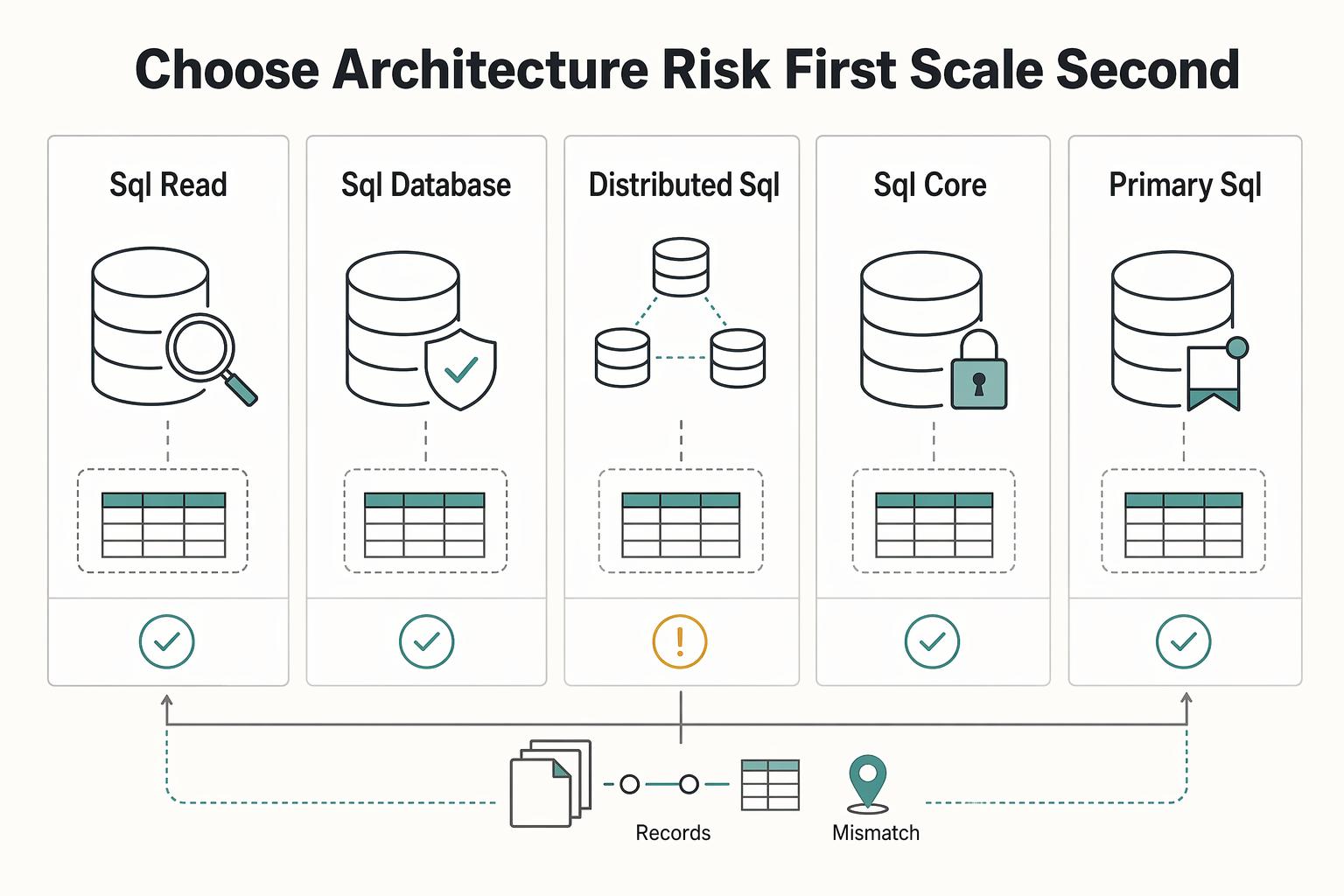
For platform payments, your first database decision is boundary-setting. Decide which paths in your system must stay exact and current in the **relational core**, and which can tolerate delay through read replicas, sharding, or distributed options. If you let money-critical reads and writes drift from the source of truth, risk rises fast.
How Pet Services Platforms Pay Groomers Walkers and Sitters with Compliance-First Payout Models
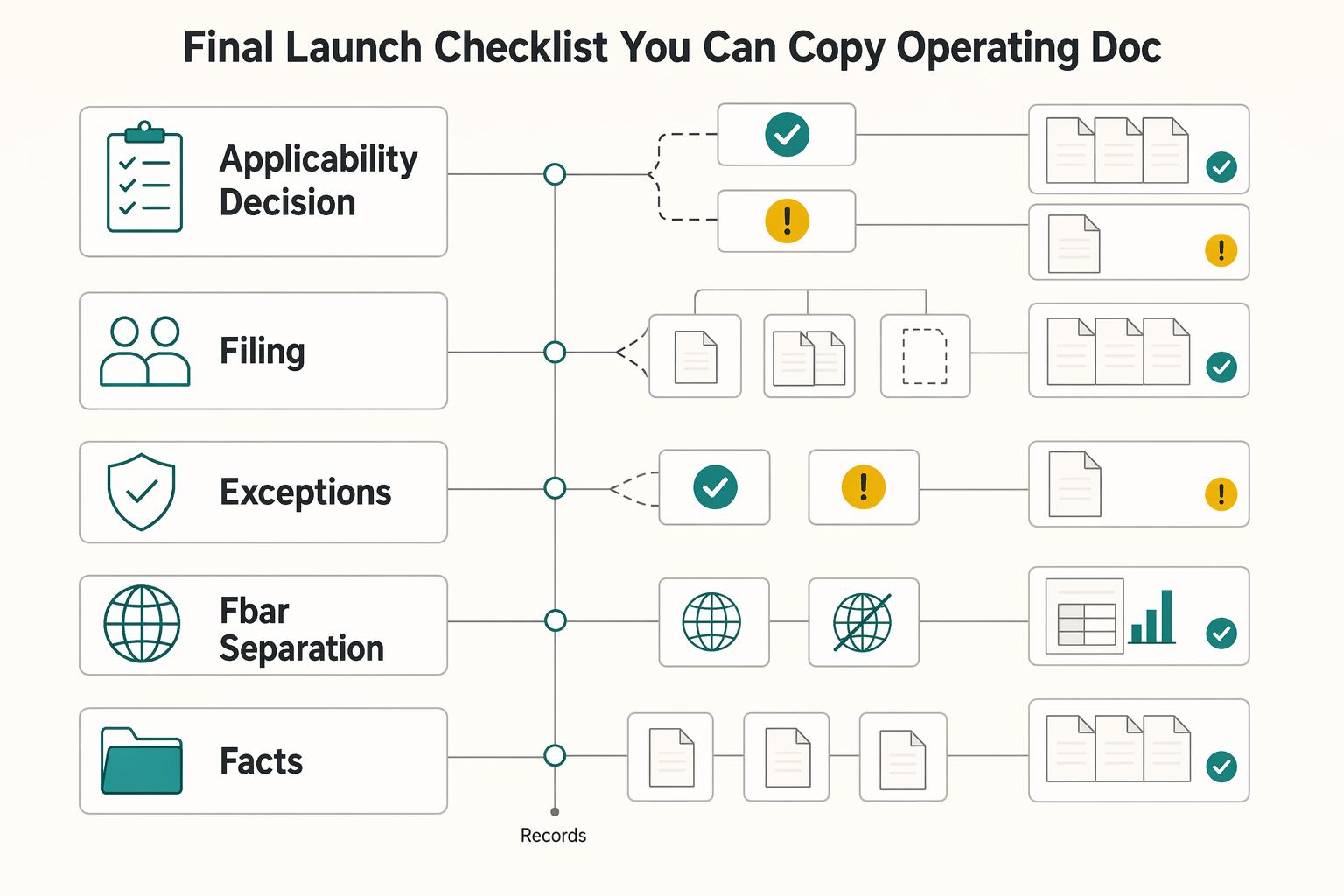
If you are building a marketplace for pet care, the hard part is not just taking bookings and collecting customer payments. Your platform connects pet owners with caregivers rather than delivering care directly, so you also have to manage scheduling, messaging, payment processing, and payout release after service completion.
How Photo and Stock Image Platforms Pay Photographers with Royalty and Licensing Payout Models
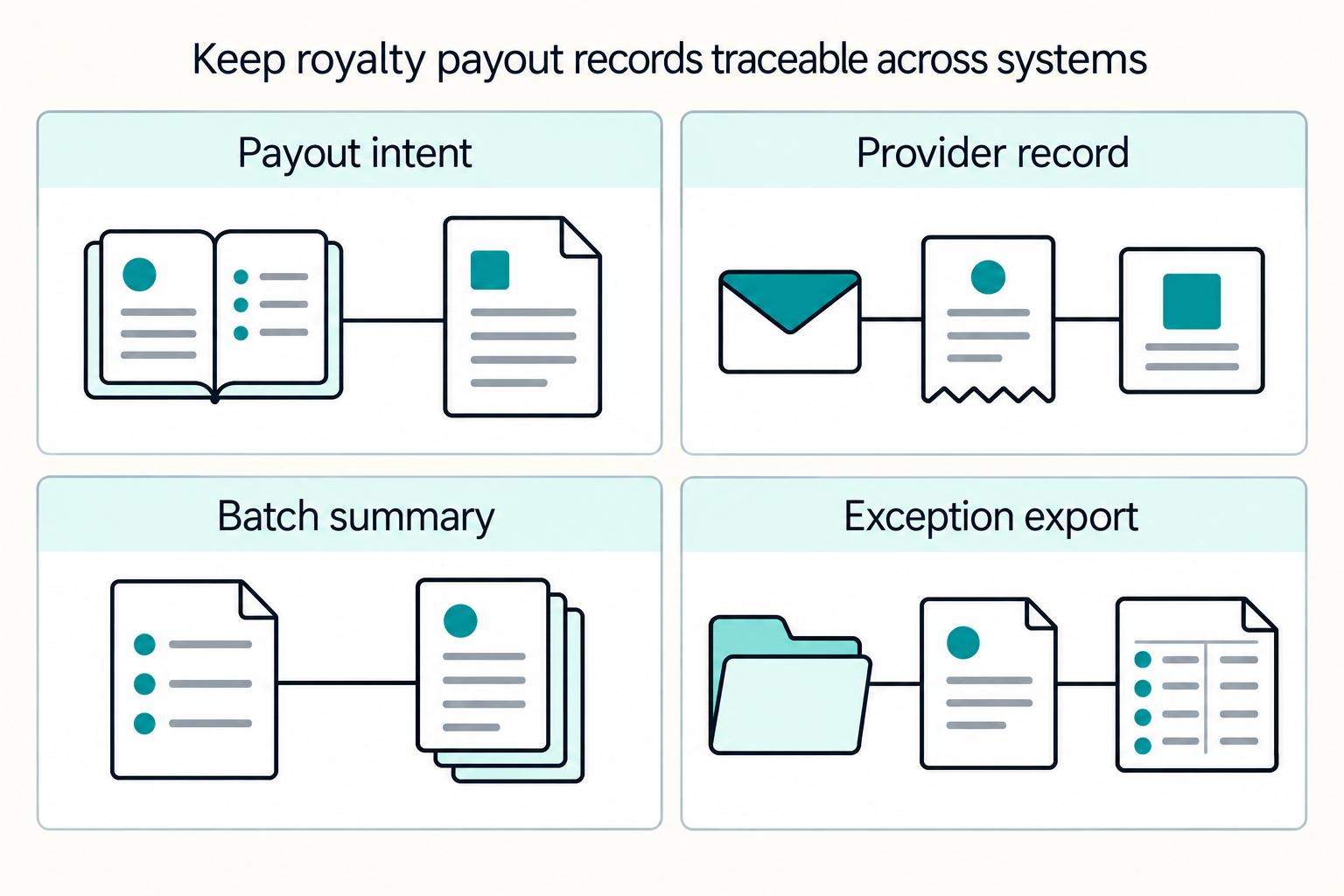
Use platform-owned evidence, not marketplace landing pages, for this decision. Most comparisons of how photo stock image platforms pay photographers under different royalty, licensing, and payout models come down to four details that are often buried or split across pages: the license type, how contributor earnings are calculated, when payments actually go out, and what must be in place before money can move.