
Quick Answer
Start with a lean market mix: cards, one broad baseline, and one local method, then expand only after renewal data clears your thresholds. For India and Brazil, the article points to UPI and Pix as early tests, but requires separate tracking of checkout completion, first-attempt renewal failure, retry recovery, and involuntary churn. Keep methods that improve recurring outcomes and remove ones that add disputes, unresolved payment states, or support burden.
Why Payment Method Mix Varies by Market#
Subscription conversion across markets can improve when you prioritize relevant local methods and run them well, not necessarily when you add every possible option.
The upside from relevant methods is real, but it is not universal. Stripe reported that when at least one additional relevant payment method beyond cards was dynamically surfaced, businesses on average saw a 12% increase in revenue and a 7.4% increase in conversion rate. Stripe also says results varied by country and industry, with the biggest uplift coming from dominant local payment methods, digital wallets, and bank debits. Use that as direction, not as a substitute for your own cohort data.
Alternative Payment Methods, or APMs, are payment methods outside cash and traditional major credit cards. For subscription teams, the first categories to evaluate are:
- Digital wallets
- Account-to-account, or A2A, payments
- Market-specific rails
India and Brazil show why local rails deserve explicit testing. NPCI's official UPI statistics for February 2026 show activity across 694 banks, with 20,394.18 million transactions and value of 26,84,229.29 crore. In Brazil, the Central Bank said Pix transaction volume grew 52% in 2024. These signals do not prove subscription success on their own, but they are strong enough to justify early UPI and Pix testing when those markets matter.
China-oriented demand also needs a specific path, not a generic "wallets" label. Stripe describes Alipay as having more than a billion active users worldwide and WeChat Pay as having over 800 million users.
Europe has a different shape. PSD2 was designed to support a more integrated and efficient payments market, and Open Banking Payment Initiation Services allow a licensed initiator to start a payment with the user's explicit consent. In Southeast Asia, support often varies by country. Stripe documents real-time payment support in Singapore and Thailand, which is a reminder to treat the region as multiple markets.
That leads to the first operational checkpoint: verify real payment-method availability before you design your checkout. Support depends on country, currency, and product setup, and providers document country-level method acceptance clearly.
The second checkpoint is scope control. Irrelevant or weakly supported methods can add complexity without lifting completion. This guide gives you a decision sequence for digital wallets, A2A payments, UPI, Pix, and Europe's pay-by-bank patterns. It also gives you launch checkpoints for product, payments ops, finance, and engineering. Where evidence is thin, especially for subscription-specific renewal behavior, it calls that out so you can validate in your own data instead of assuming.
Define APMs for subscriptions and where conversion actually moves#
For subscriptions, treat APM selection as a market-fit decision, not a checkout decoration. The method that lifts signup in one market can have limited impact in another, and that same method may not translate into better renewals.
Alternative Payment Methods are payment methods other than cash and traditional credit cards. These rails are not interchangeable. Pay by Bank moves funds directly from the payer's bank account to the payee's account. UPI is NPCI's instant real-time interbank system. Brazil's scheme is Banco Central do Brasil's instant payment system, operational since November 16th, 2020.
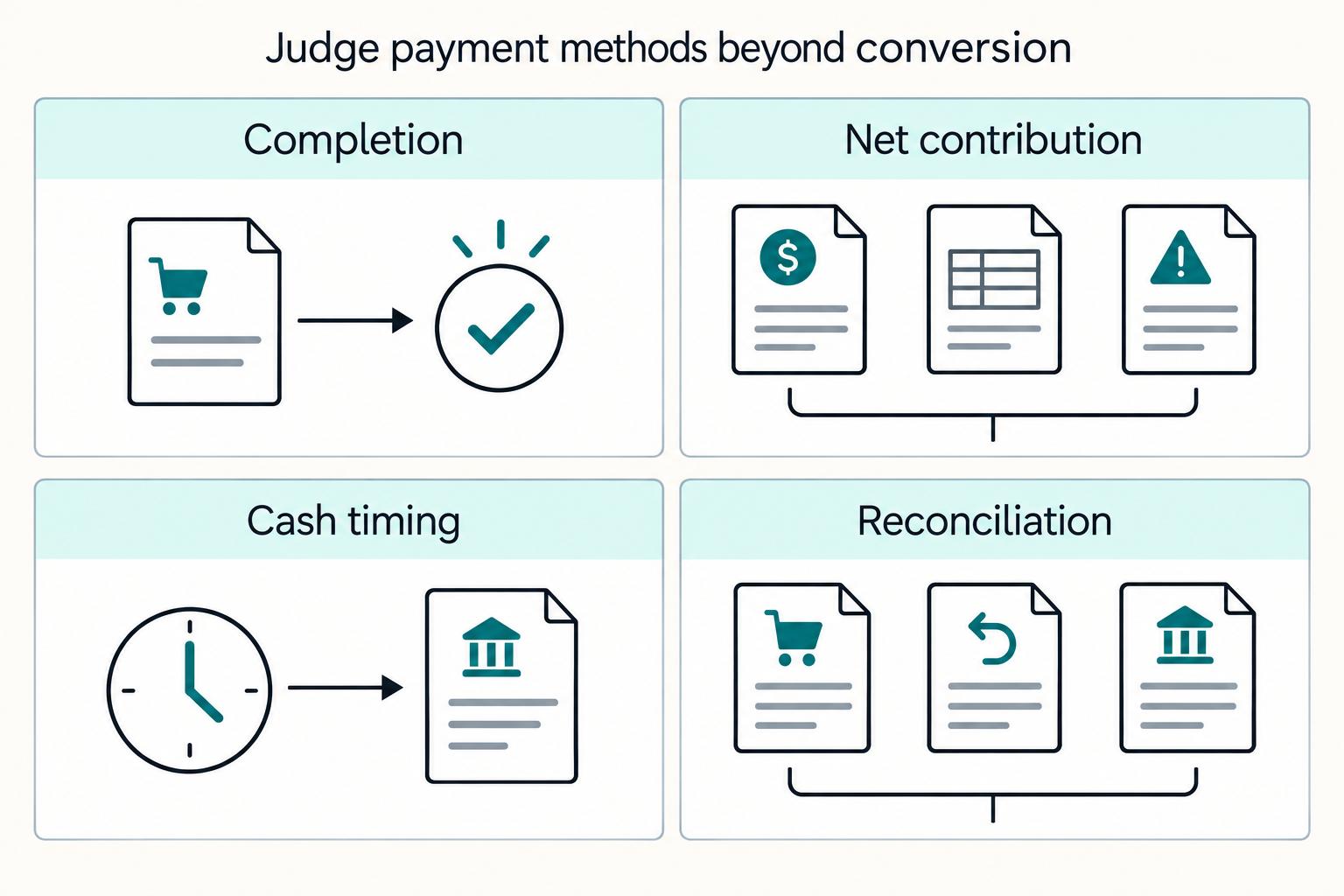
For subscription teams, conversion is not one metric. Track these separately:
- Initial checkout completion
- Renewal rate
- Failed-payment retry recovery
- Involuntary churn, meaning customers who did not intend to cancel and often drop after payment issues
That separation matters because first-payment performance and recurring performance are different outcomes. A method can help initial checkout and still be a poor fit for automatic recurring collection, so treat cash-linked options carefully unless your provider setup supports your billing model. Retry recovery needs separate reporting too. Platforms can automate retries, but you still need reporting to confirm whether recovery is actually working.
Stripe's April 10, 2025 experiment reported average uplift when at least one relevant non-card method was surfaced. On average, revenue was 12% higher and conversion was 7.4% higher. Their examples are context-specific, including Alipay in China and PayPal in Germany, so do not assume any single method will win everywhere.
Before rollout, validate each method on two axes: acceptance in your target country and fit for subscription behavior. Public benchmarks remain partial, for example coverage across 40 key markets, so treat external figures as directional and confirm with your own cohort data. We covered this in more detail in 3D Secure Conversion Data for Authentication Drop-Off Decisions.
Build your market method shortlist before you touch checkout#
Shortlist by market first, then by subscription profile. Adding relevant local methods can lift outcomes more than adding a long generic menu.
| Market | Recommended first methods | Expected upside signal | Operational burden | Key caveats |
|---|---|---|---|---|
| China | Alipay, WeChat Pay | Stripe's aggregate test showed gains when relevant non-card methods are surfaced (12% revenue, 7.4% conversion on average) | Wallet integration, reconciliation, and method-level reporting | Treat gains as directional; validate on your own cohort |
| Southeast Asia | Local online wallets plus cards | Regional preference is market-specific, with local online wallets and cards currently dominant | Country-by-country routing and provider setup | Do not assume one wallet mix works across all SEA markets |
| India | UPI | UPI scale is substantial (Feb 2026: 694 banks live; 20,394.18 Mn volume; 26,84,229.29 Cr value) | Recurring eligibility and configuration checks | High scale does not remove the need to validate subscription-fit constraints |
| Brazil | Pix (and Pix Automático where recurring fit is needed) | Pix reached nearly 170 million users; BRL 11 trillion in 2024 transactions | Integration and recurring-flow setup | Confirm recurring model fit and provider capabilities before rollout |
| Europe | Pay by Bank or Open Banking where supported | Open banking usage is material in the UK (more than 34 million monthly payments; 53% YoY growth cited by FCA) | Country and provider coverage checks, recurring-flow design, and reporting | Coverage and readiness are not uniform across Europe |
Once the market shortlist is clear, narrow it again by subscription profile. A high-ticket annual plan does not need the same method mix as a low-ticket monthly plan.
| Subscription profile | Better first-fit methods | BNPL fit | What to validate before launch |
|---|---|---|---|
| High-ticket annual plans | Bank debit / Pay by Bank and strong local methods by market | Consider BNPL only when repayment terms and risk controls are explicit (for example, Klarna or Afterpay) | Method eligibility for subscriptions and operational support load |
| Low-ticket monthly plans | Methods with reliable recurring collection in your target market (for example UPI, Pix/Pix Automático, or Open Banking variants where supported) | Usually selective; avoid adding BNPL by default | Method eligibility, collection reliability, and operational overhead |
| Mixed B2B/B2C flows | Split method mix by segment and country instead of one global default | Use only for segments where underwriting and repayment disclosures are operationally workable | Technical restrictions for subscription use, plus risk/fraud and disclosure handling |
If a method shows low adoption and high support burden, consider removing it before you add another rail. You might also find this useful: How to Expand Your Subscription Platform to Europe: Payment Methods Tax and Compliance.
Choose the first three methods per market without bloating checkout#
Start lean. In many markets, a practical starting mix is your card path, one broad baseline, often PayPal, and one dominant local method. Expand only if your own data justifies it.
That lean approach matches the available evidence better than defaulting to a long menu. Stripe's April 10, 2025 experiment reported average gains of 12% revenue and 7.4% conversion when at least one relevant non-card method was added beyond cards. The biggest lift was tied to dominant local methods, digital wallets, and bank debits.
Start with a broad baseline and the local habit#
Use a broad baseline, then pair it with the method customers already trust in that market. PayPal is available in more than 200 countries and regions and supports 25 currencies. In India, that can point to UPI, which NPCI describes as an instant real-time inter-bank system and which recorded 20,394.18 million transactions in February 2026. In Brazil, that can point to the Central Bank rail, created by Banco Central do Brasil, used by 76.4% of the population, and described by BCB as the country's most widespread payment method.
Baymard's findings point to the tradeoff you need to manage: some users will not continue without a preferred method, and checkout complexity also drives abandonment. Prioritize the methods most likely to convert, not the longest list.
Use an if-then rule instead of adding card complexity#
If a local method is dominant in your target segment, prioritize it before you add more card UX layers. Stripe's country examples show why that can matter: 91% conversion uplift for Alipay in China, 39% for iDEAL in the Netherlands, and 47% for PayPal in Germany in the digital media segment.
| Method | Market | Stripe example |
|---|---|---|
| Alipay | China | 91% conversion uplift in the digital media segment |
| iDEAL | Netherlands | 39% conversion uplift in the digital media segment |
| PayPal | Germany | 47% conversion uplift in the digital media segment |
Treat those as directional, not automatic outcomes for your subscription cohort. Public adoption data shows market scale, not guaranteed subscription-renewal fit. Before rollout, instrument checkout start, authorization success, completion, abandonment, and support tickets by method and country.
Keep the first screen lean and earn every extra method#
Choice-overload research is mixed, so avoid rigid rules about option count. Keep the first screen focused on the highest-probability methods, and reveal additional options only when conversion data shows a real gap.
Set removal criteria before launch. Sunset a method if it does not produce measurable checkout or renewal lift and it:
- increases failed or unresolved payment states
- raises dispute, reconciliation, or exception workload relative to usage
- remains low-adoption after clear placement in checkout
Also confirm country and product support with your provider before exposing any method. One risk is enabling a method that looks strong in market data but lacks the recurring behavior, reporting, or exception handling your subscription flow needs.
If you want a deeper dive, read Payment Method Conversion Rates by Country: Which Local Methods Lift Checkout Completion.
Design recurring consent and renewal flows that survive real-world edge cases#
A successful first payment is not proof that renewals will keep working. Build a per-method map of what the customer approved for future charges, what artifact proves that approval, and what happens when that approval is no longer usable.
Separate checkout approval from renewal permission#
Digital wallets and A2A methods do not use one recurring model. Some support reusable tokens or consents for future charges, and others require method-specific recurring setup artifacts. If you miss that distinction, checkout can look healthy while renewals fail later.
| Method pattern | What supports renewal | What to verify before go-live |
|---|---|---|
| Apple Pay | Apple Pay merchant tokens for recurring or automatic payments, independent of a device transaction token | Confirm your provider stores and reuses the merchant token for recurring billing, not only the one-time checkout token |
| Open banking / Pay by Bank with VRPs | A recurring consent that gives ongoing permission within agreed rules | Store consent ID, agreed limits, and status so you can distinguish active consent from revoked or otherwise inactive permission |
| UPI | UPI AutoPay e-mandate | Confirm mandate creation succeeded and track customer actions such as modify, revoke, pause, and unpause |
For A2A, the consent artifact is the critical control. Open Banking VRPs are designed for ongoing permission within agreed rules, and GoCardless describes consent as the agreement used to create future payments. NPCI's UPI AutoPay also includes customer mandate controls such as modify, revoke, pause, and unpause, so renewal logic should check mandate status, not only first-payment success.
A practical checkpoint is simple: for every recurring-capable method, persist method type, token or consent reference, mandate status, created-at time, and agreed parameters or limits. If support or finance cannot pull that evidence quickly for a failed renewal, you are missing a core operational control.
Retry by failure type, not with one generic dunning rule#
Use different recovery paths for different failures. Stripe Billing can automatically retry failed subscription and invoice payments, with a recommended default of 8 tries within 2 weeks, but Stripe also documents no-retry cases, including hard declines and no available payment method. Chargebee likewise separates decline causes, including expired cards, from insufficient-funds scenarios.
| Failure type | Example | Suggested handling |
|---|---|---|
| Soft failure | Insufficient funds | Keep automated retries on a method that still has valid recurring authority |
| Expired credentials | Expired card | Stop blind retries and request a payment method update |
| Interrupted re-auth or mandate-confirmation flow | Own checkout re-auth or mandate-confirmation flow is interrupted | Track it as a separate recovery state with a resume path instead of treating it as a standard decline |
Use that split in your dunning logic:
- Soft failure, for example insufficient funds: keep automated retries on a method that still has valid recurring authority.
- Expired credentials, for example an expired card: stop blind retries and request a payment method update.
- If you have an interrupted re-auth or mandate-confirmation flow in your own checkout, track it as a separate recovery state with a resume path instead of treating it as a standard decline.
Provider cadence also differs. PayPal Subscriptions retries every 5 days, up to twice per billing cycle. Do not force one retry schedule across all methods and expect equal outcomes. Recovery design is a retention control, not just a billing setting.
Make fallback explicit between methods#
Fallback protects continuity, but it is a product design choice, not automatic cross-rail behavior. For example, you can prompt a customer who started with Google Pay to add Pay by Bank as a backup renewal method. That is different from assuming a native Google Pay to Pay by Bank handoff exists across providers.
If your stack supports ordered retry priorities, set them intentionally. Stripe notes retries use the first available method in a defined order, so saved-method priority directly affects recovery. One failure mode is storing a backup method but never making it retry-eligible, or storing it without enough consent detail to confirm renewal use.
Final checkpoint: in staging, test revoked consent, paused mandate, and no-method-available states, and log customer messaging, webhook events, and internal status changes. Renewal continuity usually breaks at these edges, not on the happy path.
Instrument conversion and renewal metrics before rollout#
Do not change routing until you can isolate whether each method improves checkout or renewals. Blended "payment conversion" is not enough for rollout decisions.
Use one stable, method-level measurement pack for the full test window:
- checkout start to complete
- renewal failure rate on first attempt
- recovery rate after a failed renewal
Treat renewal quality as failure plus recovery, not one number. Stripe separates failure rate and recovery rate, with breakdowns by payment failures, recovery methods, and decline codes. Use the same logic internally. A method can be viable with weaker first-attempt renewals if recovery is strong. A method can still be a bad fit if checkout improves but renewal failures rise.
Report by market and method together. Give Apple Pay, UPI, and Pix separate rows by country or region, not a global wallet bucket or blended APM average. Stripe segmented by country and industry, and its published examples, including a 22.3% Apple Pay lift in eligible checkouts and a 91% Alipay lift in China, show variation, not a promise for your business.
Before removing a method or changing routing, lock a pre-launch baseline and a fixed test protocol. If you can run a controlled rollout, Stripe documents payment-method A/B testing and notes that a 50/50 split with 80,000 offers can detect a 100 BPS change at 5% significance. You do not need that exact sample every time, but you do need a predefined protocol and consistent decision rules.
Record the cohort definition, start date, traffic share, market, method, and success criteria in the launch record. If external benchmarks are missing, mark the field as unknown and update decisions only from observed cohort results. Brazil and India monthly rail statistics are useful for market activity, but they are not subscription-specific renewal evidence.
Connect product, finance, and ledger records so disputes are resolvable#
If you cannot trace one subscription payment from customer action to ledger entry, disputes become slower and harder to resolve. Before scaling PayPal or any other APM, make the event chain explicit and make retries safe.
The prior section covered method-level KPIs. This section covers the operating layer underneath them. When a renewal fails, a customer disputes a charge, or finance finds a mismatch, every team needs the same ordered record of what happened.
Map the payment chain in one exact order#
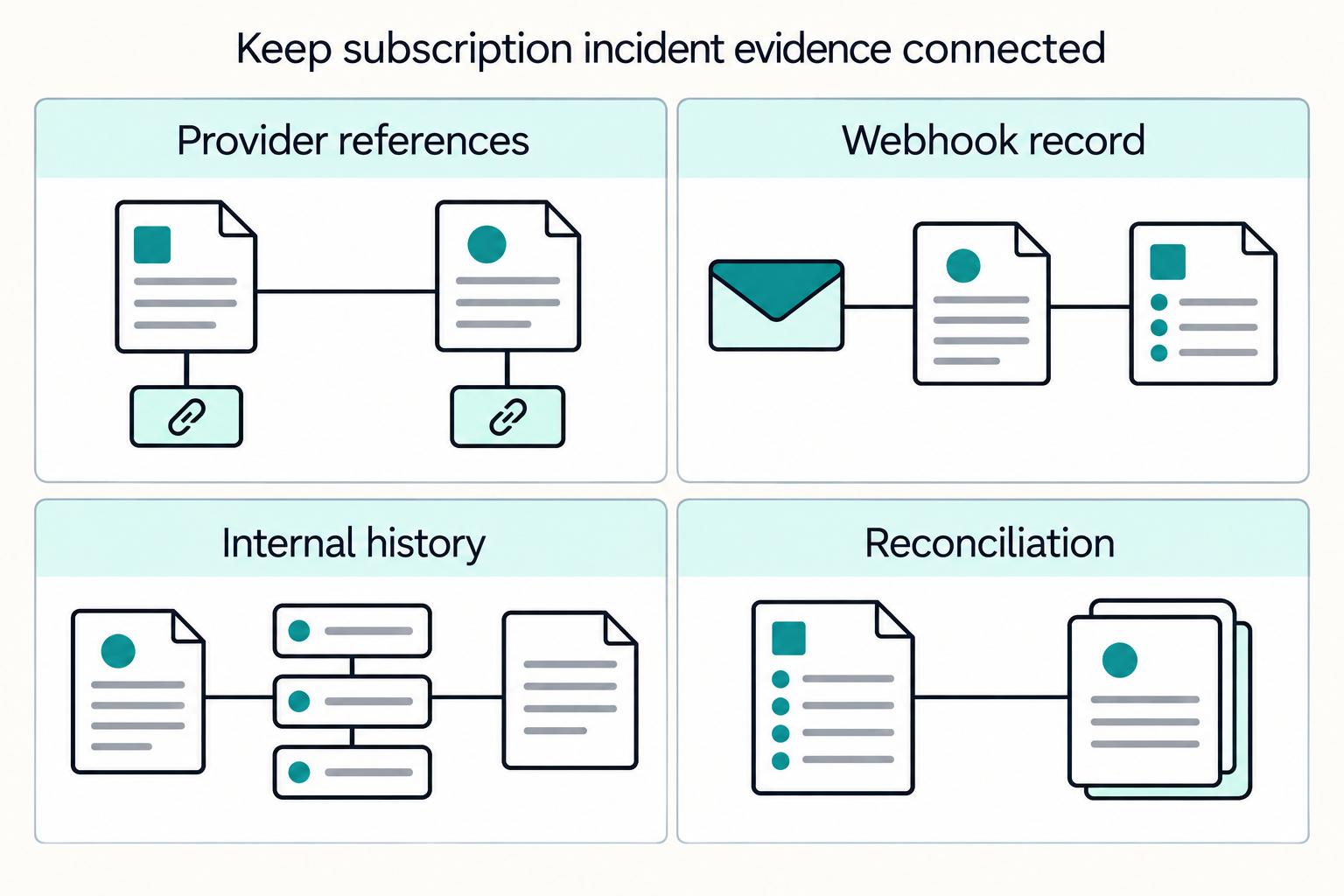
Define one shared order of operations and keep it consistent across product, engineering, and finance: customer action, provider reference creation, webhook event, internal status update, finance reconciliation.
Use this sequence for each payment attempt:
- Customer starts checkout, or a renewal job creates an off-session attempt.
- Your platform sends the provider request and stores provider and merchant reference identifiers from the API response.
- The provider sends an HTTPS webhook for the lifecycle event.
- Your application updates internal payment and subscription status only after webhook validation and processing.
- Finance reconciles the settled amount to the transaction batch and ledger posting.
This matters most for asynchronous outcomes. Providers document asynchronous events, and server-to-server webhooks close the loop when synchronous responses are delayed, missing, or timed out.
Operational check: pick one real subscription payment and confirm all five records are visible without cross-team manual searching. If a link is missing, disputes turn into manual spreadsheet work.
Make retries replay safely#
Treat idempotency and deduplication as required controls, not optional hardening. They prevent duplicate financial effects when requests are retried or webhook events are delivered more than once.
| Provider | Focus | Documented detail |
|---|---|---|
| Stripe | Duplicate-safe processing | Duplicate webhook deliveries are documented; log processed event IDs; idempotency keys can be up to 255 characters |
| PayPal | Webhook retries | Non-2xx responses can trigger up to 25 retries over 3 days; verify webhook authenticity before trust |
| Adyen | Idempotency-key window | Minimum 7-day idempotency-key validity period after first submission |
Stripe documents duplicate webhook deliveries and recommends logging processed event IDs. PayPal documents webhook retries for non-2xx responses, including up to 25 retries over 3 days. Without duplicate-safe handling, a transient outage can create duplicate processing side effects.
Use a strict processing gate: do not let a webhook trigger a new charge or renewal until authenticity checks, deduplication checks, and state-transition validation pass. For PayPal, verify webhook authenticity before trust.
Minimum controls to enforce:
- Processed-event store keyed by provider event ID, with timestamp, payload hash, and processing result
- Request-side idempotency keys for payment creation and renewal actions. Stripe allows keys up to 255 characters, and Adyen documents a minimum 7-day idempotency-key validity period after first submission
Common failure modes are preventable: split-brain status, where the client shows success but settlement is not confirmed, and replay damage, where late events re-open resolved transitions.
Assign exception owners before incidents happen#
Define owner routing before incidents so exceptions are handled quickly and consistently. This matrix is an operating choice, not an external standard.
| Failure state | Typical signal | Primary owner | First action |
|---|---|---|---|
| Customer completed action but no confirmed internal payment status | Checkout success screen, missing or stale webhook state | Engineering | Verify webhook delivery, authenticity checks, deduplication log, and state-transition handling |
| Payment status confirmed but customer is confused or abandons re-auth or retry flow | Support contacts, repeated failed recovery attempts, drop-off in renewal prompts | Product | Review UX copy, retry prompts, fallback path, and method-specific messaging |
| Provider amount or payout cannot be matched cleanly to internal records or ledger | Reconciliation exception, missing settlement mapping, unmatched batch total | Finance ops | Use payout reconciliation and ledger-to-subledger review to trace and resolve the mismatch |
The goal is clear accountability: engineering owns webhook integrity and event processing, product owns recovery UX, and finance ops owns reconciliation exceptions.
Require an audit pack for every incident#
Close disputes with traceable artifacts, not chat summaries. Require the same incident pack every time:
- Provider reference identifiers, including provider-side and merchant-side IDs from API responses and webhooks
- Raw webhook event log, delivery timestamp, verification result, and deduplication record
- Internal payment, subscription, and state-transition log
- Ledger entry plus reconciliation record tying payout or balance movement to underlying transactions
Do not depend on one identifier alone. Keep the full reference set across API responses and webhooks.
Build timing rules into escalation. For example, PayPal notes a maximum 3-hour lag before executed transactions appear in Transaction Search. Treating that window as immediate data loss creates false exceptions and unnecessary cleanup.
This adds process discipline and storage, but it reduces fragmented-data firefighting and makes disputes audit-ready. Related reading: How to Build a Deterministic Ledger for a Payment Platform.
Apply compliance and tax gates before scaling volume#
Treat compliance and tax readiness as launch gates, not post-launch cleanup. Do not open new APM volume in a market until applicable KYC, business verification, AML, and tax collection steps are mapped for that country, entity type, and provider program.
Treat verification as a market gate, not a cleanup task#
There is no universal checklist. FATF sets an international AML/CFT framework, but countries apply it through local legal and operational measures, and providers enforce program-level requirements. Adyen, for example, requires user verification before payment processing, payouts, or financial products, and the required information depends on legal entity type and country or region.
Make your enablement sheet market- and program-specific, not just "KYC done." For each planned market and flow, confirm who is verified, which fields are required, which documents are accepted, and which capabilities stay blocked until approval.
Minimum record per market:
- user type, individual or business
- provider program and capability being enabled
- required identity or business fields
- accepted document types by country
- owner for review, exceptions, and resubmission
A practical risk is scaling demand before verification logic and document collection are live, then discovering processing or payouts are blocked because checks are incomplete.
Keep tax handling separate from payment-method enthusiasm#
Strong APM conversion does not simplify tax treatment. VAT handling varies by jurisdiction. In the EU, the VAT Directive sets the framework, but each Member State sets the number and level of VAT rates, with a standard rate floor of 15%.
Use one operating rule: do not reuse one VAT assumption across markets, and do not infer tax treatment from checkout demand. Before launch, get legal and tax sign-off on required tax data, invoice or receipt treatment, and record linkage. Because business verification may require business name, address, and company registration or VAT number, tax and verification data models should align.
Align B2B tax profiles with W-8 and W-9 where relevant#
If B2B subscription flows involve US withholding or information-return reporting, collect forms during onboarding. Form W-9 provides the taxpayer identification number for information-return workflows, and foreign beneficial owners provide Form W-8 BEN to the withholding agent or payer when requested. Make retrieval audit-ready: store the submitted form version, collection timestamp, linked account or customer ID, review status, and replacement history.
Consider capping rollout when coverage is partial#
As an internal risk policy, if compliance coverage is partial in a market, cap rollout scope until controls and documentation are production-ready. Use pilots, capability limits, or a market hold. Scaling before KYC, AML, VAT, or US reporting-form workflows are ready can increase blocked payments and rework, and create audit gaps. Related: A Guide to App Store Optimization (ASO) for Mobile Apps.
Prevent the failure modes that silently kill subscription conversion#
Once compliance and tax gates are live, conversion can still drop in execution: too many options, mishandled non-final states, and unclear ownership when payments get stuck.
Cut method sprawl before it cuts completion#
More methods do not automatically mean more completion. Choice overload can reduce decision quality, while relevance improves outcomes. Stripe reports that dynamically surfacing at least one additional relevant method beyond cards was associated with a 12% revenue lift and a 7.4% conversion lift on average.
Use a tight rule: show the most relevant eligible methods first, not every enabled method. Start with a small baseline and a few market-fit options, then expand only when your own cohorts show clear gains in completion or renewal recovery. If a method adds support load without measurable upside, remove it before adding another rail.
Sanity-check what users actually see by market, device, and eligibility. A targeted configuration can still appear as a long, flat list at checkout.
Treat Pix and UPI as state-management problems, not just payment buttons#
Design for non-final states up front. Delayed-notification methods can remain in processing before resolving to success or failure, so premature "paid" or "failed" decisions can create retry errors, access issues, and churn risk.
For Brazil's rail, keep the rail-versus-implementation distinction clear. It is instant at the rail level, but Pix Automático guidance includes resend logic when no response is obtained and user notification when instruction receipt is delayed.
For UPI, model mandate setup as a conversion risk point. UPI Autopay requires user authorization, and Google Pay says requests may take up to 24 hours to appear. RBI's June 16, 2022 update kept first-transaction AFA in scope and raised the AFA-waiver limit for subsequent e-mandate transactions from ₹5,000 to ₹15,000 per transaction.
Before scaling, force-test:
- delayed confirmation after the customer exits checkout
- missed webhook delivery followed by recovery, including retry windows up to three days
- duplicate event handling during replay
- abandoned UPI mandate authorization
If any of these break entitlement, renewal status, or retry logic, pause rollout.
Make unresolved states owned, visible, and customer-safe#
Support volume can spike when customers cannot tell whether to retry, wait, or re-authorize. Your retry and status messages should match the real payment state, especially for pending flows.
Fallback paths must route to a valid next action, not the same dead end. Assign explicit owners:
- Engineering: webhook integrity and idempotent processing
- Finance ops: reconciliation exceptions
- Support: customer communication, not payment-state adjudication
Pause expansion when these red flags appear:
- involuntary churn tied to failed payments increases after adding a method or renewal path
- reconciliation gaps remain unresolved across provider references, internal state history, and settled outcomes
- repeated compliance holds block the same market or program
When those signals show up, stop adding methods and fix state handling, fallback routing, and ownership first.
Run a 90-day rollout with explicit stop and go checkpoints#
After you control the silent failure modes, keep rollout scope narrow and decisions measurable. Use a phased plan (for example, over 90 days): set a market baseline, launch a limited set of local methods in each priority market, and scale only if conversion or renewal outcomes improve without adding significant finance ops or support drag.
Phase the rollout so each decision has a real checkpoint#
Start with a locked shortlist and baseline by market before changing routing or checkout rank. If your first cluster is India and Brazil, treat them as distinct operating patterns: UPI AutoPay for recurring e-mandates in India and Pix for instant bank transfers in Brazil. Track method-level outcomes, not blended averages: checkout completion, renewal success, retry recovery, support load, and exception volume.
In Phase 2, expand with a small number of additional local methods per priority market rather than refreshing the full menu at once. If you run controlled exposure, keep experiment discipline strict: one experiment per payment-method configuration, with enough sample size to avoid noisy decisions. Stripe's guideline example is 80,000 sessions to detect a 100 BPS change at 5% significance. If traffic is lower, extend the test window instead of forcing a conclusion.
Make ownership explicit before launch day#
Set owners and required evidence before go-live:
- Product owns checkout visibility, ranking, and fallback messaging.
- Engineering owns integrations, webhook integrity, and idempotent retry handling so duplicate events do not create duplicate outcomes.
- Finance ops owns reconciliation across provider references, event history, internal payment state, and ledger outcomes.
- Risk and compliance own verification and compliance gates, including country-specific and account-specific requirements.
A method is launch-ready only when finance can trace a live payment end to end and support can confidently guide a customer to wait, retry, or re-authorize.
Use regular stop and go reviews#
Run stop and go reviews on a regular cadence (for example, every two weeks) using method-level data. Pause expansion when conversion is flat, involuntary churn worsens, or exception volume rises across operational statuses such as Received, Authorized, Refused, Error, and Chargeback.
Keep expansion sequenced by market cluster. Before moving from an initial cluster into Europe or Southeast Asia, recheck local constraints. In Europe, VAT rules can be applied differently by country. Scale only when current-market metrics are stable, exception load is low, and no verification or compliance blockers remain.
Use this launch and operating checklist before adding the next method#
Do not add another payment method until five gates are green: checkout, integration, controls, measurement, and coverage. If one gate is partial, you are usually adding operational ambiguity faster than conversion value.
| Gate | Launch-ready standard | Stop-expansion signal |
|---|---|---|
| Checkout readiness | Ranking logic is tested, fallback order is explicit, and renewal prompts work for the Digital wallets and A2A payments flows you plan to support | Method appears at sign-up but is hidden, fails, or drops out in recurring billing or recovery |
| Integration readiness | Retries use idempotent requests, webhook duplicate delivery is handled, and failure states map to internal statuses | Replayed events can produce duplicate outcomes or unresolved payment states |
| Control readiness | Beneficial-owner procedures and VAT obligations are documented with named owners by market/program | Legal, risk, or tax sign-off is still open near go-live |
| Measurement readiness | Baseline and target KPIs are set, review date is scheduled, and kill criteria are pre-approved | Teams disagree post-launch on what success or failure means |
| Coverage readiness | Provider and partner teams confirm country, currency, product, and device support for your exact integration | Support is assumed from generic docs and exclusions appear only in production |
Check recurring behavior, not just the first purchase#
A method can look available in a demo or one-time flow and still fail your subscription setup. Treat verification as a recurring-use check: does it stay eligible for this subscription, currency, and market, not just does it render once.
For Digital wallets and A2A payments, test three paths: initial purchase, renewal reminder, and failed-payment recovery. Also verify fallback sequence, because retry routing is ordered and should match what the customer sees next.
Treat webhook safety and reconciliation as one gate#
Idempotency is necessary, but not sufficient. Webhook consumers should handle duplicate event delivery, and replay tests should still produce one business outcome and one internal payment state.
Finance should be able to trace each payment across provider and internal references. If those records cannot be tied across API responses, reports, and webhooks, disputes and close cycles become slower and riskier.
Document controls by market and by program#
Controls are jurisdiction- and program-specific, so owner sign-off matters more than generic policy text. Beneficial-owner procedures may be required in some jurisdictions, and VAT treatment in Europe is not uniform across member states.
Keep sign-off separate when program requirements differ. A market can be approved for one program and not another.
Lock measurement and coverage before exposing traffic#
Set baseline, target KPI, review date, and kill criteria in writing before launch. That keeps underperforming methods from lingering because success was never defined.
Then confirm support directly with provider and partner teams. Availability can vary by country, currency, product integration, and device, so keep a method out of checkout until support is confirmed for your exact market and program.
For a step-by-step walkthrough, see Webhook Payment Automation for Platforms: Production-Safe Vendor Criteria. If you are converting this checklist into implementation tickets, map your flow against the Gruv docs before rollout.
Conclusion#
The winning move is not maximum payment-method coverage. It is market-fit method selection with disciplined execution: add the methods customers already use in that market, then scale only if they improve both checkout and recurring outcomes.
The evidence supports that approach. In Stripe's April 10, 2025 findings, adding at least one relevant non-card method increased revenue by 12% on average and conversion by 7.4%, with the strongest uplift from dominant local methods, digital wallets, and bank debits. The key signal is variation by geography. Some country-method pairs can outperform the average significantly, for example Alipay in China, while others show smaller gains.
Start narrow and measure deeply. Launch a clean baseline, add a small set of local methods with a clear rationale, and judge them on renewal success, failed-payment recovery, and operational reconciliability, not checkout usage alone. If a method lifts first purchase but creates recurring-state ambiguity, it is not improving the subscription system.
Before market expansion, confirm coverage and compliance gates in provider documentation. Payment methods can have specific requirements and restrictions, and country and currency support is not universal even when a method appears in support tables. PayPal also notes the cart currency must be supported for an APM to render. The same country-specific discipline applies to controls: FATF sets international AML/CFT standards implemented locally, and EU VAT rates are applied at the Member State level.
Operate with explicit stop and go rules. Keep a shared evidence chain across provider references, event logs, internal payment states, and ledger outcomes, and remove methods that add complexity faster than value. That is how APM rollout becomes a durable subscription advantage instead of a short-term checkout experiment. When you are ready to validate market coverage and control requirements for your rollout plan, talk with Gruv.
Frequently Asked Questions
Which APMs usually improve subscription conversion in each market?
There is no universal table for this. Treat local payment behavior as a shortlist signal, not proof. In practice, UPI in India and Pix in Brazil are major A2A rails, and European launches should stay country-specific, including pay-by-bank only where recurring support is live. Validate by market and by method, and do not blend usage, renewal success, and recovery performance into one checkout metric.
How many payment methods should a subscription checkout show before conversion drops?
There is no authoritative magic number in the sources. Show only methods compatible with the buyer’s location and currency, then optimize ordering for conversion instead of adding more options by default. If a method has low usage, consider removing it before expanding the set.
What must be in place before launching UPI, Pix, or Pay by Bank for recurring billing?
Recurring consent mechanics must be live for the specific rail, not just one-time checkout. UPI AutoPay requires e-mandate support and a pre-debit notification at least 24 hours before execution; Brazil’s recurring variant runs collection after a one-time authorization; UK VRPs run within agreed limits. Before launch, confirm support for your exact country, currency, and subscription flow.
Should we prioritize Digital wallets or A2A payments first in Europe?
Do not apply one default across all of Europe. Prioritize by country, scheme readiness, and recurring support rather than a fixed wallet-first or A2A-first rule. In the UK, open-banking payments grew 53% year on year and VRPs reached 16% of open-banking transactions, but commercial recurring rollout remains staged, with first live UKPI scheme payments expected in Q1 2026.
What are the biggest operational risks when adding BNPL options like Klarna or Affirm to subscriptions?
Key documented risks are cost pressure and consumer-protection operations, not just checkout uplift. BNPL merchant fees are often higher than card fees, and disputes, refunds, and affordability checks are active regulatory focus areas, including stronger UK protections from 15 July 2026. Operational gaps often show up in refund and dispute handling.
How do we prove an APM is helping renewals and not just first-time checkout?
Measure checkout usage and recurring outcomes separately. At minimum, track method usage, renewal success, and failed-payment recovery so you can identify impact on involuntary churn rather than only first purchase. Compare these metrics by market so method effects are evaluated on recurring performance, not just initial checkout.
When should we remove an APM that is underperforming?
Remove it when pre-set criteria show no meaningful gain in method usage, renewal success, or recovery outcomes for that market. If it does not improve recurring performance, take it out of checkout.
Try a related tool
Researched and edited by the Gruv editorial team. Gruv builds cross-border billing, payouts, and finance-operations software for global businesses.
Sources
- consumerfinance.gov/about-us/newsroom/cfpb-takes-action-to-ensur...trusted
- docs.stripe.com/billing/revenue-recovery/smart-retriestrusted
- docs.stripe.com/webhookstrusted
- ecb.europa.eu/paym/retail/instant_payments/html/instant_pa...trusted
- ecfr.gov/current/title-31/subtitle-B/chapter-X/part-1...trusted
- europa.eu/youreurope/business/taxation/vat/vat-rules-r...trusted
- federalreserve.gov/econres/notes/feds-notes/pay-by-bank-and-the...trusted
- irs.gov/forms-pubs/about-form-w-9trusted
Educational content only. Not legal, tax, or financial advice.
Related Posts
Payment Method Conversion Rates by Country for Checkout Completion
Adding payment methods can lift checkout completion when the method matches how buyers prefer to pay in that country and still fits your fee and operating model. The real decision is not whether to add more methods, but which method to add in which country, and on what economics.
Run App Store Optimization Like an Operator for Mobile Apps
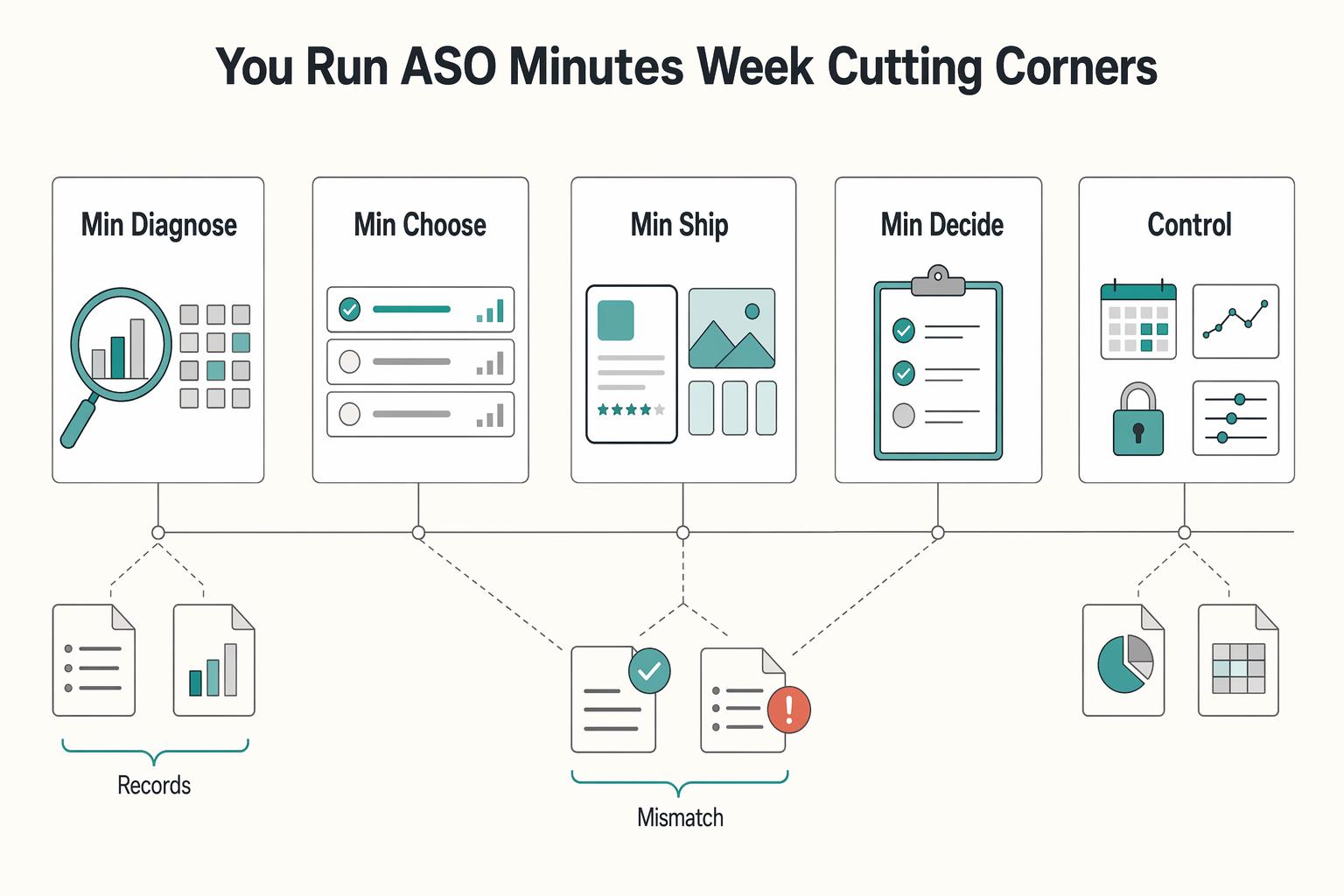
ASO works when you treat it like a recurring operating practice, not a burst of edits when installs dip. If you are working solo or with one helper, keep it to four controls you can actually manage: metadata, creative, experimentation, and risk. Think of this as a practical four-part ASO stack with a simple report card for execution.

How to Expand Your Subscription Platform to Europe for Payment and VAT Readiness
Treat a European launch as an operations sequencing decision first. Lock VAT, payments, and compliance ownership before you scale localization or acquisition.