
Quick Answer
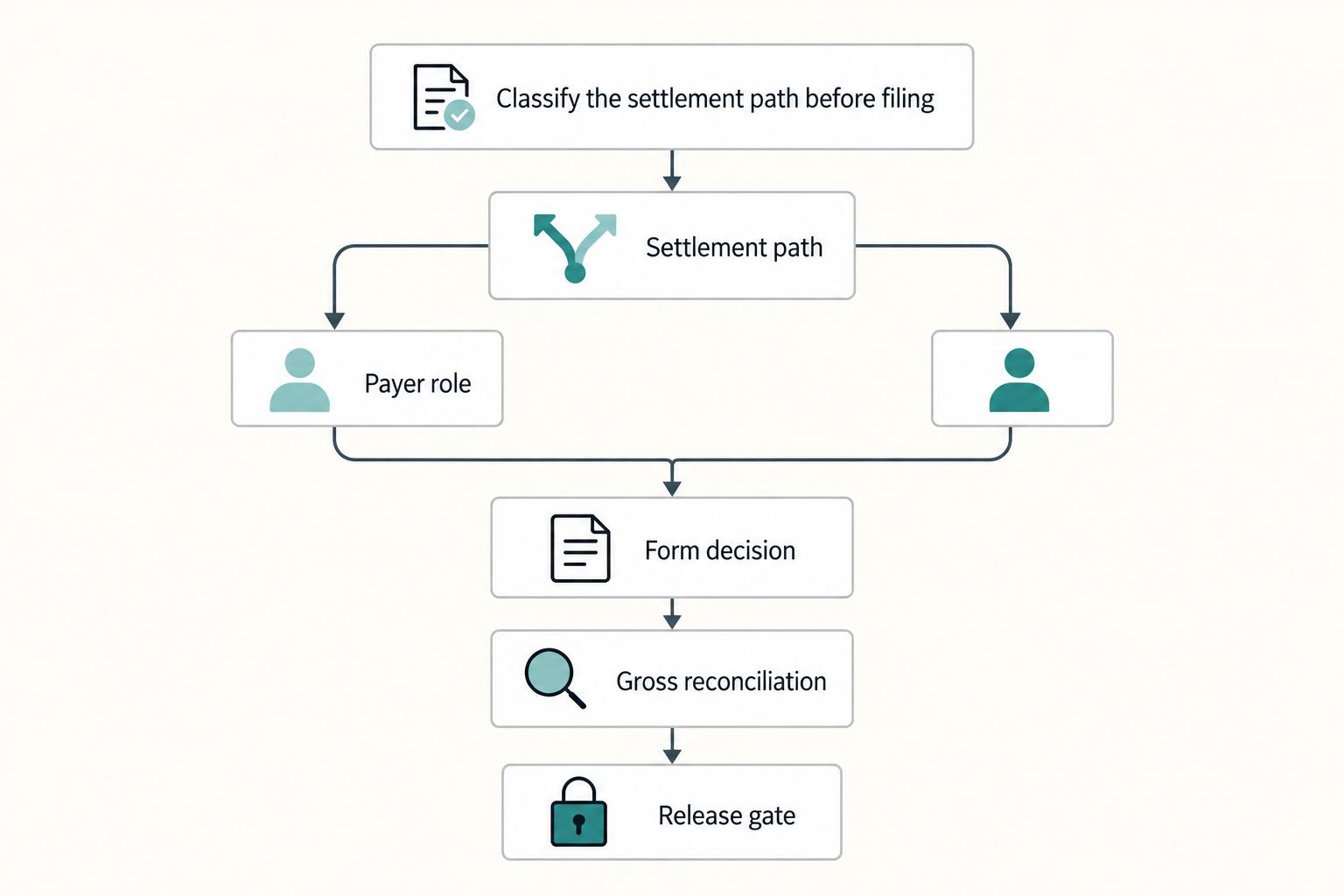
Classify by settlement path first: in 1099-nec vs 1099-k platform filing, card/app/marketplace-settled transactions should go through a Form 1099-K ownership review, while direct nonemployee service payments should go through a Form 1099-NEC review. Next, verify payer role, reconcile Box 1a amounts against provider and ledger records, and run overlap checks so the same dollars are not reported twice. If threshold assumptions or TIN details are unclear, pause automation and escalate before recipient delivery on January 31.
Start With the Settlement Path#
Start your filing analysis with the payment flow, not the worker label. The practical question is whether a transaction belongs in the Form 1099-K lane, whether another form in the 1099 series, including Form 1099-NEC, may apply, whether both might appear across different flows for the same payee, or whether form assignment needs further review.
That framing matters because Form 1099-K sits in a specific context. It reports payments received for goods or services, and the IRS says payment card companies, payment apps, and online marketplaces file it each year. Payment apps and online marketplaces are treated as third party settlement organizations, so the first useful question is often, "Is this a TPSO-style flow?"
Use threshold summaries carefully. IRS guidance on one page states a payment app or online marketplace trigger at over $20,000 and more than 200 transactions, while also noting forms may still be sent below that level. The same guidance says direct card payments can produce Form 1099-K regardless of payment count or amount.
Set your reconciliation controls before year-end. Box 1a is a gross payment amount. The IRS says it is not adjusted for items like fees, refunds, or discounts, so gross-versus-net comparisons will break if teams use the wrong report basis. Payee identity checks matter too. Verify tax record details, including payee TIN display data, and escalate mismatches, since IRS guidance indicates correction may be needed in some entity-return alignment cases.
This article gives you a filing decision sequence, reconciliation checkpoints, and escalation triggers so compliance, legal, finance, and risk teams can work from one process before January 31 recipient delivery. Related reading: 183-Day Rule Tax Myths That Trigger Residency Filing Mistakes.
At a glance comparison your team can apply before filing#
For 1099-NEC vs 1099-K platform filing, start with the payment rail and filer role. Use the Form 1099-K lane when payments are settled through cards or third-party networks, and test Form 1099-NEC when your business is directly paying nonemployee compensation.
| Criteria | Form 1099-NEC | Form 1099-K |
|---|---|---|
| Ownership context | Business payer reporting Nonemployee Compensation. | Third Party Settlement Organization (TPSO) or payment-card reporting Payment Card and Third Party Network Transactions. |
| Payer type and payment rail | Direct business-to-payee compensation flow. | Payments received through payment cards or third-party network settlement. |
| Filer responsibility | Review this lane when your business is the direct payer. | In 1099-K flows, IRS materials describe payment card companies, payment apps, and online marketplaces as the entities that file and send copies to the IRS and the recipient. Direct card acceptance can trigger filing regardless of payment count or amount. |
| Recipient experience | Usually seen as direct compensation reporting from the paying business. | Recipients may receive more than one Form 1099-K if they use multiple platforms; recipient copy is due by January 31. |
| Threshold posture | Do not infer a universal NEC threshold from this comparison alone. | IRS materials describe a common payment app/marketplace trigger at over $20,000 and more than 200 transactions, and also note forms may still be sent below that. Do not assume older $600 summaries are current without checking filing-year guidance. |
| Data inputs required to file accurately | Completed Form W-9, legal name, and Taxpayer Identification Number (TIN). | Same identity controls: completed Form W-9, legal name, and strong TIN quality. |
| Common failure modes | Treating all contractor-like payees as NEC without checking settlement ownership; weak W-9/TIN intake can drive correction work and may trigger backup withholding (24%). | Assuming threshold summaries decide ownership, assuming your platform is always the filer, or missing that recipients can receive multiple Form 1099-K forms across platforms. |
Use this table to sort flows quickly, then validate W-9 and TIN readiness and confirm filing ownership before form generation. This table is triage, not final approval. IRS FAQ-style guidance is operationally useful, but if guidance and law conflict, the law controls. Keep your filing-year source version documented, for example FS-2025-08, Oct. 2025.
Related: 1099 Filing Threshold Calculator: Is Your Platform Required to File for Each Contractor?.
Classify payment flows before you classify forms#
Classify by settlement path first, then test the form. Starting from worker type alone is one of the easiest ways to send a payment into the wrong reporting lane.
Use this first-pass split before assigning form lane:
| Payment lane | What you observed | First form lane to test | Evidence to check |
|---|---|---|---|
| Direct payer to nonemployee | Your business paid a freelancer, creator, or contractor directly | Form 1099-NEC | Payer identity, payment record, and payee tax details (TIN) |
| Card or app-settled flow | Payment moved through payment cards or payment apps | Form 1099-K | App or processor reports, payment card receipts, merchant statements, settlement path |
| Marketplace-mediated checkout | Buyer paid through online marketplace checkout | Form 1099-K | Marketplace payout reports and settlement records showing how funds moved |
The working rule is straightforward. If funds were received through payment cards, payment apps, or online marketplaces, start with the Form 1099-K lane. If your business directly paid nonemployee compensation, start with the Form 1099-NEC lane.
Mixed models need clear scenario boundaries. A contractor paid directly by your company follows a different classification path than a seller paid through marketplace checkout, even when both recipients are self-employed.
Require three intake fields before classification: who paid, how funds moved, and through which platform. If any one of those fields is missing, stop and collect records instead of inferring from the payee profile.
Use records, not memory, to confirm the settlement path. Payment app or marketplace reports, payment card receipts, and merchant statements usually answer the question faster than a debate over labels. If a payee provides a Form 1099-K, use clues on the form, including the last 4 digits of the payee TIN and Box 1a gross payment amount, to match it to the correct account and settlement path.
Also keep gross and net separate. Form 1099-K Box 1a is not a net payout figure, and IRS guidance states gross is not adjusted for common deductions. If you treat it like net, your books can end up showing the same income twice.
You might also find this useful: 1099 Contractor Payment Guide for Platforms: Rules Thresholds and Filing Deadlines.
Assign filing ownership in hybrid platform models#
Start by assigning ownership by payment flow, not by product label. In hybrid models, separate lane-by-lane reviews can reduce mistakes, but final filer ownership for mixed flows may still require current tax/legal review.
Build the matrix around roles, not brand names#
Map each transaction by role, then document where ownership is still uncertain.
| Role in the flow | What to confirm first | Operational lane to review first | Minimum evidence pack before approval |
|---|---|---|---|
| Direct payer | Whether your entity paid the worker directly for services | Form 1099-NEC review path | Form W-9, tracked payments, payee-account mapping, paying-entity record |
| Marketplace checkout role | Whether buyer funds moved through marketplace checkout before payout | Marketplace reporting review path (ownership not assumed) | Marketplace payout reports, settlement records, account ownership mapping, checkout-control note |
| Settlement infrastructure role | Whether you routed settlement without being the service payer | Settlement reporting path, then ownership review | Processor/settlement reports, internal role description, partner agreement summary, account-level tracking |
| Blended or unclear role | Whether contracts, rails, and operations point to different owners | Hold decision and escalate | Combined evidence plus written issue memo, named approver, escalation outcome |
Use this matrix as a control tool, not a substitute for legal analysis.
If-then rules to enforce in operations#
A few rules can prevent common ownership mistakes:
| Trigger | Operational action |
|---|---|
| Your entity directly pays a contractor for services | Collect the Form W-9, track payments, and review the Form 1099-NEC path |
| The same product also runs marketplace or app-settled flows | Keep those flows in a separate review lane until ownership is confirmed |
| One payee is paid through more than one lane | Keep transaction tags separate from intake through year-end review |
| Facts are incomplete | Pause assignment, gather records, and document why the lane decision changed |
The checkpoint does not change just because the product is complicated. For direct contractor flows, collect Form W-9 data, track payments, and issue Form 1099-NEC when required.
Approving ambiguous ownership#
Set an approval path before year-end. Operations can classify the flow, and tax/compliance/legal should review unresolved ownership questions before filing.
| Escalation trigger | Required step |
|---|---|
| Records conflict | Escalate before filing, document the ownership assumption, and get signoff before forms are generated |
| Architecture changed midyear | Escalate before filing, document the ownership assumption, and get signoff before forms are generated |
| Partner reporting does not map cleanly to your accounts | Escalate before filing, document the ownership assumption, and get signoff before forms are generated |
Form W-9 and payment tracking do not align well enough to support a filing decision | Escalate before filing, document the ownership assumption, and get signoff before forms are generated |
Escalate before filing when records conflict, architecture changed midyear, partner reporting does not map cleanly to your accounts, or Form W-9 and payment tracking do not align well enough to support a filing decision. In those cases, document the ownership assumption and get signoff before forms are generated.
The failure mode to avoid#
A major operational risk is delay. When role assignment slips, teams can end up reconstructing prior periods and finding recordkeeping gaps. Hybrid models can make that harder when ownership by flow is still unclear.
Keep a live flow-level ownership matrix from the first transaction, maintain W-9 and payment tracking discipline for direct-pay lanes, and escalate unresolved ownership questions before filing.
Control thresholds and timing without relying on stale summaries#
Treat threshold policy as a controlled input, not a memory exercise. The common failure here is using an old threshold summary as if it were current filing-year IRS policy.
Use this split in your controls:
| Decision point | Operational baseline | Re-verify for the filing year |
|---|---|---|
Form 1099-K filer role | Payment card companies, payment apps, and online marketplaces (TPSOs) are filing parties | Which of your lanes actually match those roles |
| Direct card lane | Recipient gets Form 1099-K from the card processor regardless of payment count or amount | Confirm your config is not applying TPSO thresholds to card-settled flows |
| Payment app / marketplace lane | IRS materials describe over $20,000 and more than 200 transactions, and forms may still be sent below that | The current-year IRS instructions and the exact threshold assumption you approved |
| Recipient timing | Recipient copy deadline is January 31 | Your internal freeze, QA, and escalation cutoffs |
Before production filing config is released, require a dated policy memo. At minimum, include the filing year, the IRS instruction or page used, lane mapping, the exact Form 1099-K threshold assumption for TPSO flows, and the owner and approval date. Keep lane controls separate so one threshold assumption does not bleed into unrelated filing paths.
Set a hard release block. If the memo is missing, undated, or inconsistent with config, do not ship. Validate one test payee per lane against expected output, including Box 1a gross-payment treatment (gross, not net) and the masked payee TIN check using the last 4 digits.
If filing-year threshold details are still unclear near year-end, escalate and document the assumption. Do not fill gaps with stale internal summaries, vendor commentary, or memory.
Reconcile gross reported amounts to internal books before filing#
Use Form 1099-K gross as the anchor, not a net payout view. Box 1a is the gross payment amount, and it is not adjusted for fees, credits, refunds, shipping, cash equivalents, or discounts. If you validate only against net settlements, mismatches are expected and filing issues can be missed.
| View | What it represents | Why it may diverge from Box 1a | How to use it |
|---|---|---|---|
Form 1099-K Box 1a | Gross payments processed by the payor or TPSO | No reductions for common offsets | Primary filing anchor |
| Internal gross ledger view | Gross payment records and adjustments | Internal records may not mirror payor-reported gross totals | Reconciliation support |
| Net payout/workpaper view | Post-offset payout or income analysis view | Designed for net economics, not gross reporting | Secondary check only |
Reconcile at the payor level, because each payor can issue a separate Form 1099-K. One failure mode is combining marketplace, payment app, and card-settled lanes into one internal number and expecting one form total to match.
Before filing, compare Form 1099-K gross amounts with supporting records such as payment app or marketplace reports, card receipts, and merchant statements, then trace differences to the reported gross amount.
If gross is wrong, do not file as-is. Stop and correct before release.
Prevent overlap between Form 1099-NEC and Form 1099-K#
Once gross is reconciled, the next control is overlap. A payee can legitimately receive both forms in the same year when payments came through different channels, so treat overlap as a review step, not an automatic fail or an automatic pass.
When both forms are legitimate#
Start with settlement channel and filer role. Form 1099-K reports payments for goods or services processed through payment cards or third-party payment networks, including payment apps and online marketplaces (TPSOs). Form 1099-NEC reports nonemployee compensation paid by a business. Because those are different lanes, one recipient can receive both forms in the same year.
| Scenario | Settlement channel | Likely reporting owner | Overlap view |
|---|---|---|---|
| Business pays a contractor directly for services | Direct business payment | Business payer on Form 1099-NEC | No 1099-K unless card or third-party network settlement also occurred |
| Same contractor also receives payments through a payment app or online marketplace | Third-party network or marketplace | Payment app / marketplace on Form 1099-K | Receiving both can be legitimate across different flows |
| Same underlying dollars appear in both populations | Same transaction in two lanes | Two candidate filers on same amount | High duplicate risk; stop and review before filing |
The problem is not that two forms exist. It is when one transaction is counted twice.
Add a duplicate-risk test before form generation#
Put a duplicate check in place before forms are generated. If the same payee appears in both candidate populations, verify whether one flow is direct nonemployee compensation and the other is card or third-party network settlement.
| Check | What to do |
|---|---|
| Potentially overlapping records | Match potentially overlapping records in your system |
| Settlement channel for each amount | Compare the settlement channel for each amount (direct payment vs. card or third-party network) |
| Underlying dollars | Confirm whether the same underlying dollars appear in both form populations |
| Same underlying dollars appear in both form populations | Hold release and route the case to review |
Use this checkpoint before release:
- Match potentially overlapping records in your system.
- Compare the settlement channel for each amount (direct payment vs. card or third-party network).
- Confirm whether the same underlying dollars appear in both form populations.
- If they do, hold release and route the case to review.
Use Form 1099-K alongside your other records before filing, not as a standalone truth source. If duplicate amounts are added together, reported income can be overstated and may trigger IRS matching notices.
Prepare support before recipients get forms#
If overlap is expected, consider preparing recipient messaging and internal support notes before forms are issued. Form 1099-K recipient copies are sent by January 31, so transaction-level examples should be ready in advance.
For a step-by-step walkthrough, see A Guide to Form 1099-K for Freelancers Using Payment Apps.
Validate payee identity and entity data before forms are generated#
Before generating forms, pause any payee record with unresolved name or TIN issues, or an entity-return mismatch, until it is corrected. This helps reduce avoidable correction cycles, especially when a payee setup changed during the year.
Use a pre-filing check that compares the filing record to the payee tax profile across EIN, SSN, ITIN, and ATIN paths, then confirms name alignment. The IRS instructs recipients to verify key Form 1099-K details, and the form's last-4-digits TIN display is a useful output check, but not proof on its own. Resolve discrepancies against your records before filing.
| Validation point | What to verify before release | Red flag that should stop filing |
|---|---|---|
| Name and TIN pairing | Legal name on the filing record matches the tax profile tied to the EIN, SSN, ITIN, or ATIN on file | Individual name paired to a business EIN, or business legal name paired to an individual identifier |
| Identifier path | One clear identifier path is active for the payee record | Multiple active tax identities for the same payee after edits or entity changes |
| Entity return alignment | Records suggest whether income is reported on Form 1120, Form 1120-S, or Form 1065 | Form 1099-K drafted to a personal name/TIN where records indicate business-return alignment, which may require correction |
For exceptions, document the discrepancy and correction path. Support reconciliation with available payment app or marketplace reports, payment card receipts, or merchant statements.
Run correction and escalation paths with clear ownership#
Treat correction work as a controlled process, not ad hoc back-and-forth. Put filing exceptions in one queue, assign an accountable owner based on policy, and pause automated release when core facts conflict.
Triage exceptions by type first#
A single "1099 issue" bucket hides different risks. Split at least these classes so each case gets the right evidence and reviewer path.
| Exception class | Verify first | Primary owner (set by policy) | Escalate when |
|---|---|---|---|
| Wrong recipient or entity mismatch | Name/TIN path and whether income belongs to the legal recipient on file | Set by policy | Onboarding, tax profile, and payout records point to different recipients |
| Incorrect totals on Form 1099-K | Box 1a gross amount against payment-app or marketplace reports, payment card receipts, and merchant statements | Set by policy | Records only reconcile on netted amounts (fees, refunds, shipping, discounts, credits) and gross cannot be supported |
| Missing identifier data | Last 4 digits shown on the form against underlying SSN/ITIN/EIN record and one clear identifier path | Set by policy | Payee cannot be matched to one tax identity |
| Disputed filer role/classification | Payment flow, settlement rail, and whether a payment card company, payment app, or online marketplace is acting as the filer | Set by policy | Contracts and payment flow support different filing-role conclusions |
Use the form as an output to inspect, not the source of truth. IRS guidance explicitly tells recipients to check the form and provides correction paths when a Form 1099-K is received in error or has incorrect information.
Anchor internal deadlines to the filing calendar#
Set internal deadlines by policy, but anchor them to January 31, when recipient copies must be sent. Work backward so wrong-recipient, missing-identifier, and incorrect-total cases are resolved before release.
When triage capacity is limited, prioritize wrong-recipient and filer-role disputes first. If the name or TIN on Form 1099-K does not align with business income reporting, for example Forms 1120, 1120-S, or 1065, correction is required.
Pause automation when evidence conflicts#
If contracts, payout rails, and filing logic do not align, stop the file and escalate to specialist review. Do not force a decision from one clean-looking artifact.
Package each escalation with a consistent evidence set, such as contract excerpts, payment-flow evidence, payout or processor records, and draft filing logic.
Make corrections auditable#
Keep a clear correction record with the original and corrected values, the reason for the change, and supporting evidence. That record helps explain later why a payee received multiple Forms 1099-K or why totals changed.
If you want a deeper dive, read Music Royalty Tax Compliance: How Platforms Handle 1099-MISC vs. 1099-NEC for Artist Payments.
Use this pre-filing decision checklist#
Make these four checks mandatory before release. If one fails, pause and escalate.
| Checkpoint | What "ready" looks like | Red flag that should stop release |
|---|---|---|
| Flow routing | Every transaction flow is tagged to a Form 1099-K path, another information-return path, or an excluded path, with a short rationale tied to how funds settle | Classification was based on worker type alone, or a payment-app/marketplace lane that fits a Third Party Settlement Organization (TPSO) pattern was forced into one global rule |
| Guidance version control | One dated Internal Revenue Service (IRS) filing-year guidance record is approved for the filing cycle and used across teams | Teams are using different threshold summaries, or policy says "current IRS rules" without a dated filing-year record |
| Gross reconciliation | For Form 1099-K, Box 1a gross ties to internal records and to external records (payment app/marketplace reports, payment card receipts, merchant statements) | Reconciliation only works on net amounts after fees, refunds, discounts, shipping, or credits, or material exceptions are unresolved |
| Identity validation and recipient support | Taxpayer Identification Number (TIN) checks are complete, masked last-4 checks align with the underlying tax ID on file, and support messaging is ready for overlap questions | A payee maps to more than one tax identity without resolution, or support cannot explain why someone may receive multiple forms across platforms |
Do not treat gross reconciliation as optional. Form 1099-K reports gross payment amount, and that amount is not adjusted for common items like fees or refunds.
Add one final pre-flight control: if you are submitting 10 or more information returns, file electronically. Make sure the output matches IRS filing specifications, not PDF or spreadsheet-style exports, because invalid electronic submissions can put your Transmitter Control Code (TCC) at risk.
If you want this checklist to run as an operational workflow instead of a spreadsheet exercise, map it to your implementation controls using the Gruv docs.
Conclusion#
As a working rule, decide filing ownership from payment flow and settlement role, not from worker labels alone. If money is settled through a card, payment app, or marketplace-style third-party payment service, test the Form 1099-K path first. If a business or client pays nonemployee earnings directly, test the Form 1099-NEC path first. In either case, confirm who the payer is for each payment lane before filing.
Many filing failures come from control gaps, not from form labels alone. Keep a dated current-year guidance record and align it to the filing specification you are actually using, for example IRIS A2A Rev. 1-2026 / Processing Year 2026. Do not treat bulletin synopses as authoritative interpretations. If threshold assumptions, filing ownership logic, and settlement facts do not match that record, stop before production.
Reconcile gross amounts before debating form correctness. Form 1099-K reports gross amounts before common adjustments such as fees and refunds, so gaps against net-ledger views are often expected. Tie provider or marketplace totals to payee-level ledger events using gross first, then explain remaining differences with your adjustment categories.
Run overlap and exception controls before release. A payee can receive both forms in some cases, so test identity, settlement channel, and payer role across direct-pay and third-party-settled lanes. Route unclear cases as exceptions with documented rationale. Treat IRIS acknowledgments, pre-receipt rejection handling, and correction or replacement steps as required checkpoints.
Start with one high-volume cohort, run the checklist end to end, and measure ownership, reconciliation, and overlap exceptions. Scale to full filing only after those exceptions are stable, understood, and assigned to named owners.
When you are ready to pressure-test filer ownership and payout-flow controls for your specific model, contact Gruv.
Frequently Asked Questions
When should a platform issue `Form 1099-K` instead of `Form 1099-NEC`?
Start with the settlement path, not the worker label. If payments for goods or services are received through a payment settlement entity and the flow runs through a payment card, payment app, or online marketplace pattern, Form 1099-K is the first test. For direct-pay service arrangements outside that pattern, do not infer Form 1099-NEC rules by analogy. Verify current instructions before filing.
Can the same payee receive both `Form 1099-NEC` and `Form 1099-K` in one tax year?
If both forms appear for one payee, do not treat that as automatic proof they are both correct. If your team cannot clearly explain the split by identity, settlement channel, and payer role, pause and escalate.
If payments run through `PayPal`, `Venmo`, or marketplace checkout, who is usually the filer?
At the IRS guidance level, payment apps and online marketplaces, described as TPSOs, are the type of entities required to file Form 1099-K. Do not rely on brand names alone. Confirm who actually settles funds and whose reporting trail carries the gross totals.
Does `Form 1099-K` report gross amounts before fees, refunds, and discounts?
Yes. Box 1a reports the gross payment amount from payment card and third-party network transactions, before common adjustments like fees and refunds. So a gap between Form 1099-K and a net-based internal view is often expected and must be reconciled, not ignored.
What should we do when `Form 1099-K` totals do not match our internal ledger totals?
Assume the first issue is the reconciliation method, not an automatic form error. Tie provider totals to ledger events by payee using gross amounts first, then explain differences with fees, refunds, discounts, and similar adjustments using processor or marketplace records. If totals still do not tie, block filing and verify Payee TIN and entity alignment, including whether a correction is needed for returns such as Form 1120, 1120-S, or 1065.
Which threshold details are still uncertain and must be verified against current `IRS` guidance before filing?
Use a dated, filing-year-specific IRS guidance record before filing. Current materials describe direct card acceptance as potentially reportable regardless of payment count or amount, while also referencing the over $20,000 and more than 200 transactions framework, the historical more than $600 narrative, and that filers may send forms below stated thresholds. Keep in mind that IRS FAQs are operational guidance and can be updated, including Fact Sheet 2025-08 updates on Oct. 23, 2025.
Try a related tool
Researched and edited by the Gruv editorial team. Gruv builds cross-border billing, payouts, and finance-operations software for global businesses.
Sources
Educational content only. Not legal, tax, or financial advice.
Related Posts
Music Royalty Tax Compliance: How Platforms Handle 1099-MISC vs. 1099-NEC for Artist Payments
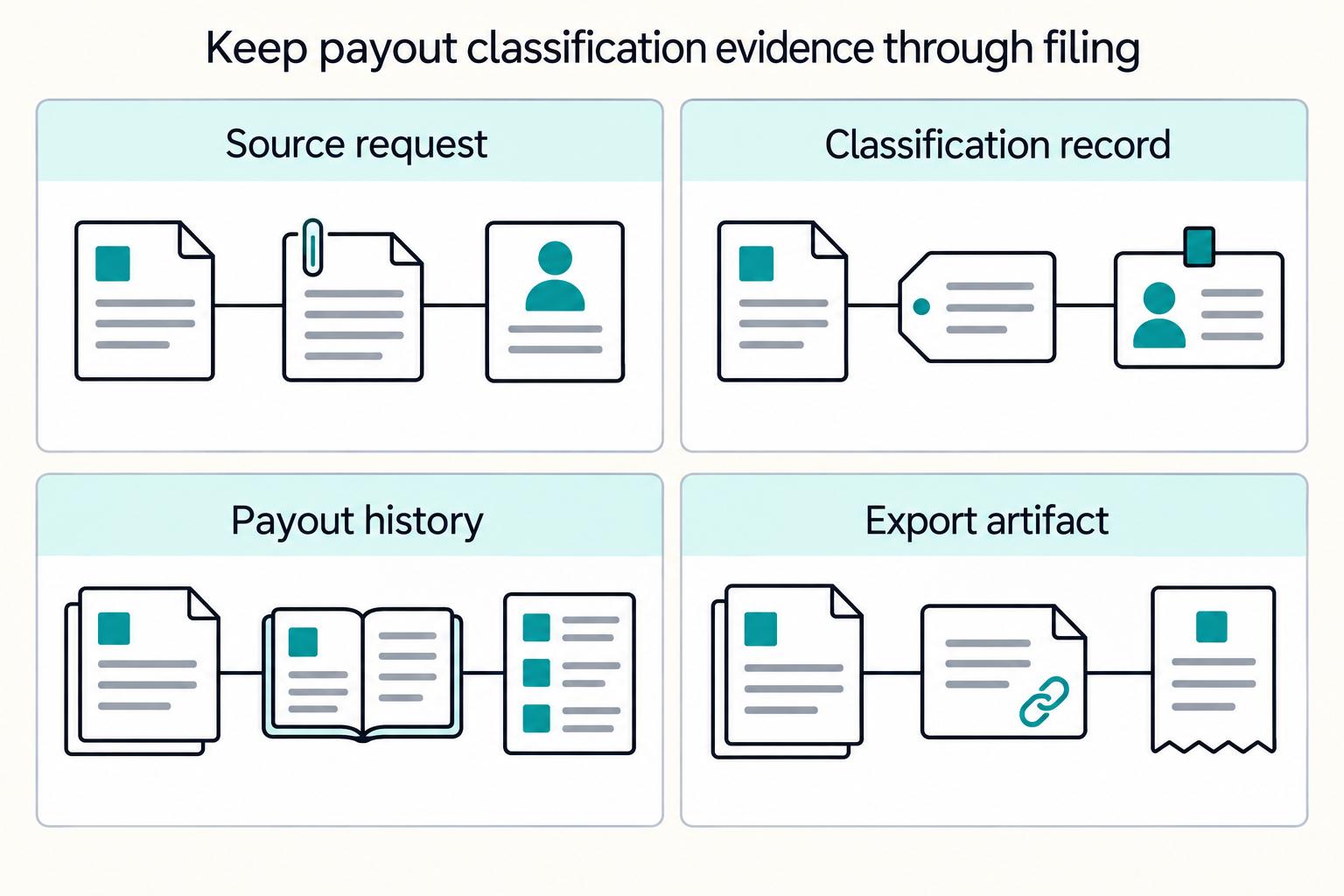
This is an operating-model decision, not a year-end form choice. A team can ship quickly and still end up with misclassified payouts, correction cycles, and filing risk if the classification logic is weak. If you run creator payouts, you need the classification rule before your first batch, not after your first correction cycle.
1099 Filing Threshold Calculator for Platform Contractor Decisions
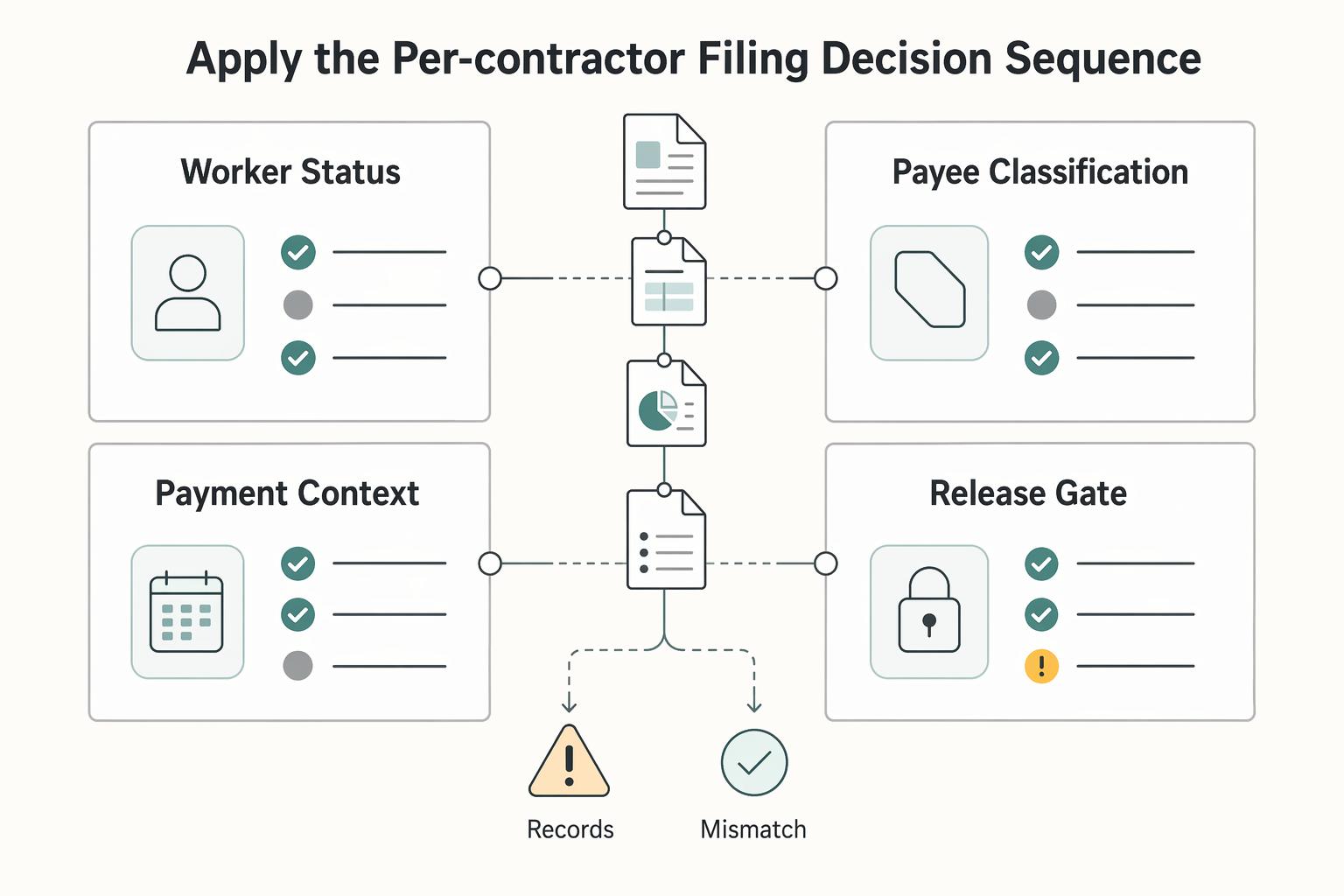
If you own compliance, legal, finance, or risk for a platform, the question is not, "what is the general 1099 threshold?" It is this: for this payee, with this payment flow and this documentation, are you required to file, not required to file, or unable to decide yet without review?
Choosing 1099 Filing Ownership for Platform Contractor Payments
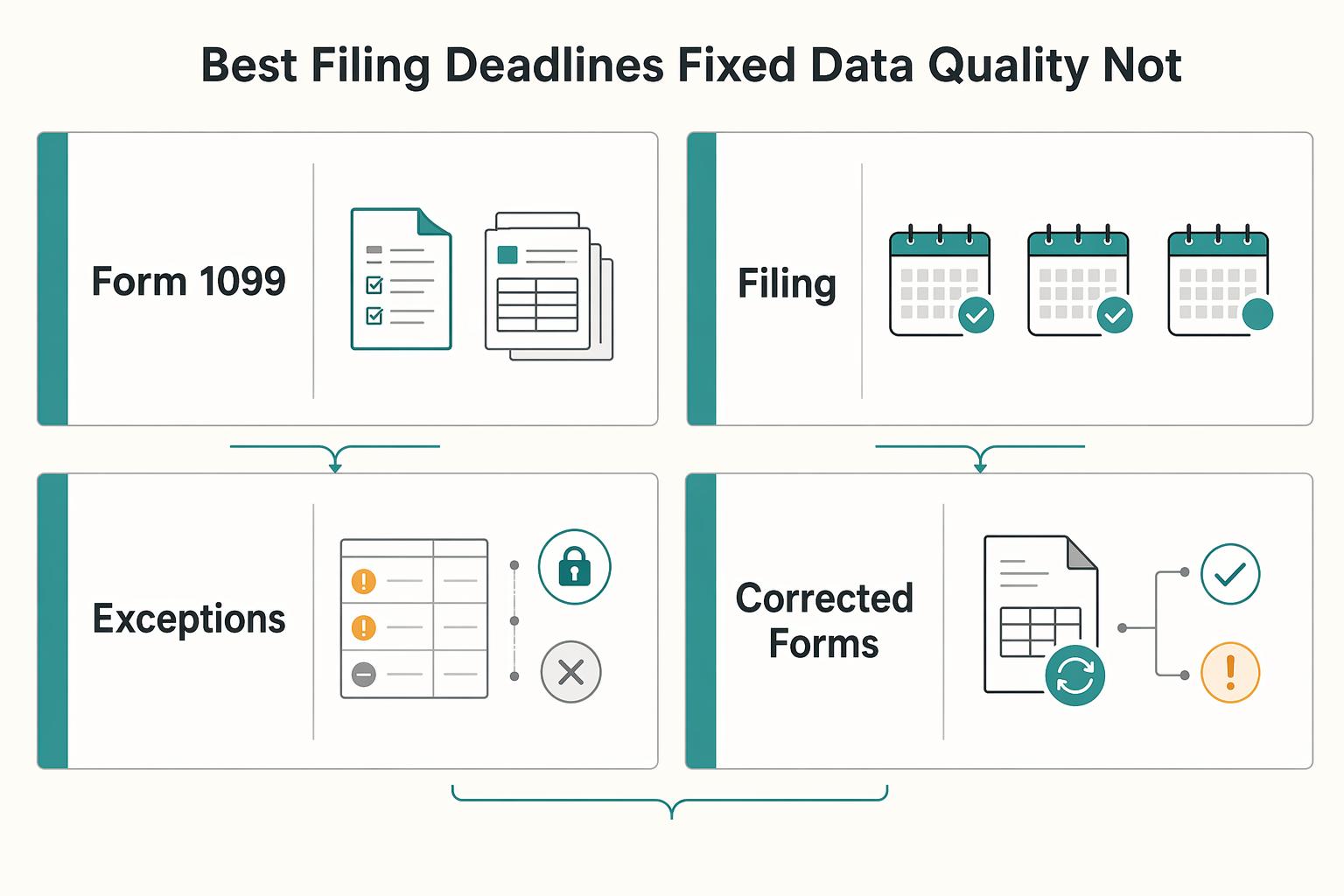
At platform scale, 1099 risk is usually an ownership and evidence problem before it is a threshold problem. If you run payouts across multiple programs, entities, or payment rails, the question is not just whether a payment triggers a form. It is who owns the filing, what records support that decision, and how exceptions get handled when the facts are messy.