
Quick Answer
Start with a mixed-rail operating model: run virtual-card ePayables for card-ready suppliers, keep ACH for bank-ready vendors, and reserve checks for controlled exceptions. Then clear three launch gates before scaling: enrollment data that routes payments correctly, approval controls for issuance and release, and reconciliation that links the AP record to provider references without spreadsheet reconstruction. This sequence reduces manual payment handling while keeping audit evidence intact during staged check reduction.
Start Here if You Need to Replace Checks Without Breaking Ops#
If you are replacing checks in a high-volume environment, treat this as a controls-and-scale decision first. The goal is to choose the right ePayables model, introduce virtual cards without creating avoidable new exceptions, and keep reconciliation and audit trail intact from the AP source record through payout.
- Use this guide when volume and risk are already operational problems
ePayables means handling supplier payables electronically. Some providers use the term broadly; others mean virtual-card vendor payments. Confirm the program definition before choosing rails. This guide covers supplier enrollment, approval, execution and reconciliation for recurring B2B payments.
- Use a three-part decision path, not a single-rail stance
Choose a rail mix that fits supplier acceptance, approval controls and reconciliation workload. Virtual-card programs may support amount, date and merchant limits; confirm the actual configuration. Trace each payment from the AP record to the provider transaction and reconciliation output.
- Keep scope narrow and evidence standards high
Before rollout, verify supplier routing, approval authority and reconciliation evidence. Plan a mixed-rail transition rather than assuming universal card acceptance or a rapid shutdown of checks.
How to Choose the Right ePayables Path for Your Team#
Choose your ePayables path as an operating-model decision, not a generic AP software purchase. If payment volume is growing, supplier readiness, rail coverage, controls, and reconciliation quality matter more than any promise to remove checks in one step.
- Choose this path when payments are cross-functional, not AP-only
Use these controls when AP, payments operations and engineering share execution responsibilities. Volume alone does not determine fit: test approvals, file delivery, exceptional states and reconciliation using your own workload.
- Do not force a full rollout if checks are occasional and operations are stable
If you issue only occasional checks and do not need additional automation or controls, a full ePayables rollout may add more overhead than value. Supplier enablement and integration work can be meaningful. The trigger is operational strain, not a preference for digital tools.
- Set selection criteria before comparing providers
Evaluate supplier acceptance, rail coverage, reconciliation burden, integration effort and control requirements. Test your actual suppliers and representative payments rather than treating a provider network count as coverage proof.
- Apply a simple decision rule
Use virtual cards where suppliers accept them and the controls fit. Keep ACH or checks for appropriate exceptions, with the same approval and reconciliation requirements.
What ePayables Means in Real Platform Operations#
In platform operations, ePayables means replacing check-heavy AP payments with electronic supplier payments, often virtual cards, with approvals, routing, and reconciliation built into execution. Once you choose a path, this is the operating model you are actually implementing.
- Electronic supplier payments, not generic "digital payments"
In AP workflows, ePayables means paying suppliers electronically instead of mailing paper checks. It is not a consumer-style checkout flow. The payment sits inside your payables process, with operational controls wrapped around it.
- A file-driven execution model
After approval, AP or your ERP submits an electronic payment file, and that file can route payments across rails such as virtual card, ACH, and check. The real checkpoint is end-to-end behavior. File input, bank response, and reconciliation output should all be testable together before you scale.
- Virtual card credentials are control primitives
A common payment unit is a bank-provisioned virtual card credential set: a 16-digit number, expiration date, and security code, with some programs explicitly using a 3-digit CVV2. Programs can also bind a virtual account to a specific supplier, amount, and validity window. Implementation varies, so confirm how credentials and remittance are delivered in your workflow.
- Approval and traceability make the model reliable
Link each payable and payment attempt to an internal ID and a protected provider transaction reference. A reusable supplier card can support several charges, so its card identity alone cannot uniquely identify an invoice payment. Do not put full credentials or security codes in audit exports.
For a step-by-step walkthrough, see What is a Virtual IBAN and How Do Platforms Use It to Collect Payments Globally?.
Checks, ACH Payments, and ePayables Compared for Platform Use Cases#
Many platforms run a mixed-rail model. Use ePayables where card acceptance is real and control depth matters, keep ACH primary for bank-ready suppliers, and keep paper checks as a tightly managed fallback.
At a glance#
| Rail | Typical setup pattern | Supplier acceptance risk | Control depth | Reconciliation complexity |
|---|---|---|---|---|
| Paper checks | Commonly retained as a secondary option in business payments | Lower near-term acceptance risk where suppliers still accept checks | Limited once issued; checks are frequently reported as fraud-susceptible | Typically more manual than digital rails |
| ACH payments | Bank-to-bank ACH flow that is batch and file or schedule driven | Often workable for bank-ready suppliers | Moderate; generally less granular than virtual-card controls | Moderate; timing is tied to ACH processing windows |
| ePayables with virtual cards | Provider implementation plus supplier enablement for vendor-assigned or single-use cards | Can be highest of the three because not every supplier accepts card payments | Deepest where supported; controls can include spending amounts, payment periods, and additional transaction controls | Varies by provider program and supplier acceptance |
ACH can be simpler for suppliers already set up for bank transfers. ePayables can improve control depth. Vendor-assigned or single-use virtual cards can be tied to a specific supplier and, in some programs, a specific amount or validity window.
Decision checkpoints#
- Prefer ePayables first when control depth is the primary goal and supplier card acceptance is proven.
- Keep ACH primary where supplier readiness or cost favors it. FedACH’s 4:45 p.m. ET transmission deadline and 6 p.m. ET third settlement window concern eligible operator processing; your bank cutoff can be earlier and beneficiary availability depends on the applicable service.
- Keep checks as controlled exceptions where supplier acceptance requires them, with approval and reconciliation evidence.
If your biggest problem is control depth, start with ePayables for card-accepting suppliers. If your biggest problem is supplier readiness, keep ACH as the primary electronic rail and add virtual cards where the control benefit justifies the enablement effort.
Before scaling, validate supplier acceptance and reconciliation outputs rail by rail in your own AP or ERP flow. Fee outcomes and speed gains vary by provider and operating model, so confirm both in your own cost model instead of assuming a universal advantage.
The 5 ePayables Setup Options and Where Each Fits Best#
If supplier readiness is mixed, choose a setup pattern before you optimize rails. A practical starting point is often hybrid routing (card plus ACH) or ePayables-first with a defined fallback. Narrower card patterns make more sense once acceptance and controls are proven.
| Option | Best fit | Key consideration |
|---|---|---|
| Per-supplier card assignment | Supplier payments are stable and recurring | Supplier enablement work, including enrollment and self-service support |
| Single-use virtual cards per payment | You want tighter per-payment control and a clear payment-level trail | Higher issuance and coordination volume across suppliers, remittance delivery, and reconciliation |
| Hybrid ePayables plus ACH payments | Card acceptance varies by supplier | Routing logic, remittance standards, and reporting must work across both rails |
| ePayables first with explicit fallback payment rail | You need to reduce manual handling quickly but know card acceptance will not be universal | Document fallback triggers, override authority, and required evidence for each routed payment |
| AP-led file-based launch before deeper API automation | You need near-term modernization without waiting for full API integration | Verify that the payment file, issuer acknowledgment, and reconciliation output all map back to the original invoice or payable ID |
1. Per-supplier card assignment#
Use this when supplier payments are stable and recurring. Some virtual-payables programs can restrict payments to a single supplier and allow multiple charges, which supports a repeatable payment identity for that vendor.
This pattern can help keep AP mapping consistent across the supplier record, remittance, and payment event. The tradeoff is supplier enablement work, including enrollment and self-service support. If enablement is weak, exception volume can increase, including remittance mismatches and fallback use. Confirm the supplier can process the assigned virtual card and that your ERP or AP output maps supplier ID to the correct payment identifier every time.
2. Single-use virtual cards per payment#
Use this when you want tighter per-payment control and a clear payment-level trail. A virtual card is a temporary number linked to a funding account, and some programs can limit each card to a single use.
This fits variable invoice amounts, one-off payouts, or categories where reuse exposure is a concern. Each payment can be tied to a unique virtual card account. The tradeoff can be higher issuance and coordination volume across suppliers, remittance delivery, and reconciliation. Pilot card issuance, supplier acceptance, and AP reconciliation export together before scaling.
3. Hybrid ePayables plus ACH payments#
Use this when card acceptance varies by supplier. Keep ePayables for card-accepting suppliers and route bank-ready suppliers to ACH, an electronic transfer over the ACH network.
The benefit can be broader coverage without forcing full card adoption on day one. The tradeoff is dual-rail operations. Routing logic, remittance standards, and reporting must work across both rails. Some provider models also support direct bank transfer in virtual-payables flows, but routing and reconciliation behavior is provider-specific. Verify exactly how routing is set, what references return per rail, and whether card and ACH outcomes reconcile in one export.
4. ePayables first with explicit fallback payment rail#
Use mixed rails when card acceptance varies. Before replacing a card payment with ACH or a check, resolve its authorization, capture and settlement outcome; disable unused credentials where supported and confirm no payable payment remains.
A notification failure or supplier delay does not prove nonpayment. Check partial captures, refunds and outstanding authorization or settlement before approving replacement. Record the original attempt, outcome evidence and authority for the new rail.
5. AP-led file-based launch before deeper API automation#
Use this when you need near-term modernization without waiting for full API integration. ePayables can launch as an AP-managed, post-invoice, file-based flow and still replace part of check volume.
This fits teams that can already produce an electronic payment file and want a controlled rollout. Some implementations offer a website, batch-file processing, and real-time XML API, which supports phased migration instead of a hard cutover. Verify that the payment file, issuer acknowledgment, and reconciliation output all map back to the original invoice or payable ID. For a related architecture example, see How MoR Platforms Split Payments Between Platform and Contractor.
Supplier Enrollment Choices That Decide Success or Failure#
Supplier enrollment is often the go/no-go gate after you pick card-first, hybrid, or fallback routing. Do not scale ePayables until enrollment quality supports reliable reconciliation and manageable exceptions. Weak supplier data can create more manual work, not less.
| Enrollment area | What to confirm | Checkpoint |
|---|---|---|
| Legal payee record first | Legal name, person or corporation code, tax identification number, and 1099 information where relevant | ERP payee data matches the entity receiving remittance and appearing in the payment file |
| Explicit rail acceptance and preference | Whether the supplier accepts virtual cards and which rail to use when they do not | Store acceptance and preferred method in the supplier profile and drive routing from that data |
| Remittance format and matching evidence | Supplier can consume the remittance format, unique payment identifier, and your invoice reference | Run a test payment or remittance sample and confirm supplier-side matching |
| Finance signoff needs evidence and named owners | Enrollment progress, tracked rejection causes or objections, and fallback-rail usage patterns by supplier segment | Define triage by failure origin before launch so issues route to one owner on first review |
Use one operating rule: scale only when enrollment data is complete enough that fallback behavior is intentional, remittance is matchable, and vendor payment failures can be routed quickly to the correct owner.
Controls You Need Before You Increase Payment Volume#
Before you scale ePayables volume, your controls need to prove approvals, execution, overrides, and reconciliation in one traceable chain. If you cannot show who approved issuance, who released payment, what was overridden, and how it reconciled, higher volume can turn into more unresolved exceptions and weaker auditability.
- Approval gates tied to real payment actions
Separate approvals for card issuance, payment release, and exception overrides instead of relying on one generic "payment approved" status. Use role-based access control so permissions follow job function, and keep virtual-card controls tight: payments processed only after approval, only for the amount authorized, with single-use accounts constrained to supplier, amount, and expiration date. Checkpoint: for one payment, confirm approver identity, timestamp, supplier, authorized amount, and expiration setting in the same evidence chain.
- Traceability from payment file to bank reference to reconciliation output
Your control model is harder to defend if the electronic payment file cannot be traced through bank-side records and back into reconciliation output. ePayables workflows can support payment-file transmission and reconciliation-file delivery, and virtual-card identifiers can help anchor the payable, payment instruction, and reconciliation record. Checkpoint: replay one settled payment end to end from source file to bank reference or virtual-card identifier to reconciliation output. If you need spreadsheet stitching between systems, the audit trail is weaker than it looks.
- Risk-based policy gates and exception logging
Apply controls according to your entity’s regulatory role and partner obligations. FinCEN’s February 13, 2026 exceptive relief concerns repeat account-opening beneficial-owner identification and verification for covered institutions; it does not remove ongoing risk duties. Preserve each exception’s reason, approver, before-and-after state and payment reference.
Build the Cost Model Before You Commit to One Rail#
Do not choose a payment rail on sticker price alone. Use a scenario-based total operating cost model. Do not approve expansion until the provider validates the assumptions behind it. Once the controls are defined, this is where you test whether the model holds financially.
1. Start with total AP cost, not just rail fees#
Separate buyer economics from supplier acceptance cost. Supplier merchant or acquirer fees are not automatically the buyer’s program fee. Model the buyer’s contracted issuer, processing and financing charges, rebates and operating effort separately from the supplier’s card acceptance quote.
Then add the indirect cost buckets teams often skip: AP handling time, reconciliation effort, supplier enablement, and exception handling. APQC's cost-per-invoice framing is useful here because AP cost includes outsourced, overhead, personnel, system, and other costs, not just payment fees.
2. Price supplier enablement and exception handling as real work#
Supplier enablement is not automatic and should be modeled as real effort. In practice, teams usually need to confirm supplier acceptance, remittance format, routing preference, fallback method, and ownership across AP and operations. Integration and training requirements also vary by provider.
Include exception handling, fraud investigations and unrecovered losses in your own check baseline. Use observed incidents and handling time rather than importing survey percentages as a forecast.
3. Compare scenarios, not averages#
Averages hide decision risk, so compare full scenarios side by side.
| Scenario | Include | Common miss |
|---|---|---|
| Current paper checks baseline | Print and mailing steps, AP handling time, check exceptions, fraud and loss follow-up | Reconciliation delays and exception follow-up effort |
| ACH payments-heavy baseline | ACH processing steps and exception handling across AP workflows | Manual work when remittance mapping is weak |
| ePayables-heavy target state | Buyer program, processing and financing costs net of contracted rebates; enrollment, reconciliation and fallback effort. Model supplier acceptance fees separately. | Training, provider-specific integration effort, card acceptance variance |
For each scenario, replay one payment from source payable to settlement to reconciliation output and count the human touches. If a "low-cost" rail still depends on spreadsheet stitching, manual remittance matching, or repeated supplier outreach, the model is understating real cost.
4. Use a go/no-go rule before expansion#
Compare buyer cost and control benefit by supplier segment, then test supplier willingness separately. For example, an illustrative $1,000 payment with a supplier’s quoted 2% acceptance fee costs that supplier $20; it does not establish the buyer’s fee or rebate. Use the buyer’s separate contract for those amounts.
Reconciliation quality is one practical upside to include. Virtual payments can carry detailed remittance information and unique payment identifiers, and single-use virtual accounts can be constrained to supplier, amount, and expiration date.
5. Separate knowns from unknowns before final signoff#
Keep two columns in the model: knowns and provider-validated assumptions. Knowns include your invoice volume, exception counts, AP staffing effort, and fallback rail usage. Assumptions include effective card pricing, supplier acceptance, implementation effort, reconciliation export quality, and training scope.
If the business case depends on one unverified blended card-cost assumption or vague automation savings, stop and validate before signoff. Final approval should require clear provider confirmation on pricing mechanics, integration scope, enablement ownership, and reconciliation evidence outputs.
Failure Modes That Break ePayables Rollouts and How to Prevent Them#
Once the cost model supports a test, rollout risk is usually operational. The failure points are typically supplier acceptance, reconciliation data quality, control discipline, and ownership when exceptions happen.
- Low supplier acceptance of virtual cards
Choose each supplier’s preferred rail before initiating payment. For a replacement after an attempted card payment, resolve the original outcome and prevent further use of unused credentials before issuing another payment. Track fallback reasons by segment.
- Weak reconciliation from poor payment references
A rollout is harder to stabilize if finance still has to match payments manually. Require consistent remittance references and clear mapping between the AP record, payment event, and reconciliation output. Virtual payments can carry detailed remittance information and unique payment identifiers, and single-use virtual accounts can be restricted by supplier, amount, and expiration date. If ACH is part of fallback, enforce addenda format compliance so payments can be correctly identified and applied.
- Control gaps under time pressure
Control drift during a volume ramp can break rollout quality. Lock approval gates so payments run only when approved and only for authorized amounts, and implement control activities through clear policies and procedures. Keep segregation of duties intact: do not allow one person to request, approve, and reroute the same payment when deadlines tighten.
- Mismatched ownership when vendor payments fail
Assign owners for enrollment, file errors, remittance mismatch, provider coordination and close. Put the actual bank or provider response and escalation deadlines in the playbook.
If you want one simple operating check, review fallback volume, reconciliation exceptions, and approval overrides together. That combined view can surface instability earlier than high-level launch metrics.
If you want a deeper dive, read What Is an e-Payable? How Virtual Cards and Digital Payments Replace Paper Checks in B2B.
A Phased Migration Plan Off Paper Checks#
A durable migration off checks is usually a four-phase operating change, not a rail switch. The goal is to reduce manual work and keep reconciliation and controls intact as you move supplier by supplier.
1. Baseline the current check and ACH reality#
Start with what AP is actually doing now. Baseline paper-check volume, ACH volume, exception volume, and the reconciliation effort required after payment is sent.
Your Phase 1 evidence pack should include:
- Monthly counts and dollar volume by rail
- Exception rate by rail and supplier segment
- Reconciliation aging or manual touch count
- Return, rejection, or reissue reasons
- Approval override count for vendor payments
Before scaling, sample recent check and ACH payments and verify the full trail from the AP record to the payment event to reconciliation output. If reference data is weak, fix that first.
2. Launch a controlled cohort where card fit is highest#
Start with suppliers that have recurring payments, stable payee data, and realistic virtual-card acceptance. Use clear per-supplier routing rules to keep exception handling clear.
Enrollment quality makes or breaks this phase. Track completion rate, rejection reasons, supplier response lag, and whether enrolled suppliers actually transact on the intended rail.
Where card acceptance or remittance is unsuitable, choose ACH before initiating payment. After an attempt, switch rails only once the original outcome is resolved and duplicate-payment risk is controlled.
3. Expand by segment, not by enthusiasm#
Scale by supplier segment, not by broad volume pushes. Segment by recurrence, invoice variability, card acceptance, and reconciliation complexity. Track these every cycle:
- Fallback rail usage by segment
- Reconciliation quality, including unmatched or late-applied items
- Audit-trail completeness from the AP record to payment execution to closeout
Do not expand solely because payment success improves. Require supplier-side remittance matching and finance acceptance; keep ACH primary for segments where cards create avoidable cost or manual work.
4. Retire paper checks by policy, with explicit exceptions#
Retire checks through policy, not informal behavior change. Set checks as non-standard by default, then define explicit exception handling. Use a clear policy structure:
- Named approvers for check exceptions
- Valid reason codes
- Required documentation
- Exception validity window and review cadence
The federal model shows the pattern: set a cutover rule and allow defined exceptions. For private platforms, copy that structure, not the federal deadline. Once a supplier is successfully live on a non-check rail, require explicit reapproval for any future check request to prevent check creep.
ePayables replace paper checks with electronic execution, but the migration only holds when policy, enrollment tracking, reconciliation quality, and exception governance move together.
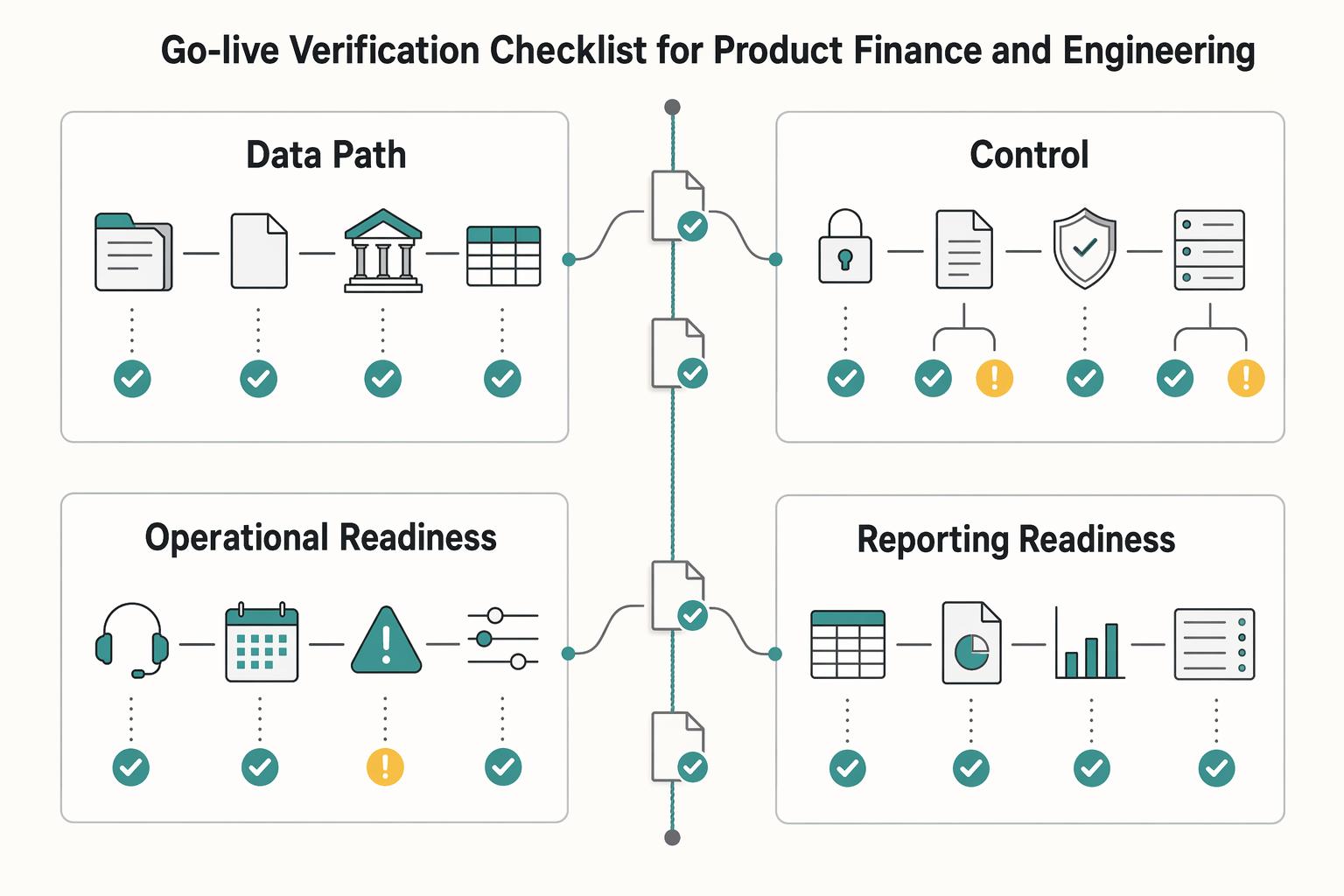
Go-Live Verification Checklist for Product, Finance, and Engineering#
Go-live is not a config milestone. In ePayables, it is a no-go until product, finance, and engineering can prove the payment path, controls, and reporting hold under retries, exceptions, and supplier support load.
| Area | Go-live check | Key point |
|---|---|---|
| Data path integrity | Trace one source transaction from AP record to electronic payment file, bank/payment-system acknowledgment, and reconciliation export | Payment events tie back to source data without manual guesswork |
| Control integrity under replay and retry | Test provider-supported unchanged-payload API retries within retention; separately test file/batch duplicates and atomic local webhook effects | Validate duplicate prevention and auditability together |
| Operational readiness for mixed-rail reality | Assign fallback authority and require resolved original payment outcome before replacement | Ownership and fallback execution, not just supplier status |
| Reporting readiness for finance review | Finance can open one audit-trail view and see approval, execution, remittance, and reconciliation status without rebuilding the record in spreadsheets | Reporting is go-live critical only when it supports direct audit review |
Use this checklist as your implementation handoff. Then map each approval gate, retry path, and reconciliation export in Gruv Docs.
The Practical Next Step for Most Platforms#
For most platforms, a practical next step is a constrained ePayables rollout with explicit go or no-go gates, followed by staged check retirement with documented exceptions.
1. Pilot a narrow cohort#
Start with a supplier cohort you can observe end to end, not the largest spend segment. The goal is to prove reconciliation and audit-trail integrity under real volume before you chase migration totals.
Your first checkpoint is traceability from the AP record to the payment credential to the reconciliation result. With virtual cards, each payment can have a unique card number, expiration date, and CVC. Scale only when your team can map that chain cleanly without spreadsheet reconstruction.
2. Set hard go or no-go gates#
Do not expand on elapsed time alone. Promote cohorts only when enrollment, controls, and exceptions meet explicit thresholds you define up front.
Treat enrollment tracking as a launch control, not a reporting afterthought. For each gate, keep an evidence pack with:
- supplier enrollment completion and rejection reasons
- confirmation that approval routing follows existing approval processes
- exception counts by rail, plus cause and owner
- audit-trail samples linking source record, payment event, and reconciliation output
If exception volume rises faster than stable enrollment, pause expansion and fix the operating handoff first.
3. Expand only when mixed rail is stable#
Mixed rails can remain appropriate after the pilot. Expand by supplier segment when acceptance, exceptions and reconciliation evidence support the change.
Retire checks in stages, with written exceptions and periodic review. That mirrors Treasury's paper-check phaseout becoming effective on September 30, 2025, with Section 4 exceptions.
Keep fallback capability for suppliers whose acceptance or costs make cards unsuitable. Choose their rail before initiation, and require the original-outcome checks for any later replacement.
Related: Virtual Credit Cards for Platforms: How to Issue Single-Use Cards for Contractor and Vendor Payments. Before full cutover, validate your target rail mix, fallback design, and coverage assumptions with Gruv's team.
Frequently Asked Questions
What are ePayables in plain terms for a platform team?
ePayables means handling payables electronically rather than through paper-check workflows. The term is not standardized, so some providers use it for electronic payables in general while others use it specifically for virtual-card vendor payments. In practice, confirm which definition your provider uses before you scope implementation.
How are ePayables different from ACH payments in day-to-day operations?
ACH is a batch-based rail for electronic credit and debit transfers between depository institutions, so day-to-day operations typically center on batch submission and reconciliation. Virtual-card ePayables focuses on issuing digital payment credentials per supplier or payment and applying transaction-level controls. ACH is also a very large rail, with 35.2 billion ACH payments in 2025.
Can ePayables fully replace paper checks for all vendor payments?
Not immediately for every supplier and use case. Checks are still in active use, and Federal Reserve materials note that about 11 billion checks were written in 2021 even as usage declined. Treat check removal as a phased transition and keep a fallback rail until supplier acceptance is proven.
How do virtual cards reduce payment risk compared with paper checks?
Paper checks are vulnerable to theft, alteration, and forgery. Virtual cards can be configured with controls such as date, amount, and merchant parameters, which narrows where a payment credential can be used. That can reduce exposure, but it does not eliminate fraud.
What should we evaluate first before switching from checks to ePayables?
Start with supplier enrollment and acceptance, because that is the practical gate for scaling virtual-card disbursements. Then verify that reconciliation is reliable across the rails you plan to run. If those two pieces are weak, you may just shift exceptions instead of reducing them.
When should we keep a fallback payment rail instead of forcing full card adoption?
Keep a fallback when supplier enrollment is incomplete or supplier card acceptance is inconsistent. Mixed-rail operations are normal, and AP offerings commonly support virtual card, ACH, and check together. Consider delaying card-only behavior until enrollment and exception handling are stable.
Try a related tool
Researched and edited by the Gruv editorial team. Gruv builds cross-border billing, payouts, and finance-operations software for global businesses.
Sources
- bsaaml.ffiec.gov/manual/OfficeOfForeignAssetsControl/01trusted
- csrc.nist.gov/pubs/sp/800/92/r1/ipdtrusted
- csrc.nist.gov/glossary/term/role_based_access_controltrusted
- doa.virginia.gov/reference/virtualPayables/SupplierFAQ.pdftrusted
- ecfr.gov/current/title-31/subtitle-B/chapter-X/part-1...trusted
- ecfr.gov/current/title-31/subtitle-B/chapter-X/part-1...trusted
- fbi.gov/investigate/cyber/alerts/2025/mail-theft-rel...trusted
- federalregister.gov/documents/2025/03/28/2025-05522/modernizing-...trusted
Educational content only. Not legal, tax, or financial advice.
Related Posts
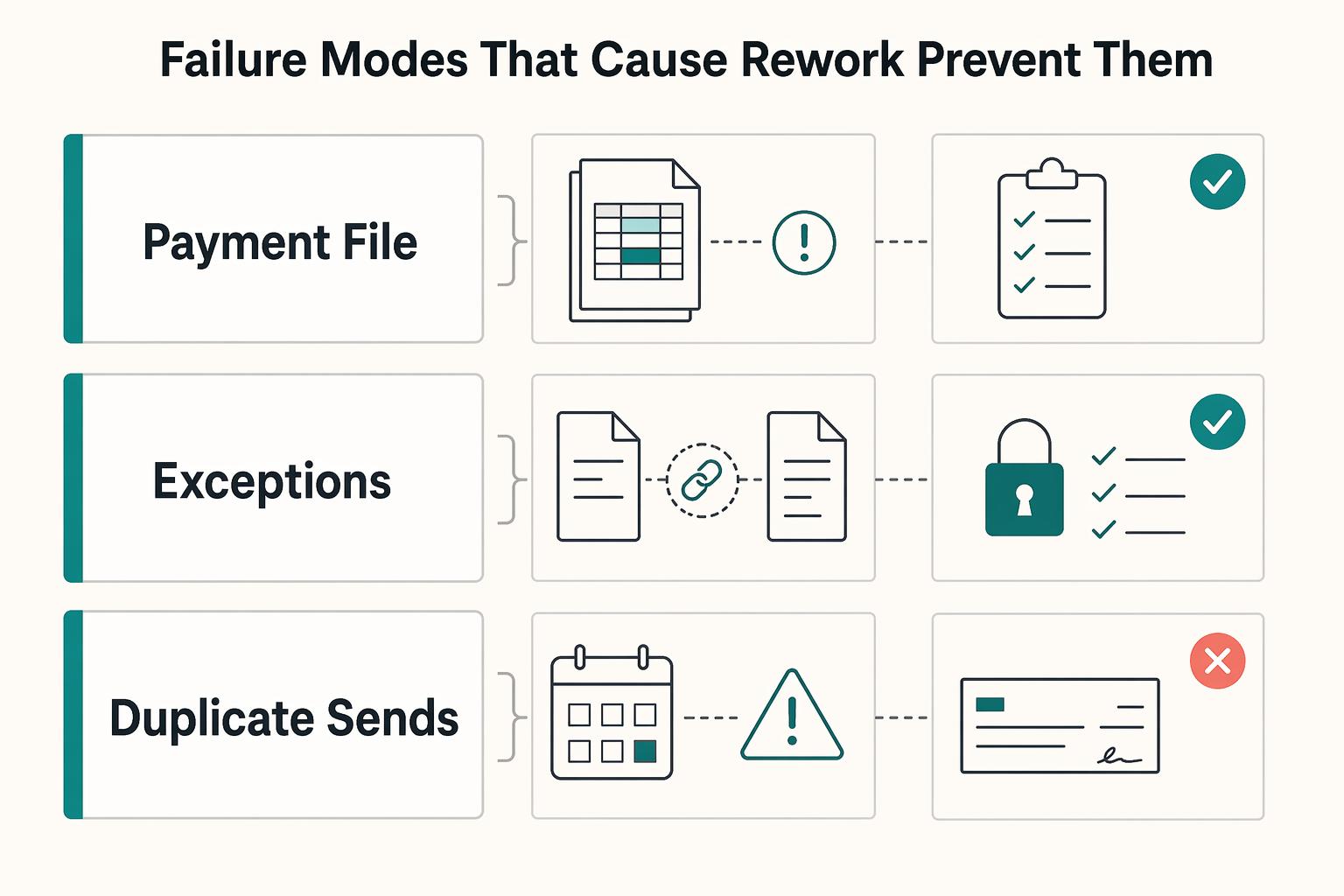
What Is an e-Payable? How Virtual Cards and Digital Payments Replace Paper Checks in B2B
Platform teams usually replace paper checks once payment speed, status visibility, and clean matching become operating requirements, not nice-to-haves. Checks still work in many workflows, but they can become a bottleneck as volume rises and control expectations tighten. If your team is still chasing check status by email, you are already paying the cost of that bottleneck.
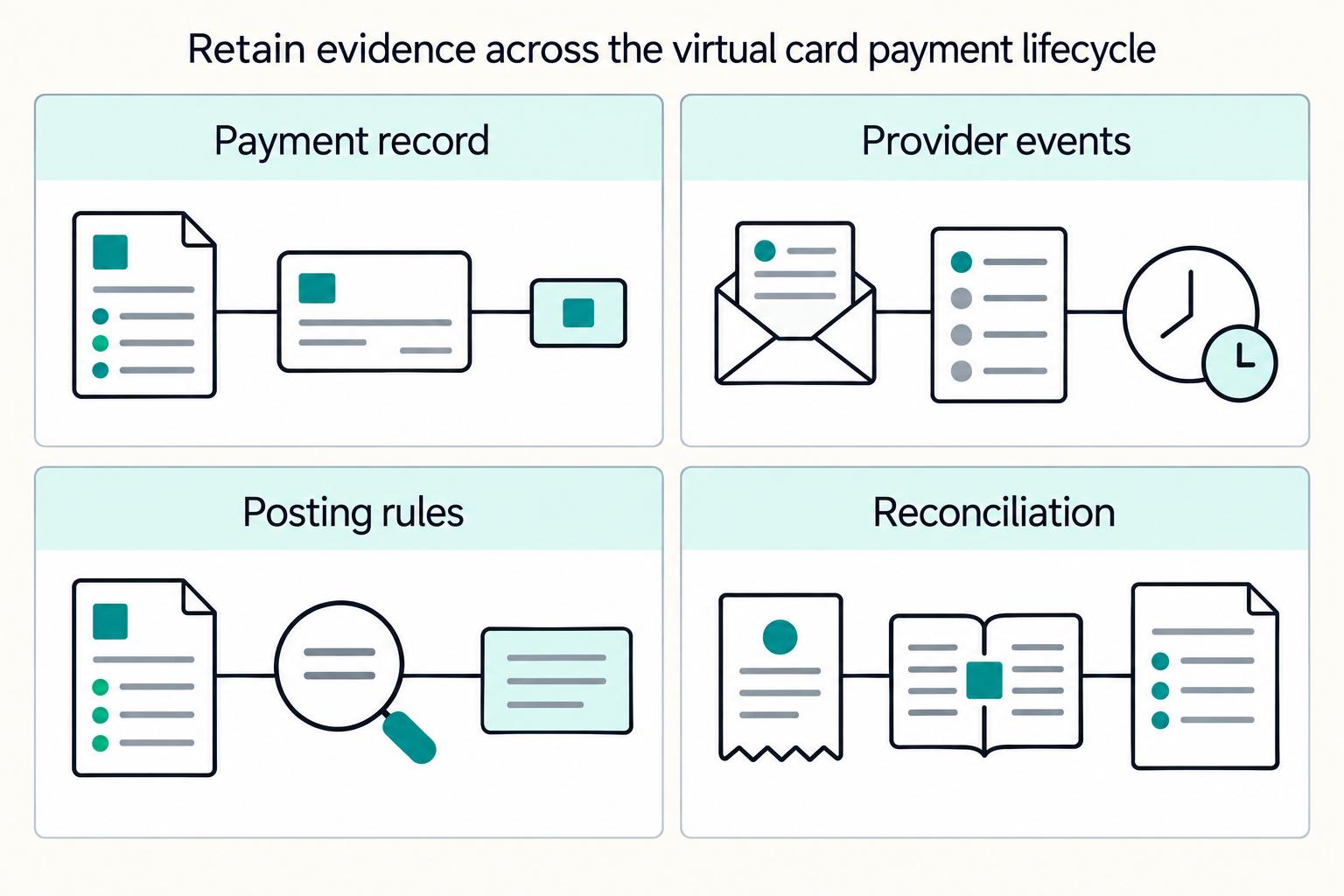
Virtual Credit Cards for Platforms: How to Issue Single-Use Cards for Contractor and Vendor Payments
Single-use virtual cards are often positioned as a fit for controlled vendor payments, but not for every contractor payout. This guide helps product, Payments Ops, and AP teams decide whether virtual cards fit their operating model, or whether cards belong alongside ACH, checks, or other payout rails.
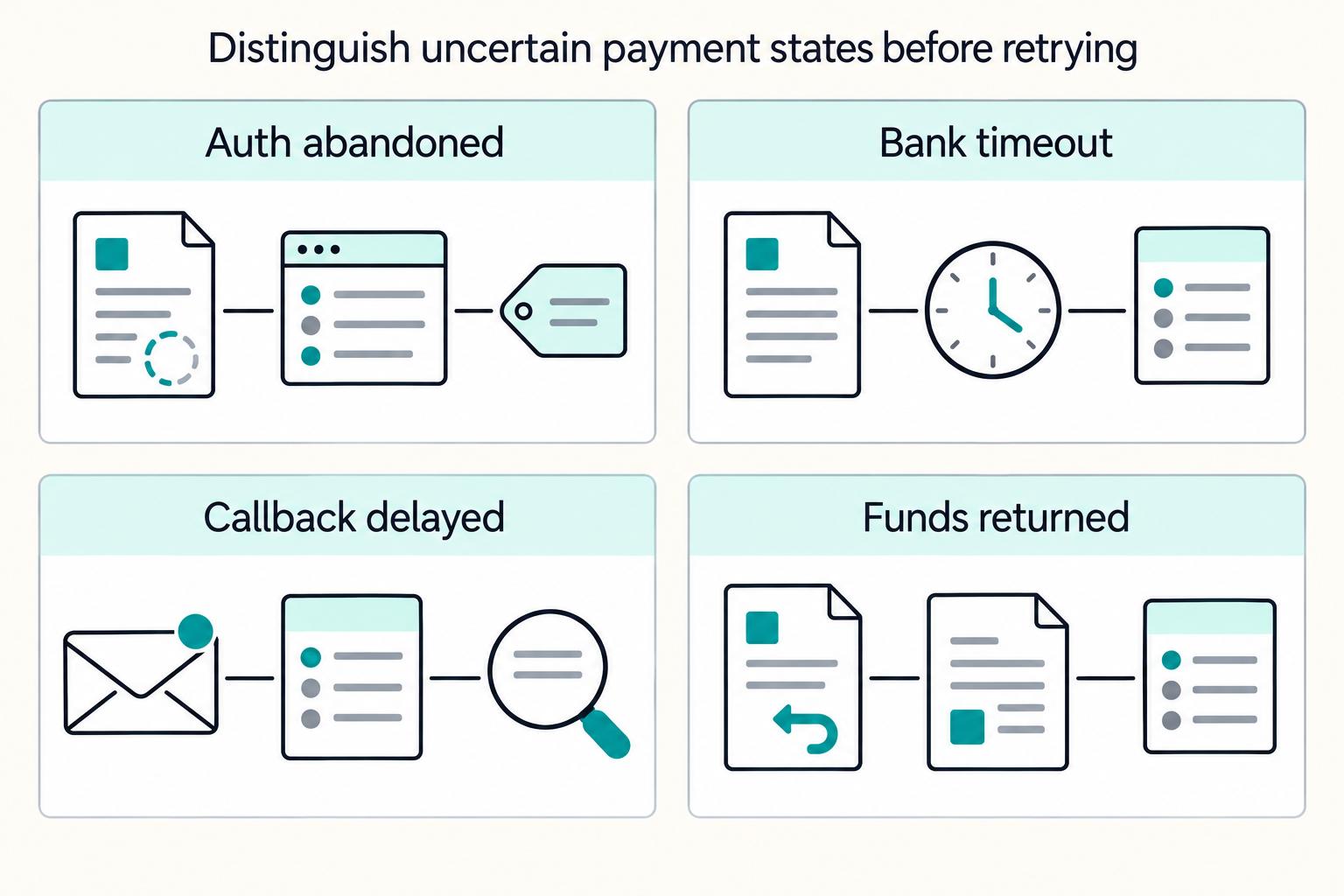
Open Banking for Platforms: How to Use Account-to-Account Payments to Bypass Card Fees
Account-to-account (A2A) payments can reduce card-fee exposure, but only in the right lanes and markets. The real decision is not whether to replace cards. It is which transactions should move off card rails first, and what that change adds in product, support, finance, and control work.