

Quick Answer
For payments within the IRS program’s scope, use the payee-furnished tax name and TIN to run an interactive or bulk check through an eligible payer or authorized agent. Correct intake errors and retain results. A failed pre-filing match is not an IRS B notice, and matching is voluntary; keep required reporting, withholding and filing deadlines separate from your internal match status.
Why platforms should validate contractor tax IDs before filing season#
Collecting a tax form and checking its name/TIN pair are different controls. For eligible reportable payments subject to backup withholding, IRS TIN Matching is a voluntary pre-filing tool that can catch errors while there is time to correct them. An uploaded form alone does not show that a match was run, but absence of a match does not suspend filing obligations.
This guide is for compliance, legal, finance, and risk owners at platforms paying contractors, sellers, or creators. It is not a tools ranking. It is an operating sequence you can defend in audits, control reviews, and filing-season escalations.
Confirm program eligibility before submitting data. The service is restricted to eligible payers and authorized agents for reportable payments subject to backup withholding, with payer access tied to the IRS Payer Account File. It is not a general lookup for any contractor or tax number.
If your platform files at scale, this matters more. As of tax year 2023, filers with 10 or more information returns generally must file electronically, which can make weak intake and validation processes harder to manage.
Keep matching and formal notice handling separate. A failed voluntary pre-filing check is not CP2100 or CP2100A. When an IRS notice arrives, compare its listing with your records: missing or obviously incorrect numbers require the applicable solicitation/withholding handling, while an incorrect name/TIN listing that agrees with your records follows the relevant B-notice procedure.
In practice, keep tax-form collection status separate from match status, and retain evidence for both. At minimum, keep the match result, timestamp, and remediation history for failed or unresolved records. For a deeper walkthrough, see IRS B-Notice Procedures for Platforms: What to Do When Your Contractor TIN Is Wrong.
Keep the scope narrow on purpose. This guide covers pre-filing readiness for information returns. It does not replace separate regimes such as DAC7 or FATCA/Form 8938, which have their own reporting obligations and rules.
The rest of this article focuses on when to match, how to handle failed records, and what evidence to retain so your filing position is defensible.
Related: Gig Worker Tax Compliance at Scale: How Platforms Handle 1099s W-8s and DAC7 for 50000+ Contractors.
What TIN matching actually validates and what it does not#
TIN Matching validates one thing before filing: whether the payee name and Taxpayer Identification Number match IRS records for an information return. It is a pre-filing control, not a full tax compliance verdict on worker status, withholding completeness, or cross-border reporting.
Validate the name/TIN pair, not the whole tax profile. Use TIN Matching to confirm the payee name and TIN pair you intend to file, not to assign a generic "tax verified" status to the account.
Keep match evidence separate from reporting relevance. If evidence is missing for a record within your matching procedure, open a data-quality exception; tax operations must still decide how to meet the applicable filing deadline.
Treat Form W-9 and Form W-8BEN as intake controls. Form collection and TIN Matching are separate controls. A W-9 captures a U.S. payee's TIN for information-return reporting, while a W-8BEN is provided by a foreign beneficial owner to the payer or withholding agent for withholding and reporting purposes.
Apply the documentation workflow appropriate to the payee and payment. A W-9 name/TIN pair may be in scope for matching, while W-8 documentation follows its applicable foreign-status and withholding rules. Do not label every form upload as a successful match or require IRS matching for every foreign payee.
Exclude questions TIN Matching does not answer. Set the boundary explicitly. TIN Matching does not determine worker classification, prove withholding is complete across regimes, or confirm DAC7, FATCA, or Form 8938 compliance.
Define internal completion by the actual workflow: required source documentation, reporting relevance and any in-scope matching result or documented exception. Do not equate an unmatched record with permission to omit a required return.
We covered this in detail in How to Get a Foreign TIN Without W-8BEN Filing Mistakes.
Confirm IRS eligibility and access before you pick tools#
IRS TIN Matching is a restricted voluntary service for eligible payers and authorized agents. Confirm the payer and payment scope before choosing direct access or a vendor workflow.
Verify that your entity qualifies as the payer or an authorized agent#
Start with the filing chain, not the org chart. Identify the legal entity filing the information return and confirm whether your team is acting as that payer or as an authorized agent designated by the payer.
Document a short evidence pack:
- Legal entity name and filing EIN
- Payer vs authorized-agent role
- Internal designation or approval for that role
- If a vendor is involved, whether it only transmits forms or is also acting as authorized agent for TIN Matching
Collecting W-9s is separate from confirming payer or authorized-agent status for TIN Matching.
Confirm IRS e-Services registration and PAF presence#
Confirm e-Services access and payer presence on the PAF. IRS describes PAF eligibility through prior Form 1099 filings within the last two years. A newly reporting payer should check its actual eligibility instead of assuming account registration alone enables matching.
Treat setup as a controlled access process:
- Assign named business and security owners, plus a backup
- Verify the payer entity matches the application path
- Record application status, user accounts, and payer identifier used
Test access early and check current service availability before scheduling a time-sensitive run. Interactive checks support up to 25 name/TIN combinations with immediate results and a limit of 999 requests in 24 hours; bulk checks support up to 100,000 combinations with results within 24 hours.
Use Publication 2108 to define role boundaries#
Use Publication 2108 with the IRS TIN Matching pages to define participation requirements, then map who can submit requests, who can view results, and who can approve internal exceptions.
Use the current IRS participation guidance rather than treating a publication label as an access guarantee. A pre-filing mismatch result is not itself an IRS incorrect-name/TIN notice that starts the B-notice process.
Escalate blocked access and keep filing decisions moving#
If access is blocked, escalate immediately with legal or compliance and assign a named owner for remediation. Include the payer entity and the failed prerequisite, such as missing PAF listing or incomplete e-Services registration.
Record the access failure, owner and next action. Continue payee documentation and required solicitations, and assign tax operations to decide reporting and withholding by the deadline. A missing match result does not authorize dropping a reportable payment or delaying a required return.
Decide your operating cadence across onboarding and pre-filing#
Use two cadences on purpose. Run interactive checks during onboarding or profile changes, and run a bulk reconciliation before Form 1099 production. One control sits close to intake, and the other sits close to filing, which fits IRS positioning of TIN Matching as a pre-filing data-quality control.
Use interactive checks for new payees and tax-profile changes#
Use Interactive TIN Matching when a payee profile is tax-form-complete and you need point validation. IRS supports up to 25 name/TIN combinations per submission with immediate results, and notes a limit of 999 requests per 24 hours.
Record the source tax name/TIN, match result and timestamp separately from form collection and reporting relevance. If the program is unavailable or a result remains unresolved, keep the exception visible for a timely filing decision.
Run bulk reconciliation before Form 1099 production#
Use Bulk TIN Matching for your filing-population sweep. IRS bulk matching supports up to 100,000 name/TIN combinations, with results returned within 24 hours, so it fits pre-filing cleanup.
If legacy data is messy, start this cycle earlier. Track owner, last match date, match status, filing relevance, and remediation state so unmatched records are visible and workable before production deadlines.
Set decision rules before payout and filing cutoffs#
Set the rules before filing week so outcomes are not improvised under time pressure:
- For an in-scope failed check, correct source errors and retain the result or open exception.
- Before filing, give unresolved records a tax-operations owner and deadline decision.
- Before applicable payments, review documentation and withholding requirements; a matching result alone is not a universal payment-release gate.
This matters because payout risk and filing risk can move together. For some Form 1099-related payments, the payee must furnish a TIN in writing, and incorrect or missing TIN situations can trigger backup withholding at 24 percent.
This pairs well with our guide on State 1099 Filing Requirements for Multi-State Platforms.
Prepare the data and evidence pack before the first run#
Before submission, identify the eligible matching population, its source data and result retrieval path. Put incomplete records in an exception queue with a filing deadline and owner; internal match status must not silently remove required returns.
Assemble the minimum intake fields#
Capture the minimum fields needed to match and route: legal name, Taxpayer Identification Number (TIN), form type, and entity type. Add owner team as an internal control field for follow-up and remediation.
For U.S. payees on Form W-9, store the exact name and TIN the payee furnished. Form W-9 ties the TIN in Part I to the name on line 1, and that pair matters for backup withholding risk. Use the federal tax classification on line 3a to support entity-type handling and reduce intake errors.
W-8BEN documents applicable foreign individuals; foreign entities generally use W-8BEN-E where appropriate. Those forms are not a reason to submit a foreign tax number to IRS TIN Matching. Keep their withholding and reporting workflows separate.
Define the evidence artifacts you will retain#
Set your evidence standard before you run checks so each result can be reconstructed. A practical internal set can include:
- request payload hash or equivalent request fingerprint
- match response
- timestamp
- operator or system actor
- remediation action, if corrected or failed
Use whatever field names fit your stack, but keep traceability intact and avoid unnecessary spread of sensitive TIN data.
Register where IRS and internal evidence can be retrieved#
Maintain one retrieval register across IRS outputs and internal logs. IRS e-Services identifies the Secure Object Repository (SOR) as the mailbox for TIN matching results, and SOR messages are purged after 60 days.
Track, at minimum, SOR location, internal log location, owner team, and last retrieval date for each submission or batch. This helps avoid cases where internal queues still show a status label, but the source evidence is gone.
Add a hard completeness checkpoint before report-ready status#
As an internal control, require complete source data and a result or documented exception for in-scope matching. If a deadline approaches with an open issue, assign a filing and withholding decision rather than holding the required return indefinitely.
Use a simple checkpoint:
- Can the record be matched or correctly routed from form type and taxpayer details?
- Can a reviewer retrieve proof without manual inbox or ticket hunting?
If either answer is no, keep the record in remediation.
Step 1 run real-time checks during onboarding#
Run TIN Matching early in onboarding, such as when a profile reaches tax-form-complete status, so mismatches are caught before records enter payout or filing queues. This is an internal control choice, not an IRS timing mandate, and IRS guidance positions TIN Matching as a pre-filing service.
Trigger at tax-form-complete#
For onboarding reviews in IRS e-Services, Interactive TIN Matching gives immediate results for up to 25 name/TIN combinations, with a limit of 999 requests per 24 hours. Use this lane for new or changed records, and reserve bulk cycles for larger cleanup.
For records within your matching procedure, retain the submitted tax name/TIN, form version, result and timestamp. Track unresolved status separately from whether a payment must be reported.
Make retries idempotent#
Give your internal validation job a request identifier and tax-form version so duplicate queue work is recognizable. This is your workflow control; it does not establish that the IRS web tool exposes an idempotency API.
Collapse or reject duplicates with the same request identifier and tax-form version. If the same payload returns conflicting statuses, route it to manual exception review instead of writing both statuses to the profile.
Send failures straight to remediation#
If a match fails, move the profile straight to remediation with clear ownership and next actions:
- request corrected or reconfirmed legal name/TIN data from the payee
- resubmit after the payee response
- enforce a cutoff date before report-ready status
Compare the submitted values with the payee-furnished source and correct your own transcription errors. If source data needs to change, obtain the payee’s correction rather than guessing from secondary records. Retain the form version and resubmission result. A pre-filing failure does not trigger a B notice; formal notice handling requires the appropriate IRS notice and record comparison.
Step 2 run bulk reconciliation before filing season#
Bulk TIN Matching is the pre-filing control you use to validate payee name/TIN combinations before information returns are built, including Form 1099 filings.
Scope the sweep to filing relevance#
Start from upcoming reporting candidates, then select only payments and payees within the IRS matching program’s scope. Keep W-8 documentation and other reporting workflows separate rather than submitting the full user base.
Use Bulk TIN Matching in IRS e-Services for pre-season population checks. It supports up to 100,000 name/TIN combinations per submission, with results expected within 24 hours. Keep Interactive TIN Matching for spot fixes. With 25 combinations per entry batch and a cap of 999 requests per 24 hours, it is not a substitute for large reconciliation.
Set a clear internal control standard for in-scope payees. Each record should have either a current match result or an open remediation record.
Build one control table teams can operate from#
Use one shared queue view across tax, compliance, and operations. Keep it limited to the fields needed for filing decisions: record owner, last match date, current status, remediation state, filing relevance, and escalation path.
Before report-ready or file-build status, make sure each in-scope payee maps to either a reconciled bulk result or a documented exception path.
Submit in bulk and reconcile against SOR#
Run bulk submissions in IRS e-Services, then retrieve results through the Secure Object Repository (SOR). SOR access requires an active registered e-Services user account.
For each run, reconcile three counts: submitted records, SOR results retrieved, and records mapped back to your system of record. If those counts do not align, keep records open until they do.
Retrieve and retain needed SOR evidence promptly: IRS says messages are purged after 60 days. Check current service availability when scheduling deadline-sensitive retrieval.
Triage mismatch spikes before filing week#
If mismatches spike, treat it as queue control, not as a one-off data problem. Prioritize records by filing relevance first, then by remediation age, so payees likely to be reported this cycle move first.
Escalate unresolved pre-filing records to tax operations for required reporting, solicitations and withholding decisions. Do not initiate a B notice merely because a matching check failed; that procedure follows the applicable IRS notice event and record comparison.
Choose IRS only or add a commercial layer#
Use TIN Matching as the authoritative pre-filing control, and add a commercial tool only if it closes a specific workflow gap you can test.
A commercial interface does not change program scope or payer eligibility. Establish the eligible payer or authorized-agent relationship and understand how the vendor performs the check and returns evidence.
Anchor on the IRS baseline first#
Decide first whether your team can run IRS e-Services directly with clear ownership and evidence retention. If yes, you already have the core validation path.
- Interactive TIN Matching: up to
25name/TIN combinations with immediate results - Bulk TIN Matching: up to
100,000combinations with results within24 hours - Secure Object Repository (SOR): retrieval point for matching outputs
If your internal process can submit, retrieve from SOR, map results to your system of record, and retain reviewable evidence, an IRS-direct model may be sufficient.
Compare vendors as workflow layers, not replacements#
Evaluate commercial options on controls you can verify. Focus on onboarding triggers, bulk orchestration, audit export quality, and exception queue ownership.
| Evaluation area | What to ask | Evidence to inspect |
|---|---|---|
| Validation authority | How is the eligible IRS payer/agent relationship established? | Current authorization and documented matching method |
| Batch workflow | How are requests, results and failed rows reconciled? | Representative request/result export and count reconciliation |
| Onboarding automation | How are form versions and duplicate jobs handled? | Versioned source record and job/result linkage |
| Evidence retrieval | Can operators export results and remediation history? | Sample audit export and retention/access settings |
| Accuracy claims | What does a match prove and what remains outside scope? | Documented result-code interpretation, not an accuracy slogan |
Mark unknowns as "not verified"#
If the evidence does not prove validation method, integration depth, or the basis for an accuracy claim, label those points as not verified in your selection memo and control documentation. Terms like "real-time," "API," or "audit trail" do not by themselves prove equivalence to the IRS control.
Apply the bandwidth decision rule#
If engineering bandwidth is limited, a commercial layer may reduce manual onboarding, bulk handling, and evidence collection work. If your controls are already mature internally, IRS-direct can be sufficient. Add a vendor layer only when it closes a named, testable operating gap rather than shifting process ownership by habit.
Handle mismatches and escalate without guessing#
Treat mismatch handling as a filing-risk workflow. Work the records that can affect near-term filing first, and if IRS mismatch notices arrive, move unresolved cases into the formal IRS notice path instead of relying on case-by-case judgment.
Rank the queue by filing impact#
Prioritize records by their actual reporting deadline. Form 1099-NEC generally has a January 31 deadline, with the applicable weekend or holiday adjustment; use the tax-year instructions for your filing calendar.
Use this triage order:
- Payees expected on the upcoming
Form 1099-NECfile - Other active reportable payees with current-year payment activity
- Lower-risk or inactive records with no immediate filing consequence
Separate intake-data fixes from identity inconsistencies#
Do not escalate every failed match the same way. First determine whether the issue is intake-data quality in your records or a persistent name/TIN inconsistency.
Route intake-data issues through correction and resubmission, and retain the supporting form and rematch evidence together. If the payee reaffirms the data and the mismatch still persists, treat it as a name/TIN inconsistency and escalate to legal or compliance review.
Trigger the formal IRS notice path on notice events#
When CP2100 or CP2100A arrives, compare its listing with your records. Distinguish missing or obviously incorrect TINs, a matching name/TIN inconsistency, and an error in your filed data; the required action differs.
For an incorrect name/TIN listing that agrees with your records, Publication 1281 generally requires the appropriate B notice within 15 business days of the notice date or receipt date, whichever is later. A first notice includes Form W-9; a second notice within three calendar years requires the second-notice procedure instead. Keep receipt, comparison and mailing evidence together.
Apply withholding and repeat-mismatch escalation consistently#
For applicable reportable payments with a missing or obviously incorrect TIN, apply required backup withholding at 24 percent. For an IRS-notified mismatch, follow Publication 1281’s notice and withholding timing, rather than treating every failed pre-filing match as the same event.
After a second B notice, name/TIN validation must come from the SSA or the IRS. This is where legal or compliance oversight matters most. The risk is not just data quality, but also missed deadlines, incomplete evidence, and unsupported withholding actions.
Avoid common failure modes and recover fast#
Treat this as a control process, not a last-minute rescue. A collected form is not the same as a validated name/TIN match.
Separate form collection from matching#
Failure mode: a workflow labels every uploaded form as matched. Recovery: store form collection, in-scope match status and reporting relevance separately, with a documented exception path.
Use the voluntary match result as evidence when your procedure calls for it. Unavailable or unresolved results need remediation and a deadline decision, not automatic removal from the reporting population.
Assign access ownership before it breaks#
Failure mode: no one clearly owns e-Services access or PAF participation checks. Recovery: define internal owners for PAF status, e-Services credentials, and result retrieval, with backup coverage.
Participation is explicit: payers must be on the PAF, and prospective users must complete e-Services registration. If you use an authorized agent, keep that relationship explicit in your access map and confirm access before peak filing periods.
Pull remediation earlier than feels necessary#
Failure mode: exception volume spikes near deadline because matching started too late. Recovery: run earlier bulk sweeps, then track backlog reduction on a regular cadence.
Interactive checks support up to 25 name/TIN combinations with immediate results, and bulk checks support up to 100,000 with results within 24 hours. Use that capacity early so intake issues surface while you still have time to correct them. If unresolved cases continue to grow as filing deadlines approach, treat that as active filing risk.
Minimize sensitive data in exception handling#
Failure mode: teams over-collect personal data during mismatch triage. Recovery: keep only what is needed for matching and evidence, and mask wherever full display is unnecessary.
Limit exception handling to the fields required for matching and review, such as legal name, TIN, match result, timestamp, and remediation notes. IRS permits truncation on payee statements, but not on Copy A filed with the IRS. More raw PII in tickets or spreadsheets can increase exposure risk and may not improve match quality.
Copy paste filing-season control checklist#
Use this checklist to improve data quality and surface exceptions before the deadline. An unresolved match or access problem must reach tax operations for the applicable reporting and withholding decision; it is not a blanket reason to omit a return.
Confirm IRS access before you queue work#
Confirm your IRS access model first: payer or authorized agent, active IRS e-Services registration, working login credentials, and payer listing on the PAF. A practical check is that one named owner can log in, open TIN Matching, and confirm the payer is listed before exception volume rises.
Verify intake data before the first match#
Capture the payee-furnished tax name and TIN for the applicable documentation workflow. For W-9-based checks, follow the line 1 name and TIN rules, including disregarded-owner treatment where applicable. Do not substitute a display name or DBA that differs from the tax name.
Run both matching cadences and log evidence#
Run matching on two practical cadences: onboarding matching when a profile becomes tax-form complete, and a pre-filing bulk reconciliation before information returns. IRS supports up to 25 interactive checks with immediate results, and up to 100,000 in bulk with results within 24 hours. Log the match date, result, source record, and who ran or triggered it.
Escalate unresolved cases with owners and dates#
Escalate unresolved mismatches immediately with a named owner, next action, and deadline. Do not treat a failed pre-filing match as an IRS B-Notice event by itself. Route these cases to the team that handles CP2100 or CP2100A fallout and payer-issued B-Notices if notices arrive. For first-notice handling, that path includes sending a First B Notice and Form W-9.
Gate Form 1099 production on evidence completeness#
Before filing, reconcile reportable payments, matching results and unresolved exceptions. Complete remediation where possible, then follow the applicable filing instructions for records that remain incomplete. Preserve the decision and any required solicitations or withholding; do not miss a deadline or omit a reportable payment solely because matching is unresolved.
Use this checklist as your baseline, then map each control to your implementation details in the Gruv docs.
Conclusion#
For eligible payees within your matching procedure, retain the current result or a documented exception. Separately show that the reporting population and required withholding decisions were reconciled by the deadline.
Define completion by the applicable documentation and reporting workflow, with a match result or documented exception where your procedure uses matching. Missing matching evidence does not itself remove a reportable payment from the filing population.
Make the verification concrete. Sample records and confirm that you can retrieve the underlying result from IRS e-Services, including the Secure Object Repository. Keep the submitted name/TIN values and match timing in your records so the evidence chain is easy to reconstruct.
Implement the two-cadence model first. If you make one upgrade this quarter, implement both IRS paths: interactive checks for immediate validation and a bulk reconciliation before information-return production. This is an operating choice, but it is the most direct way to reduce filing-season surprises.
IRS supports this split in practice. Interactive TIN Matching verifies up to 25 name/TIN combinations with immediate results, with a limit of 999 requests during a 24 hour period. Bulk TIN Matching handles up to 100,000 combinations, with results within 24 hours.
Before generating returns, reconcile the reporting population to source records, match results and open exceptions. Assign unresolved cases a tax-operations owner and filing deadline so required reporting proceeds under the applicable instructions.
Escalate exceptions before they become notices. A failed pre-filing match is a remediation signal, not a filing-time surprise to absorb. First compare submitted values to the source record, correct intake errors, and rerun where appropriate. Keep unresolved in-scope records visible with a defined escalation path.
Keep formal notice handling separate. After CP2100 or CP2100A, compare the listing with your records and follow the appropriate Publication 1281 procedure, including notice timing and required withholding. A failed pre-filing match alone does not start that procedure.
Keep the control proportionate to your risk and filing volume: use IRS matching as the authoritative pre-filing check, keep evidence tight, and run disciplined exception handling. If you want to validate rollout fit, controls, and market coverage before filing season, talk with Gruv.
Frequently Asked Questions
What does TIN Matching validate for platforms?
It checks whether a submitted name/TIN pair agrees with IRS records within the program’s eligible payment scope. Matching is voluntary and does not establish worker classification, complete withholding compliance or the validity of a foreign tax number.
Who is allowed to use Internal Revenue Service (IRS) TIN Matching and what is the role of an authorized agent?
Eligible payers and their authorized agents use the service for reportable payments subject to backup withholding. Confirm payer access through the PAF and current IRS application requirements before submitting data.
Should we validate only before filing season or also at onboarding?
Matching is voluntary. As an internal procedure, checks at onboarding or profile changes and a pre-filing bulk sweep can catch errors early. Keep unresolved results and access problems on a deadline decision path instead of delaying required reporting.
What should we do first when a contractor record fails a match?
Compare the submission with the payee-furnished tax name/TIN, fix transcription errors and obtain corrected source data where needed. Retain the rematch result or open exception. A failed pre-filing check is not a B notice; if CP2100 or CP2100A later arrives, compare its listing and follow the applicable notice, solicitation and withholding procedure.
Is an IRS-only approach enough, or should we use tools like Tax1099 or Compliancely too?
Use IRS TIN Matching as the core validation control because it is an IRS pre-filing service and IRS provides a free e-Services tool. Commercial tools can still help with orchestration, exception handling, and audit workflow. Do not treat vendor claims as IRS endorsement.
Does collecting Form W-9 or Form W-8 remove the need for matching?
Form collection and matching are separate. Use voluntary matching for eligible W-9-based name/TIN checks under your procedure. W-8 documentation supports the applicable foreign-status, withholding and reporting workflow; it does not create a blanket requirement to run every foreign payee through IRS matching.
How does this process connect to related obligations like DAC7, FATCA, or Form 8938?
Keep these obligations separate in your control design. TIN Matching supports U.S. information-return readiness, but it does not satisfy DAC7, FATCA, or Form 8938 obligations. Those regimes have their own reporting rules and workflows.
Researched and edited by the Gruv editorial team. Gruv builds cross-border billing, payouts, and finance-operations software for global businesses.
Sources
Educational content only. Not legal, tax, or financial advice.
Related Posts

The Freelance Payment Penalty: A Modeled Audit of Platform Fees, FX Spreads, and Payout Delays
The money rarely disappears through a single, easy-to-spot fee. The real loss is stacked. A marketplace takes its commission, a processor adds a charge for international cards, a bank or payment company converts the currency at a spread, a platform holds the funds before release, and a wire sheds a little to intermediaries on the way in. Each layer looks defensible on its own, but the worker feels the combined result as a smaller deposit and a later payday.
How to Respond to a Subpoena for Business Records
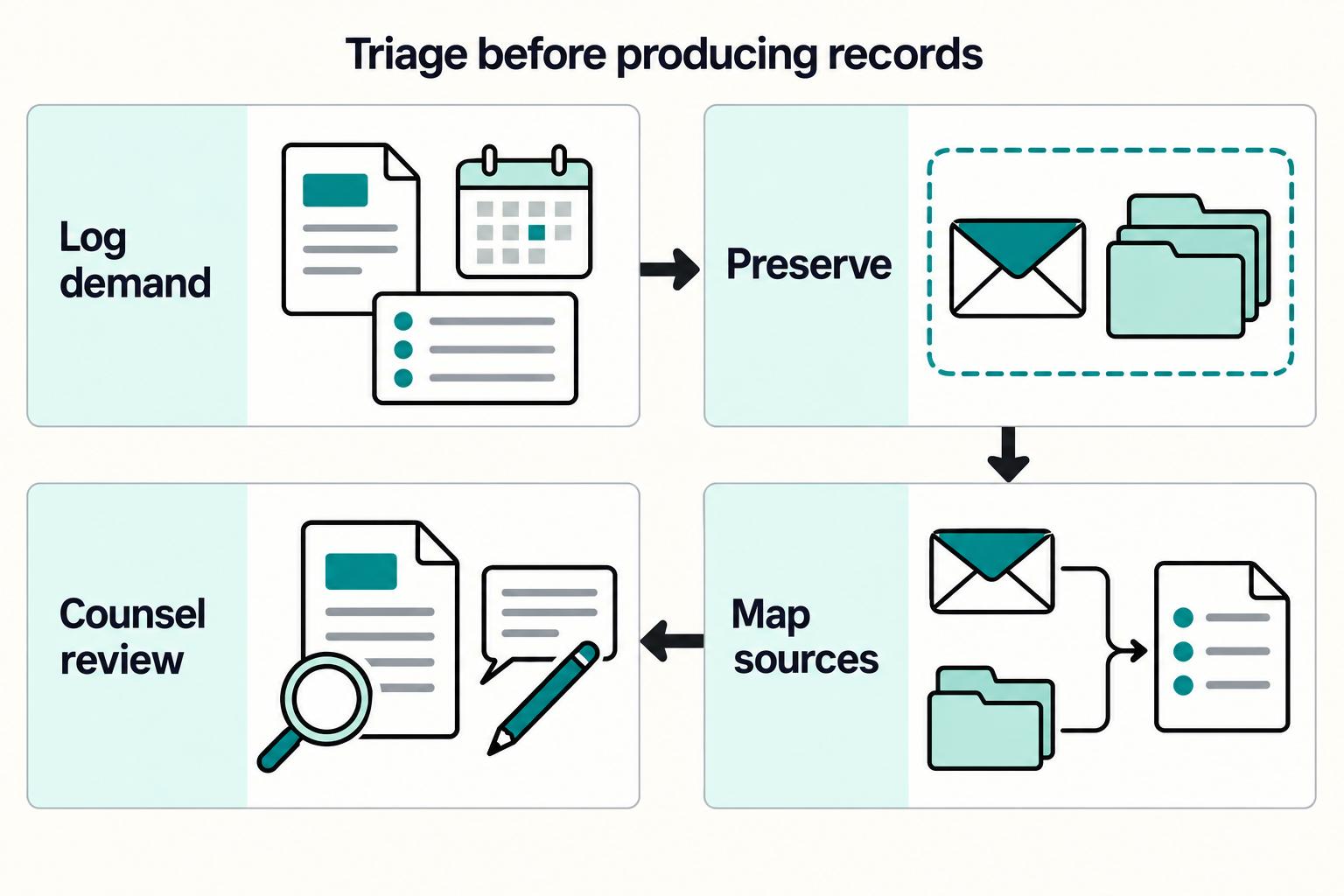
Move fast, but do not produce records on instinct. If you need to **respond to a subpoena for business records**, your immediate job is to control deadlines, preserve records, and make any later production defensible.
A US Expat's Guide to Investing in UCITS ETFs to Avoid PFIC Issues
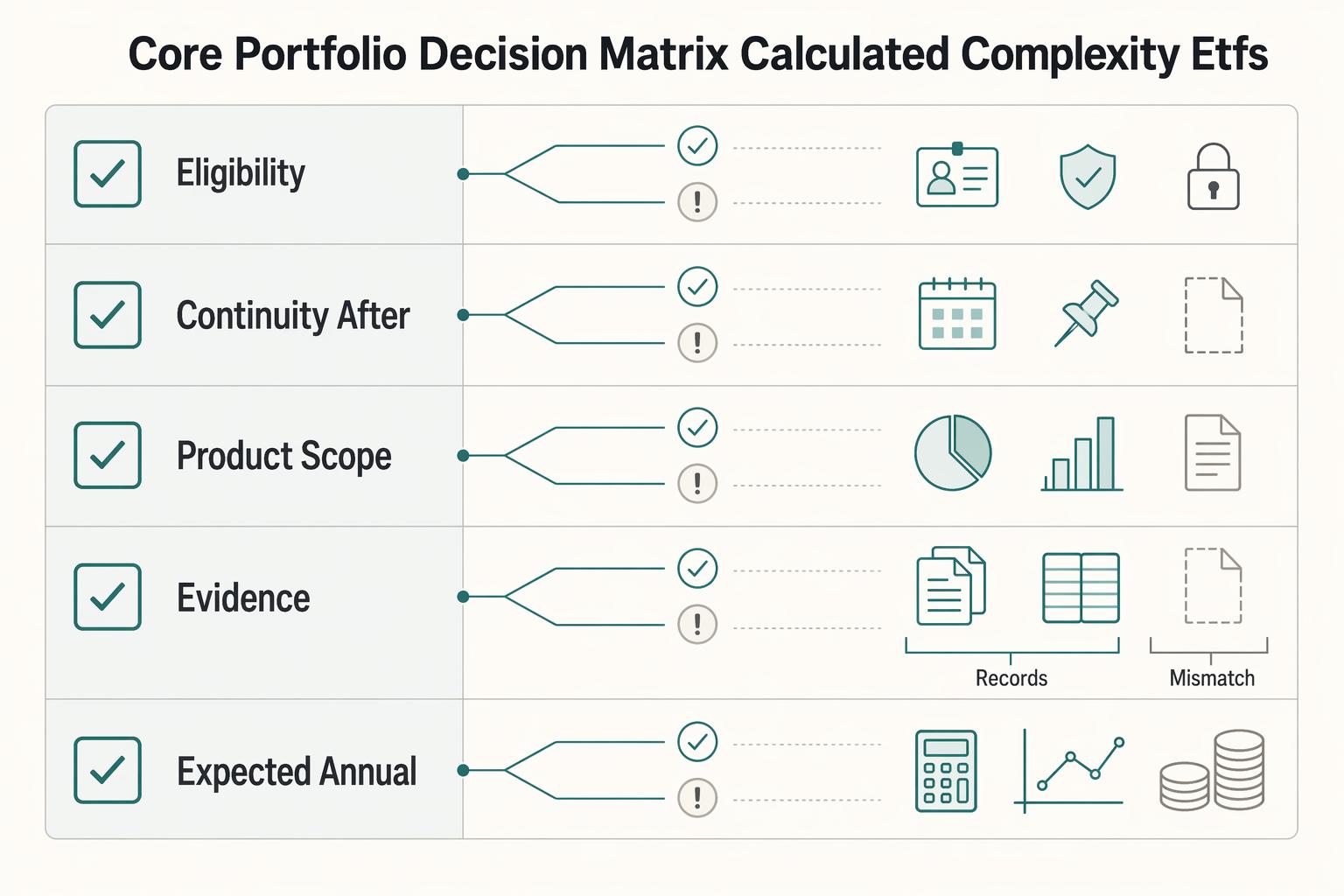
The real problem is a two-system conflict. U.S. tax treatment can punish the wrong fund choice, while local product-access constraints can block the funds you want to buy in the first place. For **us expat ucits etfs**, the practical question is not "Which product is best?" It is "What can I access, report, and keep doing every year without guessing?" Use this four-part filter before any trade: