
Quick Answer
Start by automating only the requisition decision stage before PO creation, then prove each approved request reaches ERP and AP with a complete audit record. Use one intake channel, rule-based routing, and explicit exception ownership so speed does not weaken control. Keep invoice checks such as two-way matching and three-way matching in their later AP stage. Expand to more entities only after duplicate submissions, urgent overrides, and rejected requests are handled cleanly in the first lane.
Why pre-PO approval automation matters for platform operators#
Automate Pre-PO Approval before you try to optimize the rest of purchasing. The goal is simple: move requests through approval faster while enforcing spend controls at the moment of purchase and reducing cleanup risk for Accounts Payable (AP) later.
Step 1 Put control before commitment#
If you are evaluating platforms that automate pre-PO approval, judge them on what happens before a Purchase Order (PO) exists. That matters because a PO is not just an internal note. It is a formal purchasing document, and it can become a binding commitment with suppliers. Weak approvals at this stage can create downstream exceptions that finance has to untangle later.
That is why the promise of automation should stay narrow and concrete. You want digital approvals that centralize requests, route them to the right people, and preserve a clear record of what happened. You do not want a faster way to approve the wrong thing. A useful checkpoint is whether the approval record captures who requested the spend, who approved it, and when key actions happened. If that record is incomplete, your control story is already weak.
Step 2 Match the process to platform spend reality#
This matters most for teams dealing with high-volume or variable operating spend. In those environments, stakeholders need visibility and speed, while finance needs policy followed without relying on ad hoc email or chat threads.
When approvals are manual, those goals can pull in different directions. Teams may move quickly first and add checks later, which shifts work downstream. The tradeoff is whether decision rules are applied up front or handled later through exceptions.
Step 3 Define the outcome AP and finance actually need#
The right outcome is not more approvals. It is faster approvals, a cleaner Audit Trail, and fewer surprises when an approved request turns into PO and invoice activity. Automated purchasing tools are valuable because they can create a complete record of purchasing actions without adding headcount. For operators, that record is what keeps approvals usable after the fact, not just during the request itself.
A strong verification point is this: can you trace one approved request from submission to approver decision to PO creation, then hand it cleanly to AP? If not, the process is still fragile. One risk to watch is approving spend in side channels and issuing the PO later from a different source of truth, which can increase reconciliation effort.
For most platform teams, the practical recommendation is straightforward: automate the pre-PO decision first, then expand. A phased approach lets you pilot one spending lane, confirm that the approval record is complete, and verify that downstream finance teams are getting cleaner inputs rather than more noise. If you want a deeper dive, read Internal Controls for Accounts Payable on Platforms: How to Prevent Fraud and Ensure Accurate Disbursements.
Place pre-PO approval in the money lifecycle before you buy tools#
Set the boundary before you evaluate software: pre-PO approval should decide spend before it becomes an order, while downstream systems handle receiving and payment. If you automate the wrong stage, you can speed up approvals but still create delayed approvals and payment errors later in ERP and Accounts Payable (AP).
Step 1 Map the pre-PO boundary#
Use your Purchase Requisition System for one job: request, review, and approval before Purchase Order (PO) creation. Keep that distinct from broader Procure-to-Pay (P2P) software, which manages purchasing, receiving, and payment together.
A practical handoff map is requester -> approver -> ERP -> AP. Define who owns each handoff, and explicitly assign exception ownership for rejects, coding errors, and cross-entity routing issues.
Step 2 Separate Req-to-PO from invoice controls#
Keep Requisition-to-Purchase Order (Req-to-PO) decisions separate from invoice controls like Two-Way Matching and Three-Way Matching. Matching controls are important, but they happen later in AP and do not correct weak approval decisions made upstream.
Step 3 Fix policy ownership before buying software#
If approval authority is unclear across entities, budget owners, or spend lanes, resolve that first. Software can automate routing and synchronize with existing systems without requiring a full replacement, but it cannot resolve unclear ownership rules for you.
Use one live exception test before procurement: route a request under the wrong entity and confirm who corrects it before ERP sync and who handles visibility in AP.
You might also find this useful: Merchant of Record for Platforms and the Ownership Decisions That Matter.
Prepare the minimum inputs before implementation starts#
Start implementation only after you define a small input pack for approvals, evidence, and tax-related dependencies. Without that, you risk automating unclear ownership and incomplete decisions.
Step 1 Define the policy inputs you will actually route on#
Set four required inputs in your Approval Workflow: spend category, entity ownership, approver matrix, and escalation path. Keep v1 narrow so requesters can reliably pick the right category and entity.
| Input | Question answered | Note |
|---|---|---|
| Spend category | What type of spend it is | Keep v1 narrow so requesters can reliably pick the right category |
| Entity ownership | Which entity is buying | Keep v1 narrow so requesters can reliably pick the right entity |
| Approver matrix | Who approves first | Part of the minimum decision table |
| Escalation path | Who takes over if the approver is unavailable or the request is misrouted | Test one messy case before build starts |
Your decision table should answer those four questions, then be tested with one messy case before build starts, such as a request submitted under the wrong legal entity. Confirm who fixes it and how.
Step 2 Gather the records that prove how approvals work today#
Collect your current request forms, approval logs, and any evidence you use today to reconstruct who approved what and when. Use that pack to identify Audit Trail gaps before rollout.
Focus on missing timestamps, off-platform approvals, and requests that changed category or entity without a visible record. A practical pack is the current intake form, samples of approved and rejected requests, and one exported approval history.
Step 3 Confirm which compliance checks can block or pause approval#
For KYC, KYB, AML, and VAT Validation, map dependencies instead of encoding assumptions. Confirm whether each check applies to your lanes, who owns it, and whether approval should stop, continue with a flag, or route to an exception queue when status is incomplete.
Use one verification line per lane: control owner, status signal shown to the approver, and retained evidence when a request is held.
Separate document collection from tax eligibility decisions#
If a lane can become payout-related, define where W-8, W-9, Form 1099, FBAR, and FEIE handling sit in the process. Keep tax judgment with the right owner, not frontline approvers.
For FEIE, keep the rule narrow: it applies only to a qualifying individual with foreign earned income. The physical presence test applies to U.S. citizens and U.S. residents and is based on time abroad, including 330 full days in a 12-month period, not intent. FEIE also does not remove the requirement to file a U.S. return reporting that income.
If you expose an FEIE-related exception path, assign an owner and evidence standard before go-live, including whether tax home in a foreign country is reviewed outside approval. For 2026, the maximum FEIE amount is $132,900 per person, which is a tax-calculation input, not an approval shortcut.
Once these inputs are set, you can compare tool options based on fit rather than unresolved policy gaps.
Compare suite and point-solution paths with explicit tradeoffs#
If your invoice and payout controls already work, start by fixing pre-PO approvals instead of replacing your full stack. A focused requisition tool is usually the lower-risk path when the core issue is request intake, routing, and auditability before a Purchase Order (PO) exists.
Step 1 Match the tool to the boundary you actually need#
A Source-to-Pay suite targets end-to-end Procure-to-Pay (P2P) coverage, from procurement through payment. A focused Requisition Management System stays narrower: request capture, approval routing, and status tracking before invoice and payment workflows take over.
| Decision area | Source-to-Pay suite | Focused requisition tool |
|---|---|---|
| Integration depth | Broader procurement-to-payment coverage with more downstream touchpoints | Narrower scope, typically easier to place in front of an existing ERP and AP stack |
| Rollout risk | Higher when approvals, PO creation, invoice handling, and ownership all change together | Lower when invoice and payment controls stay where they already work |
| Team ownership | Better fit when procurement, finance, and AP can align on one operating model | Better fit when teams need to repair pre-PO approvals without redesigning AP |
Verification point: name your current system of record for requisitions, POs, invoices, and payments, plus the handoff owner for each step.
Step 2 Test ERP sync and AP handoff before you optimize for future expansion#
Do not choose based on an approval demo alone. Require proof of one approved requisition entering your ERP, one rejection or hold returning a visible status to the requester, and one downstream AP handoff with required fields.
| Scenario | Proof requested | What it shows |
|---|---|---|
| Approved requisition | One approved requisition entering your ERP | Approved records sync into ERP |
| Rejection or hold | One rejection or hold returning a visible status to the requester | The requester can see the status |
| AP handoff | One downstream AP handoff with required fields | AP receives the required fields |
| Failed sync | One failed-sync example showing how correction works | The correction path is visible |
Fragmented intake across chat, email, and forms creates visibility gaps, duplicate orders, and missed deadlines. Centralizing requests improves status visibility even if you are not expanding to full P2P yet.
For expansion, ask a narrower question than "Can you do P2P?" Ask what must change when you add PO issuance, invoice matching, or payment approval, and whether that forces AP-layer replacement, ERP remapping, or team retraining.
Verification point: ask for an evidence pack, not just a sales deck: sample ERP field map, one approval history export, and one failed-sync example showing how correction works.
Step 3 Treat rankings and vendor claims as directional only#
Use market rankings, customer logos, and comparison reports as directional input, not implementation proof. Some comparison content explicitly combines vendor documentation, independent reviews, and case studies, which is useful context but not validation of your entity mapping, ERP sync, or AP handoff in your environment.
Decision rule: if pre-PO approval is the broken step, fix that step first. Expand only after requisition status is consistently visible and downstream teams are no longer covering approval gaps manually.
Design approval logic that scales across entities and teams#
Keep the Approval Workflow shallow and rule-driven. If managers cannot review a lane quickly, remove approval layers and tighten routing rules. Extra approvers usually hide weak policy design.
Step 1 Build approval lanes around entity, spend type, and risk#
Start with lanes, not one giant chain. In an online requisition system, requests are submitted in-system and routed through a defined approval hierarchy, but that hierarchy only works if it matches how each entity buys.
Define lanes using legal entity, spend category, and risk level. Use adaptive approval logic based on criteria like request value, category, supplier type, and compliance risk so low-risk spend can move faster, strategic requests can escalate, and redundant steps can be skipped.
Use thresholds as examples, not defaults. For example, office supplies under $500 move through a lighter path, while capital equipment over $50,000 may require broader review.
Add a fallback approver for each lane and an Approval SLA so requests keep moving and can be converted quickly to a Purchase Order once approved.
Step 2 Design exceptions before you go live#
Exception handling should be designed before launch, not after. Define emergency approvals, policy overrides, and post-approval review with clear reason codes, owners, and follow-up deadlines.
Emergency paths should be narrow. They can move time-sensitive spend, but they should stay visibly tagged and require review after the fact.
Policy overrides should be rare and attributable. Post-approval review is useful when spend must move now but still needs procurement or finance validation before PO conversion or AP handoff.
For the Audit Trail, require complete decision history for submission, approval, rejection, override, and status change, including who acted, when, and why.
Step 3 Enforce request identity and test for duplicates#
Duplicate prevention is part of approval quality. One source explicitly frames requisition controls as a way to block rogue spend and duplicates before they hit budget.
Require a stable request identity at submission and make retry behavior explicit in your workflow design. You want one active request and one clear approval history when the same action is sent more than once.
Test this before launch. Submit the same request twice, retry an approval update, and confirm the system keeps a single request history; then submit a near-duplicate with one changed field and confirm it is handled according to policy.
| Metric | What to check before launch | Red flag |
|---|---|---|
| Duplicate rate | Are repeat submissions and retries collapsing into one request where expected? | Finance or AP is still deduplicating by hand |
| Approval cycle time | Do low-risk lanes move fast enough without backlog? | Most requests wait on layered approvals rather than policy checks |
| Policy-violation rate | Are exceptions, overrides, and out-of-policy requests visible and reviewable? | Teams only find bypasses after PO or invoice stage |
If this keeps getting framed as speed versus control, use a simpler rule: shorten the chain, sharpen lane rules, and make exceptions visible.
Roll out integrations in an order that avoids finance breakage#
Roll out in stages, not all at once, so finance sees committed spend early instead of discovering it only when invoices arrive. That visibility gap is a known failure mode in manual spreadsheet workflows, and it gets riskier as you scale through roughly 100 to 500 employees.
Step 1 Stabilize requisition records before broad integration#
Get your Purchase Requisition System producing clean, reviewable approval records first. Before you add more system connections, confirm each approved request preserves core decision context in one history: requester, amount, entity, approver, decision time, and any exception reason.
Step 2 Use traceability as the go-live gate#
Treat traceability, not integration count, as your launch check. For a small sample of approved requests, verify you can follow each one from approval decision to the finance record your team relies on, and then to the handoff used by AP or accounting operations.
Step 3 Pressure-test for scaling and delay risk#
Assume an informal, trust-based process will not hold as volume grows. Run operator tests that simulate real handoff friction, including delays that can stretch across days in manual flows, and confirm requests still move with clear ownership and auditable status changes.
If a request cannot be traced cleanly end to end, pause expansion and fix that path first.
Add compliance and payout gates before scaling volume#
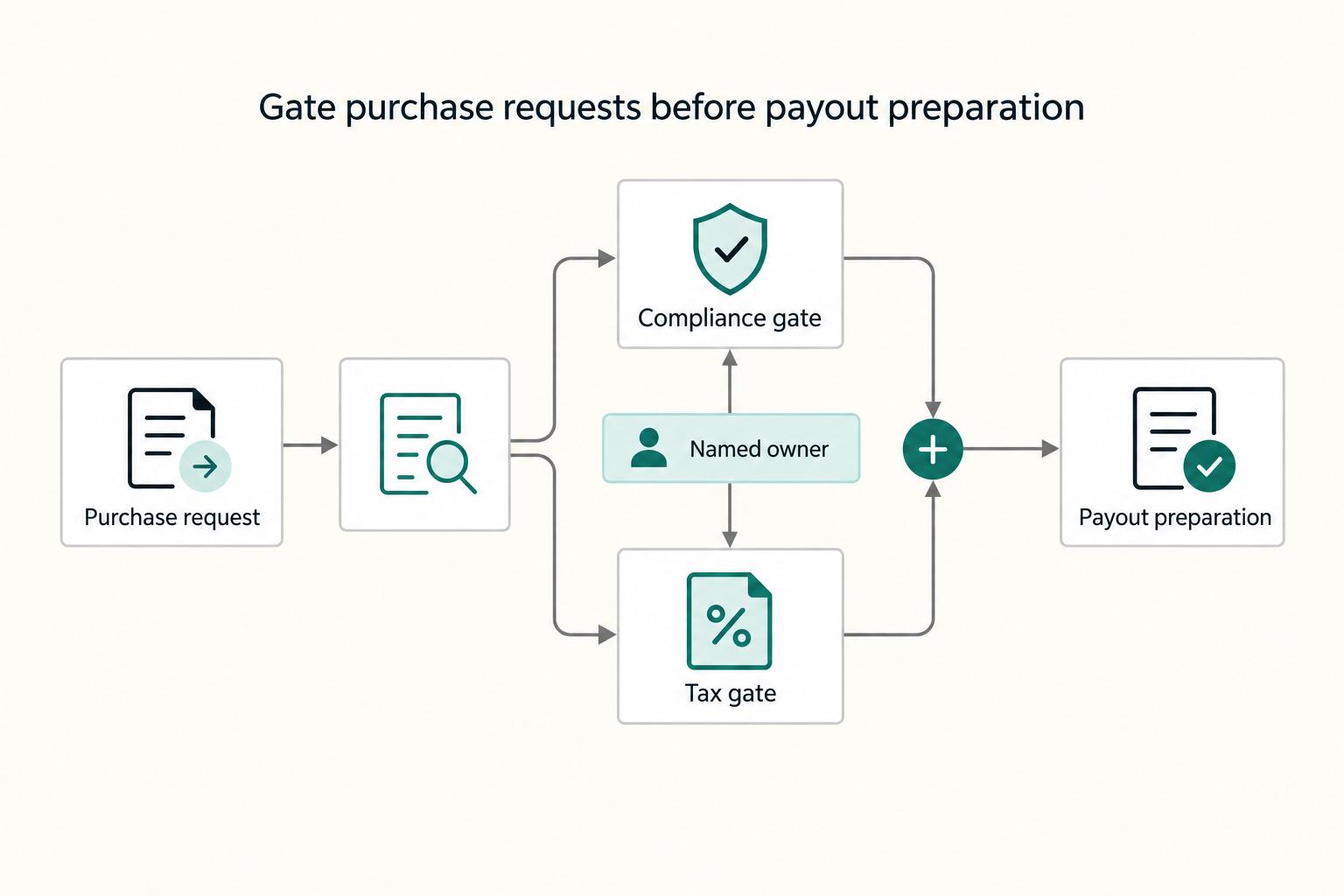
Traceability alone is not enough. Put compliance and tax gates in front of final approval, and assign one named owner to each gate so an approved request can actually move to PO issuance and payout preparation.
Step 1 Tag the request early so the right gate can fire#
Use your Purchase Requisition System to capture the routing fields up front: entity, market, program, supplier type, and intended payout path. Then trigger any policy-required checks before the request is treated as PO-ready.
Run a spot check across entities and markets and confirm each approved record shows which gate was reviewed, by whom, and with what outcome. If that evidence is missing from the audit trail, your approvals only look complete.
Step 2 Separate approval to buy from approval to pay#
Keep the spend decision separate from payout readiness. A request can be valid to approve for purchasing while still not ready for payout operations.
This is where teams usually get stuck: business approval is complete, but payee setup, validation, or required records are still incomplete. If that gap appears after approval, manual bypasses follow.
Step 3 Define document holds before final approval#
Missing tax or compliance documents should move a request into a defined hold state, not an ad hoc debate. Decide in advance whether each hold type stays pending, is rejected, or can proceed only through a documented exception path.
For each hold, preserve document status, exception reason, and approver in the same approval record. If "approved" appears while required document status is blank, control has already drifted.
Assign one owner and one SLA for each exception type#
Pre-PO controls break when ownership is shared but unclear. Assign one control owner per gate and one SLA per exception type, such as missing identity data, failed validation, or incomplete tax documentation.
That creates a measurable queue and a clear escalation path. Digital procurement tools can enforce this with role-based access, approval limits, and audit trails, but they cannot resolve ownership ambiguity on their own.
Related: Prepaid Cards as a Payout Method: When They Work for Platforms and When They Don't.
Handle common failure modes and recovery steps#
Treat recovery as part of launch, not post-launch cleanup. Manual approval chains are already prone to delays, errors, and compliance risk, so design recovery controls into the workflow from day one.
| Failure mode | Control | Why it matters |
|---|---|---|
| Duplicate submissions | Use consistent duplicate checks at intake and route likely duplicates into a clear review state | One business request stays one approval path |
| Approved state missing from core records | Build a routine reconciliation against downstream purchasing and payment records | Unresolved gaps stay visible until cleared |
| Urgent requests bypassing policy | Require exception tagging, a secondary review, and a preserved audit trail | Teams can confirm who approved the exception, why, and what follow-up was required |
Step 1 Catch duplicate submissions before they split the approval path#
If duplicate retries are possible, contain them early so one business request stays one approval path. Use consistent duplicate checks at intake, then route likely duplicates into a clear review state instead of allowing parallel approvals.
A practical control is to flag near-identical submissions (same supplier, amount, requester, and close submission time) before approval moves forward. If duplicates are approved, you lose the visibility and control structured PO management is supposed to create.
Step 2 Reconcile approved requests to your records of truth#
An approval is only operationally complete when the approved state is reflected in your core records. Build a routine reconciliation so approved requisitions are checked against downstream purchasing and payment records, and unresolved gaps stay visible until cleared.
Without that loop, you recreate the same bottlenecks, hidden costs, and vendor-trust issues seen when purchase and invoice records drift out of sync.
Step 3 Make urgent-policy exceptions explicit and reviewable#
Urgent requests should not bypass policy silently. Require exception tagging, a secondary review, and a preserved audit trail for each override so teams can confirm who approved the exception, why it was allowed, and what follow-up was required.
If an urgent request cannot carry that record, do not treat it as a standard approval. That keeps speed from turning into untraceable spend.
Make the decision and launch in phases with a copy-paste checklist#
Launch this in phases, not as a big-bang Procure-to-Pay change. If one approved requisition cannot cleanly reach ERP and AP with a visible audit trail, do not widen scope yet.
Step 1: Pick one lane and freeze the boundary#
Start with one high-volume lane only: one entity, one spend type, and one requester group. Define where Pre-PO Approval ends (typically at approved requisition handoff into the Purchase Order (PO) or ERP record), then lock this checklist:
- write the pre-PO boundary in one sentence
- name one policy owner for each entity and spend category in scope
- define approval lanes by value, vendor type, or budget owner
- test duplicate protection and retry behavior before go-live
- verify traceability from approved requisition to ERP and AP
- document exception recovery for urgent or policy-override requests
Checkpoint: one request should have one owner, one visible status, and one traceable handoff.
Step 2: Prove controls with test cases, not screenshots#
Before rollout, run real sample requests through the chosen lane: normal approval, rejection, urgent exception, and duplicate submission attempt. Also test the failure path where approval completes in the tool but no matching ERP/AP record appears.
Your evidence pack should include the request form, approval log, exception tag (if used), and recovery steps for replay or correction.
Step 3: Expand only after lane one stays stable#
Expand to additional entities or spend types only after the first lane stays controlled on approval cycle time and duplicate rate, without creating new reconciliation work.
Keep vendor claims qualified: automation can cover approvals, PO management, and sourcing, but coverage and controls vary by market and program, and depth varies by tool. Confirm feature availability for your exact lane before rollout, especially if ERP sync, AP handoff, and exception handling are required.
Frequently Asked Questions
What is pre-PO approval, and where does it sit in requisition-to-pay?
Pre-PO approval happens at the purchase requisition stage, before a Purchase Order exists. A purchase requisition is an internal request to get approval to buy goods or services, while a PO is the document that commits the purchase. Both sit inside the broader procure-to-pay process, but they solve different problems at different points.
Which approval steps should a platform automate first?
Start with intake, rule-based routing, and status visibility in one place. Routing should at least use clear factors like order value, vendor type, and budget limits, then push approved records into your ERP. A useful checkpoint is one visible status and a traceable handoff to the system of record.
How do we choose between a suite and a point requisition tool?
If you mainly need better pre-PO control, a focused requisition tool can be a lower-risk starting point. Automation can integrate with existing systems without forcing a full replacement, which matters when you only need better pre-PO control first. Go broader only if your issues are not limited to approvals and you already know downstream P2P steps also need redesign.
How many approval layers are too many?
There is no credible universal number, so do not buy on a vendor claim that says there is one right limit. You have too many layers when approvers cannot review quickly, urgent requests start bypassing policy, or approvals become a rubber stamp. When that happens, reduce layers and tighten the approval rules instead of adding more people to the chain.
How do we prevent duplicate requests and duplicate approvals?
First, stop scattered intake across email and chat, because fragmented request channels make status hard to track and can create duplicate orders and missed deadlines. Then standardize intake and approval tracking in one workflow so requests are less likely to be submitted in parallel through different channels.
What controls are non-negotiable for audit readiness and compliance?
You need clear approval records and a reconciliation step from approved requisition to ERP record. That keeps approvals from becoming isolated evidence and supports consistent follow-through after approval.
What usually goes wrong when teams automate too early?
A major risk is automating approvals without clear ownership and traceability into ERP. That can give you faster clicks but weaker control, especially when an approval completes in the tool and never lands in ERP. If you are evaluating this category, verify traceability before rollout.
Try a related tool
Researched and edited by the Gruv editorial team. Gruv builds cross-border billing, payouts, and finance-operations software for global businesses.
Sources
Includes 5 external sources outside the trusted-domain allowlist.
- irs.gov/individuals/international-taxpayers/figuring...trusted
- irs.gov/individuals/international-taxpayers/foreign-...trusted
- ntrs.nasa.gov/api/citations/19910004582/downloads/19910004...trusted
- artsyltech.com/blog/order-processing-in-accounts-payable-guideexternal
- blog.hyperbots.com/the-ultimate-guide-to-purchase-order-automat...external
- ism.ws/supply-chain/e-procurementexternal
- ivalua.com/blog/purchase-order-automation-what-it-is-ho...external
- order.co/blog/procurement/purchase-requisition-approv...external
Educational content only. Not legal, tax, or financial advice.
Related Posts
How Platform Teams Use 2-Way and 3-Way Invoice Matching to Stop Overpayment
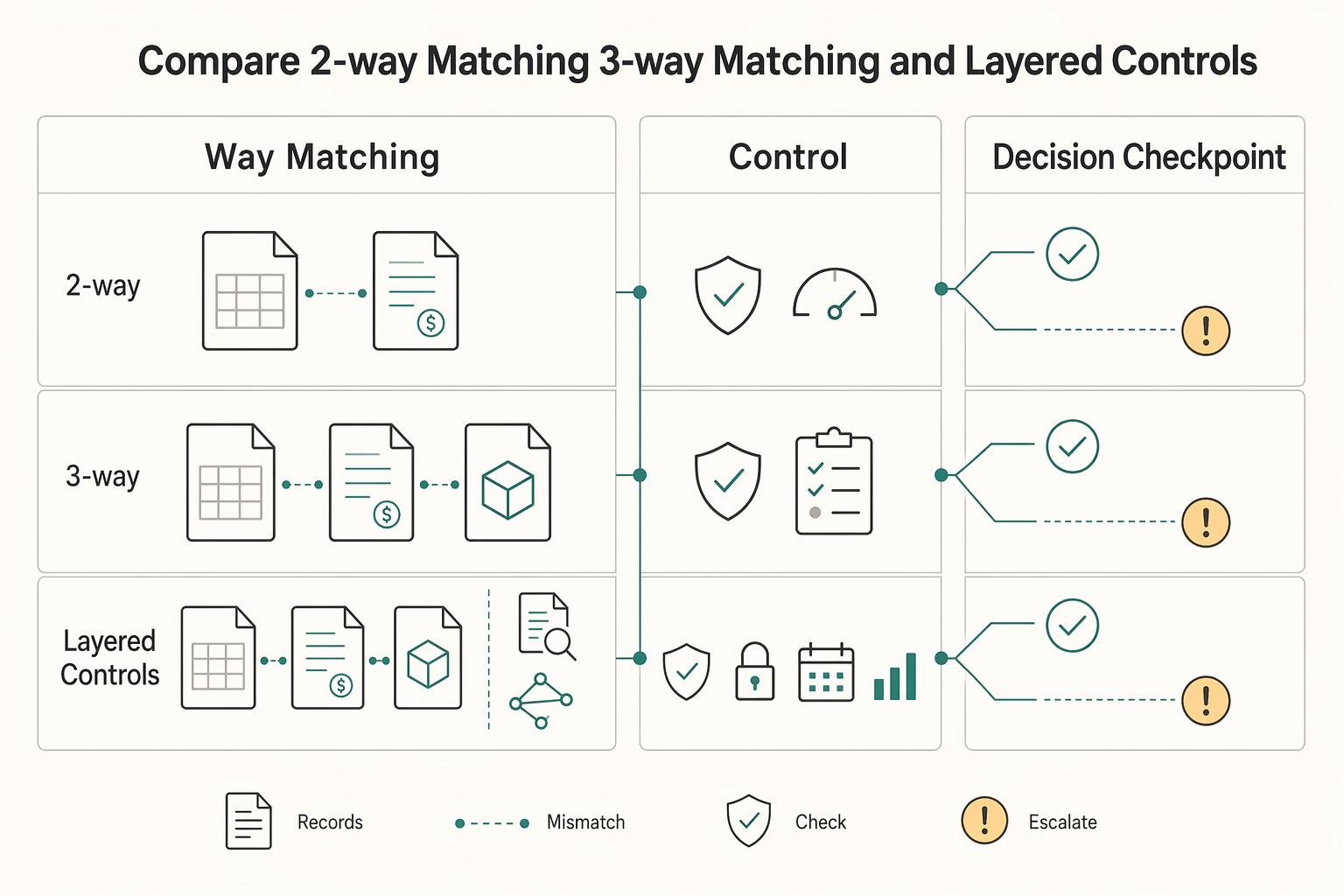
Platform teams do not need another glossary entry on invoice matching. They need controls that stop real overpayment paths before money goes out the door. At its core, invoice matching compares an invoice with supporting records before payment. The practical question is what you add when a clean match still does not mean the invoice should be paid as submitted.
Internal Controls for AP Platforms to Prevent Fraudulent Disbursements
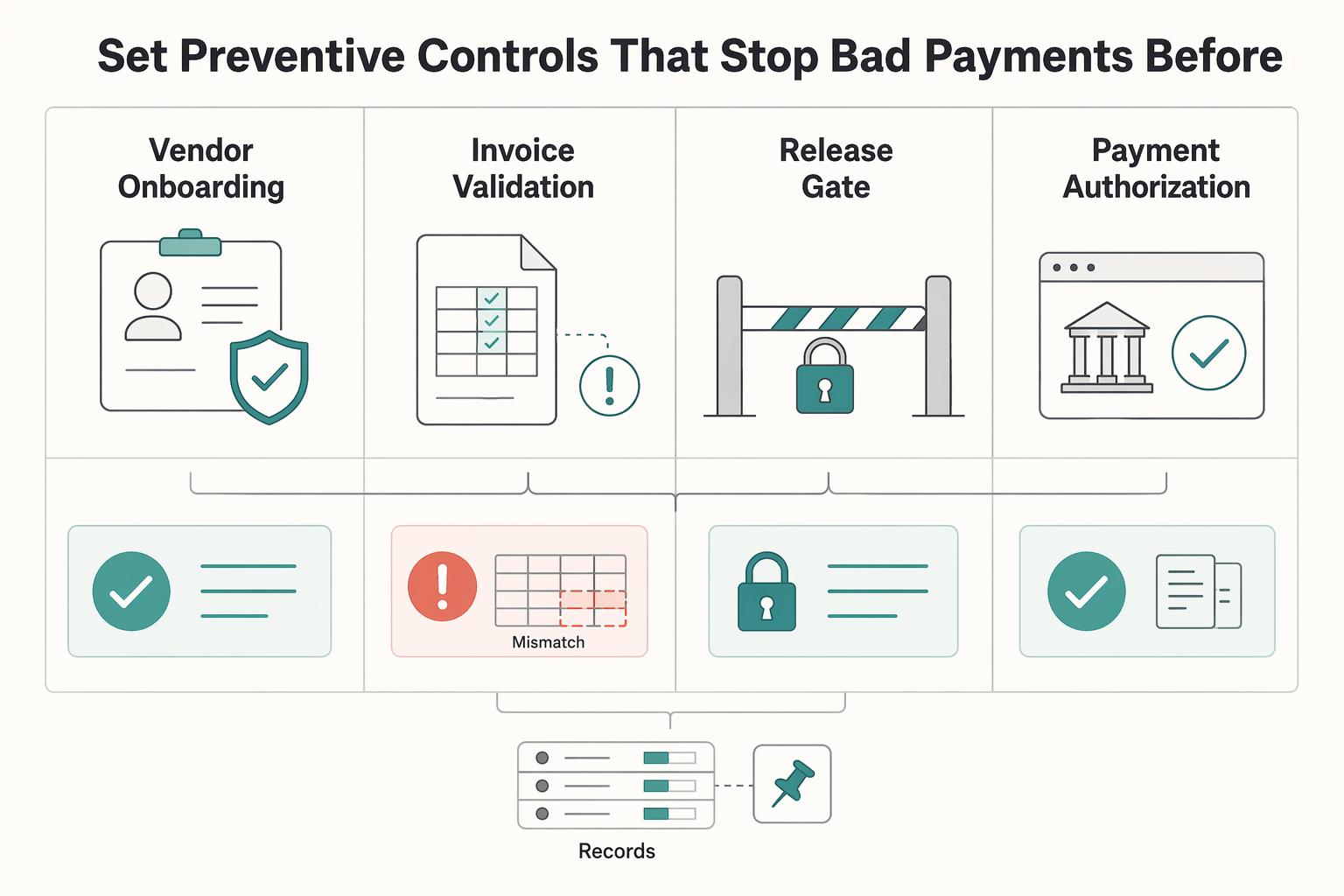
Start here: your AP control design should reduce fraudulent disbursements and payment errors without turning every payout into a bureaucratic exercise. In practice, that means clear escalation points at the moments where money can move incorrectly, not extra approvals added just to look controlled.
Prepaid Cards as a Payout Method: When They Work for Platforms and When They Don't
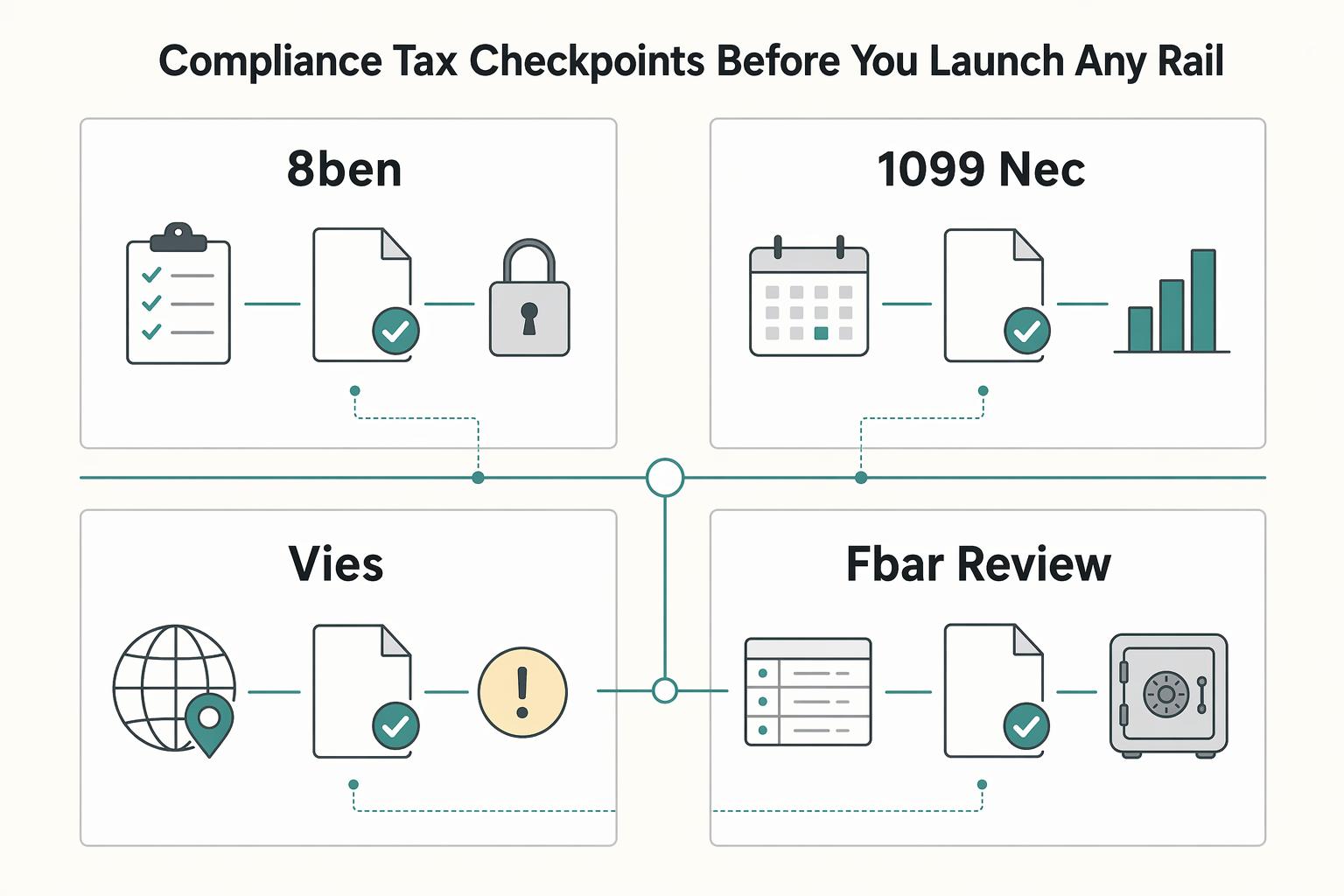
Prepaid cards are a real payout option, but they are not a shortcut to sound payout design. If you run payouts for a marketplace platform or embedded payments product, the question is not just whether a rail moves money fast. It is whether the rail fits your use case and operating model.