
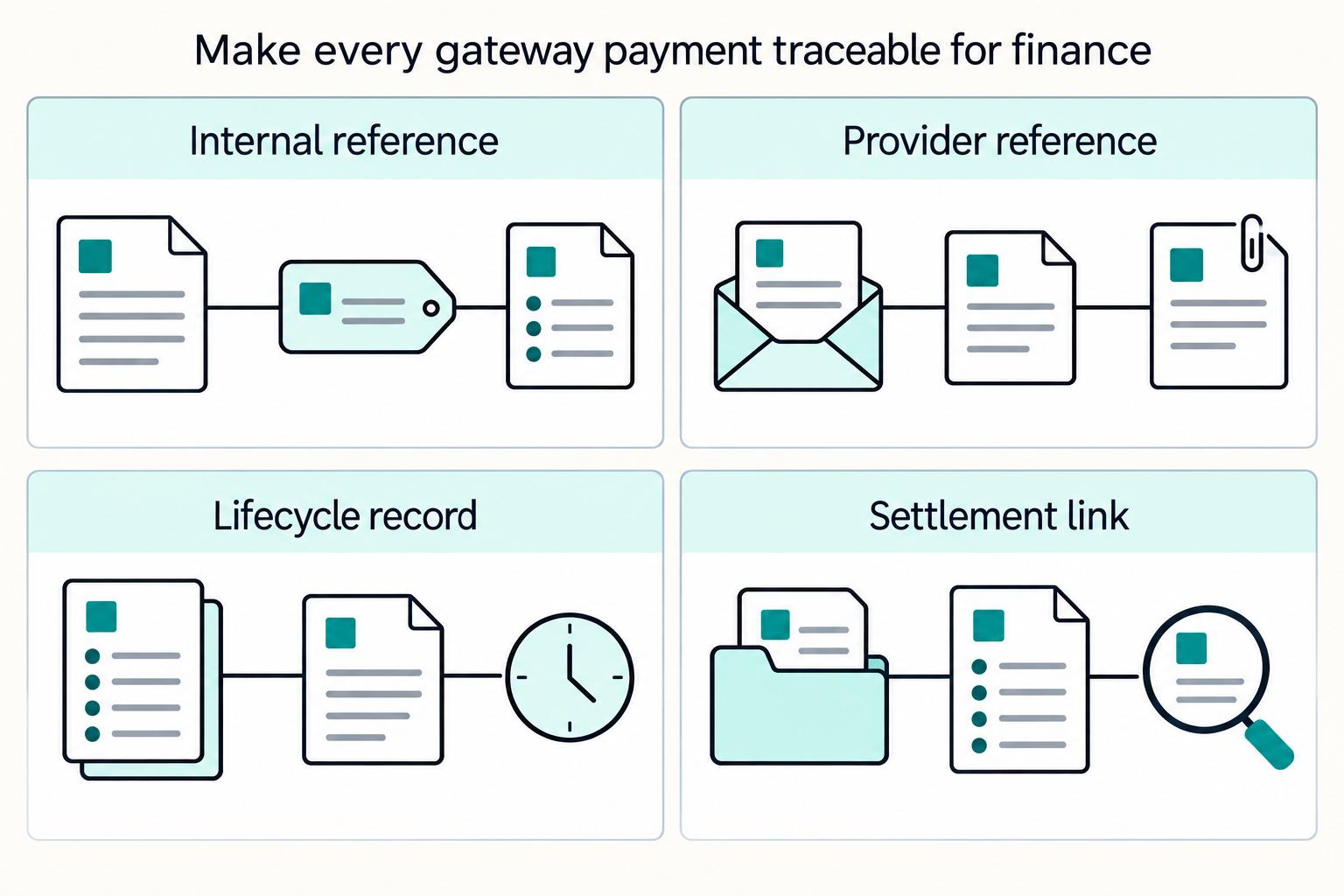
Quick Answer
Move to a multi-gateway model when a single PSP outage or regional coverage gap can materially block revenue, and stay on one gateway when current coverage and reporting are still sufficient. For this payments orchestration multi-gateway strategy platform decision, begin with one corridor, define a primary route plus one fallback, and verify finance can trace each payment from authorization through settlement reporting. If that trace test fails, defer expansion and tighten ownership, ID mapping, and exception handling first.
When a Single Gateway Stops Being Enough#
Payment orchestration can become a practical priority when payment performance and finance operations start limiting growth, not just checkout delivery. A single PSP can be the right setup for a long time. But once approval paths, provider constraints, or reconciliation workload start affecting outcomes, you need a clearer strategy than adding providers ad hoc.
A payment gateway and a payment orchestration platform sit at different layers. A gateway starts the payment process by securely handling payment data and forwarding it for approval. Orchestration sits above that layer. It centralizes gateways, processors, acquirers, and other providers, so you can control routing, retries, provider prioritization, and failover instead of inheriting fixed decisions from one provider's system.
This matters because failures are not rare. Stripe notes that nearly 1 in 13 online payments fail, so routing quality can materially affect customer outcomes. Mastercard also indicates that optimizing authorization improves outcomes. That does not mean every platform should move to multiple providers now. It does mean payment path control deserves product, engineering, and finance ownership as complexity grows.
Timing matters too. Stripe reports that 54% of worldwide payments were cashless in 2025, up from 50% in 2023. As more payments move through digital flows, gaps in provider coverage, approval handling, and reconciliation can become harder to ignore.
If you are evaluating a payments orchestration multi-gateway strategy platform, the core question is simple. Do you need direct control over payment decisions that a gateway-only setup does not expose well? This guide helps founders, product leaders, engineering owners, and finance teams choose a practical path: stay on one gateway, add a second PSP, or introduce orchestration as the control layer.
The recommendation is to centralize what creates operational clarity first, then optimize depth later. Start with routing policy, retry and failover behavior, provider prioritization, and transaction data that supports reconciliation. Expand into cost tuning, broader provider mixes, and finer routing rules after that foundation is working.
Before launch, verify traceability end to end, from authorization request to provider outcome to finance reporting. Without that, adding another processor can add confusion instead of resilience. A common risk is adding connections before ownership, routing intent, and reconciliation checks are clear.
For a related breakdown, read How MoR Platforms Split Payments Between Platform and Contractor.
Define the payment stack before you change it#
Start by naming the layers. If your team cannot clearly say who decides routing and who executes the payment, pause the redesign until that is explicit.
A payment orchestration platform is the control layer above providers. It centralizes gateways, processors, acquirers, and other financial service providers. In practice, checkout connects to that layer, and the orchestration layer decides how each payment is handled. Providers still perform the underlying processing work.
| Layer | What it actually does | What you should verify |
|---|---|---|
| Payment Gateway | Securely transmits payment data between customer, business, and processor | Which checkout surface uses it today |
| Payment Processor | Handles electronic transaction processing | Which processor receives each authorization request |
| Acquirer | Processes card transactions for the merchant and deposits proceeds to the merchant account | Which merchant entity and account receive settlement |
| Payment Orchestration Platform | Applies routing and processor-selection rules across multiple providers | Which team owns rule changes and outcome review |
The key distinction is simple: orchestration decides routing, and providers execute the underlying transaction processing. You can configure processor-selection rules, including conditions like card country, currency, and amount, and set retries to another processor in some flows. But when a payment is routed to a third-party processor, that processor remains responsible for that transaction, including fees and transaction-loss liability under its contract.
Map your current stack by entity, not logo. For each provider, list who handles checkout, authorization, settlement, disputes, and reporting. Before you discuss a multi-gateway change, make sure finance can trace one payment from authorization request to settlement reporting without engineering translating provider terminology.
You might also find this useful: What Is Payment Orchestration? How Platforms Route Transactions Across Multiple PSPs.
Compare single gateway and orchestration with explicit tradeoffs#
The tradeoff is straightforward: a single gateway is simpler to run, while a payment orchestration platform gives you more control and optionality but adds design, integration, and governance overhead. If one provider already covers your markets, methods, and resilience needs, simplicity is a real advantage. If a single provider gap can interrupt revenue, the extra operating burden can be worth it.
| Decision area | Single Payment Gateway | Payment Orchestration Platform |
|---|---|---|
| Control | More payment behavior is fixed by the provider's system | A control layer can coordinate multiple gateways, processors, acquirers, and payment methods |
| Complexity | Lower integration and operating burden | Higher engineering and operational burden across integrations, routing logic, and monitoring |
| Vendor dependency | Heavier dependence on one provider's roadmap and coverage | Lower lock-in risk because you can add or shift providers over time |
| Change velocity | Changes usually follow the gateway's capabilities and checkout implementation | You can add gateways, local processors, or methods without rebuilding checkout each time |
| Real-Time Transaction Routing | Usually limited to what the provider exposes | Direct rule control for routing, retries, provider prioritization, and failover behavior |
| Failover options | Often provider-defined and narrower | Broader failover design, including route-and-retry across partners where supported |
| Payment Reconciliation effort | Usually simpler with fewer data sources and status formats | Can be harder because multiple provider references, status models, and exception paths must be reconciled |
What market definitions cover, and what they miss#
Stripe's comparison is a useful baseline: gateways start the payment flow, while orchestration manages a broader multi-provider payments layer. BlueSnap and PSPBox make similar points about routing and failover in their product pages, but those are vendor claims, not neutral operating guidance.
A practical comparison comes down to ownership. You are deciding whether payment decision logic stays mostly inside one vendor's defaults, or whether your team owns route rules, retry behavior, provider precedence, and downstream reporting quality.
Where orchestration earns its keep#
Orchestration earns its keep when you need explicit control over real-time routing, provider redundancy, or market-specific coverage that one gateway may not reliably handle. Independent market framing points to the same business drivers: control, redundancy, specific requirements, and reduced lock-in. As one industry quote puts it, "No payments provider is truly global and does everything well."
A practical test is simple: if your primary provider degrades tomorrow, what changes the same day? In a single-gateway model, options are often constrained by the provider's defaults. In an orchestration model, teams may be able to change routing rules without checkout rework. But that only works if integrations, fallback behavior, and finance workflows are already production-ready.
When you evaluate vendors, use a concrete routing scenario instead of a feature tour. Pick one corridor, one currency, and one failure case, then verify:
- Who can change route priority and retry behavior
- How fast those changes can ship without checkout rework
- Which transaction identifiers finance receives from each downstream provider
If a demo shows smart routing but not provider reference IDs, status transitions, and export shape, you are only seeing half the system.
The overhead is real#
Adding providers is operationally expensive, not just technically possible. Beyond connectors, teams must maintain routing logic, unify performance views, and govern failure behavior. In-house orchestration can become resource-intensive enough to strain organizational capacity.
A common risk is enabling a second processor before operating controls are ready. Engineering can launch the route, but reconciliation and exception handling can become harder.
Choose a single gateway when current coverage, resilience, and reporting are sufficient. Move to orchestration when you need explicit routing or redundancy control and are ready to own the operating layer that comes with it.
Decide on operating burden, not architecture fashion#
The right decision is less about architecture style and more about whether you can operate the result. Before adding orchestration, define the monthly operating set: provider transaction IDs, internal payment IDs, route-decision logs, settlement reports, and a named owner for unmatched records.
If you cannot trace one payment from authorization decision to final reporting across each provider, keep the stack simpler for now. If you can, and single-provider dependency is limiting growth or resilience, orchestration becomes a controlled step forward rather than a costly abstraction.
Should your platform move to multi-gateway now#
Move now if one PSP outage, processor incident, or market-coverage gap can materially disrupt revenue. If not, defer the extra complexity and keep improving your single-gateway setup.
That is the real tradeoff. A multi-gateway model pays off when dependency risk is expensive enough to justify more ownership in routing, reporting, and incident handling. Payment failures can come from network issues, processor outages, and temporary declines, and some orchestration setups can retry a failed payment on another processor. The question is whether you need that capability now and can operate it well.
Use business exposure, not hype, as the trigger#
If you sell in one region, rely on one or two payment methods, and your current provider already meets checkout and reporting needs, simplicity is still a strong choice. There is no supported universal trigger by transaction volume, region count, or decline rate that automatically means "add orchestration now."
Treat performance claims the same way. Authorization rates vary by context, even within one industry, and benchmark bands such as 85-90%, 91-96%, and 97%+ show dispersion, not a guaranteed uplift from adding providers. Do not approve a multi-gateway program based on an assumed standard approval-rate gain or a reliable universal cost-reduction baseline.
Expansion changes the timing#
Expansion changes the decision from "should we" to "when do we sequence this." As you expand across regions, country, currency, and payment-method support start to drive rollout order. Local payment methods become more important as you enter markets like South Korea or Nigeria.
| Planning item | What to confirm |
|---|---|
| Routing objective | Define the exact reason for the second route: outage resilience, regional coverage, local methods, or selective cross-processor retries. |
| Finance ownership | Assign ownership for unmatched records, provider reference mapping, and month-end evidence; track internal payment IDs, downstream provider transaction IDs, status transitions, and settlement report ownership. |
| Provider coverage by market | Verify support by country, currency, and payment method for each target launch market before commercial commitment. |
| Implementation capacity | Confirm who will build, test, monitor, and update routing rules, plus availability/support and scope limits early. |
Start with coverage, not feature lists. Check which provider, processor, or acquirer supports the payment methods and currencies you need in each target market. Cross-border infrastructure remains complex and evolving, and capabilities differ across platforms. If your roadmap includes new countries, local methods, or region-specific acquiring needs, waiting too long can turn provider dependency into a launch blocker.
One risk is adding a second provider under expansion pressure, then discovering finance cannot reconcile provider references or operations cannot handle disputes and settlement activity outside the orchestration layer. Scope gaps matter. Before committing, make those four items explicit and testable.
If one outage or one regional gap can block meaningful revenue, start now with one corridor and one fallback path. If that risk is still hypothetical, keep the stack simpler and use the time to tighten ownership, reporting, and market-coverage readiness.
If you want a deeper dive, read Gateway Routing for Platforms: How to Use Multiple Payment Gateways to Maximize Approval Rates.
If your go/no-go checklist is close, map your routing, idempotency, and reconciliation requirements against Gruv's API and webhook model in the developer docs.
Set cross-functional ownership before writing routing rules#
Set ownership before you write routing logic. Orchestration centralizes routing, but in multi-processor setups it does not automatically transfer processor, acquirer, reconciliation, or incident responsibilities into one team.
If you route through Stripe Orchestration to a third-party processor, that processor still acts as the processor for those payments, and fees and loss-liability terms stay under your contract with that processor. In those setups, disputes and settlement-related activity are handled in the processor dashboard rather than the orchestration layer. Treat that boundary as an operating constraint, not a detail to sort out later. A practical pre-go-live split can look like this:
| Function | Primary owner | Pre-go-live ownership |
|---|---|---|
| Product | Customer outcome and routing intent | Why the rule exists, who it affects, and what success/failure means |
| Engineering | Integration and rule behavior | Provider mappings, idempotency/fallback behavior, and release correctness |
| Finance | Reconciliation and reporting | Internal ID to provider reference traceability, status transitions, settlement-report ownership |
| Operations | Incident response | Alerting, escalation paths, outage handling, and provider contact execution |
Maintain a shared operating document across teams. For each PSP and acquirer, record owner, SLA commitments, escalation path, support channel, dashboard location, and which workflows sit outside orchestration.
Treat routing updates as policy changes#
Treat routing changes as policy changes, not routine config edits. If a change can affect authorization behavior or regional coverage, run it through a named internal approval gate. That includes shifts like a new primary route by region, enabling a new acquirer, or adding cross-processor retry behavior.
One internal rule is to hold go-live until product, engineering, finance, and ops complete review, and finance confirms downstream reporting and exception handling are ready. Before launch, confirm:
- a transaction is traceable from internal payment ID to provider transaction ID and final reporting output
- status transitions are visible and interpretable across providers
- exception handling ownership is explicit for unmatched records and stale statuses
Include provider-specific checks where needed. For example, Adyen settlement reconciliation depends on payout-frequency setup, recommends merchant-account-level reconciliation for settlement detail, and may require external settlement detail reporting when external acquirers are in use. See Adaptive Payments for Platforms: How to Split a Single Transaction Across Multiple Payees.
Design routing logic that can be audited and changed safely#
Good routing is explainable. Every payment should have a clear primary path, a defined fallback, and a controlled stop condition when policy or data checks fail. In an orchestration layer, that structure keeps real-time routing understandable when rules change or providers degrade.
Build routing in layers, not exceptions#
Start with the route you want most payments to take, define fallback behavior next, and keep a deterministic final path if nothing matches.
- Hard stop first: Block payments that fail policy or required-input checks.
- Primary route next: Route by stable inputs such as card country, currency, or amount.
- Fallback after that: Retry on another processor only when that path is allowed and compatible.
- Deterministic final path: Use an explicit Else/default policy so unmatched traffic never enters undefined behavior.
| Routing input | Example condition | Primary action | Fallback or Else action | What to record |
|---|---|---|---|---|
| Region | Card country or currency maps to market A | Route to PSP A | Use approved default only where method compatibility holds | Rule name, market reason, route version |
| Payment method | Method support differs across gateways | Route to method-supported PSP | Hard stop if configured gateways do not support the same method | Method check, compatibility result |
| Cost priority | Corridor where commercial terms favor one PSP | Route to lower-cost PSP first | Else route to standard provider when pricing rule does not apply | Business reason, finance approval |
| Auth performance | Internal trigger indicates primary-path degradation | Shift new attempts to PSP B | Keep explicit rollback to incumbent provider | Trigger, approver, traffic share |
| Provider availability | Primary PSP or routing path is unavailable | Route to secondary PSP | Use default only if policy and compatibility still hold | Incident ID, failover cause, recovery time |
Decide failure behavior before launch#
Failure behavior should be documented before go-live: decide when to retry on the same provider, when to retry on another provider, and when to return a user-visible failure. Stripe's orchestration guidance supports retrying a failed payment on another processor one more time. Treat that as a deliberate limit unless you have tested evidence for a different policy.
Only use cross-processor retry when the alternate gateway supports the same payment method. If no compatible fallback exists, or the default path would violate your own policy, fail in a controlled way and surface a clear user outcome.
Make every rule explainable to finance and ops#
A routing rule is ready for production only when product can explain the customer impact, ops can monitor the behavior, and finance can reconcile the outcome. Keep a short rule record with the business reason, owner, approval date, affected segment, rollback condition, and exact routing action.
Traceability depends on IDs that survive across systems and reports. Keep your internal payment ID connected to provider references, for example Merchant Reference and PSP Reference, and verify that linkage through reconciliation outputs. In Stripe flows, each funds movement creates a BalanceTransaction, and automatic payouts help preserve transaction-to-payout linkage for cleaner reconciliation checks.
Treat routing changes as controlled policy releases. A phased rollout, for example 10% / 90%, is easier to observe and unwind. Pair it with process-level metrics, logs, dashboards, and on-call alerts. If a rule cannot be monitored, rolled back, and reconciled, it is not ready for production. See How to Embed Payments Into Your Gig Platform Without Rebuilding Your Stack.
Build reconciliation and analytics into day one operations#
Treat payment reconciliation and transaction analytics as launch blockers. If finance cannot trace a payment from internal records to payout or invoice reporting for each provider, your multi-gateway setup is not operationally ready.
Define the minimum evidence pack before launch#
You do not need one universal schema across providers, but you do need a minimum evidence pack with clear join keys and ownership.
| Evidence item | Why it matters | Example grounded artifact |
|---|---|---|
| Internal transaction ID | Connects product, ledger, and support records | Internal payment ID linked to provider records |
| Merchant-assigned reference | Maps provider data back to your system | Adyen Merchant Reference |
| Provider-assigned reference | Tracks the provider-side transaction across reports | Adyen PSP reference |
| Lifecycle status transitions | Shows attempts, status changes, and outcomes over time | Adyen Payment accounting report; Stripe PaymentRecord |
| Payout or settlement linkage | Connects transaction records to funds movement | Stripe payout reconciliation report |
For month-end operations, document who owns each exception queue and who resolves missing or conflicting records.
Add one trace test finance can run without engineering#
Set one recurring test: finance should be able to trace one successful payment and one failed or retried payment end to end using approved reports and stored IDs. That trace should include internal transaction ID, merchant reference, provider reference, lifecycle changes, and final payout or settlement appearance.
On Stripe, PaymentRecord supports this by capturing attempts and outcomes. On Adyen, Merchant Reference, PSP reference, and the Payment accounting report can provide the trail in a different format.
Track incident metrics that expose finance risk early#
Do not rely only on auth rate or uptime. Track reconciliation health by provider: unmatched records, stale statuses, and unresolved exceptions. Keep unmatched transactions and exceptions in explicit queues with named ownership.
Use provider-specific status expectations. Stripe exposes payout states (processing, posted, failed, returned, canceled) and notes returned payouts are typically visible within 2-3 business days; use that as a Stripe checkpoint, not a universal threshold.
Recheck these metrics whenever you change routing mix or add a provider. Routing flexibility only helps if finance traceability keeps pace.
For a step-by-step walkthrough, see How to Build a Global Accounts Payable Strategy for a Multi-Country Platform.
Handle regional compliance constraints before scaling traffic#
Do not scale traffic into a market until your onboarding and payout controls support that market's compliance requirements. Document regional regulatory requirements per country before enabling a new route, because requirements vary by country or region, legal entity, and financial product.
Adyen's requirements show why this matters: inputs differ by market, entity, and offering, and even nearby markets can diverge. For example, a sole proprietorship in Belgium requires a registration number, while this is not required in the United Kingdom. Treating a whole region as one compliance bucket can create avoidable payout failures.
Tie onboarding and payout eligibility to routing#
A route is not truly live if users can enter payment flows before they are eligible for payout. For marketplace payments, users must complete onboarding and Know Your Customer (KYC) checks before processing and payouts, and additional verification can disable payouts at higher tiers.
Align onboarding policy with routing rollout. If you enable a new PSP or acquirer corridor without collecting required country-level entity data, you can create a silent break: payments may move, but payouts stall.
Before launch, test end-to-end journeys for the launch scope: onboarding complete, KYC approved, payment accepted, and payout eligibility confirmed. If any step is manual, document that gate as part of launch readiness.
Check provider support by market and program#
Assume conditional coverage, not universal coverage. Stripe notes connected-account country availability depends on the platform's business location, and cross-border local-currency payouts apply only if the platform qualifies.
Use the same lens across providers. PayPal's overall footprint is broader than product-specific coverage, and Payouts support is tiered across levels. PSD2 also requires scoped thinking: it applies to payment services provided within the Union. Use that as regulatory scope context, then confirm provider implementation and market-specific obligations before launch.
| Pre-launch check | Why it matters | Minimum artifact |
|---|---|---|
| Supported countries, entities, and products | Requirements vary by market, legal entity, and offering | Market matrix by PSP/acquirer with supported entities and products |
| Onboarding and KYC gating | Incomplete verification can block processing or disable payouts | Required fields, verification states, and payout eligibility rules |
| Feature availability | Connected accounts, cross-border payouts, and orchestration access can be conditional | Provider confirmation plus enabled-features list |
| Route testing before production | Sandbox rule testing helps catch policy gaps before go-live | Evidence of rule testing and payout-eligible successful flow(s) for the launch scope |
Use caveats that keep readers and teams honest#
Use explicit caveats in your guidance: "where supported," "when enabled," and "confirm with provider and counsel for your market." That is the operationally accurate stance. Provider documentation states it is not legal advice, and Stripe orchestration routing is described as private preview with sandbox testing before go-live.
If you cannot show market coverage, entity support, policy controls, and test evidence for a route, do not scale traffic there yet. Compliance gaps can appear as blocked onboarding, disabled payouts, or payment flows that move charges before payout readiness is in place.
Roll out in phases that reduce regression risk#
Once core prerequisites are in place, reduce risk by rolling out in controlled phases and keeping your known-good payment gateway path live until new routing proves stable in production.
| Phase | What to do |
|---|---|
| Baseline instrumentation | Set baseline metrics such as payment success rate and accepted payment volume across processors. |
| Sandbox rule testing | Test routing conditions like card country, currency, and amount in sandbox first. |
| Limited live canary traffic | Use canary controls with a target segment, bake time, minimum validation volume, and rollback triggers. |
| Broader rollout by segment | Expand only after canary bake time shows stable behavior on enough traffic to validate the result. |
Use a tight sequence: baseline instrumentation, sandbox rule testing, limited live canary traffic, then broader rollout by segment. Keep it practical. Test routing conditions like card country, currency, and amount in sandbox first. Only expand after the canary bake time shows stable behavior on enough traffic to validate the result.
Consider starting with one corridor instead of a broad regional launch. A narrower pilot is easier to validate before expanding to additional corridors.
Keep rollback boring and immediate. Maintain your existing primary route as the default while you test new rules, and treat secondary-processor retry as fallback protection, not proof that the new route is fully ready.
During rollout, run one checklist with clear owners and stop conditions for each phase. If canary volume is too low for meaningful validation, do not mark the phase successful. Include:
- baseline metrics: payment success rate and accepted payment volume across processors
- canary controls: target segment, bake time, minimum validation volume, and rollback triggers
- release gates: confirmation that the primary payment gateway path still works end to end and rollback criteria are clear
Spot the failure patterns that sink orchestration projects#
Testing routing rules before launch helps, but it will not fix a weak operating model. Orchestration efforts can stall on execution basics: reconciliation ownership is unclear, approval-rate claims are not matched with comparable analytics, finance and compliance controls arrive late, or vendor demos replace fit criteria.
The first red flag is adding multiple PSP connections before assigning payment reconciliation ownership and exception handling. If your team cannot trace a transaction from routing decision to final report and assign a named owner for exceptions, pause rollout. This gets harder when routing changes reporting models, including setups that require Payment Attempt Records across all Stripe volume. And because disputes and settlement can remain in each processor dashboard, more PSPs often mean more coordination, not less.
The second red flag is using authorization uplift as the business case without route-level transaction analytics and observability. Authorization rate is the share of submitted transactions accepted by issuers, but comparisons are weak when payment context is not comparable. At minimum, you need payment success rate and accepted payment volume across processors, plus clear visibility into routing outcomes. Test rules in sandbox before go-live and verify rule order, because incorrect ordering can break expected processing behavior.
The third red flag is treating routing as engineering-only and expecting finance and compliance to catch up later. Regional controls can change what is valid in production, including strong customer authentication and monitoring obligations in EU payment flows. If a route changes market coverage or authentication handling, require finance and compliance signoff before enabling traffic.
The last red flag is letting vendor-led selection define your multi-processor strategy. Set fit criteria first: market coverage, reporting depth, cross-processor analytics, exception handling, and oversight requirements for your risk profile. If a tool looks good in demos but fails those checks, it is not production-ready.
Choose providers with a platform-operator scorecard#
Choose providers with one operator scorecard across every option, and pick the stack that fits your next 12 months of expansion and operating maturity, not the broadest demo.
Score the layer, not just the logo#
A payment gateway transmits payment data, a payment processor authorizes and processes transactions, and an orchestration layer applies rules-based routing across processors. Some vendors span multiple layers, but you should still score each layer separately because the tradeoffs are different.
| Stack layer | What to score | Verification detail | Change-cost risk |
|---|---|---|---|
| Payment Gateway | Checkout fit, supported payment methods, coupling to one provider | Confirm support in your target markets and where dependencies sit | Later swaps can require checkout and reporting rework |
| Payment Processor | Market coverage, processor terms, reporting exports, reconciliation fit | Validate regional coverage, processor terms, and export formats finance actually uses | Adding processors can change terms, fee reporting, and reconciliation workflows |
| Payment Orchestration Platform | Routing control, policy granularity, reporting depth, incident visibility | Test rule inputs, fallback behavior, exports, and status transparency before signing | Lock-in risk can shift to the orchestration rule and reporting model |
Add the criteria listicles usually miss#
Scope limits and operational depth should be scored explicitly. Stripe supports rules based on conditions like card country, currency, and amount, and also documents feature-scope exclusions that should be treated as fit criteria. BlueSnap positions modular controls, for example by country, product, and issuer, plus unified reporting and a reporting API, which matters if you need market-by-market rollout with consolidated reporting. Spreedly and Stripe both expose public incident and status surfaces, which are useful operational signals even though they are not contractual SLAs. Bluefin's PayConex reporting API supports CSV, JSON, and XML and documents a suggested reporting window. Its developer positioning also highlights North American merchant context, so regional fit should be scored directly.
| Example | Documented detail | Why score it |
|---|---|---|
| Stripe | Supports rules based on conditions like card country, currency, and amount, and documents feature-scope exclusions. | Treat rule inputs and scope exclusions as fit criteria. |
| BlueSnap | Positions modular controls by country, product, and issuer, plus unified reporting and a reporting API. | Useful if you need market-by-market rollout with consolidated reporting. |
| Spreedly | Exposes a public incident and status surface. | Operational signal, even though it is not a contractual SLA. |
| Bluefin PayConex | Reporting API supports CSV, JSON, and XML and documents a suggested reporting window; developer positioning highlights North American merchant context. | Score reporting-format fit and regional fit directly. |
Test lock-in with a live change simulation#
Do not stop at "Can we add another PSP?" Require a live walkthrough of adding or swapping a provider, recreating an existing routing rule, and producing the reconciliation outputs your finance team needs.
Multi-processor setups can reduce lock-in and improve control, but complexity can still become resource-intensive, especially if orchestration ownership sits in-house. Keep the decision rule simple: buy the stack your team can operate reliably next year, not the one with the longest feature list.
Conclusion#
The practical path is controlled centralization first, then phased expansion. A payment orchestration platform is most useful when it gives you one place to define routing rules, test them in sandbox, and review which rule sent a payment to a specific processor. It is less useful when it simply adds more providers.
A durable multi-gateway strategy depends on three things: clear ownership of rule changes, auditable routing decisions, and reconciliation that still holds when volume is split across processors. If those are weak, adding providers can increase confusion faster than resilience.
Keep routing logic explicit and small enough to reason about. Orchestration rules can use conditions like card country, currency, and amount, and the first matching rule is applied. If your team cannot explain the first-match path for a transaction, complexity is ahead of control.
Treat reconciliation as the hard production gate, not the routing diagram. Outages, network issues, and temporary declines are normal failure modes, so fallback and cross-processor retry can help, but orchestration does not cover every downstream workflow. Disputes and settlement activity can remain processor-specific, so finance and ops need clear records, reports, and escalation ownership for each provider.
Before broader rollout, confirm payment-to-payout traceability on every active route. Automatic payouts can preserve transaction-to-payout linkage, and a daily reporting cadence may be required to track payment flows reliably. If your reporting design cannot support that traceability, pause expansion.
Market coverage is the final check: payment-method availability and configuration are country- and provider-specific. The pre-launch question is not "do we have another processor?" but "does this route support the payment methods and regional configuration we need in this market?"
- Pick one corridor or segment where single-provider risk is real.
- Define the primary route, fallback route, and stop conditions.
- Test routing rules in sandbox before live activation.
- Verify daily reconciliation and exception handling before expanding scope.
When you are ready to validate market coverage, compliance gates, and rollout scope for your platform, talk with Gruv.
Frequently Asked Questions
What is the difference between a payment gateway and a payment orchestration platform?
A payment gateway is the infrastructure that starts the payment process. A payment orchestration platform coordinates multiple gateways, acquirers, processors, and payment methods through one unified layer. In practice, a gateway processes the path you configure, while orchestration gives you control over routing rules, retries, provider prioritization, and failover behavior.
When does a platform actually need multi-gateway routing?
A practical trigger is when you need to add gateways, local processors, or payment methods without reworking checkout flows. Because provider performance can vary by market and payment context, relying on a single provider can create exposure in a key flow. If the corridor, customer segment, or failure risk is not clearly defined, the added complexity may be premature.
Which routing factors should be prioritized first?
Start with clear routing conditions such as card country, currency, amount, and other transaction attributes that matter for your flows. Then define retry behavior, including whether a failed payment on the main processor should be retried on another processor. Optimize additional rules after that baseline is stable.
Who should own orchestration decisions internally?
There is no single externally validated ownership model, so ownership should be explicit in your operating model. Define who sets routing, retry, and failover rules, and who reviews performance outcomes.
Can orchestration guarantee higher authorization rates?
No universal guarantee is supported by the evidence. Approval rates vary by provider, region, card scheme, issuer behavior, and even time of day, and a provider can perform differently across markets. Some vendors publish uplift ranges, but those should be treated as vendor claims and validated with controlled traffic and comparable analytics.
What is the minimum viable launch scope?
There is no universally validated external minimum launch standard, so keep the first rollout intentionally narrow. At minimum, define a primary route and an explicit retry path to another processor after a failure on the main processor. Expand only after validating outcomes in your own traffic and markets.
Try a related tool
Researched and edited by the Gruv editorial team. Gruv builds cross-border billing, payouts, and finance-operations software for global businesses.
Sources
- bsaaml.ffiec.gov/manual/RisksAssociatedWithMoneyLaunderingAnd...trusted
- docs.stripe.com/payments/orchestration/route-paymentstrusted
- docs.stripe.com/payments/orchestrationtrusted
- ecb.europa.eu/press/intro/mip-online/2018/html/1803_revise...trusted
- federalreserve.gov/supervisionreg/srletters/SR2304.htmtrusted
- legislation.gov.uk/eudr/2015/2366/title/Itrusted
- middlebury.edu/sites/default/files/2025-01/PCI-DSS-v4_0_1.pdftrusted
- nvlpubs.nist.gov/nistpubs/SpecialPublications/NIST.SP.800-61r...trusted
Educational content only. Not legal, tax, or financial advice.
Related Posts
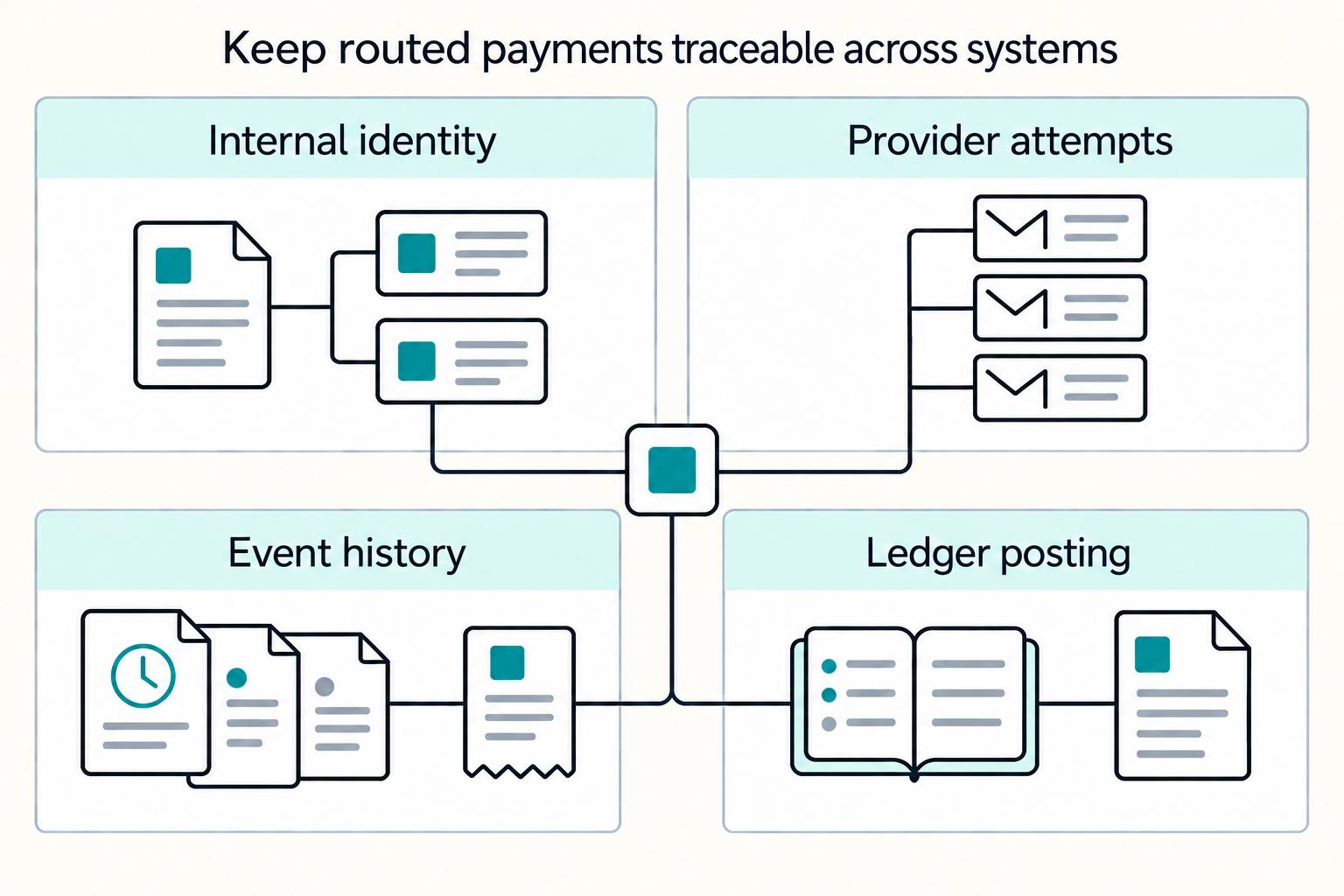
Gateway Routing for Platforms: How to Use Multiple Payment Gateways to Maximize Approval Rates
Adding a second payment gateway is not the win. The win is routing each payment on purpose, then proving approvals improved without creating new latency, cost, or reconciliation problems.
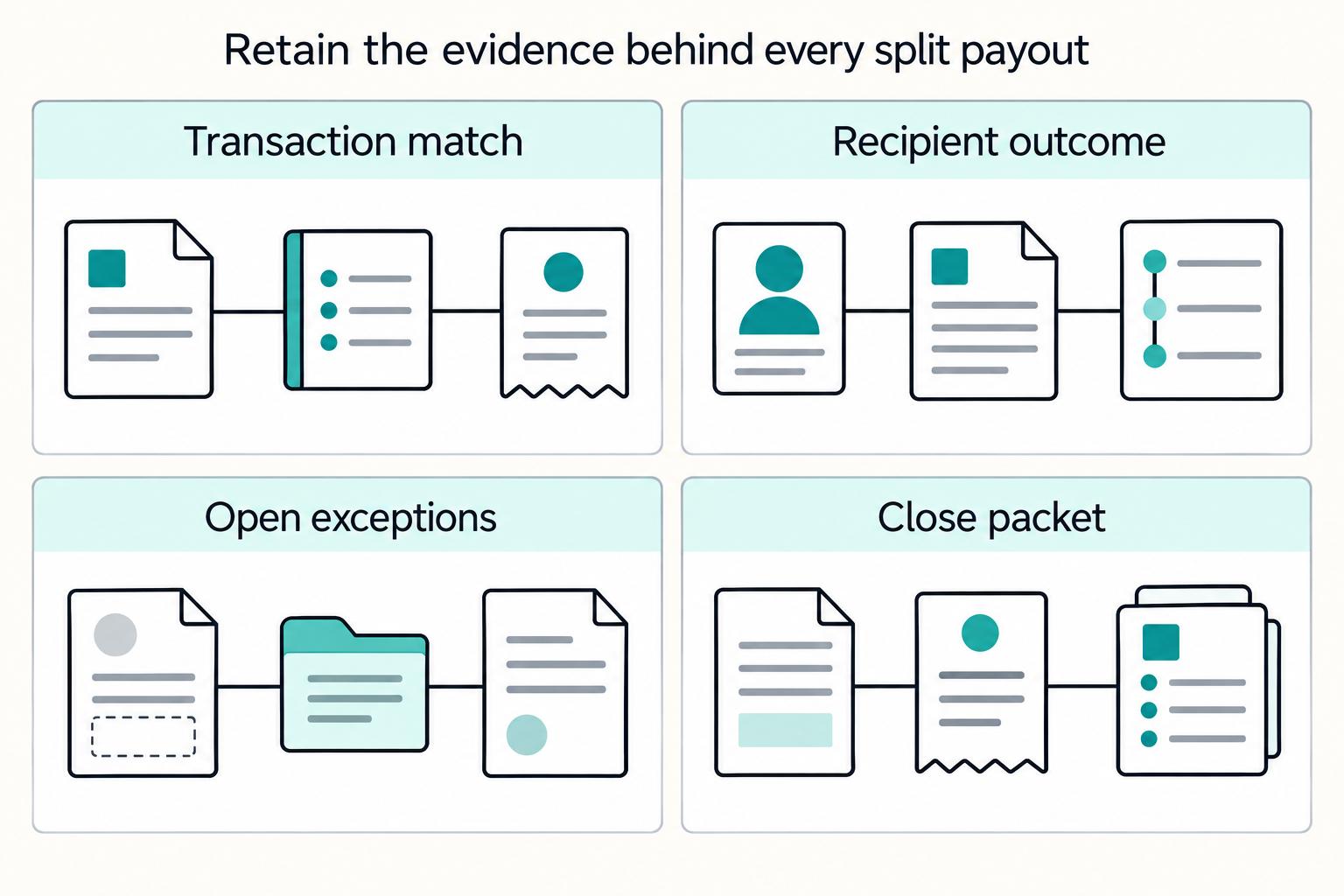
Adaptive Payments for Platforms: How to Split a Single Transaction Across Multiple Payees
The first decision is easy to state and easy to get wrong. Does one buyer checkout need to fund multiple recipients under explicit rules for platform fees, partner payouts, and failed or blocked money movement? If you cannot explain that money path on one page, pause before you code.
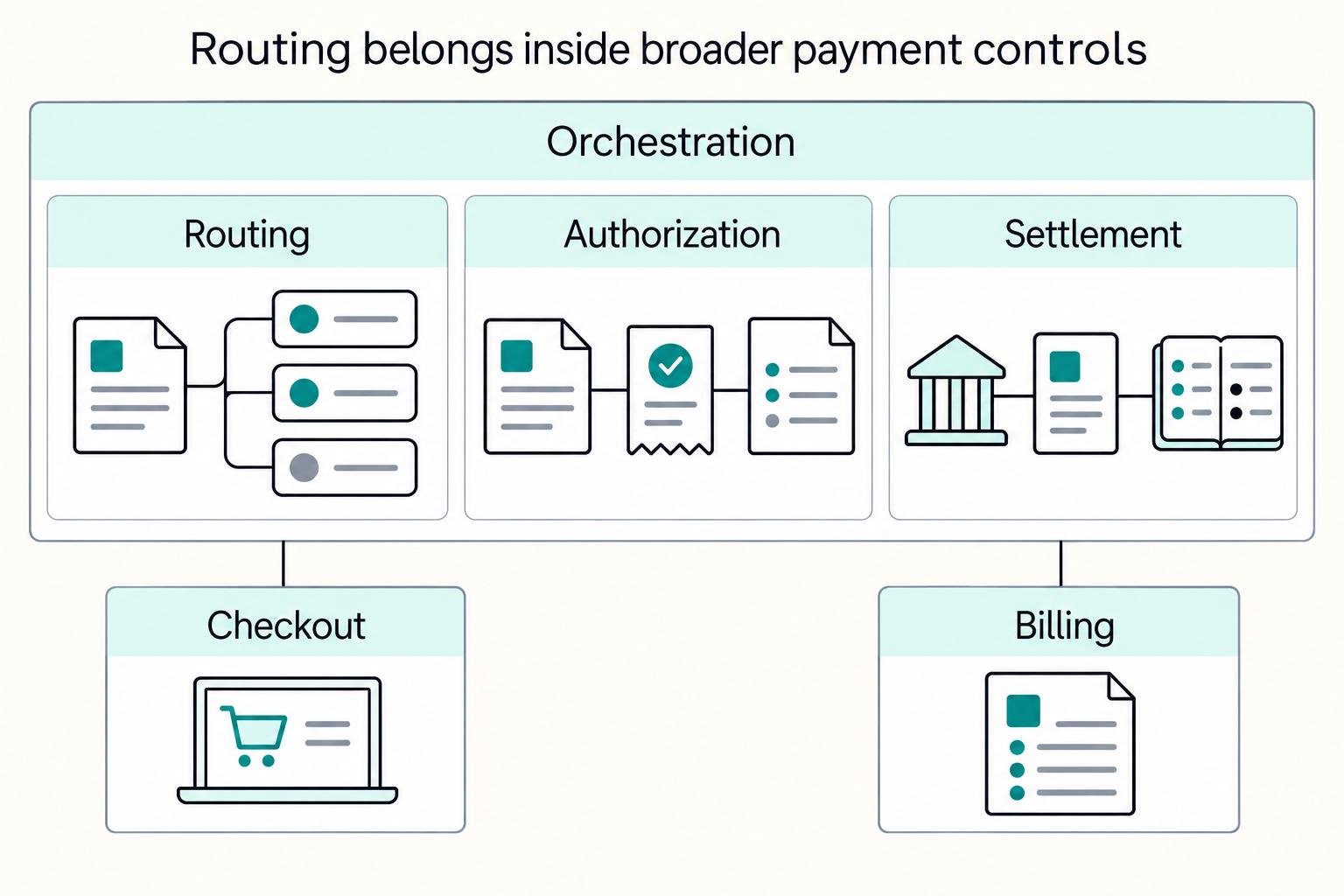
What Is Payment Orchestration? How Platforms Route Transactions Across Multiple PSPs
**When orchestration starts to matter** Payment orchestration usually starts to matter when you operate across regions and customer payment preferences, and a single-PSP setup becomes harder to manage cleanly. At that point, you are not just adding another gateway or acquirer. You are coordinating multiple PSPs, routing rules, retries, and failure paths while keeping reconciliation in the flow. A [payment orchestration platform](https://stripe.com/resources/more/what-is-payment-orchestration-what-businesses-need-to-know) is the control layer that centralizes gateways, processors, acquirers, and related providers. It keeps your team from managing each integration in a different way.