
Quick Answer
Yes: treat this as an evidence-first scope decision before rail selection. Use the SADC-RTGS PFMI Public Disclosure Framework (31 March 2025, version 4.0) to confirm operator and oversight facts, then keep a separate unresolved list for private-platform EFT issuer questions. Build a role map for payer, platform, provider/bank, and contractor, and block architecture sign-off until legal/compliance confirms whether your flow is issuer-like.
When RTGS Makes Sense and When EFT Is Enough in South Africa#
If you are evaluating contractor payouts in South Africa, do not start with rail selection. Start by separating what the South African Reserve Bank has clearly published from what still needs direct validation for a private platform.
That distinction matters because the public record is strongest on Real-Time Gross Settlement governance, specifically the SADC-RTGS System, and is not explicit on what a private platform can assume about its own payout role. The practical risk is straightforward: teams read a regulator-published RTGS document, assume it answers platform onboarding or EFT scope questions, and start building too early.
Step 1. Start with published SARB material#
Anchor your view in the SADC-RTGS PFMI Public Disclosure Framework dated 31 March 2025, Version 4.0. From the excerpt, two facts are firm: SARB is named as the SADC-RTGS system operator, and the disclosure is the fourth issue of that public PFMI document. It also places the FMI in the context of South Africa and the Southern African Development Community (SADC).
Your first checkpoint is basic document hygiene. Confirm the title, date, and version in your internal note, then copy the operator statement closely enough that legal and product work from the same source. Also note the warning in the document itself that the publication is for general information purposes only and is not financial or other advice. Here, that is not boilerplate. It is a reminder not to treat a governance disclosure as implementation clearance.
Step 2. Separate confirmed RTGS facts from private-platform guesses#
What is confirmed here is governance and oversight context. The PFMI disclosure points to SARB and the SADC Payment System Oversight Committee as authorities overseeing the FMI. That gives you a solid basis for understanding who operates and oversees the RTGS environment.
What public sources do not confirm is just as important. They do not give you private-platform onboarding steps, exemptions, or EFT thresholds, triggers, and procedures for platform implementation. If your team is searching "pay contractors south africa rtgs eft sarb compliance platform," treat that as a research prompt, not a product requirement. The failure mode is building a payout flow around assumptions the authority never actually published.
Step 3. Build a go or no-go evidence pack before spending#
Before you commit engineering or GTM resources, create a short evidence pack with three items: the 31 March 2025 PFMI disclosure, a one-page summary of confirmed facts, and a separate list of unresolved questions for counsel or compliance review. Keep those lists separate.
A good outcome at this stage is not false certainty. It is a clean decision path: what SARB has explicitly published, what your platform still needs to validate, and what evidence you need before choosing RTGS, EFT-style flows, or a pause. That is the standard this guide uses throughout.
Need the full breakdown? Read How to Pay Contractors in Nigeria Using Local Rails for Compliance-Safe Operations.
What is confirmed today and what is still unknown#
Today, you can confirm SARB's role in South Africa's RTGS infrastructure through SAMOS, but you cannot confirm a private platform's EFT issuer obligations without consulting official National Payment System guidance directly.
Step 1. Anchor the confirmed facts in the published SARB record#
The strongest primary-source evidence here is the South African Multiple Option Settlement (SAMOS) Real-Time Gross Settlement (RTGS) System Self-Assessment 2024. The disclosure shows Date of this disclosure: 31 March 2025 and Version: 5.0. It also states that the FMI operates in South Africa, that the South African Reserve Bank is the authority regulating, supervising, or overseeing it, and that data were supplied by SARB as the SAMOS system operator.
Use those exact fields in your internal note: title, date, version, jurisdiction, authority, and operator.
Step 2. Separate RTGS governance facts from EFT scope signals#
You can also cite broader policy context: SARB's Payments Network Modernisation (PEM) Programme is presented as part of modernising South Africa's national payment system in its 2030 strategy context. That is useful direction, not platform implementation clearance.
Treat any mention of EFT Credit Payment Instruction Issuers as an incomplete signal here. Official guidance does not confirm which business models are in scope, what exemptions apply, or what registration sequence a contractor payout platform would follow.
Step 3. Mark the unknowns before you build#
For this South Africa contractor payout question, the unresolved questions are operational: whether your model is in scope, whether your flow is treated as issuing payment instructions, and what onboarding or control constraints apply.
If you cannot map your payout role to a primary source, do not treat rail choice as settled. A common failure mode is using RTGS governance material to infer private-platform permissions that were never confirmed.
What to prepare before you scope product work#
Before product writes tickets, lock down a small evidence pack and a written role description. The goal is simple: separate what the documents confirm from what still needs legal or compliance interpretation.
| Source | Treatment | Notes |
|---|---|---|
| PFMI Public Disclosure Framework material | Include in the minimum evidence pack | Save the source, title, date, version (if shown), and URL |
| RTGS Renewal Programme page | Use for directional context | Save the source, title, date, version (if shown), and URL |
| National Payment System Department references | Include as relevant references | Save the source, title, date, version (if shown), and URL |
| Payments Industry Body Design report (November 2022) | Use as secondary context, not final authority | Where discrepancies exist, the signed-off content will prevail |
Step 1: Build a minimum evidence pack you can verify quickly. Include the PFMI Public Disclosure Framework material you are using, the RTGS Renewal Programme page for directional context, and relevant National Payment System Department references. For each item, save the source and log the title, date, version (if shown), and URL so another reviewer can trace each claim without guesswork.
Use compiled industry reports as secondary context, not final authority. The Payments Industry Body Design report (November 2022) states that where discrepancies exist, the signed-off content will prevail.
Step 2: Define your payout model in writing before rail decisions. State whether the flow is domestic or cross-border payments, where pay-in comes from, what triggers payout, and whether you issue instructions on behalf of payers. Name the actors in the flow (payer, platform, provider or bank, contractor) so scope questions stay tied to a concrete operating model.
This matters because even in a broadly open FDI environment, strategic areas such as banking can still carry specific licensing, ownership, or prudential requirements.
Step 3: Turn unknowns into a hard gate. Create a known-vs-unknown brief using SARB and National Payment System terminology. Keep unknowns explicit, including whether your flow resembles EFT Credit Payment Instruction Issuers, and whether any cross-border element changes the analysis.
Set the checkpoint in writing: no architecture commitment until legal and compliance owners sign off on that issuer-similarity question.
RTGS and EFT decision points for contractor payouts#
Make this an operating-fit decision first. Test an EFT-style instruction flow for variable, batched contractor payouts, and treat RTGS-linked design as a separate infrastructure-role workstream that needs early compliance mapping.
Step 1. Anchor the choice to participant reality#
Start with what the published record clearly confirms: oversight lanes and operating jurisdictions. In the December 2025 PayInc self-assessment (period under review: 2025), the split is explicit: SARB National Payment System Department for PSO activities in South Africa, and the SADC Payment System Oversight Committee for RCSO activities in the Southern African Development Community.
Use that to frame your decision memo around your actual role. Name whether you are a direct participant, operating through a bank or provider participant, or blocked on access assumptions. If an option does not have a clear participant and oversight lane in your evidence pack, mark it unconfirmed.
Step 2. Score the rail against your operating model#
Use one table so leadership can see what is clear, what is directional, and what is still unknown.
| Option | Regulator clarity | Participant model | Exception handling | Reconciliation burden | Dependency on bank relationships within South Africa |
|---|---|---|---|---|---|
| EFT-style instruction flow | Public clarity on private platform scope is incomplete | Usually framed first as a bank/provider-mediated instruction flow unless legal review confirms otherwise | Often easier to model for scheduled, variable, and batched payouts, with role boundaries documented | Can expand quickly if approvals, retries, and beneficiary mismatches are not tied to references | High |
| RTGS-linked path | Oversight is clearer at FMI/operator level (PSO/RCSO) than at private platform implementation level | Must be mapped carefully so you do not assume access or participation | Harder to design if settlement-stage ownership is undefined | Should start from participant statements and provider reports, not product assumptions | Very high |
| Blocked by unknowns | Directional only | Unknown | Unknown | Unknown | Unknown until legal or compliance confirms role and provider path |
Step 3. Escalate unknowns before build#
If you need scalable marketplace disbursements, EFT-style flows are usually the right first operational test. If your model depends on high-assurance settlement assumptions, map SADC-RTGS implications early and treat readiness as unproven until legal or compliance signs off.
Keep market context separate from implementation readiness. The SIIPS 2022 report is explicit that it includes "only systems with live transactions and functionality" as of June 2022; that helps with context, not private-platform onboarding certainty.
Expected output from this step: one provisional rail choice, one named South Africa bank or provider dependency, and one visible "blocked by unknowns" row.
If you want a deeper dive, read How to Pay Contractors in Canada: Interac e-Transfer EFT and CRA Compliance for Platforms.
How to test if your platform may fall into EFT issuer scope#
Start with a conservative rule: if your payout flow could be interpreted as issuing EFT instructions on a payer's behalf, treat launch as blocked until that point is confirmed.
| Scenario | Control questions | Decision signal |
|---|---|---|
| Scheduled batches | Who operationally originates instructions and who controls retries, edits, resubmissions, and release timing | If control shifts from customer approval to platform logic, flag issuer-scope risk |
| One-off payouts | Who operationally originates instructions and who controls retries, edits, resubmissions, and release timing | If control shifts from customer approval to platform logic, flag issuer-scope risk |
| Rule-triggered payouts | Who operationally originates instructions and who controls retries, edits, resubmissions, and release timing | If control shifts from customer approval to platform logic, flag issuer-scope risk |
Step 1. Map parties and actions before you map labels#
Build a role map with payer, platform, and beneficiary for one full payout path. For each step, state who approves, who triggers the instruction, who controls timing, and who receives funds. If any line reads like "the system sends payment," rewrite it into a named party and action.
Step 2. Run scenario tests on origination and timing control#
Test the same role map across scheduled batches, one-off payouts, and rule-triggered payouts. Focus on who operationally originates instructions and who controls retries, edits, resubmissions, and release timing. If control shifts from customer approval to platform logic, flag that as issuer-scope risk instead of treating it as routine automation.
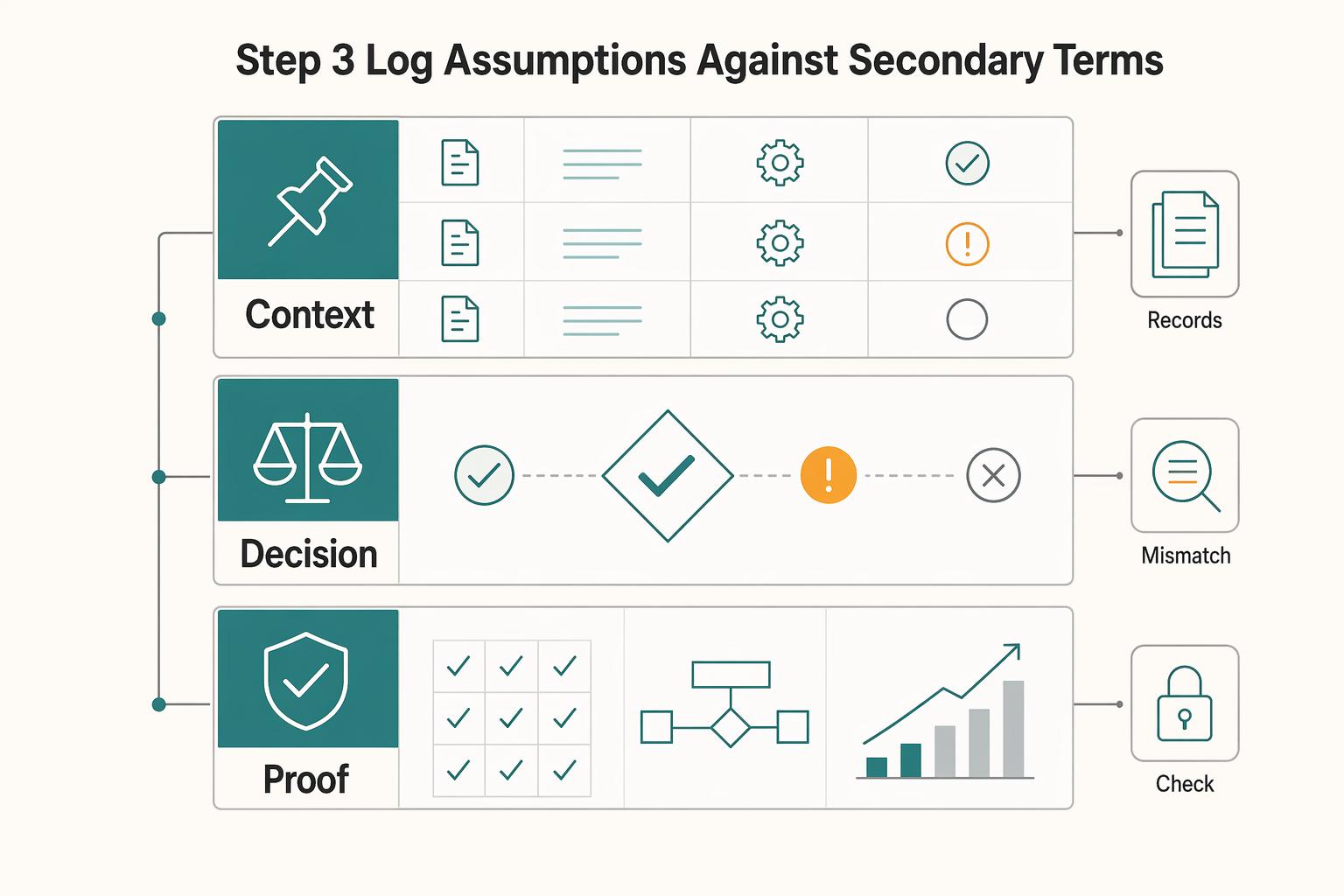
Step 3. Log assumptions against secondary terms, then mark gaps#
Use the Bowmans update on EFT Credit Payment Instruction Issuers as a checklist for terms, not as final authority. For each term, record: your interpretation, the product behavior that supports it, and whether primary-source confirmation is still missing. If confirmation is missing, keep the item unresolved.
Step 4. Gate launch when your flow is operationally issuer-like. Set a clear decision rule: if role mapping and scenario tests show issuer-like behavior, make SARB registration or compliance review a launch dependency. The output should be a clear go, no-go, or blocked by unknowns decision with attached evidence.
Related: How to Pay Contractors in Turkey: FAST EFT and MASAK Compliance for Platform Operators.
Design the operating model for compliance and auditability#
If issuer-scope risk exists, your operating model should make every payout traceable from request to final ledger state. The goal is practical: a reviewer should be able to follow what happened without guessing.
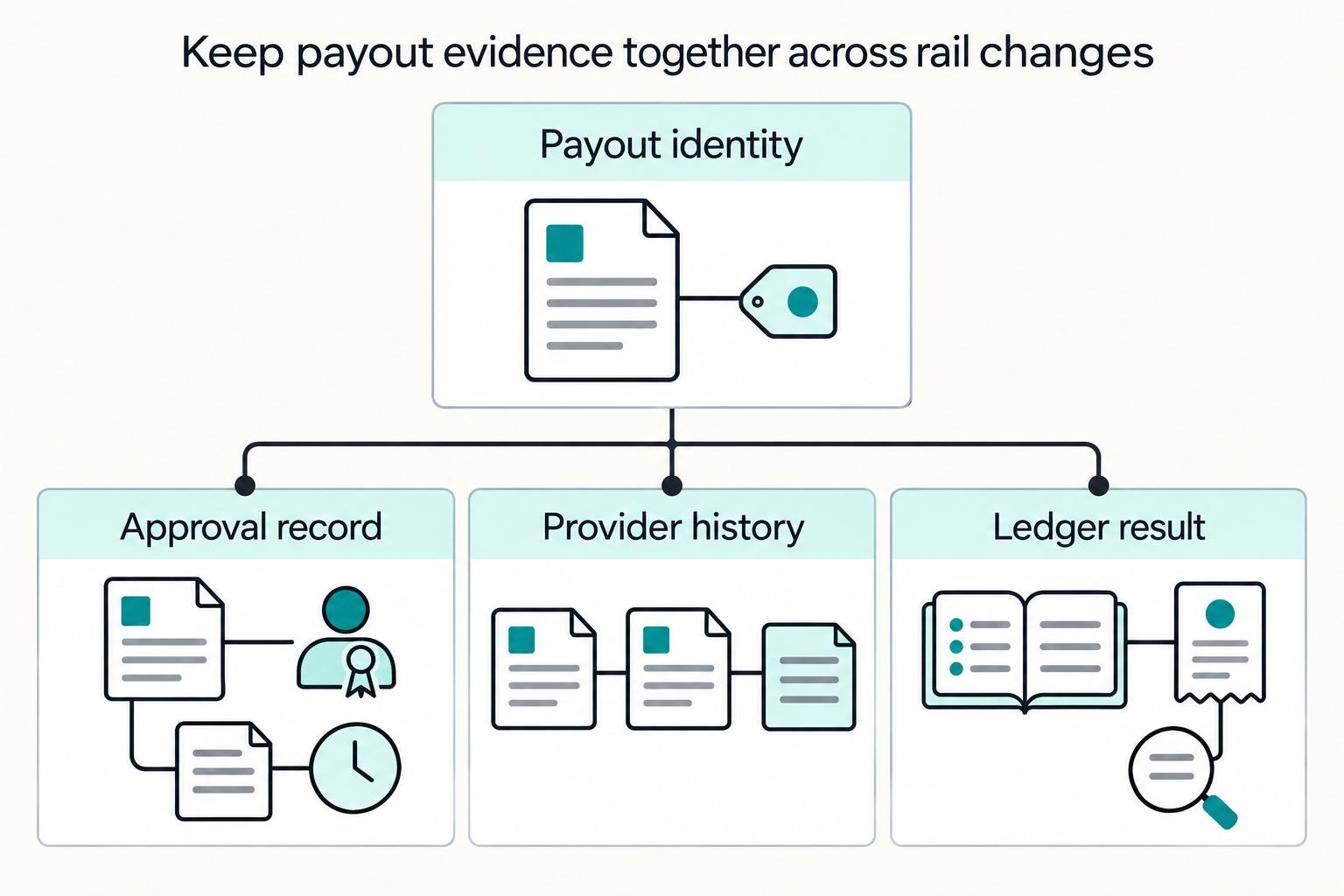
Step 1. Build a regulator-readable payout trace. Start with one record that ties the full chain: original request, provider reference, internal ledger posting, and export trail. In practice, keep a stable internal payout ID tied to approval time, funding reference, beneficiary details, provider submission reference, webhook events, and final ledger state.
Verification test: sample one payout and confirm an operator can trace it end to end without asking engineering.
Use the PFMI Public Disclosure dated 31 March 2025 (version 4.0) as a benchmark for external explainability. It identifies SARB as the responding institution and lists oversight by SARB and the SADC Payment System Oversight Committee. It does not prescribe your schema, but it does raise the bar above vague statuses like "paid" or "done."
Step 2. Put policy gates before release. Apply your internal policy controls before an instruction leaves the platform, and record why each control exists. The public PFMI materials here do not define platform-level KYC, KYB, or AML requirements, so treat those controls as your own operating choices and document them.
Route each hold to an exception queue with a reason code, evidence, owner, and release decision. Keep policy outcomes separate from payment execution outcomes so policy hold, provider reject, and technical retry are distinct states in your National Payment System trace.
Step 3. Make retries idempotent and reconcile by event. Use one obligation ID per contractor payout and separate attempt IDs for each provider submission. Then reconcile outbound requests, provider references, webhook callbacks, and ledger movements before marking completion or requeueing.
Checkpoint: replay a timeout and confirm a retry does not create a second payable. If one view cannot show the obligation, attempts, and final settled state, fix that before scaling cross-border payments.
Step 4. Assign sign-off by function. Policy-sensitive payout changes should require shared sign-off, not product-only judgment.
- Product owns approval UX, payout state design, and change notes where user actions affect instruction origination.
- Compliance owns policy rules, evidence standards, and review of changes influenced by the Policy and Regulation stream.
- Payments Ops owns provider mappings, exception handling, daily reconciliation, and release controls.
The PFMI disclosure also states it is for general information only and not financial or other advice. Use it to shape auditability, not as legal advice for your exact model.
For a step-by-step walkthrough, see Gig Worker Tax Compliance at Scale: How Platforms Handle 1099s W-8s and DAC7 for 50000+ Contractors.
Sequence implementation in phases with hard checkpoints#
Run this rollout in phases, not as one continuous build, and treat pilot exit as a hard decision gate. The main risk is scaling on top of unresolved scope assumptions tied to SARB interpretation or an EFT Credit Payment Instruction Issuer question.
| Phase | Main output | Hard checkpoint |
|---|---|---|
| Scope memo | Separate confirmed facts, directional signals, and open questions, with a product consequence column | Write the memo before technical design |
| Design pack | Define payout orchestration, ledger mapping, failure handling, a sequence view, status definitions, and a field map | Fix reversal handling before pilot launch if balances can change without a distinct status and compensating ledger entry |
| Controlled pilot | Trace each payout through a stable internal ID, provider reference when present, and an exportable reconciliation view | Set pass criteria in advance for settlement visibility, reversal handling, and reconciliation output quality |
| Pilot exit | Hold expansion on volume, corridors, or customer segments while any scope-critical unknown remains open | Pause and resolve any open point that could change your role in the payment flow |
Step 1. Write a scope memo before technical design#
Start with a short memo using the PFMI Public Disclosure Framework and RTGS Renewal Programme material to separate confirmed facts, directional signals, and open questions. Add a clear product-consequence column so unresolved points are visible before build decisions.
Use regional context to keep the discipline tight: the SADC Payment System Project was launched in June 1996 and aimed to support a coordinated regional approach to cross-border payments and reduce trial-and-error in national payment system modernization. Treat that as a signal to avoid improvised scope logic.
Step 2. Design the payout path around evidence#
For South Africa, define payout orchestration, ledger mapping, and failure handling as one design pack. At minimum, include a sequence view, status definitions, and a field map from obligation to provider attempt or attempts to ledger and reconciliation outputs.
Test the design with one success case, one provider reject, and one reversal case. If a reversal can change balances without a distinct status and compensating ledger entry, fix that before pilot launch.
Step 3. Run a controlled pilot with explicit pass criteria#
Keep the pilot small enough for full operational review, but broad enough to exercise expected failure paths. Set pass criteria in advance for settlement visibility, reversal handling, and reconciliation output quality.
Each pilot payout should be traceable through a stable internal ID, provider reference (when present), and an exportable reconciliation view linking request, attempt, and ledger outcome. If exception handling still depends on manual spreadsheet stitching, the pilot is not ready to pass.
Step 4. Enforce the hard stop at pilot exit#
Do not expand volume, corridors, or customer segments while any scope-critical unknown remains open. If the unresolved point could change your role in the payment flow, pause and resolve it first.
This stop rule is practical, not theoretical: SIIPS 2025 notes that central banks and IPS operators, including South Africa and SADC, provided data to help close information gaps. Treat open scope questions as rollout blockers until they are resolved.
Common mistakes that derail South Africa rollout decisions#
Most rollout mistakes here come from treating context sources as implementation proof. For a go or no-go decision, classify evidence by what it can actually prove and mark anything else as unresolved.
Step 1. Classify governance documents for what they are#
Do not treat SADC-RTGS System governance material as a private-platform onboarding manual. It supports regional and infrastructure context, not direct onboarding steps for your contractor payout model.
Use a simple source label in your memo: context, scope signal, or procedure. If a document does not establish participant role, required evidence, or approval path, it is not a procedure source.
Step 2. Reject secondary summaries as compliance proof#
Do not decide electronic funds transfer compliance scope from secondary summaries alone. The grounding here is explicit: the Scribd item is user-uploaded with an AI-enhanced title and description, and ReConnect Africa is a general professional magazine site rather than a South African payments regulatory source.
Set a hard rule: each compliance claim must map to primary material or be flagged unresolved. If it cannot be traced to primary South African Reserve Bank or formal National Payments System material, treat it as a lead, not proof.
Step 3. Define your role before you design payout UX#
Define platform role before interface design. The World Bank FSAP technical note (prepared during September 2020 to June 2021) separates National Payments System and Payment Services and Instruments, which is a useful structure for your scope memo.
If contractor flows may extend from South Africa into the SADC region, reopen scope before expanding assumptions from a domestic pilot.
Related reading: How to Write a Payments and Compliance Policy for Your Gig Platform.
Your copy-paste checklist before committing build budget#
If any core scope question is still unresolved, treat that as a build-budget gate. Use this checklist to separate what is confirmed from what still needs primary-source interpretation.
- Separate global context from country-specific requirements.
Use the BIS paper Payment aspects of financial inclusion in the fintech era (April 2020) and the World Bank/CGAP guide A guide to inclusive instant payment systems (2021) as policy and design context only. Do not treat them as South Africa operating rules.
Verification point: every compliance claim in your deck or PRD must link to a stored primary document. Red flag: if a statement cannot be tied to a primary source, downgrade or remove it.
- Map your operating role before locking product behavior.
Put the full flow on one page: payer, platform, beneficiary, provider or bank, who triggers payment instructions, who controls timing, and who can change details after approval. Then have legal and compliance test that role map against in-scope local payment-system classifications.
Verification point: test at least normal payout, scheduled batch, and retry-after-failure paths.
- Use a decision table for RTGS vs EFT, and keep unknowns explicit.
Compare business fit, participant dependencies, exception handling, reconciliation burden, unresolved legal questions, escalation owner, and decision deadline. Include one row marked blocked by unknowns if key interpretation is still open.
- Gate launch on controls you can verify internally.
Require written compliance interpretation, audit-ready payout traces, and defined pilot pass criteria for South Africa. Your evidence pack should support request-to-reconciliation tracing with internal IDs, timestamps, provider references (when available), ledger postings, retries, reversals, and manual interventions.
- Pause scaling when role scope is still disputed.
Keep building low-regret components such as ledgering, trace capture, and exception handling, but avoid locking pricing, GTM claims, or partner assumptions until primary-source interpretation is settled.
Frequently Asked Questions
Do platforms paying contractors in South Africa need SARB registration for EFT instruction issuance?
That question is unresolved rather than assumed. If your product appears to issue or control payment instructions on behalf of payers, get a written legal interpretation tied to primary South African Reserve Bank and National Payment System material before launch. A potential failure mode is building payout UX first and only later finding your role was classified too loosely.
Who regulates RTGS activity in South Africa and the SADC region?
For the SADC-RTGS System, the PFMI public disclosure names the South African Reserve Bank as the responding institution. It also lists the oversight and regulatory authorities as SARB and the SADC Payment System Oversight Committee, and places the FMI in South Africa and the Southern African Development Community. If you need a source to verify internally, use the PFMI disclosure dated 31 March 2025, version 4.0.
What does the RTGS Renewal Programme change for platform operators in practical terms?
From the evidence here, you should not claim a concrete operating change for private platforms yet. The confirmed public signal is broader: SARB links its 2030 strategy to modernising South Africa’s national payment system, and says the Payments Ecosystem Modernisation (PEM) Programme is the tangible expression of that priority. Read that as direction, not as an implementation instruction for contractor payouts.
Is there enough public detail to choose RTGS over EFT for contractor payouts today?
Not with confidence from public governance documents alone. The RTGS material is useful for oversight context, but it does not tell you whether your contractor flow fits, what your participant model would be, or what a private platform approval path looks like. If leadership wants a decision now, record it as provisional and add a clear “blocked by unknowns” note.
What evidence should founders gather before approving engineering spend?
Start with three items: the SADC-RTGS PFMI public disclosure, your written role map, and a claim log that marks each compliance statement as either primary-source supported or unresolved. Then add operator evidence: who initiates the payment, who controls timing, what references are stored, and how you will export request, provider reference, ledger posting, and reconciliation output for audit checks. If a deck says “SARB requires” and no primary document is attached, remove that claim or flag it.
How should teams handle decisions when key compliance scope details are still unknown?
Pause irreversible product commitments and set a named checkpoint for legal and compliance sign-off. You can still build low-regret components such as ledgering, traceability, and exception handling, but avoid pricing, GTM promises, or bank-partner assumptions that depend on unresolved scope. The expensive mistake is not delay itself. It is having to rework architecture after your role in the National Payment System is clarified.
Try a related tool
Researched and edited by the Gruv editorial team. Gruv builds cross-border billing, payouts, and finance-operations software for global businesses.
Sources
Includes 3 external sources outside the trusted-domain allowlist.
- bis.org/cpmi/publ/d191.pdftrusted
- bis.org/cpmi/publ/d48.pdftrusted
- documents1.worldbank.org/curated/en/784831625137368238/pdf/Building-F...trusted
- documents1.worldbank.org/curated/en/099125002222218689/pdf/P1707070ca...trusted
- elibrary.imf.org/view/journals/087/2025/004/article-A001-en.xmltrusted
- adb.org/sites/default/files/publication/1109771/unlo...external
- africanenda.org/uploads/files/siips2025/SIIPS2025-mainreport...external
- africanenda.org/uploads/files/EN_SIIPS_Report_web.pdfexternal
Educational content only. Not legal, tax, or financial advice.
Related Posts
Pay Contractors in Canada with Clear Interac, EFT, and CRA Ownership
**Step 1. Treat the payout choice as a market-entry choice.** If you want to pay contractors in Canada, you are not just picking a payment rail. You are deciding who owns compliance interpretation, who absorbs support exceptions, and how much product work you need before launch. That matters because Canadian payout design can pull in separate obligations for payment operations and anti-money laundering compliance. Those responsibilities do not always sit with the same team or role.
Pay Contractors in Turkey on FAST and EFT With MASAK Controls
Start with a narrow decision, not a country-level yes or no. If you can support Turkish lira payouts, treat FAST as a likely primary rail, and accept that MASAK and EFT details still need local confirmation, a controlled pilot in Turkey is reasonable. If those unknowns affect whether you can legally monitor, release, or reconcile contractor payouts, delay direct launch or use an Employer of Record as an interim model.
Pay Contractors in UAE with Clear WPS Boundaries and UAEFTS Checks
Write down the exact flow you want to launch in the United Arab Emirates: who contracts with the worker, who holds funds, who instructs the payout, and where the money actually moves. If you cannot explain it on one page, you are not choosing a payout feature yet. You are still defining a regulated operating model.