
Quick Answer
Start with one country evidence pack that proves access-control sync, failed-payment recovery, tax and invoicing treatment, and payment-method reliability. For media digital publishing subscription billing paywalls metering, a meter is usually the lower-risk first move when market payment confidence is still being validated. Lock meter and preview rules before pricing experiments, then test one renewal failure path end to end, including `invoice.payment_failed` behavior, retries, entitlement updates, and finance reconciliation sign-off.
How to Evaluate Paywalls, Metering, and Bundles#
A metered paywall is only a good business decision if your billing operations can support it. For platform founders, the real question is not whether reader revenue sounds attractive. It is whether digital publishing subscription billing and paywall metering can survive the messy parts of launch: failed renewals, entitlement sync, invoicing, tax treatment, and local payment movement.
That framing matters because subscriptions, paywalls, and meters can open a real revenue lane for publishers. But a growth idea can turn into an operating problem fast when the paywall sits on one side and the subscription engine sits on the other. When those controls drift out of sync, failure modes show up quickly. A paid user can lose access after a renewal, a lapsed card can keep premium access longer than intended, or finance can struggle to reconcile what product says was sold with what billing actually collected.
This article focuses on that seam between access and operations. It does not redefine metered, hard, and hybrid access from scratch. Instead, we'll walk through the checkpoints that decide whether a rollout is commercially viable in a given market and whether your current subscription billing setup will support it or slow it down.
The practical test is simple. Before you commit product and GTM resources, you should be able to answer four questions with evidence, not optimism:
- Can your paywall and subscription logic stay in sync when a user starts, renews, fails payment, or cancels?
- Do you have failed-payment recovery, including automated retry handling, so churn is not driven by avoidable billing failure?
- Can finance and legal confirm the right invoicing and VAT or GST treatment for a cross-border digital subscription, given that OECD guidance specifically focuses on services and intangibles?
- Are the payment rails in the target market reliable enough for the recurring charge experience you want to offer?
If one of those answers is still vague, treat it as a rollout risk, not a minor backend task. Payment rails are the networks that move funds between parties, so they directly shape whether recurring billing feels smooth or brittle. Failed-payment recovery is not a nice-to-have either. It is a core part of churn prevention. If your stack cannot recover missed renewals or communicate clearly during a payment failure, your meter can create billing fallout that undermines the revenue case.
A useful operator checkpoint is to require a small evidence pack before launch approval. Include one successful signup, one renewal, one failed-payment scenario with recovery behavior, and one finance-reviewed tax and invoicing note for the target market. That sounds basic, but it is where many expansions either gain confidence or reveal that the access model is ahead of the billing reality.
For a direct comparison of access models, see Publishing Subscription Models: Metered Paywalls vs Hard Paywalls vs Hybrid Access.
Define the access model before touching pricing#
Choose the access model before you test price, because pricing results are hard to trust if access rules are still unclear.
| Model | Access rule | Best fit |
|---|---|---|
| Metered paywall | Limited free access before a subscription prompt | When growth and reach are the constraint |
| Hard paywall | Blocks content immediately unless the reader pays | When you already have a highly engaged or niche audience |
| Hybrid (freemium) access | Keeps some lanes free and gates other content for subscribers | When constraints differ by segment or content type |
A metered paywall gives readers limited free access before a subscription prompt. A hard paywall blocks content immediately unless the reader pays. Hybrid (freemium) access keeps some lanes free and gates other content for subscribers.
Use your main operating constraint to pick a starting model:
- If growth and reach are the constraint, start with metering, which is commonly used to balance audience growth and subscription revenue.
- If you already have a highly engaged or niche audience, a hard paywall can be a better fit.
- If your constraints differ by segment or content type, use a hybrid model and define those free vs paid lanes explicitly.
Before pricing review, lock one written access rule: what is free, what is gated, and which events change access status. If that rule is fuzzy, pricing tests create noise, not evidence.
Mature publishers also iterate. In one public account, The New York Times launched its paywall in March 2011 with one meter limit for all users, then later moved to a personalized Dynamic Meter. Treat that as an operating lesson: there are no hard-and-fast paywall rules. Start with a model you can run reliably and refine as evidence improves.
Related: Streaming Media Subscription Billing: How OTT Platforms Handle Billing Trials and Churn.
Choose meter settings with explicit conversion tradeoffs#
Use a monthly pay meter as your default testing baseline, then tune from measured outcomes. Google's flexible sampling guidance frames monthly metering as safer for testing than daily resets, with an expected range of 6-10 articles per user per month for many daily news publishers and 10 per month as a practical starting point.
| Pay meter option | Allowance window | Reset behavior | Expected impact on conversion rate vs reach |
|---|---|---|---|
| Daily meter | Small quota per day | Resets every day | Tighter exposure control, but less testing flexibility and noisier user-experience/search signals |
| Monthly meter in the 6-10 range | 6-10 articles per user per month | Resets monthly | Balanced starting range with a clearer tradeoff between conversion pressure and top-of-funnel reach |
| Monthly meter at 10 articles | 10 articles per month | Resets monthly | More sampling room for reach and discovery, with less immediate pressure to subscribe than tighter limits |
Treat tighten/loosen rules as test triggers, not laws. If trial-to-paid stalls after readers are clearly hitting the wall, test a tighter meter before changing headline price. If acquisition drops sharply after a meter change, test a looser meter before concluding willingness to pay is the issue. Avoid changing price and sampling at the same time, or you lose causal clarity.
Test segments, not one default#
Do not assume one global meter will fit every audience segment. Different traffic cohorts can respond differently, so segment tests usually produce more useful decision signals than blended averages.
Keep the validation checklist operational: confirm counters increment only on eligible content, excluded pages do not consume quota, and monthly resets happen on the documented schedule. If these controls drift, conversion readouts are not trustworthy.
Mark evidence quality in your notes#
Separate observed outcomes from survey signals and hypotheses in your experiment log:
| Evidence type | What it reflects | Example in article |
|---|---|---|
| Behavioral evidence | Observed user actions | LMU/DRIVE-related work reported by Nieman Lab |
| Large survey evidence | Broad stated attitudes | Reuters Institute Digital News Report 2024 |
| Executive survey evidence | Informed but self-reported operator views | Reuters Institute's 2025 trends report |
| Hypothesis | Local assumptions that still need testing | Local assumptions that still need testing |
- Behavioral evidence: observed user actions. The LMU/DRIVE-related work reported by Nieman Lab is useful here because it is framed as actual behavior, not only self-report.
- Large survey evidence: broad stated attitudes. Reuters Institute Digital News Report 2024 is based on more than 95,000 people across 47 countries.
- Executive survey evidence: informed but self-reported operator views. Reuters Institute's 2025 trends report draws from 326 digital leaders across 51 countries and territories.
- Hypothesis: local assumptions that still need testing.
Use external findings to guide experiments, then label what you observed in your own cohort separately. There is no one-size-fits-all meter policy, so keep that boundary explicit in your notes.
For a step-by-step walkthrough, see Subscription Billing Platforms for Plans, Add-Ons, Coupons, and Dunning.
Treat preview depth as a first-class lever#
Treat preview depth as a conversion lever, not an editorial default. If subscription starts are the goal, start by showing less content before the paywall and test that choice deliberately.
A meter can be well set and still underperform if too much value is visible before the ask. Pugpig's 28th February 2025 summary cites research from the Department of Media and Communication at LMU Munich that challenges the usual try-before-you-buy assumption and argues for reducing preview depth when conversion is the objective.
Use that as a strong input, not a universal rule. The cited analysis covers DRIVE data from 21 newspapers in Germany and Austria over four months. Press Gazette's reporting of the same research says showing a standfirst decreased subscribe-click odds by 86.3%, and showing an intro decreased those odds by 72.2% in that reported context.
A practical baseline is to show the headline, picture, and a small amount of text, then place the rest behind a prominent paywall that cannot be dismissed. If search and discovery are still a major growth channel, avoid tightening preview depth for all traffic at once.
Telegraph leadership commentary captures the operating reality: this is a balancing act, and a blanket paywall approach can backfire. Their dynamic approach by source, including allowing some Google Discover users one or two articles before the wall, is a useful reminder that preview and paywall pressure do not need to be identical for every audience.
Design the test cleanly#
To get a usable result, isolate preview depth from pricing and offer changes. Keep a comparable cohort on the current preview treatment so movement is easier to attribute.
- Keep headline price, discount length, and checkout copy fixed during the preview test.
- Keep a holdout cohort on the current preview setup for the same segment and referral source.
- Track subscribe clicks, completed starts, and downstream retention by variant, not just paywall CTR.
Use a mechanical verification pass before trusting results: confirm each variant shows exactly the intended preview length, confirm the remaining content is blocked, and confirm analytics separate preview exposure from paywall interaction. If you change preview depth, offer copy, and price in one release, attribution becomes guesswork.
Price and discount policy should protect long-term value#
Treat pricing and discounts as retention decisions first, not just acquisition levers. Introductory discounts can increase starts, but renewal at full price is a known weak point; if discounted signups rise while early churn worsens, test a shorter discount window before lowering base price.
Pugpig's reporting suggests discount framing can drive conversion even when readers are less sensitive to precise price-point detail. That can make a promo look strong at the top of the funnel while still attracting subscribers who are unlikely to stay after the offer ends. Cutting your base price for everyone in response can reduce revenue without solving retention.
State of Digital Publishing highlights longer-term plans as a churn lever. It cites annual pricing examples where many publishers use a 20% annual-vs-monthly discount, and where larger 30% or 40% gaps can push more annual uptake. Use those as test inputs, not defaults, and validate against your own cohort behavior before scaling.
Require one memo per offer#
Before launch, require one short pricing memo per offer that defines:
- target cohort and acquisition channel
- discount duration, renewal price, and plan term
- expected payback window
- rollback trigger if starts improve but retention or payback degrades
Keep execution checks mechanical: confirm the paywall, checkout, receipt, and renewal messaging all present the same discount, renewal terms, and billing cadence.
Industry inputs are useful, but they are not rollout proof. Pugpig, citing FT Strategies and Minna, reported that 68% said retention was their top priority; reconcile that signal and State of Digital Publishing guidance with your own renewal outcomes before global rollout across markets, channels, or paywall variants.
Build billing operations before market rollout#
Do not launch a market until billing operations are explicitly defined and tested. If subscription billing, invoicing, retries, and reconciliation are still implied, launch risk is operational, not just commercial.
A practical way to enforce this is a market readiness table that marks each capability as supported now, unsupported, or scheduled later.
| Area | What must be defined before launch | Verification checkpoint | Common failure mode |
|---|---|---|---|
| Subscription billing | Plan term, renewal cadence, currency, and status events used by product and support | Create a test subscription and confirm renewal dates, amount, and status changes are visible to ops | Checkout is enabled, but renewal behavior is unclear or mismatched across teams |
| Invoicing | Whether subscriptions generate periodic invoices, what the customer receives, and who can retrieve it | Trigger a live-like invoice from a subscription and confirm amount, tax display, and delivery path | Sales promises receipt/invoice behavior the setup does not provide |
| Dunning | Retry policy, payment-failure messaging, support handling, and escalation timing | Force a failed payment in test and verify retries, emails, and account state across the full sequence | First failure creates silence, then surprise cancellation or duplicate outreach |
| Reconciliation workflow | Source record for finance reporting and who signs off daily or weekly review | Reconcile sample subscription events to balance transaction records before go-live | Product shows payment success, but finance cannot tie cash movement to the subscription event |
Define failure order before the first failed renewal#
Before launch, write the failure sequence for each market. At minimum, define: the failure event, retry path, customer communication, entitlement status, and finance reconciliation checkpoint.
Tie entitlement actions to subscription status signals so billing state and access state do not drift. For finance, use balance transaction records as the reconciliation checkpoint rather than UI status alone.
Run one full failed-renewal test before approval. Confirm retries run as configured, customer messages are sent, support can see account state, and finance can trace the resulting records.
Add a country gate for tax and payment rails#
A country is not rollout-ready until both tax readiness and payment-method fit are green. If tax obligations are identified but registration is still pending where required, keep local checkout off.
Also verify payment-method support for that market's country, currency, product, and integration constraints. Some methods are not available for all merchant and customer locations, so "cards are live" does not mean the market is fully ready.
If local methods are part of expected conversion in that market, treat them as a launch gate, not a later enhancement.
Separate supported now from promised later#
For each market, document what is supported now versus later. Include invoice behavior, local payment methods, retry behavior, tax collection status, and entitlement rules.
This prevents go-to-market teams from promising capabilities that are not enabled yet. Retry behavior can differ by provider and setup, so record your actual behavior and evidence rather than assuming a universal pattern.
For a broader media billing walkthrough, see Subscription Billing for Media and Publishing: How to Manage Metered Paywalls Bundles and Gift Subs.
Decide country expansion with a hard go or no-go checklist#
Use a hard go/no-go checklist for each country, and do not launch on demand signals alone when payment acceptance, tax handling, or billing controls are still assumptions. Score the market as a decision aid, not as a mathematical reason to ship.
| Dimension | What "ready enough" looks like | Red flag that should stop go-live |
|---|---|---|
| Access model fit | Your access model matches local payment confidence and audience behavior | You plan a hard paywall while payment success is still unproven |
| Payment rails readiness | Checkout is configured by country or region, with relevant payment methods shown for that market | Local method coverage is weak, or you are relying on cards only without evidence that cards are enough |
| Tax compliance burden | Legal or tax review confirms obligations and registration status before charging customers | Tax review is incomplete, or required registration is still pending |
| Billing support maturity | Failed-payment recovery and payout reconciliation are tested end to end | Retry recovery exists only on paper, or finance cannot match payout totals to underlying transactions |
When country payment performance is uncertain, avoid the strictest access posture first. A hard paywall gates all content behind subscription, and hard paywalls are now rare, so treat this as a selective move. If billing confidence is still limited, start with controlled metered exposure to learn demand without making payment friction the first experience.
Require proof, not team confidence#
Before go-live, require three reviewable artifacts. First, legal or tax confirmation for the target country. For some digital-services VAT cases, place of supply follows where the consumer is located, and that can require VAT registration in each EU member state where you supply digital services to consumers.
Second, validate retry recovery with an actual failed renewal test. If you use Stripe Smart Retries, the documented recommended default is 8 tries within 2 weeks, but the real check is whether failed payments are actually recoverable in your setup.
Third, test payout reconciliation with finance. The operational requirement is clear: know which transactions are included in a payout. If payouts are manual, reconciliation ownership stays with your team.
Mark red markets early#
Flag markets red when local payment-method coverage is weak, tax registration work is unresolved, or retry recovery and reconciliation are unproven. This is not a minor optimization: adding at least one additional relevant payment method beyond cards has been associated with an average 12% revenue increase and 7.4% conversion-rate increase.
If country-specific payment-method configuration is not ready, tax sign-off is not in hand, or reconciliation cannot be proven, delay aggressive rollout. Keep the market in discovery mode, use lighter access pressure, and reopen the go decision only after artifacts are in place.
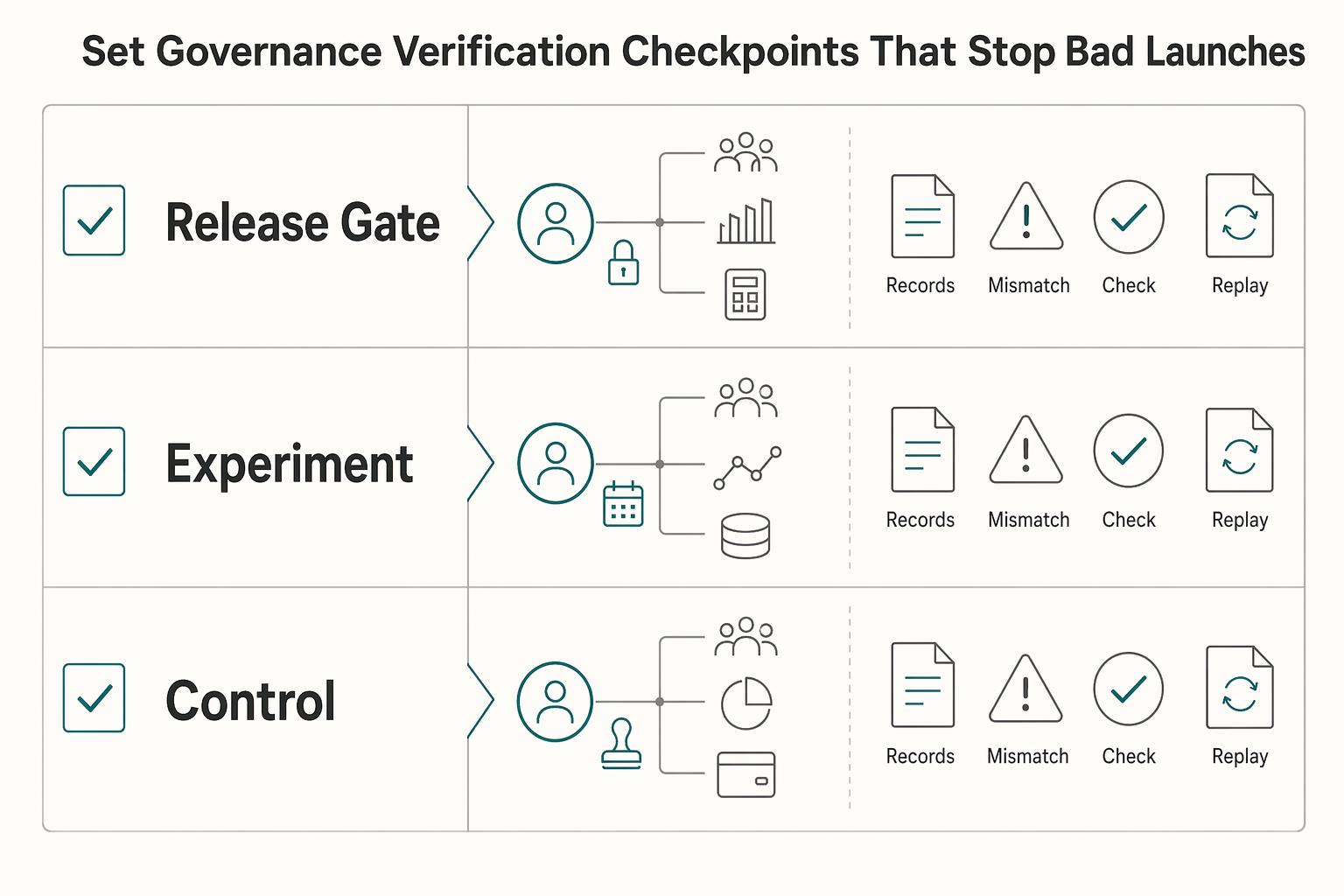
Set governance and verification checkpoints that stop bad launches#
Bad launches usually come from unclear ownership and weak verification, not from a single bad metric. After a market clears go/no-go, set explicit launch authority for meter policy, pricing strategy, and subscription billing changes.
| Checkpoint | Focus | What to verify |
|---|---|---|
| Access-model sign-off | Access model for that country | Metered, hard paywall, or hybrid, and why |
| Experiment QA | Telemetry and product-wide guardrails | Not conversion rate alone |
| Control-plane validation | Subscription and entitlement checks | Webhook endpoints for payment failures and status changes, and entitlement events and active-entitlement checks are actually updating provisioning |
Assign a named decision owner for each change type, and make that authority visible across product, growth, and finance. Teams can contribute analysis, but one owner signs the final change record.
Before launch, require three checkpoints:
- Decision sign-off on the access model for that country (metered, hard paywall, or hybrid) and why.
- Experiment QA that includes telemetry and product-wide guardrails, not conversion rate alone.
- Subscription and entitlement control-plane validation: test webhook endpoints for payment failures and status changes, and confirm entitlement events and active-entitlement checks are actually updating provisioning.
Use a partial, time-limited canary before wider rollout, and let the canary evaluation decide whether to continue.
Keep an evidence log for each launch using four certainty levels: high, moderate, low, and very low. Pair each launch decision with rollback conditions, then run an early incident review focused on dunning and entitlement drift so short-term signup gains do not hide retention damage.
Conclusion#
The through-line is simple: paywall choice is only useful if your billing operations can carry it. A metered paywall can buy you learning room, but it will not rescue weak failed-payment handling, unclear tax ownership, or messy reconciliation.
That matters even more in a market where publishers are working through a paywall plateau, with growth no longer coming from model choice alone. The more durable operators treat access decisions as part of funnel discipline, not as a branding exercise. In practice, that means your meter, preview depth, offer structure, renewals, and finance controls all need to point at the same outcome: paid conversion that still looks healthy after the first billing cycles.
If you need one immediate next step, make it a country-by-country decision sheet. Keep it short enough to use, but strict enough to block bad launches. At minimum, each country entry should show:
- chosen access model and pay meter settings
- preview rule being tested, and how outcomes will be compared
- tax owner and confirmation of VAT, GST, or sales-tax handling
invoice.payment_failedtest result and retry policy- post-retry access policy
- finance sign-off that reconciliation checks have been run
That last point is easy to underweight. Reconciliation is not abstract back-office work. It is the basic check that your internal records and external financial records agree. If finance cannot match those records cleanly, you do not yet have proof that the market is launch-ready.
The other recurring mistake is scaling on a narrow win. A lift in starts or engagement does not give you permission to scale blindly. Pugpig's warning is the right one to keep in view here: product changes can create short-term gains while weakening longer-term outcomes. If a discount lifts starts but churn worsens, shorten the offer before cutting list price. If preview depth raises engagement but subscribe clicks fall, tighten the preview before you touch the meter.
So the recommendation is modest and practical. Test one meter-plus-preview package per target country, verify dunning and tax compliance before broad rollout, and require reconciliation proof before you call the experiment a success. Scale only where both sides hold: readers convert, and operations stay clean.
Frequently Asked Questions
What is a metered paywall in one sentence?
A metered paywall lets readers access a limited number of articles for free before a subscription is required. It sits between fully open access and a full block.
How is a metered paywall different from a hard paywall for operators making expansion bets?
A hard paywall blocks content unless the reader subscribes, so it asks the market to prove paid intent immediately. A meter can give you room to test audience appetite and local checkout performance before you put all acquisition pressure on conversion. If payment methods, renewal behavior, or tax setup are still being verified in a new country, a meter or mixed paywall strategy can be a lower-risk first move.
Which pay meter settings should we decide first before launch?
Decide the free-article allowance, the reset behavior, and whether the same rules apply to every visitor segment. Also lock one tightening rule and one loosening rule before launch, so you are not improvising after the first conversion swing. A good checkpoint is simple: confirm analytics can distinguish meter exposure, subscribe click, checkout start, payment success, and renewal outcome before you ship.
Does showing more content preview usually increase conversion, or can it reduce subscription starts?
It can reduce subscription starts, so do not assume more preview is better. In the LMU-led behavioral study, showing teaser elements such as a standfirst or introductory paragraph on locked articles significantly reduced the odds of visitors clicking the subscribe button. Treat preview depth as a test variable with holdouts, not as an editorial default.
Do subscribers respond more to headline price changes or to a discount offer structure?
In that same study, discount offers significantly increased the odds of people completing payment for a subscription. Several other offer elements, including base subscription price, were mostly not associated with completion in that dataset. The operator takeaway is to test offer structure before cutting list price, then monitor early retention and cohort value.
What billing unknowns must be resolved before entering a new market for digital subscription products?
You need clear answers on local payment methods, failed-payment handling, and tax setup before you treat a market as launch-ready. Payment method fragmentation varies strongly by geography, so verify what you can actually offer in that country rather than assuming your default card mix will hold. On failure handling, confirm your invoice.payment_failed webhook is firing, decide whether you will use Smart Retries or a custom retry schedule, and note that Stripe documents a recommended default of 8 tries within 2 weeks. Also define what happens to access when retries fail, what customer message is sent, when finance reviews the failed renewal, and how sales tax, VAT, or GST will be handled before enabling checkout.
Try a related tool
Researched and edited by the Gruv editorial team. Gruv builds cross-border billing, payouts, and finance-operations software for global businesses.
Sources
Includes 4 external sources outside the trusted-domain allowlist.
- docs.stripe.com/billing/revenue-recovery/smart-retriestrusted
- docs.stripe.com/billing/revenue-recoverytrusted
- nist.gov/document/11032023-sara-r-update-draft-csf20trusted
- oecd.org/en/publications/international-vat-gst-guidel...trusted
- betternews.org/a-playbook-for-pay-meters-paywalls-and-digit...external
- chartbeat.com/resources/research/paywall-model-landscape-b...external
- cochrane.org/authors/handbooks-and-manuals/handbook/curre...external
- developers.google.com/search/docs/appearance/flexible-samplingexternal
Educational content only. Not legal, tax, or financial advice.
Related Posts
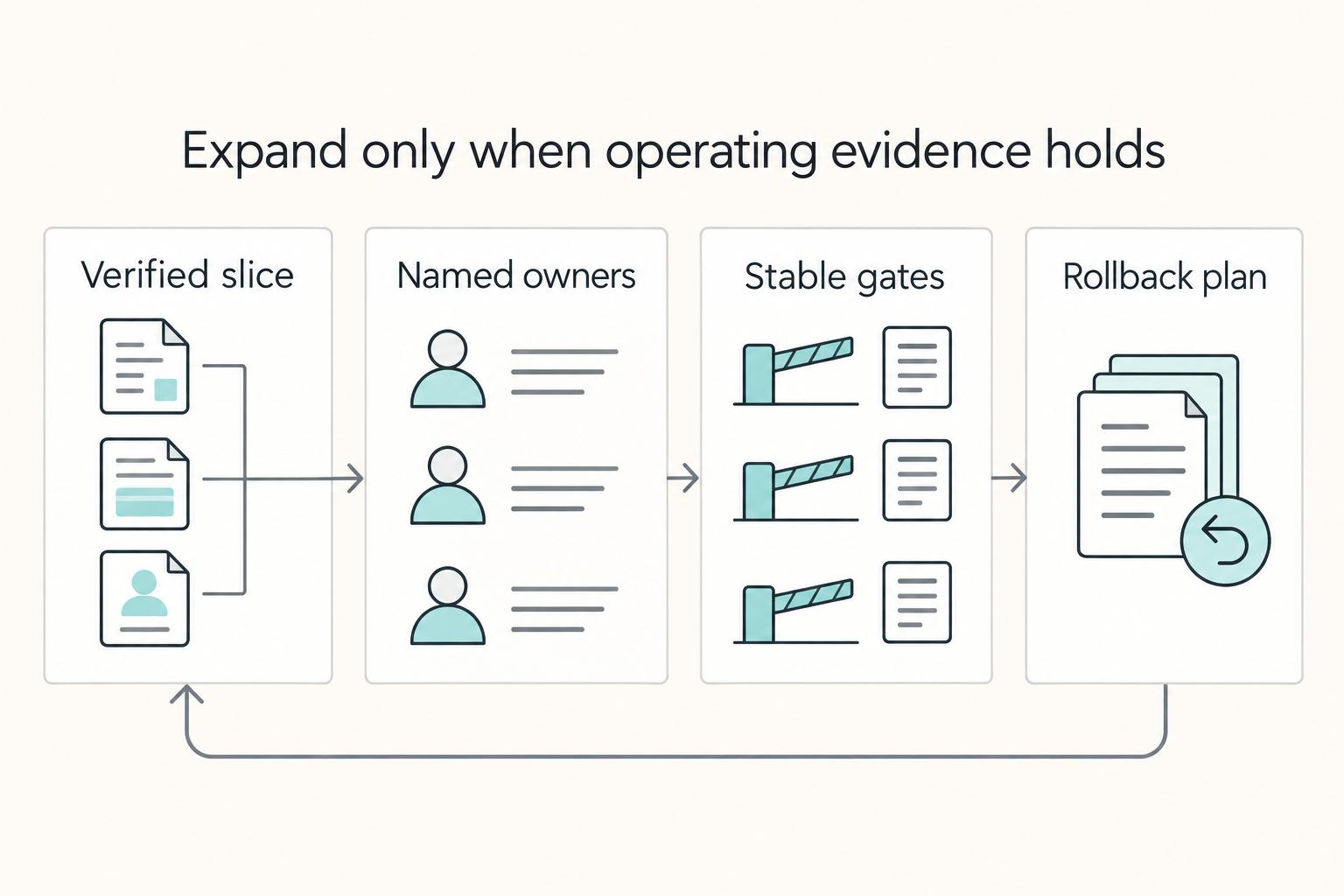
Subscription Billing for Media Publishing with Metered Paywalls and Gifts
Treat this as a contract and access problem first, not a pricing-page tweak. For teams working through subscription billing in media publishing with metered paywalls and bundles, the common challenge is getting product, finance, and engineering to agree on exactly when access starts, pauses, resumes, and ends. If your team cannot explain that in plain language before launch, you are not ready.
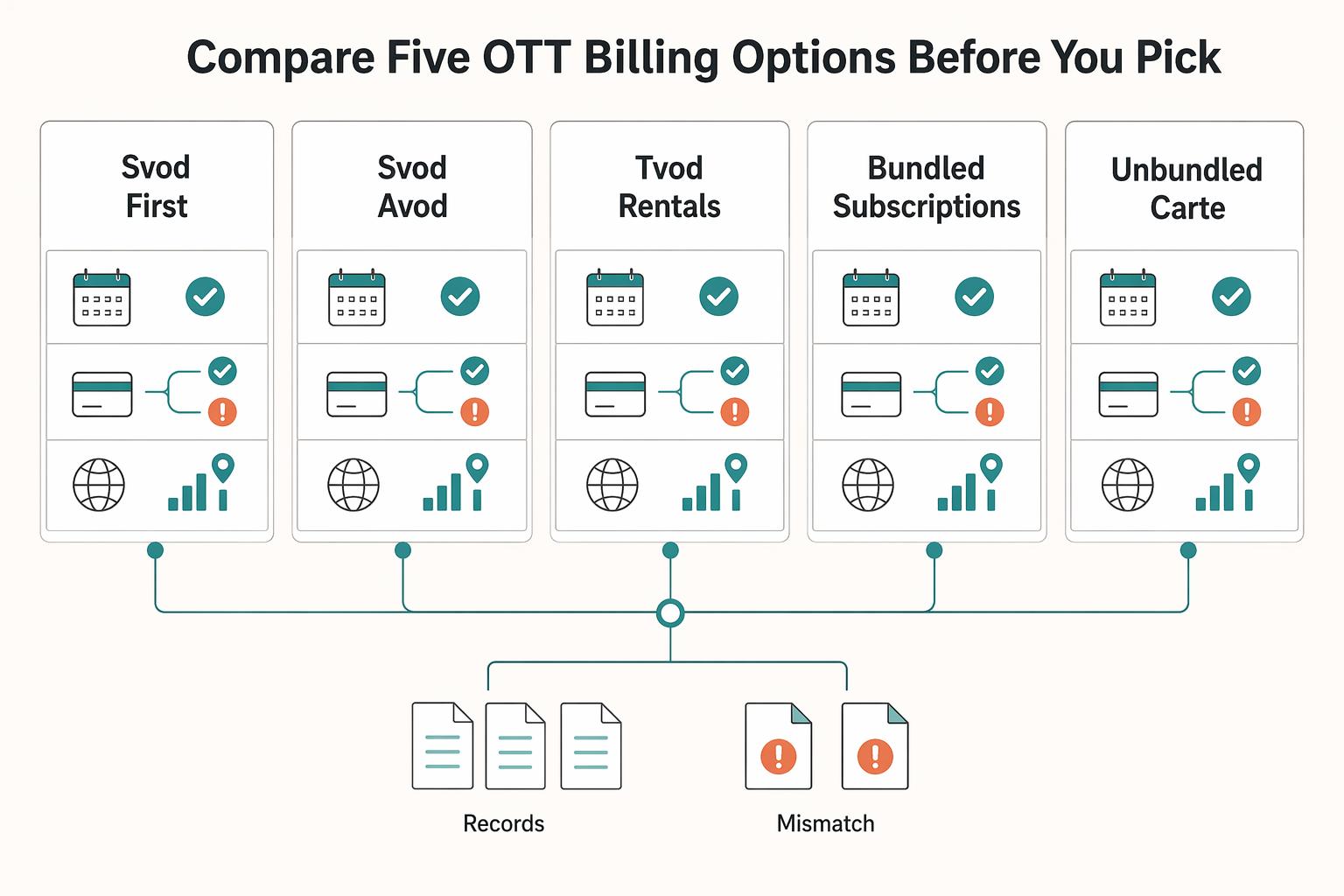
How OTT Platforms Handle Billing Trials and Churn in Streaming Subscriptions
Start with the monetization model. Choose your monetization path before a product demo starts steering the decision. For a streaming offer, the real question is not which vendor can show subscriptions on a checkout page. It is whether your business is built around recurring access, ad-supported reach, one-off transactions, or a direct-to-consumer mix that may vary by market.
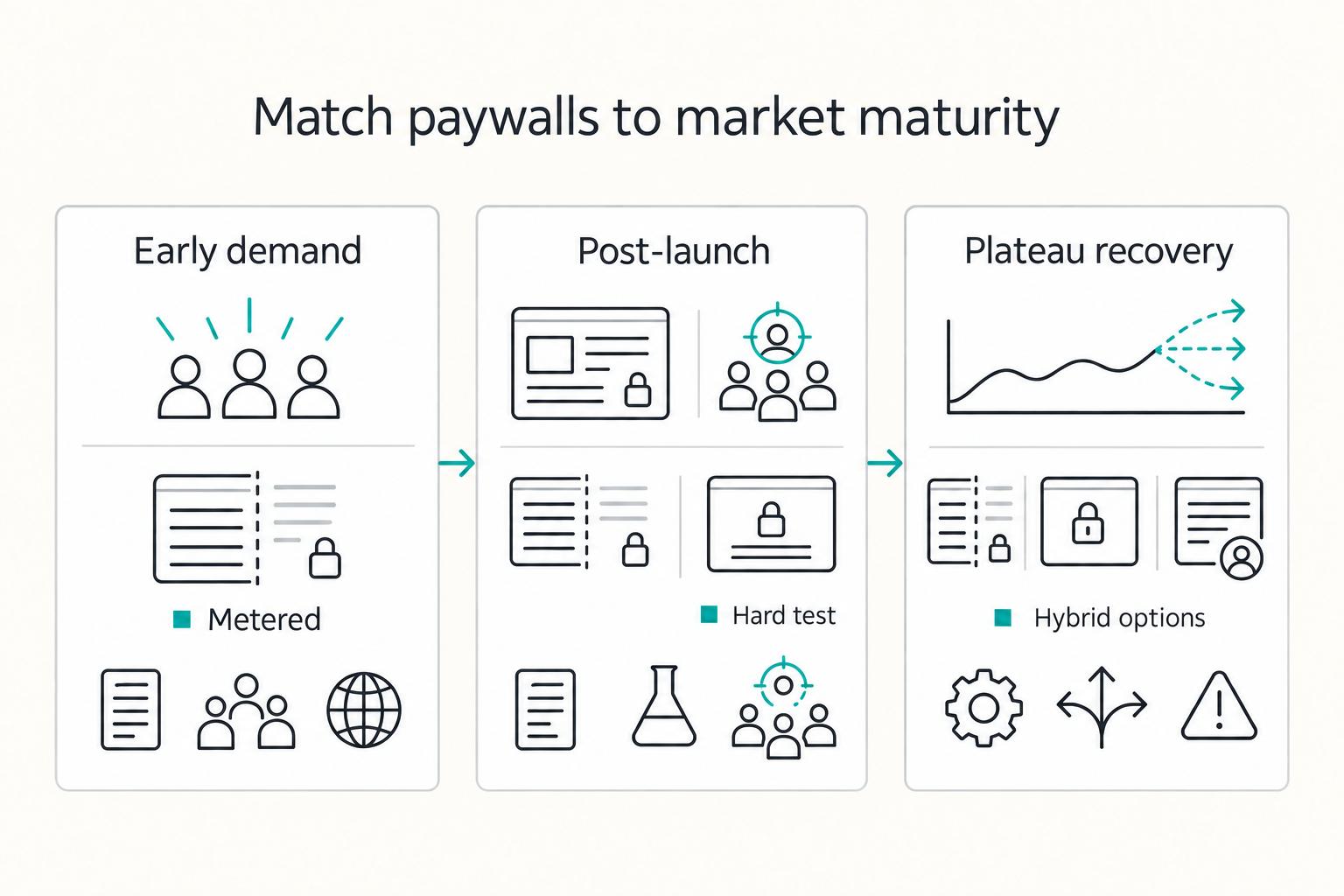
Choosing Publishing Subscription Paywall Models by Market Fit
Treat paywall choice as a market-entry decision, not a pricing tweak. If you are deciding where to put product and GTM effort, the first question is not which model sounds strongest on paper. It is whether the target market shows enough reader demand, trust, and subscription maturity to support the access rules you plan to enforce.