
Quick Answer
Use a stage-based KPI matrix to make expansion decisions, not just to report growth. For kpis platform growth seed series c ipo stages, the practical rule is: prove traction first, then growth quality, then control readiness. If commercial metrics improve but KYC, KYB, AML handling, payout reliability, or reconciliation evidence is unstable, defer launch and fix the bottleneck. This keeps Seed, Series A, Series B, Series C, and IPO planning tied to execution reality.
What to track from seed to IPO#
The useful way to read growth metrics is by stage, not as a fixed scorecard. Key Performance Indicators (KPIs) change with a company's lifecycle, and the decisions you make from them should change too.
That matters for teams deciding whether to expand now or pause until operations catch up. A Seed company and a Series C company should not use the same proof of readiness, even if both are chasing growth. Public guidance is fairly clear on the broad shift. Early companies are often still pre-revenue, so the emphasis is usually on user and engagement signals. Later-stage companies move closer to recurring revenue and revenue growth measures.
This article turns that stage logic into something operators can use. The goal is not investor storytelling or a prettier dashboard. It is to connect metrics to launch decisions from Pre-Seed and Seed through Series A, Series B, Series C, and later stages, where milestones and expectations change as companies mature. Your KPI choices should reflect that reality.
For platform businesses, growth metrics also need operating context when you are making expansion decisions. A strong demand signal is only part of the picture, and you still need to judge whether execution is ready for the next step. The exact requirements vary by company and stage, so this article avoids made-up universal thresholds. Instead, it focuses on the decision pattern: what to measure now, what that metric is supposed to prove, and what kind of weakness should pause a launch.
One recommendation runs through the whole piece: if your stage-appropriate growth signal is improving but your operational picture is still unclear or unstable, consider slowing down instead of pressing ahead. That matters most in the messy middle, where topline metrics can improve faster than execution capacity.
You will also see explicit gaps called out where public guidance is thinner. In the sources used here, KPI guidance is most explicit from early stages through Series C, while standardized IPO KPI thresholds are not defined. Where the evidence is strong, this article stays specific. Where it is not, it says so.
Build the mental model before picking metrics#
Treat funding stage and operating stage as separate lenses before you choose KPIs. Pre-Seed, Series A, Series C, and IPO describe capital context; operating stage describes how ready execution is in a specific country, payout route, or vertical.
Use that split to avoid false confidence from the fundraise label. For expansion decisions, read metrics by country and cohort, not only at the consolidated level. If acquisition is strong but repeat use is weak or payment exceptions are rising in one market, treat that market as earlier in operating maturity.
Read Product-Market Fit narrowly: repeated adoption and retained value in the target segment, not just a signup spike. That filter matters because startup-failure summaries often list demand misread as the top reason, so topline intake alone is weak evidence of fit.
Then check Unit Economics with operations included. Revenue Growth Rate can mask weak contribution quality when support load, payout failures, reconciliation work, or compliance handling scale at the same time.
Use Crunchbase and National Venture Capital Association (NVCA) benchmarks as directional context, then validate against your own market and compliance constraints. Related: Subscription Revenue Forecasting: How Platforms Model MRR Growth Churn and Expansion.
Use one stage-by-stage KPI matrix to drive go or no-go calls#
Use one matrix to make one decision at each stage: proceed or defer expansion and fix the root cause first.
| Stage | Top KPIs | Why each KPI matters | Decision triggered | Common failure signal | Owner |
|---|---|---|---|---|---|
| Pre-Seed | Repeat usage in one target segment, early retention, onboarding completion | This is the first Product-Market Fit check: users returning for core value, not launch noise. | If repeat use or onboarding completion is weak, defer any new country or vertical and fix the root cause first. | Signups rise, but return behavior stays flat. | Founder + Product lead |
| Seed | PMF signals, first recurring revenue pattern, cohort retention by country | You need repeatable value, not one-off spikes; country cuts matter in multi-local scaling. | If recurring behavior is inconsistent in the first market, keep tightening that lane before adding market complexity. | New customer count grows, but repeat spend or renewal behavior is soft. | Founder + Growth lead |
| Series A | Revenue Growth Rate, Unit Economics after delivery and payment operations | Growth must connect to contribution quality, not just demand capture. | If growth improves but unit economics weaken, pause expansion and repair margin drivers first. | Acquisition scales while operating burden expands with it. | GTM lead + Finance + Ops |
| Series B | Recurring revenue by segment and geography, Unit Economics, payout completion reliability, aged exceptions | Quality of growth now matters more than vanity metrics; public guidance here is still under-specified. | If a core segment or geography fails on growth quality or payout reliability, defer the next launch until fixed. | Topline grows, but exception queues age and finance cleanup expands. | CFO/Finance + Payments Ops + Country GM |
| Series C | Durable Revenue Growth Rate, recurring revenue quality, compliance review cycle time, reconciliation lag | Scale has to be controllable, not only fast; public guidance remains thin for multi-local platforms. | If controls lag volume, hold new country or vertical plans until reviews and reconciliation stabilize. | Strong growth sits next to worsening control lag. | CFO + Controller + Compliance + Ops |
| IPO | Stable KPI definitions, quarter-to-quarter consistency, explainable geography splits, disclosure-ready controls | IPO comparables are least standardized; issuer filings are context, not universal KPI templates. | If KPI definitions keep changing or controls cannot support disclosure, defer expansion and simplify reporting scope first. | Last-minute metric rewrites or unresolved close issues. | CFO + Controller + Legal/IR |
The sequencing is the operating rule: traction first, then quality of growth, then control. Reversing that order either overbuilds controls for weak demand or scales demand into operations that cannot carry it.
Use two checks to keep the matrix decision-grade. First, verify each KPI by country and cohort, not only in consolidated reporting. Marketplace benchmark matrices are useful for questions, but they are reductionist, centered on 25-75% percentiles, and do not capture outliers; that matters because marketplaces are less homogeneous than SaaS and often scale country by country.
Second, require evidence behind each KPI before calling a market ready. If records are incomplete or definitions changed mid-cycle, treat the KPI as untrusted and defer expansion.
For Series B/C, apply a strict finance rule: do not chase vanity metrics, and do not wait until later rounds to get serious about finance rigor. Growth signals without reliable controls are a common setup for expensive expansion mistakes.
Set expansion gates before committing GTM and product resources#
Treat this as a hard no-go rule: if KYC, KYB, AML, payout exception handling, or reconciliation proof is still manual and unstable, do not launch that market yet.
A market can look strong on demand and still fail operationally. Make launch approval evidence-based, not forecast-based.
Make the gate hard to pass on purpose#
Require explicit pass criteria across:
| Area | Requirement | Detail |
|---|---|---|
| KYC and KYB coverage | Target customer type is covered | Known document paths and review ownership |
| AML review flow | Visible status | Resolution handling |
| Payout outcomes | Outcome visibility | Completed, failed, held, and reversed states |
| Reconciliation evidence | Traceability | Transaction event to payout record to ledger outcome |
| Exceptions | One named owner | When payouts or compliance reviews stall |
Build a country evidence pack before go-live#
Use one approval artifact per market. It should capture policy constraints, onboarding requirements, payout method coverage, and tax form handling where enabled (W-8, W-9, Form 1099, FBAR, FEIE).
For FEIE-related handling, keep the rules explicit in your documentation:
- Eligibility requires foreign earned income and a tax home in a foreign country.
- One qualifying route uses the physical presence test:
330 full days in 12 consecutive months. - If qualification is only for part of the year, the maximum exclusion is adjusted by qualifying days.
- For tax year
2026, the maximum exclusion is$132,900per person. - Income excluded under FEIE still must be reported on a U.S. tax return when FEIE is claimed.
For FBAR, treat it as a reporting topic that may apply to some users. FinCEN's FBAR page includes due-date and extension notices, so your pack should define whether user guidance, support escalation, or disclosure review is needed for that market.
Check implementation, not just policy#
Before go-live, verify system behavior:
- Idempotent
APIretries - Reliable
Webhooksdelivery and retry handling without state loss - A clear exception queue owner for failed or held payouts
If the team cannot trace one request through final status and reconciliation evidence, the market is not launch-ready.
Keep a simple internal tracker for each planned country or vertical: eligibility certainty, compliance load, operational risk, and timeline confidence.
What to prioritize in Pre-Seed Seed and Series A#
After you set a hard launch gate, use stage to set the proof bar. In Pre-Seed and Seed, prioritize learning quality over headline growth. By Series A, prioritize both demand capture efficiency and reliable execution.
Stage labels vary, but the operating pattern is consistent: Seed is the earliest funding stage and is typically used to build the product, validate market fit, and build the founding team. By early stage, including Series A, investors expect evidence the business can scale, not just early user interest.
Pre-Seed and Seed#
Treat traction as a hypothesis test, not proof of scale readiness. A signup spike or pilot win matters only if usage is repeatable and your money movement flow can complete without constant manual rescue.
Use one practical checkpoint: trace a recent cohort through onboarding, first collection, and first payout. Confirm each step has clear status visibility. If reviews stall, payout states are unclear, or reconciliation depends on manual cleanup, your constraint is operational reliability, not demand.
Series A#
At Series A, read commercial and operational signals together. Metrics like Sales Close Rate and Cost Per Lead are useful only if the demand they represent can be fulfilled reliably.
For each closed-won cohort, verify onboarding completion, expected collection outcomes, and payout final states with predictable visibility. If demand rises while payout or reconciliation exceptions rise faster, hold country expansion and fix the bottleneck first.
What changes in Series B and Series C before IPO pressure starts#
By Series B and Series C, the core test is growth quality, not just growth rate. Investors are evaluating whether your model scales and whether unit economics hold up, while IPO readiness raises the bar on visibility, regulation, and operational responsibility. KPI ownership should shift accordingly, from headline momentum to defensible performance by segment, geography, and operating path.
Keep Recurring Revenue, Revenue Growth Rate, and Unit Economics in the same review cycle. That makes it easier to spot where growth is strong on paper but weaker after support load, payment failures, or review effort are included.
Add the operating KPIs that explain the growth#
Pair commercial metrics with a short operating KPI set so performance is explainable, not just impressive:
- payout completion reliability
- aged exceptions
- reconciliation lag
KYC/AMLreview cycle time
You do not need universal benchmarks for these to be useful. You need stable definitions, clear owners, and a cadence that shows drift early.
Concentrate where certainty is higher#
If one vertical grows quickly but creates heavier compliance friction than another, prioritize the path with higher operational certainty before broad rollout. Treat repeated manual intervention in onboarding, payouts, or reconciliation as a signal to pause expansion in that segment and fix predictability first.
For high-volume flows like Payout Batches, Virtual Accounts, and Merchant of Record (MoR) paths where enabled, keep an internal evidence pack before scaling further: traceable event history, exception reasons, approval records where relevant, and a clean link from transaction activity to financial records.
For a step-by-step walkthrough, see Choosing Creator Platform Monetization Models for Real-World Operations.
Handle IPO stage decisions with explicit unknowns#
At the IPO stage, treat public KPI guidance as incomplete, not as a universal threshold set. Q3 2025 Venture Pulse commentary signals improving US IPO conditions and successful high-profile exits, but it does not define the KPI levels every company must hit or how investors will weight them in your category.
Be explicit about guidance limits. The NYSE IPO Guide, Second Edition, describes itself as summary, general guidance, notes no duty to update, and references information current as of its initial publication date on August 16, 2013. If you are moving from Series B or Series C toward IPO readiness, do not backfill certainty that the guide does not claim.
What you can standardize is your own reporting discipline. Keep metric-definition changes to a minimum quarter to quarter, and keep Unit Economics, growth, and control metrics explainable in the same form across board materials, finance reporting, and operating reviews. A practical checkpoint is to compare the current quarter's metric dictionary with the prior quarter's board deck and flag any formula, cohort boundary, exclusion, or geography-treatment changes before numbers circulate.
Use a short disclosure section in every late-stage KPI pack:
- Stable definitions: fixed formulas, owners, and reporting scope.
- Market-specific definitions: metrics that vary by country, product variant, or regulatory treatment.
- Directional only: metrics still maturing, where coverage or definitions are not yet consistent enough for firm external claims.
The expensive failure mode is definition drift: results look stronger, but the gain comes from metric changes rather than better execution. If a metric still needs regular caveats, label it as directional instead of presenting it as IPO-grade. Related reading: How to Set and Track KPIs for Your Freelance Business.
If you're working through "kpis platform growth seed series c ipo stages" and
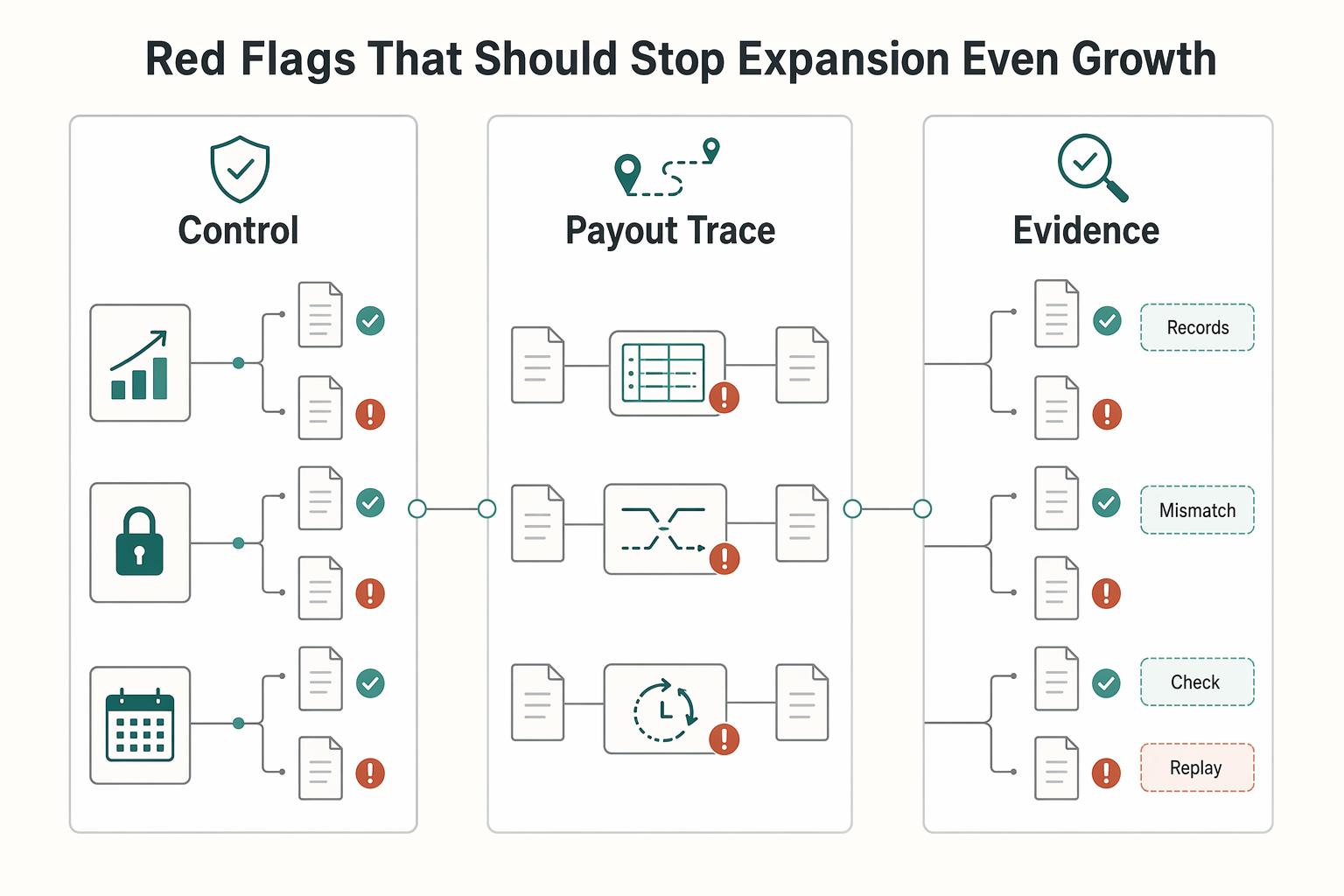
Red flags that should stop expansion even when growth looks strong#
Strong growth is not expansion-ready if your control layer is getting weaker as volume rises. When commercial KPIs improve while compliance queues, payout exceptions, and documentation gaps worsen, you are adding scale debt, not durable capacity.
| Red flag | What it looks like | Why it matters |
|---|---|---|
| Demand outpaces control capacity | Revenue Growth Rate rises while KYC, KYB, or AML work ages and payout exceptions accumulate | Pause expansion and fix throughput before adding another market |
| Weak traceability | The team cannot reconcile a payment from API request to webhook outcome to financial record with shared identifiers | Reported growth may not be fully collectable, payable, or explainable |
| Fragmented tax and document ownership | W-8, W-9, Form 1099, and FBAR sit across teams without clear market-level ownership and evidence | Stop expansion until that control surface is stable |
For FBAR, keep the control detail specific and testable:
- maximum account value is a reasonable approximation of the greatest value during the calendar year
- each account is valued separately
- amounts are reported in U.S. dollars rounded up to the next whole dollar (for example,
$15,265.25becomes$15,266) - if a calculated maximum value is negative, Item 15 is
0 - for certain filers with signature authority and no financial interest, FinCEN extended the due date to
April 15, 2027; for other individuals with FBAR obligations, the due date remainsApril 15, 2026
If your team cannot show who owns this logic, where evidence is stored, and which accounts are in scope by market, stop expansion until that control surface is stable. As an internal planning guardrail, many teams use a simple pause rule: if control failures rise faster than corrective throughput for two consecutive planning cycles, hold the next launch step.
If you want a deeper dive, read Finance Automation and Accounts Payable Growth: How Platforms Scale AP Without Scaling Headcount.
Conclusion#
The practical win is not a bigger dashboard. It is one decision-ready KPI approach that stays consistent across stages while changing emphasis as your company changes. The labels matter less than the discipline. Public stage models are not perfectly aligned, and metric relevance can vary by stage, business model, and industry, so you need a method you can explain and defend, not a borrowed template.
That means keeping the same decision spine across stages. Early on, you are still proving repeated user value, so customer and operating signals such as conversion rate, retention rate, CAC, LTV, and churn can tell you whether adoption quality is real. As you move into later funding stages, those metrics still matter, but they need to sit beside burn rate and runway so growth decisions stay tied to cash reality, not just momentum.
The checkpoint that matters most is definition stability. Before you expand, verify that each KPI in your matrix has a fixed owner, a plain-English definition, a market scope, and one decision it is meant to trigger. If your team changes how a metric is calculated every planning cycle, or cannot say whether a number applies globally or only to one country or segment, you do not have a launch-ready metric set yet. You have reporting noise.
A common failure mode is treating strong commercial signals as permission to scale everywhere. That is where stage-aware judgment helps. If early-stage metrics still point to weak retention, do not act like a late-stage operator and spend around the problem. If later-stage growth looks healthy but the company still debates basic metric definitions or lacks a clean evidence pack for an expansion choice, you are carrying decision risk forward. Bigger revenue can hide weak controls for a while, but it does not remove them.
Your next move should be concrete. Build a stage matrix that lists the few KPIs you actually use across your current and next stages, then pair it with an evidence checklist for one upcoming market or vertical decision. Keep that checklist simple: decision owner, metric definitions, assumptions, known operational constraints, open risks, and the exact no-go condition that would stop the launch. Then pressure-test the decision before you commit product or GTM resources.
If you do that well, the KPI conversation gets much cleaner. You stop asking, "Are these good numbers?" and start asking, "Are these numbers good enough for this stage, in this market, with these constraints?" That is the standard that keeps growth tied to reality.
Frequently Asked Questions
Which KPIs matter most at Seed versus Series C for a platform expanding across countries?
In this guide, Seed is the earliest stage, and stage labels are generally tied to company maturity and development. It does not provide a universal Seed-versus-Series-C KPI checklist, especially for cross-country expansion. Treat stage labels as context, then use consistent internal KPI definitions.
How do KPI priorities change when moving from Product-Market Fit to Unit Economics discipline?
This guide does not define a standard KPI handoff from Product-Market Fit to Unit Economics. It does show that public stage frameworks differ, so priorities should be documented explicitly rather than inferred from stage labels alone.
Which signals should trigger a no-go decision for a new market launch?
The grounded sources here do not specify universal no-go signals for market launches. They describe fundraising-stage labels, not operational launch thresholds. Teams should define their own clear stop/go criteria and keep them stable across reviews.
How should teams balance Sales Close Rate and Cost Per Lead against payout reliability and compliance load?
This guide does not rank those KPI groups or provide a standard weighting model. A defensible approach is to evaluate them in one consistent operating framework, since stage labels by themselves are not decision rules.
What is the minimum KPI stack needed before launching a new vertical?
This guide does not provide a minimum KPI stack for vertical launch readiness. External stage models are high-level, so minimum KPI requirements need to be set internally and documented clearly.
How should operators handle IPO-stage KPI planning when public benchmarks are under-specified?
Do not invent hard standards just because the company is late stage. Public stage models vary, with some sources using Seed through Series C and others using broader buckets like Early-stage, Venture-Funded, and Late Stage, so the practical focus should be consistency and clear definitions over forced precision.
Try a related tool
Researched and edited by the Gruv editorial team. Gruv builds cross-border billing, payouts, and finance-operations software for global businesses.
Sources
- bsaefiling.fincen.gov/docs/XMLUserGuide_FinCENFBAR.pdftrusted
- fincen.gov/report-foreign-bank-and-financial-accountstrusted
- fincen.gov/system/files/2025-12/FBAR-FBAR-Filing-Requir...trusted
- irs.gov/individuals/international-taxpayers/figuring...trusted
- irs.gov/individuals/international-taxpayers/foreign-...trusted
- oecd.org/content/dam/oecd/en/publications/reports/202...trusted
- repository.upenn.edu/bitstreams/7406fe36-c727-4c49-a3b9-240dd4b3c...trusted
- rochester.edu/ventures/wp-content/uploads/2025/06/UR-Ventu...trusted
Educational content only. Not legal, tax, or financial advice.
Related Posts
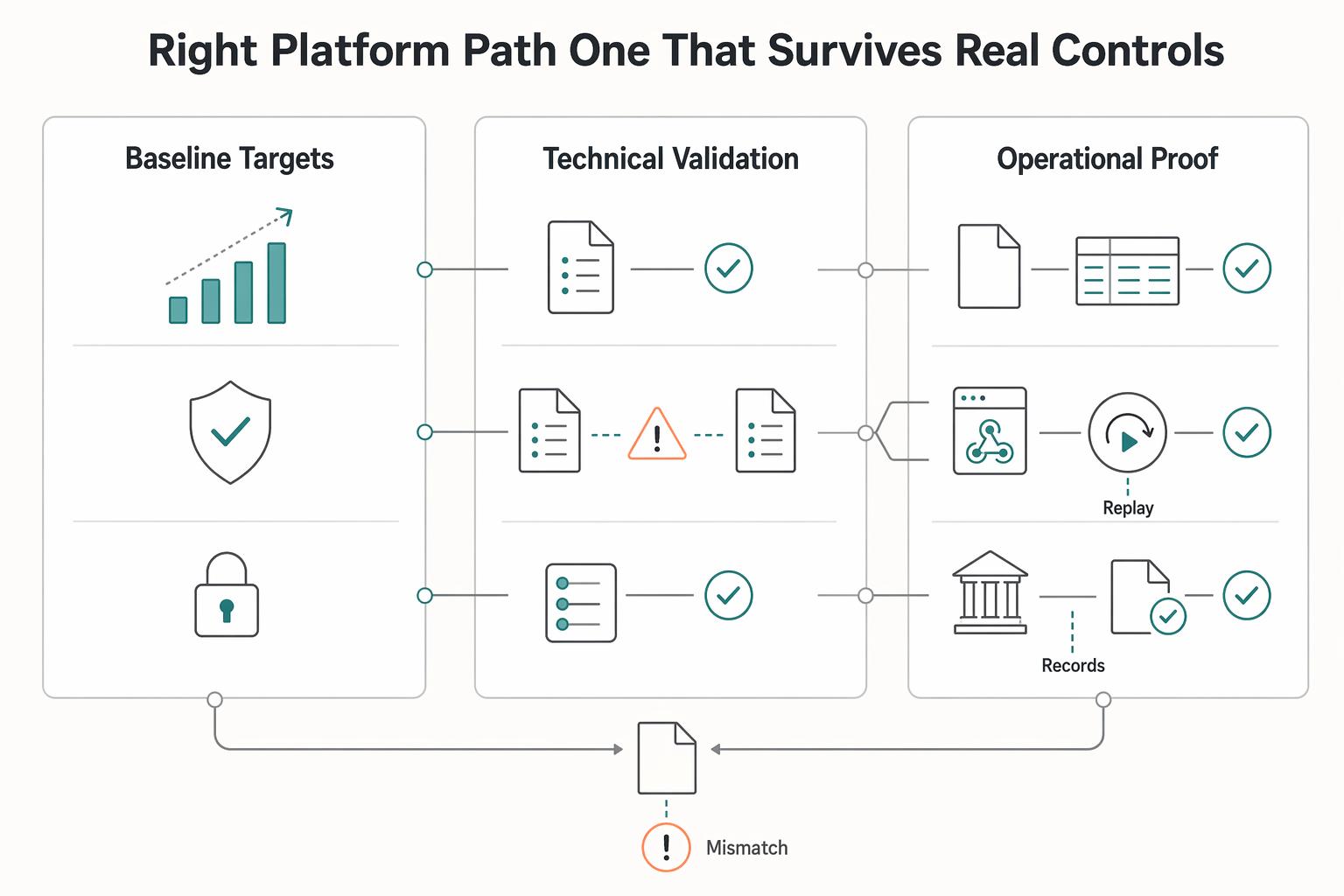
How Platform Teams Scale AP Volume Without Adding Headcount
Use this as a decision list for operators scaling Accounts Payable, not a generic AP automation explainer. In these case-study examples, invoice volume can grow faster than AP headcount when the platform fit is right, but vendor claims still need hard validation.
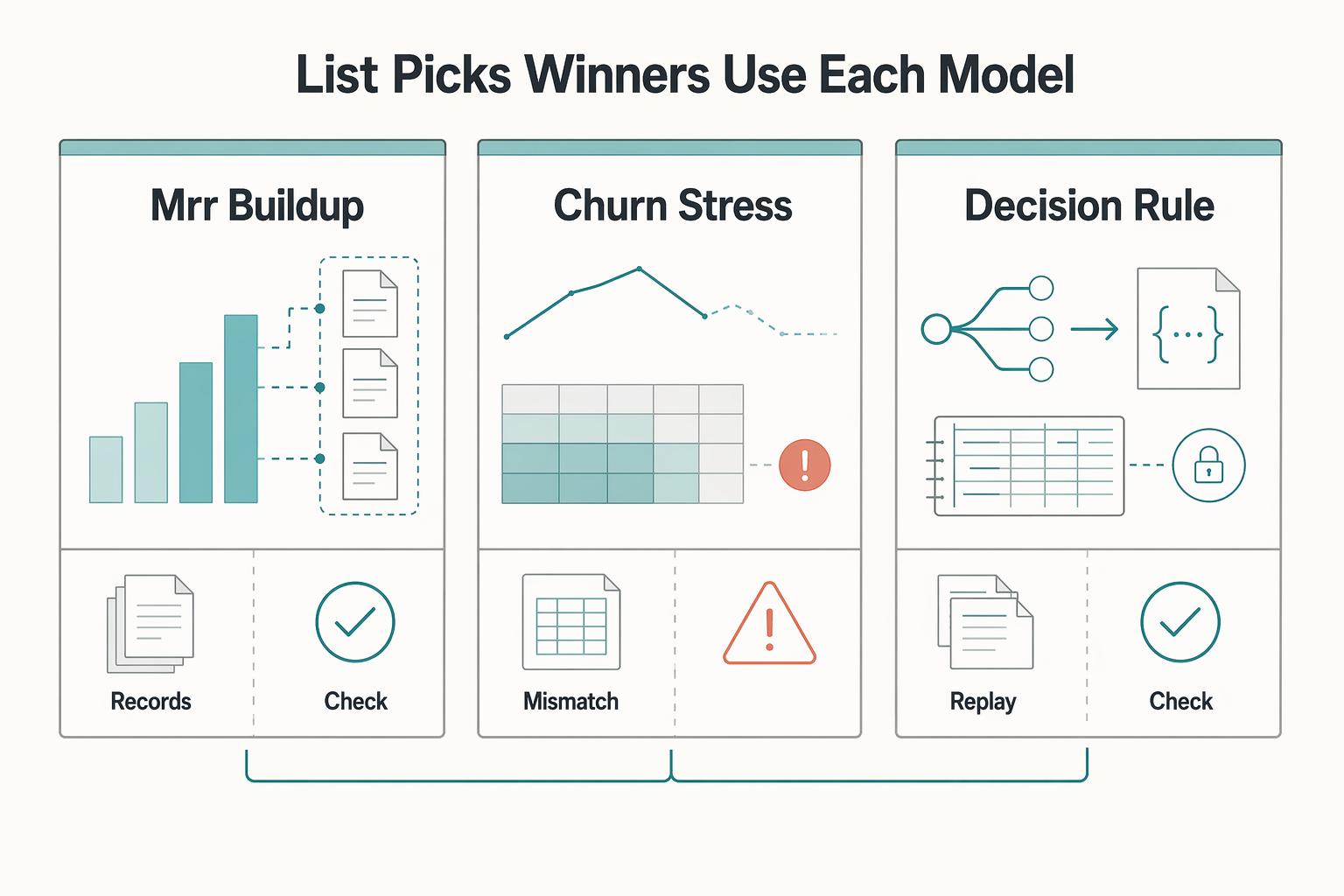
Subscription Revenue Forecasting for Platform Teams Modeling MRR Churn and Expansion
A usable forecast starts with shared definitions, not sharper formulas. If finance, ops, and product define MRR, Expansion MRR, or churn differently, the model can look precise and still fail the first serious review.

Gig Economy 2026: Payment Volume Trends, Payout Rail Readiness, and Platform Consolidation
Treat **gig economy 2026 payment volume trends** as an execution question, not a headline-growth story. Some inputs are measurable now, including platform counts, payout-rail behavior, and jurisdiction-specific compliance requirements. What remains uncertain is any single, verified global gig payment volume number for 2026.