
Quick Answer
Build a country x rail scorecard and treat every unproven row as no-go. Separate three clocks (client sent to platform available, platform release to handoff, withdrawal complete), then price gross invoice through FX and exception cost before approving expansion. Use dated fee artifacts such as Wise SWIFT receive fees and market-scoped PayPal pages, and push high-demand markets to backlog when filing ownership or compliance evidence is missing.
Use payout data to decide where launch is actually ready#
A freelancer payment insights report for 2026 matters only if it tells you where contractor payouts are actually launch-ready, not just where demand looks strong. Treat payouts as a market-entry decision from day one and evaluate four factors together:
- payment speed
- total fee stack
- compliance burden
- evidence quality
Speed matters, and vendor material often treats it as the differentiator. But speed alone is not enough if fee drag is high, compliance is hard to run, or evidence quality is weak.
Growth signals can also mask operational friction. One source cites a $582.2 billion gig-economy figure for 2025 and links that growth to stricter payment and tax compliance frameworks. Country-level detail still determines readiness. A cited Spain 2026 change says any payment must be reported and that the prior €3,000 threshold was abolished.
Evidence quality is part of launch readiness too. One page presented as 2026 insight is dated 22 August 2024, and one Upwork scrape excerpt is mostly navigation. That means extracted benchmark claims should be re-verified before they shape planning.
The economics deserve the same scrutiny. One analysis says platform commissions can erase $6,000 to $12,000 per year from freelancer income. You do not need to treat that as universal to see the practical point. Fee drag can materially change take-home outcomes and platform viability.
This report stays focused on one practical question: where can you pay contractors with enough predictability, compliance control, and evidence quality to justify a 2026 launch.
You might also find this useful: Gig Economy Payment Trends 2026 for Platform Operators.
Define the metrics before comparing payout options#
Set the measurement model first, or the market ranking will mislead you. Every payout claim should answer the same question on the same clock.
Split the timing clocks#
Track each route with separate timestamps so you do not confuse policy delay with rail behavior:
| Clock | What it measures | What to exclude |
|---|---|---|
| Client sent to funds available to platform | Collection and internal posting | Contractor withdrawal time |
| Platform release to bank or wallet handoff | Your policy hold and release logic | Pre-release rail behavior |
| Withdrawal complete | End-to-end contractor receipt | Internal delay before release |
Normalize cost into buckets#
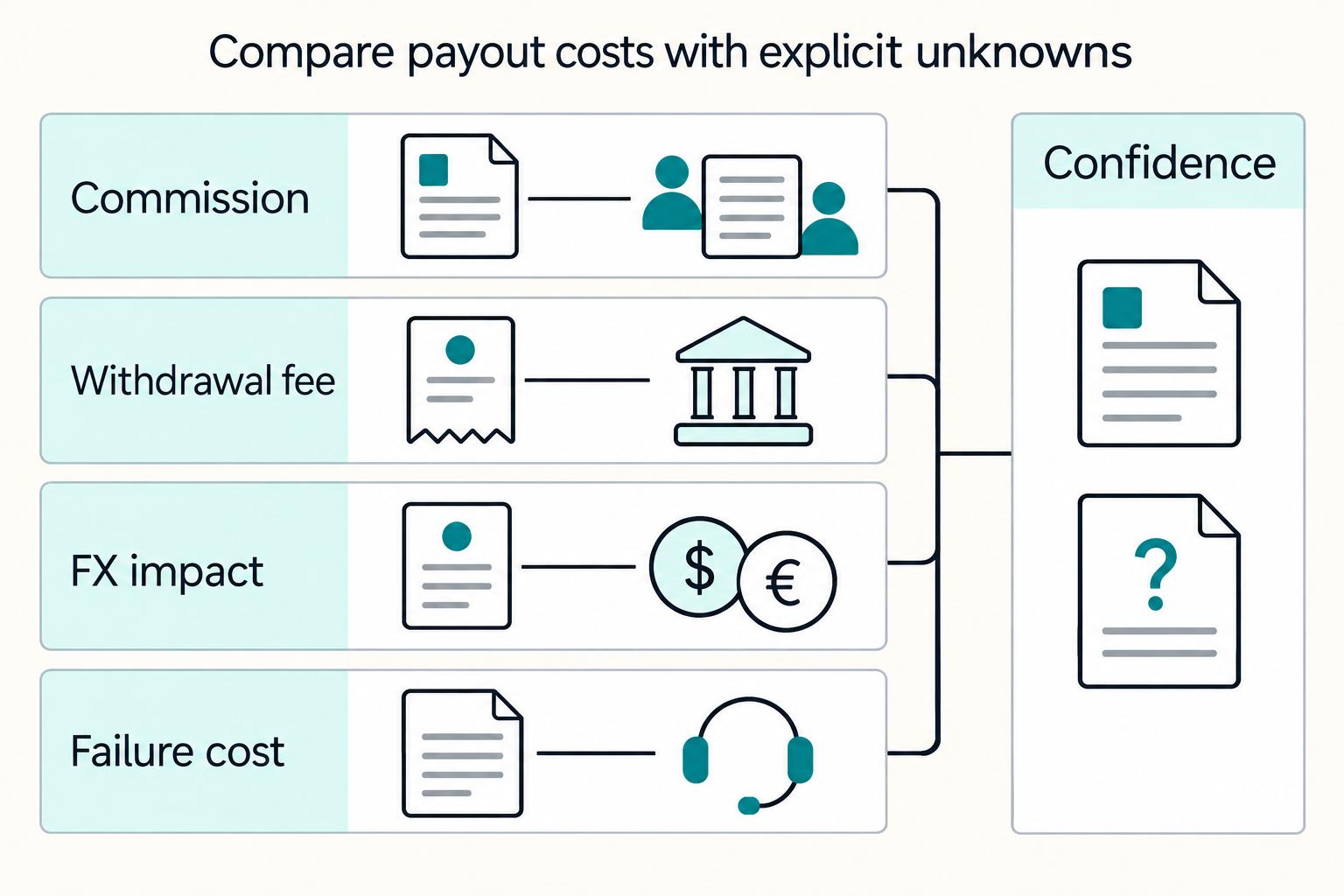
Use the same buckets for every option: platform commission, withdrawal fee, FX impact, and payout failure cost. If one bucket is not clearly disclosed, mark it as unknown instead of rolling it into an estimated total.
Wise shows why this matters. It separates domestic non-SWIFT/non-wire receiving from SWIFT/wire receiving. It lists fixed per-payment fees for some SWIFT routes, including 6.11 USD for receiving USD wire and SWIFT payments. It also states send fees vary by currency, from 0.57%. Wise says it uses the live mid-market rate with a separate upfront fee.
Mark confidence instead of false precision#
Add a confidence field to each benchmark, and use provider artifacts first when they exist. For Wise, the regulator-standardized pricing format can serve as your verification checkpoint.
Also note the volume effect in the benchmark. Wise says discounts start from 25,000 USD monthly send volume and that the threshold resets on the first. That means transfer timing can change effective cost even when the payout corridor stays the same.
Related: How to Report a Client to a Credit Bureau for Non-Payment.
Build a country and rail rollout scorecard#
Build the scorecard at the country x rail level, not by region, and treat any row without usability proof and reconciliation clarity as not launch-ready.
Use one row per country x rail pair#
Keep the same scoring columns in every row: speed reliability, total cost, compliance load, operational risk, and implementation complexity. Then add usability evidence and tool overlay so the unknowns stay visible.
| Country x rail pair | Speed reliability | Total cost | Compliance load | Operational risk | Implementation complexity | Usability evidence | Tool overlay |
|---|---|---|---|---|---|---|---|
| [Target country] x SEPA Instant | Unverified until market-specific documentation is logged | Unverified until market-specific documentation is logged | Unverified until market-specific documentation is logged | Assess with payout traceability evidence | Unverified until market-specific documentation is logged | Required before launch | Wise, PayPal, Stripe, and Payoneer impact must be validated per market/product |
| [Target country] x UK Faster Payments | Unverified until market-specific documentation is logged | Unverified until market-specific documentation is logged | Unverified until market-specific documentation is logged | Assess with payout traceability evidence | Unverified until market-specific documentation is logged | Required before launch | Wise, PayPal, Stripe, and Payoneer impact must be validated per market/product |
| [Target country] x SWIFT | Treat as corridor-specific until proven | Include fixed and variable components | Unverified until market-specific documentation is logged | Assess based on deductions/returns traceability | Assess exception-handling burden with evidence | Required before launch | Wise publishes concrete SWIFT receive examples (6.11 USD, 2.16 GBP, 2.39 EUR); PayPal, Stripe, and Payoneer still need market-specific proof |
Use the table to make better decisions, not to create fake precision. A slower route with clear evidence and clean reconciliation should outrank a fast route with unresolved unknowns.
Where tool choice changes the launch decision#
Tool choice matters when it changes what you can verify before go-live. Wise provides concrete artifacts: live mid-market rate plus upfront fee, sending fees from 0.57%, and a regulator-standardized pricing view. It also shows product-level variation, so avoid one blended provider score.
For example, Wise card withdrawals are 2 free withdrawals each month up to 100 USD, then 1.5 USD + 2% over 100 USD. If contractor cash-out behavior includes card withdrawals, include that path in total-cost scoring.
Score PayPal within a tight market scope. The referenced fee page is for US accounts. It defines domestic vs international by market, notes that certain markets are grouped for international pricing, and provides a downloadable fee PDF with a page timestamp of February 19, 2026. Also account for external bank or card charges that may still apply.
Stripe and Payoneer belong in the overlay, but fee, coverage, and timing claims for either one are not yet verified. Leave those cells unverified until product-specific and market-specific documentation is logged.
Delay fast-looking launches when exception handling is weak#
Use an explicit rule in the scorecard: if compliance load is high and payout failures are hard to reconcile, delay launch even when speed looks attractive.
For each country x rail row, keep an evidence bundle with the fee artifact, version date, and payout traceability records for both the normal flow and the exception path. If those controls are weak, backlog the row and launch the corridor you can actually operate.
Compare payout rails and platform models on operational constraints#
Treat the platform layer as a launch dependency, not a given. Release logic, withdrawal dependencies, and cross-border route support for marketplaces and workforce platforms are not yet verified.
| Platform | Release logic in this evidence pack | Withdrawal dependencies in this evidence pack | Cross-border payout route support in this evidence pack | What to verify before launch |
|---|---|---|---|---|
| Deel | Unverified | Unverified | Unverified | Provider docs or account-level help content showing release timing, destination methods by market, and failure visibility |
| Upwork | Unverified | Unverified | Unverified | Release timing definition, hold conditions, withdrawal methods by country, and exception traceability |
| Fiverr | Unverified | Unverified | Unverified | Release timing, withdrawal prerequisites, country availability, and rejection/return handling |
| Toptal | Unverified | Unverified | Unverified | Release conditions, withdrawal options, corridor support, and status visibility |
| Catalant | Unverified | Unverified | Unverified | Release model, available routes, market restrictions, and reconciliation artifacts |
Use the same evidence standard you use for rails: a current fee artifact, a dated policy page, explicit market scope, and at least one normal and one exception payout example.
Where direct bank rails and wallet-style flows stall differently#
Route type can change cost exposure and operational checkpoints, so track it explicitly. In Wise pricing, receiving USD wire and Swift payments is separated from non-Swift domestic receiving, and the USD wire/Swift receive fee is listed as 6.11 USD. That is an operational signal that the route should be tracked as a distinct path.
If wallet-style flows are in scope, track two states separately in reporting: funds released to provider balance and funds withdrawn to destination account. That separation makes it easier to see whether an issue appears at release or at withdrawal.
PayPal shows the same need for scope control. The cited fee page applies to US-resident accounts, is marked Last Updated: February 19, 2026, and includes a downloadable PDF. PayPal also notes that certain markets are grouped for international transaction rate calculation, so one market page should not be treated as global truth.
Flexibility can add downstream fee drag#
Flexibility can push costs downstream, so score the full exit path. Wise states sending and conversion fees start from 0.57%, fees vary by currency, and the exchange rate used is the mid-market rate. That keeps key fee components visible in the pricing disclosure.
Wise card cash-out rules make the same point. You get 2 free withdrawals each month up to 100 USD, then 1.5 USD per withdrawal plus 2% over 100 USD. If expected usage is card-heavy, score the route on actual exit behavior, not only on initial release visibility.
Use a hard scope checkpoint before launch#
Before launch, run a hard scope check:
- Capture the exact provider page or PDF used for pricing, including market scope and revision date.
- Record the payout path type: bank, wire/Swift, domestic transfer, wallet balance, or card cash-out.
- Test one normal payout and one exception case to confirm where issues surface: release, withdrawal, or destination receipt.
If any item is missing, keep that platform or route marked unverified in the rollout overlay.
For a step-by-step walkthrough, see Payment Infrastructure Trends 2026: How Marketplace Operators Should Prioritize Real-Time Rails, Stablecoins, BNPL, and Embedded Checkout.
Separate market demand signals from payout feasibility#
Demand narratives are useful for lead scoring, not for launch approval. Signals from market reports or hiring-trend coverage can show where attention may be rising, but they do not prove payout readiness or compliance readiness.
This gap shows up especially in the European Union, where demand can look regional while launch readiness remains compliance-specific. Since 1 July 2021, EU cross-border B2C e-commerce VAT rules changed, and the One Stop Shop (OSS) allows one Member State registration for covered VAT declaration and payment. But OSS is not a full shortcut. Returns are quarterly in the Union and non-Union schemes and monthly in the import scheme. OSS returns are additional to domestic VAT returns.
The decision rule is simple: if demand looks strong but payout and compliance readiness are still unverified, move that market to backlog instead of launch.
Before you commit EU launch work, confirm:
- your Member State of identification for OSS
- whether your platform has record-keeping obligations, including cases where it is not a deemed supplier
- whether complex cross-border treatment needs a VAT Cross-border Ruling (CBR) request under that country's national ruling conditions
- who owns filing cadence and evidence retention
Also account for commitment risk. Choosing a Member State of identification can bind you for the calendar year of the decision plus the next two calendar years. A taxable person or intermediary can also be excluded from an OSS scheme by a Member State.
Related reading: Become Freelancer Spain Autonomo 2026 with the Right Filing Sequence.
Price the full payout stack instead of headline speed#
Price each corridor as a full payout waterfall, because headline speed does not tell you whether the margin survives. Use demand and compliance as entry screens, then model the path from billed amount to usable contractor cash.
- Gross invoice: what the client paid or what the platform recognized as payable.
- Platform cut: commission, service fee, or take rate before payout.
- Payout fee: rail or provider charges to move funds out.
- FX impact: conversion cost when currencies differ.
- Tax-document overhead: operational work when tax profile or reporting data is incomplete.
- Exception-handling cost: support, returns, reconciliation, and reissuance.
If you skip the last two buckets, cheap-looking payouts can become expensive once exceptions and manual fixes show up.
What current pricing evidence supports#
The current pricing evidence supports a layered view, not a single-number comparison.
| Provider | Verified from current evidence | Verify before modeling |
|---|---|---|
| Wise | Wise shows feature-level pricing, says it uses the live mid-market rate with a separate upfront fee, and lists sending/conversion fees from 0.57%. It also lists a fixed 6.11 USD fee per payment for receiving USD wire/SWIFT, and notes discount behavior after 25,000 USD sent that resets on the first. | Corridor, currency pair, payment method, account type, and withdrawal path (bank vs card). Keep the regulator-format pricing view as a checkpoint artifact. |
| PayPal | PayPal defines international vs domestic by whether sender and receiver are in different or the same markets. The cited fee page is scoped to US-resident accounts and provides a printable PDF, with page freshness shown as February 19, 2026. | Both parties' market, account type, and correct country page before applying any fee interpretation. |
| Payoneer | Confirm fee schedule and threshold with the provider directly. | Pull current corridor-specific withdrawal/FX/account pricing before using it in margin math. |
| Stripe | Confirm payout and withdrawal fee schedule with the provider directly. | Confirm country coverage, payout method, and fee treatment for your exact setup. |
Use predictability as the tie-breaker when margins are thin#
When margins are thin, predictability matters more than the fastest headline. Wise shows why: transparent pricing can still shift by feature, corridor, and threshold timing. PayPal shows a different kind of risk: classification depends on market context, so fee treatment can change with setup.
Operator rule: do not approve corridor economics until your evidence set includes the exact pricing artifact, account-market scope, and capture date.
Model release timing separately from withdrawal timing#
Release timing and withdrawal timing should be modeled separately. Provider release policies can change working-capital assumptions before any withdrawal fee is applied. For contractors, funds can stay unavailable before withdrawal even starts. For platforms, that delay affects payable aging, reserve planning, and support demand.
Model two clocks separately: release-to-available and available-to-withdrawn. If you blend them, you over-credit the rail and understate the support and cash-flow impact. Before locking a rail mix, model corridor-level fee behavior with a Payment Fee Comparison.
Map compliance gates that block expansion in practice#
Expansion is not launch-ready until you can show how compliance gates affect payout release in each target country. Treat compliance states such as KYC/KYB status, AML review, tax profile completeness, and reporting obligations as payout-state controls, not just onboarding admin.
Gate logic that changes payout outcomes#
These gates should explicitly determine whether a payout is released, delayed, or held for review. Country-specific KYC/KYB requirements, AML thresholds, and filing rules require separate verification, so your country brief should document exactly how each gate changes payout status and which exceptions apply.
For Spain and the European Union, country-specific filing rules require separate verification. What is clear is the operating risk: compliance frameworks vary widely by country. Do not treat an EU rollout as one compliance decision, and do not assume Spain is covered by a regional default without its own documented gate logic, exception path, and owner.
Operator checkpoint: if your country brief cannot state which gate blocks payout, what status the user sees, and who clears the hold, that country is not ready.
Where Form 1099-K touches payout tooling#
Form 1099-K matters here because the tooling needs to reconcile, not just count toward a threshold. One cited source says threshold changes for TPPNs apply to the 2025 tax year, with forms issued in 2026. The same source says that before 2026, the trigger required both more than 200 transactions and more than $20,000 gross in a calendar year.
The form includes monthly gross reportable amounts and an annual total, so payout tooling and ledger records need to reproduce that view without a manual rebuild.
The same source defines payment settlement entities to include merchant acquirers and third-party payment networks. Your launch plan should therefore name who owns reporting artifacts, where they are stored, and who resolves monthly variance questions. For a focused refresher, use A Guide to Form 1099-K for Freelancers Using Payment Apps.
The launch checkpoint to enforce#
No country launch should pass review without all three items documented:
- Gate logic: each hold condition and whether payout is blocked, delayed, or routed to review.
- Exception path: what clears the hold, where evidence is stored, and what happens if unresolved.
- Ownership: who owns unresolved holds across payments ops, compliance, and finance.
A practical test is to run a payout with an intentionally incomplete tax profile and confirm whether a hold reason appears in ledger and support workflows. If support only sees "not paid," finance cannot reconcile, and no one owns resolution, the corridor is not operationally ready.
Need the full breakdown? Read 8 Resilient Compliance Controls for Payment Platforms in 2026.
Sequence the launch steps for one new payout country#
Launch in a strict sequence, and do not widen access until one rail path, one ledger path, and one support path work together in production-like conditions.
| Step | Focus | Grounded detail |
|---|---|---|
| 1 | Primary rail and fallback | For euro-area payouts, cited obligations from 9 Oct 2025 include 24/7 availability and Verification of Payee with payee-name checking |
| 2 | Posting and orchestration | Track when funds were collected, when they became payout-eligible, when submission was attempted, and whether the payout settled, returned, or moved into review |
| 3 | Narrow pilot | Confirm user-visible payout status, finance reconciliation from provider records to ledger entries, and support visibility into holds, retries, returns, reversals, and disputes |
| 4 | Incident playbooks | Complete provider-specific playbooks for Stripe, Payoneer, and PayPal; require provider reference, internal payout ID, ledger entries, event history, operator notes, and final disposition |
1) Pick the primary rail and define fallback before launch#
Start with one primary payout rail and one fallback, then document the exact condition that allows fallback. For euro-area payouts, use an instant-transfer rail as primary and define a fallback only if the operating requirements are covered.
From 9 Oct 2025, cited euro-area instant-transfer obligations include 24/7 availability and Verification of Payee with payee-name checking. Your rail plan should answer three operator questions up front: can you send instantly, can you run payee-name checks, and what happens when that check fails.
2) Configure posting and orchestration so state changes are auditable#
Make state changes auditable before you scale. Set collection, ledger posting, and payout orchestration on a shared state model. At minimum, track when funds were collected, when they became payout-eligible, when submission was attempted, and whether the payout settled, returned, or moved into review.
Design retries so the team can distinguish a new submission from a retry, reversal, dispute, or clawback. The point is internal state clarity and ownership, not assuming identical behavior from Stripe, Payoneer, and PayPal.
3) Pilot with a narrow cohort and validate operational outputs#
A narrow pilot should validate operations, not just successful sends. Confirm three outputs before broader rollout:
- user-visible payout status
- finance reconciliation from provider records to ledger entries
- support visibility into holds, retries, returns, reversals, and disputes
Use payment reliability as the gate: earnings should clear, settle, and remain forecastable. Also verify cross-border FX effects, since hidden conversion fees can materially change route economics. For Spain, include a reporting readiness check before expansion. The cited evidence says that in 2026 the €3,000 threshold is abolished and reporting applies regardless of amount.
4) Finalize provider incident playbooks before expansion#
Do not expand until provider incident playbooks are done. Complete provider-specific playbooks for Stripe, Payoneer, and PayPal before scaling access. Cover delayed credit, returned payout, unmatched provider events, and post-validation adjustments.
Require a complete evidence set for each incident: provider reference, internal payout ID, ledger entries, event history, operator notes, and final disposition. If you include newer options such as stablecoin payouts, treat rollout as staged. The cited Visa program is a select-partner pilot, with broader rollout planned for the second half of 2026.
Plan failure handling and audit evidence before go live#
Before you go live, keep UK filing readiness separate from payout-rail recovery claims. UK Self Assessment registration and filing checks are established. Payout-rail recovery logic and a universal payout-failure taxonomy are not — verify those separately with your provider.
Separate compliance holds from payment exceptions#
Start by separating UK filing readiness from rail exceptions. Internal labels such as delayed credit, returned payout, unmatched deposit, compliance hold, or stale FX quote can still be useful. But they are your operating terms unless provider documentation backs them up.
For UK readiness, the supported checks are concrete: register for Self Assessment, reactivate an existing account when needed, keep records, and have a UTR to file online. The sources also state two specific risks. Filing without reactivating an existing account may delay the return. Telling HMRC after 5 October 2025 could trigger a penalty for the prior tax year, 6 April 2024 to 5 April 2025. For sole traders, the cited registration trigger is earning more than £1,000 in a tax year.
Build an evidence pack you can verify#
Build a small, verifiable UK filing evidence set first, then layer broader payment incident artifacts separately. Provider references, ledger entries, event history, and operator notes may be valuable internally, but they are not established as mandatory here.
| UK filing check | Grounded requirement |
|---|---|
| Self Assessment | Registered for Self Assessment |
| Existing account | Existing account reactivation status |
| UTR | UTR availability for online filing |
| Records | Record retention, for example, bank statements or receipts |
| Filing route | Eligibility through the online service, commercial software, or other forms |
Minimum UK filing-readiness checks:
- registered for Self Assessment
- existing account reactivation status
- UTR availability for online filing
- record retention, for example, bank statements or receipts
- filing-route eligibility, whether through the online service, commercial software, or other forms
That filing-route check helps keep a filing-path limitation from being treated as a payout issue.
Mark rail recovery as unknown until providers prove it#
Keep payout-rail recovery behavior explicitly unconfirmed until providers document it. Return handling steps, anomaly timelines, and rail-specific SLAs should be verified directly with each provider.
Set reconciliation gates as an internal control#
Set reconciliation gates for pilot countries as your own operating control, not as a requirement from these GOV.UK excerpts. They cover filing readiness, deadlines, and record keeping.
Before expansion, run one UK pilot verification pass and confirm you can prove account status, UTR availability, filing-route eligibility, and record retention from your records. If you cannot, resolve those gaps before go live.
Set explicit go or no-go rules for expansion#
Once pilot evidence is in place, make expansion a binary operating decision, not an open-ended growth debate. Publish the thresholds that trigger go, defer, or rework, and require both payout operability and VAT operability for a European Union launch.
Publish thresholds that force a decision#
Your scorecard should define explicit internal cutoffs for reliability, payout friction, and compliance burden. If a country and rail pair misses any one gate, treat it as no-go until the gap is closed.
| Decision gate | Go when | No-go when | Accountable owner (set internally) |
|---|---|---|---|
| Reliability | Minimum internal threshold is met with pilot evidence | Results are still assumption-based or inconsistently defined | Define in scorecard |
| Payout friction | Support load, exception handling, and reconciliation stay within your published limit | Manual intervention remains frequent or unresolved | Define in scorecard |
| Compliance burden | Registration, filing path, record keeping, and audit support are documented | Key obligations are unclear or duplicated | Define in scorecard |
| Country launch decision | All three gates pass together | Any single gate fails, even with strong demand | Cross-functional owners named in your scorecard |
Growth can propose a market, but launch approval should stay with the cross-functional owners named in the scorecard.
Treat EU VAT operability as its own gate#
For EU expansion, One Stop Shop (OSS) is a grounded VAT compliance gate in this section. A taxable person that opts in registers in one Member State, the Member State of identification, but OSS is optional, and OSS VAT returns are additional rather than replacements for domestic VAT returns.
| VAT operability check | Grounded detail |
|---|---|
| OSS scheme fit | Confirm whether your model falls under the Union, non-Union, or import OSS scheme |
| Filing cadence | Quarterly for Union and non-Union; monthly for import |
| Domestic returns | Confirm domestic VAT return obligations alongside OSS |
| Records and audit | Confirm record-keeping and audit retrieval readiness |
| Exclusion risk | A taxable person or intermediary can be excluded by a Member State |
Use that directly in your decision rule: if your launch depends on multi-country B2C activity and OSS operations are not ready, payout readiness alone is not enough.
Minimum operator checks:
- confirm whether your model falls under the Union, non-Union, or import OSS scheme
- confirm filing cadence support: quarterly for Union and non-Union, monthly for import
- confirm domestic VAT return obligations alongside OSS
- confirm record-keeping and audit retrieval readiness
Also treat OSS exclusion as an active failure mode. A taxable person or intermediary can be excluded by a Member State, so the evidence has to cover ongoing operability, not just registration.
Use scenario contrasts, then revisit on a schedule#
Use scenario contrasts to keep the decision explicit. If your own evidence shows low-friction payout operations and OSS readiness, launch can proceed. If the current path still carries high payout friction or unresolved exception handling, defer.
Where VAT treatment is unclear, use VAT Cross-border Rulings (CBR) as a decision input. It supports advance rulings for complex cross-border transactions, but only in participating Member States and through the country where you are VAT-registered under national ruling conditions. If treatment is unclear and no viable ruling path exists yet, keep the launch at no-go.
Also account for lock-in before selecting the Member State of identification. In certain Union-scheme multi-establishment cases, that choice binds the current calendar year plus the next two years.
For deferred countries, set a documented re-evaluation cadence and revisit when payout operability evidence, VAT registration status, or ruling clarity changes.
Red flags that make payment reports unreliable for operators#
Treat a payment report as unreliable unless its claims tie back to reconciled transaction data, consistent timelines, and transparent source provenance.
The first red flag is any metric you cannot verify against records. Use a simple control check: match reported transactions to bank and credit card statements. Without regular reconciliation, reports become unreliable, and small errors can compound into a distorted view of cash flow and profitability.
The second red flag is weak provenance. One Yahoo Finance item syndicated from GlobeNewswire is explicitly labeled, "This is a paid press release." That does not automatically make every figure false. But it does make the item weak as standalone operating evidence.
The same item also conflicts on forecast timing. The headline says 2033, while the body says growth from US$ 127.65 Billion in 2023 to US$ 528.39 Billion by 2030 at 22.5% CAGR.
A third red flag is missing reliability context. If reporting does not clearly cover reliability and outages, confidence in payment-system claims drops.
Use three quick filters before trusting any input:
- Reconciliation check: can the claim be matched to statement-level evidence?
- Provenance check: is the source independent, or paid distribution?
- Consistency check: do timeline, metrics, and reliability statements stay internally consistent?
Treat mismatches as an early warning that your controls are failing. Even routine monthly reconciliation can surface concrete issues, including duplicate charges such as the documented $2,400 example.
If you want a deeper dive, read The Global Freelance Payment Report 2026: Rates Rails and Compliance Across 50 Countries.
Conclusion#
Expansion decisions are strongest when you assess payout readiness at the corridor level instead of following broad market momentum. Demand signals can help you prioritize where to investigate, but they are not proof that a country-and-rail path is launch-ready.
Use source quality and scope as hard gates. iHire provides concrete context from January 2026, 2,250 U.S. candidates across 57 industries, and shows a freshness marker, "Last Updated: March 31, 2026," but it also excludes gig work and side hustles. That makes it useful input, not a standalone basis for broader rollout decisions.
Apply the same discipline to reliability signals. If a Yahoo-hosted item is labeled "This is a paid press release," treat it as paid distribution rather than independent operational validation. If a stats compilation says results are "snapshots in time that may change" and vary by location and market conditions, do not treat those averages as stable operating truth.
The practical next step is to build a country-and-route assessment and gate rollout on validated, current operational evidence and source-quality checks, not on market excitement alone.
At minimum, your decision pack should include:
- the exact country and payout route being tested
- freshness checks for each external source
- scope boundaries for what each source does and does not cover
- documented compliance prerequisites and reporting assumptions
- unresolved unknowns with explicit owners
Keep jurisdiction-specific vendor claims provisional until you confirm them against official rules. If coverage is still unclear in target markets, confirm constraints and enablement details before committing roadmap resources.
We covered this in detail in Gig Economy 2026: Payment Volume Trends, Payout Rail Readiness, and Platform Consolidation.
If your shortlist depends on market-specific payout coverage and compliance gates, talk with Gruv to validate launch-readiness assumptions.
Frequently Asked Questions
What should a freelancer payment insights report in 2026 include to be decision-ready for operators?
For UK coverage, include the HMRC checkpoints that determine filing readiness: Self Assessment registration, the £1,000 sole trader threshold, UTR requirement, record-keeping expectations, and online filing exclusions. In the cited HMRC examples, missing the 5 October 2025 notification date can trigger penalty risk, online filing starts on or after 6 April, and payment is due by 31 January. Keep these verified obligations separate from any payout-performance claims.
Why are payout speed claims across providers and platforms often not directly comparable?
With this evidence pack, they are not comparable because rail timing definitions, provider benchmarks, and platform hold rules are not provided. If a claim does not define when timing starts, when funds are available, and what exceptions are excluded, treat it as unproven.
Which matters more for expansion planning, market growth signals or payout operations readiness?
For this section, payout operations readiness matters more because it is verifiable from the provided guidance. The HMRC material gives concrete checks on registration, eligibility, reactivation, records, and deadlines, while market-growth validation is out of scope here. Do not advance launch decisions on demand narratives alone when compliance readiness is not documented.
How should we evaluate a country when fast rails exist but compliance requirements are heavy?
Do not let speed narratives outrank documented compliance requirements. The rail comparison itself requires direct verification, so require clear answers on who must register, by when, which identifier is required, what records are needed, and which cases are excluded from the standard filing path. If those are incomplete, pause rollout decisions.
What minimum evidence should we require before trusting provider payout benchmarks?
Require documented eligibility, exception handling, and filing prerequisites from authoritative guidance. In the UK example, that includes first-time Self Assessment registration, possible account reactivation to avoid delays, online-service exclusions, and records such as bank statements or receipts. If a benchmark lacks that documentary trail, it is not decision-ready.
When should we choose **SWIFT** rather than **SEPA Instant** or **UK Faster Payments**?
This evidence pack does not support a rail-choice recommendation between SWIFT, SEPA Instant, and UK Faster Payments. What it does support is a control standard: any path should have clear filing, identification, and exception documentation before approval.
How can teams confirm country coverage safely when provider documentation is incomplete or ambiguous?
Do not infer coverage from high-level product copy. Require written confirmation of country scope, customer type, prerequisites, exclusions, and fallback path, and store it in your launch evidence pack. The UK example shows why: some cases, including partnerships, cannot use the online filing service and must use commercial software or other forms instead.
Try a related tool
Researched and edited by the Gruv editorial team. Gruv builds cross-border billing, payouts, and finance-operations software for global businesses.
Sources
- minotstateu.edu/archive/_archive/catalogs/catalog_archive/u/...trusted
- paypal.com/us/digital-wallet/paypal-consumer-feestrusted
- sec.gov/Archives/edgar/data/0001762301/0001178913260...trusted
- sec.gov/Archives/edgar/data/1820566/0001104659230392...trusted
- taxation-customs.ec.europa.eu/archives/taxable-persons/vat-cross-border-ru...trusted
- vat-one-stop-shop.ec.europa.eu/one-stop-shop_entrusted
- vat-one-stop-shop.ec.europa.eu/index_entrusted
- wise.com/us/pricingtrusted
Educational content only. Not legal, tax, or financial advice.
Related Posts

Global Freelance Payment Readiness Report 2026 Across 50 Countries
Use this report as a launch decision map, not a generic freelancer payment guide. If a country looks attractive on nominal fees but you cannot show how the payout rail, compliance checks, and KYC reviews will work in production, it belongs in a later tier.
A Guide to Form 1099-K for Freelancers Using Payment Apps
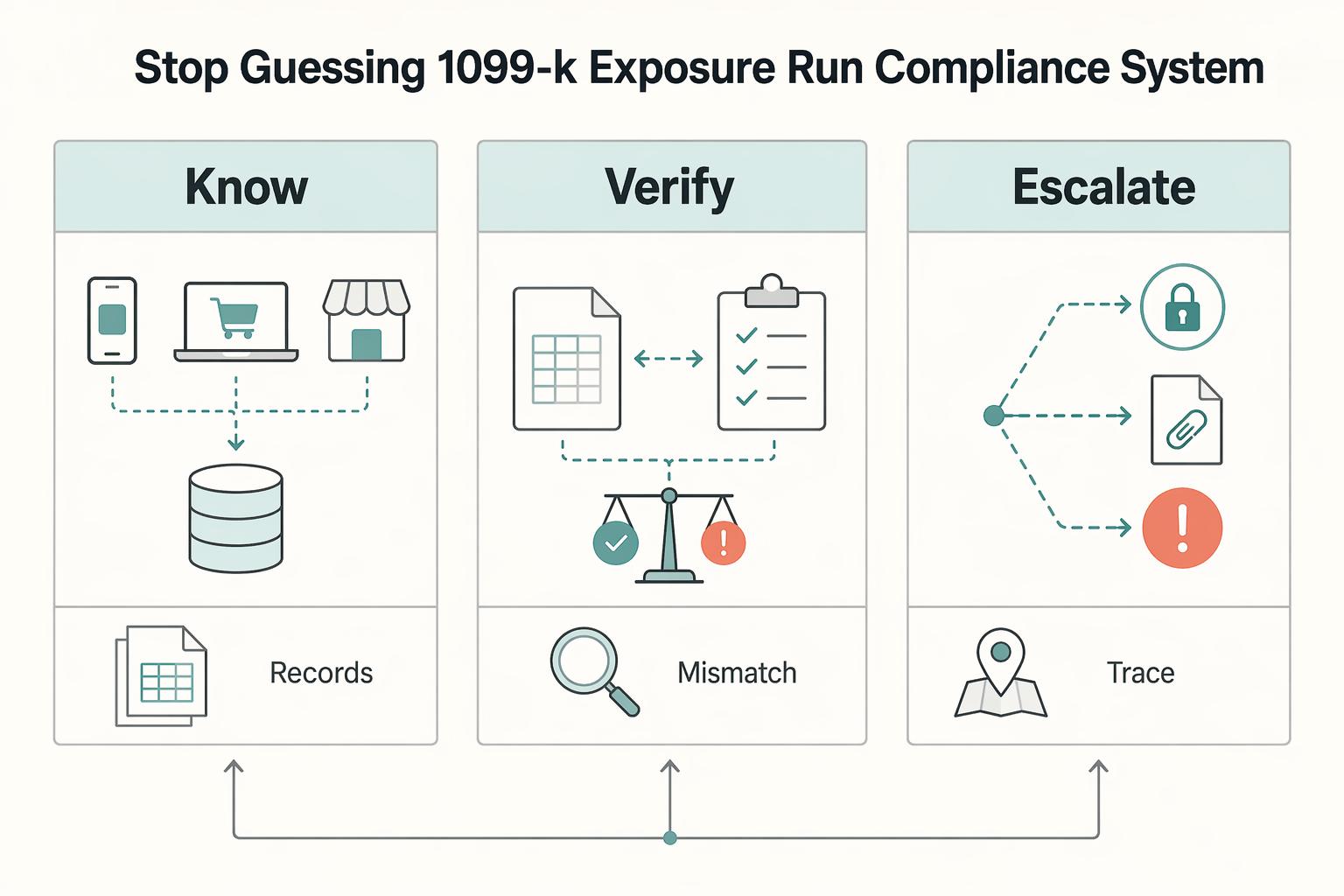
Run a monthly Know/Verify/Escalate loop for Form 1099-K instead of guessing thresholds. That routine cuts avoidable tax risk and keeps your reporting process stable when guidance shifts. Payment apps and marketplaces can split your records across platforms, payout types, and reporting rules, which is where the stress starts. If you run a business of one, replace guesswork with a repeatable close process.
How to Report a Client to a Credit Bureau for Non-Payment
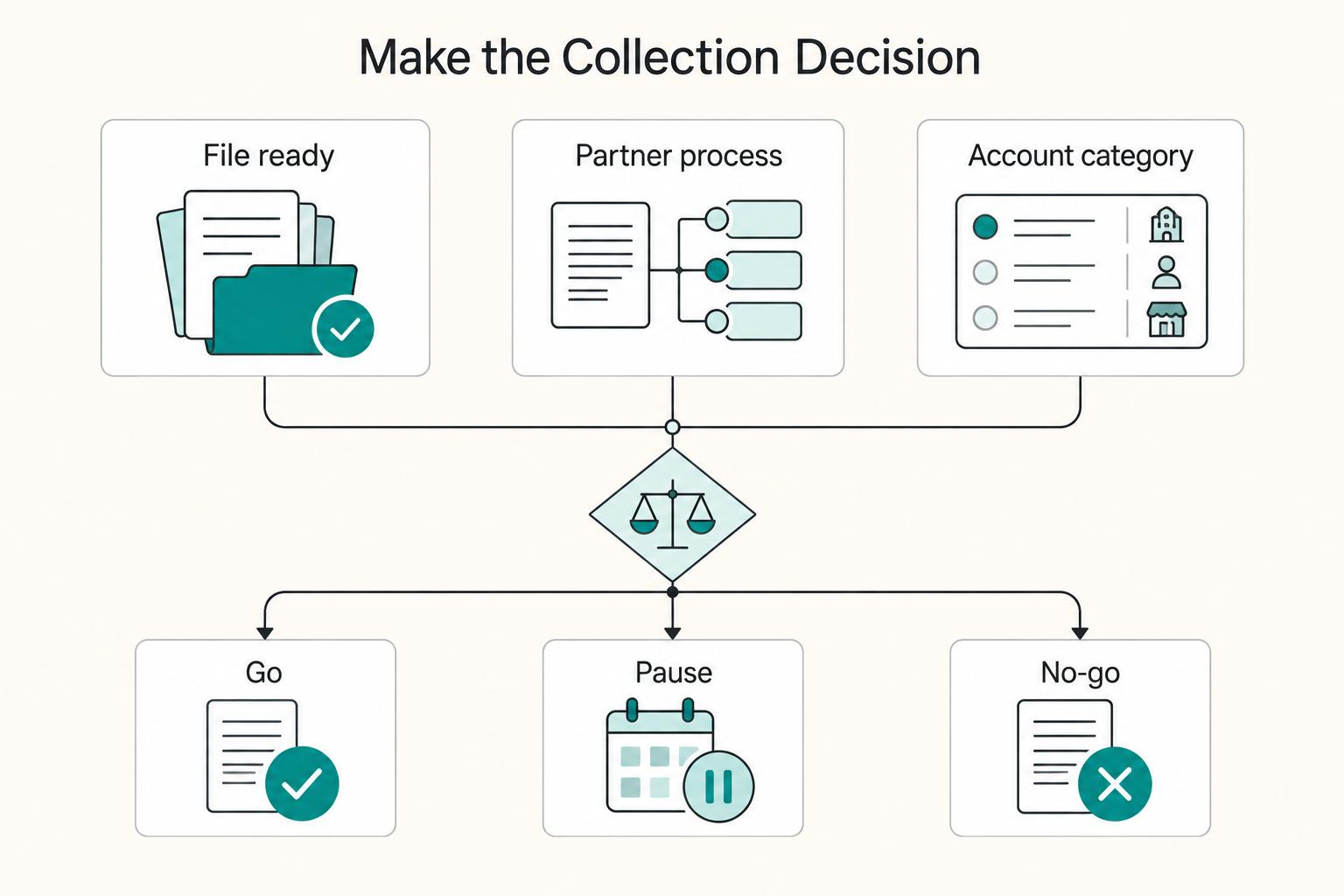
The silence after you send an invoice creates a specific kind of anxiety for any independent professional. A relationship that felt mutual suddenly turns into a chase, and it drains time and attention from work that actually moves your business forward. That anxiety is not inevitable. It usually comes from handling non-payment reactively instead of designing for it up front.