
Quick Answer
Treat these as separate channels with different economics. The article supports Dribbble and Behance as portfolio-led discovery surfaces (including Ruul’s “classic portfolio layout” framing), while 99designs runs as a project-posting and submission-review flow, per the Useme January 8, 2026 roundup. Because fee tables and take-home details are not confirmed, the recommended move is a contained 30-day test that tracks qualified inquiries, proposal movement, repeat engagement, and unpaid scoping time before scaling effort.
Many dribbble vs behance vs 99designs comparisons focus on visibility#
Many dribbble vs behance vs 99designs comparisons focus on visibility. The more useful question is which channel, or mix of channels, gives you better lead quality and healthier margin for your design business.
These three do not work the same way, and they are not documented equally in the evidence reviewed here. The public picture is clearer for Dribbble and Behance as portfolio channels than it is for current 99designs economics.
Ruul describes Dribbble and Behance as "two different faces of the classic portfolio layout," which is a useful starting point. Both are presentation channels, but that does not make them equal revenue channels. By contrast, a Useme roundup published on 8 January 2026 describes 99designs-style use as a flow where a client posts a project, reviews submissions, and picks the design they like.
That same source warns that contest-based pricing can add up quickly for smaller businesses. That points to cost pressure, but it is still not enough to model designer take-home.
| Platform | What is documented here | What is still not verified here | Decision implication |
|---|---|---|---|
| Dribbble | It is grouped with Behance as part of the classic portfolio layout model | Average designer earnings remain unconfirmed, so verify them directly on the platform | Treat it as a lead source to test, not a guaranteed income level |
| Behance | It is also documented as a portfolio presentation channel, distinct in format from Dribbble | Average designer earnings remain unconfirmed, so verify them directly on the platform | Compare how well deeper portfolio presentation turns into qualified inquiries |
| 99designs | It is described here as a project-posting and submission-review marketplace flow; contest-based pricing may become expensive for smaller businesses | Verify current fee table, commission percentage, and designer take-home economics directly on the platform | Run it as a separate profitability test with tighter checks on effort and payout |
That is the right lens for the rest of this comparison: separate what is known from what is still unclear. Known: Dribbble and Behance are easier to frame as portfolio channels, while 99designs is easier to frame as demand capture through project posting and submission review. Unknown: current net earnings, fee drag, and other platform-level profitability details.
If you are deciding where to spend time, make two checks before you commit hard. First, verify any live pricing, fee, or contest terms directly on the platform you plan to use, because those details are not confirmed. Second, track your own evidence from day one: source of inquiry, time spent qualifying, and whether the work turns into repeat business. The common failure mode is treating all three as interchangeable visibility channels when the real issue is conversion friction and margin leakage.
This pairs well with our guide on A Deep Dive into the US-France Tax Treaty for Freelance Performers.
At a glance comparison for earning potential#
For a quick decision, treat Dribbble and Behance as portfolio-led lead channels, and treat 99designs as a separate profitability test.
| Platform | Demand intent | Posting effort | Discovery mechanics | Lead-quality signal | Known monetization levers | UI/UX | UI Design | Branding | Illustration | Web Design |
|---|---|---|---|---|---|---|---|---|---|---|
| Dribbble | Portfolio-led interest | Upfront portfolio setup | Profile and work-sample discovery | Niche-fit inquiry quality | Specialization clarity | Good | Good | Mixed | Mixed | Good |
| Behance | Portfolio-led interest | Upfront portfolio setup | Portfolio review and creator discovery | Inquiry quality after proof-of-work review | Specialization clarity | Good | Good | Good | Good | Good |
| 99designs | Posted-project demand flow | Ongoing brief review and submission effort | Client brief, submission review, selection flow | Brief quality and paid conversion | Access to active demand, but terms must be verified live | Verify live | Verify live | Verify live | Verify live | Verify live |
| Platform | Known | Unknown | Decision implication |
|---|---|---|---|
| Dribbble | Documented here as portfolio-led | Verify current earnings benchmarks and upload-gating status directly on the platform ⚠ | Use as a lead-quality test, not an assumed earnings engine |
| Behance | Documented here as portfolio-led | Verify current earnings and conversion benchmarks directly on the platform | Prioritize if deeper portfolio proof improves inquiry quality |
| 99designs | Documented here as posted-project/submission marketplace flow | Current fee table, commissions, and designer take-home are not verified here | Run as a separate lane with stricter unpaid-effort controls |
The clearest grounded lever here is specialization: Useme's 2026 guide says platform choice can affect both time-to-work and achievable rates, and that niche positioning can improve client fit in competitive markets. Punchlist's framing also applies here: platforms differ on cost, effort, and expertise, so track qualified inquiries, unpaid hours before paid scope, and repeat business by platform before you scale one channel.
If you want a deeper dive, read The Best Tools for Creating a Freelance Portfolio Website.
What each platform is built to do#
Use a two-lane model: treat Dribbble and Behance as portfolio-led discovery channels, and treat 99designs as a separate hiring-site or marketplace test until you verify current economics and participation rules.
A March 14, 2026 framework separates freelance channels into marketplaces, remote job boards, and portfolio networks. In that same logic, portfolio platforms are for showcasing work so clients can find you, while marketplace-style channels are built around posted demand.
| Platform | Built to do in this comparison | Best used when | What is still unverified here |
|---|---|---|---|
| Dribbble | Portfolio visibility in a design-focused destination | You want fast visibility feedback from your visual work | Current posting flow, visibility limits, and details of related products (including Dribbble Job Board and Dribbble Pro Playbook) |
| Behance | Portfolio-led discovery for buyers who need more project context before outreach | Your close rate improves when buyers review fuller project narrative first | Current feature depth and discipline-specific support details |
| 99designs | Demand capture via hiring-site/marketplace flow | You want access to posted demand, not only inbound discovery | Current fee terms, payout model, and real take-home profitability |
Pangea describes Dribbble as "the world's destination for design," which supports its role here as a discovery surface. The same source includes 99Designs among popular hiring sites (last updated Oct 29, 2025), which is enough to classify it in this section as demand-capture, but not enough to treat its current economics as known.
In practice, use a simple rule. If growth depends on rapid visibility loops, prioritize Dribbble. If close rate depends on fuller project narrative, test Behance first. Treat 99designs as a separate profitability lane and validate live terms before committing serious time. Related: The best 'book cover design' services for indie authors.
Revenue mechanics that actually change earnings#
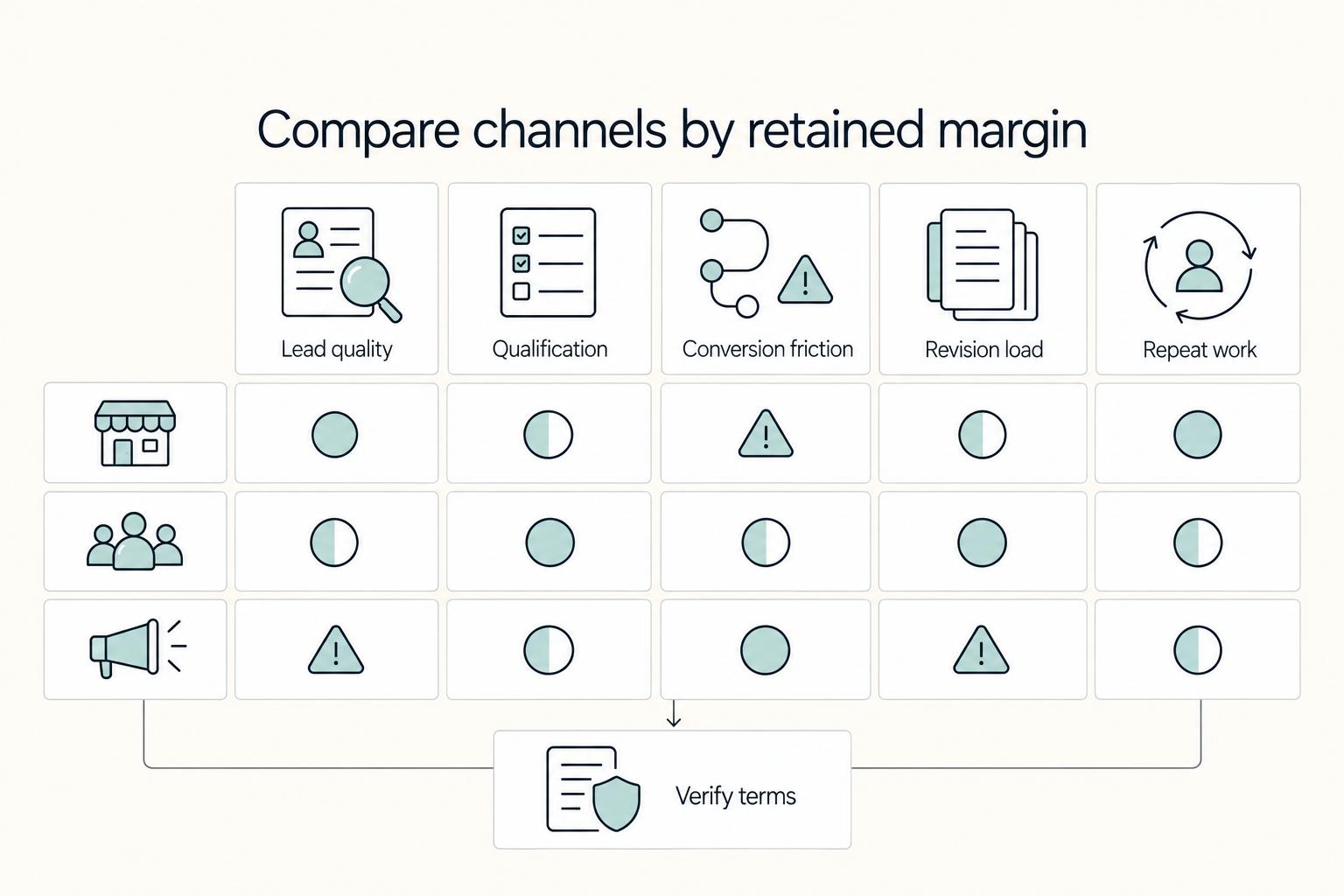
Earnings here are usually decided by margin retention, not raw attention. Dribbble and Behance are positioned as showcase channels for finding freelance gigs, while 99designs is positioned around connecting with clients, so compare them by how each channel affects qualification effort, conversion friction, and repeat work potential.
| Earnings component | Dribbble | Behance | 99designs |
|---|---|---|---|
| Lead volume | Treat as visibility from a showcase channel | Treat as visibility from a showcase channel | Treat as demand from a client-connection channel |
| Lead quality | Verify from your qualified inquiry rate | Verify from your qualified inquiry rate | Verify from fit between posted opportunities and your offer |
| Conversion friction | Measure how much clarification is needed after first contact | Measure how much clarification is needed after first contact | Measure qualification effort under current platform rules |
| Revision burden | Track from real projects, not assumptions | Track from real projects, not assumptions | Track from real projects, not assumptions |
| Repeat-client probability | Confirm from repeat engagement share | Confirm from repeat engagement share | Confirm from repeat engagement share |
Jobbers is explicit that published commission-rate and earnings figures are indicative estimates, and that market conditions and platform policies change. Treat any third-party numbers as directional, then verify current fee structures on each platform's official pages before you commit budget or team time.
Where margin usually leaks#
Use this checklist before you scale effort on any channel:
| Leak source | What it includes |
|---|---|
| Unpaid scoping effort | Time spent clarifying fit, scope, and budget before a viable proposal |
| Low-intent inquiries | Conversations that never match your service, budget floor, or timeline |
| Portfolio-production overhead | Time required to prepare channel-ready portfolio assets |
What to verify before picking a lane#
Compare channels using the same checkpoints by niche, for example UI/UX and Branding:
| Checkpoint | How to measure |
|---|---|
| Qualified inquiry rate by niche | Count inquiries that match your service, budget floor, and timeline |
| Proposal-to-close ratio | Measure whether conversations convert to paid work |
| Repeat engagement share | Measure how much revenue comes from follow-on projects, retainers, or referrals |
If one channel drives visibility but fails on qualified inquiries or proposal-to-close, treat that as a margin signal and rebalance effort. If a channel's repeat engagement share stays weak after a fair test, treat that as an economics warning, not just a traffic issue.
You might also find this useful: Designer's Guide to Dribbble: How to Get Hired and Get Paid Through the Platform.
Demand quality by niche and buyer intent#
Match the channel to how much context a buyer needs before they can decide. If your service is explanation-heavy, favor the platform where full project narrative can do more pre-qualification; if your service is visual-first, favor the platform where a fast visual read is enough to start a serious conversation.
| Channel | Use when | Check |
|---|---|---|
| Dribbble | A fast visual read is enough to start a serious conversation | Review whether first contact includes project goal, timeline, and budget context |
| Behance | Buyers need sequence, rationale, and outcomes before outreach | Review whether fuller project narrative improves pre-qualification |
| 99designs | You are evaluating contest or proposal-style demand | Check whether briefs are clear enough to avoid heavy unpaid interpretation before fit is clear |
For this comparison, treat UI/Interaction versus Illustration/Photography as a test lens, not a proven conversion rule. The grounded evidence here does not verify fixed conversion-speed differences by niche, so use this distinction as an operating hypothesis and validate it with your own inquiry quality.
Behance and Dribbble are both documented as portfolio-driven communities, which means discovery starts from showcased work. Use Dribbble when snapshot appeal is your strongest entry point, and use Behance when you need buyers to evaluate sequence, rationale, and outcomes before outreach.
Broader discovery can help, but it can also increase competition noise. That is why client quality, scope clarity, and long-term engagement potential are better decision signals than raw exposure.
99designs is a different mechanic in this comparison: it is documented as a design-contest model. Contest or proposal-style demand can look active, but you still need to check whether briefs are clear enough to avoid heavy unpaid interpretation before fit is clear.
Before choosing a primary lane, review a recent sample of inquiries by channel and mark whether first contact includes project goal, timeline, and budget context. If those basics are often missing, expect slower conversion and more scoping load. For explanation-heavy services, prioritize the channel that rewards full project narrative over snapshot appeal.
Related reading: Choosing Between Subscription and Transaction Fees for Your Revenue Model.
First 30 days execution sequence#
Run the first 30 days as a channel test, not one blended brand push. Give each platform one monetization job, publish assets for that job, and judge results by conversion friction, not likes, views, or saves.
| Channel | Best first-month goal | Week 2 asset bias | Week 4 keep signal |
|---|---|---|---|
| Dribbble | Inbound volume | Fast visual proof in one clear lane such as UI/UX, Web Design, or Illustration | Inquiries match the lane you posted, and first replies are easy to qualify |
| Behance | Higher-ticket close rate | Deeper project narrative for UI/UX, Branding, or Web Design | Prospects arrive with clearer scope and fewer basic explanation gaps |
| 99designs | Repeat-client hypothesis, tested cautiously | Enter only briefs that closely match your specialty lane and offer | Briefs include usable scope and decision logic, and effort stays proportional to outcomes |
In Week 1, define one monetization goal per platform in one sentence. A practical setup is volume on Dribbble, close quality on Behance, and a tightly gated repeat-client test on 99designs. This keeps measurement single-purpose, so you can tell whether each channel is working.
In Week 2, publish niche-specific assets for at least two lanes, but keep your offer language consistent. Talent marketplaces are built to match companies and freelancers by skills and project needs, so avoid a broad "designer for hire" message and make the lane explicit. If you change both niche and message at once, the result is hard to interpret.
By Week 3, keep one evidence sheet with one row per inquiry and four required fields: source tag, response latency, qualification notes, and close outcome. In qualification notes, use the same checkpoint from the previous section: did first contact include project goal, timeline, and budget (or budget range)?
Week 4 is a keep/adjust/drop decision based on observed friction, not activity volume:
- Keep when work matches your lane and qualification is fast.
- Adjust when lane fit exists but offer language is too broad or asset depth is off.
- Drop when the month is mostly shallow interest, mismatched briefs, or heavy unpaid scoping.
Measure qualified conversations and closes, not audience response. We covered adjacent execution detail in The Best Project Management Tools for Freelance Designers.
Failure modes that quietly suppress income#
The biggest quiet mistake here is treating all three as interchangeable exposure channels. Current third-party references frame them differently: a guide published on August 16, 2024 frames Behance around showcasing work and finding freelance gigs, frames Dribbble as a freelance-gig platform, and lists 99designs separately. That does not prove earnings outcomes, but it is enough reason to stop shipping one identical portfolio package everywhere.
| Quiet mistake | Why it suppresses income | What to check instead |
|---|---|---|
| Same assets on all three | Every channel is forced to do every job, so signal quality drops | Tag each inquiry by source and review close outcomes by platform, not in aggregate |
| One generic portfolio across Graphic Design, Motion Graphics, and UI Design | Buyers cannot quickly place your specialty, so trust and fit weaken | Check whether first-contact messages mention the exact lane you meant to attract |
| Chasing likes, follows, and saves | Attention can look healthy while pipeline quality stays weak | Use qualification notes: did the inquiry include project goal, timeline, and budget or budget range? |
| Relying on old platform lore | Channel decisions drift away from current conditions | Re-check live posting conditions, current job surfaces, and recent buyer activity before committing effort |
Portfolio blur is usually self-inflicted: if you mix UI Design, Motion Graphics, and broad Graphic Design without a clear lead offer, prospects have to decode what you actually sell. If your first reply requires unpaid interpretation just to define scope, that is already margin leakage.
Assumption drift is the other red flag. A VistaPrint trend piece dated 31-10-2025 says it used input from the 99designs by Vista community and internal experts. Useful context, but not evidence of platform earnings mechanics, so validate live reality with your own evidence pack: source tag, response latency, qualification notes, and close outcome.
Need the full breakdown? Read Build a Cancellation Flow That Saves the Right Subscribers.
Scenario recommendations for founders and operators#
Match channel order to explanation load: use a Dribbble-first flow when you want fast signal on UI/UX positioning, and a Behance-first flow when buyers need deeper narrative before they can qualify your offer. Treat 99designs as a separate marketplace lane with its own pass/fail economics, not as part of your portfolio-channel totals.
A March 14, 2026 guide frames this space as different platform models (marketplaces, remote job boards, and portfolio networks) and recommends judging by economics such as what you keep and client quality, not visibility alone. A January 9, 2026 source still describes Behance as a portfolio showcase platform, while also noting some buyers are moving toward broader creative service solutions. So the practical decision is less about community size and more about how much context your service needs before a buyer can say yes.
| Scenario | Lead channel | Supporting channel | What to verify in weeks 2-4 | Red flag |
|---|---|---|---|---|
| Fast top-of-funnel test for UI/UX offers | Dribbble | Behance | Do inbound messages include clear problem, scope, timeline, or budget range? Do serious prospects move to deeper proof before calls? | High activity, weak briefs, and rising unpaid scoping time |
| High-context services (Branding, Art Direction, complex Web Design) | Behance | Dribbble | Do prospects reference process, constraints, or outcomes from your case studies? Do calls start with clearer goals? | Intro calls begin with basic education because qualification happened on snapshots |
| Controlled acquisition experiment | 99designs as its own lane | None initially | Separate source tagging, qualification rate, proposal-to-close ratio, and margin fit against your minimum bar | Marketplace results blended into other-channel reporting |
For a step-by-step walkthrough, see The Best AI Image Generators for Freelance Designers.
Conclusion#
The practical answer here is usually not a single winner. For most freelancers and operators, the better choice is a channel mix: use Dribbble for fast signal, Behance for proof that carries context, and treat 99designs as a separate marketplace lane that has to earn its place with your own margin data.
That conclusion follows from the different jobs these platforms do. Dribbble is known for quick visual posts ("shots") and fast feedback loops, so it is useful when you need a fast read on whether your work gets the right kind of response. Behance is stronger when your sell depends on complete projects, rich descriptions, and multi-page layouts. For 99designs, the reliable takeaway here is narrower: it puts you into a competitive setting with multiple project bids and access to a large talent pool, and there are reported customer-service and pricing concerns. What remains unproven here is the part that matters most financially, which is repeatable take-home economics.
So make the next step concrete. Run a 30-day test and collect the same evidence pack across all active channels: qualified inquiry count, response latency, proposal-to-close ratio, repeat engagement share, and unpaid scoping time. Keep the offer, niche, and proof assets as consistent as possible so you are actually comparing channels instead of comparing different positioning. A simple checkpoint works well: when a lead comes in, can you tag the source, note whether the brief included scope, timeline, and budget, and record whether it moved to proposal?
Your reallocation rule should be blunt. Keep the channels that produce qualified briefs and cleaner closes. Reduce effort on the ones that create attention but force too much explanation, unpaid revision thinking, or back and forth before budget is even real. If you test 99designs, set a stop-loss before you start, based on weekly hours spent and brief quality, because marketplace activity can feel productive long before it is profitable.
The main failure mode is acting as if all three platforms are interchangeable discovery outlets. They are not. Dribbble helps you test demand quickly. Behance helps you justify higher trust through fuller case studies. 99designs should stay in the mix only if your own numbers show that the competitive bidding and support tradeoffs still leave enough margin. Keep known facts separate from unknowns, and you will make a commercially sound choice even when third-platform evidence is incomplete.
Frequently Asked Questions
What is the practical difference between Dribbble, Behance, and 99designs for earning income?
A direct, verified income comparison across all three platforms is not available from any single source. What is supported is a practical tradeoff: platforms can differ in price, required legwork, and expertise, and broad outsourcing marketplaces can have uneven quality, so screening effort matters.
Which platform is better for freelance designers who want higher-paying clients instead of more leads?
This guide does not prove a single winner for higher-paying clients. One older Startups.com opinion recommends Dribbble for "high quality designers," but that thread is marked "Answered over 10 years ago," so treat it as directional only and validate with your own results.
Is Dribbble better for UI/UX and UI Design while Behance is better for full case studies?
That rule is not confirmed by this evidence pack. There is no substantive Behance-specific evidence here, so treat it as a hypothesis and test it with your own lead and project-quality data.
Can you run Dribbble and Behance together without duplicating effort?
Yes, but this guide does not establish a platform-specific formula. Keep the channels distinct enough to learn from them, and avoid posting the exact same lightweight asset everywhere if it prevents useful comparison.
What is still unknown about 99designs in this comparison and how should you handle that uncertainty?
Current take-home economics, conversion quality, and whether the work consistently clears your margin floor stay unconfirmed until you measure them yourself. Older opinion also conflicts, including a Startups.com comment that marketplaces like 99designs may not offer high-quality designers, but again that evidence is old. Treat 99designs as a contained test: separate source tagging, weekly hours spent, brief quality, proposal-to-close ratio, and a prewritten stop-loss rule.
How should founders or revenue teams evaluate these platforms without relying on vanity metrics?
Do not use raw attention metrics alone as your decision signal. Compare channels on qualified project outcomes and the practical tradeoffs supported here: price, expertise fit, and how much legwork and screening each platform requires.
Try a related tool
Researched and edited by the Gruv editorial team. Gruv builds cross-border billing, payouts, and finance-operations software for global businesses.
Sources
Includes 7 external sources outside the trusted-domain allowlist.
- digiedulearning.com/top-10-freelancing-platforms-for-graphic-des...external
- pangea.app/blog/article/hire-designersexternal
- ruul.io/blog/contra-vs-dribbble-vs-behanceexternal
- startups.com/questions/2994/what-is-the-best-place-to-fin...external
- twine.net/blog/top-platforms-to-hire-freelance-graphic...external
- useme.com/en/blog/guide-to-60-freelance-platforms-in-2026external
- zarmatype.com/best-freelance-platforms-for-graphic-designersexternal
Educational content only. Not legal, tax, or financial advice.
Related Posts
Best Freelance Portfolio Tools for a Website You Can Keep Updating
Choose the tool you can still maintain in 12 months, not the one that only looks good this weekend. A strong portfolio setup should help you show proof, collect inquiries, and keep pages current as client work grows.
The Best Book Cover Design Services for Indie Authors
You do not need another roundup built from provider marketing pages and recycled praise. You need a buying guide that helps you choose the right service model, verify what is actually being sold, and reduce avoidable revision loops when launch week gets tight.
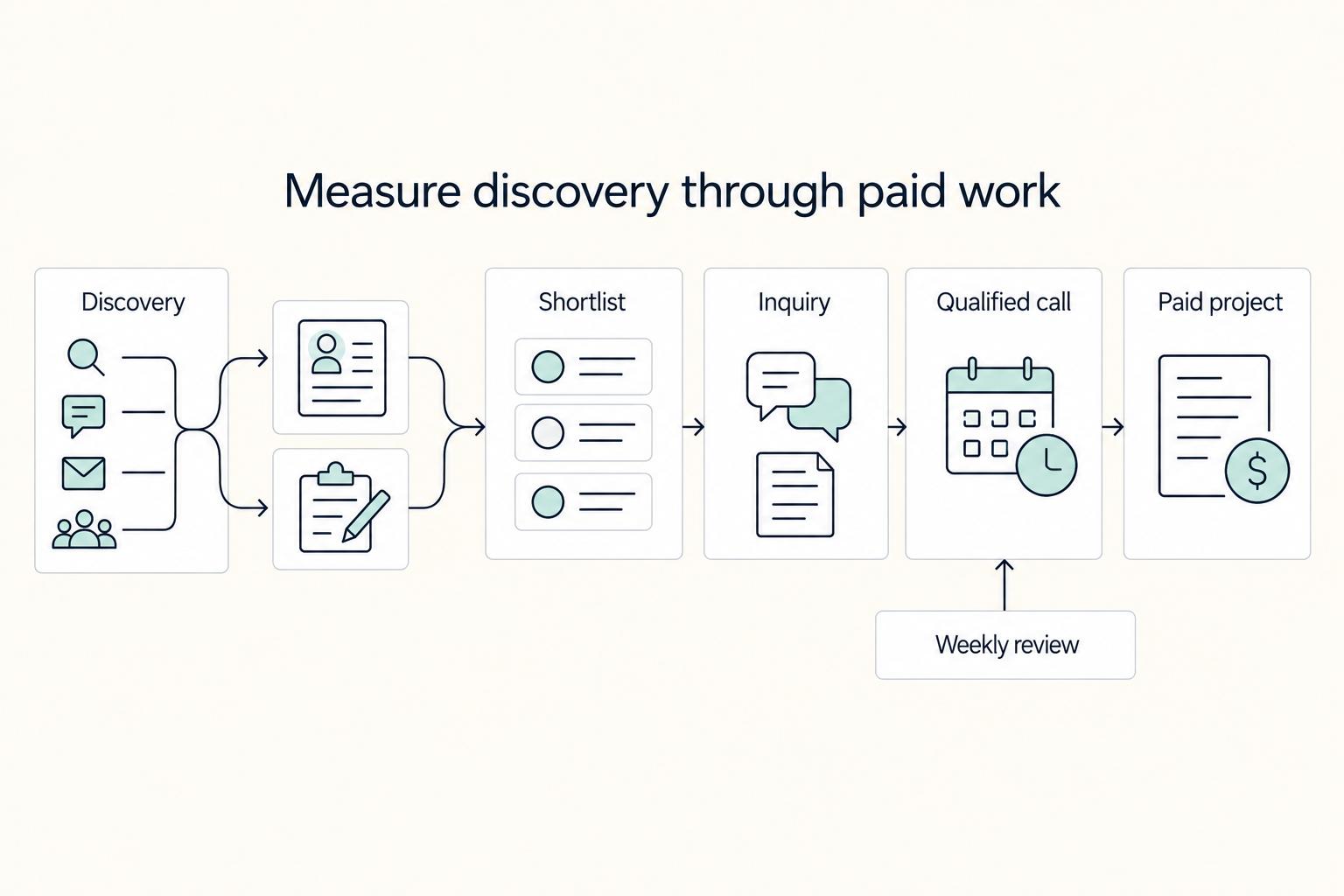
How Freelance Designers Get Hired and Paid on Dribbble
Dribbble can be useful for freelance visibility and, sometimes, client opportunities. Treat it like a hiring funnel, not just a gallery. If you're evaluating **dribbble for freelance designers**, the practical question is simple: what can it reliably do for visibility, what can it do for lead capture, and what still has to be proven by your own numbers?