
Quick Answer
Start by matching your project to a route: managed studio for lower coordination, or marketplace and directory paths for faster option volume. Then verify terms in writing before any deposit, especially the Creative Brief requirements, Scope of Work, Revision Policy, and rights transfer details. For best book cover design services, the winning move is process discipline over brand-name hype, because many claims you see in search results are provider-led and leave key contract fields unclear.
Why this guide exists for indie authors#
You do not need another roundup built from provider marketing pages and recycled praise. You need a buying guide that helps you choose the right service model, verify what is actually being sold, and reduce avoidable revision loops when launch week gets tight.
- Because most search results are selling something, not auditing it.
Much of the visible material in this category is provider owned or provider adjacent. One clear example from the current results is MIBLART's book cover design category page, which is an in-house blog hub, not an independent comparison resource. It also features a pricing article titled How Much Does It Cost to Design a Book Cover? (2026 Prices), dated 28.02.2026. That makes the larger point: much of what looks like research in search is still commercial framing.
The practical takeaway is simple. Treat homepage claims, blog rankings, and pricing explainers as inputs, not proof. If a page cannot show you the buying terms you actually care about, such as what is included, what gets revised, and what happens at handoff, it has not earned your trust yet.
- Because the real decision is not "who looks best," but "which service model fits your project."
Authors often shop visually first and operationally second, and that is how projects drift. A cover designer is not just making an attractive front image. As NovelPad notes, cover designers create both the front and back of your book cover, and that means the scope can go beyond a single front visual.
You will make better decisions if you classify the job first. Are you buying a custom design, a stock cover design built from existing library assets, or a premade cover created before anyone knew your story? Those are different products with different briefing needs and rework risk. If your book has a narrow genre target or a tight launch schedule, choosing the wrong model can create avoidable rework.
- Because verification beats vibes when money and timing are on the line.
NovelPad's advice is a solid baseline: read the fine print and make sure you have the right fit before signing any contracts. That is the posture of this guide. Contract clarity, scope clarity, and evidence quality matter more here than generic "top designer" claims.
One checkpoint to adopt immediately: verify terms in writing before you pay, even if the seller has strong reviews or a polished portfolio. The Quora result in this space is user-generated advice that recommends checking prior client reviews on marketplaces like Fiverr. That is sensible as a screening step, but reviews do not replace written terms. Even platform details such as Ebook Launch's cookie consent and links to privacy and cookie policies tell you more about site operations than design quality. Useful, yes. Sufficient, no.
That is why this guide stays procurement first: match the project, verify the terms, then pick the provider. If you want a deeper dive, read GDPR for Freelancers: A Step-by-Step Compliance Checklist for EU Clients.
Selection criteria and who this list is for#
This list is for indie authors who want a buying decision, not just a cover they personally like. Use it if you want to compare services on fit, process, and handoff details before you pay. If you are choosing on vibe alone and skipping a real brief, this list will not help much.
- Start with reader fit, not personal taste
Genre fit is the first pass/fail check. The cover needs to signal the right category quickly, and the 7-second framing is a useful way to pressure-test that first impression. Before you hire anyone, review current top sellers in your category and note repeated patterns in color, typography, and imagery.
- Use a practical scope check before shortlisting
A strong portfolio is not enough by itself. Confirm, in writing, what revisions are included, how communication works, and exactly what files and formats you will receive at handoff. If those basics are vague, expect rework risk.
- Treat trust signals as supporting evidence, not proof
Reviews, rankings, and guarantee copy can help you screen options, but they should not replace clear terms. Some recommendation pages disclose monetization, including affiliate links, which is useful context when evaluating claims. The decision should still come from fit and written deliverables.
The standard here is intentionally strict: verify what is being sold, validate genre fit, and remove ambiguity before committing. For a step-by-step walkthrough, see How to Find a Book Editor for Your Manuscript Stage.
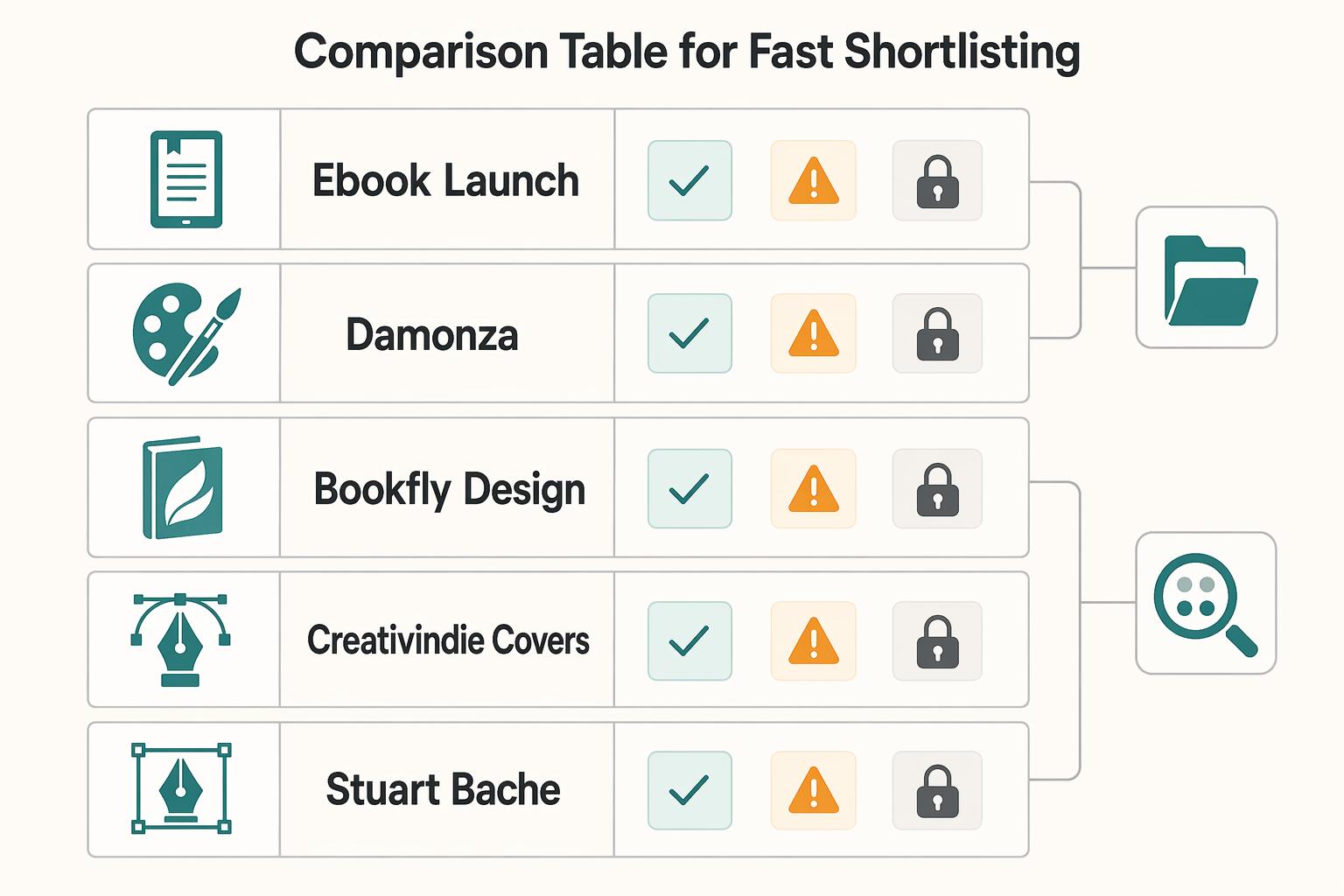
Comparison table for fast shortlisting#
Use this table to choose a service route first, not to treat any provider detail as verified. Do not assume provider-specific Creative Brief, Revision Policy, and rights terms are settled, so treat every shortlist as verify before deposit.
If you want managed execution, start with studio-style candidates. If you want more options quickly, start with directory and marketplace routes and plan for heavier screening.
| Provider | Best for | Service model | Briefing depth | Revision structure | Rights language | Risk notes | Confidence |
|---|---|---|---|---|---|---|---|
| Ebook Launch | Studio-style shortlist candidate | Unverified from excerpts (often treated as managed) | Unknown from excerpts; confirm whether Creative Brief is required | Unknown from excerpts | Unknown from excerpts | Do not assume file handoff or print variants are included | Low |
| Damonza | Studio-style shortlist candidate | Unverified from excerpts (often treated as managed) | Unknown from excerpts | Unknown from excerpts | Unknown from excerpts | Confirm revision rounds and communication model in writing | Low |
| Bookfly Design | Studio-style shortlist candidate | Unknown from excerpts | Unknown from excerpts | Unknown from excerpts | Unknown from excerpts | Confirm whether scope is ebook-only or full print cover | Low |
| CreativIndie Covers | Readers already using CreativIndie resources | Unknown from excerpts | Unknown from excerpts | Unknown from excerpts | Unknown from excerpts | CreativIndie source is conversational and notes possible bias; familiarity is not contract evidence | Low |
| Stuart Bache Design | Individual-designer style shortlist candidate | Unknown from excerpts | Unknown from excerpts | Unknown from excerpts | Unknown from excerpts | Verify availability, turnaround, and source-file delivery early | Low |
| GetCovers | Budget-first shortlist candidate | Unknown from excerpts | Unknown from excerpts | Unknown from excerpts | Unknown from excerpts | Lower upfront cost can still create rework risk if deliverables are vague | Low |
| I Need a Book Cover | Buyers wanting many designer options quickly | Unverified from excerpts (directory/jobs-board style assumption) | Unknown from excerpts; plan to supply a strong brief | Unknown from excerpts | Unknown from excerpts | More choice can mean higher screening burden and contract variance | Low |
| Reedsy | Buyers preferring curated profiles over fully open flows | Unverified from excerpts (directory/marketplace assumption) | Unknown from excerpts | Unknown from excerpts | Unknown from excerpts | Reedsy is mentioned in a marketing-company roundup; that does not confirm cover-contract terms | Low |
| 99designs | Buyers who want fast option volume | Unverified from excerpts (marketplace/contest assumption) | Unknown from excerpts; strong brief is critical | Unknown from excerpts | Unknown from excerpts | More concepts can increase decision noise and rights-term mistakes if unchecked | Low |
| Fiverr | Buyers optimizing for speed, price range, and broad freelancer choice | Unverified from excerpts (open marketplace assumption) | Unknown from excerpts; brief quality drives results | Unknown from excerpts | Unknown from excerpts | Highest screening burden if you need clear rights, source files, and consistent genre fit | Low |
What this table confirms is simple: the evidence gaps are real, and that is exactly why the confidence column matters. None of the shortlist sources verify the contract fields, so confirm revision terms, rights language, and deliverable scope directly with each service before signing.
Before you pay any deposit, request three items in writing for each finalist: required Creative Brief, exact Revision Policy, and rights transfer language for final files. Also confirm whether "cover design" includes front-only or full-wrap, plus source files and ebook/print exports.
If you are deciding between two routes, use this shorthand: choose studio-style candidates for tighter coordination; choose directory and marketplace routes for faster option volume when you can handle deeper screening.
Best managed studios for hands-off execution#
If you want fewer moving parts, start with managed studios and treat marketplaces like Fiverr or 99designs as the wider-choice path. Use this section as a shortlist filter only: provider-level terms, deliverables, pricing, and rights language aren't verified here.
- Ebook Launch
Best for: authors who want a studio-style starting point with one provider relationship. Key pros: it can be simpler to evaluate one managed proposal than many open bids. Key cons: treat Creative Brief requirements, Revision Policy, rights transfer, and exact deliverables as unconfirmed until you get them in writing. Use case: shortlist it if you want hands-off coordination and will request written scope, revision rounds, final-file list, and rights terms before deposit.
- Damonza
Best for: buyers comparing a few managed options side by side. Key pros: it supports a controlled apples-to-apples comparison when you reuse the same brief. Key cons: treat communication model, turnaround, revision structure, and print vs ebook scope as unconfirmed until you get them in writing. Use case: use it when you already know your genre and want to compare two or three managed quotes against the same requirements.
- Bookfly Design
Best for: authors who want a managed candidate but need scope clarity early. Key pros: it fits a lower-coordination shortlist approach. Key cons: treat whether "cover design" includes front only, full wrap, source files, and export variants as unconfirmed until you get it in writing. Use case: shortlist it if your first decision gate is exact package scope for ebook and print outputs.
- CreativIndie Covers
Best for: readers already familiar with the CreativIndie network. Key pros: familiarity can make initial evaluation faster. Key cons: familiarity is not contract evidence; treat key buying terms as unconfirmed until you get them in writing. Use case: keep it in consideration only if you can get clear written Creative Brief, Revision Policy, and rights language.
- Stuart Bache Design
Best for: authors who prefer a direct individual-designer route over open bidding. Key pros: one named designer can simplify the decision flow for some buyers. Key cons: treat availability, process cadence, and file handoff terms as unconfirmed until you get them in writing. Use case: this can fit a direct working relationship if timeline, responsibilities, and deliverables are confirmed in writing before kickoff.
The tradeoff is simple: managed routes may reduce coordination overhead, while broad marketplaces may offer more stylistic range. Choose based on your operating preference, then verify paperwork before money moves.
Best marketplaces and directories for choice and speed#
If you need many candidate designers quickly, use a wide-net path like I Need a Book Cover or 99designs; if you want a more curated-profile starting point, begin with Reedsy. The tradeoff is consistent: more choice usually means more screening work before you can hire safely.
| Option | Best for | Evidence note | Use case |
|---|---|---|---|
| Reedsy | A narrower, curated-feeling starting point | The cited Reedsy page is a printing-services page, not a cover-designer marketplace comparison, last updated Dec 22, 2025. | Start here when you want less noise, then require a written Scope of Work, file-delivery list, and rights terms before award. |
| 99designs | Getting many design directions quickly | High volume increases screening effort; confirm revision and ownership terms directly before selecting a designer. | Use when concept variety matters most, and filter finalists for clear genre-fit portfolios before selecting one. |
| Fiverr | Speed and a large talent pool | ClearVoice (updated October 3, 2025) calls Fiverr its go-to recommendation and references thousands of book cover designers. Confirm platform-specific rights and revision terms before hiring. | Use when you can screen aggressively and define scope up front. |
| I Need a Book Cover / Book Cover Jobs Board | Fast shortlist building through a book-specific lane | Terms and deliverables for this service and its Jobs Board are unverified; confirm scope and rights in writing before proceeding. | Include it for quick discovery, but treat each option as unverified until written scope and rights language are confirmed. |
The evidence here is uneven, so use this section as routing guidance, not as a confirmed feature matrix. The current source set does not verify revision terms, rights transfer, licensing, or exact deliverables across these providers.
- Reedsy
Best for: a narrower, curated-feeling starting point. Key pros: useful when you want fewer initial options to sort. Key cons: Reedsy's most prominent listing covers printing services rather than a cover-designer marketplace comparison, last updated Dec 22, 2025. Use case: start here when you want less noise, then require a written Scope of Work, file-delivery list, and rights terms before award.
- 99designs
Best for: getting many design directions quickly. Key pros: it fits a fast, high-choice search when you are still testing direction. Key cons: high volume increases screening effort; confirm revision and ownership terms directly before selecting a designer. Use case: use it when concept variety matters most, and filter finalists for clear genre-fit portfolios before selecting one.
- Fiverr
Best for: speed and a large talent pool. Key pros: ClearVoice (updated October 3, 2025) calls Fiverr its go-to recommendation and references thousands of book cover designers. Key cons: volume can hide weak fit if you do not screen carefully; confirm platform-specific rights and revision terms before hiring. Use case: use it when you can screen aggressively and define scope up front.
- I Need a Book Cover and the Book Cover Jobs Board
Best for: fast shortlist building through a book-specific lane. Key pros: it belongs in the same many-options-fast bucket as 99designs. Key cons: terms and deliverables for the service and Jobs Board are unverified; confirm scope and rights language in writing before proceeding. Use case: include it for quick discovery, but treat each option as unverified until written scope and rights language are confirmed.
Before you award any job, lock three items in writing: Scope of Work, file-delivery list, and rights transfer or licensing language. Community signals like Reddit or r/selfpublish can help you find names, but they are not a substitute for portfolio-fit checks or contract terms.
You might also find this useful: The Best Platforms for Self-Publishing Your Book.
Best budget-first options when cost is the hard constraint#
If cost is the hard constraint, cut scope before you cut protections. Use a tight brief, a single concept, and fixed revision rounds, then require a written Revision Policy, final deliverables, and Copyright Assignment terms before award.
- GetCovers
Keep it on your budget-first shortlist, not as a verified low-cost winner. Pricing, deliverables, revision handling, and rights language are not confirmed, so only proceed when those terms are explicit in writing.
- Fiverr
Treat it the same way: budget-first candidate, not a source-verified pricing benchmark. The practical risk is coordination drift when revision rules and file handoff details are vague, so lock those terms before work starts.
- BookCoverHub
Include it only with the same evidence warning. Fee levels, revision terms, and rights transfer are not verified here, so do not rely on high-level promises without written scope and rights language.
Cross-source price benchmarking is not reliable from this SERP material. The grounded cost signals here are about print format economics, not cover-service rate cards: Mixam (updated Jul 18, 2025) and 4hatteras (Mar 31, 2025) both frame softcover/paperback formats as more cost-effective than hardcover.
Contract and rights checklist before you pay#
Do not pay in full until ownership, usage rights, and final-file ownership are unambiguous in writing.
Treat this agreement like a checklist, not a chat thread. A publishing-contract checklist typically covers delivery, acceptance, copyright ownership and grants, warranties, and related terms, and this is practical guidance rather than legal advice.
The clauses to confirm before final payment#
| Clause | What to confirm |
|---|---|
| Scope of Work | Define exactly what you are buying: concept count, ebook-only vs. print wrap, typography, sourcing, and any back-cover or related assets. |
| Revision Policy and timeline commitments | State how many rounds are included, what counts as a round, who submits feedback, and when drafts are due. |
| Delivery file list | Name the exact final package up front. If "final files" is vague, clarify before you approve payment. |
| Copyright Assignment and Licensing Terms | Spell out whether rights transfer, what uses are allowed, and where those uses apply. If work-for-hire or assignment terms are used, address termination and rights reversion explicitly. |
- Scope of Work
Match this to the brief and proposal. Define exactly what you are buying: concept count, ebook-only vs. print wrap, typography, sourcing, and any back-cover or related assets.
- Revision Policy and timeline commitments
Spell out how many rounds are included, what counts as a round, who submits feedback, and when drafts are due.
- Delivery file list
List the exact final package up front. If "final files" is vague, stop and clarify before you approve payment.
- Copyright Assignment and Licensing Terms
State whether rights transfer, what uses are allowed, and where those uses apply. If work-for-hire or assignment terms are used, address termination and rights reversion explicitly.
Add AI language when originality is a requirement#
If your launch or brand requires non-AI artwork, make that a written acceptance condition. Add an AI Art Policy and warranty language that states whether generative AI was used in concepting, image creation, or compositing. Keep this explicit so rights and acceptance standards are not left to interpretation.
Data handling checkpoint and payment stop sign#
Before you share project details on any platform, review its Privacy Policy and Cookie Policy, and share only the personal data needed to complete the work. Then hold final payment until your closing pack matches the contract: approved files, any promised source or print files, and written rights confirmation.
Related: How to Create a Brand Style Guide for a Client.
Hiring sequence from brief to final files#
Use this sequence in order: brief, shortlist, structured outreach, proposal comparison, contract lock, then production. That order keeps decisions clear and cuts avoidable rework.
- Finalize the Creative Brief first
Write the brief before you compare providers. GetCovers says clients fill in a book cover design brief and then managers confirm the order, so treat the brief as the project control document, not admin filler. Checkpoint: before kickoff, confirm the brief clearly states genre references, audience fit, and acceptance criteria you will use to approve work against the Scope of Work.
- Shortlist services and run structured outreach
Send the same brief to each shortlisted service and ask the same questions so proposals are comparable. Ask for scope, file package, revision structure, rights language, and pricing in writing; GetCovers says it provides a full fixed price before payment. Checkpoint: compare written proposals over homepage signals. A displayed 5.0 / 624 rating or a 100% money-back guarantee does not replace explicit deliverables and rights terms.
- Lock contract terms, then control the middle
Start design only after the Scope of Work and Revision Policy match the approved brief. During production, use one decision owner and one revision log, even if a provider advertises unlimited revisions. Checkpoint: keep one feedback channel. Conflicting side feedback is a common way revision rounds expand and approval slows down.
- Accept only with a final handoff pack
Final approval should happen after a file-and-rights check, not only a visual thumbs-up. Confirm the promised source files, print/export variants, and written rights confirmation covering Copyright Assignment and Licensing Terms. GetCovers says copyright belongs to the client after final delivery, but you still want that confirmation in writing in your handoff package. Checkpoint: release final payment only when files and rights documentation match the contract.
The decision that prevents most cover-buying mistakes#
Most cover-buying mistakes come from process, not taste. Pick your service model first, then evaluate providers with the same evidence standard.
- Pick the service model before you compare names
Decide your coordination load first: managed studio, curated directory, or open marketplace. Then shortlist inside that lane. Build your Creative Brief before outreach, and make sure it clearly states target audience, genre fit, and the main promise the cover should communicate at thumbnail size. A common mistake is neglecting target audience fit or overloading the design until it becomes cluttered and unclear. Checkpoint: if your brief does not clearly say who the book is for, pause provider comparison.
- Use one written checklist for every candidate
Compare each option on the same checklist: fit, deliverables, revisions, and rights terms. If any term is vague or missing, treat it as unresolved risk until it is clarified in writing. Checkpoint: do not treat unknown terms as minor details; they are unresolved decision risk.
- Choose verifiable evidence over marketing gloss
Keep your decision anchored to what you can verify in the brief, proposal, and contract language. Be careful with thin sources: for example, a visible self-publishing excerpt is sponsored and partially gated, so it is not enough on its own for broad service claims. Likewise, even official-looking pages can be informational rather than legally authoritative. Checkpoint: the better choice is the provider you can verify on fit, scope, and terms, not the one with the strongest promotional framing.
Frequently Asked Questions
What should indie authors check first before hiring a book cover designer?
Check the written brief before you check the portfolio. If the provider cannot work from a clear cover design brief, you are likely buying taste and promises instead of a defined deliverable. Before kickoff, verify three things in writing: the brief requirements, what files you will receive, and how the revision policy handles rounds.
How much should I budget for book cover design if market benchmarks are inconsistent?
Do not force a fake market average. The grounded numbers here show why: one provider says packages start at $10 and average $25 to $35, while another says price depends on the complexity of the illustration and the package you choose. Budget by scope and timeline, not by blog-list averages. If you need fast, simple execution, a low-cost package may fit. If you need custom illustration, plan for a much longer production window such as 8 to 10 weeks, and ask whether an urgency fee applies for rush work.
Is a directory like `I Need a Book Cover` better than a managed studio like `Ebook Launch`?
Do not assume either option is the clear winner. Use the same checks either way: whether a brief is required, deposit terms, first-draft timing, revision policy, and final file/licensing paperwork.
When is `Fiverr` or `99designs` the right choice instead of `Reedsy`?
This guide does not provide direct evidence that one of these platforms is better. Whichever route you pick, require the same scope, file list, revision structure, timeline expectations, and rights language from each candidate so you can compare them cleanly.
How do I confirm non-AI artwork requirements in a contract?
You need an explicit clause, because clear non-AI guarantees should not be assumed by default. Put the requirement in the scope of work and ask for a written warranty that the cover will comply with your non-AI requirement. If the provider will not add that language, treat the risk as unresolved and do not assume the art is compliant just because the portfolio looks original.
What rights language must be in place before I pay the final invoice?
Before final payment, get written licensing terms, any copyright-assignment terms you negotiated, and the final file list promised in the contract. A useful evidence check is a license details document listing source links and license details for any images and fonts used. The failure mode is accepting flattened exports and a casual chat message instead of rights paperwork. If rights transfer, source-file ownership, or asset licenses are vague, final acceptance is not complete.
Try a related tool
Researched and edited by the Gruv editorial team. Gruv builds cross-border billing, payouts, and finance-operations software for global businesses.
Sources
- austintexas.gov/sites/default/files/files/Watershed/flood/fe...trusted
- cired.vt.edu/content/dam/cired_vt_edu/grants-application/...trusted
- copyright.gov/ai/Copyright-and-Artificial-Intelligence-Par...trusted
- des.sc.gov/sites/des/files/Library/Regulations/R.61-58.pdftrusted
- dgs.virginia.gov/globalassets/business-units/bcom/documents/c...trusted
- federalregister.gov/documents/2024/01/10/2024-00067/employee-or-...trusted
- highways.dot.gov/sites/fhwa.dot.gov/files/Design%20Exceptions...trusted
- nps.gov/orgs/1103/upload/NPS-Rodent-Exclusion-Manual...trusted
Educational content only. Not legal, tax, or financial advice.
Related Posts

GDPR Compliance Checklist for Freelancers Working With EU Clients
Start by separating the decisions you are actually making. For a workable **GDPR setup**, run three distinct tracks and record each one in writing before the first invoice goes out: VAT treatment, GDPR scope and role, and daily privacy operations.
How to Create a Brand Style Guide for a Client
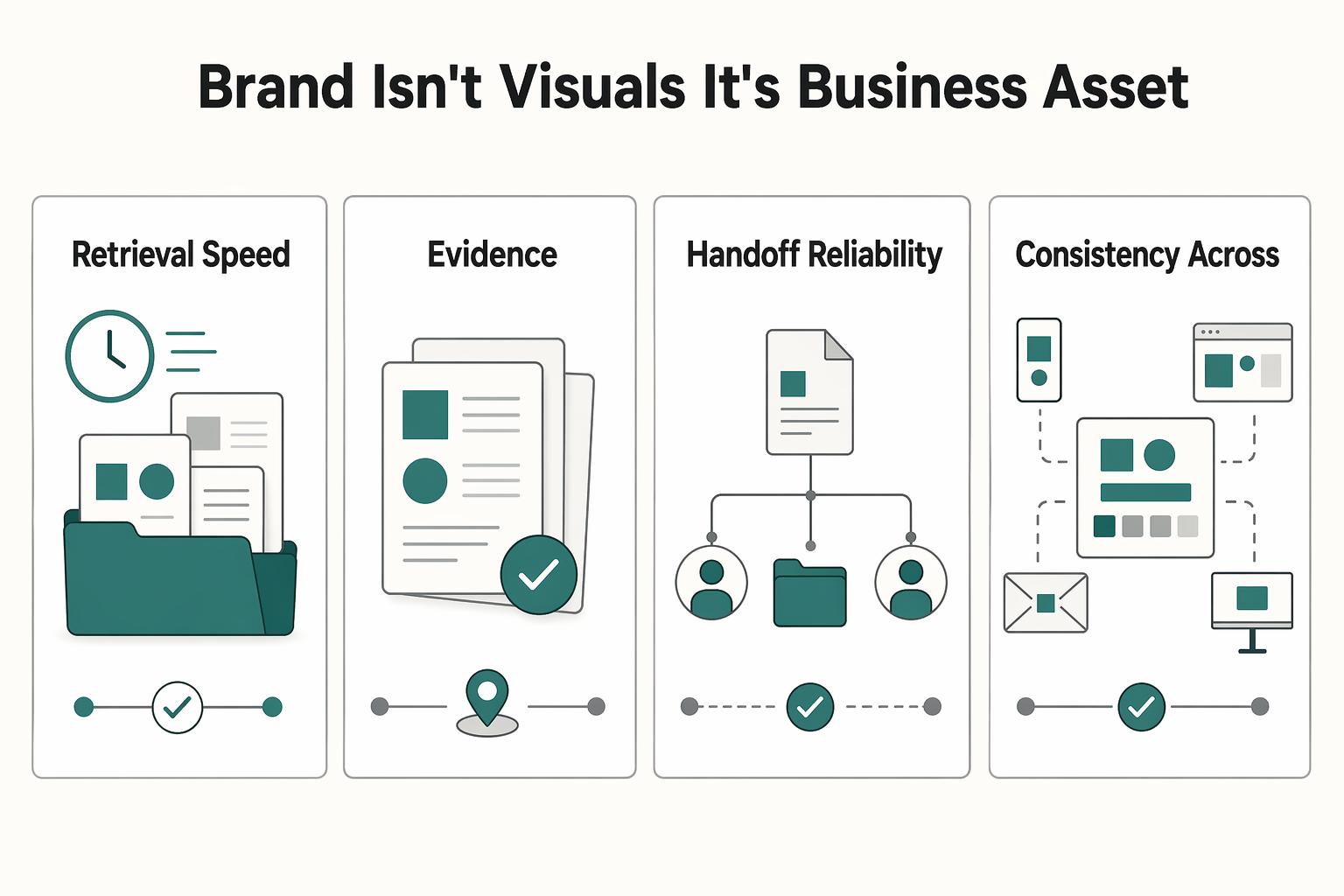
If you work alone, your guide does not need to be a full brand book. It should work as a control document. Standardize the few choices that keep coming up so your proposals, reports, invoices, decks, and delegated work look and sound like they come from the same business.

The Freelance Payment Penalty: A Modeled Audit of Platform Fees, FX Spreads, and Payout Delays
The money rarely disappears through a single, easy-to-spot fee. The real loss is stacked. A marketplace takes its commission, a processor adds a charge for international cards, a bank or payment company converts the currency at a spread, a platform holds the funds before release, and a wire sheds a little to intermediaries on the way in. Each layer looks defensible on its own, but the worker feels the combined result as a smaller deposit and a later payday.