

Quick Answer
Start with a small seller cohort and trace it from onboarding through the reporting extract and filing outcome. Fix identity and payout-link errors upstream, assign one submission owner, and add markets only when the dry run and exception process work. Confirm the reporting Member State separately; entering another EU market does not automatically require another DAC7 filing.
Why this DAC7 compliance worked example matters for growth leaders#
This is a hypothetical rollout, not a named customer engagement. Assume an EU personal-services marketplace is preparing to add a second seller market. Its tax review has confirmed DAC7 scope and its reporting Member State. The cohort sizes and failures below are invented to illustrate decisions; they are not customer results or industry benchmarks.
The launch problem is concrete: seller profiles, payment records and finance exports use different identifiers. A reporting tool can format a file, but the team first has to make those records agree. The example follows that repair through the launch gate.
Step 1. Set the right lens#
Growth leaders often get pulled into DAC7 late, after legal has flagged an obligation or finance has started feeling the reporting burden. By then, the issue is no longer legal interpretation alone. It is whether seller data, payout records, internal ownership, and filing steps are clean enough to support new-country launches without rework.
DAC7 covers specified platform activities, including personal services, and the European Commission explains that qualifying operators can report in one EU country. Confirm that reporting route before designing a separate filing process for every seller market. VAT registration and payment obligations are separate decisions.
Step 2. Focus on the decisions that change economics#
Follow the example for four operating decisions: which records need repair, who owns each correction, which reporting model the team can maintain, and what evidence clears the next launch wave.
Stay close to decision-grade questions: What was manual before tooling changed? Which team owned the reporting sequence? What checkpoint proved the data was ready? A useful verification detail is whether the company can show who owned submission, what evidence pack existed before implementation, and how readiness was confirmed before expansion. If those details are missing, treat any growth claim as incomplete.
A common failure mode is treating compliance as if it lives only inside finance. In practice, margin gets hit when product, ops, and finance do not agree on data ownership early enough, and fixes get pushed into launch windows.
Step 3. Keep assumptions separate from results#
The example assumes that the operator and the selected sellers are in scope. In a real rollout, tax review must establish that from the actual product flows and seller facts. A platform that only processes payments needs its own scope assessment; being a fintech business does not by itself make every payment reportable.
Start with the baseline bottleneck and success criteria#
Start by documenting your current filing workflow as evidence, then set success criteria you can verify before you evaluate any tool.
Step 1. Write the starting state as evidence, not opinion#
In the hypothetical baseline, finance reviews 100 seller records: six lack required tax data and two different records cannot be matched to their payout history. Ops owns the six seller follow-ups; engineering owns the two identity mappings. Finance records eight open exceptions before the team evaluates reporting software.
Avoid broad statements like "compliance is slowing expansion" unless you can show where time is actually spent. If the constraint is unclear, later tool choices are hard to test.
Step 2. Trace one seller through the repair#
Take seller S-041 from the two broken links. The profile has a current seller ID, while older payouts still use a legacy ID. Engineering adds a reviewed mapping between the two; finance reruns the extract and checks that the seller appears once with the complete payment history. The correction log keeps the old ID, new ID, owner and affected extract version so the repair can be rechecked.
Step 3. Set success criteria before evaluating tools#
Choose measures that change decisions and can be checked quickly:
| Measure | Evidence example |
|---|---|
| Filing timeliness | Submission receipts |
| Time to resolve submission or data exceptions | Issue timestamps |
| Internal hours per filing cycle | Internal records or time tracking |
| Market launch readiness for the next jurisdiction | Launch checklists |
Tie each measure to concrete evidence, for example submission receipts, issue timestamps, and launch checklists. If a vendor process cannot show how your team will verify improvement on those points, you have not reduced execution risk yet.
Prepare the inputs before touching tooling#
Do the prep work before you buy or build anything. Software will not fix disputed scope, weak evidence, or unclear data ownership. Get these inputs stable first. DAC7 sits within the EU Directive on Administrative Cooperation, and the operating trend is more data and more automatic exchange of information.
Preparing the inputs is mostly a data question, and it is measurable before any vendor conversation starts. DAC7 and DPI reporting for platforms lists the elements a filing carries and the requirement level of each, and the DAC7 seller data checker reads a seller export in the browser and returns a chase list of what is missing, seller by seller. Doing that first turns a vendor evaluation into a conversation about a known gap rather than an unknown one.
| Artifact | What it covers | Detail to include |
|---|---|---|
| Legal interpretation note | Scope across DAC7 and adjacent regimes | Real product lines, seller types, countries, and points that still need counsel |
| Reportable activity map | Flows that may create reportable seller income | Owner of each flow and the source tables |
| Seller field dictionary | Seller attributes used for reporting | Origin, whether entered or derived, and what counts as complete |
| Per-jurisdiction filing owner list | Filing ownership by jurisdiction | One named filing owner per jurisdiction |
- Confirm scope in writing across DAC7 and adjacent regimes.
Start with a short legal interpretation note tied to your real product lines, seller types, and countries. Use it to answer: which parts of your platform may fall under DAC7 reporting rules for digital platforms, whether MRDP or the OECD Model Rules also need assessment for your business, and which points still need counsel.
Verification: product and finance should be able to read the same note and reach the same view on in-scope, out-of-scope, and escalation items. Failure mode: broad assumptions get documented without mapping to actual transaction types, and downstream teams build the wrong model.
- Build the minimum evidence pack before integrations start.
Keep four artifacts together in one controlled folder: legal interpretation, reportable activity map, seller field dictionary, and per-jurisdiction filing owner list. The activity map should name each platform flow that may create reportable seller income, the owner of that flow, and the source tables. The field dictionary should define each seller attribute, origin, whether it is entered or derived, and what counts as complete.
Verification: trace one seller from onboarding to payout using only this pack. If you cannot, the tooling project is early.
- Lock the data prerequisites you will rely on for reporting.
Define the seller identity, tax-residence and tax-number fields needed for your activity and filing route, including VAT data where applicable. Keep W-8/W-9 collection and VAT payment workflows separate from DAC7 requirements. Each reporting field needs a source and a rule for resolving missing or conflicting values.
The key checkpoint is payout linkage: if you cannot show which payouts belong to which seller entity, later reporting outputs are difficult to trust.
- Assign control owners across product, finance, and ops.
Product should own field capture and change management, finance should own reporting interpretation and filing readiness, and ops should own exception handling and seller follow-up. For each control, define reviewer, sign-off owner, and incident logging path. This audit trail is an internal control choice, but it becomes more important as data volumes and correction load increase.
If one control has no named owner, stop and fix that before vendor selection.
Choose the operating model that protects margin#
Compare an internal build, a reporting vendor and a hybrid model against the same seller extract. The choice turns on who maintains reporting formats, who resolves rejected records and whether finance can retrieve the submitted version and outcome without engineering help.
Use the activity map, seller field dictionary and confirmed reporting route from the previous section. Ask each option to process the same hypothetical cohort, including S-041, so you can compare correction handling as well as file generation.
Step 1. Compare your options against EU operating reality#
| Model | What the team owns | Useful test before selection |
|---|---|---|
| Internal build | Data capture, extract, output maintenance, submission and corrections | Can engineering maintain the filing format and let finance recover a rejected submission? |
| Reporting vendor | Source-data quality, scope decisions and vendor handoff; contract defines output and submission responsibilities | Can the vendor return seller-level errors, submitted versions and outcome evidence? |
| Hybrid | Internal seller extract and corrections; external output or filing services as agreed | Can both systems retain the same seller IDs and version references through a correction? |
For this hypothetical team, the hybrid model fits: engineering can maintain seller and payout mapping, while finance needs help maintaining filing outputs. The choice depends on testing that handoff, rather than assuming outsourcing also fixes source data.
Implement the reporting flow in the right order#
Build the flow in the same order the data is created and validated: seller onboarding, transaction classification, reporting extract, file generation, then submission tracking. That order keeps data issues out of filing cycles, where fixes are slower and more expensive.
| Stage | Primary action | Validation focus |
|---|---|---|
| Seller onboarding | Capture known reporting fields, including TIN and VAT-related data where relevant | Add a completeness check before sellers are fully active for reportable activity |
| Transaction classification | Set a clear in-scope versus out-of-scope classification tied back to seller records | Verify traceability from seller record to classified transaction to reporting line |
| Reporting extract | Give finance a stable extract tying seller identity, activity classification, and reportable income values together | Keep correction history auditable |
| File generation | Generate filing files only from validated extracts | Fix incomplete or inconsistent records upstream, not during filing preparation |
| Submission tracking | Separate accepted, pending, and rejected filings clearly | Make corrections traceable before resubmission |
Step 1. Lock seller onboarding controls first#
Under DAC7 (Council Directive 2021/514), reporting starts with seller data quality, not year-end file assembly. If you cannot reliably connect activity to a usable seller identity record, your reporting process is not ready.
Capture the reporting fields you already know you need, including Tax Identification Number (TIN) and VAT-related data where relevant to your activity model. Add a completeness check before sellers are fully active for reportable activity, and route missing fields back for correction early.
Step 2. Classify transactions before you extract for reporting#
DAC7 reporting is about income data submitted to a local tax authority and then shared across EU member states. Your transaction layer therefore needs a clear in-scope versus out-of-scope classification, tied back to seller records collected during onboarding.
Make that classification close to where the event is created, then verify traceability from seller record to classified transaction to reporting line.
Step 3. Produce a dedicated reporting extract#
Give finance a stable reporting extract instead of raw transaction output. The extract should tie seller identity, activity classification, and reportable income values together in one reviewable layer.
In the example, finance keeps the baseline extract and the version containing the S-041 mapping. It checks the repaired seller history and confirms that all eight tracked exceptions are closed before generating the dry-run file. A clean file with an omitted seller would still fail this gate.
Step 4. Generate filing files only from validated extracts#
Treat file generation as a formatting step, not a data-repair step. Run validation before generation so incomplete or inconsistent records are fixed upstream, not during filing preparation.
Step 5. Track submission outcomes clearly#
After generation, track submission outcomes with explicit status visibility so accepted, pending, and rejected filings are easy to separate and resolve. For rejected cases, make corrections traceable before resubmission so teams can confirm what changed.
Keep PII handling explicit in operations by limiting exposure in day-to-day views and preserving clear audit logs for corrections. For the full breakdown, read How a Creator Platform Streamlined 1099 Filing with Gruv.
Launch countries in waves and govern the filing calendar#
Launch seller markets in waves once the reporting flow works end to end. Confirm the operator’s reporting Member State separately from the market launch plan: a new seller market may change the data you collect without creating a second DAC7 submission route.
Step 1. Rank launch countries by filing friction, not just revenue potential#
In the hypothetical second-market wave, the team checks the same seller fields, payment linkage and exception ownership used in the first cohort. It tests the new market’s records through the confirmed filing route before enabling wider onboarding. Additional reporting routes need their own readiness checks only where the operator’s obligations require them.
| Market wave | Readiness evidence | Open issue | Launch decision |
|---|---|---|---|
| Initial cohort | 100 seller records reviewed | Six tax-data gaps and two payout-link errors | Repair the eight exceptions before the dry run |
| Next seller market | New-market sample passes the same checks through the confirmed filing route | None in the tested sample | Proceed with a limited wave and monitor exceptions |
| Later market | Sample cannot be reconciled to seller history | Identity mapping remains unresolved | Delay this market while the current wave continues |
Step 2. Put a fixed governance rhythm around the filing calendar#
A fixed review rhythm keeps the calendar from drifting. Run recurring readiness checks, schedule a dry run before the live window, and assign explicit deadline checkpoints to owners. Review the same evidence each time so decisions stay operational rather than anecdotal.
Step 3. Set go or no-go gates before each country launch#
Define go/no-go gates before launch pressure builds. At minimum, confirm your required data-completeness level is met, exceptions are manageable inside the window, and one accountable owner is assigned for submission and confirmation. If any gate is unclear, delay that country and keep the wave intact.
Measure compliance as a monetization system, not overhead#
Treat DAC7 compliance as a growth system only if you measure business impact, not just filing completion. For DAC7 under Directive (EU) 2021/514, the real decision question is what changed in operating cost, margin pressure, and rollout speed after reporting became cleaner and more repeatable.
Step 1. Baseline economics before you claim improvement#
Start with costs you can defend from internal records for one baseline month or one full filing cycle: seller-data fixes, file prep, submission follow-up, rejected-record repair, and cross-team handoffs. If finance cannot show hours, owners, and external spend without memory-based estimates, any ROI claim is still unproven.
Step 2. Tie compliance outputs to unit economics#
Track compliance outcomes in the same frame leadership uses for expansion decisions: cost-to-serve per seller, margin share consumed by manual compliance work, and incremental cost of adding one more EU jurisdiction. If manual review work rises faster than seller volume, treat it as a scaling and expansion constraint, not just an ops annoyance.
Step 3. Separate proven outcomes from unproven claims#
Use two labels in reporting: proven and unproven. Proven means the metric is traceable to internal records, filing logs, or time tracking. Unproven means it may be plausible, but the baseline, method, or comparison is not defensible yet.
Treat DAC7 ROI, internal-hours-saved, margin-impact outcomes, and like-for-like vendor comparisons as not independently validated until you check them yourself.
| Function | KPI | Owner | Frequency |
|---|---|---|---|
| Finance | Cost-to-serve per seller in DAC7 scope | Finance lead | Monthly |
| Finance | Manual compliance hours and external spend per filing cycle | Finance or tax ops | Monthly and post-filing |
| Product | Seller profile completeness for reportable fields | Product manager | Weekly |
| Product | Exception rate from missing or mismatched seller data | Product with data owner | Weekly |
| Ops | Rejected submissions still open by jurisdiction | Compliance ops | Weekly during filing windows |
| Ops | Time from issue detection to corrected resubmission confirmation | Compliance ops | Weekly and post-incident |
Keep these KPIs in place for launch monitoring. The next market’s launch gate is the representative sample and dry run described above; use the first live filing cycle to evaluate actual effort, reliability and cost and inform later rollout decisions.
Related: Gig Worker Tax Compliance at Scale: How Platforms Handle 1099s W-8s and DAC7 for 50000+ Contractors.
Avoid the failure patterns most teams repeat#
The repeat failure is running compliance reporting as a seasonal filing task instead of an always-on data-quality process. If records are only cleaned up right before submission, errors surface when timelines are tight and expansion decisions are already in motion.
Step 1. Keep reporting data live year round#
Treat reporting data as an operating record, not a year-end export. A mid-cycle sample should confirm that seller profile changes still reach the payment and reporting records. Keep the S-041 mapping in that sample after subsequent updates so an old integration cannot reintroduce the same break.
Step 2. Baseline before you compare vendors#
Do not evaluate tools without a baseline. If you cannot show current internal effort, exception volume, and correction cycle time, feature comparisons are not decision-grade. Keep one evidence pack per filing cycle with input counts, correction reasons, file versions, and submission confirmations by jurisdiction.
Step 3. Assign exception owners before you need them#
Set clear ownership for exception handling before issues appear. Each jurisdiction should have a named owner responsible for tracking errors through root cause, corrected version, and confirmation of resubmission. If error volume rises, pause new-market rollout until data quality and the correction cycle are stable.
Related reading: How to Build a Compliance Operations Team for a Scaling Payment Platform.
Turn DAC7 into an expansion asset with a copy-paste checklist#
Use a checklist that proves you can launch jurisdictions with controlled reporting operations, not just DAC7 awareness.
- Define the bottleneck and set 4 to 6 metrics before changing tooling.
Write the current failure in one sentence, then track only metrics you can verify: internal hours per filing cycle, percentage of sellers with complete payout-linked records, exception volume, time from rejection to corrected resubmission, and launch delay caused by reporting readiness gaps. If you cannot reconcile sampled seller identity, tax data, and payouts, your baseline is not reliable.
- Confirm scope across DAC7 and OECD model rules, then assign owners.
Document what is in scope under DAC reporting rules for digital platforms, what is out of scope, and where OECD Model Reporting Rules also apply. Keep a minimum evidence pack: legal interpretation, reportable-activity map, seller field dictionary, and one named filing owner per jurisdiction.
- Choose an operating model with explicit build-versus-buy criteria.
Decide against clear criteria, not vague "flexibility" language: country-output maintenance, integration effort, change-control burden, exception handling, and finance operating load. If you are expanding across multiple EU markets, centralize reporting logic only if exported data is verifiable, correction logs are preserved, and support effort is costed realistically.
- Implement the flow in sequence with checkpoints and owners.
Run onboarding controls, transaction classification, reporting extracts, file generation, then submission and confirmation tracking. At each stage, assign one owner and one check: field completeness, file-schema validity, payout-to-seller reconciliation, and saved submission receipt by jurisdiction. Watch for identity mismatches, missing seller tax fields, and broken payout linkage.
- Launch in waves with hard go/no-go gates.
Sequence jurisdictions by operational readiness, not revenue potential alone. Before each wave, require data completeness above your internal threshold, a successful dry run, and a named owner for the submission window and exception queue. Use simple governance: weekly readiness review, visible issue log, and a pause rule when rejection or correction volume rises.
- Review economics and reliability monthly before the next wave.
Review reliability and cost before the next market wave: exception volume, correction cycle time, internal support hours and the cost of supporting the next cohort. If the S-041 mapping breaks again or seller follow-ups accumulate, repair that process before expanding the wave.
Frequently Asked Questions
What does a dac7 compliance case study actually prove beyond legal awareness?
A completed rollout should show a trace from seller records to reporting output and submission evidence, with named owners for corrections. This hypothetical example teaches that sequence; it does not prove that a customer saved money or launched faster.
What changes operationally in this worked example?
The team replaces disconnected seller and payout IDs with a reviewed mapping, assigns the six tax-data follow-ups to ops, and gives finance a versioned extract. S-041 then appears once with its full history. The launch gate checks those repairs before file generation instead of leaving finance to patch the final file.
Which metrics should founders and revenue leaders track first in a DAC7 rollout?
Track hours per filing cycle, open seller-data exceptions, correction turnaround and the share of records linked to payment history. In the hypothetical 100-record cohort, eight exceptions are the starting workload. Measure how much work it takes to close them and whether they recur; the example provides no external benchmark for that effort.
Does entering another EU market require a separate DAC7 filing?
Not automatically. The European Commission describes criteria that allow qualifying operators to report in one EU country. Confirm the operator’s reporting route, then check that sellers in the new market are included correctly. Keep market-launch readiness separate from the number of submission routes.
What is the difference between a DAC7 explainer and a decision-useful case study?
An explainer tells you what the rule is. A decision-useful case study shows the starting bottleneck, the chosen operating model, the documents used to control quality, and the before-and-after metrics that management would actually use. It should also state what is still unknown, especially around ROI and vendor comparison.
Can DAC7 readiness accelerate European Union market expansion without hurting margin?
Shared records can reduce repeated data repair, but readiness alone does not prove a margin improvement. In this example, the team uses the same validated extract for the next market wave. Compare actual correction hours, external fees and launch delays with the baseline before deciding whether that model is economical.
Which outcomes does this hypothetical example leave unmeasured?
Implementation cost, hours saved, margin impact and launch acceleration are unmeasured. The example shows an operational path and the evidence to collect, not a vendor comparison or an ROI result. Use the KPI table to measure those outcomes in your own rollout.
Try a related tool
EU VAT number validator
Validate EU VAT IDs and keep evidence for invoicing (informational only).
Pricing calculator
Sanity-check pricing and margin assumptions before you send a proposal.
DAC7 seller data checker
Check a seller export against the OECD DPI XML Schema in your browser and get a chase list of the gaps.
Researched and edited by the Gruv editorial team. Gruv builds cross-border billing, payouts, and finance-operations software for global businesses.
Sources
Includes 2 external sources outside the trusted-domain allowlist.
Educational content only. Not legal, tax, or financial advice.
Related Posts
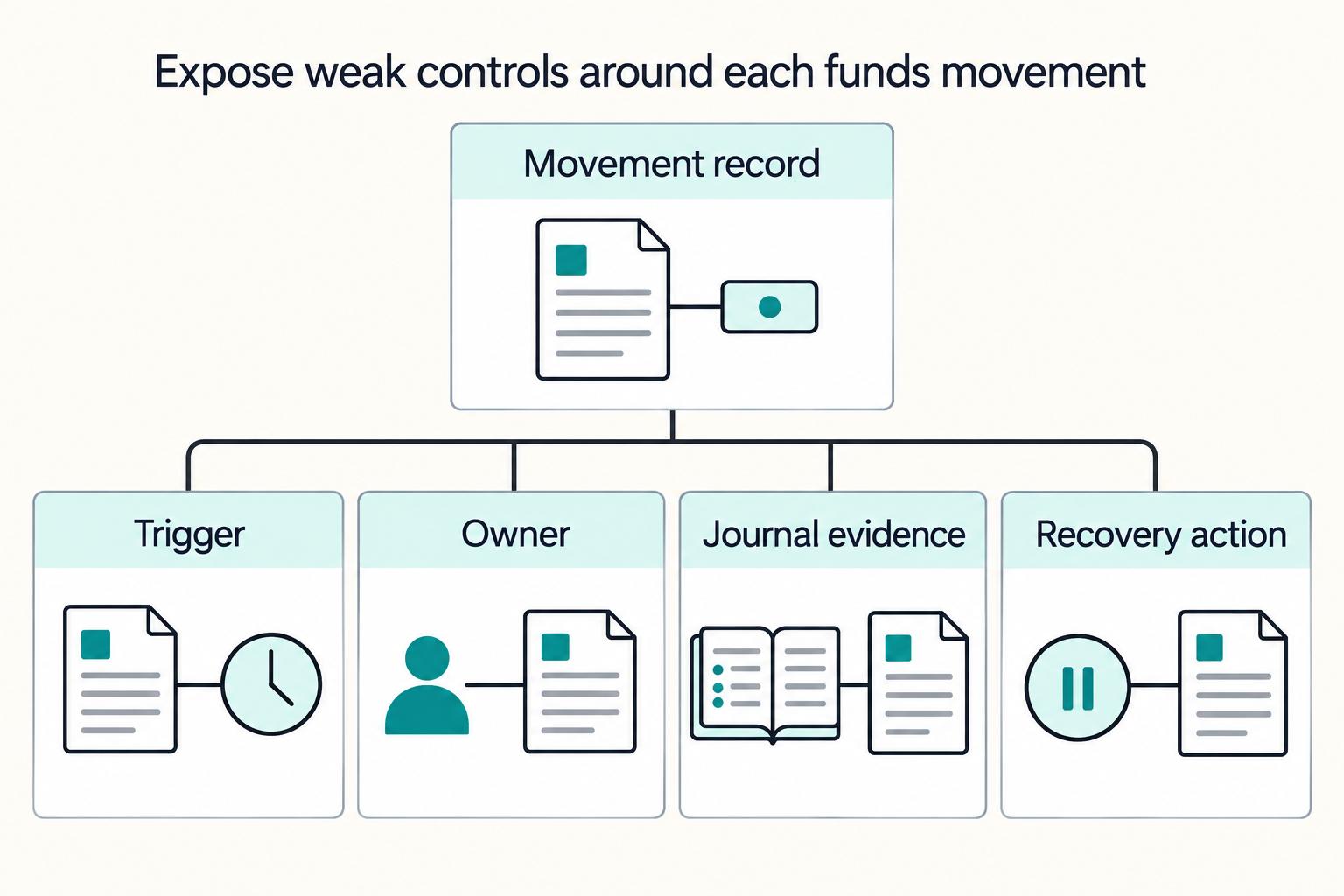
How a Legal Marketplace Modernized Trust Accounting Compliance
Trust accounting is often treated as a compliance topic, but for a legal marketplace it is also an economic decision. When money movement and control are unclear, operating friction rises and pricing pressure gets harder to manage.

Gig Worker Tax Compliance at Scale: How Platforms Handle 1099s W-8s and DAC7 for 50000+ Contractors
At scale, the hard part is not the acronyms. It is deciding sequence, ownership, and evidence when Form 1099-K, Form 1099-NEC, Form W-8BEN/W-8BEN-E, and DAC7 do not line up cleanly. If you run a high-volume marketplace, put controls in the right order and define clear stop points where legal or tax takes over.
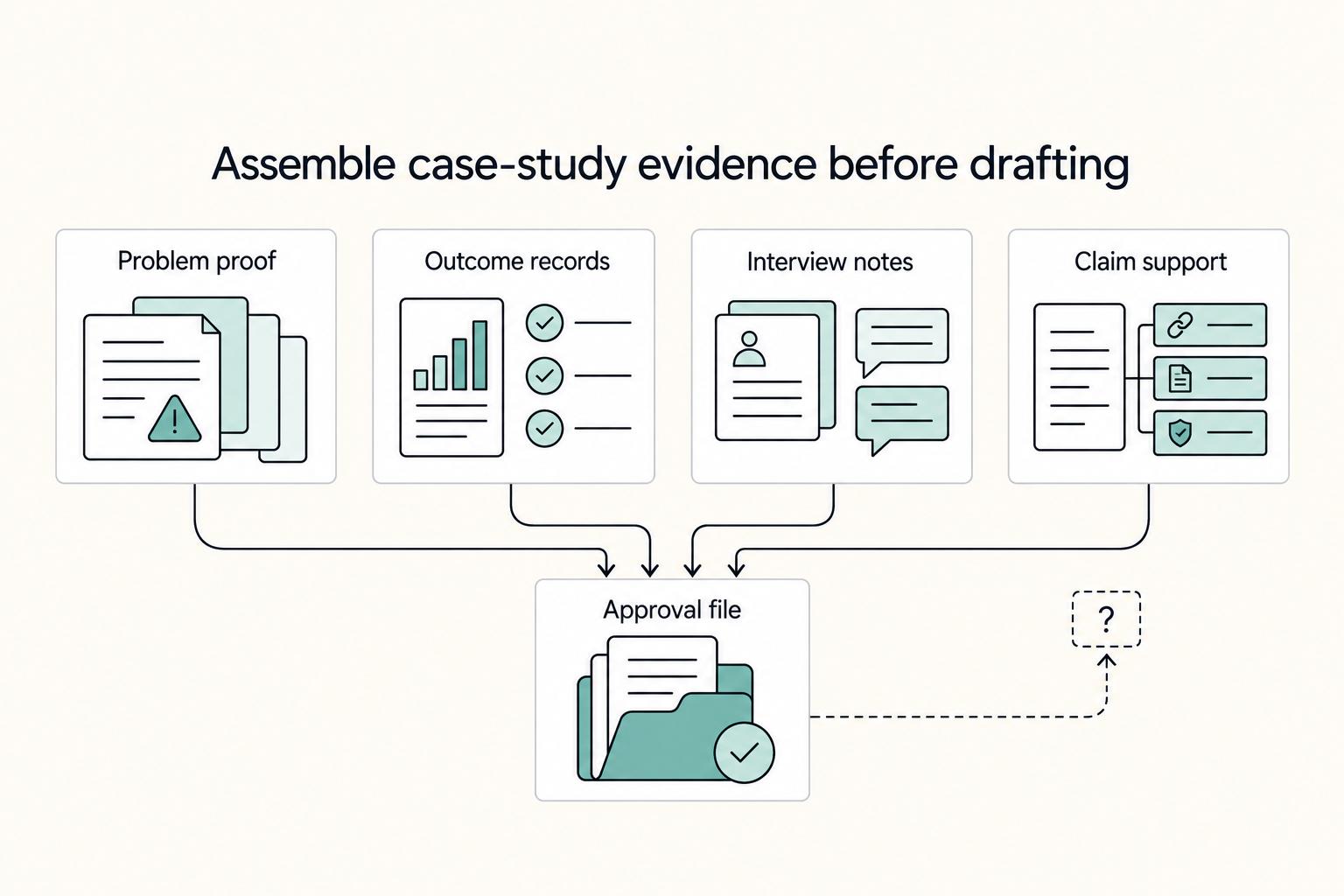
Writing Case Studies for B2B SaaS That Buyers Trust
If you work independently, you do not need another gallery of polished examples. You need a way to produce B2B SaaS case studies that help a buyer trust the result, help a client feel fairly represented, and hold up in review when someone asks, "Where did this number come from?"