
Quick Answer
Start by treating subscription pause optimization duration as a bounded state transition, not an open offer. Use a reason-based duration matrix, keep options time-boxed, and require a clear end-of-pause decision to resume or cancel. Then wire a four-stage trigger sequence with named owners and track outcomes past acceptance into resumed billing. The practical target is simple: move customers from paused back to active on schedule while protecting unit economics.
A subscription pause works best when you treat it as a controlled, temporary path back to active billing#
A subscription pause works best when you treat it as a controlled, temporary path back to active billing. If you treat it like a cosmetic retention feature, you can create retention blind spots and muddier finance reporting, with the paused state drifting away from what later appears as churn in the numbers.
On paper, pause is simple. It gives a customer a temporary break from billing and access without full cancellation. The subscription is then expected to resume automatically or manually after the pause period ends. That temporary part is the point. Recurly explicitly recommends clear pause limits, and Recharge points to configurable durations and auto-resume as core implementation elements. Pause is not just an offer. It is a time-bound state transition with an expected return path to the active state.
The hard part is not turning the feature on. It is deciding who should see a pause, how long the pause should last, what message or trigger should fire during the break, and what happens if the customer does not come back on schedule. Chargebee, Recurly, SaaSLogic, and Recharge all support the basic case that pause can reduce churn or protect recurring revenue. Recharge even frames the impact as reducing cancellations by up to 10% in some contexts. What those sources do not give you is a universal duration benchmark or a trigger schedule that works across every subscription model. That is where operators usually make or lose money.
The useful lens here is economics, not feature completeness. A pause can preserve customer lifetime value when the reason for leaving is temporary. The same pause can hurt unit economics if flexibility is too broad and customers do not return on schedule. Finance has a stake here too. Pause design can affect deferred revenue and revenue recognition schedules, so this is not only a lifecycle marketing decision.
Before you debate offer copy, verify two things. First, your billing setup needs to enforce explicit duration limits. Second, your team needs a clear owner for resume behavior. A common example cap in pause-offer documentation is 3 months, but that is a guardrail example, not a universal answer. The failure mode is easy to describe and expensive to ignore: a customer enters the paused state and quietly does not return on schedule.
This article focuses on that missing layer. The goal is to help you set duration and reactivation logic so pause works as a controlled route back to active billing, not a softer path to losing the customer later.
Related reading: Run App Store Optimization Like an Operator for Mobile Apps.
Build the mental model before touching settings#
Treat pause as a temporary route back to billing, not a soft cancellation state.
Define lifecycle states before you configure anything, and make sure your team uses the same labels:
| State | Definition |
|---|---|
| Trial state | The customer is evaluating and no payment has been collected yet. |
| Active state | Entitlements are valid, and billing continues on the renewal cadence. |
| Paused state | Entitlements and billing are temporarily suspended until the subscription resumes. |
| Churned state | The subscription has ended, either by cancellation or unrecovered payment failure. |
These distinctions matter because pause is not termination. Recurly defines pause as temporarily halting a subscription without ending it, and restart behavior is explicit: restarting returns the subscription to the active state with billing for a new cycle.
Use one operating rule: every pause policy needs a clear recovery path back to active billing. Recurly's guidance also supports a fixed pause period that ends in a decision to resume or cancel. Without that end-of-pause design, "paused" can become delayed churn under a friendlier label. As one subscription revenue leader put it, when brands support flexibility, customers come back when the value is there.
Once this model is clear, you can set duration rules around real customer scenarios instead of platform defaults. The ARR implications are clearest in Retainer Subscription Billing for Talent Platforms That Protects ARR Margin.
Set duration with a decision matrix tied to cancellation reason#
Set pause length by cancellation reason and expected time-to-value recovery, not by platform default. The goal is to buy time for a temporary issue, then force a clear resume-or-cancel decision at the end of that period.
Use reason data from your cancellation flow to separate cases that need different treatment. Cost objections and low-usage objections should not get the same deflection offer. Common temporary pause drivers include budget pressure, usage-frequency changes, travel, and seasonality.
| Duration tier | Best-fit reason pattern | Expected subscription save rate | Likely resume behavior | Downside risk to unit economics |
|---|---|---|---|---|
| 1 month | Short, temporary disruption with near-term recovery | Directional lift vs immediate cancellation | Faster return when need is truly temporary | Lower deferral window, but less flexibility |
| 2 to 3 months | Seasonal or moderate temporary pressure with a clearer return window | Directional lift depends on segment and flow quality | More sensitive to reminders and end-date clarity | More deferred revenue exposure |
| Longer or indefinite | Weak recovery confidence or unclear return timing | Can improve accepted pauses in the short term | Lower certainty of return without strict controls | Higher risk of delayed churn and weaker signal quality |
Keep operating rules explicit:
- If the reason is temporary and recent engagement is high, offer a shorter duration first.
- If engagement is low, cap duration and require stricter review gates before longer pauses.
- If return timing is unclear, avoid open-ended pauses by default and require a forced decision point.
Nuuly is a useful example of bounded flexibility: customers can pick 1, 2, or 3 months, then extend month by month. That pattern supports temporary needs without implying a universal "best" pause length. Platform controls also vary: some systems allow defined pauses or indefinite pauses, so capability should inform implementation, not decide policy on its own.
Decide how many pause options to offer and where to cap flexibility#
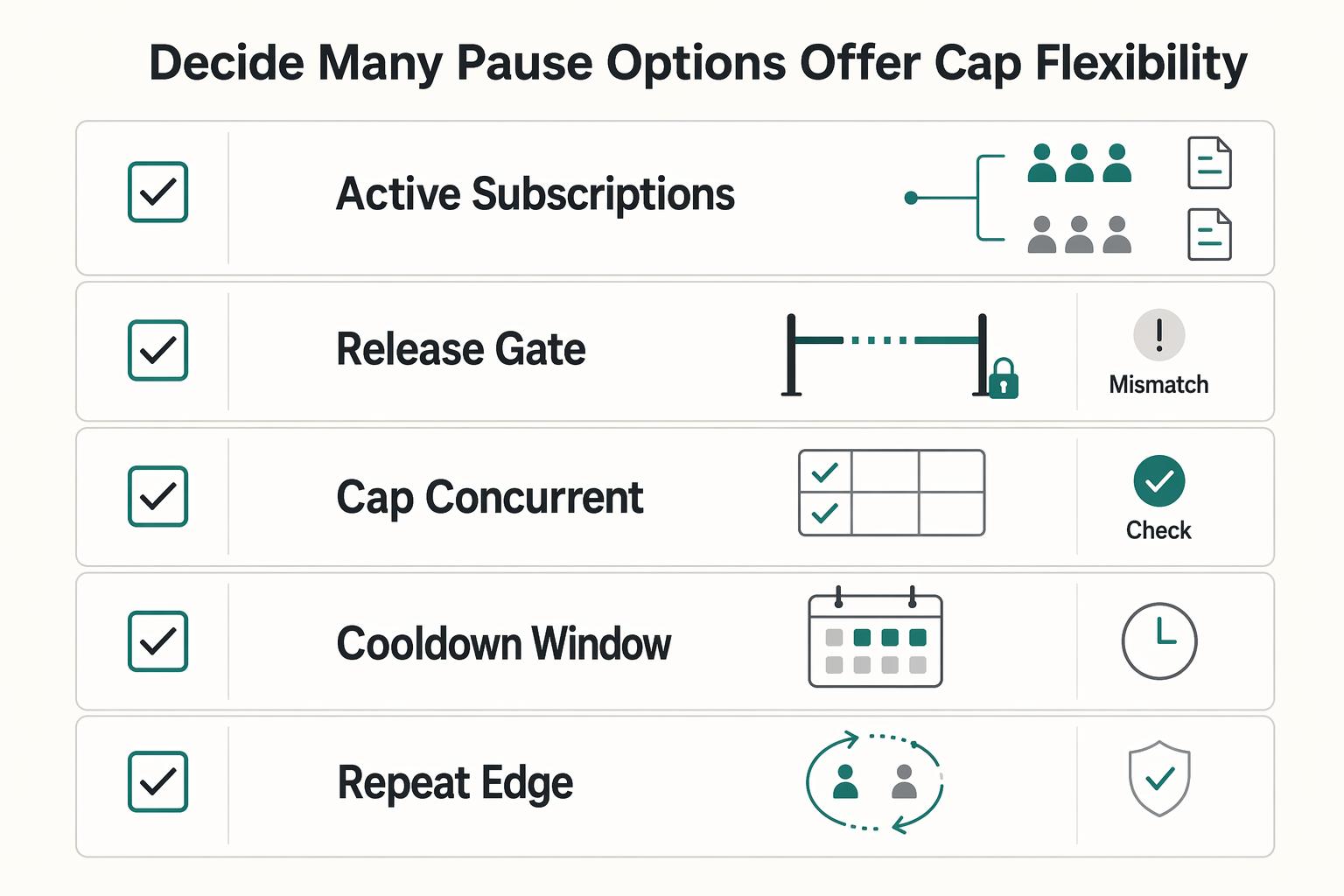
Start with bounded choice: one pause option by default, then add a second only when segment differences are clear and operationally measurable. Keep every option time-boxed.
| Control | Category | Article detail |
|---|---|---|
| Active subscriptions and no overdue invoices | Minimum eligibility | Keep eligibility checks at minimum to active subscriptions and no overdue invoices. |
| Internal tenure gate tied to active-state history | Additional gate | Layer your own internal tenure gate tied to active-state history if abuse risk is rising. |
| Cap on concurrent pauses | Hard brake | Add a cap on concurrent pauses. |
| Cooldown window between pause offers | Hard brake | Enforce a cooldown window between pause offers. |
| Repeat or edge-case requests | Manual review | Route repeat or edge-case requests to manual review. |
Chargebee Retention is useful context because it supports personalized cancel experiences and audience-based targeting, so different segments can see different offer paths instead of one generic flow. Recurly complements that with a stricter posture: use a set pause period, require resume-or-cancel at the end, and set clear pause boundaries. Together, that points to targeted flexibility, not an open-ended menu.
| Option design | Best fit | Main upside | Main risk |
|---|---|---|---|
| One pause option | Simple product mix, similar usage patterns | Clear policy and cleaner measurement | Some customers who need a different window may still cancel |
| Two targeted options | Distinct reason or usage clusters | Better fit without overloading choice | More deferred cash and noisier demand signals |
| Three or more options | Only when segments are materially different and targeting is reliable | More segment fit | Harder intent read and weaker near-term recovery visibility |
Add hard brakes before you add options. Keep eligibility checks at minimum to active subscriptions and no overdue invoices, then layer your own internal tenure gate tied to active-state history if abuse risk is rising. Add a cap on concurrent pauses, enforce a cooldown window between pause offers, and route repeat or edge-case requests to manual review.
Before you expand platform-wide, run a verification checkpoint on uptake by segment: plan, reason, price point, and active-state tenure. If an added option is concentrated in one segment, keep it targeted there rather than broadening it to everyone. The core tradeoff is simple: too little choice can increase cancellations for temporary issues, while too much choice can delay cash recovery and blur true demand signals.
For implementation mechanics, How to Use Pause Subscriptions as a Retention Tool covers pause-state setup and retention flow design.
Design the re-engagement trigger ladder in advance#
Pause only works as retention if you design the follow-up path before launch. Because pause is a temporary lifecycle state, you need a clear route from cancellation intent back to active billing, not silent drift toward a churned state.
Use a simple four-stage ladder:
- Pre-cancel intercept
- Mid-pause check-in
- Pre-resume reminder
- Post-resume recovery
Who should own each stage?#
Use one named owner per trigger so execution and accountability stay clear.
| Trigger stage | Primary purpose | Recommended owner | Key check |
|---|---|---|---|
| Pre-cancel intercept | Redirect cancellation intent into pause or another path | Product (in-app experience) | Does cancel route into the intended intercept flow instead of a dead-end page? |
| Mid-pause check-in | Reconfirm intent and gather updated context | Lifecycle marketing (email/CRM) | Are paused users getting one relevant check-in, not a generic promo blast? |
| Pre-resume reminder | Prepare customers for billing restart and next action | Lifecycle marketing, with product support for in-app moments | Does every upcoming resume have a reminder scheduled? |
| Post-resume recovery | Stabilize return to active billing | Finance/RevOps for KPI acceptance, with product/marketing support | Are resumed accounts tracked beyond day one? |
This split is a practical operating model, not a vendor rule. Chargebee Retention supports the intercept concept by redirecting cancellation into a more tailored experience instead of a generic cancel page.
Why is the pre-resume reminder a control point?#
Treat the Subscription Resume Reminder as a hard control, not optional messaging. In Recurly, it is a distinct pre-resume email with a default of 7 days, and reminder lead windows can be configured.
Do not assume renewal reminders will cover paused subscriptions. Chargebee notes renewal reminders are not sent during pause, and Recurly warns reminder timing changes can leave near-term renewals without coverage. The operational check is straightforward: confirm the upcoming resume population is actually queued for the reminder after any timing change.
What should happen when customers miss the resume milestone?#
Do not let missed resumes drift. If a customer does not return on schedule, you should branch explicitly to:
- downgrade
- pause extension (within your rules)
- structured cancellation
Keep offers aligned with the original pause reason, and monitor for two common failures: duplicate sends and conflicting offers across billing, CRM, and product triggers. Churnkey's pause-wall pattern is directionally useful here because it keeps resume/cancel actions explicit.
Billing tooling still has to support the policy. Subscription Billing Platforms compares plans, add-ons, coupons, and dunning controls.
Set clear rules for pause versus discount versus cancellation#
Use explicit routing rules, not intuition: route temporary intent to pause, price objections to discount, and clear value mismatch to cancellation. If every cancellation attempt sees the same offer, save counts can rise while customer lifetime value and unit economics get worse.
| Path | Route when signal is | What you are protecting | Main risk |
|---|---|---|---|
| Pause | Temporary intent, stated willingness to return, short-term affordability pressure, or seasonal non-use | Future revenue without cutting price | Deferred churn if return intent is weak |
| Discount | Cost objection is the blocker and product fit is still strong | Retention when price is the issue | Margin leakage if discounted users would have accepted pause |
| Cancellation | No credible return signal or persistent value mismatch | Cleaner economics and cleaner demand data | Lower short-term save rate |
How should you route by stated reason?#
Start with a reason-based retention offer: ask why the customer wants to cancel, then branch. Practical intake categories include financial constraints, seasonal fluctuations, and "need a breather."
If intent is temporary and return is explicit, lead with pause. If the issue is cost and fit remains strong, test a discount with clear amount and duration controls. Alternatives like pause or downgrade can deflect some cancellations, but the branch should match the stated reason.
How should you judge each path?#
Treat "saved" as an economic outcome, not just a cancel-wall conversion. Pause can protect price integrity but delay cash collection. Discount can preserve billing but compress margin. Cancellation can hurt near-term retention while improving long-run signal quality when fit is poor.
Review outcomes by path against customer lifetime value and unit economics each month. Keeping customers is generally cheaper than reacquiring them, but that does not justify retaining at any price. If "financial constraints" and "seasonal use" reasons are mostly taking discounts, your routing is likely too price-led. If paused users rarely resume, tighten your pause eligibility and duration rules.
A red flag is making discount the default before pause. In some models that sequence works, but it can also train cancellation threats for lower pricing. Where temporary non-use is common, lead with pause and reserve discounts for true price objections. Keep a pause guardrail so paused accounts auto-resume or cancel instead of staying in limbo.
Related: Customer Lifetime Value Optimization for Subscription Platforms: 7 Operational Levers.
Instrument the minimum KPI set and review cadence#
Measure pause performance beyond acceptance, or you will overstate retention impact. Your minimum scorecard should track what happens after the pause decision and into resumed billing.
| KPI | What it tells you | What to verify |
|---|---|---|
| Subscription save rate | How often cancellation flow stops an immediate cancel | Measure save outcomes in the cancellation flow, not only lower churn totals |
| Resume rate | How many paused subscriptions return to active billing | Review by pause reason and duration option |
| Time-to-resume | How quickly paused subscriptions return | Compare observed timing against your duration decision matrix |
| Post-resume retention | Whether resumed subscriptions stay active | Check retained billing after resume, not just first successful rebill |
| Revenue recovered vs deferred | Whether pause preserved value or mainly delayed it | Define recovered vs deferred revenue clearly before evaluation |
Chargebee's reporting distinction is useful but easy to misread: paused subscriptions are not counted as churn. If churn appears better while resumes or post-resume retention stay weak, the program may be deferring loss rather than recovering revenue.
Recharge and Chargebee both point the same way: instrument pause separately. Recharge positions pause as a retention step before cancel, supports structured interval options (Day, Week, Month), and provides analytics for KPI investigation with daily refresh by 8 AM ET. Chargebee makes the paused-not-churned treatment explicit. Neither source provides a universal pause-duration benchmark or a cross-platform pass/fail target, so set thresholds from your own data.
What review cadence should you use?#
Use a fixed cadence with explicit pass/fail rules:
- Daily: check core KPI movement after the data refresh checkpoint.
- Weekly: review save rate, resume rate, and time-to-resume trends by reason and duration option.
- Monthly: keep, revise, or remove duration and trigger rules based on post-resume outcomes and your recovered-vs-deferred definition.
If monthly rules are not written in advance, decisions drift toward vanity wins. Treat a rising save rate with flat resumes as a warning sign that the pause flow may be improving dashboard optics more than retention.
Use How to Calculate and Manage Churn to connect pause outcomes to churn reporting instead of save-rate optics.
Execute in the right order across product, revenue, and finance#
Execute pause rollout in this sequence: policy first, lifecycle copy second, event instrumentation third, and a limited cohort launch last. If you reverse it, the UI can look ready while billing behavior, recovery logic, and finance ownership are still unclear.
| Platform | Pause-related behavior | Implementation note |
|---|---|---|
| Chargebee | Product guidance says only Active subscriptions can be paused, while its API allows active or non_renewing. | Requires an explicit dunning choice: stop or continue. |
| Paddle | Pauses at end of billing period by default unless overridden and supports open-ended pauses when no resume date is set. | Paused subscriptions stop transaction creation and payment collection. |
| Stripe | Provides status-change webhooks: customer.subscription.paused, customer.subscription.updated, and entitlements.active_entitlement_summary.updated. | Status changes should be traceable. |
Start by locking the state-transition rules and eligibility. Your state map should show the path from active state to paused state to recovery, plus who can enter that path. Platform behavior differs: Chargebee product guidance says only Active subscriptions can be paused, while its API allows active or non_renewing; Paddle pauses at end of billing period by default unless overridden and also supports open-ended pauses when no resume date is set. If you do not set these rules first, your copy can promise one behavior while billing executes another.
Before rollout, require a compact evidence pack:
- state map from active to paused to resumed or canceled
- trigger specs for lifecycle messages across the pause window
- KPI definitions, especially recovered versus deferred revenue
- escalation owners across product, lifecycle/revenue, and finance
Then verify instrumentation and billing controls before expansion. Stripe provides status-change webhooks (customer.subscription.paused, customer.subscription.updated, and entitlements.active_entitlement_summary.updated), so status changes should be traceable. On the billing side, Chargebee requires an explicit dunning choice (stop or continue), and Paddle states paused subscriptions stop transaction creation and payment collection. Validate these behaviors by market or program, confirm compliance-sensitive messaging with the right owners, and scale only when finance can describe the setup as "GAAP compliant and easy to audit."
For a step-by-step walkthrough, see Choosing Between Subscription and Transaction Fees for Your Revenue Model.
Conclusion#
Treat pause as an operating decision, not a switch you turn on once and forget. If your paused state has a time cap, a low-friction resume path, and backend checks tied to the real subscription state, it can support retention without making delayed churn look like a save.
The practical loop is straightforward. First, map the lifecycle states you actually support, including how a subscription moves from active to paused and back again. Then set a small duration matrix that customers can understand and your team can measure cleanly. A simple menu like 30, 60, or 90 days can be easier to manage than open-ended flexibility, and it matches the kind of explicit frontend choice that platforms like Paddle support.
From there, make the backend the source of truth. One useful grounding principle from subscription lifecycle handling is that lifecycle events should be processed by your backend and validated against subscription state, not inferred only from what the frontend thinks happened. That means your verification checkpoint is not "the customer clicked pause." It is whether your system recorded the state change correctly, whether the subscription is actually marked paused, and whether billing behavior followed the rule that no new recurring transactions are created during the hold.
The next part is where many teams lose the value. A pause only works if the resume path is obvious and easy. Cleeng notes that the subscription can resume automatically or manually after the pause period ends, and Paddle explicitly recommends making resumption as easy as possible. If you bury resume behind support tickets, unclear account settings, or conflicting messages, that can create a predictable failure mode. Customers may stay inside your network on paper but still drift toward churn in practice.
Guardrails matter because flexibility has a cost. Recurly's advice to place a pause option in the cancellation flow is useful, but that option should still sit inside boundaries around how long a subscription can be paused. Cleeng makes the same point from another angle: pauses typically have clear limitations, including time caps, to avoid misuse. If your current design allows repeated or vague holds with no firm end, fix that before you treat early save-rate improvements as durable.
So the closing recommendation is simple. Keep the pause-duration decision tied to lifecycle operations: map states, offer bounded options, place pause where cancellation intent shows up, and review outcome evidence on a cadence your team will actually maintain. When the paused state is designed to lead back to active billing, pause becomes a retention tool. When it is left unbounded and weakly instrumented, it becomes a cleaner-looking way to postpone churn.
For state design, What Is a Subscription Lifecycle? maps trial, active, paused, and churned states.
Frequently Asked Questions
What is the best pause duration for subscription products?
There is no universal best length, but the strongest starting point is usually short and bounded. One documented benchmark says a 1-month pause is often the most effective option, and another recommends capping total pause length at 3 months. If you are unsure, test short first and treat longer holds as exceptions, not the default.
How many pause options should we offer at checkout or cancellation?
Start with a bounded menu, not an endless chooser. A practical documented pattern is preset choices such as 30, 60, or 90 days. Then monitor save outcomes over time to see which options perform best for your cohort.
When should we offer pause instead of a discount?
A pause is a temporary billing-state change that skips billing cycles without ending the subscription record. It should be offered directly in cancellation touchpoints so customers can choose a temporary stop instead of immediate cancellation. Whether pause or discount performs better should be decided from your own save-performance data over time.
When is cancellation better than pause for long-term economics?
Use cancellation as the terminal path once the pause window ends. Recurly’s retention guidance is clear here: after the pause window, the customer should have to resume or cancel.
Can unlimited pause hurt revenue recovery?
Yes. The clearest red flag in vendor guidance is open-ended flexibility without an upper bound, because longer pauses can reduce engagement and lower the odds of retention. A common cap example is 3 months.
What metrics prove our pause policy is actually working?
Do not stop at pause acceptance. Chargebee Retention highlights outcome tracking like canceled, deflected, watch list, and saved, plus monitoring save performance over time. Use those trends to verify the policy is improving retention, not only delaying churn.
How often should we re-test duration and trigger settings?
There is no fixed global cadence, so use a review interval your team will actually keep and tie it to save-performance reporting. Re-test sooner if save-performance trends weaken or your outcome mix shifts.
Try a related tool
Researched and edited by the Gruv editorial team. Gruv builds cross-border billing, payouts, and finance-operations software for global businesses.
Sources
Includes 8 external sources outside the trusted-domain allowlist.
- blog.cleeng.com/how-to-use-subscription-pauses-to-reduce-chu...external
- chargebee.com/docs/billing/2.0/subscriptions/pause-subscri...external
- chargebee.com/retentionexternal
- developer.amazon.com/docs/reports-promo/retention-offers.htmlexternal
- developer.paddle.com/build/lifecycle/subscription-pause-resumeexternal
- developer.paddle.com/build/subscriptions/pause-subscriptionsexternal
- developers.cleeng.com/docs/subscription-lifecycle-flowsexternal
- docs.churnkey.co/cancel-flows/offers/pause-subscriptionexternal
Educational content only. Not legal, tax, or financial advice.
Related Posts
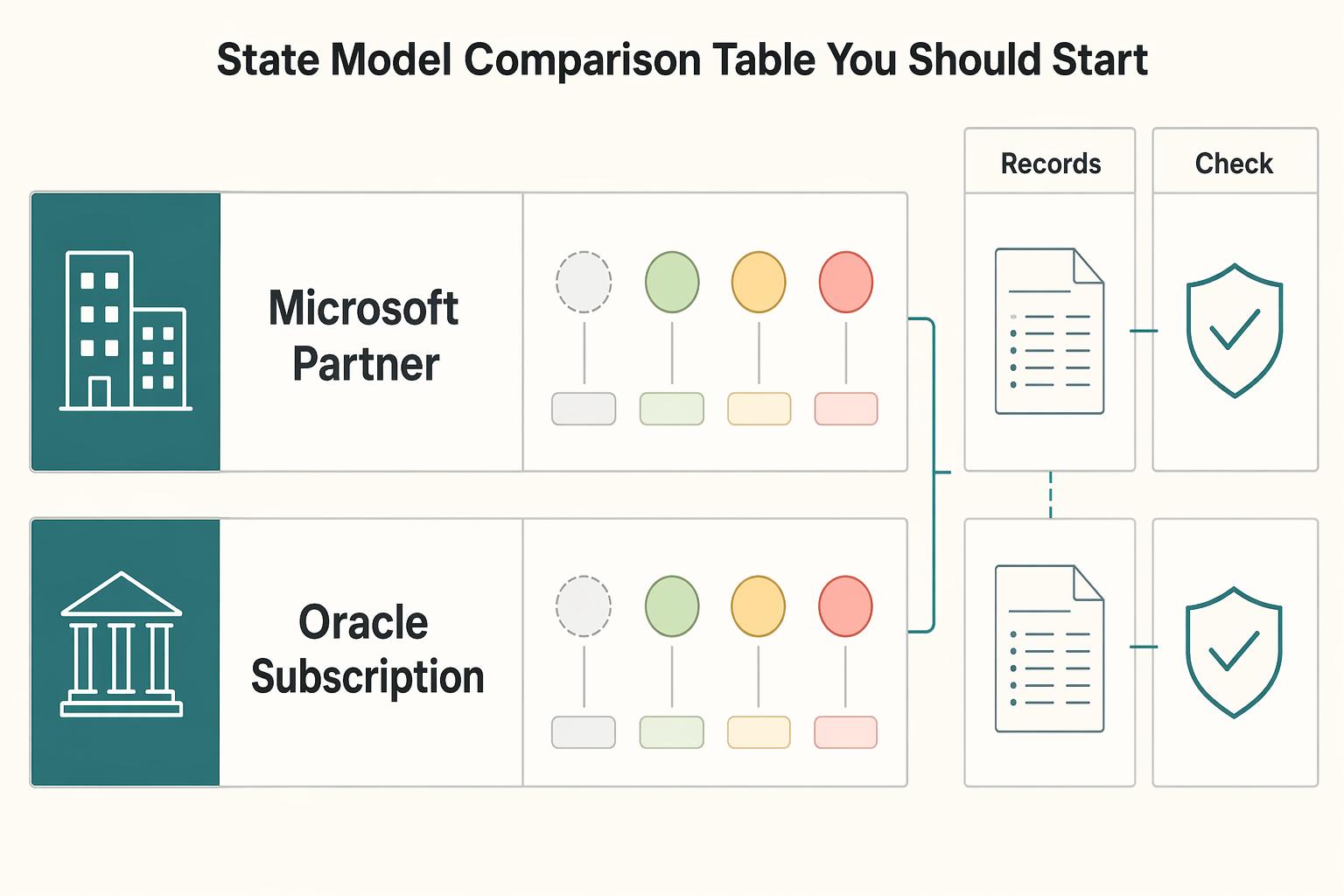
What Is a Subscription Lifecycle? How Platforms Manage Trial Active Paused and Churned States
Subscription lifecycle states matter only when they tell your team what happens next. In **subscription lifecycle states platform management**, a label like `Active` or `Suspended` should tell finance, billing ops, and product what changes in charges, access, edits, and reconciliation.
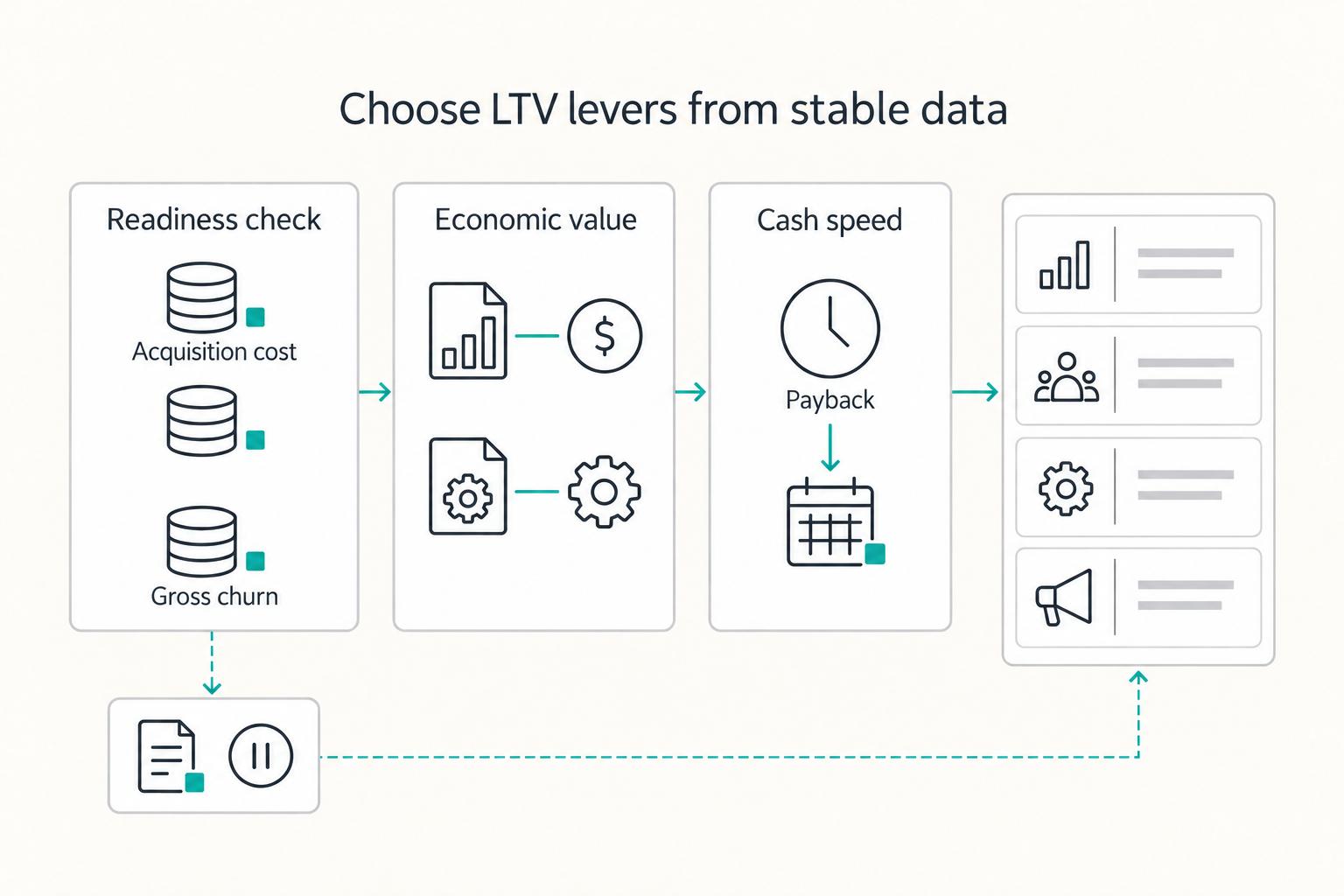
Customer Lifetime Value Optimization for Subscription Platforms Using 7 Operational Levers
For a subscription platform, Customer Lifetime Value is first a unit economics question. It rises or falls based on how reliably you turn acquired demand into recurring revenue over time. It also depends on how much of that revenue you retain and the margins behind it.

How Platform Builders Implement Subscription Pause for Retention
Treat subscription pause as a policy decision in your subscription lifecycle, not a nicer-looking button in the cancellation flow. If you only surface pause when someone tries to leave, you may see short-term retention wins while creating unclear billing behavior and status handling across systems.