
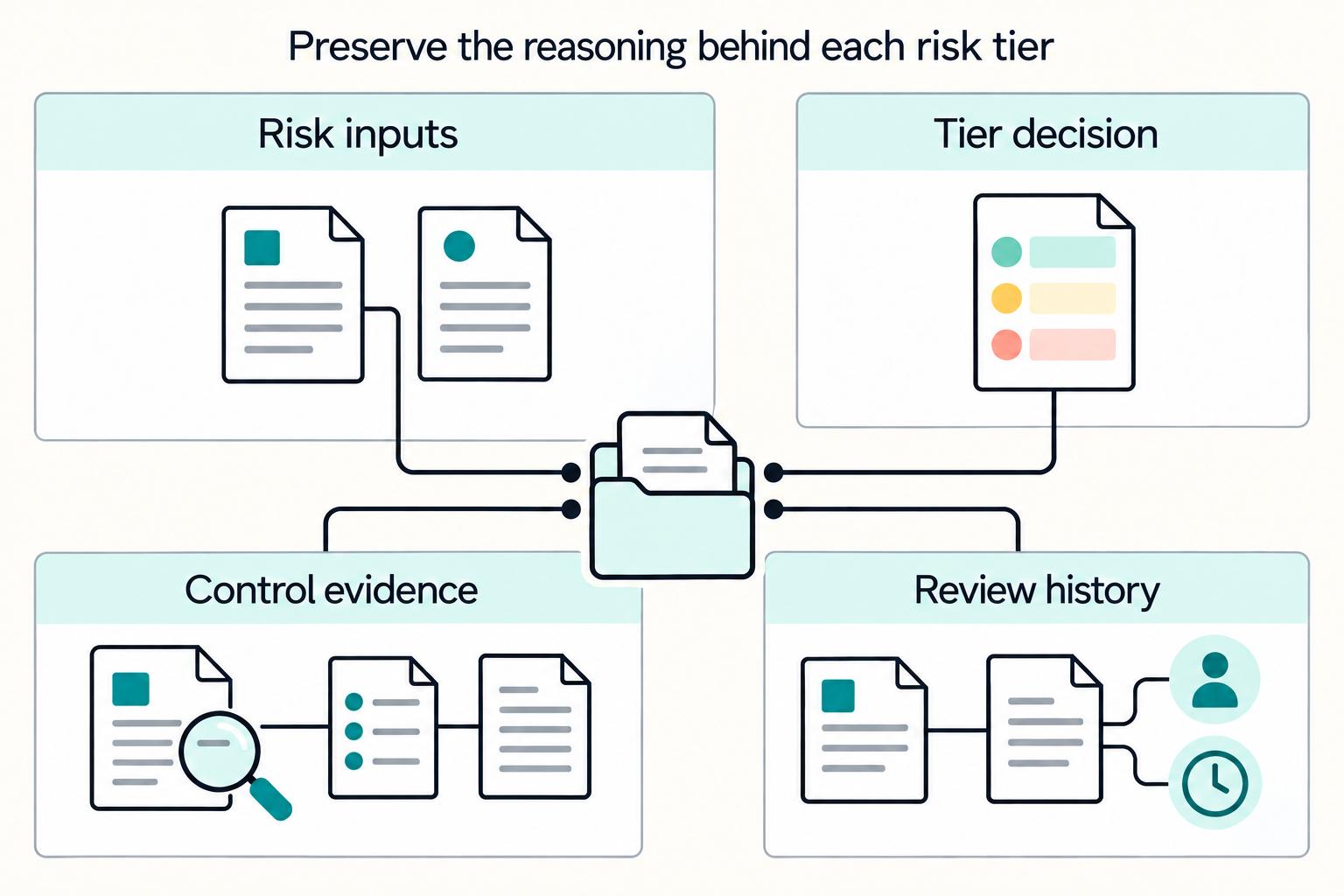
Quick Answer
Build a risk-based KYC framework by separating your firm-wide ML/TF assessment from contractor-level KYC/CDD decisions, then rating the correct entity with a short, evidence-based scorecard. Map low, medium, and high tiers to specific checks, payout gates, approvers, and escalation paths, and support every exception, re-tiering decision, and release or hold with a complete audit trail.
Why Risk-Based KYC Matters for Contractor Platforms#
This guide is for compliance, legal, finance, and risk owners managing contractor, seller, or creator payouts across markets. The goal is practical: build a risk-based KYC tiering model your team can run every day, explain in an audit, and scale without overbuilding too early.
The core stance is proportionality. A risk-based approach is internationally recognized for assessing money laundering and terrorist financing risk. In FINTRAC's guidance context, reporting entities must assess ML/TF risk and document that assessment, but there is no single prescribed method. That flexibility is useful, but undocumented judgment is still a control gap.
The focus here is operating decisions for KYC, CDD, EDD, escalation, and reporting. It is not jurisdiction-specific legal advice, and it is not a substitute for confirming whether your entity is in scope for a given rule. Some risk-assessment obligations and examples are sector-specific, so assumptions that work in one market can fail when copied across products or jurisdictions. Before you turn any requirement into policy, confirm three points in writing:
- Which legal entity and payout product the control applies to
- Which jurisdiction or regulator you are relying on
- Whether the source is final and official, not a proposal or summary
That status check matters. FederalRegister.gov notes that legal research should be verified against an official edition. The DOJ item posted on Oct 29, 2024 appeared on Regulations.gov as a Proposed Rule, with comments closed on Nov 29, 2024 at 11:59 PM EST.
By the end of this guide, your tiering model should make ownership and decisions explicit. It should show what evidence to collect, when standard CDD is enough, when EDD is required, who can approve exceptions, and what must be escalated or held. If a decision cannot be traced to a documented owner, rationale, and record, the model is not production-ready.
Gather prerequisites before you design tiers#
Get the groundwork right before you score anyone. Tiering is most reliable when teams start with clear inputs, clear owners, and a defined rollout boundary.
| Prerequisite | What to confirm | Why it matters |
|---|---|---|
| Minimum evidence pack | Who your third parties are, how they are integrated into operations, and what controls or safeguards they have in place | Supports traceable logic for design decisions |
| Inputs you have and trust | Fields available at decision time and data quality for each input | Prevents weak inputs from becoming tiering drivers |
| Governance | Who owns policy, who is accountable for due diligence, and who owns ongoing monitoring | Makes the model enforceable in day-to-day operations |
| First rollout boundary | One vendor cohort, one service category, or one market | Helps allocate effort proportionally before scaling globally |
- Assemble a minimum evidence pack.
Gather the records you will rely on for design decisions: who your third parties are, how they are integrated into operations, and what controls or safeguards they have in place. The goal is traceable logic, not a full policy library on day one.
- Confirm the inputs you actually have and trust.
Work from fields available at decision time, and verify data quality before using them in tiering. For each input, check whether it is reliably available when the decision is made before you make it a tiering driver.
- Document governance before tuning rules.
Define who owns policy, who is accountable for due diligence, and who owns ongoing monitoring. Cross-functional buy-in and clear communication channels help make the model enforceable day to day.
- Set a tight first rollout boundary.
Start with one vendor cohort, one service category, or one market before scaling globally. Tiering works best when it helps you allocate effort proportionally, with stronger due diligence and closer monitoring for higher-risk relationships and lighter periodic review for lower-risk ones.
For a broader view of KYC controls on payment platforms, see KYC Best Practices for Reducing Money Laundering Risks: A Payment Platform Compliance Guide.
Set risk model boundaries and ownership#
Set the boundaries first. Keep your firm-wide ML/TF Risk Assessment separate from individual KYC/CDD decisions, and make ownership explicit for both. When those layers blur, teams can over-apply platform-level risk labels to single payouts or use case files to answer business-level risk questions.
Separate the firm-wide assessment from the contractor decision#
Under a risk-based approach, the business-level ML/TF assessment explains exposure from your business activities and clients. FINTRAC frames the assessment through those two lenses.
Contractor-level review answers a different question. It helps determine whether a specific contractor or payee can be onboarded, paid, monitored, or escalated under your controls. If a decision changes because your platform enters a new market, that belongs in the business assessment. If it changes because one contractor has unresolved identity or ownership information, that belongs in KYC/CDD.
Keep both records distinct in your evidence pack: one file for the current ML/TF assessment, and separate case files for individual decisions and applied controls.
Define the entity being rated#
Define the entity being rated before anyone scores risk. For contractor payouts, that may be the individual, the business entity, or both.
Do not leave this implicit. Add an explicit entity_rated field in the case record and require matching evidence for that entity. If the payee is a company and ownership is still unclear, record that as unresolved risk rather than a neutral outcome.
This is a common failure mode. Treating all entities as if they were the same creates avoidable errors. The fix is clearer scoping, not a more complex model.
Put accountability in writing#
Put accountability in writing. The reporting entity is responsible for completing and documenting its own risk assessment, so ownership cannot stay informal.
Use a practical split that fits your team size. Policy ownership, case execution, edge-case review, and reporting evidence ownership can each have a named owner. A short approver matrix can be enough, as long as real cases show clear accountability at each point.
Create an override path before urgent payout requests arrive#
Create an override path before urgent payout requests arrive. FINTRAC does not prescribe a single risk-assessment method, but it does require you to complete and document your own risk assessment.
At minimum, document the reason for the exception, the contractor identifier, the temporary action, and the approving owner. If KYC/CDD is incomplete, document how the decision is controlled and what follow-up is required. When the method is flexible, your internal record is what makes boundaries, ownership, and exceptions auditable later.
Build a contractor risk scorecard that people can apply consistently#
Keep the scorecard short, evidence-based, and explicit enough that different reviewers reach similar outcomes on the same file. If that does not happen, the scorecard is too vague for reliable due diligence decisions.
Start with a compact factor set#
Start with a compact factor set you can prove from case evidence: integrity, risk profile, compliance history, and operational reliability.
Keep it short on purpose. A structured due diligence approach should work before onboarding and throughout the relationship, but too many loosely defined factors can create interpretation drift. If a factor does not change what you request, review, monitor, or escalate, remove it from the scorecard.
Use an evidence test for every factor. Each entry should be traceable to documented evidence in the file.
Define bands with observable rules#
Define low, medium, and high bands with plain-language rules tied to observable facts. Labels alone do not create consistency.
Separate governance from execution as you write these rules. Policy defines what must happen. The framework defines how reviewers apply the method across onboarding, due diligence, continuous monitoring, and offboarding. Then run calibration on shared sample files and tighten any factor where reviewer outcomes diverge.
Treat missing critical data as a risk signal#
Treat missing critical data as a risk signal until due diligence evidence is complete. Missing information should increase caution, not disappear as a neutral input.
Do not force missing data into a fixed band automatically. Instead, record the gap and its impact on the decision. At minimum, document:
- what critical item is missing
- why it matters to the due diligence decision
- what temporary judgment applies while it is unresolved
- who owns follow-up
Use scenario contrasts to set band boundaries#
Use scenario contrasts to show where band boundaries sit in practice. A lower-risk pattern has clear documentation, a stable risk profile, and no unresolved compliance or operational concerns. A higher-risk pattern has material information gaps, integrity concerns, or signs of operational unreliability. Examples like these reduce reviewer drift and make daily decisions more consistent.
Add a real not applicable option#
Include an explicit not applicable option for out-of-scope inputs. That prevents false precision when a factor is not part of your program.
For example, if a factor is outside scope, mark it as not applicable and require a brief reason or policy note. Do not let N/A behave like low risk, and do not treat optional inputs as hidden penalties.
Keep the scorecard tailored to your organization, industry, and regulatory context, and review the criteria periodically as expectations change. A compact model with clear rules and documented exceptions is easier to apply and defend.
Related: Enhanced Due Diligence for High-Risk Contractors: What Triggers EDD and How to Conduct It.
Map each risk tier to controls and payout permissions#
A tier only matters if it changes what can happen before settlement. If low, medium, and high risk do not change checks, approvals, or hold logic under your AML policy, the tier is not operational.
Fix a control package for each tier#
Map each tier to a fixed control package. A graduated model, for example Tier 0/1/2, is a useful pattern: routine monitoring at lower tiers, and tighter identity disclosure and approval controls at higher tiers.
Use pre-settlement verification as the control point. Do not move a payout into settlement until the required checks for that tier are complete and the case record shows what cleared it.
| Risk tier | Minimum controls before settlement | Payout permission | Evidence needed to clear the gate |
|---|---|---|---|
| Lower risk | Baseline identity and screening checks where enabled | Routine payouts can proceed without extra manual intervention when required data is complete | Identity verification result, screening result, and case status marked cleared for payout |
| Medium risk | Baseline checks, plus documented review of inconsistencies or unusual setup | Payout proceeds only after reviewer clearance, or manual approval in exception cases | Reviewer note resolving discrepancies, approver name or ID when applicable, and timestamped release decision |
| Higher risk | Enhanced identity disclosure and review before release, stronger approval controls, and dual-control approval for higher-sensitivity decisions | Temporary hold until required approvals are complete | Enhanced-review record, hold reason, release decision, both approvers when dual control applies, and an immutable audit trail |
Keep this mapping in both policy and the tools your operations team uses, so reviewers are not improvising on sensitive payouts.
Write payout gates as explicit if-then rules#
Write payout gates as explicit if-then rules so your operations team can apply them consistently.
| Condition | Required action |
|---|---|
| Contractor is high risk and screening returns an adverse result | Route to enhanced review before settlement |
| Critical identity gap is unresolved | Block payout release until resolved or approved through a documented exception |
| Sanctions gating, wallet verification, or payee details do not match the approved profile where those checks exist in your stack | Place a temporary hold and investigate before settlement |
| Case needs higher-sensitivity supervisory access or an exception to normal release rules | Require dual-control approval and record both approvers |
The aim is proportional friction. Lower-risk files should move on baseline checks, while higher-risk files should absorb the extra checks and approvals.
Define the evidence pack for each gate#
Define the evidence pack for each gate so decisions are auditable and repeatable.
For lower-risk cases, require completed identity checks, clean screening, and a timestamped clearance decision. For medium risk, require a discrepancy-resolution note, not just a green status. For higher risk, require the enhanced-review record, hold reason, release rationale, and approval artifact.
If controls are automated, keep the governance boundary clear. Code implements legal terms and policy, but it does not override them.
Link escalation to adjacent checks#
Link higher-risk escalation to adjacent checks when identity verification alone does not explain the activity.
Where those controls are enabled, sanctions gating, wallet verification, and reconciliation checks can add signal before release. For a deeper treatment of one escalation path, see Source of Funds Checks for High-Risk Payout Accounts: When Platforms Need More Than KYC.
The operating rule is simple. If the tier changes risk, it must also change the gate, approver, or required evidence.
For a step-by-step walkthrough, see How to Hedge FX Risk on a Global Payout Platform.
If you're converting tier rules into execution gates, use the implementation patterns in Gruv docs.
Define escalation paths before edge cases hit production#
If an edge case can stop a payout, define the escalation path before launch and tie it to your pre-settlement gate. Reviewers should not have to improvise ownership when risk signals escalate.
Document the escalation ladder#
Document an escalation ladder with a named owner at each stage. One workable pattern is first-line review, senior compliance sign-off, legal or policy consult when obligations or interpretation are unclear, and a final decision owner for release, hold, or rejection. Not every case should climb every rung, but every case should have a clear next stop.
| Escalation stage | Typical scope |
|---|---|
| First-line review | Resolve routine CDD gaps and record what they checked |
| Senior compliance sign-off | Handle higher-risk judgment calls, including whether EDD is needed |
| Legal or policy consult | Focus on genuine uncertainty, including AML/CFT concerns and cross-border interpretation questions |
| Final decision owner | Release, hold, or rejection |
Keep role boundaries explicit. First-line reviewers should resolve routine CDD gaps and record what they checked. Senior compliance should handle higher-risk judgment calls, including whether EDD is needed. Legal or policy review should stay focused on genuine uncertainty, including AML/CFT concerns and cross-border interpretation questions.
Set hard escalation triggers#
Set hard escalation triggers so first-line reviewers know when to hand off. You do not need one fixed numeric threshold, but you do need trigger categories that force escalation. Escalate when you see:
- transaction activity that does not align with what you know from CDD and ongoing monitoring
- AML/CFT concerns that routine review cannot clear
- higher-risk profiles commonly associated with EDD, such as PEP exposure, cross-border exposure, or complex corporate structures
This keeps escalation aligned with core CDD/EDD logic: identify the customer, understand activity, assess risk, and escalate when the facts no longer match the profile.
Set service expectations by risk tier#
Set service expectations by risk tier, not one blanket speed target. Lower-risk files should clear quickly when CDD checks are complete, while higher-risk files should get deeper review without stalling routine payouts.
Tiered supervisory access, such as Tier 0/1/2, helps separate routine monitoring from exceptional review. For sensitive release decisions after a hold, consider dual-control approval and maintain an immutable audit trail. That supports defensible decisions without unnecessary operational drag.
Use exception policies that force re-review#
Use an exception policy that forces re-review. Temporary overrides may be necessary, but they should not become permanent control gaps.
For each exception, record the minimum evidence pack: which rule was overridden, why, who approved it, and when it must be re-reviewed. If a case remains in pre-settlement verification without a clear owner or review point, treat that as a control gap.
Add re-tiering triggers and review cadence#
Re-tiering should be continuous, not a one-time onboarding task. Keep it defensible by combining event-based re-scoring with periodic reviews so you catch both sharp changes and slow risk drift.
Define event triggers for re-review#
Define a short set of meaningful events that trigger re-review. Focus on new information that could change the tier, controls, or escalation path.
Use one decision test: would this new information change the tier or controls? If yes, re-route to review. If no, log the update and keep monitoring.
Combine periodic reviews with event triggers#
Run periodic reviews alongside event triggers. Real-time checks catch sudden changes, and scheduled reviews catch gradual shifts that build over time.
Set cadence through your risk framework, not through a generic calendar habit. Higher-risk cases generally warrant closer scrutiny than routine low-risk cases, and your rationale should align with a risk-based approach under the FATF Recommendations.
Document each re-tier decision#
Document each re-tier decision in a consistent, auditable format. The record should show what triggered review, what evidence was assessed, the before-and-after tier outcome, and which controls changed.
Use consistent decision fields so review quality can be tested over samples. If the trail does not clearly show the trigger, reviewer, timestamp, evidence, and resulting control action, the decision is harder to defend.
Escalate sensitive decisions with clear controls#
For sensitive decisions, route through elevated supervisory review where relevant, for example Tier 0/1/2.
Apply dual-control approval with an immutable audit trail so exceptional decisions remain defensible.
Connect tier decisions to Gruv policy gates and payout operations#
A tier decision is most useful when it changes what payout systems and operators can do. After re-tiering, convert each outcome into an enforceable Gruv gate so payout handling follows the same decision path consistently.
Map each tier to a payout action Gruv can enforce#
Map each tier result to a payout action Gruv can enforce in execution, not just in case notes. Use a small set of internal states such as proceed, hold for review, require approval, or block until missing evidence is resolved.
Use one control test: can a payout move from queued to released without consulting the gate? If yes, the control is advisory, not enforceable.
Keep API and ops surfaces on the same decision state#
Keep API and ops surfaces on the same decision state. If the console says one thing and the payout API sees another, teams can end up with inconsistent actions and weaker traceability.
Use one shared status model and reason codes for both automated checks and manual handling. In connected integrations, verify the same contractor and payout through both paths and confirm the same gate outcome.
Make retries idempotent at the decision layer#
Make retries idempotent at the decision layer, not only at the payment-rail layer. A replay should reuse the existing gate decision for that payout attempt unless the underlying risk state changed after the original decision.
Bind each payout attempt to a unique decision reference and persist the outcome before advancing payout status. On replay, resolve that reference first. If prior application is unclear, route to investigation instead of creating a second release path.
Keep one audit trail from risk decision to payout status change#
Keep one audit trail, centered on the ledger, from risk decision to payout status change. Reconciliation and incident review should show the decision result, actor or service, timestamp, related payout ID, and resulting action in one traceable chain.
If a manual override is used, record approval and expiry clearly so later review can distinguish a valid exception from a control failure.
Pilot before broader rollout#
Run a short pilot before broader rollout. A one- or two-month pilot is a practical checkpoint to confirm gates, retries, and audit records behave the same way in manual and automated paths.
Before scaling, confirm core checks are stable: no duplicate decisions on replay, no API or ops state mismatch, and no payout release without a linked risk decision.
Related reading: Competitive Benefits for International Contractors Without Misclassification Risk.
Build an audit-ready reporting pack regulators and internal teams can trust#
An audit-ready pack should let someone reconstruct each tier decision after the fact. Compliance, finance, audit, and reviewers should be able to see what was known, which risk tier was assigned, which CDD or EDD controls were applied, who approved the decision, and when each step occurred.
Capture a full case record#
Capture a full case record for every contractor decision, not just the final tier. At minimum, retain the input risk factors, assigned tier, reviewer or approver, applied controls, and key timestamps for decision and escalation steps. For KYC and AML/CFT, keep evidence for identity verification, beneficial-owner identification where relevant, the purpose and intended nature of the relationship, and ongoing monitoring.
Use a simple quality check: sample a small set of cases and test whether a second reviewer can explain each outcome without asking the original analyst. If they cannot see the underlying factors, CDD or EDD evidence, and approval chain in one place, the record is not audit-ready.
Maintain a management view#
Maintain a management view that shows trend pressure, not just case-level detail. Track tier-mix shifts over time, escalation volume, and unresolved high-risk queues so you can see whether controls still look proportionate in practice.
Treat these metrics as operational signals, not mandated fields. If high-risk queues rise while approvals stay flat, investigate escalation capacity. If higher-tier assignments jump in a market or segment, check whether exposure changed or whether your screening inputs or scoring rules changed.
Store evidence so review stays possible without unnecessary exposure#
Store evidence so review is possible without unnecessary exposure of sensitive data. In practice, consider masked views for sensitive fields in general workflows, restrict access to full records, and keep decision-history records that preserve what was known at the time.
This becomes more important as case volume and complexity grow. Review any manual override path periodically and confirm you can still see the original tier, override approver, timestamp, and any follow-up requirement from the record itself.
Write case rationales in due-diligence terms#
Write case rationales in risk-proportionate due diligence terms. The FATF Recommendations are recognized as a global AML/CFT standard, and each rationale should clearly link assessed risk to due-diligence depth.
State that link directly in each summary. If PEP exposure, certain cross-border exposure profiles, or complex corporate structures drove higher risk, document why EDD was applied. If risk was lower, explain why CDD was sufficient and what ongoing monitoring remains in place.
Avoid common failure patterns and recover fast#
A common failure pattern is not missing policy text, but inconsistent reviewer application of the same policy. The fastest recovery path is to make each failure mode explicit and tie it to a concrete operating rule.
Publish rules people can actually use#
Generic Risk-Based Approach (RBA) language can still produce inconsistent decisions. FATF guidance on RBA, risk assessment, and proportionate CDD supports turning policy into explicit operating rules. If you say controls are proportionate under the FATF Recommendations, convert that into a tier-to-control matrix. Spell out which signals route a contractor to standard CDD, which route to EDD, who can approve each path, and what blocks payout release.
Before rollout, run a consistency check. Give the same three contractor cases to two reviewers and compare assigned tier, required documents, and approver. If outcomes differ, the rules are still too abstract for day-to-day AML/CFT use.
Refresh low-risk cases before they go stale#
Low risk should be treated as a current status, not a permanent label. Your risk assessment should trigger re-tiering when profile data, ownership, geography, or payout behavior changes from the original case facts.
Do not wait for a major alert to reopen old files. Combine event-based triggers with a periodic refresh cycle you can defend internally. A practical warning sign is a contractor still marked low risk even though key KYC evidence is overdue or materially changed.
Separate true escalations from routine review#
Escalation queues often break down when routine and high-risk cases are mixed together. Use tiered supervisory access to separate routine monitoring from exceptional identity disclosure, set clear ownership for intake and final decision, define internal SLA targets by case type, and keep routine CDD exceptions out of the EDD queue.
If repeated verification failures or potential money laundering or terrorist financing indicators are handled in the same queue as basic missing-document follow-up, the queue loses signal.
Standardize evidence and tie it to payout actions#
Weak evidence retention is often an operating-design issue, not just a storage issue. Standardize case artifacts for every decision: input factors, KYC evidence, screening results, tier assignment, rationale, approver, and each payout hold or release action linked to that record.
Pressure-test this with one held payout and one released payout. A second reviewer should be able to trace both decisions end to end without asking the original analyst. For overrides or exceptional releases, use dual-control approvals and immutable audit trails so the record shows who changed what and when.
Roll out in phases and verify before scaling#
Scale only after a small rollout shows consistent decisions and reliable control outcomes. If the first cohort still produces reviewer drift, unclear escalations, or unexplained actions, expansion can amplify those issues.
Start with a narrow cohort#
Start with a narrow contractor cohort or one market, and keep scope small enough to review edge cases directly. The goal is to confirm that routine monitoring and exceptional handling are separated and applied consistently in real files.
A graduated operating split, for example Tier 0/1/2, can help distinguish routine monitoring from exceptional identity-disclosure or escalation cases. For the pilot, keep each case record complete with tier assignment, evidence, approvals, and decision history in immutable audit trails.
Run a calibration cycle#
Before adding coverage, run the same cases through multiple analysts and compare outcomes. Focus on where decisions diverge: tier assignment, document handling, and escalation routing.
When outcomes differ, tighten written rules and decision logic rather than relying on informal coaching. If a risk factor is meant to affect decisions, that effect should be explicit in both the scorecard and escalation path.
Check control outcomes before release#
Use pre-settlement verification and risk management as real checkpoints before broader rollout. Define risk thresholds up front, including early warning indicators that should trigger stronger controls.
If routine work is crowding escalation queues or alerts are overwhelming reviewers, treat that as a hold signal, not a scaling signal.
Expand only when governance is stable#
Expand in stages only when governance, reporting quality, and exception handling are stable without manual rescue. Reporting should reconcile to case files, approvals should be documented, and override decisions should be traceable end to end.
Keep updating your risk taxonomy as contractor patterns change during growth. Scale changes risk mix, so controls that worked in an early cohort may need adjustment before broader deployment.
Conclusion#
A strong Risk-Based Approach is judged by execution, not sophistication. Similar cases should get similar decisions, controls should stay proportional to risk, and the record should explain why a case was allowed, held, or escalated. If those three things are not reliable, the model is not ready to scale.
Keep the rollout practical: start with one market or contractor segment, prove consistency, then expand. That matters as regulatory divergence continues to create operational, compliance, and reputational pressure across markets.
- Confirm AML/CFT scope and owners.
Document who sets policy, who runs reviews, who approves exceptions, and who can stop or release payouts.
- Publish contractor risk factors and tier rules.
Make the rules specific enough that different reviewers reach the same tier decision and can explain it clearly.
- Map each tier to review depth and payout gates.
Define what can proceed, what needs approval, and what stays blocked until open issues are resolved.
- Define escalation triggers and approval authority.
Set explicit non-routine triggers and clear escalation paths, with reporting and decision ownership.
- Enforce re-tier events plus periodic review.
Combine event-based re-tiering with a recurring review cycle your team can complete and document.
- Standardize audit artifacts for every decision.
Keep one complete case record with reviewed inputs, assigned tier, controls applied, approver, timestamps, and decision rationale.
The shortest readiness test is simple: can your team make the same decision twice, explain it in plain language, and prove it from the record?
Before scaling to new markets, validate your control design and coverage assumptions with Gruv's team.
Frequently Asked Questions
What is a risk-based KYC model for contractor platforms, in plain terms?
It is a proportional KYC process where due diligence depth matches contractor risk. Lower-risk contractors go through standard checks, while higher-risk contractors require enhanced verification and closer review.
How should we tier contractors into low, medium, and high risk without overcomplicating scoring?
Use clear written rules tied to evidence instead of relying on hard numeric cutoffs alone. Start with identity verification, beneficial ownership identification where relevant, and the nature and purpose of the relationship. Then add explicit escalation signals such as PEP connection, adverse media, unusual transactions, or complex ownership.
What specific events should trigger `Enhanced Due Diligence (EDD)`?
Use explicit non-routine triggers. Examples in this guide include PEP connection, complex ownership structures or offshore entities, unusual transactions, adverse media, and suspicion of money laundering or terrorist financing. Unresolved sanctions, PEP, or adverse-media screening results should also move the case out of routine review.
When should we require `Source of Funds Checks` in addition to `KYC`?
This guide does not set specific monetary thresholds or transaction limits for Source of Funds checks. It supports targeting extra review to unresolved higher-risk cases, such as unusual transactions, adverse media, complex ownership, offshore entities, or suspicion of money laundering or terrorist financing. If your program uses these checks, apply them to non-routine cases rather than every contractor.
How often should we re-tier contractors if no obvious incident occurs?
This guide does not give a fixed re-tiering cadence. It supports continuous risk management through event-based reviews plus a recurring refresh cycle your team can complete and document. Higher-risk cases generally warrant closer scrutiny than routine low-risk cases.
What records do we need to keep so an audit trail is defensible?
Keep a full case record that shows what was reviewed, the assigned tier, checks performed, findings, and decision rationale. Include CDD evidence for identity verification, beneficial ownership identification where applicable, the relationship purpose, and sanctions, PEP, and adverse-media screening results. The trail should also show the reviewer or approver, timestamps, applied controls, and any escalation or override.
What should we do when required risk data is missing or inconsistent?
Treat missing or inconsistent data as a risk signal and a non-routine case, not as neutral input. Log what is missing or conflicting, why it matters, what evidence was requested, and the temporary judgment while it is unresolved. Escalate review until the issue is resolved or approved through a documented exception.
Researched and edited by the Gruv editorial team. Gruv builds cross-border billing, payouts, and finance-operations software for global businesses.
Sources
Includes 1 external source outside the trusted-domain allowlist.
- bis.org/publ/arpdf/ar2025e3.htmtrusted
- democrats-agriculture.house.gov/uploadedfiles/117-36_-_49769.pdftrusted
- federalregister.gov/documents/2024/10/29/2024-24582/provisions-p...trusted
- pmc.ncbi.nlm.nih.gov/articles/PMC12883517trusted
- regulations.gov/document/DOJ-NSD-2024-0004-0001trusted
- sec.gov/files/ctf-written-input-daniel-bruno-corvelo...trusted
- sec.gov/Archives/edgar/data/2025416/0001193125252080...trusted
- afi-global.org/sites/default/files/publications/2019-03/KYC...external
Educational content only. Not legal, tax, or financial advice.
Related Posts

The Freelance Payment Penalty: A Modeled Audit of Platform Fees, FX Spreads, and Payout Delays
The money rarely disappears through a single, easy-to-spot fee. The real loss is stacked. A marketplace takes its commission, a processor adds a charge for international cards, a bank or payment company converts the currency at a spread, a platform holds the funds before release, and a wire sheds a little to intermediaries on the way in. Each layer looks defensible on its own, but the worker feels the combined result as a smaller deposit and a later payday.
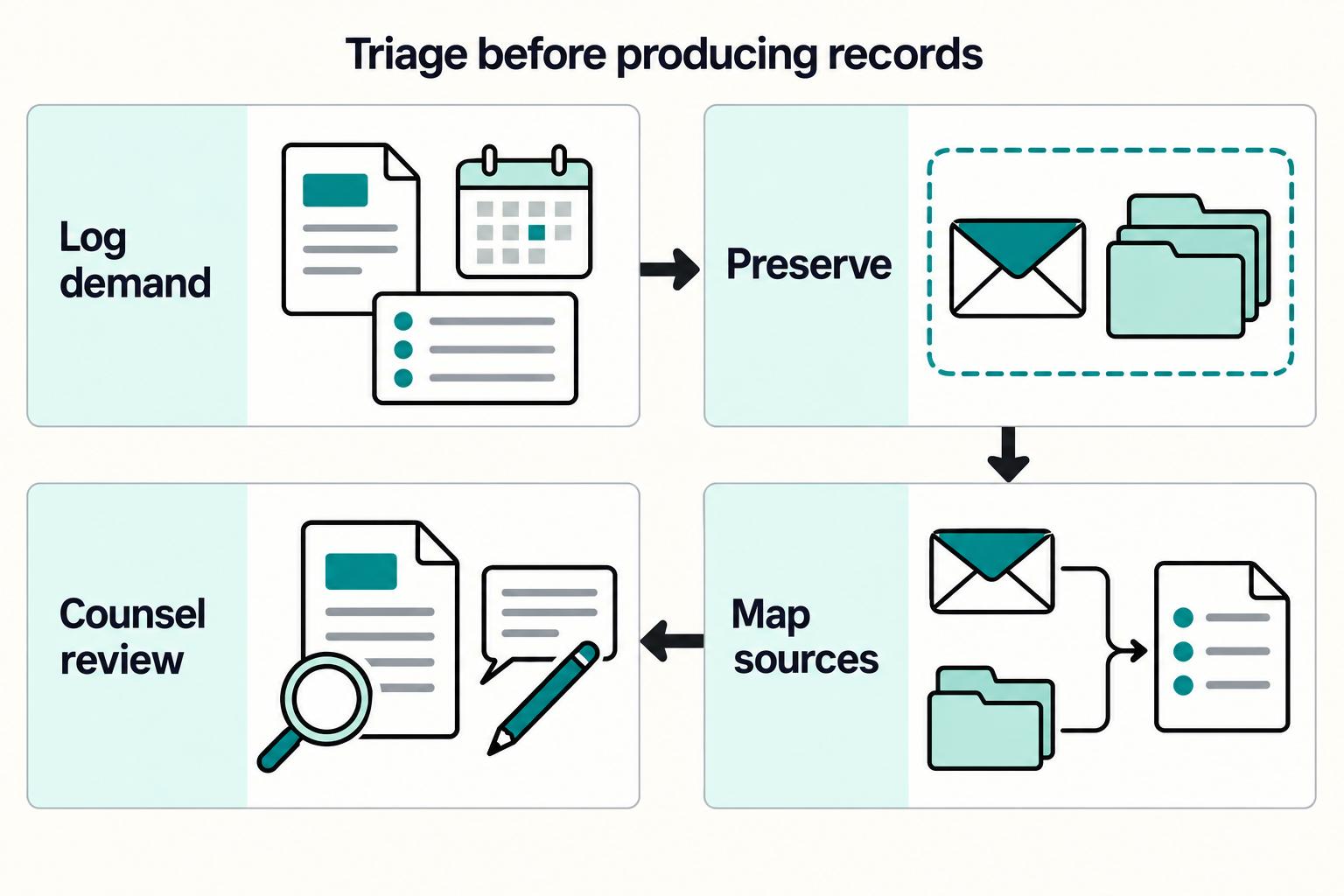
How to Respond to a Subpoena for Business Records
Move fast, but do not produce records on instinct. If you need to **respond to a subpoena for business records**, your immediate job is to control deadlines, preserve records, and make any later production defensible.
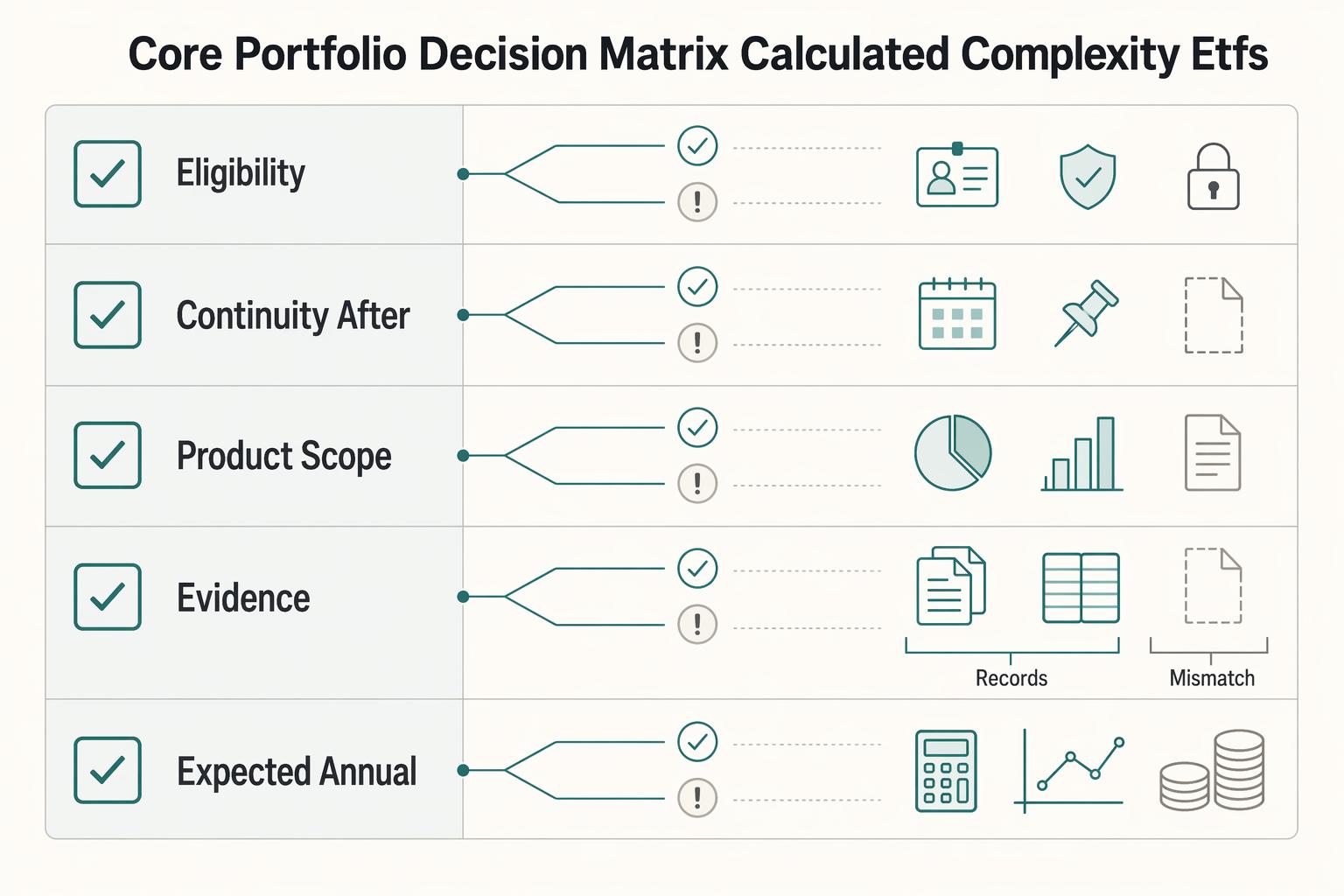
A US Expat's Guide to Investing in UCITS ETFs to Avoid PFIC Issues
The real problem is a two-system conflict. U.S. tax treatment can punish the wrong fund choice, while local product-access constraints can block the funds you want to buy in the first place. For **us expat ucits etfs**, the practical question is not "Which product is best?" It is "What can I access, report, and keep doing every year without guessing?" Use this four-part filter before any trade: