
Quick Answer
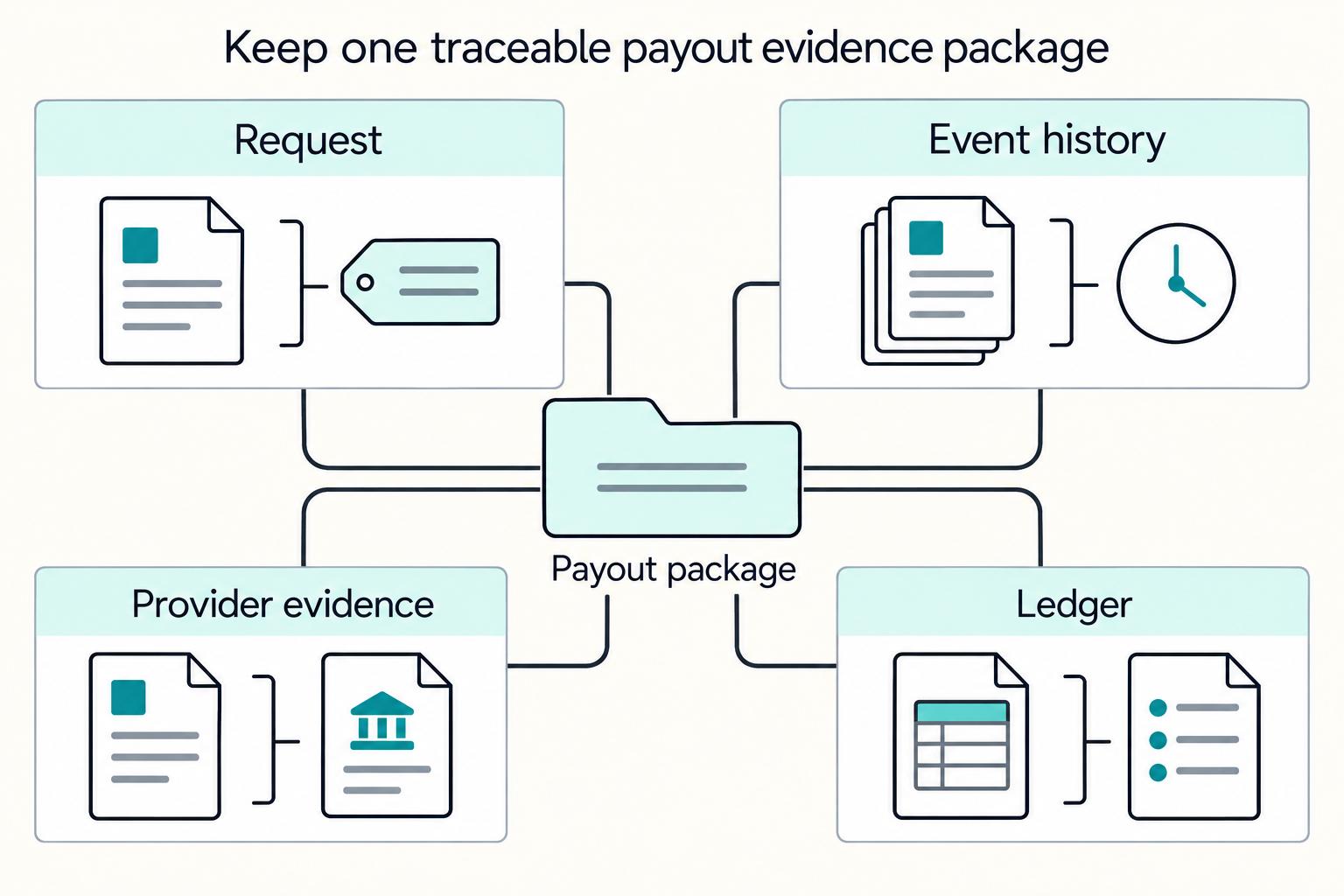
Build proof of payout as a state-based record, not a single receipt. For each transfer, keep one package that ties the payout ID to provider references, ledger journal status, timestamps, and exception notes, then update it as events arrive. This lets support share traceable pre-settlement status without claiming funds are settled too early. Keep Proof of Funds for capacity checks, and use transfer artifacts like bank payment confirmation or remittance advice only as supporting evidence.
Define proof of payout as a live evidence record#
For this operational workflow, "proof of payout" means an internal, traceable record showing a transfer was requested, routed, acknowledged, and still in motion before final settlement. Many discussions use the term to answer a different question. They explain Proof of Funds for a home purchase, or they cover generic proof of payment after money has already cleared.
That distinction matters because a static document rarely answers the real operational question. A receipt can be strong payment evidence when it includes the required transaction details, and one institutional policy even treats a receipt as sufficient on its own. When a receipt is missing, proof can fall back to items like a cleared check or a bank or card statement, with sensitive details redacted. Those documents are useful, but they do not give your team a shared view of payout progress, ownership, or exceptions.
If your current answer to a contractor ticket is just a bank transfer receipt, a bank statement line, or a remittance advice, you usually run into two problems. Finance still may not have enough context to reconcile the transfer cleanly. Ops may also be forced to choose between saying too little and overstating that funds are settled when they are only in motion. That is where a purpose-built proof artifact becomes useful.
This guide takes a practical view. You are not trying to invent a legal category that exists everywhere. You are building an internal record that finance can verify, ops can use to handle inquiries, and product can surface without guessing. The useful version ties together the payout request, transfer evidence, status changes, and exception notes so each team is looking at the same underlying history instead of passing screenshots around.
A good first checkpoint is simple. For any payout, can your team show who initiated it, what amount and currency were requested, what evidence exists so far, and what is still missing? If the answer depends on digging through email threads or manually comparing statements, your proof layer is too thin. A common failure mode is treating after-the-fact proof of payment as enough for in-flight contractor support.
One scope note before we go further. No universal cross-industry legal standard for this term is established here. Still, distinguishing receipts from fallback proof documents and looking at what transaction details make documentation credible provides a useful baseline. The practical focus is operational controls you can define, implement, and audit inside your payout process.
For contractor-facing payout UX, see Invisible Payouts: How to Remove Payment Friction for Contractors Without Sacrificing Compliance.
Proof of payout is not proof of funds#
Use a simple rule: Proof of Funds (POF) answers capacity to pay, while proof of payment or proof of payout answers what happened to a specific transfer. Keeping those separate prevents support and reconciliation errors.
| Term | Used to answer | Notes |
|---|---|---|
| Proof of Funds (POF) | Capacity to pay | Shows available funds and financial capacity; commonly points to checking, savings, money market accounts, and CDs; often used in major transactions like home purchases; a POF letter can be issued within 1-2 business days. |
| Proof of Payment | A payment was instructed or sent | Useful for send confirmation; may not prove settlement. |
| Proof of Payout | What happened to a specific transfer | Use the transfer record, payment reference number, and status history; strongest when tied to payout ID, provider reference, and ledger journal status. |
Step 1. Label the evidence correctly. A POF document, including a POF letter from a bank or financial institution, shows available funds and financial capacity. It commonly points to liquid assets such as checking, savings, money market accounts, and CDs, and it is often used in major transactions like home purchases. One source also notes a POF letter can be issued within 1-2 business days. That is useful for liquidity confirmation, not transfer traceability.
Step 2. Match the artifact to the question. If someone asks, "Can you pay?", provide POF. If they ask, "What happened to my transfer?", provide payout evidence: the transfer record, payment reference number, and status history. Finance needs reconciliation-ready proof tied to a payout event, not just a balance snapshot.
Step 3. Run a hard check before sharing externally. Ask: does this artifact show funds available, or does it show transfer progress? If it has no payment reference number or no status progression, do not present it as proof of payout. Treating a bank statement or remittance advice as complete payout proof is a common failure mode.
This pairs well with our guide on How to Build a Payout SLA: Setting Expectations for Contractor Payment Timing.
What to prepare before you launch proof of payout#
Before launch, make ownership and evidence rules explicit so support, finance, and product can explain one payout the same way.
Step 1. Assign owners by function. Define who owns ledger integrity, who owns exception handling, and who owns event ingestion plus status surfaces. Your readiness check is simple: for any payout issue, each team can answer its part without a handoff loop.
Step 2. Lock your minimum evidence fields. Set a written minimum set for payout artifacts and enforce it consistently. If required identifiers, timestamps, amounts/currency, beneficiary details, or provider status are missing, route the case to review instead of treating it as complete.
Step 3. Define compliance gates before release. If your program has required compliance checks, decide in advance whether they block visible proof, final confirmation, or both. Keep status states distinct so "submitted," "under review," and "completed" are not collapsed into one vague pending label.
Step 4. Publish a manual evidence policy. Document what upload types are accepted, what is supplemental only, and what gets rejected for missing key details or being easy to alter. This prevents "looks valid" files from being treated as payout proof when they cannot be matched to a single event.
For a step-by-step walkthrough, see How Platforms Verify Bank Details Before Payout Release.
Map payout states to required evidence#
Treat each payout state as an evidence contract, not a label. If a state does not have a clear threshold, it will create support debate instead of traceability.
Build states that change an operator decision#
Use a state only when it changes what finance, ops, and support can do now and what can be said externally. A practical internal set is initiated, submitted, in transit, completed, failed, returned, and under review. These are internal definitions, so document each meaning in plain language and keep it short enough for support to apply consistently.
Define exact entry criteria for each state. For example, keep "in transit" for cases with provider acceptance or traceability, not just a send action. Keep "under review" for compliance holds or evidence gaps that block a clean answer.
Require the same anchors in every state#
Use the same core anchors in every state: internal payout ID, provider reference, ledger journal posting status, and contractor-visible status text. If any anchor is missing, the state is not yet cleanly reconcilable.
This avoids the common gap where a screenshot looks convincing but cannot be tied to one payout event in your ledger. Contractor-facing copy should reflect evidence strength, not optimism.
There is a useful evidence-discipline precedent here: USCIS requires specific initial evidence (annual reports, federal tax returns, or audited financial statements) rather than a vague claim, and for U.S. employers with 100 or more workers it may accept a financial officer statement. Apply the same principle to payout states: define what evidence qualifies, and do not rely on vague status language.
Add downgrade rules when evidence is weak or conflicting#
Define explicit "not enough evidence" triggers and route them to review. Common triggers include a missing transaction reference number, beneficiary-data mismatch, or no provider acknowledgment after submission within your expected ingestion window.
Operational rule: if traceability is not provable, downgrade the status and open an exception path. This keeps UI certainty aligned with record certainty.
Use a compact comparison table in your internal spec so adjacent terms stay distinct:
| Term | Use internally for | Typical timing | Evidence strength in your policy |
|---|---|---|---|
| Proof of Deposit | Showing funds arrived in an account | After receipt by beneficiary side | Strong for receipt, weak for submission history |
| Proof of Payment | Showing a payment was instructed or sent | At or soon after send event | Useful for send confirmation, may not prove settlement |
| Proof of Payout | Showing the payout can be traced across request, provider event, and internal record | From submission through completion or exception | Strongest when tied to payout ID, provider reference, and ledger journal status |
This table is an internal naming contract, not an external standard. Enforce it with downgrade rules so statuses stay reliable under exceptions.
We covered this in detail in How to Audit Your Payout Platform: An Internal Audit Checklist for Finance Teams.
Design the proof package your teams can reconcile#
When someone asks, "show me exactly what happened," one durable package should answer it. Build each package as an electronic record with fixed core fields, then append new events over time instead of rewriting history.
Freeze the core record and append new events#
Create one package per payout instruction at request time, not after an issue appears. Keep core fields stable in practice: internal payout ID, beneficiary identity snapshot, amount, currency, created timestamp, current status, provider reference (once assigned), and current ledger journal posting status. If any value changes, add a new event or correction entry instead of editing the original value.
This is an operating choice, not a legal requirement, and it aligns with basic recordkeeping principles: records should clearly show transactions and their summaries in journals and ledgers, including in electronic systems. Screenshots or edited PDFs can be supporting files, but not your primary record.
Checkpoint: open one package and confirm you can see original request details, ordered event history, and the current contractor-visible status text in one place. If teams still need to ask which value is "real," the package is too editable.
Link batch, payout, and replay controls#
Make the package work at both levels: include the payout ID and, when applicable, the payout batch ID. That keeps batch reconciliation and payout-level investigation connected in the same record.
Attach an idempotency key to submission attempts so retries create replay events on the same package, not competing payout records. Store the key, submission timestamp, provider response summary, and whether the attempt was replayed or newly accepted.
Verification point: resend a known submission with the same idempotency key in a test path. You should still see one payout and one package, with an additional event marked as replay/retry.
Show provider and internal evidence side by side#
Keep provider evidence and internal book evidence together in one package. Provider references and statuses should appear alongside ledger journal state, because either side alone can leave gaps. Use documents as support, not as substitutes, and define what each artifact can and cannot prove:
| Artifact | Usually sufficient for | Usually not sufficient for | Operator note |
|---|---|---|---|
bank transfer receipt | Showing a transfer was initiated or submitted | Proving settlement to the beneficiary, or linking to your payout without matching references | Accept when it shows amount, currency, date, and a traceable reference you can map to the payout |
bank payment confirmation | Stronger send confirmation than a generic receipt | Proving your books posted correctly on its own | Useful pre-settlement evidence if the provider reference matches the package |
bank statement | Supporting that money left or arrived on an account statement line | Explaining submission path, retries, or internal status history | Request when settlement is disputed, not as your first-line artifact |
remittance advice | Explaining payment context to the recipient | Proving funds moved or settled | Treat as informational unless paired with provider and ledger evidence |
Red flag: a polished document that cannot be matched to payout ID, provider reference, and journal status in one view. If that match fails, move the case to under review and request stronger evidence.
Related reading: Payment Scheduling for Platforms: How to Build Flexible Payout Calendars for Contractors.
Execute in order from payout request to contractor notification#
Use a strict sequence so contractor updates never get ahead of what your records can support at that moment.
- Create the payout request and clear policy checks first.
Open the package at request time, capture beneficiary snapshot, amount, currency, and internal payout ID, then run required policy checks before provider submission (including KYC/AML where your program requires them). If your program includes market-specific obligations, make them explicit in the flow. For example, in Montana construction, contractors with employees must register, and the state points buyers to periodic validation of registration and workers' comp coverage.
- Submit to the provider or rail and record references immediately.
Treat submission and settlement as different states in your process. As soon as a provider or rail reference is available, attach it to the same payout record with the exact amount and currency.
- Ingest the
webhook, then updateledger journalstatus.
Append incoming events to the package and map each one to the correct payout before posting or changing journal state. If event timing is delayed or unclear, keep contractor-facing status at a pre-settlement state rather than marking it complete early.
- Send contractor messaging only after a release checkpoint.
If the provider confirms submission but settlement is still pending, send pre-settlement evidence (internal payout ID, provider reference, amount, currency, submitted timestamp) instead of staying silent or labeling it paid. Before external messaging, verify:
- reference IDs are present and mapped to the right payout * amount and currency match the request and latest provider event * no unresolved compliance hold or exception blocks release
For Virtual Accounts and Merchant of Record (MoR) models, define evidence ownership in writing. Routing and contractor-facing payment paths can differ, so the team with the provider reference may not be the one posting the final journal or sending the notice.
Need the full breakdown? Read How to Migrate Contractors from Check to Digital Payout with Clear Go/No-Go Gates.
Recover quickly when payouts go wrong#
When payout evidence is unclear, recover in layers: resolve internal record gaps first, then escalate with a documented path, and keep contractor messaging limited to what you can prove.
- Recheck your own record first.
Start with the payout package and ledger trail before external escalation. Confirm your internal identifiers, submitted amount and currency, beneficiary details, timestamps, and current journal state are internally consistent. Verification point: if your record does not show a clean request-to-submission chain, treat it as an internal exception and avoid "paid" or "completed" language.
- Request a provider trace after your internal chain is clean.
Escalate to the provider with the exact identifiers and status history you have already verified. Ask for a clear disposition you can act on: in transit, mismatch/correction needed, or no trace under supplied details.
- Request contractor documents only to close a specific gap.
Use supplementary artifacts only when they can resolve a defined mismatch or missing confirmation. Broad document requests without a clear gap add noise and slow resolution.
- Open a formal investigation when this is no longer a single exception.
If the first steps do not produce a clear resolution, freeze the evidence pack, log timestamps and responses, and assign named owners across ops and finance.
Escalate to finance leadership when any of these are true, especially if a payout batch is affected:
- the exception is aging with no new evidence
- provider responses remain ambiguous or inconsistent
- unresolved gaps span multiple payouts in the same batch
If the issue may involve unpaid minimum wage or overtime under FLSA, use the formal recovery paths documented by the U.S. Department of Labor. The FLSA provides multiple recovery methods; the Wage and Hour Division may supervise payment of back wages; and recovery timing is generally two years, or three years for willful violations.
If you want a deeper dive, read Integrated Payouts vs. Standalone Payouts: Which Architecture Is Right for Your Platform?.
Set hard decision rules for comms and escalation#
Use one rule for trust and auditability: never tell a contractor "paid" unless your completion evidence is present. If evidence is partial, say "submitted and traceable" and share the transaction reference number you can verify, not settlement language you cannot prove.
- Step 1. Map each outward status to a single evidence threshold.
"Submitted" should only be used when your internal payout ID, amount, currency, beneficiary snapshot, and provider acknowledgment are on file. "Completed" should only be used when your defined completion evidence is present and no unresolved hold remains. Verification point: before any outbound update, match contractor-facing status to the strongest evidence in the record, not the most optimistic status update.
- Step 2. Request extra documents only when they close a named gap.
Use internal records when they already show a clean chain from request to submission or completion. Request a bank statement or bank payment confirmation only when you can state the exact missing fact, such as whether funds reached a specific account or whether a beneficiary mismatch must be confirmed. Avoid "just in case" document requests, because they add noise and slow resolution.
- Step 3. Escalate by predefined rule, not ad hoc forwarding.
Use a structured ticket escalation process so unresolved cases move to the right owner without delay or confusion. Escalate to specialized teams when the case needs technical investigation, billing access, or management approval. Keep contractor messaging precise during handoff: coverage varies by market and program, and policy gates can delay final confirmation even when a transfer is traceable.
Related: Global Payouts and Emerging Markets: 5 Regions Every Platform Should Prioritize.
Conclusion#
Treat proof of payout as a living traceability record, not a one-time PDF exported at the end. That shift can reduce contractor confusion and give ops, finance, and product one shared version of the truth without slipping into "paid" language before settlement is clearly evidenced in your records.
That distinction matters because Proof of Funds is something else entirely. In the home-buying context, POF shows available money for a purchase, often with details like bank name, balances, and signatures. Your payout record should answer a different question: what happened to this transfer, what evidence exists right now, and who owns the next action if the trail breaks?
Copy and paste implementation checklist#
- Define payout states with evidence rules.
Write down the states you actually operate, such as initiated, submitted, in transit, completed, failed, returned, or under review, and name the minimum evidence required for each. The verification point is simple: another operator should be able to tell the current state from the record alone without opening a separate chat thread or guessing from a screenshot.
- Standardize the proof package fields.
Lock the core fields across every payout record, including internal payout ID, provider or transfer reference, amount, currency, beneficiary identifier, status, and status timestamp. Partial records can turn a normal support case into a reconciliation problem.
- Define your control checks before scale exposes weak spots.
Sound business practices require appropriate controls for a simple reason: in the absence of controls, unauthorized system activity may occur. If your process includes multiple handoffs or updates, set checkpoints now so teams know what must match before a record can move forward or be shared externally.
- Publish exact contractor messaging rules.
Decide in advance what you say for submitted, traceable, settled, and exception states, and keep those labels stable. If completion evidence is missing, say submitted and traceable, not paid. That one wording rule prevents support debt later.
- Assign exception ownership and escalation paths.
Document when ops owns recovery, when finance owns reconciliation questions, and when compliance must review or block action. You want a named owner for each failure pattern, especially missing references, beneficiary mismatches, and status gaps that cannot be resolved from internal records.
- Audit one full payout batch end to end before rollout.
Do not test only the happy path. Use transactional testing and document review on one complete batch, then trace at least one payout from request creation through status updates and contractor communication. If the story cannot be reconstructed from the record package alone, the design is not ready.
If you want one final decision rule, use this: do not optimize first for prettier documents. Optimize for traceability, controls, and evidence that holds up under exceptions. That is what makes the record useful when a contractor asks where the money is and when finance asks you to prove it.
Frequently Asked Questions
Is proof of payout the same as `Proof of Funds (POF)`?
Treat these as distinct terms only if your contract or internal policy defines them that way.
What fields must every proof package include for contractor payouts?
This section does not provide required contractor payout fields. Use your approved internal policy and keep records consistent enough for internal reconciliation.
What should we send when funds are in transit but not settled?
This section does not define a required pre-settlement evidence format. State status clearly, avoid calling a transfer "completed" before settlement, and share sensitive information only through secure HTTPS channels.
Which documents are acceptable evidence and which are not?
Follow your approved policy, and when sensitive payment information is involved, use official secure channels (HTTPS) and official program guidance on .gov sites where applicable.
How do we verify a delayed payout when the contractor has no settlement receipt yet?
Use your internal process and official program FAQs to validate legitimacy and next steps. For example, FTC refund guidance is published as FAQs and includes legitimacy and tax-related questions.
When should operations escalate a payout case to finance or compliance?
This section does not define payout escalation thresholds or SLA timelines. Use your documented ownership and escalation policy; for U.S. federal terminated-contract contexts, FAR Subpart 49.1 addresses settlement procedures.
Can one process handle both single payouts and `payout batch` operations?
Use the model your controls and policy support, and document it clearly.
Try a related tool
Researched and edited by the Gruv editorial team. Gruv builds cross-border billing, payouts, and finance-operations software for global businesses.
Sources
- acquisition.gov/far/subpart-49.1trusted
- comptroller.tn.gov/content/dam/cot/la/advanced-search/2026/educ...trusted
- congress.gov/69/crecb/1926/03/29/GPO-CRECB-1926-pt6-v67-1...trusted
- doi.sc.gov/953/Understanding-the-Claim-Payout-Processtrusted
- dol.gov/general/topic/wages/backpaytrusted
- dol.gov/sites/dolgov/files/OWCP/dfec/regs/compliance...trusted
- dot.ca.gov/-/media/dot-media/programs/local-assistance/...trusted
- ecfr.gov/current/title-42/chapter-IV/subchapter-B/par...trusted
Educational content only. Not legal, tax, or financial advice.
Related Posts
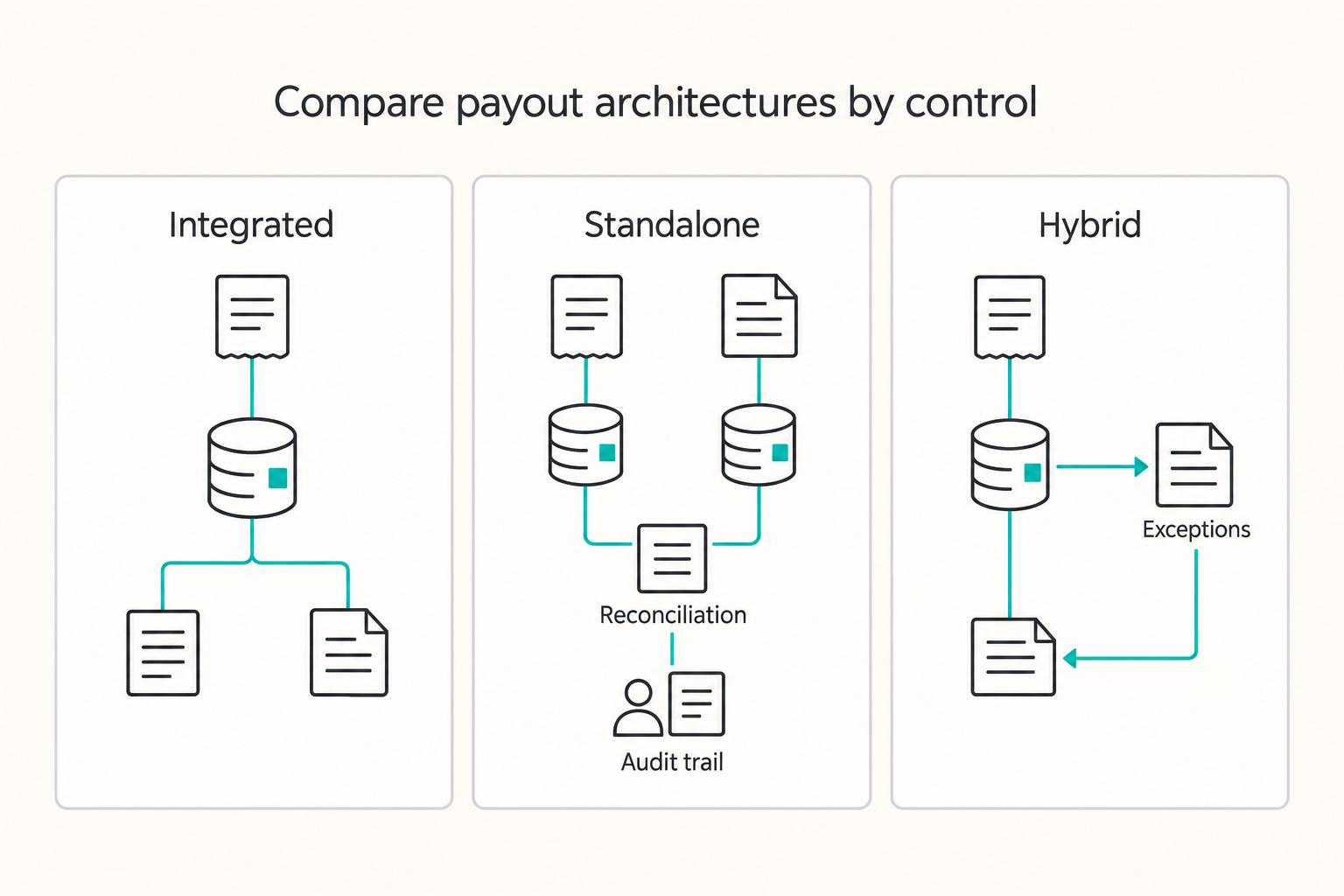
Integrated Payouts vs Standalone Payouts for Platform Architecture Decisions
**Treat integrated and standalone payouts as an architecture decision, not a product toggle.** The real split is the same one you see in payment processing more broadly: either payments are connected to the core platform experience, or they are not. [Lightspeed](https://www.lightspeedhq.com/blog/payment-processing-integrated-vs-non-integrated) puts that plainly in POS terms: your payment terminal either speaks to your point of sale, or it does not. For platform teams, the equivalent question is whether payment flows run through one connected system or sit in separate lanes you manage independently.
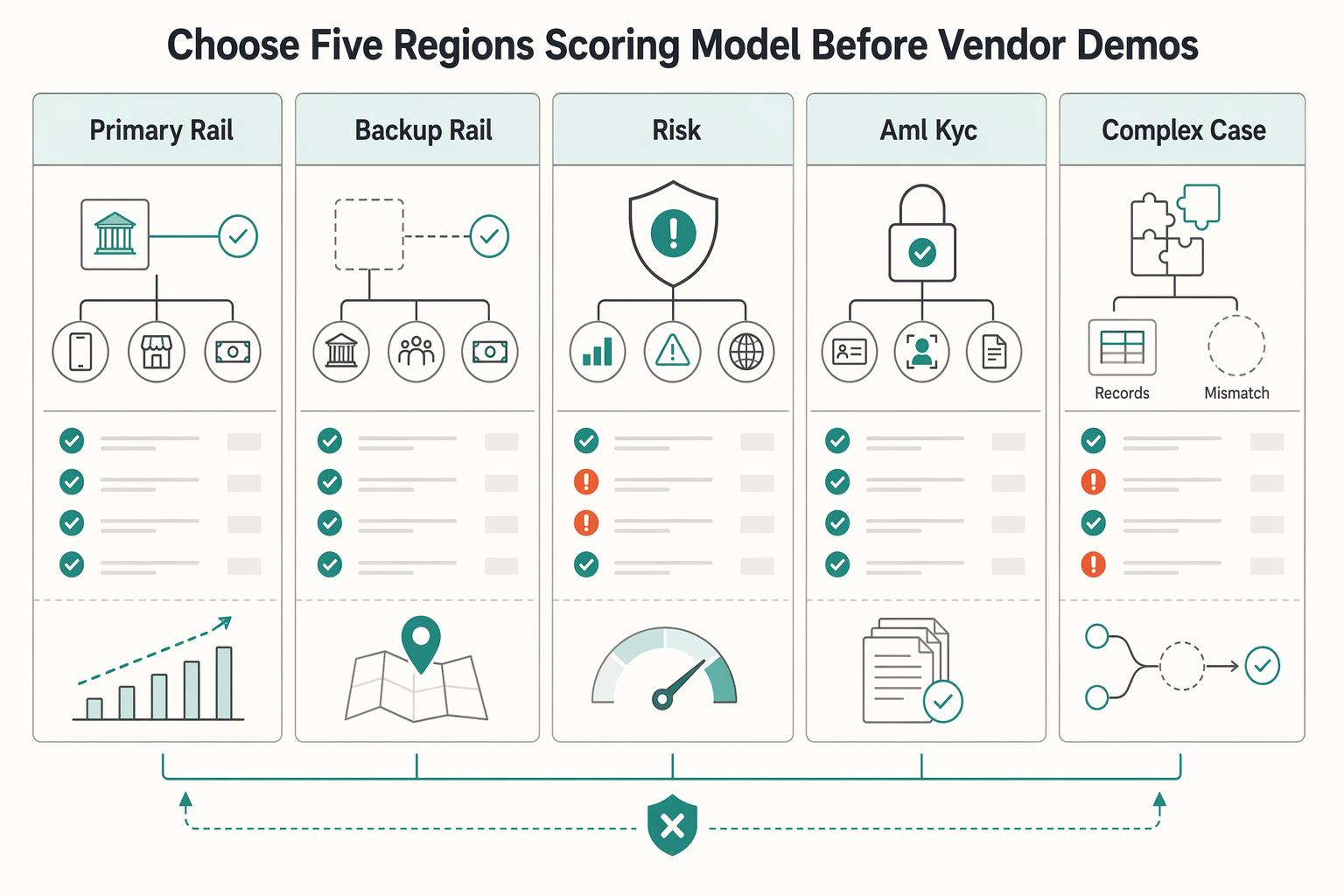
How Platforms Should Prioritize 5 Emerging-Market Payout Regions
If you are choosing where to launch cross-border payouts in 2026, start with what your team can actually run. Too many "top" lists lean on hype or market-cap tables. That may work for headlines, but it does not help with execution.
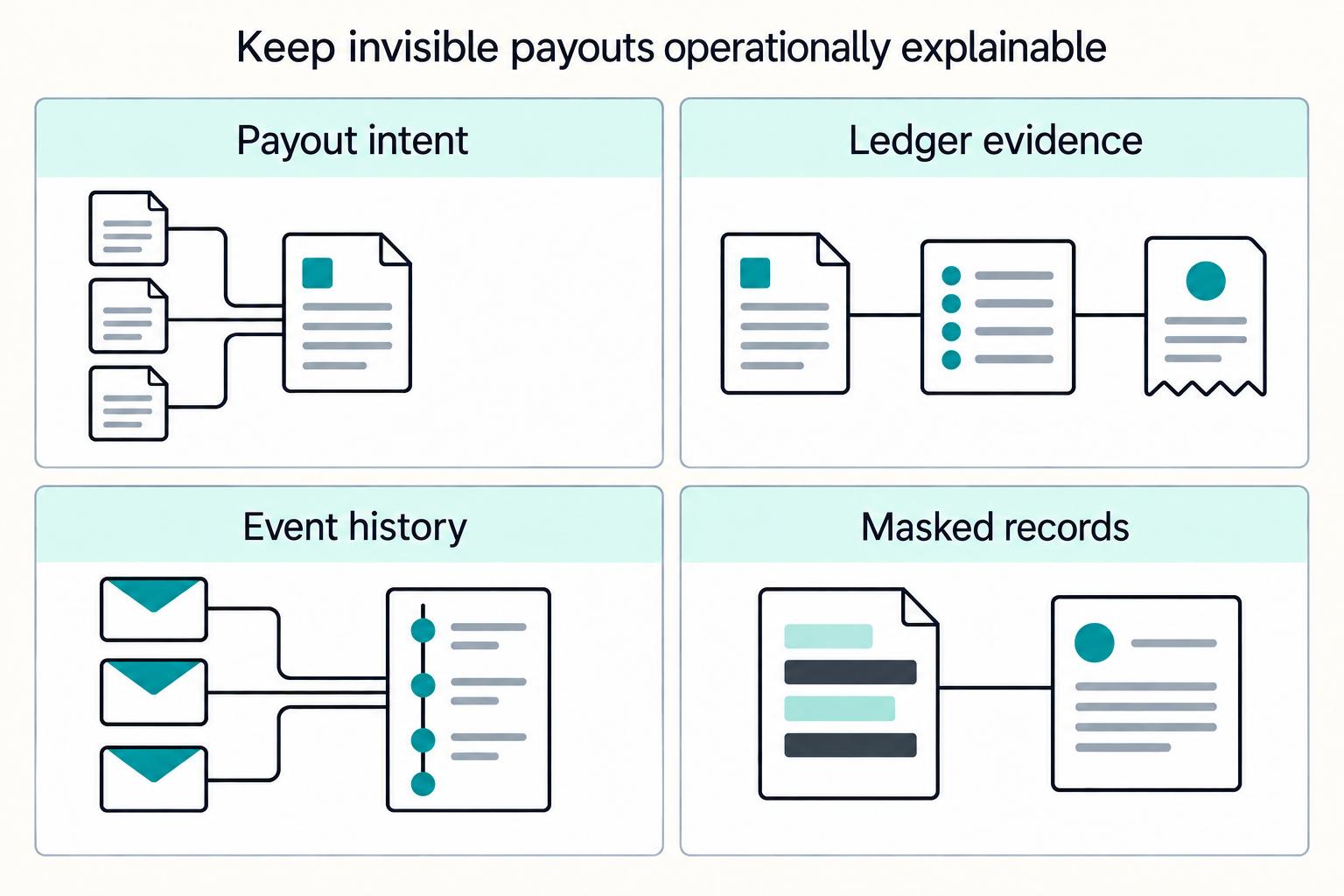
Invisible Payouts: How to Remove Payment Friction for Contractors Without Sacrificing Compliance
Invisible payouts should make life easier for contractors without hiding the controls your team needs. Contractors should get a predictable, low-friction flow, while internal teams can still enforce and document payout decisions when needed. If you run contractor payouts at scale, you need both outcomes at once. We recommend treating every easy payout as a controlled release path your team can replay later.