
Quick Answer
Freeze one launch lane and treat acceptance and payout as separate decisions before spending on build. Require partner exports that link each app, pay station, LPR/QR, map-wallet, or in-car event to ledger postings and owner/fleet disbursement status. Run a single-city pilot under change control, and pass only if finance ops can reproduce the same outcome twice from source records. Keep cross-border scope out until tax ownership is assigned for Form 1042-S, Form 8938, and FBAR review.
Start with the expansion decision you actually need to make#
Start with the real go or no-go question: can you reliably collect funds and pay the right stakeholders with records your finance and ops teams can trust? If not, you are still in discovery, not launch planning.
This is a launch-readiness guide, not a feature tour of Arrive, Passport, ParkMobile, or any other brand. Treat provider directories as research input only. NYSERDA explicitly describes its showcase as informational, non-exhaustive, and not an endorsement.
Use a simple screening rule before you commit product or GTM resources:
Goonly when you can verify the option is safe and commercially available.Goonly when it can integrate into existing community or systems.Goonly when there is execution evidence, such as case studies.Goonly when it appears technically viable and financially sustainable.
Then separate market excitement from operating reality. If your plan depends on flawless execution from day one, the case is probably too optimistic. Shared-mobility commentary also warns this is not an instant-return model.
For your first-market sequence, document what you know, what is still unknown, and why. Keep dated evidence in context. For example, the FTA state-of-practice scan was published in October 2019 and covers through May 2018, so use it as background, not as a current-market conclusion.
Need the full breakdown? Read How Platform Operators Pay Creators Globally Across YouTube, Twitch, and Substack.
Separate payment acceptance from payout orchestration before you compare vendors#
Your go/no-go decision gets clearer once you split payments into two jobs: acceptance and payout orchestration. Strong acceptance alone does not prove downstream fund movement and records are operationally ready.
Define acceptance narrowly#
Define acceptance narrowly as the front-door charge event, such as app-based pay-as-you-go at vehicle unlock. That tells you a customer payment can be processed. It does not, by itself, confirm downstream settlement readiness.
Treat one-platform claims as incomplete without payout evidence#
Use a hard rule for "one platform" claims. If payout status tracking, exception handling, and audit-trail visibility are not clearly shown, treat the claim as incomplete. Weak real-time data sharing is a known way transaction tracking and financial transparency break down.
Set the minimum system boundary before procurement#
Set the minimum system boundary before procurement: a PSP layer for payment flow, risk assessment, and onboarding, plus the operating and compliance artifacts your market requires. For example, in Philadelphia, storing more than three vehicles for a fee requires public garage/lot licensing, which can include a statement of business hours, a rate schedule, and insurance documentation naming the City as certificate holder. If your model includes multiple owners or fleets, treat it like a marketplace setup, where broader participation brings more onboarding complexity and stronger vetting requirements.
You might also find this useful: Gaming Platform Payments: How to Pay Game Developers Studios and Tournament Players at Scale.
Gather prerequisites and an evidence pack before market selection#
Build the evidence pack before you sit through more vendor demos. That keeps market selection tied to your operating model instead of a sales narrative.
Write the pre-launch evidence pack#
Write a pre-launch evidence pack that sets assumptions in plain terms. Include target jurisdictions, whether you contract with space owners, fleet operators, or both, settlement currency, and whether phase one is North America only or includes later cross-border expansion.
Keep it concrete enough that finance, product, and legal can use the same model. For each market, make sure you can answer: who gets paid, by which contracting entity, in what currency, from which jurisdiction, and whether funds touch a foreign account structure. If those fields are incomplete, treat market comparison as premature.
Build the integration inventory#
Build an integration inventory before you talk pricing or timelines. List the parking reservation system, digital permits, License Plate Recognition (LPR), QR codes, in-car systems, and any EV charging flow in scope.
For each integration, record the system of record, the available transaction or session identifier, and the data owner. If you cannot trace an owner or fleet payout to a stable identifier, log it as a launch blocker.
Turn unknowns into due-diligence questions#
Convert unknowns into due-diligence questions with owners and deadlines. At minimum, include the pricing model, implementation timeline, and any dependency on Charge Point Operators (CPOs) for EV charging flows.
| Unknown | Question to answer | If unclear |
|---|---|---|
| Pricing model | Convert it into a due-diligence question with an owner and deadline | Keep the item open |
| Implementation timeline | Convert it into a due-diligence question with an owner and deadline | Keep the item open |
| CPO dependency for EV charging flows | Ask whether any CPO dependency affects settlement timing or exception handling | Keep the item open |
| Charging, parking, and payout references | Ask whether the charging session, parking reference, and payout reference can be tied together | Keep the item open |
Ask for answers you can test operationally. For example, can the charging session, parking reference, and payout reference be tied together, and does any CPO dependency affect settlement timing or exception handling? If the answer is unclear, keep the item open.
Start compliance discovery early#
Start compliance discovery early if your model may involve foreign accounts, foreign payees, or later cross-border expansion. Assign formal ownership for whether IRS Form 1042-S, FATCA review, Form 8938, FBAR/FinCEN, or Schedule SE analysis may be needed.
| Item | What to confirm | Note |
|---|---|---|
| IRS Form 1042-S | Assign formal ownership for whether it may be needed | Include a separate tax-review item if foreign payees are part of the plan |
| FATCA review | Assign formal ownership for whether it may be needed | Start early if the model may involve foreign accounts, foreign payees, or later cross-border expansion |
| Form 8938 | Confirm review against IRS instructions | When required, attach it to the annual return and file by that return's due date, including extensions |
| FBAR/FinCEN | Assign formal ownership for whether it may be needed | Form 8938 does not replace a separate FBAR filing when FBAR is otherwise required |
| Schedule SE analysis | Assign formal ownership for whether it may be needed | Start early if the model may involve foreign accounts, foreign payees, or later cross-border expansion |
For Form 8938 specifically, confirm review against IRS instructions. When required, it is attached to the annual return and filed by that return's due date, including extensions. Also document that filing Form 8938 does not replace a separate FBAR filing when FBAR is otherwise required, and that thresholds are filer-dependent. For certain specified domestic entities, instructions reference $50,000 on the last day of the tax year or $75,000 at any time during the tax year. That is not a universal threshold for all filers, and higher thresholds can apply for some filer profiles.
Add a check for whether the entity is required to file an income tax return for the year, because if no return is required, Form 8938 is not required. Also note that even when Form 8938 is required, some account types are excluded from reporting. If foreign payees are part of your plan, include a separate tax-review item such as IRS Form 1042-S for Platform Operators.
For related context, see How Platform Operators Triage Late B2B Payments Before Market Entry.
Choose a launch lane and freeze scope before building#
Freeze one launch lane before you spend more time on demos, pricing, or architecture. The goal is a clear pass-or-fail scope gate, not proving that one lane is universally better.
Name the lane and what is out of scope#
Name the lane in writing and state what is explicitly out of scope. A short scope freeze is usually more useful than a long strategy memo because it forces an operational decision.
| Launch lane | Freeze in scope | Keep out of scope for now | Proceed only if this is verifiable |
|---|---|---|---|
| Domestic parking-only | Define and document the exact scope for this lane | Anything not explicitly documented in the lane definition | The scope boundary, owners, and pass/fail checks are written and testable |
| Domestic parking plus EV charging | Define and document the exact scope for this lane | Anything not explicitly documented in the lane definition | The scope boundary, owners, and pass/fail checks are written and testable |
| Cross-border owner/fleet payouts | Define and document the exact scope for this lane | Anything not explicitly documented in the lane definition | The scope boundary, owners, and pass/fail checks are written and testable |
Current sources support using a formal gate sequence, but they do not establish which lane should be first or which lane design is best.
Use lane selection as a pass or fail gate#
Treat lane selection as a formal screening gate, not a soft preference. The document lays out a sequence that starts with Technical Proposal Pass / Fail Screening, then moves to technical scoring, price review, and Best and Final Offers (BAFOs).
The same document also uses explicit timing gates (Issue Date: October 22, 2025; Optional Virtual Site Tours: November 19, 2025, 10 a.m.-11 a.m. EDT; Proposal Due Date: December 17, 2025, 4:00 p.m. EDT), reinforcing that gate decisions are time-bound.
Use that order internally. First confirm the lane is operationally coherent, then compare commercials and negotiate delivery detail. If your team is debating price while jurisdiction, payee type, or settlement path is still changing, you are skipping the pass-or-fail stage and creating rework risk.
Use benchmark narratives only to test assumptions#
Use benchmark narratives to test assumptions, but do not treat them as proof. Keep any pilot narrative explicit as an assumption and test it against your evidence pack.
One cited public-record endpoint returned an error, so treat that item as an evidence gap until the record is retrievable.
Apply the same discipline to external examples. The FTA material is a state-of-the-practice scan, not a product endorsement. Examples can sharpen diligence, but they do not replace a scope freeze.
This pairs well with our guide on Translation and Localization Platform Payments: How to Pay Freelance Linguists in 100+ Countries.
Design the acceptance layer with explicit partner dependencies#
Treat the acceptance layer as a dependency map, not a feature list. Before pilot, each payment entry path needs a named owner, a documented fallback, and an identifier path you can carry into ledger and payout records. Treat channel-specific behavior as unknown until partner documentation confirms it. If a partner cannot show that identifier path, do not advance.
Assign channel ownership before comparing vendors#
Assign accountable ownership per channel before vendor comparison. Name ownership for mobile app paths, pay stations, map/wallet entry points, and in-car systems.
Keep one working owner map with these fields:
- Commercial counterparty
- Technical integration point
- PSP touchpoint, if applicable
- Internal team accountable for reconciliation when failures occur
Use an artifact ID and stage label for each channel, such as pre-deployment, pilot, and deployed, so dependencies are managed as operating components rather than bundled assumptions.
Verify each channel with an operational control table#
Run due diligence with a compact channel table focused on operational controls, not marketing claims. Ask for sample exports, not screenshots.
| Channel | Named owner to document | What to verify before pilot | Blocker |
|---|---|---|---|
| Mobile app | App partner + internal product owner | Exportable completed/failed payment references tied to your ledger flow; documented fallback path | No usable transaction-level reference or failure visibility |
| Pay station | Station operator + internal ops owner | Transaction-level reporting, retained session/receipt references, outage visibility | Batch-only reporting with no trace to individual events |
| Map / wallet entry points | Entry-point partner + merchant/PSP owner | Entry source preserved in reporting; routing assumptions documented | Entry attribution disappears after processing |
| In-car systems | Vehicle/aggregator partner + internal integration owner | Distinct, exportable start/authorization/completion events | Aggregate settlement only |
| LPR / QR-linked acceptance | LPR/QR partner + exception owner | Durable link between access event and payable event; dispute evidence retained | No durable event-to-payment link |
Define failure checkpoints before launch approval#
Define failure checkpoints before launch design approval. Exceptions here are money-trace risks, not just support tickets.
| Failure mode | What to confirm | Evidence to retain |
|---|---|---|
| LPR mismatch handling | Confirm what record survives and who can review it | Transaction reference, session ID, event timestamp, gateway status, operator action log |
| QR fallback | Confirm whether fallback can complete payment without creating a second payable event | Transaction reference, session ID, event timestamp, gateway status, operator action log |
| Duplicate authorization protection | Confirm what prevents a second authorization on retries | Transaction reference, session ID, event timestamp, gateway status, operator action log |
| Offline/high-latency entry-exit behavior | Confirm system behavior and retained records when connectivity degrades | Transaction reference, session ID, event timestamp, gateway status, operator action log |
For each failure mode, confirm the retained evidence, such as transaction reference, session ID, event timestamp, gateway status, and operator action log. Also confirm who can access it.
Gate pilot approval on identifier traceability#
Gate pilot go or no-go on identifier traceability, not channel count. The FTA Mobility Payment Integration: State-of-the-Practice Scan is useful framing for multi-channel complexity, but it is still a state-of-practice scan (report date October 2019, coverage through May 2018), not proof of current partner readiness.
Decision rule: if any acceptance partner cannot expose identifiers you can tie to internal ledger postings and payout records, stop and narrow scope before pilot.
Related reading: How to Launch a Legal Compliance Platform for Freelancers and Handle Their Payments.
Design payout architecture for space owners and fleet operators#
Separate payout architecture from acceptance scope at the design stage. Parking operations can span multiple services and channels, but who should be paid, when funds should be released, and how disputes should be resolved are design decisions you define in your platform.
Separate beneficiary entitlement from checkout capability#
Treat beneficiary entitlement as a separate decision from checkout capability. Arrive markets digital payments for parking and EV charging, and also in-car payments, but that front-end scope does not by itself define payout entitlement after collection.
Keep one explicit payout-design artifact that states, for each payout track, the beneficiary type, entitlement source, release trigger, and dispute owner. If any of those fields are still undefined, mark the track as not pilot-ready.
Use contract documents to set boundaries, then fill gaps explicitly#
Use contract and procurement documents to set boundaries, then fill in payout specifics explicitly. Worcester's parking-management scope bundles citations, permits, and mobile app services under one contract, which is useful for service scope but not enough to define payout logic.
The same Worcester materials also show formal controls, such as separate proposal security handling, liquidated-damages language, and written interpretation and change timing. Use that as a reminder that payout terms should be written and testable, not inferred from broad service descriptions.
Distinguish grounded facts from design decisions#
Build a decision table that separates grounded facts from design items you still need to define.
| Area | Confirmed facts | Must be explicitly defined before pilot |
|---|---|---|
| Channel/service scope | Parking and EV charging payment capability is marketed; municipal scope can bundle citations, permits, and mobile app services | Beneficiary mapping for payouts |
| Contract/process controls | Formal procurement controls and default-risk language exist in municipal contracting materials | Release conditions, hold logic, and dispute workflow |
| Partner scope | Vendor messaging can include parking/EV charging digital payments and in-car payments | Partner-specific payout responsibilities and evidence standards |
Set a pre-pilot gate for ownership ambiguity#
Set a strict pre-pilot gate for unresolved ownership or entitlement ambiguity. Define your mismatch rule in your operating policy and contract schedule before launch.
Final check before pilot sign-off: confirm every payout track has a written trigger, a required evidence list, and an accountable owner for release and dispute handling.
If you want a deeper dive, read Micromobility Payout Challenges: How Scooter and Bike-Share Platforms Pay Fleets.
Add compliance and tax gates before first live disbursement#
Treat compliance and tax readiness as a launch gate before any owner or fleet payout, especially if cross-border disbursements are in scope. You want each payout to move from "held" to "released" based on explicit checks, not ad hoc judgment after volume starts.
Define payout release gates by payout type#
Define payout release gates by payout type and store them in the payout record. Keep each payout in a binary release state with named evidence, such as payee identity status, tax-document status, review owner, and approval timestamp.
If a held payout cannot be explained from a single screen or export, the gate is not operational yet. Do not rely on a vague "ready" status.
Split obligations into must-do-now and monitor-later#
Split obligations into two buckets at launch: must-do-now and monitor-later. Must-do-now covers checks and documents required before first disbursements in your initial market. Monitor-later covers obligations that may apply when your payee mix, account footprint, or entity setup changes.
Do not treat IRS Form 1042-S as automatic for this model without market-specific facts and legal review. If it is on your roadmap, assign an owner and decision log now so it does not surface mid-pilot. For context, review IRS Form 1042-S for Platform Operators.
Build reporting checkpoints before funds move#
Build reporting checkpoints before funds move so records are usable for filing decisions. For certain U.S.-linked filers, Form 8938 is a filing checkpoint. It is used to report specified foreign financial assets, must be attached to the annual return, and filed by that return due date, including extensions.
Your records should preserve the applicable calendar year or tax year, plus enough account and entity detail for legal review of filing status and thresholds. For certain specified domestic entities, Form 8938 can be triggered when asset value exceeds $50,000 on the last day of the tax year or $75,000 at any time during the tax year.
Filing Form 8938 does not remove a separate FBAR obligation when FBAR is otherwise required. Do not assume one export closes every FinCEN, FBAR, FATCA, or Form 8938 question.
Document exclusions and no-file outcomes#
Document exclusions and no-file outcomes so teams do not overreport or miss required filings. IRS materials note that if no income tax return is required for the tax year, Form 8938 is not required even when foreign assets exceed a reporting threshold. They also note that some accounts are excluded, including certain accounts maintained by a U.S. payer.
Keep an evidence pack per market with entity classification, account context, tax-year coverage, and legal review notes supporting the filing position. If you plan foreign payouts but do not yet have a market-by-market legal review path for FinCEN, FBAR, FATCA, or Form 8938 questions, limit initial scope to domestic disbursements. Related: State of Platform Payments: Benchmark Report for B2B Marketplace Operators.
Build reconciliation and controls that survive scale#
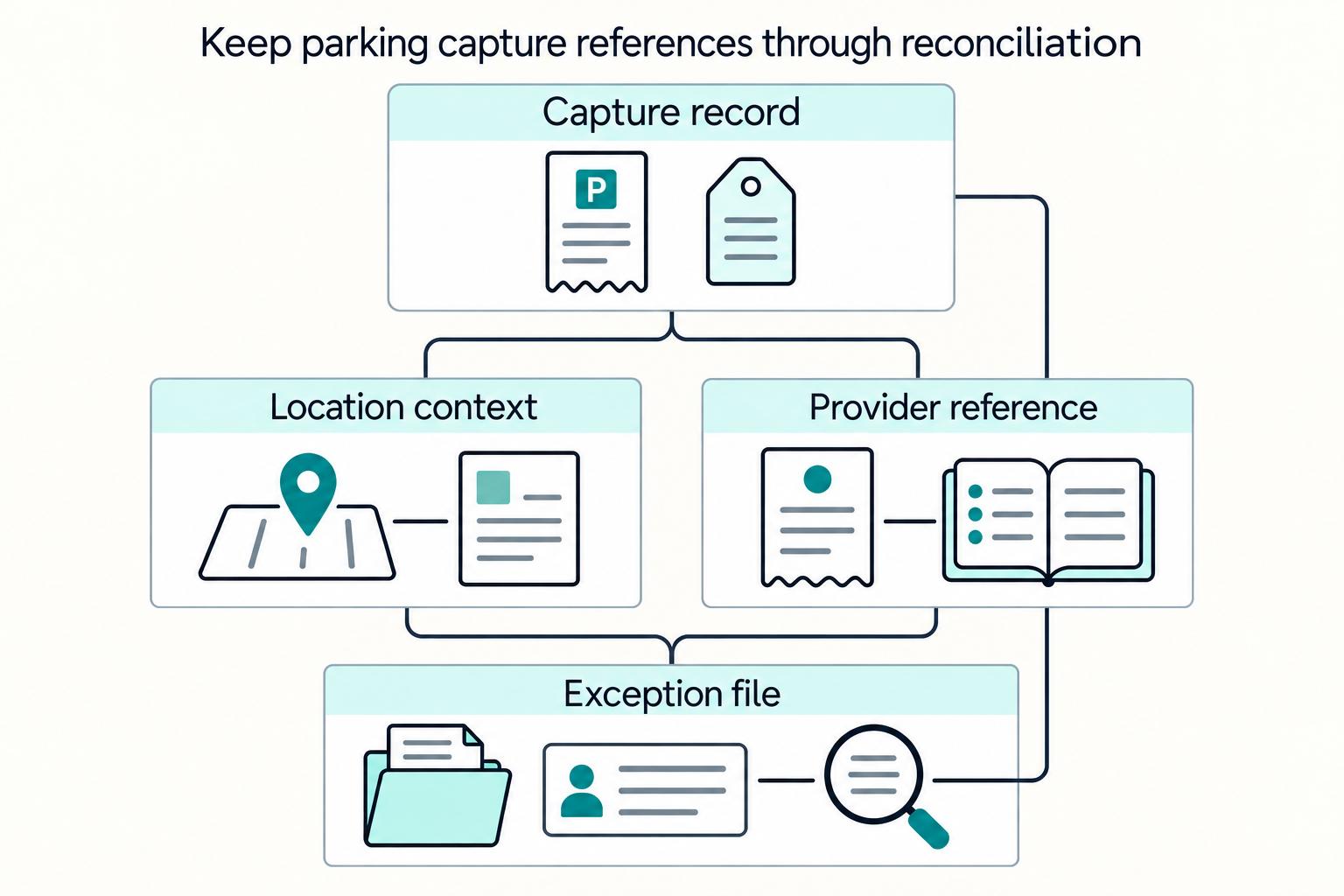
Once core payment gates are in place, a major scaling risk is traceability. Your operators should be able to follow a transaction from payment acceptance to a resolved outcome or exception without engineering intervention.
Create one trace path per transaction#
Define a single operator-visible trace path for each transaction, and keep the same identifiers connected across acceptance, provider records, internal records, and final resolution. Treat this as an operational control, not a finance-only exercise.
Where hardware is part of acceptance, such as PARCS or other unattended points, preserve the capture-side reference and location context that help operations reconcile quickly. If PCI P2PE is in use, card data encryption can reduce PCI scope, but you still need non-card identifiers for reconciliation.
Set duplicate-handling controls early#
Set duplicate-handling controls before volume grows. Test how repeated submissions are handled so duplicate activity does not create ambiguous outcomes for operators.
Use staging scenarios that include repeats and late updates, then confirm teams can explain the final transaction state from the same trace records used in production.
Review exceptions with same-day visibility#
Run a regular control review with same-day visibility into exceptions and drift, using real-time data plus standard or customizable reports. The objective is straightforward: detect issues early enough to resolve them operationally, not at month-end close.
If yesterday's exceptions cannot be explained from one screen or export, reconciliation is still too dependent on manual stitching.
Prepare close and incident artifacts operators can use#
Create operator-ready artifacts for close and incident handling: a month-end reconciliation pack, an exception log with owner or fleet impact, and, where manual overrides are allowed, an approval trail. These artifacts should make accountability and resolution paths explicit.
As volume grows, simplify reporting and ownership boundaries wherever possible. In practice, consolidation checkpoints, such as reducing multi-vendor handoffs, are often what make controls durable.
If you are defining payout status tracking, retries, and exception queues, review Gruv's operational model for compliance-gated disbursements and batch visibility in Payouts.
Run a city-level pilot and promote only with hard verification#
Treat the city pilot as a deployment gate, not a growth milestone. Run one contained market first so you can confirm the system functions as needed in real operations before you add more locations.
Lock scope and change control before the first live pilot run#
Lock scope and change control before the first live pilot run. Define one city boundary, one acceptance scope, one core operating path, and one shared requirements baseline, then freeze nonessential changes during the test window.
List the exact technologies and integrations in scope, including your detection and monitoring path. Keep a simple approval log for any fix or config change. If inputs shift mid-pilot, the results are harder to compare and less useful for decisions.
Use verification gates you can prove from production records#
Use verification gates your team can prove from production records. Track whether the pilot meets the documented system requirements and whether monitoring data is accurate enough for operations.
Judge the pilot by traceability, not top-line totals. If teams cannot explain outliers from trace records without manual stitching, the operating model is still fragile at scale.
Test traceability and monitoring, not just basic functionality#
Test traceability and monitoring paths, not just basic functionality. Confirm events can be tied to the correct location and operating context, and review mismatches as a monitoring-accuracy issue.
If you are comparing options, run the comparison against the same requirements baseline so the tradeoffs are explicit.
Expand only when requirements and monitoring both hold#
Only expand when functional performance and monitoring reliability both hold under the pilot checks. A pilot can look healthy at a high level while still hiding operational gaps.
When core logic remains unstable, fix that first and re-run pilot verification before adding locations. If hardware is part of the flow, include placement and installation dependencies in the pilot review, because monitoring quality depends on those design details.
Common mistakes that stall expansion and how to recover#
Expansion usually stalls when scope moves faster than verification. Use pilot evidence and operating controls to decide what is ready, and treat everything else as unverified.
Mistake 1: Treating a single pilot win as launch proof Recovery: Treat pilot results as directional, not as full readiness proof. Validate repeatability in your own operations before scaling, especially where loading, routing, and curb availability vary.
Mistake 2: Adding EV and fleet complexity before core curb operations are stable Recovery: Stabilize the base parking lane first, then layer in additional complexity. Last-mile operations already carry loading inefficiencies, routing pressure, curb-availability constraints, and curb misuse, including double-parking and idling, so adding new models too early can compound delays.
Mistake 3: Carrying unresolved technology unknowns into launch Recovery: Keep a mandatory question log and block launch on critical unanswered items. Implementation is challenging, technology models have tradeoffs, and stakeholder and system requirements should be explicit before rollout.
Mistake 4: Expanding scope before ownership is explicit Recovery: Reduce scope to one operating lane until accountability is clear. Identify stakeholders, document unresolved decisions, and re-stage expansion only after system requirements and dependencies are closed.
For a step-by-step walkthrough, see How Platform Operators Accept Payments Through QuickBooks.
Make the expansion call with evidence, then scale in controlled stages#
Expand only when the current market is operationally repeatable from records, not vendor claims or tribal knowledge.
Freeze the evidence pack before approving the next market#
Use this as a document test, not a slideware test. Each line should map to a real artifact, such as executed contract documents, pricing terms, program filings, implementation records, and named internal owners.
- We separated acceptance architecture from payout architecture and documented both.
- We validated channel coverage for the channels in scope and documented known gaps.
- We documented payout flow rules and exception routing for this market.
- We confirmed compliance and tax gate ownership for current target markets.
- We proved reconciliation closes cleanly before approving multi-city expansion.
A useful benchmark for evidence quality is the Con Edison PowerReady filing (Case 18-E-0138). It explicitly lays out eligibility criteria, incentive levels, implementation processes, and a named reporting checkpoint (3.1.5 Reporting Requirements). That level of specificity is the bar for marking coverage as confirmed.
Price the launch lane as it will actually run#
Model economics using the real operating setup, not the cleanest sales framing. In the ParkMobile contract context, the record states no up-front or monthly subscription fees. It also states a small fee per transaction, typically paid by the parker, and an additional card-related fee when ParkMobile is merchant of record.
That can be a core expansion risk. A lane can look simple at the headline level and change materially once merchant-of-record treatment and fee allocation are applied. Before approval, confirm who absorbs each fee and where it is recorded.
Scale only after reconciliation survives repeat use#
Use market scans to shape questions, not to replace verification. The October 2019 FTA mobility payment scan explicitly states the U.S. Government does not endorse products or manufacturers.
Final go or no-go check: finance ops should be able to reproduce the same outcome twice from source records through reconciliation. If repeatability still depends on manual fixes, do not scale yet. MaaS research also flags scalability as a key challenge, so treat first-market success as a starting signal, not proof of multi-city readiness.
Next step for Gruv-fit teams: align product, finance ops, and compliance on one implementation plan, then confirm market and program coverage before rollout.
When your launch checklist is complete and you want to confirm market/program fit before multi-city rollout, use the implementation references in Gruv Docs.
Frequently Asked Questions
What is the operational difference between accepting parking payments and paying space owners or fleet operators?
The available guidance covers customer-side acceptance capabilities, but not payout workflows to space owners or fleet operators. So a smooth checkout does not, by itself, prove payout readiness.
What capabilities should be mandatory before launching in a new parking market?
Require a tested end-to-end acceptance flow, a clear integration inventory, and a defined exception path before launch. If your model uses connected-car data, treat VIN and consent as hard prerequisites, because CARUSO states it can process data only when both are provided. GDPR obligations still apply.
When should a platform add EV charging and eMSP-style flows to its payout model?
The available guidance does not define EV charging or eMSP payout design standards. Add that scope only after the base parking lane is stable in your own operations. If fleet or connected-car data is involved, confirm consent design early, since CARUSO notes contract-based consent is primarily used in fleet use cases. If VIN and consent are not reliably available, defer the added complexity.
How should we validate "one platform" claims from vendors during procurement?
Use live testing, not feature-sheet language alone. ATOM states buyers can test the core dashboard and end-customer flow before purchase and cites more than fifteen payment gateway and IoT integrations. Those claims show acceptance and integration breadth, but they do not by themselves prove payout orchestration readiness.
Which integrations usually create payout risk first: LPR, QR codes, in-car systems, or PSP routing?
There is no supported universal ranking here. Treat the highest risk as the first integration that breaks traceability or evidence quality in your process. For in-car paths, VIN and consent are explicit prerequisites, and for on-site issues, evidence capture, such as photos when safe, is a practical baseline.
What should founders verify in a pilot before rolling out to multiple cities?
Verify the full user flow and at least two failure paths, not just happy-path acceptance. One should cover payment decline handling, including card details, billing address, and available funds, and one should cover on-site issue evidence capture and routing. If fleet incidents are in scope, include a time-bound checkpoint model, such as FNOL notifications sent within 24 hours after claim filing.
How do we decide whether cross-border payout complexity is worth it in phase one?
If phase one works with a domestic lane, keep scope domestic first. If your launch depends on European connected-car access, remember that CARUSO's "more than 90%" coverage claim does not remove VIN, consent, or GDPR requirements. Tax-specific cross-border requirements are outside the scope of this guide and should be validated separately before committing broader scope.
Try a related tool
Researched and edited by the Gruv editorial team. Gruv builds cross-border billing, payouts, and finance-operations software for global businesses.
Sources
- apsf.assembly.ca.gov/sites/apsf.assembly.ca.gov/files/Completed%2...trusted
- clerk.seattle.gov/search/ordinances/121524trusted
- connect.ncdot.gov/business/Turnpike/ProcurementsLibrary/Facili...trusted
- dgs.ca.gov/-/media/Divisions/DSA/Publications/access/20...trusted
- documents.dps.ny.gov/public/Common/ViewDoc.aspxtrusted
- fincen.gov/report-foreign-bank-and-financial-accountstrusted
- irs.gov/businesses/corporations/do-i-need-to-file-fo...trusted
- irs.gov/forms-pubs/about-form-8938trusted
Educational content only. Not legal, tax, or financial advice.
Related Posts

Micromobility Payout Challenges for Scooter and Bike-Share Fleets
The real payout challenges in scooter and bike-share platforms often start before money ever reaches a payout rail. In shared micromobility, failures can begin when operating events and finance records stop matching. Rides can close late, credits can post without clear references, or partner obligations can sit outside the same transaction view.
IRS Form 1042-S for Platform Operators: How to Report and Withhold on Foreign Contractor Payments
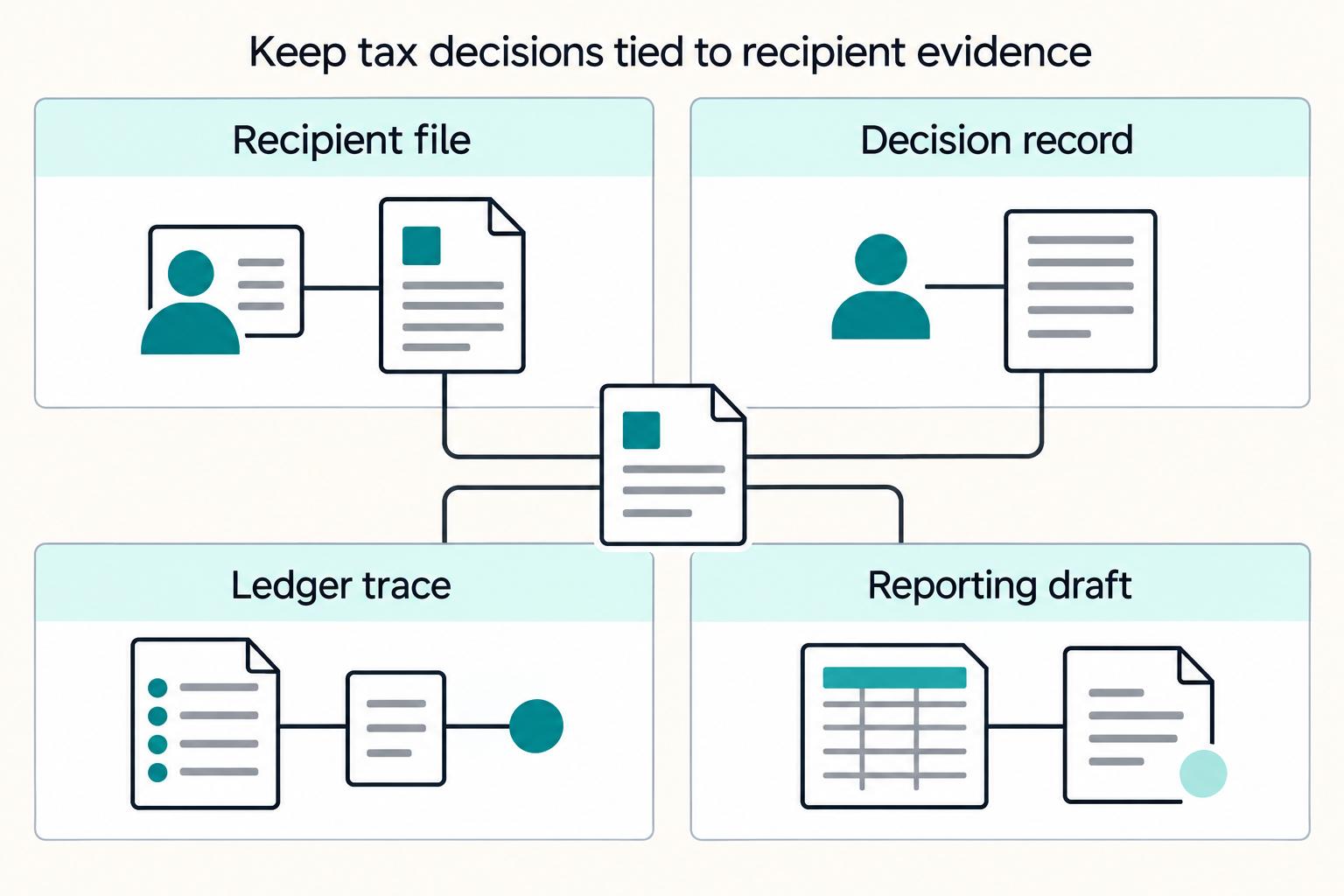
If you own compliance, legal, finance, or risk for a platform paying foreign contractors, sellers, or creators, you may need to make **Form 1042-S** operational. That means clear decisions, reliable checks, and escalation points your team can apply and defend.

State of Platform Payments Benchmark Report for B2B Marketplace Expansion
This article translates broad payments narratives into expansion decisions: where a B2B marketplace operator should launch first, what to delay, and what to validate before committing product and GTM budget in 2026.