
Quick Answer
Prioritize reliability and control evidence before chasing scale. In network effects payment platforms contractors platform value improves when one corridor shows stable payout states, explainable holds, and repeat activity on both sides. Use a minimum evidence pack that covers single-homing vs multihoming patterns, customer-provider balance, rail failure patterns, and reconciliation snapshots. When those signals are inconsistent, defer the launch decision until operations are predictable.
Why this list matters for payment platform expansion#
Treat network effects as something to verify, not something to assume from user growth or network size. This list is meant to help you test whether expansion is creating real platform value or just adding surface area.
- A network effect means platform value depends on how many participants use it.
- In multi-group platforms, cross-sided growth can create reinforcing feedback loops.
- Those loops are not always positive. Network effects can be negative, and a larger network is not automatically a stronger one.
- Competitive pressure can stay high as networks grow. Widespread multi-homing can signal weaker reliance on any one platform, and highly clustered networks can be more exposed to competitors.
Read the rest of this list as a decision tool. For each effect, identify the first behavior that should improve, the evidence that would confirm it, and the signal that tells you to pause.
For a step-by-step walkthrough, see How Modern CFOs Make Payment Platform Expansion a Strategic Driver.
How to choose which network effects actually matter#
Choose network effects based on what improves outcomes under your current operating constraints, not on which loop sounds strongest. For two-sided platforms, the effects that matter are the ones that still hold up under real participation patterns and market balance.
| Selection factor | What to check | Why it matters |
|---|---|---|
| Demand density first | Whether activity changes behavior in a segment you can actually serve | Raw growth alone is not proof of value |
| Participation structure second | Whether your market looks closer to single-homing or multihoming | Effects that depend on provider loyalty can weaken when multihoming is common |
| Congestion sensitivity is a gate | Customer-provider balance in your selection criteria | If one side grows much faster than the other, congestion can reduce utility for both sides |
| Model competitive response before scaling | Likely competitor response to pricing or incentives | A pricing-game equilibrium check is a stronger test than assuming one-sided gains |
Use this section if you operate a platform with provider and customer sides. It matters less when cross-side participation dynamics are not the core driver.
- Demand density first
A network effect is more convincing when activity changes behavior in a segment you can actually serve. In two-sided markets, side imbalance can distort outcomes, so raw growth alone is not proof of value.
- Participation structure second
Effects that depend on provider loyalty can weaken when multihoming is common. Check whether your market looks closer to single-homing or multihoming before assuming a loop will compound.
- Congestion sensitivity is a gate
Include customer-provider balance in your selection criteria before growth planning. If an effect grows one side much faster than the other, congestion can reduce utility for both sides.
- Model competitive response before scaling
If an effect depends on pricing or incentives, model likely competitor response. A pricing-game equilibrium check is a stronger test than assuming one-sided gains.
Before you prioritize any effect, require a minimum evidence pack. Without it, it is easy to mistake participation or congestion issues for demand signals.
- Participation structure by side (single-homing vs multihoming)
- Customer-provider balance over time (congestion risk)
- Competitive response scenarios (pricing/incentive equilibrium assumptions)
Also check participation structure: single-homing versus multihoming. If providers use multiple platforms, your loop can be weaker than headline growth suggests. In that case, improving participant outcomes may create more value than acquisition-first bets.
If baseline side balance is not stable, deprioritize growth loops and fix that first. More volume on top of unresolved congestion issues can reduce value instead of compounding it.
Early payment programs get more practical when contractor volume is high enough to support them. See What Is Dynamic Discounting? How Platforms Can Offer Early Payment to Contractors for a Discount.
Compare the seven network effects before you commit resources#
Rank these seven effects by operational fit first and growth story second. Use them as operating hypotheses for contractor payouts, not as a universal taxonomy. Pressure-test each one against your current constraints; payment-operations benchmarks for Virtual Accounts, Merchant of Record, KYC/AML, or webhook reliability should be sourced from your payment provider directly.
A useful measurement frame is utility, complementarity, and compatibility. One research framework operationalizes this with 20 KPIs; if an effect is not improving one of those dimensions, it is not compounding value yet.
| Effect type | Best for | Leading indicator | Operational dependency | Failure mode | Expansion risk | Time-to-proof |
|---|---|---|---|---|---|---|
| Two-sided liquidity | A lane where payer and contractor activity can grow together | Both sides become active in the same lane with less incentive pressure | Tune value on both sides; confirm payment-stack benchmarks with your provider | Side imbalance and shallow repeat usage | Medium-High | Set internally; do not assume an external timing benchmark applies |
| Payout reliability | Teams with demand but weak repeat behavior | Track execution exceptions and payout-state progression in internal data | Set internally; verify with your platform | UX appears smoother while operational breaks persist | Medium | Set internally; do not assume an external timing benchmark applies |
| Compliance trust | Growth motions that depend on documented controls | Track how many accounts progress from review into funded activity in internal data | Set internally; verify with your platform | Review friction blocks volume before trust compounds | High | Set internally; do not assume an external timing benchmark applies |
| Tax-document effect | Markets where admin burden may affect retention | Track onboarding stalls tied to required payout documentation in internal data | Set internally; verify with your platform | Effect is strong in one market and weak in another | Medium | Set internally; do not assume an external timing benchmark applies |
| Speed-to-cash | Supply-constrained categories where payout predictability may matter | Track whether first payout experience correlates with repeat activity in internal data | Set internally; verify with your platform | Promise outpaces actual execution reliability | High | Set internally; do not assume an external timing benchmark applies |
| Integration stickiness | Product-led platforms embedding payouts in core workflows | Track payout activity through integrated flows vs manual workarounds in internal data | Set internally; verify with your platform | Event quality gaps weaken finance trust | Medium | Set internally; do not assume an external timing benchmark applies |
| Cross-border coverage | Teams expanding corridors under real control limits | Track whether existing clients activate additional corridors in internal data | Set internally; verify with your platform | Support and control load grows faster than usable volume | Very High | Set internally; do not assume an external timing benchmark applies |
These scores are planning aids, not external benchmarks. Treat each row as an internal hypothesis until your own data confirms it.
Before you mark any row green, run two checks. Separate demand signal from execution noise. Then confirm that state changes are trustworthy enough for finance operations. If either check fails, deprioritize acquisition-led loops and fix operating reliability first.
That matters because not all network effects are equally durable, and indirect effects can extend across competing platforms. If your strategy assumes exclusivity that is not real, treat expansion risk as higher than the growth chart suggests.
Best two-sided liquidity effects for early market pull#
Use two-sided liquidity early only when payer and contractor activity can thicken in the same corridor through real usage, not just signups.
Where this effect fits#
This effect is most relevant when client demand and contractor supply need to grow together in one priority lane. A focused vertical-country corridor may give you a cleaner read than spreading early effort across many lanes.
The card-network analogy is useful at the mechanism level. Payment cards are a two-sided market example because participation on each side affects outcomes on the other side. That does not mean card-network scale directly predicts contractor-platform outcomes in your corridor.
Why it can compound fast#
When both sides are active in the same lane, usable counterparties become easier to find, and repeat usage is easier to sustain. The value comes from usable counterparties on both sides, not from account creation alone.
Track usage separately from membership. In two-sided payment markets, one side may care about participation breadth, while the other often cares more about observed usage. In practice, check payer activity and participation breadth, not just onboarded profiles.
Where teams get fooled#
The common mistake is treating approved accounts as liquidity. Two-sided dynamics are unforgiving. If either side stops seeing usable participation from the other side, activity can drop quickly.
How to test one lane before expanding#
If you start with one vertical-country lane for a cleaner signal, expand only after repeated cycles show real usage on both sides.
Use a short evidence pack to keep expansion tied to observed two-sided pull instead of headline signup growth:
- participation breadth on both sides in the same corridor
- observed payer usage, not just payer approvals or account counts
- repeat usage trends on both sides
Best reliability effects from payout execution quality#
If repeat volume is slipping because payouts feel uncertain, prioritize execution reliability before you expand.
Where this effect wins#
This effect matters most when transactions already exist but repeat behavior is weak because payout outcomes are inconsistent or hard to trust. In contractor payments, reliability is part of the product experience, not a cosmetic improvement.
As networks scale, the work is not just moving funds. Teams have to handle multiple currencies, payment methods, tax documentation requirements, and regional compliance rules at the same time. Those challenges compound with volume. Processes that rely on manual intervention become harder to sustain as contractor networks grow.
What to fix before scaling#
Start by making payout operations consistently explainable across teams and to contractors. Status communication helps only when it reflects real operational outcomes.
Focus your evidence on where payouts stall or fail, and separate causes clearly:
- transfer execution issues
- missing or stale tax documentation
- regional compliance holds
- process gaps that add friction and increase contractor drop-off or churn
Early methods can become a hidden risk here. Many teams launch with wires or wallets, then run into reliability issues as contractor networks grow.
What usually breaks#
One break point is unmanaged complexity: more payout flexibility can add enough friction to increase drop-offs and churn. Another is unclear operational diagnosis, where teams struggle to distinguish transfer issues from documentation or compliance blockers.
Decision rule#
If failures are mostly operational, invest here before expansion. If your team cannot consistently explain payout outcomes and distinguish transfer issues from documentation or compliance blockers, scaling this lane will likely spread the same reliability problems as the network grows.
Best compliance trust effects for enterprise-funded growth#
For enterprise-funded growth, compliance trust compounds when KYC, KYB, and AML controls are documented, tied to payout permissions, and backed by evidence your buyer can inspect. Once payout reliability is clear, the next question is who can onboard, fund, and receive money, and why.
This effect fits best when clients hesitate to route meaningful volume without visible controls. The upside is not that stricter checks automatically win bigger contracts. The gain is lower buyer uncertainty and potentially faster internal approvals when your control logic is explicit instead of hidden behind broad "secure platform" language.
What a usable controls matrix should show#
A usable matrix should answer three questions: what is checked, what payout action depends on it, and what evidence explains later why funds were released or held.
| Control gate | Payout permission tied to it | Evidence to keep ready | Common failure if overdesigned |
|---|---|---|---|
| KYC | Whether a contractor can be enabled for payout | verification status, timestamp, review outcome, hold reason | Too many manual reviews can slow onboarding and stall good users |
| KYB | Whether a client account can activate funding or expanded payment privileges | business verification decision record, approval status, escalation notes | Fragmented handoffs delay account activation for funding |
| AML | Whether a transaction or payout batch proceeds, is held, or is escalated | screening result, alert disposition, reason for release or hold | False positives and redundant alerts swamp the team |
That last column is often the hidden risk. As volume grows, noisy alerts and fragmented tooling can turn compliance into an operating bottleneck. Industry figures on compliance spend and rising costs are directionally useful for understanding pressure, but not a benchmark for every platform.
Where this effect breaks#
The common mistake is assuming stricter policy is always safer. In practice, excessive caution and fragmented setups can slow onboarding enough to push good customers away. The tradeoff is straightforward: explicit, consistent controls can increase enterprise trust, but heavy-handed policy can hurt onboarding outcomes.
Reputational risk is also asymmetric. A single public compliance lapse can damage trust quickly. The goal is not more checks. It is checks that are explainable, proportionate, and connected to visible payout states.
The checkpoint that matters most#
If you support faster payout options, test controls against settlement speed. Fraud models built for ACH timelines can break down when settlement happens in seconds. In real-time environments, verification must happen before funds move. In U.S. contexts, Nacha 2026 validation requirements are a concrete reminder that validation design cannot be bolted on after launch.
The rule is simple. For any held payout, your team should be able to show which gate triggered the hold, when review happened, and what evidence supported release or escalation. This trust effect comes from documented decisions, not added friction.
If growth is exposing manual back-office work, ERP Integration for Payment Platforms: How to Connect NetSuite, SAP, and Microsoft Dynamics 365 to Your Payout System covers the integration side.
Best tax-document effects for contractor retention#
Use this section when U.S. tax-document handling intersects with onboarding, payout holds, or support escalations. Treat payment reliability as a separate workstream from tax-document handling.
1. Early W-8 and W-9 collection#
If your workflow uses W-8 and W-9 collection, tie requests to moments you already control, typically onboarding and the first payout milestone. The goal is status visibility before year-end pressure, not emergency cleanup in December.
For each contractor, keep status explicit: which form was requested, when it was requested, whether it was completed, and whether payout access changed because of that status. If payout is held, name the missing document directly instead of routing the contractor into a generic review queue.
2. Form 1099-K visibility#
For U.S. payment operations, Form 1099-K is a concrete reporting checkpoint. The IRS states that payment card companies, payment apps, and online marketplaces are required to issue Form 1099-K and send copies to both the IRS and the recipient. The recipient copy must be sent by January 31.
| Payment context | IRS-grounded checkpoint |
|---|---|
| Direct card payments for goods/services | Form 1099-K applies regardless of transaction count or amount. |
| Payment apps/online marketplaces (TPSO context) | IRS page states over $20,000 and more than 200 transactions; providers may still send Form 1099-K below that level. |
Operationally, verify the payment channel, whether payments were for goods or services, and whether the account sits in a population that could receive Form 1099-K. Avoid threshold-only messaging that says a form will not be issued when a provider may still issue one.
3. FEIE boundaries for cross-border contractors#
For U.S. contractors abroad, keep the FEIE message narrow: it applies only to qualifying individuals with foreign earned income, and that income still must be reported on a U.S. tax return.
If you reference the physical presence test, keep the IRS wording intact: 330 full days in a 12-consecutive-month period. The IRS also states that missing this test fails qualification regardless of reason. Keep the stated exclusion caps precise: $130,000 (tax year 2025) and $132,900 (tax year 2026) per qualifying person.
Use restraint in support messaging. FEIE and related cross-border topics are profile-specific, and IRS Practice Unit PDFs are not controlling authority. A practical checkpoint is a simple evidence pack: request timestamps, completion status by form type, payout holds tied to missing documents, and a January 31 readiness review.
Best speed-to-cash effects for repeat platform usage#
Once release blockers are cleared, repeat usage can hinge on whether contractors trust your payout timing.
1. Publish only payout timing you can verify#
Speed-to-cash helps only when your promise matches real outcomes in each market. Skip broad "fast payouts" claims and publish only the payout states you can defend.
If you cannot answer even a trimmed version of the 10 questions used to pressure-test payout platforms, do not position speed as your differentiator yet. Keep proof operational: status aging by rail, failure reasons by rail, and reconciliation exceptions. One operational breakdown is calling money "paid" when it has left your platform but has not reached the contractor account.
2. Use controlled intake and payout workflows to enforce a defensible release cadence#
If your setup supports separate intake controls and scheduled payout workflows, use them first for control, then for messaging. The goal is not a universal speed claim. It is clearer tracking of incoming funds, release timing, and reconciliation by market and rail.
What starts as a simple payout flow can quickly become a multi-currency, multi-rail, tax-sensitive operation. That complexity is one reason speed claims can fail when teams are not aligned. A straightforward cycle check is: funds received, payout initiated, payout released, and final contractor-facing status posted.
3. Expand speed promises one corridor at a time#
Treat expansion as corridor-by-corridor readiness, not a single global promise. Bain's warning that the field is "littered with failures," including teams that spread too thin across too many applications, is a useful filter for payout operations too.
Use a narrow rule: if a corridor shows recurring held or returned payouts, pause speed messaging there until exceptions are under control. As contractor networks grow, payments move from back-office work to core financial infrastructure. The bar shifts from "can we pay" to "can we pay as stated." If volume depends on US bank transfers, align published timing windows with actual behavior of the US banking network.
As contractor volume grows, clear payment advice becomes more important. See What Is Bank Remittance? How Platforms Send Payment Advice to Contractors.
Best integration effects for platform stickiness#
Integration effects can create stickiness when payments are embedded in core platform interactions and backed by dependable governance. More endpoints alone may not do the job.
1. Fit#
This effect is usually stronger when payments are part of the core workflow, not a side finance process. In a multi-sided platform, value comes from helping different user groups interact. Integration depth is more likely to matter when payout actions and status flows are tied directly to those interactions.
A simple test: if removing payments would disrupt core user actions or operating flows, integration depth is likely to add stickiness. If payments still sit in manual side processes, this may not be your first growth lever.
2. What actually creates stickiness#
The differentiator is reliable behavior across the product, not just API surface area. Network effects can increase value as participation grows, but they do not guarantee viability and they do not replace governance and operating controls.
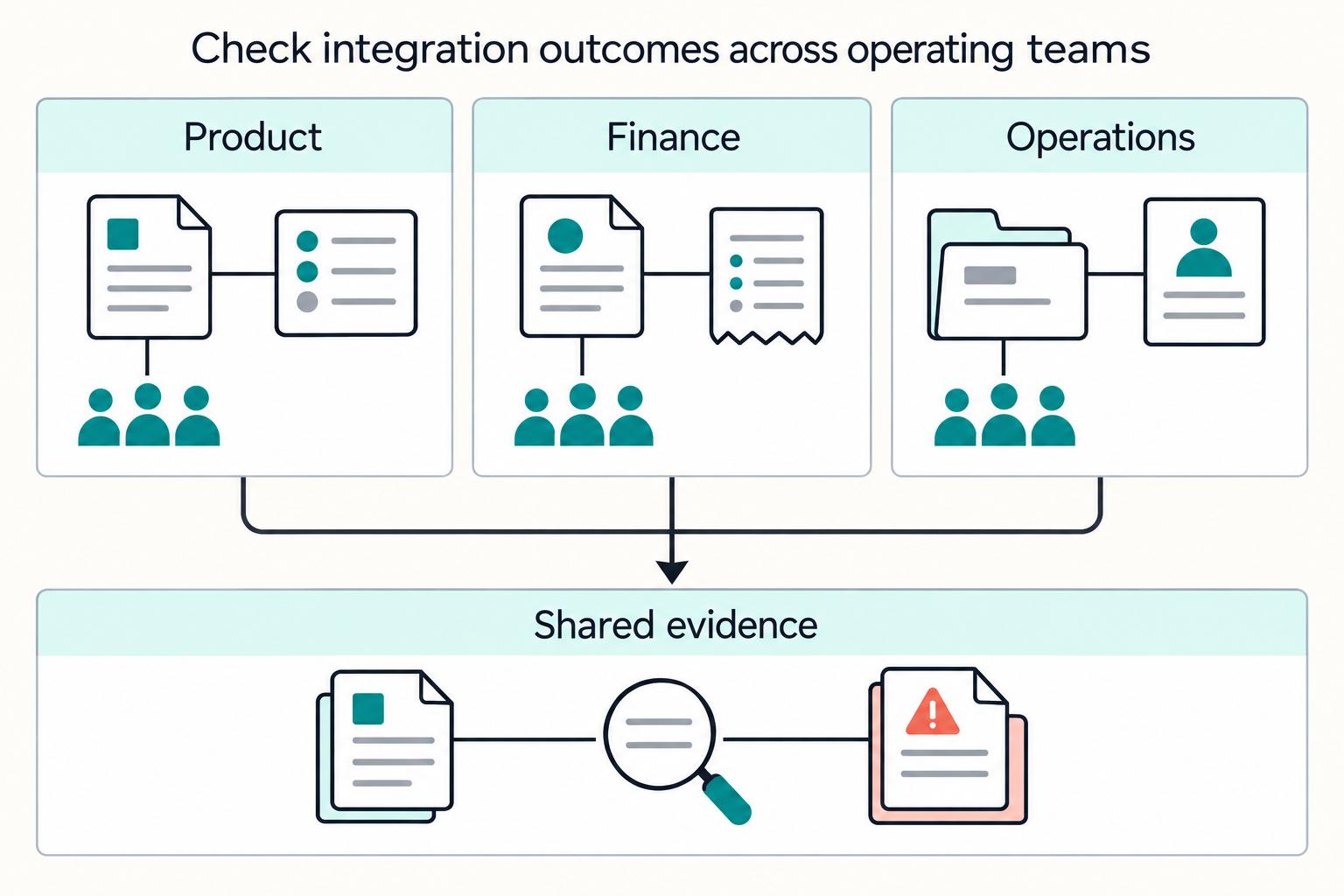
Treat integration depth as defensible when product, finance, and operations can all trust the same outcomes from the same workflows. If those teams see conflicting results, the integration is not creating durable stickiness yet.
3. Red flags and operator checks#
Network effects alone do not guarantee a viable platform. Critical mass and governance still shape outcomes. If harmful behavior creates negative externalities, efficiency drops and stickiness can erode.
Before marketing integration depth as a moat, verify two basics in your own environment:
- Core payment workflows produce consistent outcomes across normal and exception paths.
- Governance controls are clear enough to contain bad behavior before it damages trust on either side of the platform.
Related reading: How Platform Finance Leaders Decide M&A Payment Ops Readiness.
Best cross-border coverage effects for expansion leverage#
Broader cross-border coverage pays off when each corridor is operationally dependable. Choose the next country cluster by corridor readiness, not headline demand, and defer launch when KYC/AML execution is still fragile.
| Focus | Key differentiator | Evidence or rule |
|---|---|---|
| Corridor readiness over raw country count | Measure usable corridors, not map coverage | Use onboarding approval and rejection reasons, payout hold and return reasons, and user-visible delay states |
| FATF-aligned KYC and AML before widening scope | Documented exception handling, not just automated checks | Maintain an audit trail for who reviewed flags, what evidence was used, whether payout permissions changed, and how long cases remained unresolved |
| Add Merchant of Record selectively, not as a shortcut | Selective use beats blanket rollout | Add Merchant of Record only where policy and tax handling are clearly defined |
1. Corridor readiness over raw country count#
Usable coverage tends to compound value when users can onboard, receive funds, and understand delays without one-off support intervention. Cost, speed, access, and transparency remain core constraints even after the G20 elevated cross-border payments as a priority in 2020.
Key differentiator: measure usable corridors, not map coverage. Use a pre-launch evidence pack per corridor: onboarding approval and rejection reasons, payout hold and return reasons, and user-visible delay states. If exception paths are unclear, treat the corridor as not launch-ready.
A CPAI-style maturity check is useful before widening coverage. The goal is not a public score. It is a disciplined readiness review across infrastructure, regulation, and adoption conditions.
2. FATF-aligned KYC and AML before widening scope#
Expansion readiness is easier to defend when KYC/AML operations stay consistent under real volume and edge cases, not just when a screening tool exists. FATF Recommendations are recognized as the global AML/CFT baseline, so they are a practical starting point for cross-border compliance design.
Key differentiator: documented exception handling, not just automated checks. Maintain an audit trail for who reviewed flags, what evidence was used, whether payout permissions changed, and how long cases remained unresolved. AML/CFT technology can introduce unintended consequences and abuse potential, so unexplained holds or inconsistent approvals can add both compliance and support risk.
Do not assume demand alone makes a new corridor value-accretive. Cross-border adoption depends on infrastructure, regulation, and cultural factors, not technology alone.
3. Add Merchant of Record selectively, not as a shortcut#
If you use Merchant of Record, do not treat it as proof that a corridor is ready. Use it as a targeted operating choice after policy ownership, fund-flow handling, and tax-handling responsibilities are clear for that market.
Key differentiator: selective use beats blanket rollout. Evidence from a 2018 to 2024, 43-country BRI sample and 127 stakeholder interviews identified four adoption archetypes, not one universal pattern. Treat that as a signal to sequence by corridor-specific readiness instead of forcing one launch design everywhere.
The practical rule is straightforward: expand where controls and payout execution are repeatable, then add Merchant of Record only where policy and tax handling are clearly defined. Coverage advantage comes from dependable execution, not corridor count.
Sequence expansion with explicit go or no-go checkpoints#
Use explicit checkpoints before you expand a corridor, so launch decisions are based on observed system behavior rather than optimism. A practical approach is to define checkpoints for control handling, rail behavior, and reconciliation before scaling.
| Checkpoint | Validate | Go/no-go basis |
|---|---|---|
| Validate control handling | Approval, rejection, and manual-review outcomes are consistent and explainable | Outcomes map cleanly to permissions, escalation paths, and retained evidence |
| Validate rail behavior before scaling volume | Submission, acknowledgement, status transitions, returns, and final posting | Track held funds, returned funds, delayed credits, duplicate events, and missing status updates before volume grows |
| Validate reconciliation outputs, not just money movement | Operations, support, and finance do not see conflicting states for the same payout | Run a reconciliation sample from initiation through final outcome, with exceptions documented and resolved |
| Set explicit go/no-go calls in advance | Define go and no-go conditions before launch, then apply them consistently | Go reflects stable execution with explainable exceptions; no-go reflects unresolved exceptions defined as launch blockers |
That approach is an operating framework, not a universal law. The point of checkpointing is simple: capture state at defined moments so failures can be identified and handled before they spread.
- Validate control handling
Confirm your approval, rejection, and manual-review outcomes are consistent and explainable. The test is whether outcomes map cleanly to permissions, escalation paths, and retained evidence.
- Validate rail behavior before scaling volume
Test the payout path end to end: submission, acknowledgement, status transitions, returns, and final posting. Track failure modes explicitly, for example held funds, returned funds, delayed credits, duplicate events, and missing status updates, so issues are visible before they compound at higher volume.
Related payment-channel research shows success can degrade when liquidity becomes one-directional, with an empirical upper bound around 33% in that paper's context. That figure is not a contractor-payout benchmark, but it is a useful warning that asymmetric rail behavior can worsen as throughput grows.
- Validate reconciliation outputs, not just money movement
A corridor is not ready if operations, support, and finance see conflicting states for the same payout. Use defined snapshots at recovery points and run a reconciliation sample that traces payouts from initiation through final outcome, with exceptions documented and resolved.
- Set explicit go/no-go calls in advance
Define your go and no-go conditions before launch, then apply them consistently. A go decision should reflect stable execution with explainable exceptions. A no-go decision should reflect unresolved exceptions that your team has defined as launch blockers.
Treat your pre-launch packet as a working control set, not ceremony. It can include items such as a policy matrix, payout failure taxonomy, webhook replay test log, and reconciliation sample.
What to do after checkpoint baselines#
If adjacent monetization options like dynamic discounting or invoice factoring are relevant, evaluate them against the same operational checkpoint discipline. They should not be used to mask unresolved core payment issues.
Related: What Is Invoice Factoring? How Platforms Can Offer Early Payment to Contractors in Cash Flow Crunch.
Before expanding to a new corridor, map each go/no-go checkpoint to concrete payout states, exception ownership, and replay-safe operations in Gruv Payouts.
Turn contractor growth into durable platform value#
The durable path is to sequence growth. Validate participation and interaction quality first, make governance legible and consistent second, and use expansion breadth as a multiplier only after those two foundations are in place.
- Validated participation first
Network effects create value as participation grows. Two-sided markets can produce virtuous cycles between supply and demand, but those cycles are more durable when interactions remain consistently useful on both sides.
Treat this as an operating gate, not a narrative milestone. If you cannot clearly explain whether participation quality is improving, expansion is likely premature.
- Governance trust next
Governance changes outcomes when it is visible and consistently applied. Platform interventions that reduce bad-actor visibility can shift market behavior, but punishment alone may have limited market-wide effect.
The quality check is consistency: can participants understand the rules, and are similar cases handled the same way? If enforcement feels uneven, trust can erode even when demand is strong.
- Expansion breadth last
Broader market coverage can increase platform value, but it is unlikely to repair weak participation dynamics or unclear governance by itself. Expanding too early can spread unresolved issues and make cause and effect harder to see.
Use explicit go or no-go checkpoints for each launch decision. A grounded sequencing principle is to establish non-discrimination controls first, then phase in interoperability after an amortization period.
For the finance side of that shift, How Payment Platforms Turn Automation Into Better Finance Decisions connects operational scale to better decision-making.
When your expansion plan depends on country-specific compliance and operating scope, confirm fit early with Gruv Merchant of Record.
Frequently Asked Questions
How do network effects increase value in contractor payment platforms?
Network effects increase value when each additional participant makes the platform more useful to the next participant. In two-sided platforms, including contractor payment platforms, this can appear as a cross-side effect: more payers can attract more contractors, and more contractors can increase value for payers. A practical check is liquidity, meaning participants can find relevant matches and complete transactions quickly.
Are direct, indirect, and two-sided effects equally strong?
Not necessarily. In many platform models, cross-side effects are central because distinct user groups create value for each other. Taxonomies also vary by framework, with one describing 5 types and another describing 16 and counting, so context matters more than labels.
Is user growth alone enough to create platform defensibility?
No. Growth can still be fragile if retention depends on constant incentives or if traffic requires ongoing advertising spend. Defensibility is stronger when growth is paired with consistent liquidity, where participants can reliably find relevant matches and complete transactions quickly.
What does critical mass mean in this category?
Critical mass is not a universal user threshold. It is the stage where interaction density and trust start improving acquisition and retention outcomes. In practice, you should still see participants finding relevant matches and completing transactions quickly.
Why do payment network effects fail even when demand exists?
Demand alone is not enough if the platform does not consistently produce successful matches and completed transactions. Network effects weaken when liquidity is poor and participation depends on constant incentives or paid acquisition to sustain activity. In that state, value does not compound reliably for either side.
How should operators use broad claims like the NFX 70% value framing?
Use broad percentages as directional context, not as proof for your specific market. A commonly cited figure is 73% since 1994, but it is still a high-level framing. Validate your decisions with operating evidence from your own market, especially liquidity signals.
Try a related tool
Researched and edited by the Gruv editorial team. Gruv builds cross-border billing, payouts, and finance-operations software for global businesses.
Sources
- archive.nyu.edu/jspui/bitstream/2451/28523/2/Corts-Lederman_...trusted
- congress.gov/crs-product/R47475trusted
- federalreserve.gov/mediacenter/files/financial-inclusion-panel-...trusted
- gai.gmu.edu/wp-content/uploads/sites/27/2021/05/Session-...trusted
- gsm.ucdavis.edu/news/did-you-experience-platform-economy-todaytrusted
- hbs.edu/ris/Publication%20Files/21-086_a5189999-6335...trusted
- irs.gov/individuals/international-taxpayers/figuring...trusted
- irs.gov/individuals/international-taxpayers/foreign-...trusted
Educational content only. Not legal, tax, or financial advice.
Related Posts

The Freelance Payment Penalty: A Modeled Audit of Platform Fees, FX Spreads, and Payout Delays
The money rarely disappears through a single, easy-to-spot fee. The real loss is stacked. A marketplace takes its commission, a processor adds a charge for international cards, a bank or payment company converts the currency at a spread, a platform holds the funds before release, and a wire sheds a little to intermediaries on the way in. Each layer looks defensible on its own, but the worker feels the combined result as a smaller deposit and a later payday.

How to Respond to a Subpoena for Business Records
Move fast, but do not produce records on instinct. If you need to **respond to a subpoena for business records**, your immediate job is to control deadlines, preserve records, and make any later production defensible.
A US Expat's Guide to Investing in UCITS ETFs to Avoid PFIC Issues
The real problem is a two-system conflict. U.S. tax treatment can punish the wrong fund choice, while local product-access constraints can block the funds you want to buy in the first place. For **us expat ucits etfs**, the practical question is not "Which product is best?" It is "What can I access, report, and keep doing every year without guessing?" Use this four-part filter before any trade: