
Quick Answer
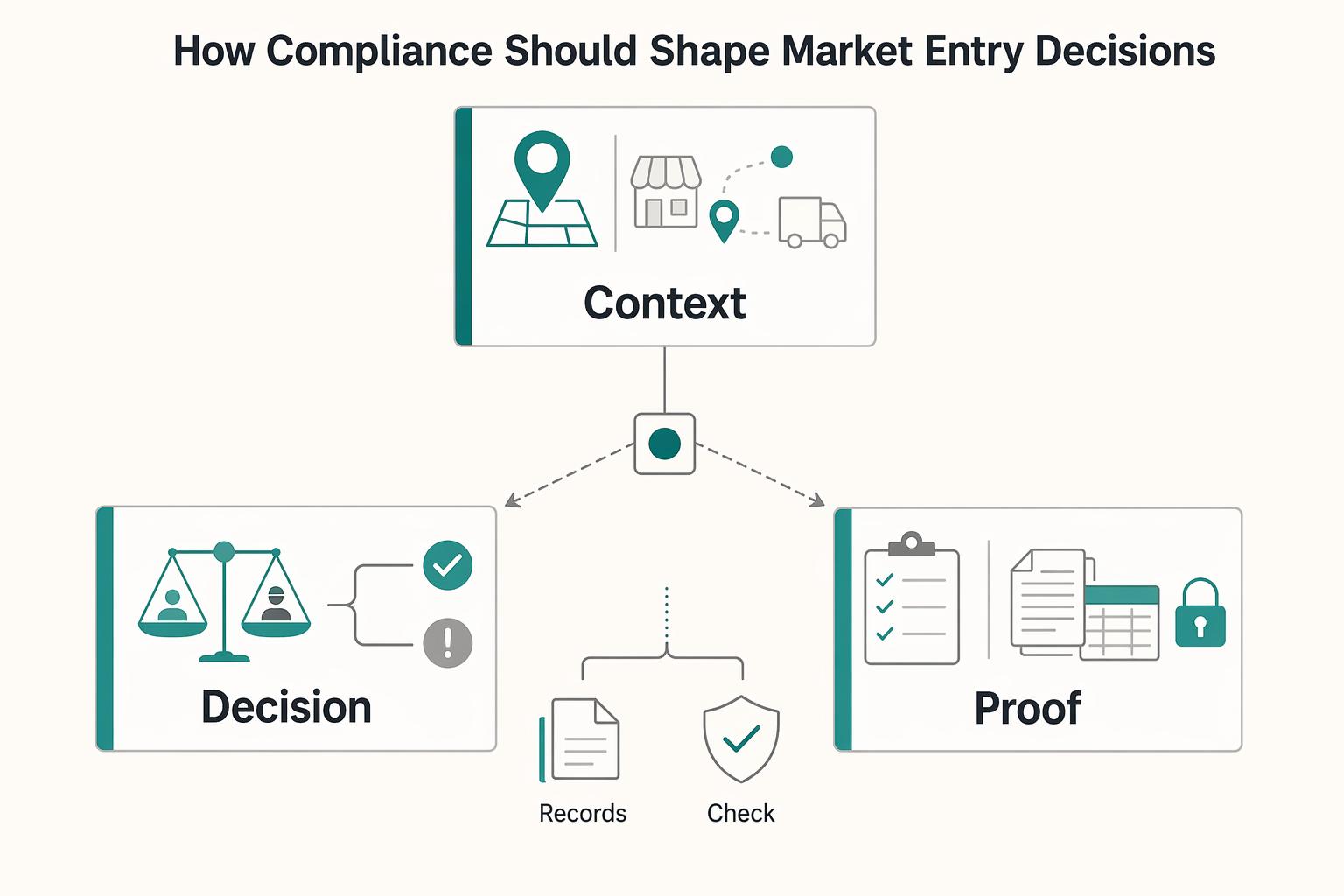
Start by locking worker status before launch decisions. For delivery contractor compliance, test your operating facts against the applicable legal standard and record why the model fits; California AB 5’s ABC framework shows how control and “usual course of business” can shift treatment to employee status. Then require a country evidence file, route-level transport confirmation, and payout release checks so activation happens only when records are complete and reviewable.
How compliance should shape market entry decisions#
If you cannot document why a courier is classified as an independent contractor rather than an employee, your launch plan may not be ready. In last-mile operations, classification shapes what you can defend later, not just what you can ship now.
This article helps founders and operators separate what you can confirm now from what still needs market-by-market verification before onboarding begins. The goal is practical: choose worker status early, define the evidence needed to support that position, and keep payout operations auditable as volume grows.
Worker status is an early hard decision. It shapes your agreements, the facts you retain, the questions that need local counsel review, and the operating assumptions you may have to change.
A grounded U.S. baseline exists. The Department of Labor Wage and Hour Division published Employee or Independent Contractor Classification Under the Fair Labor Standards Act on 01/10/2024 (89 FR 1638). Even if you are comparing multiple countries, it is a useful reminder to start with primary legal material, not copied onboarding language or market folklore.
That verification step matters. FederalRegister.gov is useful for discovery, but its XML presentation is an unofficial informational resource and does not provide legal or judicial notice. The site also directs legal researchers to verify against an official Federal Register edition. In practice, keep the rule title, citation, publication date, and the "View printed version (PDF)" artifact that links to the official PDF on govinfo.gov.
That discipline helps you avoid weak decisions built on summaries, screenshots, or inaccessible commentary. In this workflow, two candidate academic PDFs were blocked. That is exactly why launch-critical positions should rely on accessible, retainable primary records.
From there, the sequence is clear: decide classification, build the pre-onboarding evidence pack, then resolve the remaining transport and payout questions where clean records matter most. If a market still depends on inference, missing documents, or unverified assumptions, treat it as unfinished work.
Delivery contractor compliance starts with classification and control#
Start with worker classification because downstream compliance decisions depend on it. The first fork is independent contractor versus employee, and that choice changes reporting and filing requirements.
California shows the mechanism clearly. Under AB 5, signed in September 2019 and effective January 1, 2020, the ABC test applies in specified contexts. The default is employee status unless the hiring entity satisfies all three conditions. For an independent-contractor position, your operating facts must satisfy each required condition, including:
- the worker is free from the hiring entity's control and direction, and
- the work is outside the hiring entity's usual course of business.
If all required conditions are not met, the worker is treated as an employee. That is why you should document classification against the applicable legal test before onboarding.
For a step-by-step walkthrough, see Last-Mile Delivery Platform Payments: How to Pay Couriers Per-Drop with Surge Adjustments.
Compare contractor and employee models before choosing a market#
If a market only works with tight dispatch control, test the employee model before you launch. The real question is not which model looks cheaper on paper. It is whether the market still works under the status model that matches how you will actually run operations.
| Decision area | Contractor classification | Employee classification |
|---|---|---|
| Control model | Viable only when day-to-day facts show real independence, not just contract language. High platform control over work conditions is a risk signal. | Often a better fit when you need close control over schedules, methods, training, or performance. |
| Cost structure | May look lighter at first, but still requires status analysis, contract design, verification, and contingency for disputes or reclassification. | Can bring more labor administration and statutory handling into scope from the start. |
| Speed to launch | Timeline depends on whether the role is genuinely independent and whether documentation is complete. Speed based only on labels is fragile. | Timeline depends on local employment setup and documentation requirements. |
| Legal exposure | Higher where delivery work is central to your core service or where the platform shapes how work is performed. In the source comparison, a delivery-worker contractor is presented as riskier than a marketing-services contractor for the same company. | Can reduce misclassification exposure, while employment-law obligations are handled directly by the company. |
| Documentation burden | Requires pre-engagement risk analysis, a clear contractor agreement, and evidence that operations match the intended status. Contracting through a company can help, but courts still review the substance of the relationship. | Requires employment terms and records that match actual control. Heavier up front, but less dependent on proving ongoing independence. |
| Statutory contributions and insurance | Model these explicitly and verify locally. Do not assume contractor status removes statutory contribution or insurance obligations from scope. | Keep these as explicit fields in your market model rather than burying them in overhead. |
| Operational resilience | Allocate key operational risks explicitly in the contractor agreement, then check against local law. | Can be handled through employment and operating arrangements, which may reduce ambiguity. |
Early market models often miss this because they compare only headline payout cost. Give statutory contributions and insurance their own rows early, even before final numbers, so one model does not look cheaper simply because key burdens were hidden.
Use a practical rule. If your dispatch design depends on tight assignment or other day-to-day control tied to core operations, treat the contractor path as a risk case and run a second classification pass before launch. Control alone does not decide status everywhere, but it is a strong signal to re-check.
That matters in last-mile delivery because the worker may be performing the core service you sell. The comparison is direct: delivery-worker contractor arrangements are presented as more exposed to misclassification challenge than marketing-services contractors in the same business context.
Your minimum checkpoint should be a short pre-engagement risk analysis for each target market, not just a template agreement. Keep the market memo, contract form, and operating assumptions together, and reopen classification if any of those change.
If you use a contractor-company structure, do not treat it as automatic protection. It may reduce risk, but courts still examine substantive terms, and some countries make that structure more complicated.
For U.S. federal materials, keep document hygiene tight. FederalRegister.gov is informational, so verify it against an official edition and keep the linked official PDF on govinfo.gov. That check will not resolve status by itself, but it helps you avoid decisions based on stale or misread references.
Choose the market model that survives your real control pattern, explicit statutory modeling, and documented risk allocation. If it does not hold up, change the model before you scale the country.
Related: GDPR for Marketplace Platforms: How to Handle Contractor and Seller Personal Data Compliantly.
Build the country evidence pack before signing contractors#
Do not sign contractors in a new market until your country evidence pack is complete enough to survive review. That pack should show your classification position, required operating documents, payout constraints, and every unresolved issue, with an owner and review date.
Keep the pack in one market-level record, not scattered across threads. If your memo depends on contractor independence but your operating design adds tighter control, log that conflict before launch.
| Evidence item | What it should answer | Minimum checkpoint |
|---|---|---|
| Classification memo | Why contractor status is used in this market and which facts support it | Check that memo assumptions still match dispatch, training, and supervision design |
| Insurance requirements | What proof is required from each contractor and what remains unclear | Store exact document names and expiry fields you will collect |
| Licensing and vehicle obligations | Which vehicle, operator, or cargo obligations are confirmed vs unconfirmed | Separate confirmed rules from unresolved triggers |
| Payment constraints | Which conditions affect contractor payouts in this market | Record approver, source checked, and next review date |
Track the known unknowns, not just confirmed rules#
Treat potential Commercial Vehicle Operator's Registration (CVOR), DOT, and Transportation of Dangerous Goods (TDG) certification requirements as explicit unknowns until you confirm them. Do not leave them implied.
For each unresolved transport issue, require three fields: current assumption, source checked, and escalation owner. If ownership is unclear, the market is not ready.
Add proof points for supply-chain and procurement exposure#
Add one verification checkpoint for non-transport compliance exposure in this market. Even if the outcome is "not applicable," document it. The requirement here is scope review, documented ownership, and escalation where needed.
If the market may touch U.S. public-sector or infrastructure-linked work, add a procurement checkpoint. USDA states BABA derives from Public Law No. 117-58, §§ 70901-52 and can apply to iron or steel products, construction materials, and manufactured products. EPA's January 2025 FAQ says recipients are encouraged to work with their EPA project officer. It also notes the FAQ can be superseded by later authority, so date-stamp external rule summaries in your pack.
For contract handling, keep FAR Subpart 47.3 in view. Its terms apply to fixed-price contracts, and special handling may be needed for other contract types. At minimum, each market pack should show the last review date, source links, and the launch approver for any open items.
If tax documentation is part of your launch checklist, see Contractor Tax Document Portal for Self-Service 1099 and W-8 Delivery.
Set minimum onboarding gates before first live route#
Onboarding should be a strict, auditable pass-fail sequence before any contractor gets a live route. Only activate after each prior stage is completed, recorded, and reviewable.
Turn onboarding into visible gates#
Use a fixed sequence with clear pass-fail outcomes:
| Gate | Requirement | Key detail |
|---|---|---|
| Application | Capture the core details you will use later | Whether the applicant can provide required market documents |
| Contractor verification | Verify identity and required credentials | The activated person matches the file |
| Document upload | Collect the exact documents listed in the country evidence pack | For insurance evidence, keep document name, issuer, expiry date, and review status |
| Contract signature | Sign after verification and document review | Not before those steps are complete |
| Training completion | Record training completion | Current acknowledgments tied to safety and operating rules |
| Controlled first-week dispatch | Treat week one as controlled activation | Limit assignment volume, review exceptions, and confirm operations still match your classification assumptions |
Run the sequence in order. Do not move contract signature ahead of verification and document review, and do not treat first-week dispatch like ordinary volume.
This first-week gate helps stop small onboarding gaps from scaling. Slow or inconsistent check-ins can create operational delays and compliance gaps.
Use one contract core with market annexes#
If you operate across markets, use an independent contractor agreement core, then add market-specific annexes aligned to local requirements and required documents.
Contract language and live operations need to match. If the agreement is built on contractor independence but daily operations add employee-like control signals, pause and review before go-live.
Define blockers before pilot demand arrives#
Define failure handling up front. Incomplete documents, expired insurance evidence, or training non-completion should block activation under your operating policy until resolved.
Keep auditable evidence for each gate: who reviewed, when approved, what was missing, and when credentials were current. If onboarding quality is weak in pilot, pause expansion and fix it before adding cities. Review failures by stage, remove manual handoffs, and run recurring six-month classification audits to keep dispatch practice aligned with contract and onboarding records.
Verify transport and safety obligations by route type#
Do not launch a route until you have confirmed transport obligations for that route type. If you are not sure which transport requirements apply, treat that uncertainty as a launch blocker before pricing or setting a go-live date.
The onboarding gates from the last section only work if the route itself has been classified correctly. Keep separate compliance review records for parcel-only, mixed cargo, and potentially regulated-goods routes so that classification stays auditable.
Build route archetypes before commercial commitments#
Create three archetypes in your evidence pack: parcel-only, mixed cargo, and regulated goods. For each archetype, record:
- Cargo description
- Vehicle assumptions
- Pickup and drop pattern
- Domestic or cross-border scope
- Reviewer and signoff record
Keep the document trail behind each decision, including shipment document handling, Bill of Lading preparation where relevant, and the delivery certification procedure used to confirm receipt and handoff. If operations cannot show what moved and how delivery was certified, legal review is incomplete.
Re-check DOT status close to launch#
For U.S.-linked operations, re-check DOT status against 49 CFR Part 390 close to launch, not only at planning kickoff. The cited Part 390 page showed Title 49 up to date as of 4/02/2026, last amended 3/23/2026, and flagged changes in the last two weeks. It also states the eCFR text is authoritative but unofficial, so final signoff should confirm you are using current rule text rather than internal summaries. If any route-level transport status is still "to be confirmed," do not launch that lane.
Design payout operations that do not break compliance#
Once route obligations are fixed, payout operations can become the next failure point. A safer design releases funds only when the payment record is complete, traceable, and resistant to duplicate retries.
When that discipline is weak, recurring issues can include missing tax documents, unclear fee or FX outcomes, and disputes about what was approved versus what was delivered. Delayed transfers also carry an operating cost because they can damage trust and slow work.
Start with a market controls table, not a generic payout setting#
Build a payout controls table for each market before your first live batch. Keep it next to your classification record so payout rules stay aligned with your worker-model decision. At minimum, include:
- Worker model for that market
- Governing contract artifact
- Identity-check requirement and status source
- Tax-document requirement and storage location
- Payout timing rule, including cutoff and release owner
- Fee/FX review rule for cross-border flows
- Exception types and queue location
- Reconciliation artifacts required before close
- Escalation owner for holds, reversals, and disputes
Use this table as a pre-batch checkpoint. The worker record, contract record, and tax-document status should resolve to the same payee identity. Tools that only move funds, without tax-document handling, can leave companies exposed to tax-reporting issues.
Gate release at payout time, not only at onboarding#
Do not rely on onboarding checks alone. Release controls should run again at disbursement. In Gruv, where supported, policy-gated Payouts can enforce current-state checks before funds are sent.
Typical payout-time checks include identity status, required agreement and tax records, earnings approval, and unresolved policy exceptions. If your payout flow supports idempotency keys, use them on every request so retries behave like replays instead of creating a second disbursement. This is an operational reliability control, not a legal claim.
Status visibility should stay explicit through the full lifecycle, for example approved, submitted, pending, paid, failed, reversed, held. Gruv's webhook-driven status tracking, where enabled, helps ops, support, and finance work from the same state trail.
Use audit-ready records to settle disputes and close periods#
Your payout trail should answer a basic question quickly: why this payee, this amount, this date. Keep records that connect earnings approval, payout request, provider response, and final outcome.
For disputed payments, the evidence set should include the approved earnings summary, batch or request identifiers, status history, and settlement or deposit match details. Fee and FX transparency is also practical control work: keep expected amount and delivered amount as separate fields so variances can be explained without guesswork.
Where your program includes formal reporting responsibilities, keep payout records aligned with those obligations and with the governing award or regulatory terms.
Define hold and release rules before exceptions become ad hoc#
Set hold and release rules in advance. Common triggers are unresolved identity checks, unmatched deposits, or open policy-breach flags. Apply holds at payee level when issues are isolated, and at batch level when source data quality is in question.
Keep releases controlled: named owner, reason code, and timestamped note. If payee identity or classification data conflicts across systems, resolve the record first, then release funds.
The tradeoff is straightforward. Stricter controls can add payout friction, while looser controls increase duplicate risk and weaken reconciliation. A practical default is to start tighter before launch, then relax only where noise is high and control value is low.
Before launch, pressure-test your payout control matrix against real failure paths and approval gates in Gruv Payouts.
Decide when enterprise procurement is worth pursuing#
Enterprise procurement is worth pursuing when your team can handle strict submission mechanics and deadline risk without last-minute rework. If you still need fast revenue validation, keep formal Request for Proposal (RFP) lanes behind faster commercial channels.
The constraint is execution, not just pricing. In one transportation RFP excerpt, proposals were due on October 20, 2022 at 12:00 p.m. Central Time and opened at 1:00 p.m. the same day, and contractors assumed the risk for timely, properly submitted deliveries. The same solicitation also used a sole procurement point of contact and stated intent to award a single vendor per region, which raises the cost of process errors early in the bid.
Before you commit bid resources, use this readiness check:
- Can you meet fixed submission windows without same-day document fixes?
- Can you run all bidder communication through the designated procurement contact?
- Can you pass required pre-submission checks, including accessibility remediation loops, without delaying posting?
- Can your runway absorb delays if documents are returned for correction?
If the answer is mostly no, prioritize faster commercial channels first and revisit enterprise procurement once submission discipline is reliable.
Red flags that should pause market launch#
Pause launch when core compliance assumptions are still unproven in records. These red flags usually point to broader gaps in quality, risk, and communication, not isolated admin misses.
You cannot explain worker status in writing#
If your team cannot explain its operating model and the facts behind it in writing, launch is not decision-ready. Treat classification specifics as unresolved until you verify them separately with the relevant authority.
Insurance and transport duties are still guesses#
If insurance or transport obligations are still being inferred, treat that as a blocker. If commercial pressure for speed is driving decisions while these obligations remain unclear, that is an added risk pattern. Keep route-specific CVOR, TDG, licensing, and policy-limit requirements marked unknown until confirmed.
Active profiles cannot prove pre-qualification and verification#
If onboarding records cannot show what checks were completed for active profiles, your controls are not reliable yet. Missing compliance documents and small process inconsistencies are early warning signs that can expand under volume.
Payment ops cannot trace one payout end to end#
If one payment cannot be traced through your own approval, status, and ledger records, pause before rollout and fix the evidence chain first. Treat legal requirements for that payout trail as unknown and verify them separately with the relevant authority. Use independent review where possible so observations become concrete evidence for launch decisions.
If any one of these checks fails a spot review, freeze new market launch work until the missing proof exists in records.
30-day launch sequence for founders and ops leads#
Treat this 30-day launch as four weekly evidence gates, not a countdown. If a gate fails, pause and fix the record before moving forward.
Week 1. Write your classification position as a short memo#
Write your classification position as a short memo: your current judgment, the operating facts it depends on, open questions, and re-review ownership when facts change.
Check source quality before you lock that memo. If you use the Wage and Hour Division rule page published on 01/10/2024 (89 FR 1638), treat FederalRegister.gov text as informational. Verify it against the official edition and linked govinfo PDF.
End week 1 with one market checklist that names required documents, unresolved legal questions, and owner plus due date for each open item.
Week 2. Turn the checklist into onboarding gates#
Turn the checklist into onboarding gates. Finalize one executable independent contractor agreement for the market and confirm the packet is complete, including clear scope, payment, and general provisions.
Test rejection paths with real failure cases. If a license or certification record is expired, treat onboarding as incomplete until a valid replacement is on file. Records should capture both identifier and expiry.
Week 3. Run a transition checkpoint before launch#
Run a transition checkpoint before launch. Confirm the current contract end date is documented, assign handoff ownership, and define overlap timing so the transition stays smooth.
Use explicit dates in your records instead of verbal timing assumptions, especially when an overlap window is part of the plan.
Week 4. Run a hard go or no-go review#
Run a hard go or no-go review with explicit pass criteria across legal and operational controls. Do not use soft approvals.
Also confirm commercial timing is documented before activation. Where relevant, make initial term and contract amount visible in launch records, and document any overlap plan for handoff continuity. Public examples show overlap planning for approximately five (5) months.
The documents that keep the plan from drifting#
Once approved, tie this launch sequence to living operating documents:
- a compliance calendar with review dates, expiries, and legal re-check points
- an agreement artifact tracker covering scope, payment, general provisions, and license/certification fields
- data-handling standards for contractor records, signatures, and retention
If you do not already have the calendar in place, connect this launch plan to your contractor payment compliance calendar. If a weekly task does not leave a usable record, treat it as unfinished.
For a deeper look at reducing contractor payment friction without weakening controls, read Invisible Payouts: How to Remove Payment Friction for Contractors Without Sacrificing Compliance.
Choose markets by proof before growth#
Launch only in markets where your compliance position is provable from records. If key requirements are still unclear, that market is not launch-ready.
The sequence should stay strict: define the services or supplies, verify that each order fits scope, period of performance, and contract value limits, then scale only when records can stand on their own in review. Readiness is a documented file, not a target date.
Use a hard gate, not a hopeful one#
A useful benchmark is the control logic in FAR 16.505. Orders must stay within scope, period of performance, and maximum contract value. Each order must also clearly describe services or supplies so cost or price can be established at placement.
Apply that same gate before launch. If your service definition is still fuzzy, key obligations are unresolved, or records are not auditable from the file alone, you do not have a defensible basis to commit product or GTM resources.
What a defensible evidence pack actually looks like#
A defensible pack is compact but complete. At minimum, include:
- The contract terms and order documentation you plan to use
- A check that each planned order is within scope, period, and value limits
- A tracked log of open compliance questions and their resolutions
- Records showing what was removed or corrected when non-compliance was found
A practical checkpoint is a blind file test: have a second operator validate order rationale, required documents, and any corrective or removal actions from records alone. If they need side conversations to reconstruct the answer, controls are not ready for scale.
Treat unresolved issues like live risk#
Formal compliance systems remove non-compliant items from live use. They do not leave them active while issues stay open. GSA's process reflects that posture, including removal actions (SF-30) and possible corrective action for repeated non-compliance.
Use the same operating principle in market selection. If key requirements are unresolved, keep the market in research status. Move to launch only when you can produce a clean evidence pack and auditable compliance records on demand.
Frequently Asked Questions
What is delivery contractor compliance in practical terms?
In practice, it means your contract decisions and payouts are provable from records, not memory. Your file should clearly show contract and renewal documentation, supplier performance and eligibility/background-screening records, and transport/payment artifacts that can be audited. If your team cannot explain a live contract’s execution authority, supplier eligibility, and payout trail from the record alone, your controls are not ready.
What changes most between contractor and employee models?
The points here do not establish contractor-vs-employee legal classification tests. What they do show is that when your operating approach changes, your control model and records should be re-checked, including supplier performance evidence and eligibility/background-screening documentation. Treat this as a recurring governance checkpoint, not a one-time setup decision.
What are the minimum onboarding steps before activation?
This guide does not establish one universal legal onboarding sequence across markets. A practical minimum is to activate only after required documents are verified and complete in your system. The audit risk pattern is clear: missing or incomplete supplier eligibility or background documentation creates weak defensibility later.
How do I know which transport rules apply to my routes?
The points here do not define route-type trigger thresholds by regime. A practical approach is to document your route and cargo assumptions, then tie that analysis to retained transport and payment-audit records. The documented control pattern is to keep operational artifacts together, including bill-of-lading preparation, delivery certification, and pre and post-payment audit steps.
How are transportation contracts typically awarded in Canada?
The points here do not establish a Canada-wide typical award channel. What they do support is a formal control principle: contract execution authority matters, and renewal/compliance records should be complete and auditable. Before mobilizing service, confirm who is authorized to bind the contract and that final contract documentation is on file.
What should I confirm before choosing a new country?
Confirm early that you can document contract authority, supplier eligibility, transport obligations, and payout auditability in that market before committing launch dates. The same evidence standard applies: records should be complete enough to withstand review without relying on informal notes. If key requirements are still unclear, treat the market as not launch-ready yet.
Try a related tool
Researched and edited by the Gruv editorial team. Gruv builds cross-border billing, payouts, and finance-operations software for global businesses.
Sources
- acquisition.gov/far/subpart-47.3trusted
- ecfr.gov/current/title-49/subtitle-B/chapter-III/subc...trusted
- fac.gov/assets/compliance/2024-Compliance-Supplement...trusted
- federalregister.gov/documents/2024/01/10/2024-00067/employee-or-...trusted
- fmcsa.dot.gov/sites/fmcsa.dot.gov/files/2021-06/Consolidat...trusted
- ftb.ca.gov/file/business/industries/worker-classificati...trusted
- humanservices.arkansas.gov/wp-content/uploads/RFP-710-22-0009-Day-Treat...trusted
- uspsoig.gov/reports/audit-reports/contract-delivery-serv...trusted
Educational content only. Not legal, tax, or financial advice.
Related Posts
Build a Global Contractor Payment Compliance Calendar for Monthly, Quarterly, and Annual Obligations
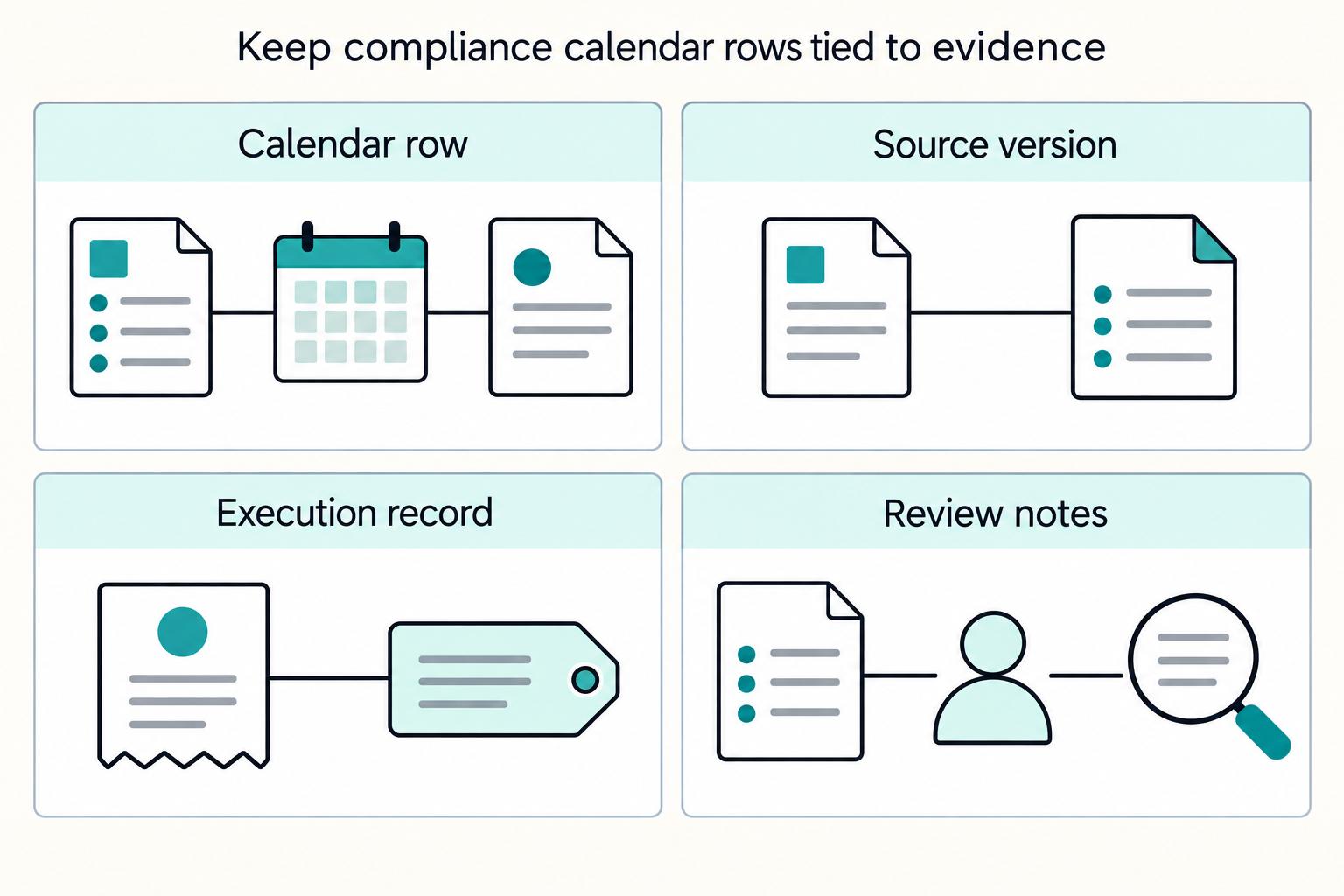
A usable first version of your **global contractor payment compliance calendar monthly quarterly annual** should work as a control document, not just a list of dates. Keep monthly, quarterly, and annual obligations in one place, assign clear owners and reviewers, and define when unclear rules or missing evidence must be escalated. If you are building version 1, we recommend starting with the obligations your team can evidence today and marking the rest for legal review.
Invisible Payouts: How to Remove Payment Friction for Contractors Without Sacrificing Compliance
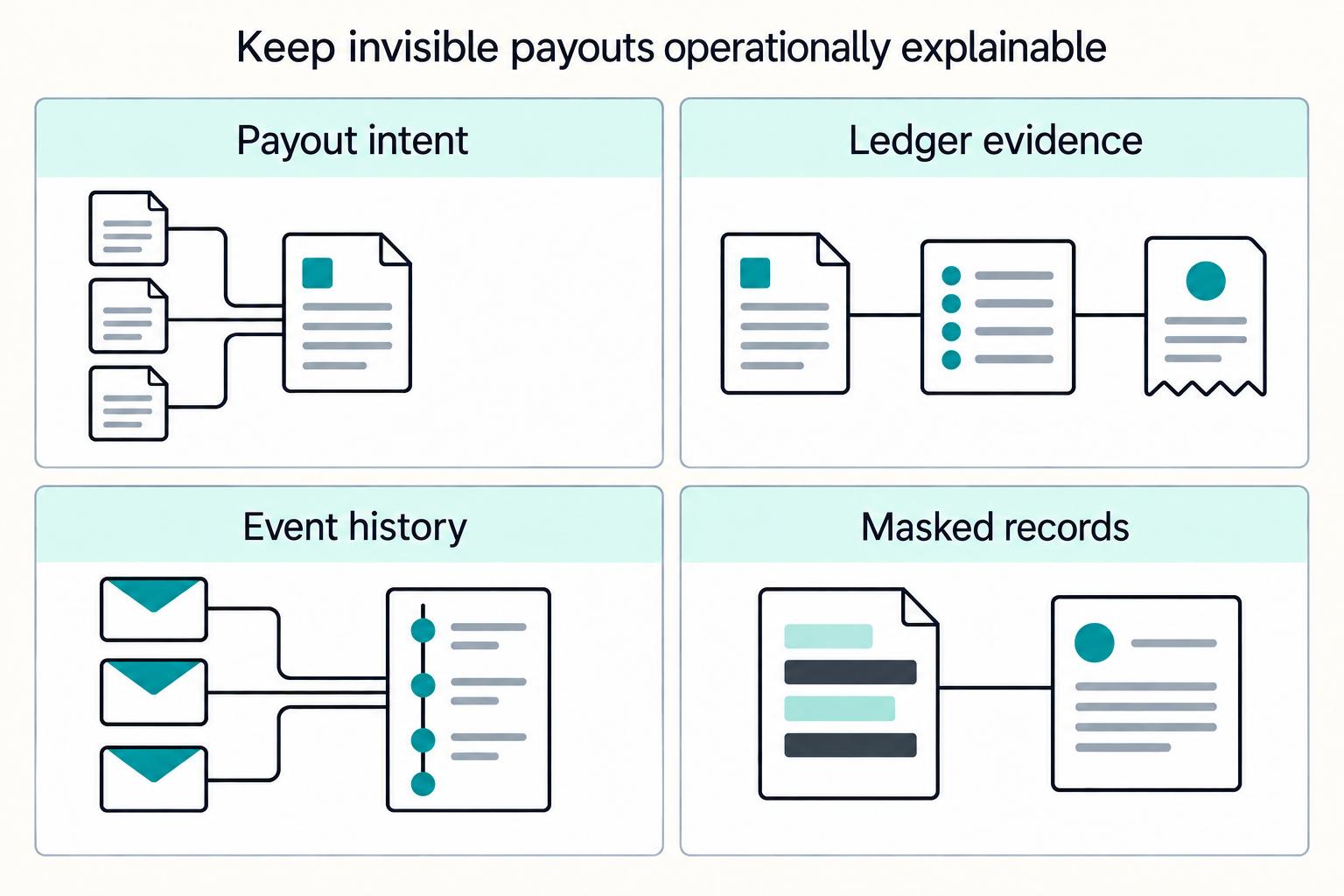
Invisible payouts should make life easier for contractors without hiding the controls your team needs. Contractors should get a predictable, low-friction flow, while internal teams can still enforce and document payout decisions when needed. If you run contractor payouts at scale, you need both outcomes at once. We recommend treating every easy payout as a controlled release path your team can replay later.

GDPR for Marketplace Platforms: How to Handle Contractor and Seller Personal Data Compliantly
Treat this as an operating decision, not a policy exercise. If you own compliance, legal, finance, or risk for a platform, your job is to decide who owns each GDPR duty. You also need to define what evidence must exist, what your team reviews on a recurring basis, and which issues need escalation before a launch or vendor change goes live.