
Quick Answer
Start by separating collected cash, available cash, and obligated cash, then make payout decisions only from amounts you can tie to posted balances and verified in-flight items. For cash flow forecasting marketplace operators modeling inflows outflows scale, build a near-term direct view for committed obligations, maintain a 13-week liquidity view for reserve and funding posture, and downgrade forecast availability immediately when settlement timing slips or reconciliation evidence is incomplete.
Why cash flow forecasting gets harder as marketplaces scale#
Cash flow forecasting only matters if it changes an operating decision. For marketplace operators, it is not a side spreadsheet or a finance ritual. It is a liquidity check that tells you what cash is likely to be usable, when it will be usable, and what is already spoken for.
At the simplest level, forecasting means estimating money moving into and out of the business over a defined period so you can meet obligations as they come due. The trap is treating reported performance as spendable cash. A marketplace can show healthy revenue or margin while usable cash is tight because cash may already be committed to near-term obligations or affected by timing differences between recorded inflows and cash that is actually available. When that distinction gets blurry, decisions get expensive fast.
Use one checkpoint from the start: forecasted available cash = expected inflows minus expected outflows and near-term obligations. Turn that into a quick operator test before you approve payouts, advances, or any non-urgent cash commitment. Can you explain the number from current cash position, expected receipts, and obligations due soon, using evidence your team can verify? If not, treat the forecast as uncertain and pause the commitment.
The common failure is not just a bad formula. It is a tidy model built on stale assumptions, incomplete obligation tracking, or inflows counted before they are actually available. If volume is your first forecasting input, Payment Volume Forecasting for Platforms: How to Predict Cash Flow is a useful companion. If your main pressure point is payout timing and obligated cash, the more direct follow-on is Cash Flow Forecasting for Payment Platforms: How to Model Payout Obligations.
From here, the article follows the order most operators need: cash states, horizon design, ledger mapping, timing gaps, and decision rules.
Build the cash state model before you forecast#
Define what each cash number means before you forecast. The goal is liquidity when obligations come due, not just projected movement. Agree on shared definitions first, then build the 13-week view and your near-term operating view.
Use cash states that are mutually exclusive and stable across teams. Keep the model focused on what is currently usable, what is not yet available, and what is already committed, so reviews stay operational instead of turning into definition debates.
Before you trust any forecast, run a reconciliation check:
- Each cash bucket ties to posted balances in your records.
- In-flight items are tracked separately until they post.
- No unexplained gap remains between balances and expected movement.
Keep one daily view that everyone can explain the same way. If finance and product cannot quickly align on the numbers, fix the cash state model first, then forecast.
Design a multi-horizon forecast that matches payout reality#
Design the forecast around decision speed: use tighter, transaction-level views where cash commitments are near, and broader views where uncertainty is higher.
Separate the forecast by the decisions it supports#
Use distinct views for distinct decisions: intraday or daily liquidity control, weekly execution, and a 13-week obligations view. Short- and medium-term (13-week) planning is the critical window for avoiding shortfalls when liabilities come due.
| Forecast view | Primary use |
|---|---|
| Intraday/daily liquidity control | Track immediate inflows and outflows and surface shortfall risk early |
| Weekly execution | Coordinate upcoming obligations and timing gaps |
| 13-week obligations view | Plan liquidity actions and escalation readiness |
Use direct for known obligations and indirect for trend-driven volume#
Use direct cash forecasting for known cash events, because it itemizes expected receipts and payments in detail. That method is more accurate for short-term predictions, but it is also more time-consuming and data-intensive.
Use indirect forecasting when you need a higher-level view built from projected financial statements and trend direction. A practical rule: direct for committed movements, indirect for expected movement patterns.
Keep one assumptions register across finance and payment operations#
Forecast drift usually starts when timing and flow assumptions are edited in multiple places. Keep one shared assumptions register so changes stay visible, dated, and owned across horizons.
Keep the register simple: assumption name, owner, effective date, reason for change, impacted horizon, and whether the change affects inflows, outflows, or timing.
For payout-side modeling detail, see Cash Flow Forecasting for Payment Platforms: How to Model Payout Obligations.
Map every inflow and outflow to ledger events#
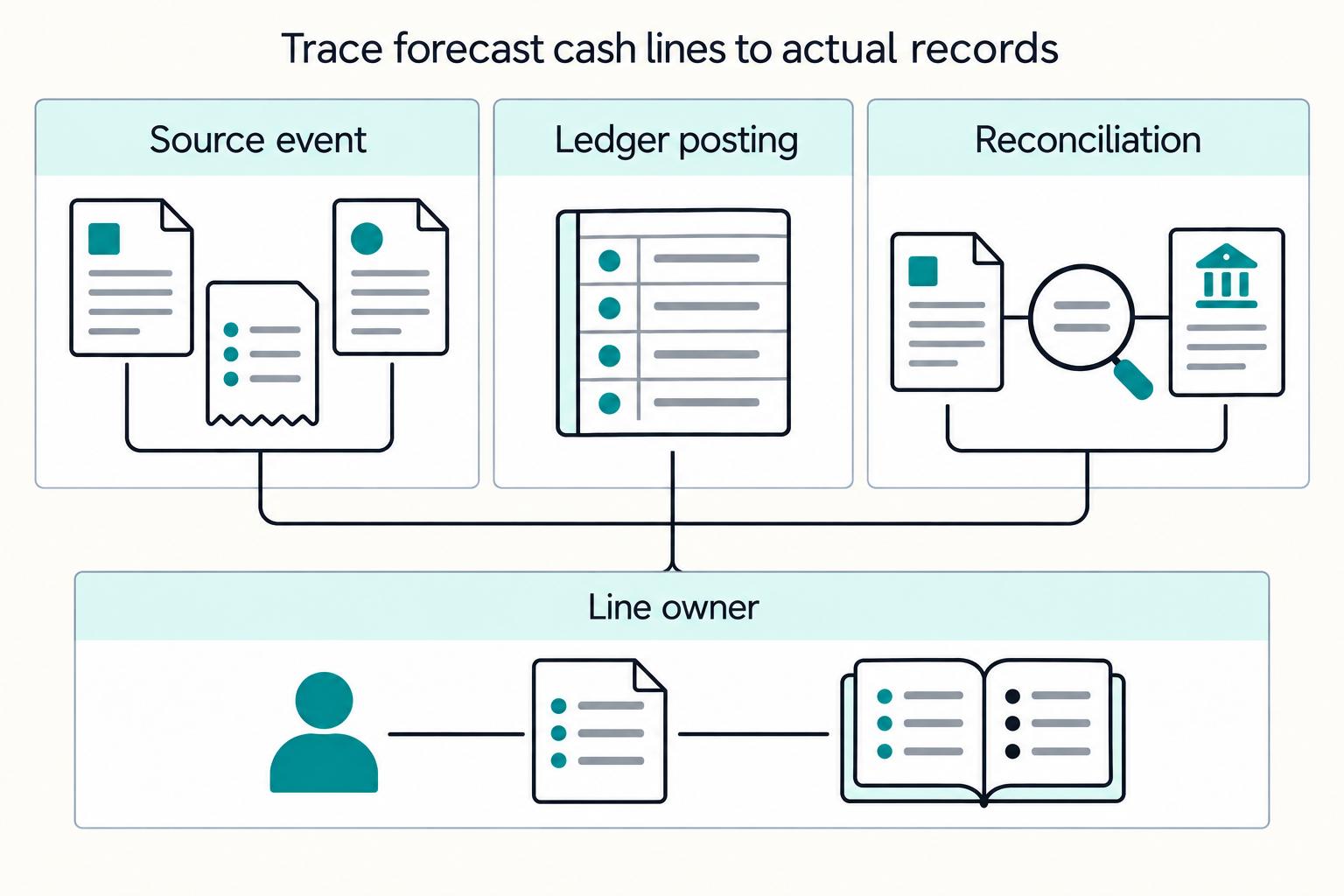
Only use cash lines you can trace end to end: event trigger, ledger posting, and reconciliation proof. If a line cannot be verified that way, treat it as planning context, not a release or funding decision input.
Keep one inflow/outflow dictionary that is simple and strict. For each line item, record the trigger, expected posting date, owner, and the checkpoint that confirms cash movement or a near-term obligation.
| Line item | Event trigger | General ledger visibility | Reconciliation checkpoint |
|---|---|---|---|
| Operating inflows (for example, sales collections) | Cash receipt event | Posted cash receipt, not only revenue recognition | Match bank activity to the ledger posting |
| Other inflows (for example, investment or financing cash) | Funding or transfer event | Posted inflow tied to event date | Match funding records to the ledger entry |
| Operating outflows (for example, expenses) | Payment due or payment initiated | Posted payable or expense movement and related cash outflow | Match due schedules and payment records to the ledger |
| Financing outflows (for example, loan payments) | Scheduled debt payment | Posted financing outflow tied to payment date | Match lender records to the ledger posting |
| Capital outflows (for example, capital expenditures) | Approved capital payment | Posted cash outflow tied to approved spend | Match invoice and payment evidence to the ledger |
Make ownership explicit#
Forecast reliability drops when one team owns the event, another owns posting, and no one owns the gap. Name who creates the event, who confirms ledger posting, and who signs off reconciliation for each category.
Run one end-to-end test each week. Pick a recent inflow or outflow, trace the source event, confirm posting date, and verify reconciliation evidence. If that takes too long, the category is still too vague for high-confidence forecasting.
Keep AR and AP in the picture#
Cash movement is the core signal, but AP and expected receipts still shape short-term decisions. AP timing is a tradeoff: paying too quickly can reduce near-term cash, while delaying too far can strain supplier relationships.
Keep expected customer receipts separate from available cash until the cash is actually in.
Reconcile settlement and payout timing gaps before they hurt liquidity#
After you map each cash line to a ledger event, timing is the next failure point. In an aggregated payment model, the platform collects customer payments and distributes funds to vendors on scheduled cycles, so vendor access can lag by days or weeks. If you do not model that gap directly, the forecast will drift as actual arrivals diverge from plan.
Use a current timing matrix plus an exception queue. This keeps late settlements, missed cutoffs, refunds, chargebacks, and dispute delays as owned operating actions instead of hidden forecast drift.
Build the timing matrix at the rail and corridor level#
Keep it simple and operational. The matrix should sit one level below your headline forecast and show how cash becomes usable by rail, channel, and cross-border corridor where relevant.
| Timing dimension | What to record | Primary owner | Evidence source and check |
|---|---|---|---|
| Settlement lag | Planned arrival window for each material cash path, based on observed actuals instead of blended assumptions | Treasury or payments operations owner maintains the window and updates misses | Settlement report, processor status, and bank credit matched to the ledger event |
| Payout cutoff behavior | The cutoff that decides whether a payout executes this cycle or rolls to the next | Payout operations owner confirms cutoff impact before release | Payout submission time, processor acknowledgment, and next-cycle carryover review |
| Weekend and holiday behavior | Recurring non-business-day timing patterns visible in your own history | Finance operations owner flags expected calendar effects | Calendar exceptions, prior-cycle comparisons, and bank or processor activity logs |
| Cross-border settlement patterns | Corridor-level delay patterns and named escalation owner when a route starts missing plan | Payments or treasury lead for that corridor owns escalation | Corridor settlement history, provider notices, and exception-case outcomes |
Populate this from your own actuals first. If one corridor repeatedly misses while the aggregate still looks fine, show the miss explicitly instead of smoothing it away.
Use the matrix daily#
Use the matrix as a daily checkpoint: what should have arrived by now, what is still pending, and what obligations are due today. Compare expected windows with actual settlement status, posted cash, and payout obligations.
If an item is still inside its expected window, keep it in forecast availability. If it misses the window, loses evidence, or hits a cutoff that moves execution, move it to the exception queue immediately.
Prioritize the exception queue by cash impact first#
Triage by cash impact first, then by aging and urgency. A delayed settlement tied to near-term payouts should outrank a small mismatch with no immediate liquidity effect.
Downgrade forecasted availability when a planned arrival window is missed, evidence is incomplete, or the same path misses often enough that observed behavior no longer supports the assumption. Treat that amount as uncertain until settlement, bank, or payout evidence confirms arrival.
Keep refunds, chargebacks, and disputes in the same queue when they change timing or reduce usable cash. For each material exception, maintain current status, owner, next action, and supporting evidence in one shared view to avoid conflicting liquidity pictures across teams.
Use webhook or processor status feeds as inputs, and apply idempotency checks so retries or out-of-order events do not move the same cash twice in your operating view. The daily close is unchanged: available cash should tie to posted ledger balances plus evidence-backed in-flight items.
Set decision rules for reserves, payouts, and funding actions#
Set explicit trigger rules so liquidity actions happen before a shortfall becomes a payout incident. Tie each variance signal to one response: slow non-urgent payouts, tighten reserve posture, or invoke funding. Keep the rule set focused on what cash is usable for upcoming liabilities, not just what appears in aggregate.
Not every variance needs the same response. Use the forecast to plan cash balances, financing timing for shortages or repayments, and how to handle excess cash. Separate temporary timing gaps from a persistent decline in expected cash availability so you avoid unnecessary payout disruption.
Make the triggers operational#
Use two planning views with different jobs: a daily liquidity view for execution and a 13-week view for reserve and funding posture. This keeps immediate payout decisions separate from medium-term financing decisions.
For payouts, classify obligations by urgency before triggers fire. For reserves, avoid reacting to one noisy day; adjust when risk is persistent and supported by evidence. For funding, use the longer horizon and treat a single timing miss as an exception, not a financing event.
| Trigger input | Owner | Action | Rollback condition |
|---|---|---|---|
| Available cash is below near-term payout obligations because inflows are arriving later than expected | Payments operations with finance sign-off | Slow only non-urgent payouts and resequence by urgency | Resume normal release once posted cash and evidenced in-flight items cover upcoming payouts |
| Repeated variance shows lower usable cash for upcoming liabilities, not a one-time timing miss | Finance or treasury | Tighten reserve posture and reduce cash treated as freely available | Return to prior posture when realized results stabilize against forecast |
| Forecasted shortage persists in the 13-week view after realistic timing assumptions and reserve actions | Finance or treasury leadership | Invoke contingency funding with timing aligned to expected need | Stand down when rolling coverage is sufficient without emergency financing |
| Forecast shows sustained excess cash beyond upcoming liabilities | Finance or treasury | Move excess cash according to policy for short-term use | Reclassify if near-term obligations or inflow reliability deteriorate |
| Payouts are blocked for policy or review reasons rather than liquidity | Policy/compliance owner | Keep these items in a separate queue from liquidity-triggered actions | Release only when policy review is cleared |
Read the scenario correctly#
Treat temporary timing drift differently from a persistent cash shortfall. Timing drift usually calls for payout sequencing and closer daily control. Persistent weakness in usable cash calls for reserve and funding actions.
Before approving any trigger, require a short evidence pack: posted ledger balances, in-flight items with proof, payout obligations by urgency, and current cash-position view. If the shortfall is not supported by that evidence, defer the trigger and keep monitoring.
Related: Payment Volume Forecasting for Platforms: How to Predict Cash Flow. If you need a quick next step on marketplace cash flow forecasting, browse Gruv tools.
Run a daily weekly monthly operating cadence#
Use a fixed daily, weekly, and monthly rhythm so forecast updates turn into decisions before liquidity pressure builds. The goal is simple: keep your cash position tied to near-term obligations, then adjust fast when assumptions move.
| Cadence | Focus |
|---|---|
| Daily | Confirm current cash position against upcoming obligations, and route any mismatch into active exception handling before payout decisions |
| Weekly | Review forecast versus actual inflows and outflows, separate timing effects from real variance, and update one shared assumptions log with a rolling 13-week view |
| Monthly | Recheck model structure, controls, and ownership so categories still match real cash movement and payout-impacting changes have clear sign-off |
Keep each pass evidence-based. If your cash position and obligations do not tie cleanly, treat that as an operating issue to resolve before normal release cadence resumes.
This discipline protects more than forecast accuracy. When liquidity gaps are missed, businesses can drift into late payments, damaged supplier relationships, and, in severe cases, broader going-concern stress.
Handle failure modes and country-program constraints explicitly#
Treat recurring failures as constraints on releasable cash, not background noise. If a break affects timing, ownership, or proof of funds, that line should stay out of committed availability until it is resolved.
Use one release test every time: can you trace available cash to posted balances, known in-flight settlement items, and current holds without improvising? If not, mark those lines as uncertain, exclude them from committed availability, and escalate to the right owner.
| Failure mode | What it means in operations | How this changes forecast availability |
|---|---|---|
| Delayed settlements | Expected inflows arrive later than the modeled posting date | Shift availability to later dates and lower near-term confidence until settlement is posted |
| Duplicate events | Retries, weak deduplication, or duplicate webhooks overstate activity | Treat impacted lines as untrusted until deduped, or you can release against cash that is not real |
| Reconciliation breaks | Ledger, bank movement, and payout status do not line up | Keep affected balances out of available cash because the money state is not provable |
| Unresolved exception-queue backlog | Aging exceptions remain open close to payout day | Treat those lines as conditional and keep them in exception view, not committed cash |
Route to the right owner#
When payout risk appears, split decisions immediately:
- Liquidity operations: routing issues, retries, reconciliation repair, settlement timing, exception cleanup
- Policy/compliance: payout blocks tied to account readiness, documentation status, review holds, or local program eligibility
This split keeps forecast actions clear. Operational breaks usually change timing and confidence; policy gates can make cash non-releasable even when balances exist. If your team cannot clearly explain who holds funds and who is liable when something breaks, escalation is still too ambiguous for reliable forecasting.
A practical checkpoint: can you explain the payment flow and owner path to a bank, regulator, or acquirer without improvising? If not, tighten issue coding before the next release decision.
Confirm cross-border constraints before promising timing#
Before committing timelines for a new market, corridor, or payout program, confirm these in writing: payout rail, corridor, settlement path, and local program gating.
| Constraint | What to confirm |
|---|---|
| Rail | The actual payout method |
| Corridor | Origin and destination country/currency pair |
| Settlement path | How funds move and where they sit before payout |
| Local program gating | Market or program conditions required before release |
Do not copy timing assumptions across routes. Provider decisions are tradeoffs across control, geography coverage, and speed, and cross-border measurement has known limits. If a corridor is new or thin on history, use conservative timing assumptions until production behavior and reconciliation are consistently clean. For a deeper build on payout obligations, see Cash Flow Forecasting for Payment Platforms: How to Model Payout Obligations.
Require an incident evidence pack#
Use one evidence standard for material misses, failed releases, and payout incidents:
- ledger trace from originating event to ledger impact
- event or webhook history, including retries and duplicates
- payout status history for affected transactions or batches
- reconciliation snapshot at the time of the break
Usage note: tie each artifact to one root-cause hypothesis at a time, for example delayed settlement, duplicate posting, reconciliation error, or policy hold. That turns incident review into model updates: which assumption changed, who owns the risk now, and which lines remain outside available cash until proven.
Related reading: Treasury Management for Platform Finance Teams: Cash Pooling Forecasting and Investment.
Conclusion#
The practical takeaway is simple: do not use a forecast to approve payouts, spending, or funding moves until it shows what cash is collected, what is actually available, and what is already obligated. Strong sales do not protect you from a liquidity miss if cash has not posted yet or is not yet available.
Your next step is not to build a bigger model. It is to put a usable implementation pack in place and make it part of operating discipline.
- Tie out opening cash first. Match the beginning cash position to recorded balances, then list known in-flight items separately instead of burying them in assumptions.
- Use the right forecast by horizon. Keep the near term on a direct, transaction-level view for scheduled payouts, wages, vendor bills, and other committed cash needs. Use a broader view, including a 12 month forecast where useful, for planning volume, hiring, or funding.
- Check cash on hand against short-term obligations. Before any release decision, confirm you can still cover bills, operating costs, and wages with cash that is truly available in time.
- Document breaks as evidence, not commentary. When numbers miss, assemble the supporting balances, line items, and reconciliation snapshot that show where the variance started.
That last point is a practical decision checkpoint. Reconciliation is not a reporting tidy-up step. It helps show whether the forecast is reliable enough for action. If the tie-out does not hold, pause non-urgent releases, avoid relying on projected surplus, and investigate until the break is explained and corrected.
This is where the tradeoff matters. Direct cash forecasting improves short-term accuracy, but it is time- and data-intensive. That cost is worth paying for near-term obligations because actual money movement, not profit, is what keeps payroll paid and vendors current. For longer-range planning, you can accept a less granular view as long as you do not confuse it with decision-ready cash.
If you want a companion guide for the demand side of the model, read Payment Volume Forecasting for Platforms: How to Predict Cash Flow. It fits well once your opening cash, settlement timing, and payout obligations already reconcile.
If you keep one rule from this article, keep this one: before you commit cash at scale, separate collected cash, available cash, and obligated cash. That distinction is what turns forecasting from a spreadsheet exercise into a confident operating decision.
Frequently Asked Questions
How is marketplace cash flow forecasting different from a standard small-business forecast?
The base definition is the same: estimating cash entering and leaving the business over a period. The practical difference for marketplace operators is timing. Not all recorded sales become available cash on the same day, so it helps to track cash on hand separately from cash expected to arrive later. That is why a healthy sales line can still hide a cash problem. A business can run short of cash even when sales are strong if cash receipts have not arrived yet.
What should marketplace operators model first?
Start with the beginning cash balance, then add all money movements in and out for the period you are forecasting. For a marketplace, that means listing expected cash inflows and expected outflows such as operating expenses and near-term payables that will actually consume cash. Do not start with volume growth or margin percentages if you cannot verify the opening cash number. If the opening balance is not reliable, the rest of the forecast will be noisy.
What is the fastest way to check timing risk before releasing cash?
Check whether the cash you plan to use is both expected and available in time for the obligation you need to meet. A practical near-term test is whether you still have enough working capital to cover end-of-month bills. If the answer depends on cash that has not been received yet, treat that cash as uncertain. That is a timing problem, not a forecasting detail.
What forecast horizon should a marketplace team use?
Use more than one horizon because the decisions are different. Near term should be a direct forecast built from known costs and committed obligations, while a longer view can extend to a 12-month forecast for planning decisions. Keep scenario design simple and explicit: best case, worst case, and a middle case. If you need a deeper build for payment operations, see Cash Flow Forecasting for Payment Platforms: How to Model Payout Obligations.
When should you tighten payouts versus hold more cash in reserve?
Adjust outgoing payment timing first when the problem is short-term timing uncertainty and you need to conserve cash. In a shortage, delaying payables can preserve cash, but it can also damage supplier relationships and affect credit. Hold more cash when the issue is broader coverage of upcoming obligations, not just a short timing mismatch. Also avoid paying AP too quickly if it reduces cash needed for near-term bills.
What should you check first when forecast variance spikes?
Start with the opening number and confirm the beginning cash balance. Then check whether all expected inflows and outflows were captured for the period, including items that were delayed or omitted. After that, compare the miss against your scenario assumptions. If the variance came from timing, update timing and confidence; if it came from a true cash loss or a new obligation, update the forecast and the response plan.
Try a related tool
Researched and edited by the Gruv editorial team. Gruv builds cross-border billing, payouts, and finance-operations software for global businesses.
Sources
Includes 1 external source outside the trusted-domain allowlist.
- clame.nyu.edu/Resources/E0739B/312163/GlobalCashFlowAnalys...trusted
- home.ubalt.edu/ntsbarsh/business-stat/stat-data/forecast.htmtrusted
- ntia.gov/files/ntia/publications/measuring_cross_bord...trusted
- occ.gov/publications-and-resources/publications/comp...trusted
- pmc.ncbi.nlm.nih.gov/articles/PMC10281586trusted
- scholarworks.waldenu.edu/cgi/viewcontent.cgitrusted
- sec.gov/Archives/edgar/vprr/1001/10011873.pdftrusted
- actuary.org/wp-content/uploads/2025/03/Life-PracticeNote...external
Educational content only. Not legal, tax, or financial advice.
Related Posts
How to Build a Freelance Financial Model That Protects Cash Flow
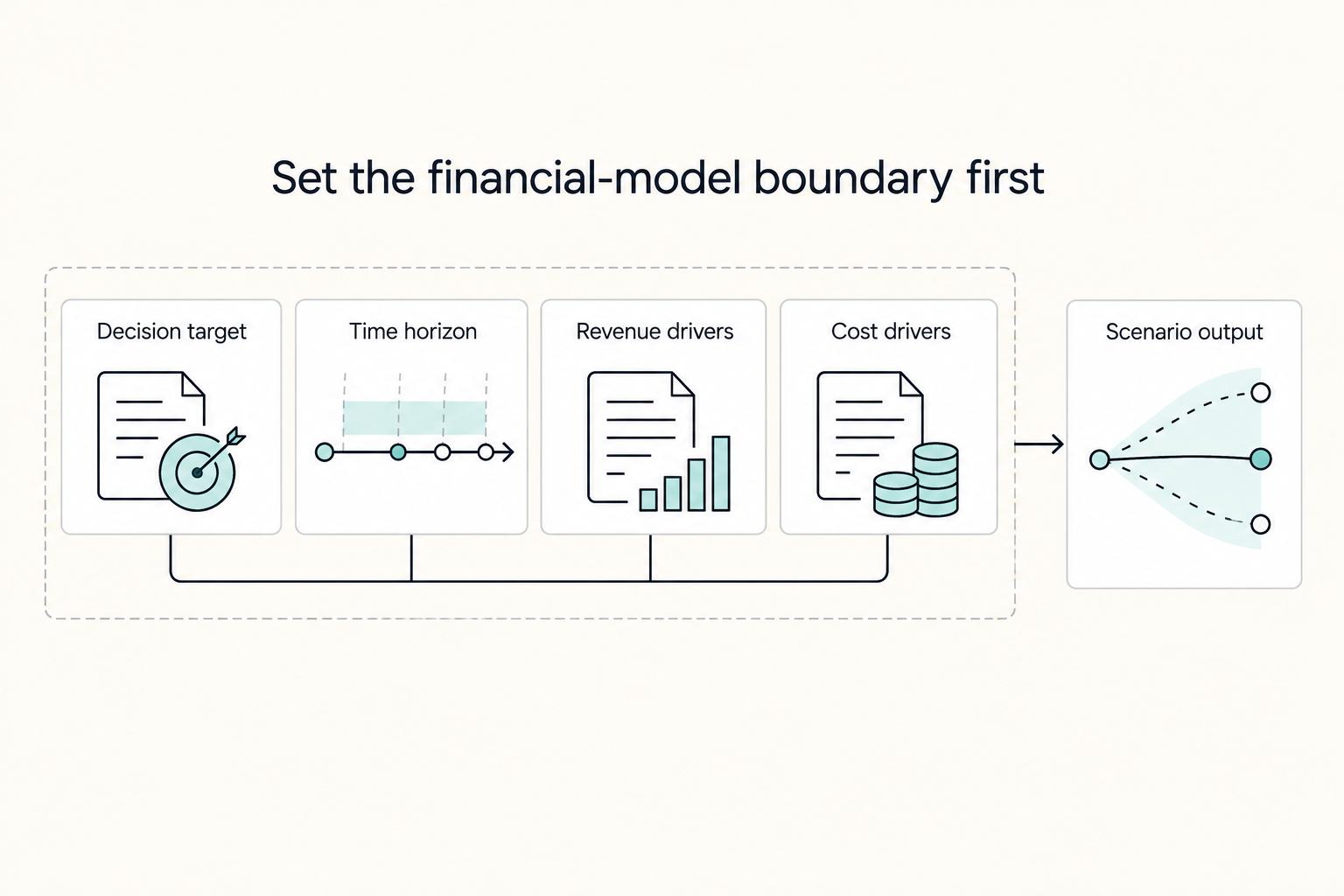
A model like this only matters if it changes a live decision before you commit. If it does not affect whether you take the work, how you set terms, or when you release money, it is just spreadsheet decoration. The goal is usable cash, not neat tabs.
Payment Volume Forecasting for Platforms: How to Predict Cash Flow
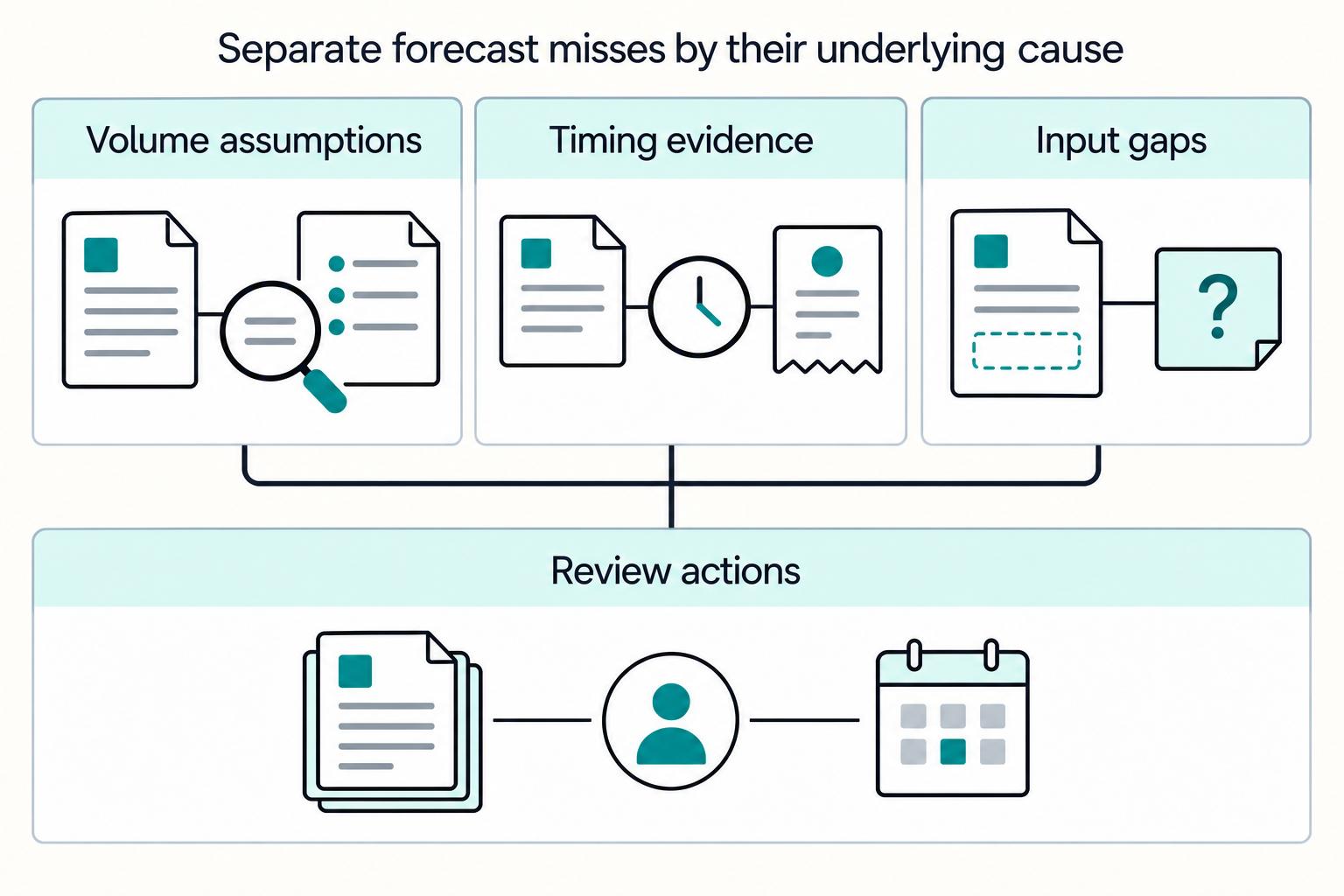
Build this as a payout-reliability forecast, not a generic finance projection. The job is to flag when payout obligations may overtake cash that is actually available. Your model has to track payment volume, settlement timing, and payout schedule together.
Cash Flow Forecasting for Payment Platforms for Payout Go/No-Go Decisions
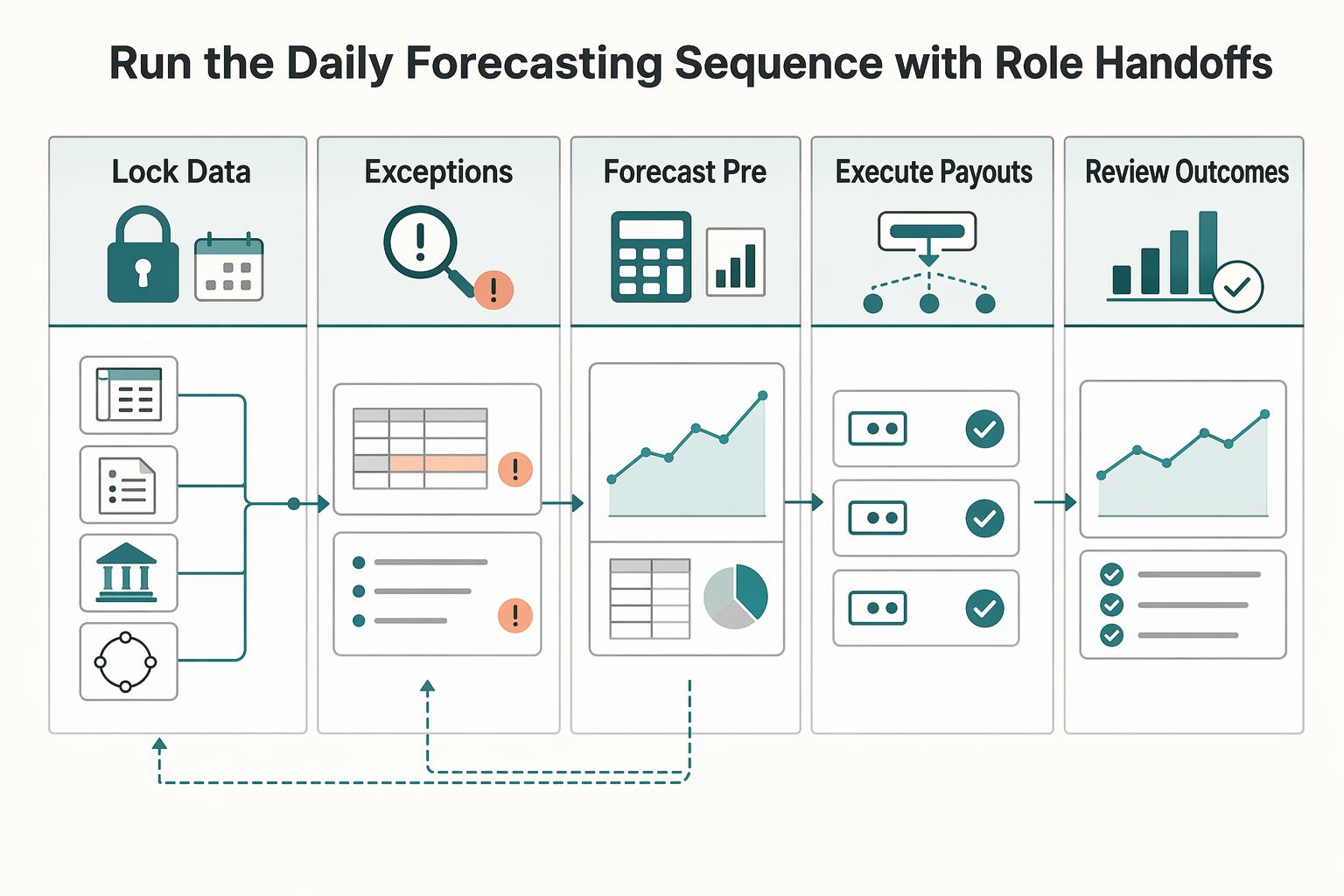
For payout decisions, a forecast is only as useful as the cash that is actually settled, reconciled, and releasable before cutoff. If pending processor funds are treated like settled funds, or reconciliation breaks are ignored, the output may still help with planning, but it is less reliable for payout release decisions. If your team treats pending cash like spendable cash, your release call will drift before you notice it. If you are approving a run, your forecast should tell you what cash is truly releasable, not just what looks available on a dashboard.