

Quick Answer
An Agent of Record is a delegated representative that may handle contractor administration, legal, and financial tasks, but it does not automatically take every compliance decision. For contractor programs, treat AOR as scoped support: confirm authority documents, named owners for classification and approvals, and clear boundaries for invoice and payout actions. If those boundaries are vague, rollout risk rises fast.
What this article will help you decide#
An Agent of Record is a delegated representative for specific administrative tasks in a contractor program. It does not automatically become the employer or take every compliance decision off your plate. For platform teams, the real question is whether this model fits your contractor operations without blurring who owns onboarding, payment controls, and compliance decisions.
In contractor programs, the service may cover agreements, classification support, tax documentation, and payment administration. It does not turn a contractor into an employee or replace your decisions about the work, rates, and commercial terms. Read the service scope line by line so your team knows which tasks the provider will perform.
This article is for founders, finance ops, product, and engineering teams building contractor onboarding and payout operations. It is not freelancer career guidance, and it is not a general insurance explainer. The scope here is narrower and more operational: independent contractor onboarding, payment and tax steps, document handling, and the real boundary between vendor support and your internal legal or policy ownership. By the end, you should be able to make three decisions with less guesswork:
- whether an AOR model fits your current team capacity and market footprint
- which implementation checkpoints need to be in place before launch
- which evidence your legal, ops, and product teams should require so responsibilities stay traceable
Before you go too far, verify the exact authority the provider has in your contract or service terms. If the language only grants administrative representation, but your team assumes the provider is also taking classification or labor-law ownership, you have the setup for a bad launch. That gap can surface later as disputes over who was supposed to review an exception.
Build the owner map for each launch market. The same provider may offer different services across countries, and classification and tax requirements depend on the engagement. Record which local checks apply and who resolves an exception before the contractor starts work.
Agent of Record vs lookalike terms that cause bad decisions#
Use the labels precisely before you pick a model: an Agent of Record is delegated representation, not automatic ownership of every compliance or payment decision. Agency law is fundamentally delegation from principal to agent, so your operating question is always scope and authority, not title alone.
Lookalike terms create expensive mistakes because they solve different problems. A Broker of Record label appears in regulated broker contexts, so importing broker language into contractor operations without checking scope is a common way to misassign ownership.
Use this quick split before implementation:
- Merchant of Record is different: the MoR is the official seller in a transaction, and the MoR name may appear on the buyer's card statement. If your question is seller-of-record and checkout responsibility, that is MoR scope.
- Agency of Record, Buyer of Record, and Registered Agent are not interchangeable shortcuts. Treat each as a separate legal/commercial designation and confirm authority, data access, and liability in contract terms.
Quick contrast#
| If the scope centers on... | You are probably evaluating... | Main owner question |
|---|---|---|
| contractor onboarding, admin representation, compliance workflow | Agent of Record | Who reviews and documents contractor-compliance decisions? |
| insurance policy or insurance premium servicing | broker or insurance servicing role | Who is authorized to service the policy relationship? |
| selling to the customer and appearing on the card statement | Merchant of Record | Who is the legal seller and payment counterparty? |
Operational checkpoint: require the exact service-scope and authority document up front. If the contract grants representation only, but your team assumes the provider also owns classification, payout controls, or recordkeeping decisions, you are setting up a bad handoff before launch.
You might also find this useful: What is a Merchant of Record (MoR) and How Does It Work?.
What an AOR actually owns in contractor compliance operations#
An AOR usually owns contractor administration and process support, not every final legal or operational decision. Treat the role as scoped representation, then lock exact ownership in writing before launch.
An Agent of Record is appointed to manage the relationship between a company and its independent contractors, and providers may handle administrative, legal, and financial tasks. That signals where support can exist, but not automatic end-to-end ownership.
Lifecycle ownership#
Map ownership across onboarding, active engagement, and offboarding before work starts. AOR support can include administrative and compliance overhead, including worker classification checks, but that is not the same as universal control of each eligibility decision or artifact.
Use a named-owner matrix so there is no ambiguity at handoff points:
| Workflow step | AOR may support | You still must confirm |
|---|---|---|
| Onboarding intake | Data collection and admin coordination | Who gives final approval to engage |
| Classification workflow | Classification checks and process support | Who makes and records the final classification decision |
| Contract administration | Issuing and tracking documents | Who approves terms, changes, and renewals |
| Invoicing and payments | Parts of financial task handling | Who approves invoices and releases payment |
| Offboarding | Contract closure steps | Exact cutoff for access, submissions, and open items |
Documents and finance scope#
If contract administration is in scope, verify exactly what is covered: NDA handling, contract packet handling, updates, renewals, and executed-record storage, versus only sending documents your team controls. For finance operations, confirm whether invoice management, expense reporting, payment steps, and tax workflow handling are included, partially included, or retained by your team.
Compliance boundaries#
Keep the classification boundary explicit. Under the FLSA, employees receive FLSA protections, while independent contractors are in business for themselves and are not covered. Because that boundary drives compliance risk, confirm who is the final reviewer and where that decision record lives.
DOL’s 2026 rulemaking page describes a proposed revision to federal classification guidance; its comment period closed on April 28, 2026. A proposal alone does not establish a new operative test. Keep the applicable classification test and its effective date in your market-specific owner map.
For example, a platform may approve a contractor’s invoice while the AOR collects the required tax record and arranges payment. If the tax record is missing, the owner map should identify who contacts the contractor, which payment action is held under the applicable policy, and who can resolve the exception. Invoice approval and payment eligibility remain separate decisions.
AOR vs in-house vs Merchant of Record decision matrix#
Consider an AOR when the work qualifies for independent-contractor engagement and the provider covers the markets and tasks your team needs help with. An in-house model may fit when you have the legal and operational capacity to run those checks and handle exceptions. If the role requires employment, compare direct employment or Employer of Record support instead.
A working matrix#
| Factor | Agent of Record | In-house | Merchant of Record |
|---|---|---|---|
| Ownership | Treat as shared unless your contract and operating split assign named owners. | Treat as internal by default, with explicit ownership per workflow step. | Confirm scope directly; do not assume it answers contractor-compliance ownership by itself. |
| Speed | Use as a launch path when provider coverage and process fit your workflow. | Use when you can absorb setup and operating load internally. | Use only if your core need matches merchanting responsibilities. |
| Control | Validate how policy exceptions are handled before launch. | Validate that your team can run and enforce custom controls consistently. | Validate whether control sits in the area you actually need to govern. |
| Implementation effort | Lower only if provider process matches your intake, contract, and payout flow. | Higher when you must design and run end-to-end controls yourself. | Depends on commercial-flow changes and whether contractor-compliance ownership still sits elsewhere. |
| Failure blast radius | Main risk is vendor dependency across multiple queues. | Main risk is internal execution and policy error concentration. | Main risk is boundary friction when merchanting and contractor operations are split. |
The practical red flag is choosing a model because it sounds broader than it is. AOR and Merchant of Record can overlap in language, but they are not automatically interchangeable for contractor-compliance ownership.
Finance and accounting checkpoint#
Before launch, route this decision through accounting and revenue review. If invoicing, funds flow, or fee presentation changes, review ASC 606 and principal-versus-agent treatment before go-live, and confirm the contract language and ledger mapping support that position. For deeper context, see ASC 606 principal vs agent for Merchant-of-Record platforms.
Where the tradeoff shows up at scale#
AOR can reduce early execution burden, but that tradeoff is higher vendor dependency and less flexibility for edge-case handling. In-house can increase custom control, but only if you can operate it with clear ownership, evidence trails, and escalation paths.
Compare providers using the same sample engagement: one contractor, one invoice, and one exception. Ask each provider to show which decisions it makes, which records it returns, and which actions remain with your team. That gives you a practical comparison of scope and handoffs.
How to implement an AOR model without breaking payments or compliance#
Start by fixing ownership and operating flow before you touch payout logic. An AOR can support compliant payment workflows and required tax documentation, but your company still sources and manages the contractor directly and keeps day-to-day control of the work. The AOR's role is to help ensure each engagement is structured correctly from a compliance standpoint, so your handoffs need to be explicit before launch.
Set scope before you wire anything#
Use this order: legal scope, systems mapping, data fields, system behavior, then production cutover. If you reverse it, payment states can look complete in-product while compliance steps are still unresolved elsewhere.
For each engagement type and launch market, write a clear owner map for classification support, contract administration, tax-document handling, invoice approval, payout release, exceptions, and offboarding. A practical checkpoint is being able to name both the system of record and the human owner for every step from onboarding intake to paid invoice.
This matters because compliance outcomes depend on how the engagement is structured and operated in practice. A common failure mode is assuming the provider covers every edge case, then discovering a payout is blocked because a required review or document was never completed.
Make payout eligibility a real gate#
A signed contract does not by itself complete onboarding or establish payment eligibility. Set the required checks from the applicable engagement and payment rules, then document what happens when a record is missing: who follows up, whether withholding or another payment treatment applies, and who approves an exception.
In practice, keep separate statuses for onboarding, contract completion, compliance review, tax-document receipt, payout eligibility, payable, and paid. Collapsing everything into a single "active" state makes launch-week support and finance triage much harder.
For required tax records, store the document artifact, validation outcome, receipt date, and source record ID. A manual inbox with no structured status makes it harder to identify an expired or missing record.
Engineer for reconciliation and audit trace#
Before cutover, agree on canonical records and status transitions across your product, the AOR system, and finance exports. At minimum, every block or release should be traceable to a reason code, owner, and timestamped state change.
| Control point | What to verify |
|---|---|
| Canonical records and status transitions | Agree them across your product, the AOR system, and finance exports |
| Blocks and releases | Each should be traceable to a reason code, owner, and timestamped state change |
| Retries | Prevent duplicate records during retries |
| Cross-system state | Reconcile state regularly across systems |
| Record consistency | Verify that your platform, provider records, and finance artifacts tell the same story |
| Dry run | Trace one onboarding case through invoice, payout record, and export artifacts before full launch |
The evidence pack your finance and audit teams should require#
You are not launch-ready if your team cannot prove who acted, when, and why across contractor onboarding, tax, payout, and exceptions. Build this evidence pack before go-live, not later from screenshots and inbox threads.
At minimum, keep authority documents, scope-of-service records, audit logs, reconciliation exports, and exception records in systems your teams can actually query. If you use documents like NDAs, service agreements, or delegation records, keep the final signed versions and effective dates as evidence artifacts, not just template links.
A practical check is whether a reviewer can start from one contractor ID and pull a clean trail from onboarding through payout and finance output. If records are scattered across tools and formats, audit prep turns into manual extraction and normalization work that can take weeks.
| Control area | Owner | System of record | Evidence artifact | Review cadence |
|---|---|---|---|---|
| Authority and scope | Legal or compliance ops | Contract repository | Signed agreements, approval matrix, delegation records if used | On provider onboarding, then on change |
| Tax documentation | Finance or compliance ops | AOR or compliance system | Required tax-document status, receipt record, validation result, received date | At the applicable collection deadline, then on change or expiry |
| Payout eligibility | Finance ops | Payment system | Status history and state-change audit log | By launch cohort and at month-end close |
| Reconciliation | Finance and accounting | Ledger export or finance data store | Contractor ID, invoice/payment references, exception codes, timestamps | Month-end close |
| Exceptions and overrides | Named approver | Ticketing or GRC workflow | Approval record, reason code, linked case notes, evidence-request record (if used) | Every exception, then monthly review |
For sensitive tax and compliance artifacts, default to masked on-screen fields and restrict full-document access. Set retention boundaries up front so teams know where originals live, where metadata-only copies are allowed, and when duplicates must be removed from shared drives, support inboxes, or exports.
Use a hard internal checkpoint before go-live: trace payout, tax, and compliance evidence end-to-end for a sample contractor and confirm each state change has an owner, source record, and supporting artifact. If any link breaks, fix the evidence path before processing live payouts.
Changing an AOR and designing an exit path before you need it#
Design the exit path before you sign, because a handoff with vague revocation steps, timelines, or data-return terms will create avoidable risk. Changing an Agent of Record is a control exercise: define who has authority, who has access, and how payment and compliance work continue during transition.
| Transition item | Failure to prevent | What to do |
|---|---|---|
| Access revocation | Leaves prior admin rights, webhook destinations, or inbox visibility in place | Confirm explicit authority updates across the systems your team uses before the effective date |
| Outstanding invoices | No clear ownership cutoff between providers | Test a payable invoice case before notice goes out |
| Incomplete offboarding cases | No clear final owner or retained record | Test a mid-offboarding case before notice goes out |
| Formal transition | Can run from weeks to months once approvals and record checks begin | Keep a documented fallback for payment operations and compliance queues |
Depending on your setup, the designation change can include an AOR letter or similar delegation record, plus explicit authority updates across the systems your team uses. Before the effective date, confirm one reviewer can trace who may approve, release, and view each step.
Run a sample-based handoff review before notice goes out. Test a payable invoice case, a pending compliance case, and a mid-offboarding case; if owner, source record, or next action is unclear, the design is not ready. Keep a documented fallback for payment operations and compliance queues, because formal transitions can run from weeks to months once approvals and record checks begin, and early planning helps avoid costly rework.
Related reading: Merchant of Record for Platforms and the Ownership Decisions That Matter.
Red flags that signal the model is wrong for your platform#
If you cannot reliably explain who decided what, from which record, and under which control, the model is likely a poor fit for your platform.
- Ownership is unclear for critical decisions. If legal, ops, and product teams give different answers on who owns key classification or risk calls by market, your control model is weak.
- Scope is promised, but not operationally defined. If your agreement uses broad language but does not map responsibilities, handoffs, and evidence return for core workflows, expect gaps when exceptions appear.
- You cannot reconstruct events end to end. If onboarding, invoice flow, or payout exceptions cannot be traced from trigger to final resolution, you have an observability gap, not just a reporting gap.
- Exceptions have no owner. A missing document or disputed invoice should reach a named person with authority to resolve it, rather than circulate between the provider and your team.
- You cannot retrieve contractor records. If signed agreements, decision records, or payment references cannot be exported, replacing the provider becomes harder.
- Product and finance do not share one source of truth. If status in product and payout records in finance disagree, reconciliation friction and close delays follow.
- Key model terms are used interchangeably in internal decisions. When teams mix labels without aligned ownership and control assumptions, approvals and access policies drift.
This pairs well with our guide on What Is DAC7? EU Platform Reporting Directive Explained.
The decision to make now#
Use an Agent of Record only if it gives you faster compliant execution without blurring ownership of key decisions. An AOR can act as an intermediary and take on administrative, legal, and financial tasks, but your team still needs clear internal ownership for approvals, exceptions, and signoff.
Treat the term itself as context-dependent. In contractor and HR contexts, AOR is commonly framed as a designated intermediary or administrative representative; in some insurance contexts, AOR and Broker of Record are treated as near equivalents and documented through signed forms or letters. Do not assume a label or template from one context automatically fits your contractor program.
Run one working session with legal, finance ops, and engineering to complete the decision matrix and evidence checklist together. Keep it focused on four points:
- Authority and scope: Confirm the authority document, service scope, and named owner for decisions and escalations.
- Systems and evidence: Confirm which records are authoritative and whether your audit/reconciliation evidence is usable end to end.
- Transition risk: If switching providers, review signed representation documents, access ownership, and handoff dependencies before cutover.
- Market and program fit: Confirm where requirements change by country, state, or program before rollout.
Before launch, validate one real record end to end using source records, not informal notes. If ownership boundaries or evidence trails are unclear, pause rollout until they are resolved.
If you are still deciding between providers, request a demo or docs now to validate integration fit, compliance gates, and audit evidence expectations. Coverage, control depth, and obligations vary by market and program, so confirm details for your rollout.
Frequently Asked Questions
Is Agent of Record the same as Broker of Record?
No. In contractor operations, an AOR is generally described as a third party appointed to manage the relationship with independent contractors and to handle administrative, legal, and financial tasks. In regulated fields, role labels can be legally constrained, so do not assume the insurance or brokerage meaning carries over to your contractor program.
Can you change a contractor AOR without changing your payment rails?
A change may leave your payment provider in place, but check which party controls payment instructions, bank details, tax records, and access. Agree on an ownership cutoff for open invoices, transfer the required records, and test the new handoff before revoking the previous provider’s access.
What does an AOR usually handle for independent contractor compliance?
Typically, the provider acts as an intermediary and may handle administrative, legal, and financial tasks tied to the contractor relationship. The exact scope should be defined in your service agreement.
Who owns compliance risk when you use an AOR provider?
Do not assume liability fully transfers just because you hired a provider. Responsibility depends on contract terms and applicable law or regulation, so ownership should be explicitly defined.
When should a platform choose AOR instead of building controls in-house?
There is no single universal trigger. Make the choice based on your program scope, internal operating capacity, and legal obligations in the markets where you operate.
What documents should we require before launch, including W-8 and W-9 handling?
Keep the signed service agreement, contractor agreement, responsibility matrix, and applicable tax records. W-8 or W-9 collection depends on the payee and payment’s tax treatment; assign an owner to determine the required form, validate it, and retain the decision record. Confirm that your team can retrieve these records during an exception or provider transition.
Which requirements vary by country, program, or state and must be confirmed with counsel?
Review local worker-classification rules, contract requirements, tax documentation and reporting, and payment-provider coverage for each engagement. Record which duties the AOR performs and which remain with your team. A service available in one country may have a different scope elsewhere.
Try a related tool
Researched and edited by the Gruv editorial team. Gruv builds cross-border billing, payouts, and finance-operations software for global businesses.
Sources
Includes 1 external source outside the trusted-domain allowlist.
Educational content only. Not legal, tax, or financial advice.
Related Posts
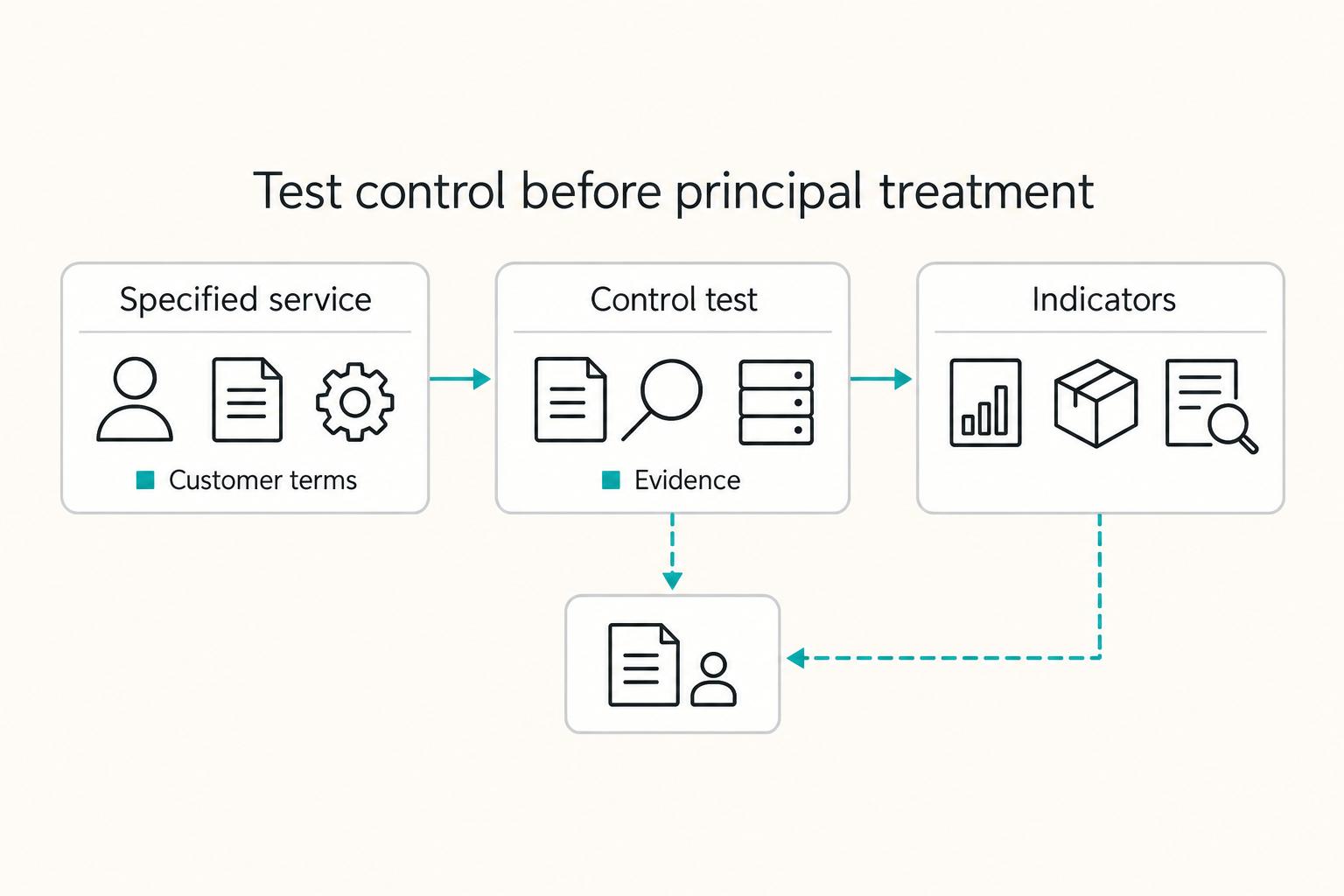
ASC 606 Principal vs Agent Decisions for Merchant-of-Record Platforms
For merchant-of-record teams, the **ASC 606 principal vs agent merchant of record** call is a high-stakes judgment, not a presentation preference. It can move revenue from gross to net and raise the level of judgment finance, audit, and compliance teams need to defend.
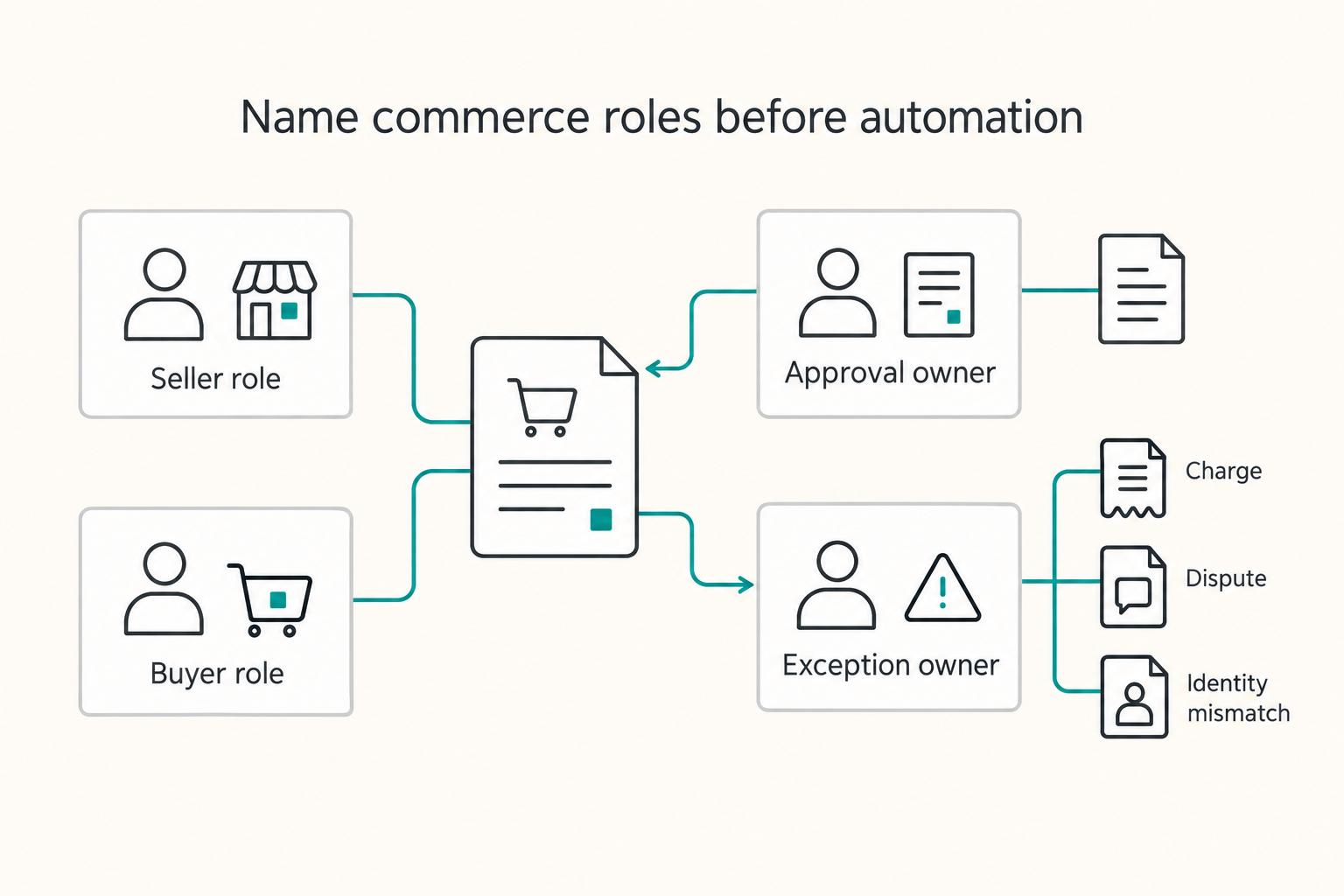
Merchant of Record for AI Agents and Buyer of Record Decisions
AI commerce is moving faster than role clarity, and that is where teams get into trouble. Before you debate protocols or checkout surfaces, decide who is actually selling, who is the recognized buyer, who captures approval, and who owns the fallout when a charge, dispute, or identity mismatch shows up later.

Registered Agent vs Virtual Mailbox and How to Split Mail Correctly
If you want a setup that still works once filings, notices, and everyday mail all start arriving at once, split the job now. Put legal notice intake in one channel and routine correspondence in another. Name a primary owner and a backup for each before your first filing, and decide how escalation works the moment a legal notice arrives.